

Most European adults searching for relief from sensitive teeth face a flood of choices, yet more than 60 percent still use chemical mouthwashes common in American routines. Natural plant-based options promise gentler care backed by science, appealing to health-conscious individuals who want fluoride-free solutions. Discover how innovative botanical formulations can transform your daily oral care, delivering effective results without synthetic shortcuts.
Table of Contents
- What Is Plant-Based Mouthwash And How It Works
- Key Natural Ingredients And Their Benefits
- Scientific Evidence For Plant-Based Formulas
- Comparing Plant-Based And Conventional Mouthwash
- Potential Risks And Safety Considerations
Key Takeaways
| Point | Details |
|---|---|
| Plant-Based Benefits | Plant-based mouthwashes utilize natural botanical extracts to provide antimicrobial, anti-inflammatory, and antioxidant properties, promoting better oral health compared to traditional chemical options. |
| Ingredient Transparency | When selecting a plant-based mouthwash, prioritize products with clear ingredient lists and verified botanical extracts for optimal health benefits. |
| Scientific Validation | Research supports the effectiveness of plant-based mouthwashes, showing comparable results to chemical alternatives in controlling oral health issues such as plaque and gingivitis. |
| Safety Considerations | Users should be aware of potential allergic reactions and variability in product quality; consulting a dental professional is recommended before adopting new natural oral care solutions. |
What Is Plant-Based Mouthwash and How It Works
Plant-based mouthwash represents a natural, scientifically advanced oral care solution derived from botanical extracts designed to support comprehensive dental health. Unlike traditional chemical mouthwashes, these innovative formulations leverage the powerful antimicrobial and therapeutic properties of natural plant ingredients to address oral hygiene challenges. Natural plant extracts like neem and tulsi offer targeted microbial control without the harsh side effects associated with synthetic alternatives.
The core mechanism of plant-based mouthwash involves utilizing bioactive compounds extracted from herbs and botanical sources to combat oral pathogens effectively. These natural ingredients contain potent antimicrobial, anti-inflammatory, and antioxidant properties that work synergistically to maintain balanced oral flora. Key components such as neem, tulsi, turmeric, and clove oil have demonstrated remarkable capabilities in reducing plaque formation, controlling bacterial growth, and supporting overall gum health.
Research indicates that plant-based mouthwashes can provide comparable performance to traditional chemical solutions. Herbal mouthwash extracts exhibit similar pathogen-controlling properties as chlorhexidine, making them an excellent alternative for individuals seeking gentler oral care options. These natural formulations target common dental issues by:
- Reducing plaque accumulation
- Minimizing gingivitis symptoms
- Supporting healthy oral microbiome balance
- Providing anti-inflammatory protection
- Offering antioxidant benefits
Pro tip: When selecting a plant-based mouthwash, prioritize products with transparent ingredient lists and scientifically validated botanical extracts to ensure maximum oral health benefits.
Key Natural Ingredients and Their Benefits
Plant-based mouthwashes harness the powerful therapeutic potential of natural botanical ingredients, offering a holistic approach to oral health maintenance. Neem, tulsi, clove, and peppermint emerge as cornerstone ingredients with remarkable antimicrobial properties, each contributing unique healing characteristics that address multiple aspects of dental wellness. These natural extracts provide a comprehensive solution that goes beyond traditional chemical mouthwash formulations.
Each botanical ingredient plays a specific role in supporting oral health. Neem, a potent antibacterial agent, effectively reduces plaque formation and prevents gum disease by targeting harmful oral microorganisms. Clove oil brings analgesic properties that help minimize oral pain and inflammation, while providing natural antiseptic benefits. Tulsi contributes powerful antimicrobial actions that help balance oral microbiome, and peppermint adds both a refreshing flavor and additional antibacterial protection. These natural ingredients collectively demonstrate remarkable potential in controlling oral pathogens and supporting gum health.

Here’s a comparison of key ingredients in plant-based mouthwash and their therapeutic roles:
| Botanical Ingredient | Primary Benefit | Additional Property |
|---|---|---|
| Neem | Reduces plaque | Prevents gum disease |
| Tulsi | Balances microbiome | Antimicrobial action |
| Clove Oil | Minimizes pain | Natural antiseptic |
| Peppermint | Freshens breath | Adds antibacterial protection |
Beyond individual ingredient benefits, the synergistic combination of these botanical extracts creates a powerful oral care solution. The comprehensive approach of plant-based mouthwashes includes:
- Reducing bacterial growth
- Minimizing inflammation
- Supporting natural healing processes
- Providing gentle yet effective oral protection
- Maintaining balanced oral microbiome
The science behind these natural ingredients reveals their profound potential to transform oral care strategies, offering a gentler alternative to harsh chemical formulations. By leveraging the inherent healing properties of botanicals, these mouthwashes provide a holistic approach to dental hygiene that supports long-term oral wellness.
Pro tip: When selecting a plant-based mouthwash, look for products that list specific botanical concentrations and prioritize organic, unprocessed natural extracts for maximum therapeutic benefits.
Scientific Evidence for Plant-Based Formulas
Scientific research has increasingly validated the remarkable potential of plant-based mouthwash formulations in oral health management. Comprehensive studies demonstrate significant antimicrobial activity against critical oral pathogens like Staphylococcus aureus and E. coli, revealing the robust therapeutic capabilities of herbal extracts such as guava leaf, clove, cinnamon, and liquorice. These findings challenge conventional chemical mouthwash approaches by providing natural, scientifically substantiated alternatives for maintaining oral hygiene.
Clinical assessments have consistently shown that herbal mouthwash ingredients produce impressive outcomes in dental health metrics. Research comparing plant-based formulations with traditional chemical treatments indicates comparable, and sometimes superior, effectiveness in controlling plaque and gingivitis. The studies highlight remarkable reductions in:
- Gingival inflammation index
- Bacterial colony counts
- Bleeding during oral examinations
- Overall microbial load
Moreover, these natural formulations offer additional benefits beyond mechanical cleaning. The antioxidative and anti-inflammatory properties of botanical ingredients provide holistic protection, addressing underlying oral health challenges without the potentially harmful side effects associated with synthetic chemical agents. This comprehensive approach represents a significant advancement in understanding oral microbiome management through natural interventions.
The scientific community continues to validate the potential of plant-based oral care solutions, emphasizing their role in preventive dental health strategies. By leveraging the inherent antimicrobial, anti-inflammatory, and healing properties of natural extracts, these mouthwashes offer a promising alternative to traditional chemical formulations.
Pro tip: Consult scientific literature and seek professional dental advice to understand how specific botanical extracts in plant-based mouthwashes can address your unique oral health requirements.
Comparing Plant-Based and Conventional Mouthwash
Oral care technologies have evolved significantly, presenting consumers with diverse mouthwash options that dramatically differ in composition and effectiveness. Plant-based mouthwashes fundamentally challenge traditional chemical formulations by offering a gentler, more holistic approach to oral hygiene, addressing critical concerns about synthetic ingredient safety and long-term oral health impacts.
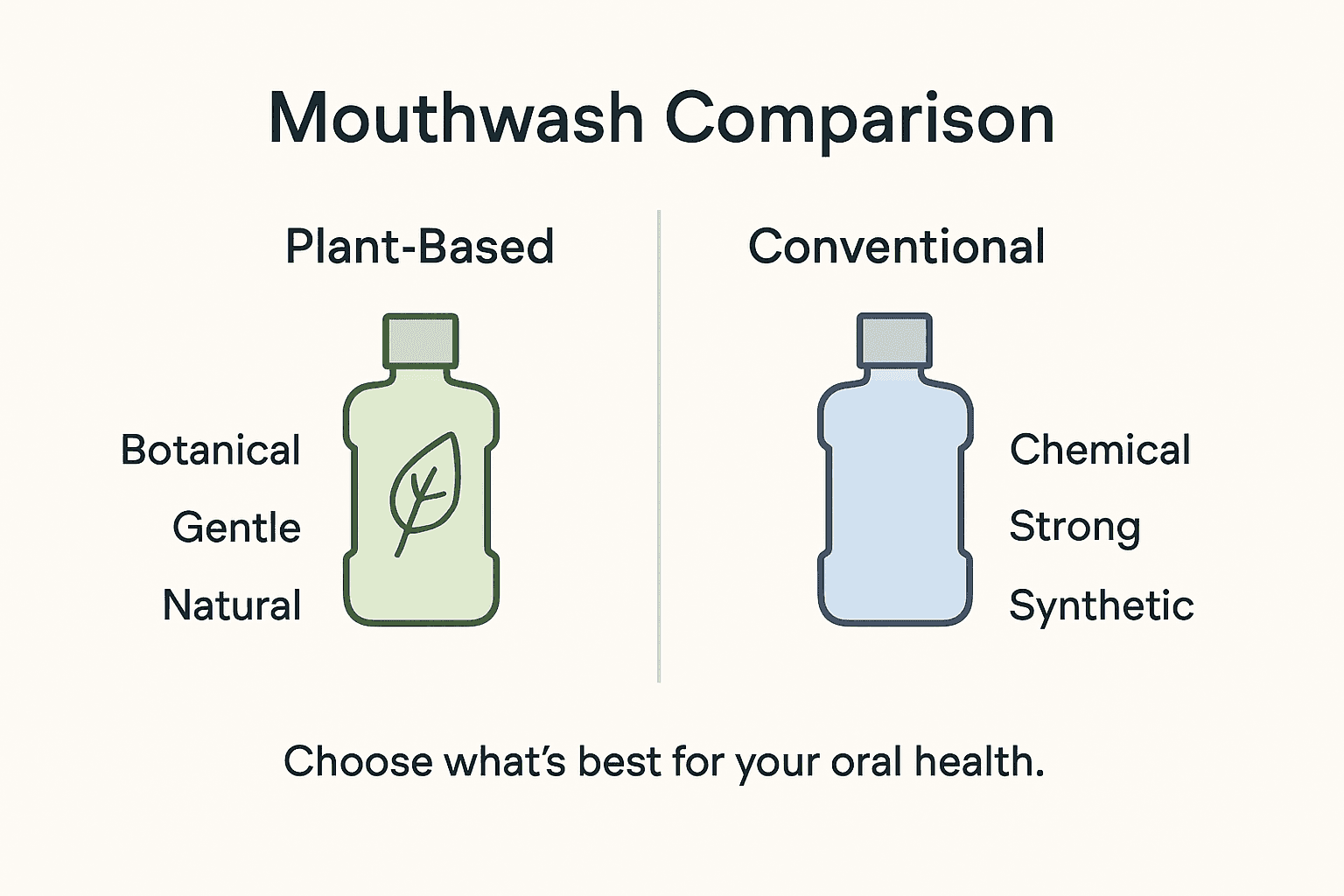
Conventional mouthwashes typically rely on alcohol and harsh chemical compounds that, while effective at killing bacteria, can disrupt the delicate balance of oral microbiome. In contrast, herbal formulations provide comparable antimicrobial benefits with significantly reduced adverse effects. The key differences emerge in several critical areas:
-
Ingredient Composition
- Conventional: Alcohol, synthetic chemicals
- Plant-based: Natural botanical extracts
-
Oral Microbiome Impact
- Conventional: Potentially disruptive
- Plant-based: Supportive and balanced
-
Sensitivity Potential
- Conventional: Higher risk of irritation
- Plant-based: Gentler on oral tissues
The scientific evidence increasingly supports plant-based alternatives as not just comparable, but often superior to traditional chemical mouthwashes. These natural formulations offer nuanced protection that goes beyond simple bacterial elimination, providing antioxidant benefits, reducing inflammation, and supporting overall oral ecosystem health without the potential negative side effects associated with alcohol-based products.
Ultimately, the choice between conventional and plant-based mouthwash represents more than a simple product selection—it reflects a broader approach to personal health that prioritizes natural, holistic wellness strategies. By understanding the profound differences in ingredient philosophy and biological interaction, consumers can make more informed decisions about their oral care routine.
This table summarizes how plant-based and conventional mouthwashes differ in safety and long-term use:
| Mouthwash Type | Safety Profile | Long-Term Impact | Typical Ingredients |
|---|---|---|---|
| Plant-Based | Fewer side effects | Supports oral microbiome | Botanical extracts |
| Conventional | Potential irritation | May disrupt microbiome | Alcohol, strong chemicals |
Pro tip: Consult with a dental professional to assess your specific oral health needs and determine which mouthwash approach might offer the most personalized benefits.
Potential Risks and Safety Considerations
Natural oral care solutions require careful evaluation to ensure comprehensive safety and efficacy. While plant-based mouthwashes offer significant advantages, users must understand potential risks and limitations associated with herbal formulations. Understanding these nuanced considerations helps consumers make informed decisions about incorporating botanical oral care products into their health routines.
Scientific assessments reveal that natural mouthwashes carry minimal risks compared to chemical alternatives, but individual variability remains an important factor. Potential safety considerations include:
-
Allergic Reactions
- Possible sensitivity to specific herbal extracts
- Individual botanical ingredient interactions
-
Formulation Quality
- Variability in extract concentration
- Inconsistent antimicrobial effectiveness
-
Usage Limitations
- Not a complete replacement for professional dental care
- Should complement standard oral hygiene practices
Critical to understanding plant-based mouthwash safety is recognizing that natural does not automatically mean universally safe. Different individuals may react differently to botanical ingredients, necessitating personalized approaches and professional consultation. Some users might experience mild sensitivity or unexpected reactions, particularly those with known allergies to specific herbs or plant compounds.
Responsible use of plant-based mouthwashes involves understanding their complementary role in oral health. These products should enhance, not replace, comprehensive dental care strategies that include regular brushing, flossing, and professional dental check-ups. Consumers must remain vigilant about their oral health and view natural mouthwashes as part of a holistic approach rather than a standalone solution.
Pro tip: Conduct a patch test with new herbal mouthwash products and consult your dentist to ensure compatibility with your specific oral health profile.
Discover a Natural Solution to Support Your Oral Health
If you are seeking to reduce plaque, soothe gum inflammation, and maintain a balanced oral microbiome without harsh chemicals then exploring plant-based mouthwash alternatives is essential. This article highlights concerns about synthetic ingredients disrupting oral flora and causing irritation along with the benefits of botanical extracts like neem and clove that provide gentle yet effective antimicrobial and anti-inflammatory protection. Those goals align perfectly with the innovative offerings at STOP Oral Care, where you can find fluoride-free dental products powered by hemp and Dead Sea minerals to naturally promote oral healing and safety.

Take control of your oral hygiene today by embracing scientifically supported natural solutions. Visit the Home Page to explore our carefully formulated mouthwashes and oral sprays that prioritize your long-term dental wellness. Act now and experience the difference of plant-based care through STOP Oral Care — your trusted source for safe and effective natural oral health products.
Frequently Asked Questions
What are the benefits of using plant-based mouthwash?
Plant-based mouthwash offers a range of benefits, including reducing plaque accumulation, minimizing gingivitis symptoms, supporting a healthy oral microbiome, and providing anti-inflammatory and antioxidant protection. These natural formulations utilize the antimicrobial properties of botanical extracts to effectively combat oral pathogens without the harsh side effects of synthetic alternatives.
How do plant-based mouthwashes compare to traditional chemical mouthwashes?
Plant-based mouthwashes are often gentler on oral tissues and maintain a balanced oral microbiome, while traditional chemical mouthwashes may cause irritation and disrupt this balance. Research has shown that plant-based formulations can provide comparable antimicrobial benefits to chemical options, making them an effective alternative for oral hygiene.
Are there any risks associated with using plant-based mouthwash?
While plant-based mouthwashes generally carry fewer risks than conventional options, potential concerns include allergic reactions to specific herbal extracts and variability in the concentration of active ingredients. It is advisable to consult a dentist to ensure compatibility with your unique oral health needs.
How can I choose the right plant-based mouthwash for my oral health?
When selecting a plant-based mouthwash, prioritize products with transparent ingredient lists and scientifically validated botanical extracts. Look for specific concentrations of key ingredients, such as neem, tulsi, or clove oil, to ensure that you are obtaining maximum therapeutic benefits for your oral health.
Recommended
- Plant-Infused Oral Care: The Rise of Hemp & Dead Sea Salt – Stop Oral Care
- Natural Mouthwash for Periodontal Disease: A Practical Guide to Safer – Stop Oral Care
- Best Natural Mouthwash for Gum Disease: 5 Effective Options Reviewed – Stop Oral Care
- 7 Examples of Innovative Dental Products for Better Oral Health – Stop Oral Care