

TL;DR:
- Hemp oil has antimicrobial and anti-inflammatory properties that may support gum health as an adjunct. It can reduce key periodontal bacteria and suppress inflammation but cannot replace professional treatments. Proper application and realistic expectations are essential for safe and effective use.
Hemp oil is defined as a plant-derived extract containing cannabidiol (CBD) and other bioactive compounds that demonstrate measurable antimicrobial, anti-inflammatory, and bone-protective effects on gum tissue. Laboratory studies confirm that hemp oil benefits for gums include reducing key periodontal pathogens, suppressing pro-inflammatory cytokines such as TNF-alpha and IL-6, and potentially slowing alveolar bone loss. These effects are documented in preclinical and biofilm research, though no clinical trial has yet confirmed hemp oil as a standalone cure for gum disease. Dental professionals and oral health researchers position hemp oil as a supportive adjunct within a broader periodontal care protocol, not a replacement for professional treatment.
What scientific evidence supports hemp oil’s antimicrobial effects on gums?
Hemp oil’s antimicrobial activity against periodontal pathogens is the most directly studied of its oral health properties. Laboratory studies confirm that continuous exposure to CBD at concentrations of 250–500 µg/mL significantly reduces key periodontal pathogens, including Porphyromonas gingivalis, the primary bacterial driver of periodontitis. This finding matters because P. gingivalis is classified in the “red complex” group, the most destructive cluster of subgingival bacteria associated with advanced gum disease.
Biofilm models that mimic the subgingival environment show measurable reductions in bacterial counts across this concentration range. The practical implication is that hemp oil, at sufficient concentrations, can disrupt the bacterial communities that initiate and sustain gum inflammation. Higher concentrations up to 1,000 µg/mL have been tested in some biofilm assays, with proportionally stronger effects on pathogen load.
Commercial CBD mouthwashes show lower antimicrobial potency than chlorhexidine in lab assays, though they may improve comfort and reduce tissue irritation. Chlorhexidine remains the clinical gold standard antiseptic for periodontal management. Hemp oil formulations are promising but currently occupy a secondary position in terms of raw antimicrobial power.
| CBD Concentration | Effect on Periodontal Pathogens | Notes |
|---|---|---|
| 250 µg/mL | Significant reduction in P. gingivalis counts | Effective in continuous exposure biofilm models |
| 500 µg/mL | Broader red complex bacterial suppression | Consistent antimicrobial activity observed |
| 1,000 µg/mL | Strongest biofilm disruption in lab assays | Upper range tested; real-world delivery is challenging |
| Chlorhexidine (reference) | Gold standard antimicrobial potency | Outperforms CBD in direct lab comparisons |
Pro Tip: Apply hemp oil or a CBD-based gel directly to the gum line rather than diluting it in water rinses. Concentrated topical contact maximizes the antimicrobial exposure time against subgingival bacteria.
A significant gap exists between lab efficacy and real-world oral conditions. Saliva dilutes active compounds rapidly, and the structural complexity of mature biofilms resists penetration. This gap does not invalidate hemp oil’s antimicrobial potential, but it does mean that formulation quality and application method directly determine whether any benefit reaches the target tissue.
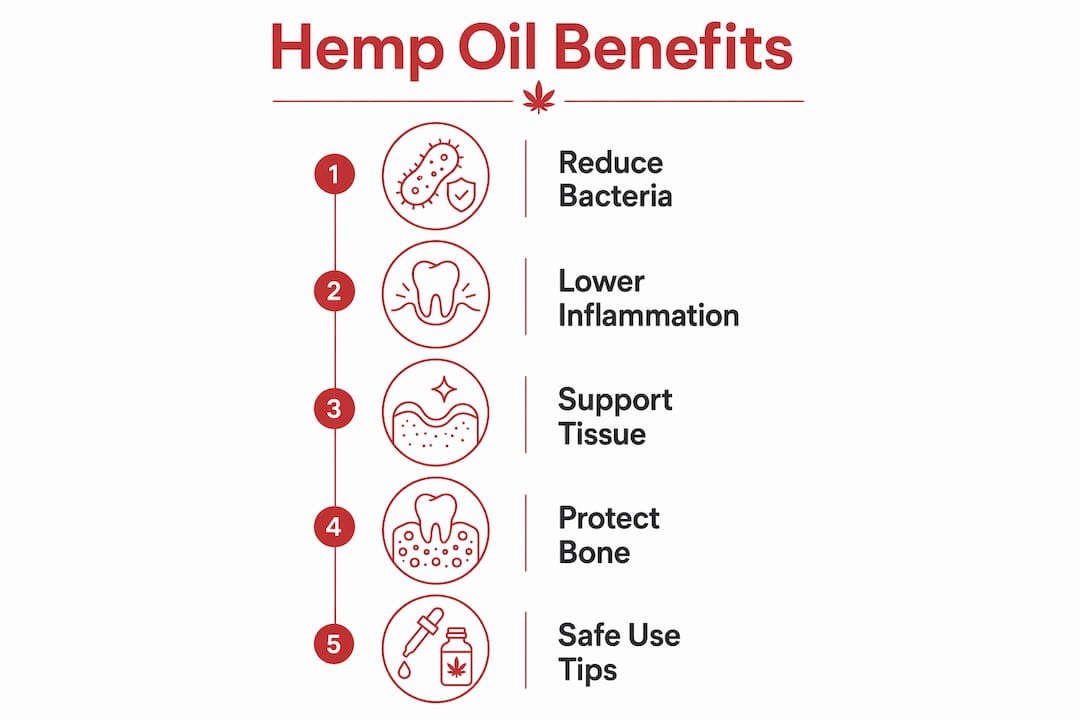
How does hemp oil reduce gum inflammation and support tissue health?
CBD’s anti-inflammatory mechanism is the most clinically relevant property for people managing gum swelling, redness, and discomfort. CBD suppresses pro-inflammatory cytokines including TNF-alpha and IL-6, two signaling proteins that drive the tissue destruction characteristic of gingivitis and periodontitis. Reducing these cytokines lowers the inflammatory load on gum tissue and creates conditions more favorable for healing.

The molecular pathway involved is the TLR4/NF-κB signaling axis. Bacterial lipopolysaccharides from pathogens like P. gingivalis activate TLR4 receptors, triggering NF-κB and a cascade of destructive inflammation. CBD modulates this pathway, reducing the downstream inflammatory response. This mechanism is documented in preclinical studies and provides a logical biological basis for hemp oil’s soothing effects on irritated gum tissue.
Key anti-inflammatory benefits of hemp oil for gum tissue include:
- Reduction of TNF-alpha and IL-6 cytokine levels in inflamed gum tissue
- Modulation of the TLR4/NF-κB pathway, limiting bacterial-triggered inflammation
- Decreased swelling and redness in preclinical gingival tissue models
- Potential support for tissue repair by reducing chronic inflammatory signaling
Current evidence is predominantly preclinical, meaning these effects are established in cell and animal studies rather than human clinical trials. Dental professionals recommend treating hemp oil as a soothing adjunct, not a therapeutic replacement. Readers experiencing active gum disease should not rely on hemp oil alone to manage inflammation.
Pro Tip: Massage a small amount of CBD gel or hemp oil directly onto swollen gum tissue for 1–2 minutes before rinsing. Direct contact with the tissue surface improves localized absorption compared to swishing a diluted rinse.
Topical application methods that maximize contact time with gum tissue include oil massage, gel application with a fingertip or soft brush, and CBD-infused mouthwashes held in the mouth for 60 seconds or longer. For guidance on managing inflamed gum tissue with CBD-based products, Stop-oralcare provides detailed application protocols based on current evidence.
What evidence exists that hemp oil may protect alveolar bone in gum disease?
Alveolar bone loss is the defining feature of advanced periodontitis and the primary cause of tooth loss in adults. Systematic reviews show that CBD influences bone metabolism by reducing osteoclast activity in animal models, with observed reductions in alveolar bone loss alongside modulation of TLR4/NF-κB inflammatory pathways. This positions CBD as a compound with multi-target potential in periodontal disease management.
The mechanism involves downregulating bone-resorptive pathways that osteoclasts use to break down mineralized tissue. In periodontitis, chronic inflammation accelerates osteoclast activity, leading to progressive bone destruction. CBD’s ability to reduce this activity in animal models suggests a theoretical protective role in human periodontal bone.
Key points on hemp oil and alveolar bone protection:
- Animal studies document reduced osteoclast activity and measurable decreases in alveolar bone loss with CBD treatment
- The TLR4/NF-κB pathway modulation links anti-inflammatory and bone-protective effects through a shared mechanism
- No human clinical trials have confirmed bone-protective effects of CBD in periodontitis patients
- Bone protection should be considered a theoretical benefit pending further research, not a confirmed clinical outcome
Hemp oil’s multi-faceted therapeutic potential addressing inflammation, microbial load, and bone metabolism simultaneously makes it a scientifically interesting adjunct candidate. Readers should understand that these properties are complementary to, not substitutes for, professional periodontal interventions such as scaling and root planing.
What are the limitations and risks of using hemp oil for gum health?
The most critical limitation of hemp oil for gum health is the absence of human clinical trial data. No clinical trials demonstrate that hemp or CBD oils cure periodontal disease. Professional dental organizations classify natural oils as adjuncts only, and mechanical scaling remains the necessary foundation of periodontitis management.
Long-term, non-targeted cannabinoid exposure may encourage the development of cannabinoid-resistant bacteria, potentially disrupting oral microbiome balance. This risk is not well-quantified in current literature, but it is a recognized concern among microbiome researchers. Indiscriminate or prolonged unsupervised use of hemp oil products warrants caution.
| Aspect | Benefit | Limitation |
|---|---|---|
| Antimicrobial activity | Reduces P. gingivalis and red complex bacteria in lab models | Less potent than chlorhexidine; real-world delivery is limited by saliva dilution |
| Anti-inflammatory effect | Suppresses TNF-alpha, IL-6, and TLR4/NF-κB signaling | Evidence is preclinical; no confirmed human anti-inflammatory outcomes |
| Bone protection | Reduces osteoclast activity in animal models | No human data; cannot replace professional bone-protective interventions |
| Safety profile | Generally well-tolerated topically | Risk of oral dysbiosis and cannabinoid-resistant bacteria with prolonged use |
| Clinical standing | Recognized as a supportive adjunct | Cannot remove hardened tartar; does not replace scaling and root planing |
No natural oil can replace professional scaling and root planing because oils cannot remove hardened bacterial tartar deposits under the gum line. Mechanical biofilm removal is indispensable in periodontitis management. Patients who substitute hemp oil for professional care risk disease progression.
Pro Tip: Schedule professional cleanings at least twice per year and use hemp oil products in the intervals between appointments. This approach captures the adjunct benefits without compromising the mechanical care your gums require.
Patient misconceptions about substituting professional periodontal care with hemp oil are a documented clinical concern. Adjunct use is recommended only to support healing and comfort, not to manage active disease independently.
How can you safely and effectively incorporate hemp oil into your oral care routine?
Topical application of hemp or CBD oil directly to gum tissue yields better localized absorption than systemic ingestion methods such as capsules or edibles. Consistency of application is the key variable for achieving anti-inflammatory and soothing effects on gum tissue. A practical daily protocol integrates hemp oil as a final step after mechanical cleaning.
A structured approach to incorporating hemp oil into your oral care routine:
- Brush and floss first. Mechanical removal of plaque and food debris prepares the gum surface for better product contact. Hemp oil applied to a biofilm-coated surface has reduced direct tissue access.
- Apply hemp oil or CBD gel topically. Use a fingertip or a soft-bristled brush to massage a small amount directly onto the gum line. Hold for 1–2 minutes before spitting.
- Use a CBD-based mouthwash as a secondary step. Rinse for 60 seconds to extend contact time with interproximal gum tissue that direct application may miss.
- Pair with evidence-supported natural adjuncts. CoQ10 and vitamin C have documented roles in gum tissue repair and collagen synthesis. Combining these with hemp oil provides broader nutritional support for periodontal health.
- Maintain professional dental appointments. Hemp oil supports healing and comfort between visits. It does not replace scaling, root planing, or professional assessment of disease progression.
For a detailed protocol on using hemp minerals for dental health, Stop-oralcare provides expert-developed guidance on application methods and product selection. Available formulations include mouthwashes, gels, and oil-based preparations, each with different absorption profiles and contact times. Gels and direct oils generally outperform rinses for targeted gum tissue delivery because they maintain higher local concentrations for longer periods.
Key Takeaways
Hemp oil provides documented antimicrobial and anti-inflammatory benefits for gum tissue in preclinical research, but it functions exclusively as an adjunct to professional periodontal care, not as a standalone treatment.
| Point | Details |
|---|---|
| Antimicrobial evidence | CBD at 250–500 µg/mL reduces P. gingivalis and red complex bacteria in biofilm models. |
| Anti-inflammatory mechanism | CBD suppresses TNF-alpha and IL-6 and modulates TLR4/NF-κB signaling to reduce gum inflammation. |
| Bone protection potential | Animal studies show reduced osteoclast activity; human clinical confirmation is pending. |
| Clinical limitations | No human trials confirm hemp oil cures periodontitis; professional scaling remains mandatory. |
| Safe application method | Topical gel or oil massage on gum tissue delivers better localized absorption than systemic ingestion. |
Hemp oil’s place in gum health: a clinician’s perspective
Patients frequently arrive at the clinic having read about hemp oil and expecting it to resolve their gum disease without professional intervention. That expectation is the most important thing to correct early.
The science behind hemp oil’s effects on gum tissue is genuinely interesting. The antimicrobial data on P. gingivalis reduction, the cytokine suppression findings, and the animal model bone protection studies all point toward a compound with real adjunct value. What I have observed in patients who use CBD-based topical products consistently is a reduction in gum sensitivity and a measurable improvement in tissue tone between professional cleanings. That is a meaningful outcome, even if it falls short of the curative claims circulating in marketing materials.
The risk I see most often is not adverse effects from hemp oil itself. The risk is delay. Patients who believe hemp oil is managing their periodontitis postpone professional care, and the disease progresses silently under the gum line where no topical product can reach. Hardened calculus deposits require mechanical removal. That is not a limitation of hemp oil specifically. It is a limitation of every topical agent, natural or pharmaceutical.
My recommendation is to treat hemp oil as you would a high-quality adjunct supplement: use it consistently, apply it correctly, and never let it substitute for the professional care that your gum health actually requires. The evidence-based use of CBD for gum disease is a legitimate and developing field. Approach it with informed expectations, and it can be a genuinely useful part of your oral health routine.
— Veronica
Natural hemp oral care products worth considering
Stop-oralcare develops fluoride-free oral care products formulated with hemp-derived CBD and Dead Sea minerals, grounded in the same preclinical evidence reviewed in this article.
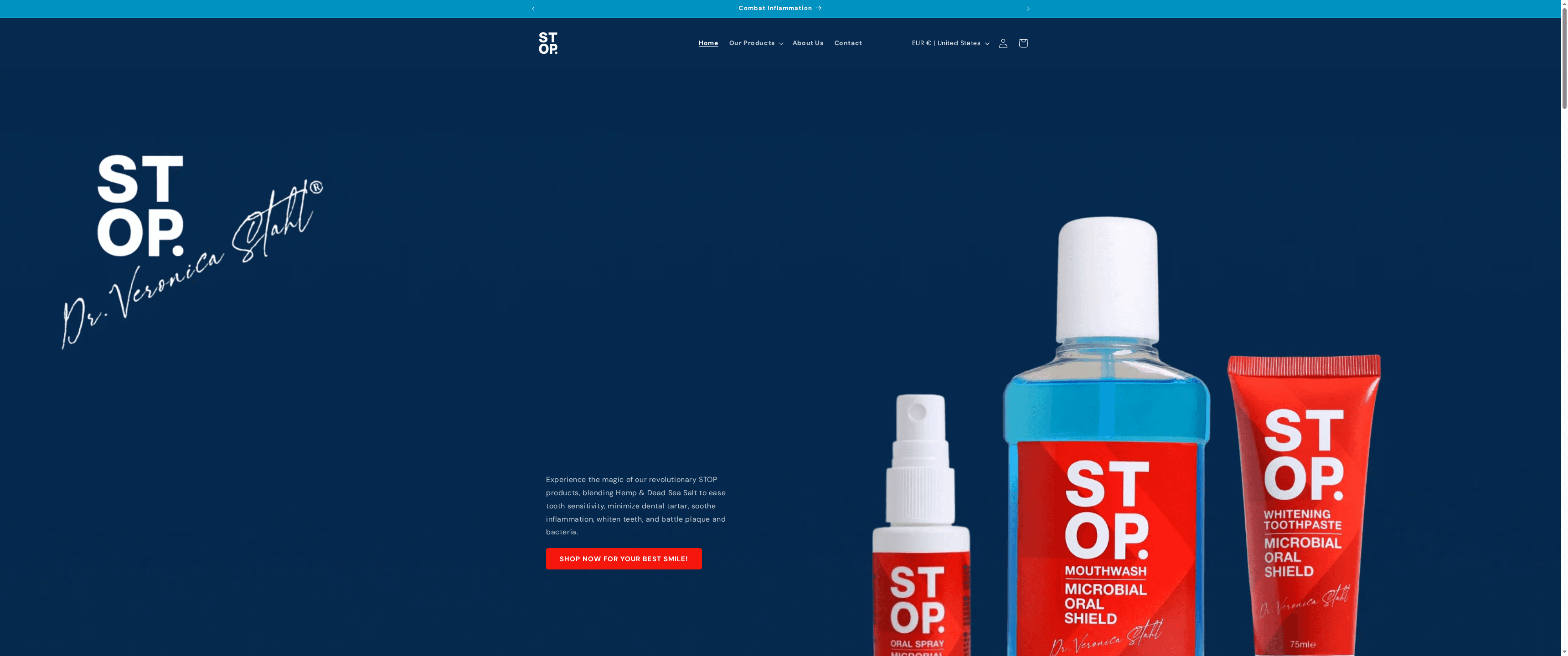
The product line includes CBD-based mouthwashes, oral gels, and toothpastes designed for topical gum application, each formulated to maximize localized contact with gum tissue. Stop-oralcare’s approach, led by Dr. Veronica Stahl, prioritizes scientific backing over marketing claims. These products are designed to complement professional dental care, not replace it. Readers who want to add a hemp-based product to their existing oral care routine can browse the full product range and review the formulation details and ingredient rationale before purchasing.
FAQ
What are the main hemp oil benefits for gums?
Hemp oil reduces key periodontal pathogens like Porphyromonas gingivalis, suppresses pro-inflammatory cytokines including TNF-alpha and IL-6, and may reduce osteoclast-driven bone loss based on animal model data. These effects position hemp oil as a supportive adjunct for gum health, not a standalone treatment.
Can hemp oil replace professional gum disease treatment?
No. No clinical trials confirm that hemp oil cures periodontitis, and no topical product can remove hardened tartar deposits that require professional scaling. Hemp oil supports healing and comfort between dental appointments.
How should hemp oil be applied for gum health?
Direct topical application by massaging oil or gel onto the gum line delivers better localized absorption than swallowing capsules or using heavily diluted rinses. Apply after brushing and flossing for maximum tissue contact.
Is long-term hemp oil use safe for the oral microbiome?
Research indicates that prolonged, non-targeted cannabinoid exposure may encourage cannabinoid-resistant bacteria and disrupt oral microbiome balance. Supervised, consistent use as an adjunct is recommended over unsupervised long-term application.
How does hemp oil compare to chlorhexidine for gum health?
Chlorhexidine remains the clinical gold standard antiseptic and outperforms CBD in direct lab antimicrobial comparisons. Hemp oil offers lower antimicrobial potency but may provide better tissue comfort and fewer side effects, making it a practical complement rather than a direct substitute.
Recommended
- Comprehensive Guide to Hemp Mouthwash: Benefits, DIY Recipes, and Choo – Stop Oral Care
- Advantages of Hemp Toothpaste for Sensitive Teeth – Stop Oral Care
- Hemp dental products: natural choices for healthier teeth – Stop Oral Care
- Everything You Need to Know About Hemp Oil Toothpaste for a Healthier – Stop Oral Care