

Finding natural dental care that respects sensitive needs can be a real challenge, especially for those in the United Kingdom and Germany who want to avoid unnecessary chemicals. More people are turning to holistic dental care because it looks at the mouth as part of the body’s overall wellness, not just isolated teeth. This approach favors biocompatible materials and preventive strategies, giving you safer, fluoride-free options without sacrificing scientific rigor or personal comfort.
Table of Contents
- Defining Holistic Dental Care Principles
- Key Differences From Traditional Dentistry
- Benefits For Sensitive And Health-Conscious Patients
- Natural Ingredients And Fluoride-Free Approaches
- Potential Risks And Common Misunderstandings
Key Takeaways
| Point | Details |
|---|---|
| Holistic Approach | Holistic dental care emphasizes the mouth’s interconnectedness with overall body wellness, integrating modern science with traditional practices. |
| Prevention Focus | This approach prioritizes preventive strategies and addresses root causes rather than merely treating symptoms. |
| Biocompatibility | Holistic dentistry utilizes biocompatible, non-toxic materials to minimize potential chemical exposure and allergic reactions. |
| Patient-Centered Care | A comprehensive health assessment is essential in holistic practices to understand the relationship between oral health and overall wellness. |
Defining Holistic Dental Care Principles
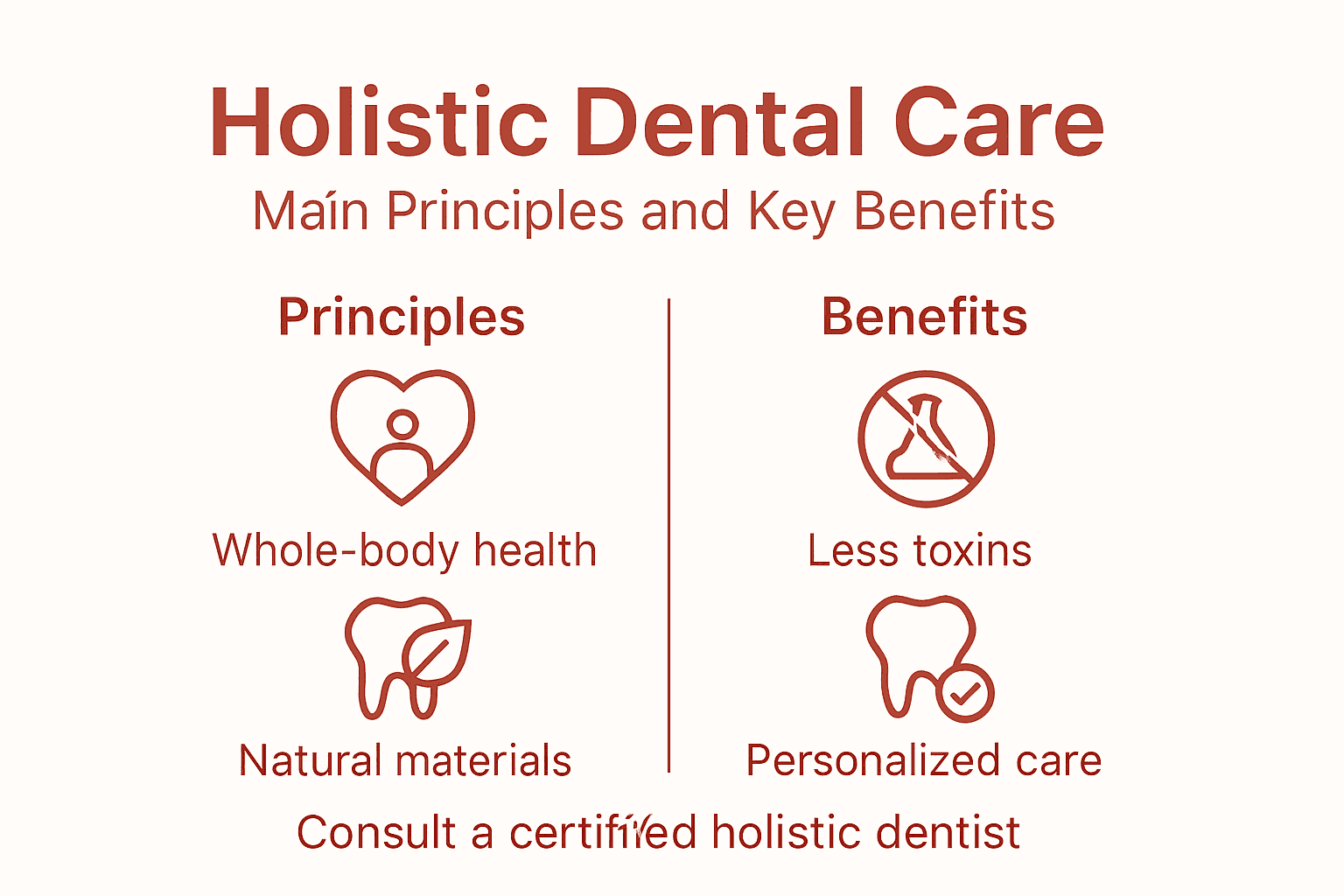
Holistic dental care represents a revolutionary approach to oral health that transcends traditional treatment models. Unlike conventional dentistry focused solely on teeth and gums, this comprehensive method considers oral health as a holistic ecosystem interconnected with total body wellness.
At its core, holistic dental care views the mouth as more than just a set of teeth and soft tissues. It recognizes the oral cavity as a critical gateway reflecting broader physiological and energetic health conditions. This approach integrates modern scientific understanding with traditional healing practices, emphasizing prevention, biocompatibility, and personalized care strategies. Practitioners consider how dental interventions impact not just oral structures, but mental states, immune function, and overall systemic balance.
Key principles of holistic dental care include:
- Prioritizing non-invasive, conservative treatments
- Using biocompatible materials that minimize potential toxic interactions
- Addressing root causes rather than just treating surface symptoms
- Considering emotional and energetic dimensions of oral health
- Promoting preventive strategies through nutrition, lifestyle, and mindful practices
Pro Tip: Schedule periodic holistic dental assessments that examine your oral health as part of your complete physiological wellness profile.
Key Differences From Traditional Dentistry
Holistic dentistry fundamentally challenges conventional dental treatment approaches by redefining the relationship between oral and systemic health. While traditional dentistry tends to treat teeth and gums as isolated systems, holistic practitioners view the mouth as an integrated component of overall bodily wellness, emphasizing interconnected healing strategies.

The most significant distinctions emerge in treatment philosophy and methodology. Traditional dentistry primarily focuses on reactive interventions treating specific symptoms, using standardized procedures and materials like mercury-based amalgam fillings. In contrast, holistic dental care prioritizes preventive strategies, biocompatible materials, and comprehensive health assessments that consider nutritional, emotional, and lifestyle factors affecting oral conditions.
Key comparative elements include:
-
Treatment Approach
- Traditional: Symptom-focused, localized treatment
- Holistic: Root cause analysis, whole-body wellness
-
Material Selection
- Traditional: Standard materials, potential toxic interactions
- Holistic: Biocompatible, non-toxic materials
-
Patient Consultation
- Traditional: Technical dental evaluation
- Holistic: Comprehensive health history, lifestyle assessment
Pro Tip: Request a comprehensive health assessment during your next dental consultation to understand the deeper connections between your oral health and overall wellness.
Benefits for Sensitive and Health-Conscious Patients
Health-conscious individuals increasingly seek dental care approaches that prioritize natural healing and minimize potential chemical exposures. Holistic dentistry offers a comprehensive solution by addressing whole-body health through conservative treatments, particularly beneficial for patients with heightened sensitivity and wellness concerns.
Patients with complex health histories or environmental sensitivities find holistic dental care especially advantageous. By avoiding toxic substances like mercury and fluoride, these practitioners offer alternatives that minimize potential inflammatory responses and support overall immune function. The approach goes beyond traditional symptom management, exploring underlying nutritional deficiencies, stress impacts, and lifestyle factors that contribute to oral health challenges.
Key benefits for sensitive patients include:
Here is a side-by-side overview of how holistic and traditional dental care impact different patient needs:
| Patient Need | Holistic Dentistry Approach | Traditional Dentistry Approach |
|---|---|---|
| Chronic Sensitivity | Uses non-toxic, tested materials | Standard dental materials used |
| Overall Wellness Focus | Evaluates nutrition and lifestyle | Focuses mainly on oral symptoms |
| Stress/Infection Management | Integrates stress reduction advice | Manages oral infection directly |
| History of Allergies | Personalized material selection | Limited materials testing |
-
Biocompatible Material Selection
- Reduced risk of allergic reactions
- Minimized chemical exposure
- Personalized material testing
-
Comprehensive Health Assessment
- Detailed medical history evaluation
- Holistic treatment planning
- Integrated wellness strategies
-
Natural Healing Techniques
- Herbal mouth rinses
- Nutritional guidance
- Stress reduction recommendations
Pro Tip: Request a comprehensive biocompatibility assessment during your initial holistic dental consultation to identify potential material sensitivities and develop a personalized oral health strategy.
Natural Ingredients and Fluoride-Free Approaches
Holistic dental care represents a paradigm shift towards safer, more natural oral health strategies. By integrating natural remedies and biocompatible materials, practitioners aim to minimize chemical exposures while supporting comprehensive wellness through innovative treatment approaches.
The core philosophy centers on replacing traditional chemical-based treatments with natural alternatives that promote healing without compromising oral health. Herbal mouth rinses featuring ingredients like aloe vera and tea tree oil, natural whitening agents, and mineral-based compounds such as hydroxyapatite offer effective substitutes for conventional fluoride treatments. These approaches not only protect teeth but also support the body’s natural healing mechanisms by reducing toxic chemical interactions.
Key natural ingredients and fluoride-free strategies include:
-
Herbal Antiseptics
- Tea tree oil
- Aloe vera extract
- Neem
-
Natural Remineralization Agents
- Hydroxyapatite
- Calcium phosphate
- Nano-hydroxyapatite
-
Alternative Cleaning Techniques
- Oil pulling
- Herbal mouth rinses
- Botanical extracts
Pro Tip: Consult with a holistic dental professional to develop a personalized oral care strategy using natural, biocompatible ingredients tailored to your specific health needs.
Potential Risks and Common Misunderstandings
Holistic dentistry, while innovative, is not without potential challenges and misconceptions. Understanding the nuanced landscape of holistic dental care requires careful examination of both its strengths and potential limitations.
Contrary to popular belief, holistic dentistry does not entirely reject conventional medical practices but seeks to integrate them with natural, minimally invasive approaches. Key misunderstandings include assumptions that holistic methods are less scientifically rigorous or completely eschew traditional treatments. In reality, qualified holistic practitioners employ evidence-based techniques while prioritizing patient safety and comprehensive wellness. However, patients must recognize that some complex dental conditions may still require standard interventions.
Potential risks and common misconceptions include:
The following table summarizes the main myths and realities about holistic dental care:
| Common Misconception | Reality |
|---|---|
| Holistic care rejects science | Integrates evidence-based and traditional methods |
| Only uses “natural” treatments | Sometimes uses conventional interventions as needed |
| Natural always means safer | Some natural materials can cause individual reactions |
| All practitioners equally trained | Training and approaches vary by dentist |
-
Treatment Limitations
- May not address acute dental infections
- Potential gaps in urgent care scenarios
- Less standardized treatment protocols
-
Material Misconceptions
- Not all natural materials are inherently safer
- Lack of universal scientific consensus
- Potential individual material sensitivities
-
Practitioner Variability
- Inconsistent training standards
- Varying levels of scientific approach
- Range of philosophical interpretations
Pro Tip: Always verify a holistic dental practitioner’s credentials, scientific background, and willingness to collaborate with traditional medical professionals.
Embrace Holistic Dental Care with Natural Solutions
If you are seeking a dental care approach that respects your whole-body wellness and avoids toxic chemicals then explore our unique line of fluoride-free products at STOP Oral Care. Our formulations harness the power of hemp and Dead Sea minerals to support natural healing and biocompatible oral health, perfectly aligning with holistic dental principles like personalized care and minimizing chemical exposure.

Take control of your oral health today by choosing scientifically backed, natural alternatives designed for sensitive and health-conscious patients. Visit our homepage to discover detailed product benefits and learn how you can integrate these innovative treatments into your daily routine. Start your journey toward a safer, more holistic smile with Stop Oral Care now.
Frequently Asked Questions
What is holistic dental care?
Holistic dental care is an approach to oral health that considers the mouth as part of a larger ecosystem involving total body wellness. It integrates modern science with traditional healing practices, emphasizing prevention, biocompatibility, and personalized care strategies.
How does holistic dental care differ from traditional dentistry?
Holistic dental care focuses on addressing the root causes of oral health issues and promotes overall wellness, while traditional dentistry typically treats isolated symptoms of dental problems using standardized procedures and materials. Holistic practices prioritize preventive strategies and biocompatible materials.
What are the benefits of choosing holistic dental care for sensitive patients?
Sensitive patients benefit from holistic dental care through the use of non-toxic materials, comprehensive health assessments, and natural healing techniques that minimize chemical exposure and address underlying health concerns rather than just symptoms.
What natural ingredients are commonly used in holistic dental care?
Holistic dental care utilizes natural ingredients such as herbal antiseptics (like tea tree oil and aloe vera), remineralization agents (such as hydroxyapatite), and alternative cleaning techniques (like oil pulling). These ingredients promote oral health without the chemicals found in traditional treatments.