


Finding a fluoride-free solution for sensitive teeth can be a challenge, especially when more British and American adults are turning to natural oral care. Traditional products often overlook the power of antioxidants found in foods like berries and green tea. For those in the UK seeking safer alternatives, learning how antioxidants protect delicate gum tissue and ease discomfort from sensitivity provides practical insights into achieving genuine oral wellness.
Table of Contents
- What Are Antioxidants in Oral Hygiene?
- Major Types and Sources of Oral Antioxidants
- How Antioxidants Work in the Mouth
- Antioxidants Versus Conventional Oral Care Ingredients
- Risks, Common Misunderstandings, and Best Practices
Key Takeaways
| Point | Details |
|---|---|
| Role of Antioxidants | Antioxidants neutralize harmful free radicals, protecting oral health and supporting cellular integrity. |
| Sources of Antioxidants | Key antioxidants include vitamins A, C, and E, selenium, and flavonoids, primarily found in fruits and vegetables. |
| Mechanism of Action | Antioxidants reduce inflammation and support immune function by neutralizing reactive oxygen species in the oral cavity. |
| Integration with Oral Care | Combining antioxidant-rich foods and supplements with traditional oral hygiene can enhance overall oral health protection. |
What Are Antioxidants in Oral Hygiene?
Antioxidants play a critical role in maintaining optimal oral health by neutralizing harmful free radicals and protecting cellular structures in the mouth. These powerful molecular defenders are natural substances that work to counteract oxidative stress, which can contribute to various oral diseases and inflammatory conditions. Complex cellular processes in the oral cavity constantly generate reactive oxygen species that can damage tissue and compromise immune response.
In oral hygiene, antioxidants function through multiple protective mechanisms. They include both endogenous compounds naturally produced by the body and exogenous nutrients obtained through diet and supplementation. Key antioxidants found in oral environments include vitamins A, C, and E, minerals like selenium, enzymes such as superoxide dismutase, and plant-based flavonoids. These substances work synergistically to reduce inflammation, support immune function, and maintain the delicate microbiological balance within the mouth.
The primary benefits of antioxidants in oral health extend beyond simple protective mechanisms. Cellular defense becomes critical in preventing progressive conditions like periodontitis and dental caries. Antioxidant interventions can modulate inflammatory responses by reducing proinflammatory cytokines and neutralizing destructive free radicals. This process helps maintain gum tissue integrity, supports healing, and potentially reduces the risk of chronic oral inflammatory diseases.
Pro tip: Incorporate antioxidant-rich foods like berries, green leafy vegetables, and green tea into your daily diet to naturally support oral microbiome health and reduce oxidative stress.
Major Types and Sources of Oral Antioxidants
Oral antioxidants represent a diverse and critical group of molecular defenders that protect the mouth’s delicate ecosystem from oxidative damage. Comprehensive research identifies multiple categories of these protective compounds spanning both endogenous and exogenous sources, each playing a unique role in maintaining oral health.
The primary types of oral antioxidants can be classified into several key groups. Vitamins form a crucial category, with vitamins A, C, and E emerging as primary defenders against cellular oxidative stress. Minerals like selenium and trace elements also contribute significantly to antioxidant protection. Enzymatic antioxidants such as catalase and superoxide dismutase represent the body’s intrinsic defense mechanisms, working continuously to neutralize harmful reactive oxygen species in the oral cavity.
Natural dietary sources provide an abundant reservoir of oral antioxidants. Fruits and vegetables stand out as exceptional sources, with citrus fruits, berries, green leafy vegetables, and tomatoes offering concentrated antioxidant profiles. Polyphenols and flavonoids found in herbs, nuts, and plant-based foods further enhance the mouth’s natural protective mechanisms. These compounds work synergistically to reduce inflammation, support immune function, and maintain the delicate microbiological balance within oral tissues.
Pro tip: Create a daily diet plan incorporating antioxidant-rich foods like spinach, kale, blueberries, and green tea to naturally boost your oral health protection.
Here’s a summary of major oral antioxidant types and their primary food sources:
| Antioxidant Type | Main Food Sources | Oral Health Role |
|---|---|---|
| Vitamin C | Citrus, berries | Gum healing, collagen synthesis |
| Vitamin E | Nuts, seeds | Cell membrane protection |
| Flavonoids | Green tea, apples | Reduce inflammation |
| Selenium | Eggs, seafood | Immune system support |
| Superoxide Dismutase | Leafy greens | Neutralize free radicals |
How Antioxidants Work in the Mouth
Antioxidants function as microscopic defenders within the oral cavity, engaging in a complex biochemical battle against harmful molecular agents that threaten cellular health. These protective compounds neutralize reactive oxygen species (ROS), which are unstable molecules that can cause significant damage to oral tissues through oxidative stress. Natural strategies for plaque removal often leverage these antioxidant mechanisms to support overall oral wellness.

The molecular mechanism of antioxidants involves direct interaction with free radicals, effectively stopping their destructive chain reactions. When these compounds encounter unstable molecules, they donate electrons without becoming unstable themselves, thus interrupting potential cellular damage. This process helps prevent inflammation, supports gum tissue integrity, and maintains the delicate balance of the oral microbiome. Enzymatic antioxidants like superoxide dismutase and catalase work continuously to transform dangerous reactive molecules into harmless compounds, providing continuous protection against oxidative deterioration.
Within the oral environment, antioxidants perform multiple critical functions beyond free radical neutralization. They support immune response, help repair damaged tissues, reduce inflammatory processes, and create an environment less hospitable to harmful bacteria. By strengthening cellular membranes and supporting natural healing mechanisms, these compounds play a crucial role in maintaining oral health and preventing chronic inflammatory conditions that can lead to more serious dental problems.
Pro tip: Consume a diverse range of colorful fruits and vegetables to maximize your oral antioxidant intake and support natural cellular protection mechanisms.
Antioxidants versus Conventional Oral Care Ingredients
Conventional oral care ingredients and antioxidants represent fundamentally different approaches to maintaining oral health, each targeting specific biological mechanisms. Innovative dental research reveals critical distinctions in how these compounds interact with oral tissues and protect against disease. Traditional ingredients like fluoride and antimicrobial agents primarily focus on surface-level protection, targeting bacterial growth and tooth decay through direct chemical interventions.
Antioxidants, in contrast, operate at a deeper cellular level, addressing underlying physiological processes that conventional ingredients often overlook. While standard oral care products aim to prevent decay through mechanical or chemical means, antioxidants work to neutralize harmful reactive oxygen species and modulate inflammatory responses. This approach provides a more holistic protection mechanism, supporting cellular integrity and reducing long-term tissue damage. Enzymatic and nutritional antioxidants can repair and protect oral tissues in ways that traditional ingredients cannot, offering a more comprehensive approach to oral health maintenance.
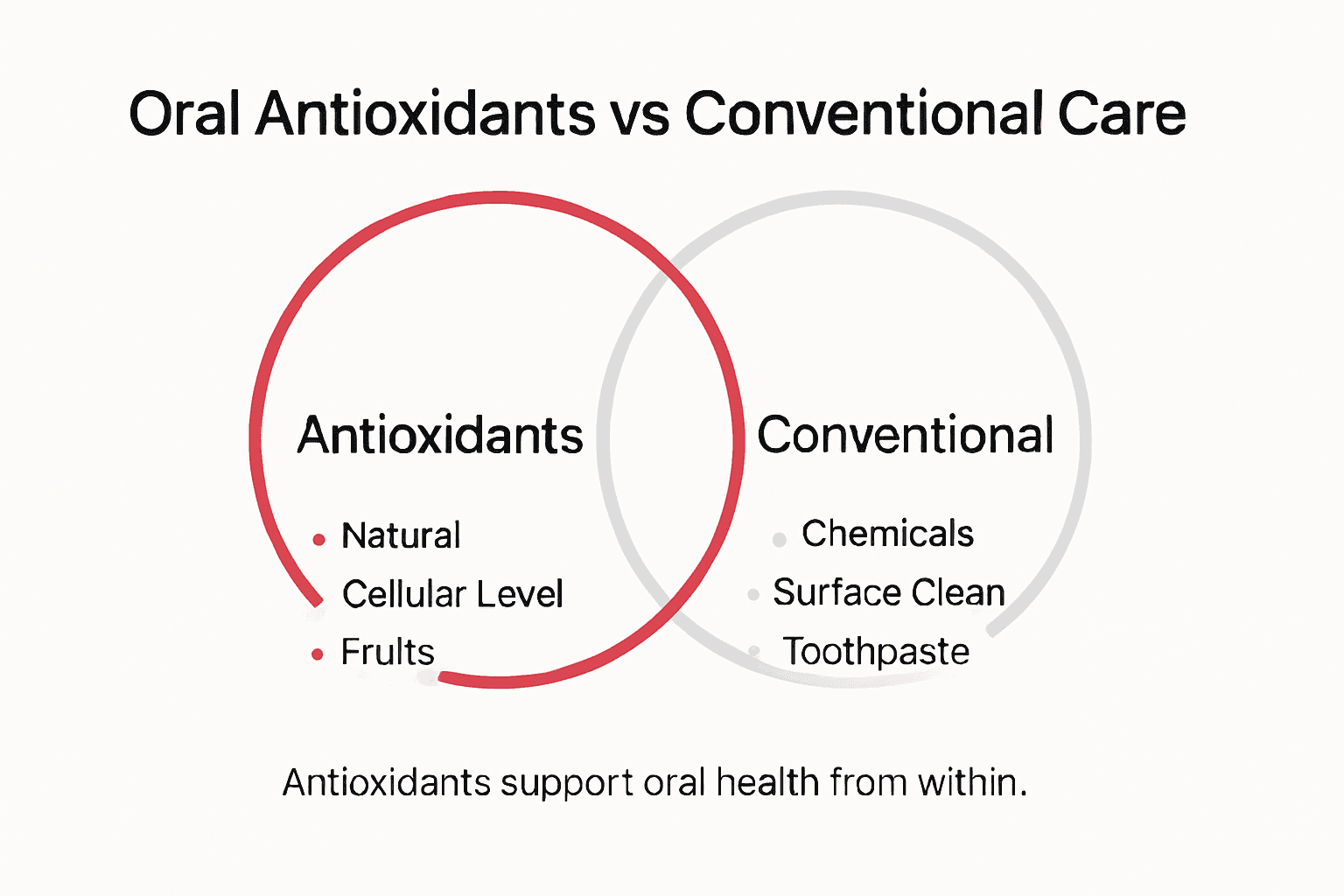
The complementary nature of these approaches suggests that integrating antioxidants into oral care routines could provide more comprehensive protection. Molecular-level research demonstrates that antioxidants can address chronic inflammation and oxidative stress that traditional oral care ingredients might miss. This broader protective strategy goes beyond simple cleaning and decay prevention, supporting the body’s natural healing mechanisms and potentially reducing the risk of long-term oral health complications.
Pro tip: Consider incorporating antioxidant-rich mouthwashes or supplements alongside traditional oral care products to enhance your comprehensive oral health strategy.
Compare how antioxidants and conventional oral care ingredients function in maintaining oral health:
| Approach | Main Mechanism | Key Benefit |
|---|---|---|
| Antioxidants | Neutralize free radicals | Reduce inflammation |
| Conventional Ingredients | Kill bacteria, prevent decay | Surface-level protection |
Risks, Common Misunderstandings, and Best Practices
Antioxidant supplementation requires a nuanced understanding to avoid potential pitfalls and maximize oral health benefits. Comprehensive research highlights critical considerations surrounding the complex role of antioxidants in oral wellness. One prevalent misconception is that consuming larger quantities of antioxidants automatically translates to enhanced protection, when in reality, excessive intake can potentially disrupt physiological balance and create counterproductive pro-oxidant effects.
The risks associated with antioxidant use stem from a lack of understanding about individual biochemical requirements. Indiscriminate supplementation can lead to unintended consequences, such as interactions with existing medications or masking underlying health conditions. Different oral environments require personalized approaches, meaning that a one-size-fits-all strategy for antioxidant consumption is fundamentally flawed. Professional guidance becomes crucial in determining appropriate antioxidant intake, considering factors like individual health status, existing oral conditions, and potential genetic variations that influence nutrient metabolism.
Best practices for integrating antioxidants into oral care involve a holistic and measured approach. Dietary sources remain the most reliable and balanced method of obtaining antioxidants, with whole foods providing a complex matrix of nutrients that work synergistically. Supplements should be considered as complementary, not replacement, strategies. Consulting with healthcare professionals, monitoring individual responses, and maintaining a balanced approach that combines traditional oral hygiene practices with targeted antioxidant support represents the most effective path to sustainable oral health.
Pro tip: Consult with a dental professional to develop a personalized antioxidant strategy tailored to your specific oral health needs and existing medical conditions.
Elevate Your Oral Health with Natural Antioxidant Solutions
The article highlights the crucial challenge of combating oxidative stress and inflammation in the mouth through effective antioxidant support. If you are seeking ways to protect your gums, reduce free radical damage, and maintain a balanced oral microbiome naturally, then choosing the right oral care products is essential. Key terms like reactive oxygen species, inflammation reduction, and cellular protection emphasize the need for a holistic approach beyond conventional methods.
Experience the transformative benefits of scientifically backed, fluoride-free oral care that taps into the power of natural ingredients like hemp and Dead Sea minerals. Our unique formulations at STOP Oral Care – Stop Oral Care are designed to support your body’s own antioxidant defenses and promote healthy, resilient oral tissues.

Take control of your oral wellness today by exploring our innovative product range on Home Page – Stop Oral Care. Don’t settle for surface-level care when you can address the root causes of oral inflammation and oxidative damage. Visit https://stop-oralcare.com now and start your journey toward a naturally vibrant smile with every brush and rinse.
Frequently Asked Questions
What are antioxidants and how do they benefit oral hygiene?
Antioxidants are natural substances that neutralize harmful free radicals, protecting oral tissues from oxidative stress. They help reduce inflammation, support immune function, and maintain a healthy balance of oral microbiota, which can prevent conditions like gum disease and dental caries.
Which vitamins are considered key antioxidants for oral health?
Key antioxidants for oral health include vitamins A, C, and E. These vitamins play critical roles in cellular defense, gum healing, and protecting cell membranes from oxidative damage, contributing to overall oral wellness.
Can dietary sources of antioxidants improve my oral health?
Yes, dietary sources of antioxidants, such as fruits, vegetables, and whole grains, provide essential nutrients that work synergistically to enhance oral health. Foods like citrus fruits, berries, green leafy vegetables, and nuts are particularly rich in antioxidants and can help maintain gum integrity and reduce inflammation.
How do antioxidants compare to conventional oral care ingredients?
Antioxidants offer a deeper level of protection by neutralizing free radicals and modulating inflammatory responses, while conventional oral care ingredients primarily focus on surface-level protection against bacteria and decay. Integrating antioxidants into your oral care routine can provide more comprehensive support for your oral health.
Recommended
- Holistic Oral Care: Natural Solutions for Optimal Health – Stop Oral Care
- How to Whiten Teeth Naturally at Home: Simple Steps for a Brighter Smi – Stop Oral Care
- 7 Essential Oral Hygiene Tips for Families Seeking Natural Care – Stop Oral Care
- 7 Examples of Innovative Dental Products for Better Oral Health – Stop Oral Care