

TL;DR:
- Hemp oil in oral care provides anti-inflammatory and antimicrobial support to improve gum health. It complements daily brushing and flossing but does not replace professional treatment or antiseptics like chlorhexidine. Regular use can help maintain oral microbiome balance and reduce inflammation-related tissue damage.
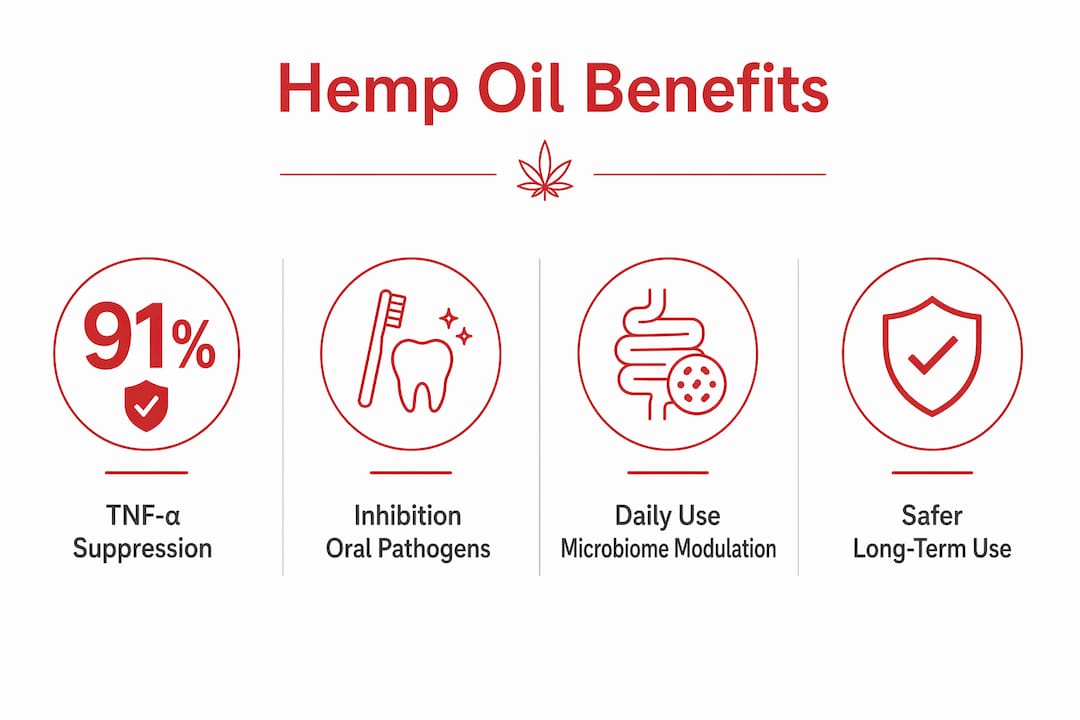
Hemp oil in oral care is defined as the application of hemp-derived extracts, primarily cannabidiol (CBD) and related phytocannabinoids, to support gum health, reduce oral inflammation, and modulate the oral microbiome. The active compounds in hemp extract interact with tissue receptors in the gums and oral mucosa, producing measurable anti-inflammatory and antimicrobial effects. Research shows CBD mouthwash formulations can inhibit TNF-α by up to 91%, a key inflammatory marker in periodontal disease. Hemp oil functions as a complementary agent alongside brushing and flossing, not as a substitute for established mechanical plaque removal.
What scientific evidence supports hemp oil’s benefits for oral health?
The pharmacological case for hemp extract in oral care rests on two documented mechanisms: anti-inflammatory cytokine suppression and direct antimicrobial activity against periodontal pathogens.
Anti-inflammatory effects
CBD’s most clinically relevant oral health property is its ability to suppress tumor necrosis factor alpha (TNF-α), a cytokine that drives gum tissue destruction in gingivitis and periodontitis. An in vitro study measuring TNF-α via ELISA demonstrated that CBD mouthwash formulations achieved up to 91% inhibition of this inflammatory marker. That figure is significant because TNF-α elevation is a primary driver of the bone and tissue loss seen in advanced periodontal disease. Reducing it at the tissue level could slow disease progression, though human clinical trials are still needed to confirm this effect in vivo.
Antimicrobial activity against oral pathogens
CBD and other non-psychoactive phytocannabinoids demonstrate inhibition of periodontal bacteria including Porphyromonas gingivalis and Eikenella corrodens at measurable minimum inhibitory concentrations. Both organisms are strongly associated with chronic periodontitis and subgingival biofilm formation. The antimicrobial potency of CBD is lower than that of chlorhexidine in direct in vitro comparisons, but the mechanism is distinct and may complement rather than replicate standard antiseptic action. Lab evidence supports hemp oil’s potential to reduce bacterial overgrowth linked to gingivitis, though large-scale clinical trials remain pending.
Pro Tip: Lab results measure isolated compounds under controlled conditions. When reading CBD oral care studies, check whether the test used whole hemp extract or isolated CBD, since the full plant extract may produce different effects through cannabinoid synergy.
| Mechanism | Evidence Type | Key Finding |
|---|---|---|
| TNF-α suppression | In vitro (ELISA) | Up to 91% inhibition with CBD mouthwash formulations |
| Antimicrobial activity | In vitro (MIC assay) | Inhibits P. gingivalis and E. corrodens at measurable concentrations |
| Biofilm modulation | Lab-based studies | Reduces bacterial overgrowth associated with gingivitis |
| Clinical validation | Human trials | Limited; large-scale studies are pending as of 2026 |
How does hemp oil compare to traditional oral care ingredients?
The most direct comparison is between hemp-derived CBD and chlorhexidine, the gold standard pharmaceutical antiseptic in dentistry. Chlorhexidine delivers broad-spectrum antimicrobial coverage and is well-supported by decades of clinical data. Hemp oil’s antimicrobial potency is lower in head-to-head in vitro assays, a fact that must be stated clearly rather than minimized.
The practical trade-off, however, favors hemp oil for long-term daily use. Long-term chlorhexidine use causes tooth staining, taste disturbances, and mucosal irritation in a significant portion of users. Hemp-based formulations do not carry these side effects, making them more suitable for daily maintenance rather than acute infection management. The safety profile of CBD mouthwash is better tolerated over extended periods, which matters when the goal is consistent oral hygiene support rather than short-term therapeutic intervention.
Hemp oil is available in several delivery formats, each suited to different needs:
- Mouth rinses and mouthwash: Provide broad contact with gum tissue and interdental spaces; best used after brushing
- Oral sprays: Offer targeted, convenient delivery between meals without requiring rinsing
- Gels: Allow localized application to specific gum areas affected by sensitivity or inflammation
- Oil pulling formulations: Hemp seed oil used in the Ayurvedic oil pulling practice supports microbial and inflammatory balance in the oral cavity
The natural oral care products category has expanded significantly as consumers seek alternatives to synthetic antiseptics. Hemp oil occupies a specific niche: it is not a replacement for chlorhexidine in acute clinical scenarios, but it is a credible daily-use adjunct for gum comfort and microbiome support.
How to incorporate hemp oil safely into your oral care routine
Hemp-based oral care products integrate most effectively when positioned as additions to an existing routine, not replacements for it. Dental experts confirm that hemp products support but do not substitute the mechanical plaque removal achieved by brushing and flossing. The following sequence reflects current best practice for integrating hemp oil into daily oral hygiene.
- Brush and floss first. Remove plaque mechanically before applying any hemp-based product. Hemp oil cannot penetrate established biofilm the way physical disruption can.
- Use a hemp oil mouthwash after brushing. Swish for 30–60 seconds to allow contact with gum tissue and interdental areas. This timing maximizes exposure to freshly cleaned surfaces.
- Apply a hemp gel to sensitive areas if needed. Localized gum sensitivity or mild inflammation responds well to direct gel application after rinsing.
- Use an oral spray between meals. Hemp-based oral sprays deliver a few quick applications to maintain microbiome balance and soothe sensitivity throughout the day without requiring a full rinse routine.
- Repeat the rinse step before bed. Evening use is particularly valuable because saliva flow decreases overnight, leaving gum tissue more vulnerable to bacterial activity.
Pro Tip: If you practice oil pulling with hemp seed oil, do it before brushing on an empty stomach. Swish for 10–15 minutes, then spit and brush normally. This sequence removes loosened bacteria before they can be redeposited.
Frequency matters as much as method. Daily use of hemp-based rinses and sprays produces more consistent microbiome modulation than occasional application. A hemp oral care routine built around consistent timing, particularly morning and evening, aligns with the natural rhythm of bacterial recolonization in the oral cavity.
The most common mistake is treating hemp oil products as standalone solutions. They work because they reduce the inflammatory and microbial load that mechanical cleaning alone cannot fully address. Used together, brushing, flossing, and hemp-based adjuncts cover the full spectrum of oral hygiene needs.
What are the potential risks and considerations of hemp oil in oral care?
Hemp oil and CBD have a well-documented safety profile in topical and oral applications. Adverse reactions are uncommon, but several considerations apply before adding hemp-based products to your routine.
- Allergic sensitivity: Some individuals are sensitive to hemp plant compounds. Perform a patch test or start with a low-concentration product if you have known plant allergies.
- Product quality and sourcing: The hemp extract market is not uniformly regulated. Select products that provide third-party laboratory testing for cannabinoid content, heavy metals, and microbial contamination.
- Drug interactions: CBD can interact with certain medications metabolized by the CYP450 enzyme system. Consult a physician if you take prescription medications before using CBD-containing oral products regularly.
- Not a substitute for professional care: Hemp oil does not treat active dental infections, cavities, or advanced periodontal disease. Signs of oral disease, including bleeding gums, persistent pain, or visible lesions, require professional dental evaluation.
- Regulatory status: In the United States, CBD-containing products occupy a complex regulatory space. The FDA has not approved CBD as a dental therapeutic, so claims on product labels should be evaluated critically.
Discussing hemp oil use with your dentist is advisable, particularly if you have an existing periodontal condition. A dental professional can assess whether hemp-based adjuncts are appropriate for your specific oral health status.
Key Takeaways
Hemp oil in oral care delivers measurable anti-inflammatory and antimicrobial benefits that complement daily brushing and flossing, but it does not replace professional dental care or pharmaceutical antiseptics in acute clinical situations.
| Point | Details |
|---|---|
| Anti-inflammatory evidence | CBD mouthwash inhibits TNF-α by up to 91% in vitro, reducing a key driver of gum tissue damage. |
| Antimicrobial scope | Hemp-derived cannabinoids inhibit P. gingivalis and E. corrodens, though with lower potency than chlorhexidine. |
| Safety advantage | Hemp oil avoids the staining, taste disturbance, and mucosal irritation associated with long-term chlorhexidine use. |
| Correct role | Hemp products support mechanical oral hygiene; they do not substitute brushing, flossing, or professional treatment. |
| Product quality | Choose hemp oral care products with third-party lab verification for cannabinoid content and contaminant testing. |
A dentist’s perspective on hemp oil and oral wellness
After years of working at the intersection of conventional dentistry and natural medicine, I have observed a consistent pattern: patients who add hemp-based products to their routine often report reduced gum sensitivity and less bleeding on probing, but only when they maintain their brushing and flossing discipline. The hemp oil is not doing the heavy lifting. It is reducing the inflammatory background noise that makes gum tissue more reactive.
What concerns me is the tendency to overstate what the current evidence actually shows. The in vitro data on TNF-α inhibition and antimicrobial activity is genuinely promising. But in vitro is not the same as in vivo. We do not yet have large-scale randomized controlled trials confirming these effects in human subjects over clinically meaningful time periods. Patients who read a headline about 91% TNF-α inhibition and conclude that hemp mouthwash replaces their prescription periodontal rinse are drawing a conclusion the science does not yet support.
My practical recommendation is this: if you are interested in CBD mouthwash for gum health, use it as a daily adjunct, not a therapeutic replacement. Choose a product with verified CBD content, use it consistently, and keep your regular dental appointments. The combination of evidence-based natural adjuncts and professional care is where the real benefit lies.
— Veronica
Natural hemp-based oral care from Stop-oralcare
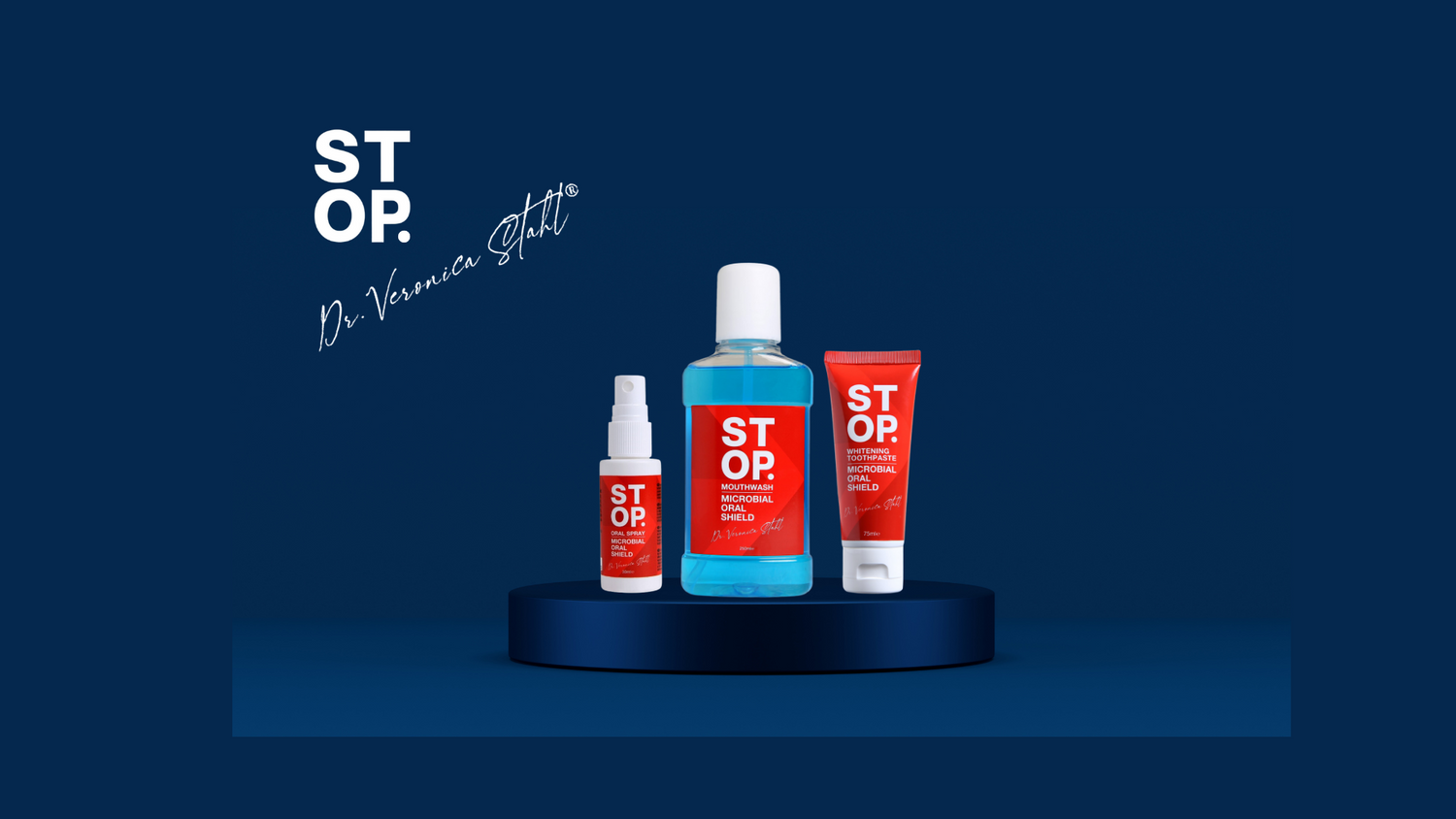
Stop-oralcare offers a line of fluoride-free oral care products formulated with hemp extracts and Dead Sea minerals, developed under the guidance of Dr. Veronica Stahl. The formulations are designed to support gum comfort, microbial balance, and daily oral hygiene without synthetic antiseptics or artificial additives.
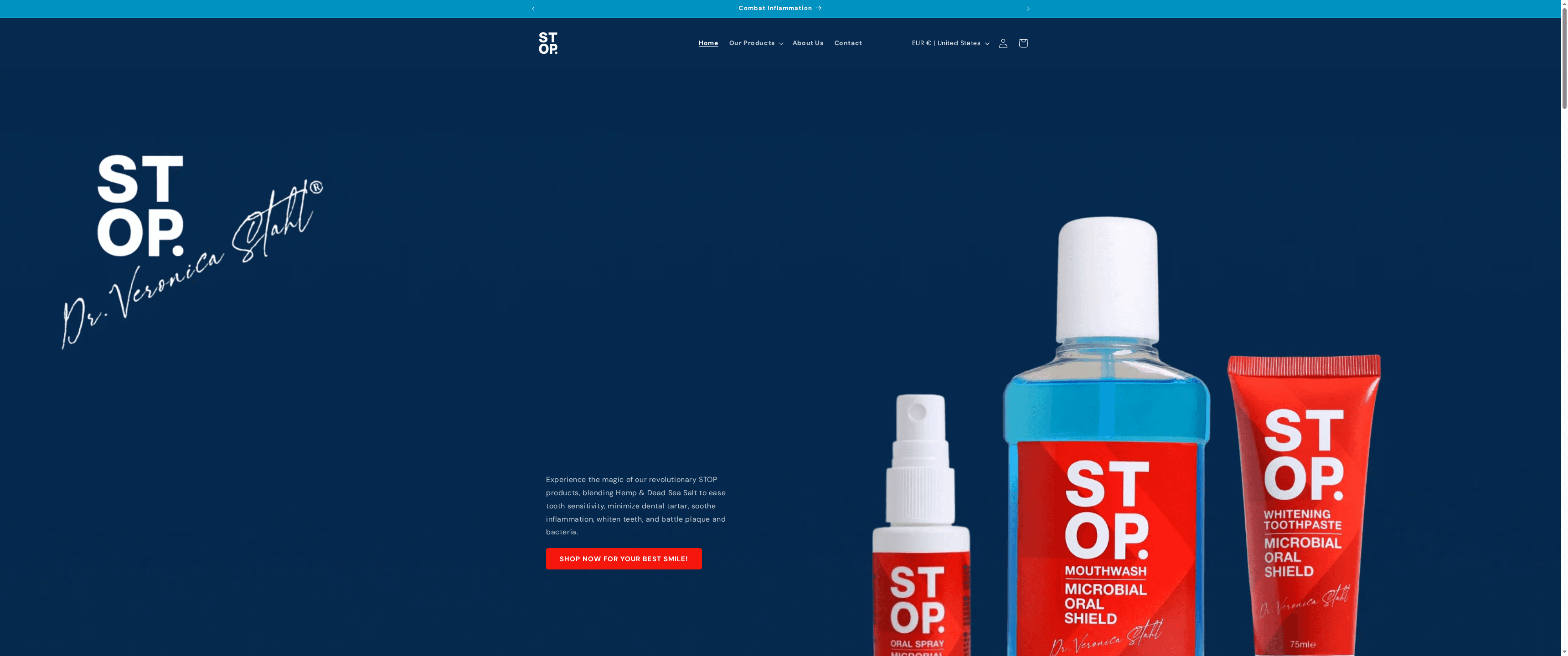
The product range includes hemp-infused mouthwash, oral sprays, and toothpaste, each developed with reference to the scientific evidence on cannabinoid activity in the oral cavity. Readers seeking detailed ingredient information, usage guidance, and product specifications can visit Stop-oralcare’s natural oral care catalog directly. All formulations are backed by third-party research and positioned as adjuncts to standard dental hygiene practice.
FAQ
What is hemp oil’s role in oral hygiene?
Hemp oil provides anti-inflammatory and antimicrobial support in the oral cavity by suppressing inflammatory cytokines like TNF-α and inhibiting periodontal bacteria. It functions as a daily adjunct to brushing and flossing, not a standalone treatment.
Does hemp oil mouthwash replace chlorhexidine?
Hemp oil mouthwash does not replace chlorhexidine in acute clinical applications. It offers a safer long-term alternative for daily maintenance, avoiding the staining and mucosal irritation associated with extended chlorhexidine use.
Is hemp oil in toothpaste and oral sprays safe for daily use?
Hemp-derived cannabinoids have a well-documented safety profile in oral applications. Adverse reactions are uncommon, though individuals with plant allergies or those taking CYP450-metabolized medications should consult a physician before regular use.
How long does it take to see results from hemp oil oral care products?
Clinical timelines are not yet established by large-scale human trials. Consistent daily use over several weeks is the standard recommendation based on current lab evidence and expert guidance from dental practitioners.
Can hemp oil help with bad breath?
Hemp oil’s antimicrobial activity against oral bacteria that produce volatile sulfur compounds may support fresher breath as a secondary benefit. This effect is not yet confirmed by dedicated clinical studies, but microbiome modulation is a plausible mechanism.
Recommended
- Everything You Need to Know About Hemp Oil Toothpaste for a Healthier – Stop Oral Care
- Comprehensive Guide to Hemp Mouthwash: Benefits, DIY Recipes, and Choo – Stop Oral Care
- Why Use Essential Oils in Oral Hygiene: What Science Says – Stop Oral Care
- Hemp dental products: natural choices for healthier teeth – Stop Oral Care