

TL;DR:
- Essential oils like clove, peppermint, and tea tree show antimicrobial properties that support oral health when used with proper guidance. Clinical evidence confirms their effectiveness as adjuncts in reducing plaque, gingivitis, and halitosis, with safety dependent on correct formulation and professional advice. Incorporating scientifically validated essential oil rinses alongside mechanical cleaning can enhance oral hygiene while preserving microbial diversity.
Essential oils have gained considerable traction as natural alternatives in oral care routines, yet confusion persists about whether they genuinely support dental health or simply mask symptoms. Understanding why use essential oils in oral hygiene requires looking beyond marketing and examining what clinical research actually demonstrates. Several plant-derived compounds, including those from clove, peppermint, and tea tree, exhibit measurable antimicrobial and anti-inflammatory properties that address oral pathogens responsible for plaque, gingival inflammation, and halitosis. This article examines the therapeutic potential of essential oils in dental contexts, reviewing the evidence, safety considerations, and practical guidance for informed use.
Table of Contents
- Key takeaways
- Common essential oils used in oral hygiene
- What clinical trials demonstrate
- Safety considerations for essential oil use
- How to incorporate essential oils into your routine
- Essential oils versus conventional agents: a comparative view
- My perspective on essential oils in clinical practice
- Natural oral care formulations from Stop-oralcare
- FAQ
Key takeaways
| Point | Details |
|---|---|
| Antimicrobial activity is documented | Clove, tea tree, and peppermint oils demonstrate laboratory and clinical antibacterial and antifungal effects against oral pathogens. |
| Microbiome balance is largely preserved | Short-term EO mouthwash use modulates specific microbial taxa without significantly reducing overall oral microbial diversity. |
| Clinical evidence supports adjunctive use | Systematic reviews confirm essential oil rinses reduce plaque and gingival inflammation when used alongside mechanical cleaning. |
| Safety requires professional guidance | Expert dentists advise sparing use and dental consultation, particularly for individuals with existing gum disease or sensitivities. |
| Product formulation determines efficacy | Clinically studied concentrations in defined delivery vehicles produce reliable outcomes; DIY preparations lack this standardization. |
Common essential oils used in oral hygiene
The role of essential oils in dental care spans several plant compounds, each with distinct mechanisms of action. Understanding which oils are studied and why they are included in oral care formulations helps consumers make informed decisions about the products they select.
The most clinically relevant oils include:
- Clove oil (eugenol): Exhibits potent antibacterial and antifungal activity and is recognized for analgesic properties, making it relevant for management of oral discomfort as well as biofilm disruption.
- Peppermint oil (menthol and menthone): Demonstrates antimicrobial effects against common oral pathogens and analgesic effects in oral use, contributing to both fresh breath and surface-level antibacterial action.
- Tea tree oil (terpinen-4-ol): One of the most studied for oral applications, with demonstrated efficacy against Streptococcus mutans and Candida albicans, the pathogens associated with caries and oral thrush, respectively.
- Eucalyptus oil (1,8-cineole): Shown to reduce plaque accumulation and gingival bleeding in clinical settings; commonly found in commercial antiseptic rinses.
- Lavender oil: Beyond its mild antimicrobial capacity, lavender reduces anxiety during dental procedures and may contribute to patient compliance in oral hygiene routines.
- Thymol (from thyme oil): A principal active ingredient in several commercial essential oil mouthwashes; acts on bacterial cell membranes and disrupts biofilm formation.
Collectively, these compounds target the primary conditions driving oral disease: halitosis caused by volatile sulfur compounds, supragingival plaque accumulation, gingival inflammation, and fungal overgrowth. Their antioxidant and anti-inflammatory properties extend their relevance beyond simple antimicrobial action.
Pro Tip: When evaluating an essential oil oral care product, look for formulations that list specific active compounds with defined concentrations rather than generic “essential oil blend” labeling. This distinction separates clinically studied products from cosmetically positioned ones.
What clinical trials demonstrate
The benefits of essential oils for teeth and gums are supported by an expanding body of clinical research, though the strength of evidence varies by condition and product formulation. Several key findings from controlled trials and systematic reviews clarify what patients and clinicians can reasonably expect.
A 2026 systematic review with meta-analysis documented that EO mouth rinses significantly improve plaque index scores and gingival inflammation when used as adjuncts to mechanical oral hygiene. This positions essential oil rinses not as replacements for brushing and flossing but as meaningful additions to a preventive routine.
Comparative data between essential oil products and chlorhexidine (CHX), long considered the gold standard antimicrobial rinse, reveal a nuanced picture:
| Criterion | Essential oil mouthwash | Chlorhexidine (0.12–0.2%) |
|---|---|---|
| Plaque reduction | Significant; comparable to CHX in some trials | Significant; well documented |
| Gingival inflammation | Clinically meaningful reduction | Strong reduction |
| Tooth staining | Rare or absent | Frequent with prolonged use |
| Taste alteration | Mild; generally well tolerated | Common complaint; alters taste perception |
| Microbiome impact | Modulates specific taxa; diversity preserved | Broader suppression of oral microbiota |
| Resistance risk | Low due to multi-component phytochemical makeup | Some concern with long-term use |
The microbiome data are particularly relevant. A pilot study demonstrated that EO-based rinse use over 28 days modulated specific oral microbial taxa without significantly reducing overall microbial diversity. This finding addresses a primary concern among patients who worry that antimicrobial rinses eliminate both harmful and beneficial bacteria indiscriminately.
“Short-term EO mouthwash can alter specific oral microbial taxa while preserving overall oral microbial diversity, alleviating concerns of broad bacterial elimination.” — Impact of an Essential-Oil-Based Oral Rinse on Oral and Gut Microbiota Diversity
For halitosis specifically, evidence from plant extract-based mouthwash trials is instructive. A randomized double-blind clinical trial showed that a 0.02% botanical extract mouthwash reduced volatile sulfur compounds by approximately 50 to 60 percent, reduced plaque by 55 percent, and reduced gingival inflammation by 52 percent over four weeks, with no adverse effects reported. While this formulation was not a traditional essential oil product, it confirms the clinical potential of plant-derived antimicrobial compounds in mouthwash delivery systems.
Safety considerations for essential oil use
Are essential oils safe for oral hygiene? The honest answer is that they are generally safe when used as directed in clinically validated formulations, though several important caveats apply.
Known risks associated with essential oil oral products include:
- Contact dermatitis and mucosal irritation: High concentrations of undiluted oils can irritate oral mucosa; this risk is minimal in commercial products formulated within tested ranges but increases sharply with DIY preparations.
- Neurotoxicity risk with specific oils: Certain oils, notably eucalyptus and camphor, carry neurotoxicity risk when ingested in quantities beyond those used in oral care. Commercial mouthwashes contain quantities well below these thresholds, but concentrated oil ingestion remains hazardous.
- Disruption of oral microbiome with excessive frequency: While pilot data confirm microbiome stability over 28 days with standard use, dental experts advise sparing use because the long-term effects of daily use on beneficial oral bacteria remain incompletely characterized.
- Interactions with existing oral pathology: Patients with active periodontal disease, oral ulcers, or mucosal lesions should seek dental consultation before adopting essential oil rinses, as the altered tissue barrier may change absorption dynamics.
Clinicians consistently recommend balancing antimicrobial benefit with protection of the beneficial oral microbiota, emphasizing professional guidance for anyone planning frequent or long-term use. This does not mean essential oil products are inherently unsafe. It means that, as with any pharmacologically active compound, frequency, concentration, and individual health status all determine the benefit-to-risk ratio.
Pro Tip: If you use an essential oil mouthwash daily, consider alternating days with a plain water rinse or a non-antimicrobial fluoride-free rinse. This practice is consistent with the precautionary guidance from dental specialists reviewing EO mouthwash effects on oral microbiota.
How to incorporate essential oils into your routine
Practical guidance on how to use essential oils for mouth health centers on one principle: these compounds function as adjuncts to mechanical cleaning, not substitutes for it. Brushing removes supragingival biofilm mechanically; essential oil rinses access interdental and subgingival areas that bristles cannot reach as effectively.
The following steps reflect guidance consistent with clinical trial protocols and expert dental recommendations:
- Complete mechanical cleaning first. Brush for two minutes with a soft-bristle brush and floss or use an interdental brush before rinsing. Using an essential oil rinse on a mouth that has not been mechanically cleaned significantly limits its adjunctive value.
- Select a clinically studied product. Formulation details and concentration directly determine clinical outcomes. Choose products that cite specific active ingredients with defined percentages rather than general botanical claims. Reviewing the safe oral care ingredients guidance available from oral health resources supports this selection process.
- Follow the manufacturer’s protocol precisely. Most essential oil mouthwash studies use 20 mL for 30 seconds to one minute, once or twice daily. Exceeding this frequency does not linearly increase benefit and may increase microbiome disruption risk.
- Monitor for irritation or sensitivity. Any burning, mucosal peeling, or taste changes persisting beyond two weeks warrant a pause in use and consultation with a dental professional.
- Establish baseline comparisons. If you start an essential oil rinse regimen, note your baseline gingival health indicators, including bleeding on brushing and any visible inflammation, to assess whether the product is producing a measurable benefit over four to six weeks.
- Consult a dentist before starting if you have active gum disease. Patients with periodontitis or recurrent oral candidiasis have distinct microbial profiles that may require targeted therapeutic intervention rather than self-managed essential oil supplementation.
For individuals seeking natural mouthwash options for gum health, understanding how essential oils integrate into a full routine is more valuable than choosing any single product in isolation.
Essential oils versus conventional agents: a comparative view
Understanding the role of essential oils in dental care relative to conventional chemical agents helps clinicians and patients identify appropriate applications. The comparison most relevant to daily oral hygiene is between essential oil rinses and alcohol-based or chlorhexidine-based products.
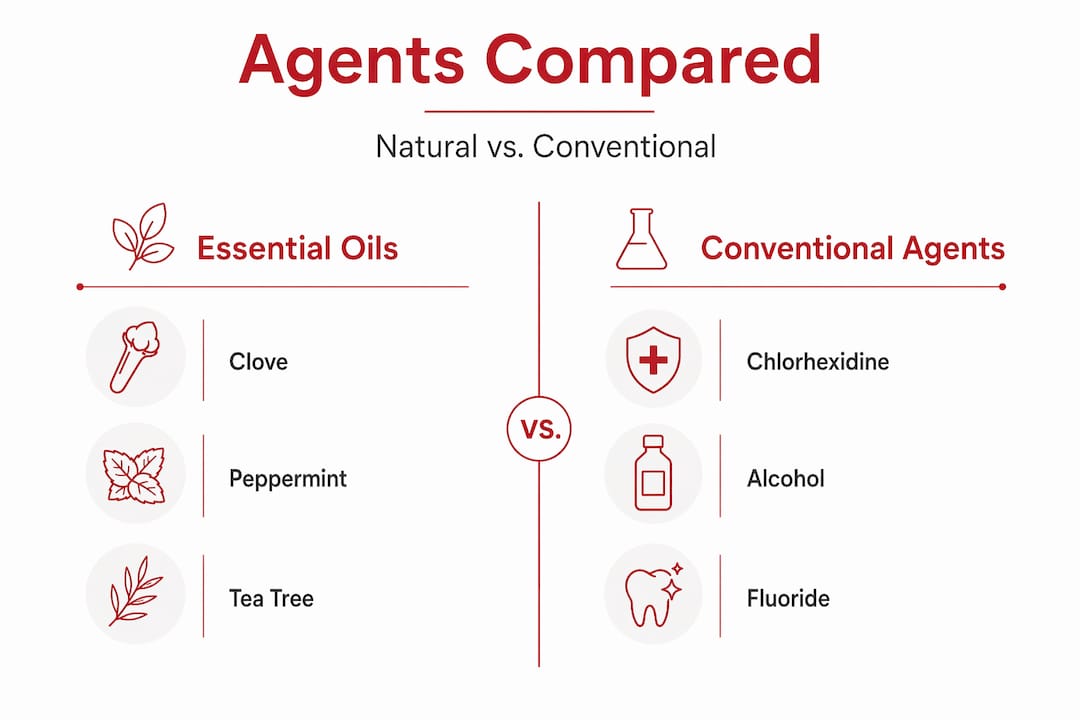
Essential oil rinses fit within clinical guidelines as adjunctive plaque control agents, occupying a category alongside other supplemental measures rather than first-line therapeutic treatments. For patients who cannot tolerate chlorhexidine due to staining, taste alteration, or mucosal sensitivity, essential oil formulations represent a clinically supported alternative with a favorable tolerability profile.
Patients seeking to avoid synthetic agents entirely, or those managing sensitivity to alcohol-based products, can find equivalent plaque-reduction outcomes through essential oil rinses when combined with thorough mechanical oral hygiene. The natural compounds in oral health literature supports this positioning, noting that multi-component phytochemical compounds carry a lower risk of promoting antimicrobial resistance than single-molecule synthetic agents.
The primary limitation of essential oil products remains inconsistency in formulation quality across commercially available products. Without defined concentrations and validated delivery vehicles, clinical outcomes cannot be reliably predicted. This makes product selection one of the most consequential decisions for patients incorporating essential oils dental care into their routines.
My perspective on essential oils in clinical practice
In my clinical work, I have observed that essential oils occupy a genuinely useful but often misunderstood position in oral care. Patients frequently come to me having either dismissed essential oils as ineffective or having placed excessive confidence in them as standalone treatments. Neither position is supported by the data.
What I have found consistently is that patients who pair a well-formulated essential oil rinse with disciplined mechanical cleaning show meaningful improvements in gingival health over two to three months. The difference is rarely dramatic in isolation. It becomes clinically significant when viewed as one component of a complete routine rather than as a replacement for it.
The concern I raise most frequently is about DIY preparations. Undiluted essential oils applied directly to gingival tissue carry real irritation risk, and the concentration-to-outcome relationship in these preparations is entirely unpredictable. I strongly advise against this practice regardless of online recommendations.
My broader position is this: the resistance profile of essential oils, combined with their tolerability and the emerging microbiome data showing preserved diversity with short-term use, makes them a rational choice for patients seeking natural alternatives. The evidence base is not yet at the level of long-term randomized controlled trials, but what exists is directionally consistent and clinically plausible. Realistic expectations combined with professional guidance will produce better outcomes than either skepticism or uncritical enthusiasm.
— Veronica
Natural oral care formulations from Stop-oralcare

For individuals seeking oral care products that integrate natural active compounds without synthetic additives, Stop-oralcare offers a line of fluoride-free formulations developed under the guidance of Dr. Veronica Stahl, combining evidence-backed natural ingredients with rigorous attention to safety and tolerability. Each product is formulated with defined ingredient concentrations, reflecting the clinical evidence that formulation precision determines efficacy. Whether you are looking for a natural mouthwash for gum health or exploring how plant-derived compounds can support your daily oral hygiene routine, Stop-oralcare’s product range and supporting educational resources provide a reliable starting point grounded in current research.
Visit Stop-oralcare to review the full product catalog and access guidance on building a complete, natural oral health routine.
FAQ
What are the main benefits of essential oils for teeth and gums?
Essential oils such as clove, thymol, eucalyptus, and peppermint demonstrate antimicrobial activity against oral pathogens, reduce plaque accumulation, and decrease gingival inflammation when used as adjuncts to mechanical oral hygiene. Clinical trials and systematic reviews support their use for improving periodontal health outcomes.
Are essential oils safe for daily use in oral hygiene?
Most commercially formulated essential oil products are safe at recommended doses, but dental experts advise sparing use due to incomplete long-term data on microbiome effects. Daily use should follow manufacturer protocols, and patients with active oral conditions should consult a dental professional before starting.
How do essential oil mouthwashes compare to chlorhexidine rinses?
Essential oil mouthwashes produce plaque and gingivitis reductions comparable to chlorhexidine in several clinical trials, with a notably better tolerability profile. Chlorhexidine causes tooth staining and taste alteration with prolonged use, while essential oil rinses over 28 days preserve overall oral microbial diversity.
Can essential oils replace brushing and flossing?
No. Essential oil rinses are classified as adjunctive agents that complement mechanical cleaning. Brushing and flossing remain the primary methods for biofilm removal, and rinses access areas that mechanical methods cannot reach as effectively.
Which essential oil is most studied for oral health applications?
Thymol, derived from thyme oil and a principal component in several commercial rinses, along with eucalyptol, menthol, and methyl salicylate, collectively form the most clinically documented essential oil combination in oral hygiene research. Tea tree oil has substantial individual study data, particularly for antifungal applications involving Candida albicans.
Recommended
- Safe Oral Care Ingredients List: What Actually Works – Stop Oral Care
- Effective Natural Mouthwash for Gum Disease: 5 Home Remedies Backed by – Stop Oral Care
- Why Use Plant-Based Oral Products: Science and Safety – Stop Oral Care
- Oral care science: principles, myths, and natural solutions – Stop Oral Care