

TL;DR:
- Oral care science involves microbe ecology, biomechanics, and biochemistry beyond just toothpaste ingredients.
- Gentle brushing at 2-3N force with mineral-based products supports natural oral defenses and prevents tissue damage.
- Natural alternatives like hydroxyapatite and botanicals can effectively maintain oral health without fluoride.
Most people assume oral health comes down to brushing twice daily and picking the right toothpaste. The science tells a more complex story. Oral care research now spans biofilm dynamics, salivary biochemistry, enamel biomechanics, and the pharmacology of botanical agents, forming a discipline that goes well beyond consumer product marketing. Caries affect 2.3 billion people worldwide, yet many preventive failures trace back to outdated assumptions rather than lack of effort. This article examines the scientific foundations of oral care, evaluates core testing methodologies, and presents evidence-based guidance for consumers, particularly those in Europe seeking effective, natural, fluoride-free alternatives.
Table of Contents
- What is oral care science?
- Core methods and models in oral care science
- Mechanical forces, saliva, and their protective roles
- Decoding fluoride and natural oral care alternatives
- Putting oral care science into practice
- A new perspective: What most mainstream oral care advice misses
- Your path to science-backed natural oral care
- Frequently asked questions
Key Takeaways
| Point | Details |
|---|---|
| Science-based oral care | Effective oral care blends biomechanics, biofilm ecology, and the body’s defenses. |
| Natural alternatives work | Hydroxyapatite and botanicals can match fluoride for remineralization and gum support. |
| Gentle methods best | Brushing with gentle force and choosing low-abrasivity pastes protect teeth and gums. |
| Saliva is crucial | Your saliva is a powerful natural defense for remineralizing and protecting your teeth. |
What is oral care science?
Oral care science is a formal research discipline that integrates dentistry, microbiology, materials science, and biochemistry. According to peer-reviewed literature, oral care science encompasses the scientific study of oral maintenance, the biomechanics of cleaning, plaque simulation, saliva’s protective functions, and the prevention of caries and periodontal disease. It is not simply the study of toothpaste formulations. It is a structured field with defined methodologies, measurable outcomes, and clinical benchmarks.
The discipline addresses several interconnected topics:
- Cleaning mechanics: How bristle design, brushing angle, and applied force affect plaque removal and tissue integrity
- Biofilm and plaque dynamics: How microbial communities form, mature, and respond to mechanical or chemical disruption
- Salivary function: How saliva buffers pH, delivers calcium and phosphate for remineralization, and provides antimicrobial peptides
- Disease prevention: Evidence-based strategies for reducing caries incidence and periodontal inflammation
Research into biofilm dynamics has fundamentally changed how scientists think about oral hygiene. Biofilm, the structured microbial community that forms on tooth surfaces, is not simply “plaque” to be eliminated. It is a regulated biological system that responds differently to mechanical disruption versus chemical agents.
“Oral health is not the absence of disease. It is the maintenance of a balanced microbial ecosystem supported by host defenses and evidence-based hygiene practices.”
Two persistent misconceptions continue to undermine public oral health. First, that brushing harder removes more plaque. In reality, excessive force causes gum recession and enamel abrasion without improving plaque removal efficiency. Second, that chemical agents are always required for effective oral hygiene. Evidence increasingly supports natural oral health science as a viable and, in some populations, preferable framework for maintaining oral homeostasis.
Core methods and models in oral care science
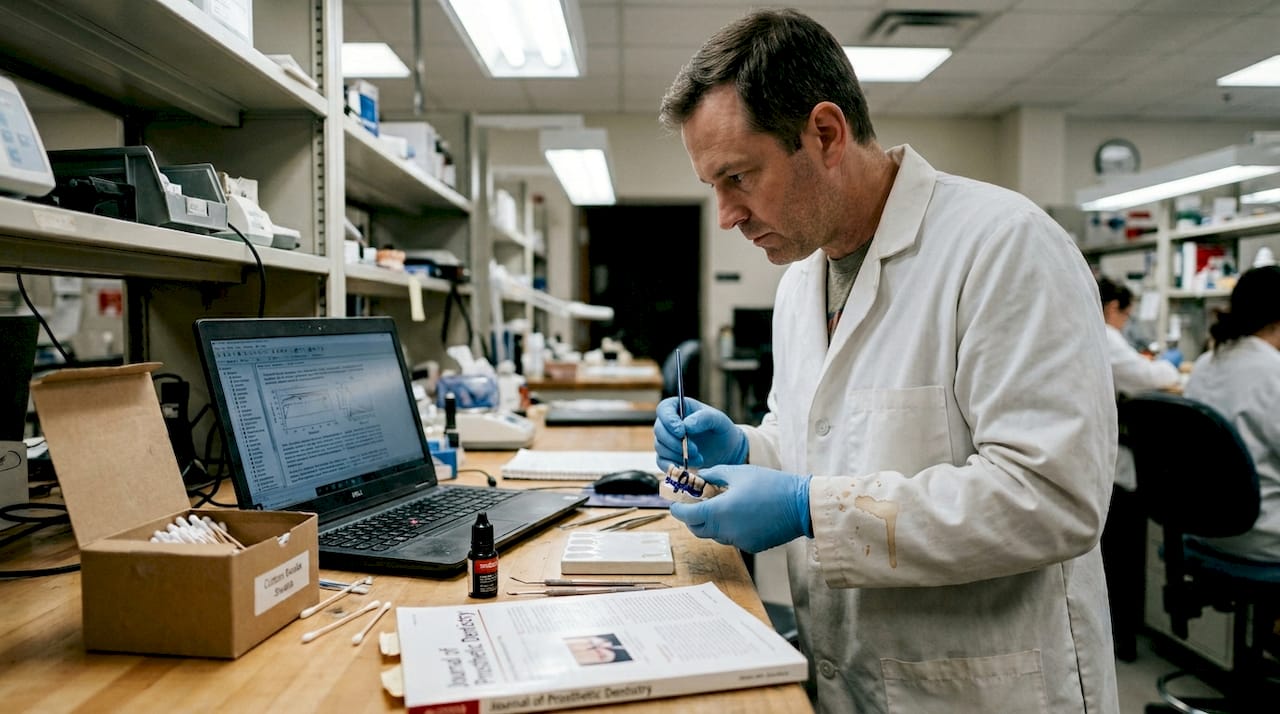
Building on what defines oral care science, it is crucial to understand how scientists actually test and measure its effectiveness. Oral care researchers rely on a set of validated methodologies to assess product safety, cleaning efficacy, and biological compatibility.
Key methodologies include in-vitro plaque simulations using ink or varnish models, finite element analysis for occlusal stress, toothpaste Relative Dentin Abrasivity (RDA) scoring, and kinetic models for food clearance. Each method targets a specific dimension of oral care performance.
| Method | What it measures | Clinical relevance |
|---|---|---|
| In-vitro plaque simulation | Biofilm removal under controlled conditions | Predicts real-world cleaning efficacy |
| Finite element analysis | Stress distribution across enamel and dentin | Identifies overbrushing risk zones |
| RDA scoring | Toothpaste abrasivity on dentin | Safety threshold: RDA below 150 |
| Food clearance kinetics | Rate of sugar/acid clearance post-meal | Demineralization risk modeling |
Research using sticky food simulation models demonstrates that fermentable carbohydrates retained in fissures and interproximal spaces generate sustained acid exposure, significantly elevating demineralization risk even when brushing frequency is adequate.
Brushing force is a critical and often overlooked variable. Studies establish that gentle brushing corresponds to 2 to 3 Newtons (N) of applied force. Most consumers exceed this threshold without realizing it, particularly when using manual brushes.
To evaluate whether a product meets evidence-based safety and efficacy standards, consider the following criteria:
- RDA value below 150 (ideally below 70 for sensitive users)
- Absence of sodium lauryl sulfate (SLS) for mucosal tolerance
- Demonstrated biofilm disruption in peer-reviewed in-vitro studies
- Neutral to slightly alkaline pH balance in oral hygiene formulations
- Clinical or in-vitro evidence of remineralization support
Pro Tip: When reviewing a toothpaste’s safety profile, request the manufacturer’s RDA data sheet. Products without published RDA values have not been independently validated for abrasivity.
Mechanical forces, saliva, and their protective roles
With a grasp on methods, let’s examine how daily brushing and the body’s natural defenses actually work together. The relationship between mechanical cleaning and salivary function is not additive. It is synergistic, and disrupting either component compromises the entire system.
Saliva helps buffer acids, remineralize enamel, and supports oral health, while overbrushing leads to gum recession and irreversible tooth wear. Salivary flow delivers bicarbonate ions that neutralize post-meal acid, calcium and phosphate that replenish demineralized enamel, and immunoglobulins that suppress pathogenic bacteria. These functions occur continuously and require no external product intervention.
The risks associated with overbrushing are well-documented. Applying force above 3N with medium or hard bristles causes:
- Abrasion of the cervical enamel and exposed root dentin
- Mechanical trauma to the gingival margin, initiating recession
- Disruption of the protective pellicle layer that coats enamel
- Increased dentinal hypersensitivity over time
Research on overbrushing risk confirms that the majority of toothbrush-related tissue damage is force-dependent rather than bristle-type-dependent, though soft bristles remain the recommended standard.
Dry mouth, clinically termed xerostomia, significantly compromises the natural buffering system. Without adequate salivary flow, acid clearance slows, remineralization stalls, and pathogenic bacterial populations expand. This is particularly relevant for European consumers using medications that reduce salivary output, including antihistamines, antidepressants, and antihypertensives.
The role of saliva in oral hygiene is frequently underestimated in consumer-facing oral care guidance. Products that support salivary function, rather than replacing it, represent a more physiologically sound approach. Remineralizing mouthwash formulations that deliver bioavailable calcium and phosphate can complement salivary remineralization, particularly in high-risk individuals.
Pro Tip: Rinsing with plain water immediately after meals accelerates acid clearance and supports salivary buffering without requiring any product. This is a zero-cost adjunct to any oral hygiene protocol.
Decoding fluoride and natural oral care alternatives
Now that we have covered the mechanics and body’s defenses, let’s compare ingredient options, including the best natural replacements for fluoride. Fluoride has served as the conventional standard in caries prevention for decades, primarily through its ability to incorporate into enamel crystalline structure and reduce acid solubility. However, concerns about systemic fluoride accumulation, dental fluorosis in children, and the demand for cleaner ingredient profiles have driven significant consumer and scientific interest in alternatives.
Natural products including neem, green tea, hydroxyapatite, and low-dose fluoride have been shown to effectively reduce plaque and gingivitis with higher tolerability, and approximately 15% of European families currently use non-fluoride toothpaste. This figure is rising, particularly among households with young children and individuals with thyroid-related health concerns.
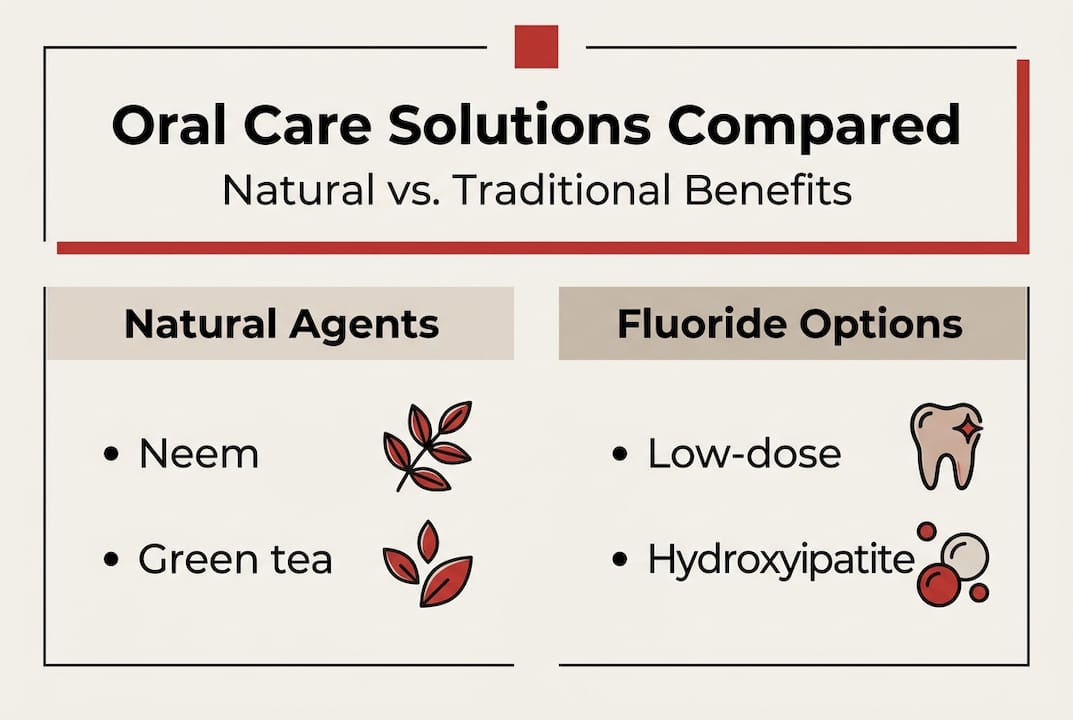
Hydroxyapatite evidence supports its use as a biomimetic remineralizing agent. Because hydroxyapatite is structurally identical to the mineral component of enamel and dentin, it integrates directly into demineralized zones without requiring fluoride ion incorporation.
| Ingredient | Mechanism | Evidence level | Tolerability |
|---|---|---|---|
| Fluoride | Enamel acid resistance | High (decades of data) | Moderate (risk of fluorosis in children) |
| Hydroxyapatite | Biomimetic remineralization | Moderate to high | High |
| Neem extract | Antimicrobial, anti-inflammatory | Moderate | High |
| Green tea polyphenols | Biofilm inhibition, antioxidant | Moderate | High |
Key considerations for consumers evaluating botanical alternatives for oral care include:
- Hydroxyapatite concentration and particle size (nano-hydroxyapatite shows superior enamel integration)
- Botanical extract standardization (active compound percentage must be specified)
- Absence of SLS and artificial preservatives for mucosal safety
For those switching to fluoride-free formulations, a structured natural oral care workflow supports a safe and effective transition without compromising protection.
Putting oral care science into practice
With the differences and evidence outlined, here is how you can confidently put these principles to work in your daily routine. Evidence-based, fluoride-free oral hygiene is achievable when product selection and technique align with validated scientific criteria.
A structured daily protocol based on practice-based insights for oral health includes the following steps:
- Brush with a soft-bristle brush at 2 to 3N force for two minutes, using circular or modified Bass technique
- Select a low-abrasivity paste (RDA below 70 for sensitive users, below 150 for standard use) with hydroxyapatite or mineral-based remineralizing agents
- Floss or use an interdental brush once daily to disrupt interproximal biofilm that brushing cannot reach
- Rinse with a pH-neutral or alkaline mouthwash to support salivary buffering and reduce post-meal acid load
- Limit fermentable carbohydrate exposure between meals to reduce sustained acid challenge periods
For children and sensitive users, European pediatric dental guidelines recommend SLS-free, low-RDA formulations. Biofilm modulation, rather than complete eradication, is the emerging paradigm in preventive dentistry. The goal is not to sterilize the oral cavity but to maintain a balanced microbial community that does not shift toward pathogenic dominance.
Refer to the fluoride-free hygiene guide for a step-by-step transition protocol. For product comparisons, best mineral oral care resources provide independently evaluated options aligned with these criteria. Cavity prevention techniques grounded in biofilm science offer additional clinical context for high-risk individuals.
Pro Tip: Introduce one product change at a time over a four-week period. This allows you to accurately assess tolerability and efficacy without confounding variables from simultaneous formulation changes.
A new perspective: What most mainstream oral care advice misses
Mainstream oral care guidance has long emphasized two assumptions: that more mechanical force produces cleaner teeth, and that antimicrobial chemical agents are necessary for adequate plaque control. Both assumptions are increasingly contradicted by current evidence. The persistence of these myths reflects commercial incentives more than scientific consensus.
New research supports a fundamentally different model. Gentle, consistent biofilm disruption, combined with mineral-based remineralization and botanical antimicrobial support, produces outcomes comparable to conventional fluoride-based regimens in most adult populations. Electric brushes with pressure sensors, mineral-based pastes, and standardized botanical extracts are not fringe alternatives. They are evidence-supported tools that mainstream guidance has been slow to recognize.
European consumers are leading this shift, driven by regulatory scrutiny of chemical additives and growing access to peer-reviewed information. The science supports their direction. Fluoride-free, natural oral care is not a rejection of science. It is an application of it, grounded in biofilm biology, enamel biochemistry, and a more complete understanding of what oral homeostasis actually requires.
Your path to science-backed natural oral care
The evidence reviewed here points toward a consistent conclusion: effective oral care does not require aggressive chemistry or excessive mechanical force. It requires precision, consistency, and product formulations aligned with the body’s own protective systems.
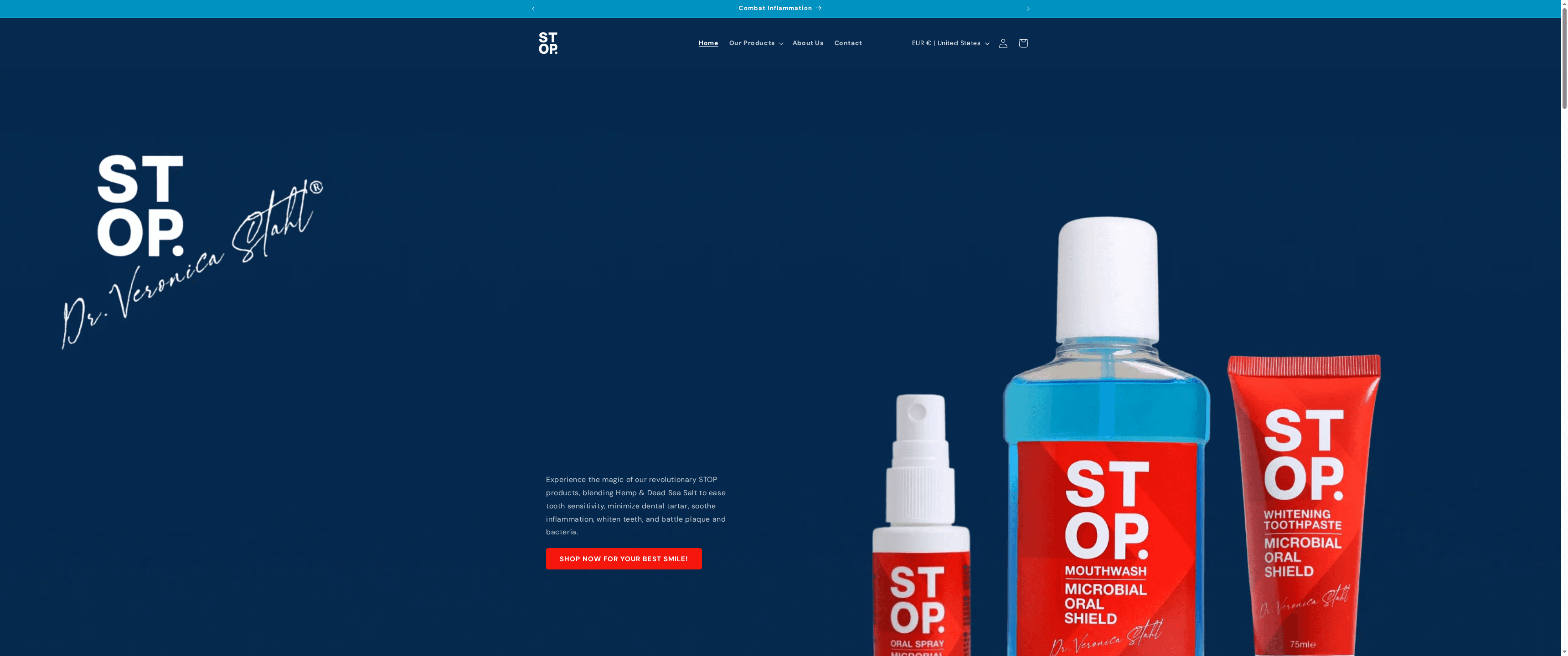
Stop Oral Care curates a range of tested, fluoride-free products formulated with hemp and Dead Sea minerals, developed under the scientific guidance of Dr. Veronica Stahl. Whether you are beginning your transition or refining an established routine, explore science-based oral care options that meet validated safety and efficacy criteria. For a structured starting point, the fluoride-free oral routines guide provides a clinically informed framework for making the switch with confidence.
Frequently asked questions
How is oral care science different from regular dental advice?
Oral care science is grounded in peer-reviewed research and biomechanics, applying validated methodologies rather than personal or commercially influenced recommendations. It produces measurable, reproducible findings that form the basis for evidence-based clinical guidelines.
Do fluoride-free toothpastes work as well as fluoride ones?
Many fluoride-free formulations, particularly those containing hydroxyapatite, demonstrate comparable plaque reduction and remineralization in clinical assessments. Hydroxyapatite and natural agents show high tolerability and effective outcomes for most adult users.
What is the safe pressure for brushing teeth?
The recommended brushing force is 2 to 3 Newtons, equivalent to light, controlled pressure. Higher force or hard bristles causes measurable gum recession and enamel wear without improving plaque removal.
Is saliva really that important for oral health?
Saliva is a primary defense mechanism, continuously neutralizing acids, delivering remineralizing ions, and suppressing pathogenic bacteria. Saliva buffers acids and aids remineralization, making it indispensable to daily oral homeostasis.
How can I safely switch to natural oral care products?
A gradual transition using low-abrasivity, mineral-based formulations minimizes disruption to established oral microbiota. The step-by-step fluoride-free guide provides a clinically informed protocol for making this change safely and effectively.
Recommended
- Natural dental care myths debunked for safer smiles 2026 – Stop Oral Care
- Oral care ingredients guide: safe, natural solutions explained – Stop Oral Care
- Sustainable Oral Care: Benefits and Best Practices – Stop Oral Care
- Oral Care Innovation: Natural Solutions for Healthy Gums – Stop Oral Care
- Professional voice care: remedies, routines, and science - TMRG Solutions