

Fluoride has dominated oral care for decades, and most people assume it’s the only way to protect enamel. That assumption is worth questioning. Modern fluoride-free remineralizing mouthwashes, formulated with nano-hydroxyapatite and calcium phosphate, are showing results that rival conventional fluoride rinses in clinical settings. If you’ve been searching for a natural alternative that actually works, this article breaks down the science, the ideal users, and how to choose a product that delivers real results.
Table of Contents
- What is remineralizing mouthwash?
- The science behind remineralization
- Who benefits most from remineralizing mouthwash?
- Choosing and using remineralizing mouthwash wisely
- Explore safe, effective remineralizing oral care
- Frequently asked questions
Key Takeaways
| Point | Details |
|---|---|
| Natural enamel repair | Remineralizing mouthwash restores minerals lost from enamel without using fluoride. |
| Comparable to fluoride | Nano-hydroxyapatite and calcium phosphate match fluoride’s effectiveness for many users. |
| Ideal for sensitive needs | Remineralizing mouthwash provides relief for sensitivity and dry mouth, especially for fluoride-avoiders. |
| Choose wisely | Selecting alcohol-free, high mineral concentration mouthwash and using it consistently is key to best results. |
What is remineralizing mouthwash?
Remineralizing mouthwash is a rinse specifically formulated to restore minerals to weakened tooth enamel. Unlike standard mouthwashes that focus on killing bacteria or freshening breath, remineralizing formulas target the root cause of enamel erosion: mineral loss. Enamel loses calcium and phosphate daily through acid exposure from food, drinks, and bacteria. Remineralizing mouthwash replenishes those minerals directly.
The key mechanism is straightforward. Bioavailable calcium and phosphate ions are delivered to the enamel surface, where they fill in microscopic lesions and strengthen the mineral lattice. This process is called remineralization, and it’s the same process your saliva performs naturally, just amplified.
Here are the most effective active ingredients to look for:
- Nano-hydroxyapatite (n-HAP): A synthetic form of the mineral that makes up 97% of enamel. It bonds directly to enamel and fills surface defects.
- Calcium phosphate: Supplies the two primary minerals enamel is made of. Works best in a bioavailable, ionic form.
- Xylitol: Reduces acid-producing bacteria and supports a healthier oral pH, creating better conditions for remineralization.
- Magnesium and zinc: Trace minerals that support enamel crystal formation and reduce inflammation in gum tissue.
- Dead Sea minerals: A complex blend of trace minerals with documented anti-inflammatory and tissue-supporting properties.
A common myth is that fluoride-free products can’t protect enamel. That’s outdated thinking. Fluoride-free oral health approaches have advanced significantly, and the ingredient science now supports real, measurable enamel repair without fluoride. If you have sensitive teeth, mouthwash for sensitive teeth formulated with these minerals can be a gentler and equally effective option.
The science behind remineralization
The research on remineralizing mouthwash has moved well beyond theory. Studies now show that specific mineral compounds can restore enamel microhardness at rates comparable to fluoride, which is a significant finding for anyone who has been told fluoride is irreplaceable.
Nano-hydroxyapatite is the most studied fluoride-free remineralizing agent. Its particles are small enough to penetrate enamel’s surface layer and integrate into the crystal structure. n-HAP increases enamel microhardness comparably to fluoride in controlled erosion models, which means it’s not just coating the surface but actually rebuilding it.
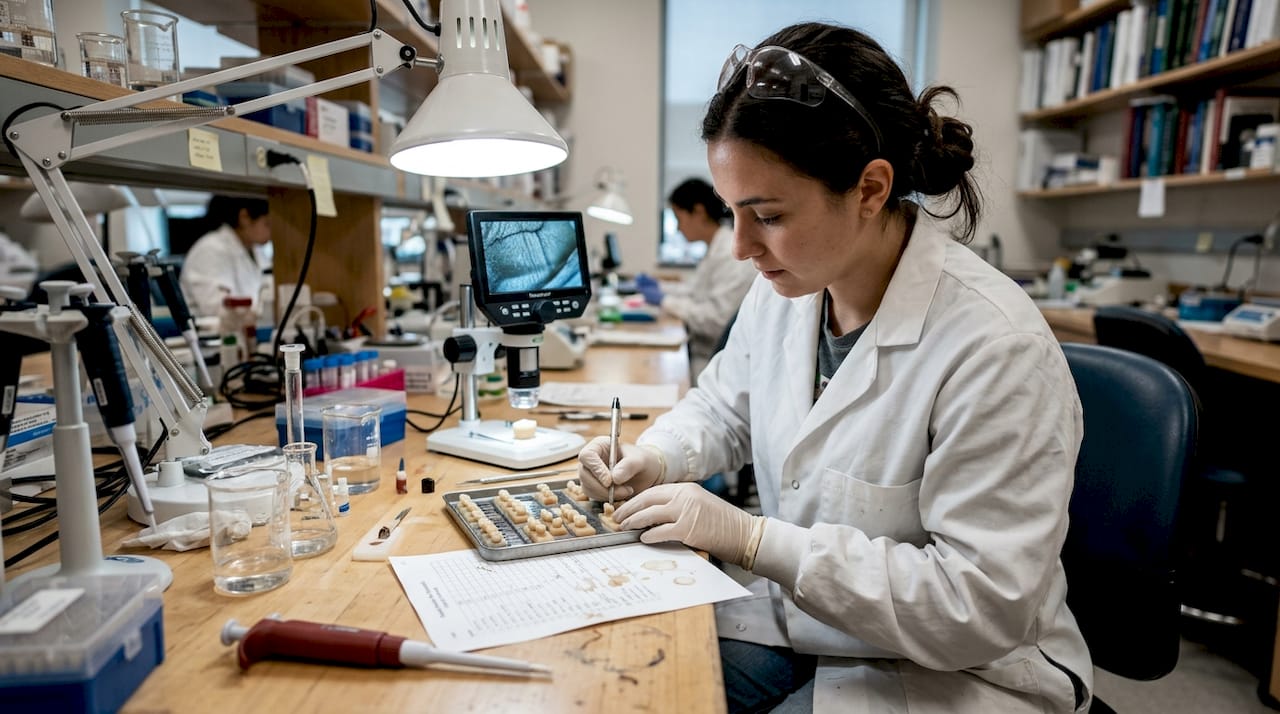
Calcium phosphate formulations also show strong results. Calcium phosphate mouthwash reduced enamel demineralization by 30% compared to a standard fluoride rinse in controlled studies. That’s not a marginal difference. It suggests that for certain users, fluoride-free remineralizing mouthwash isn’t just an alternative, it’s a better fit.
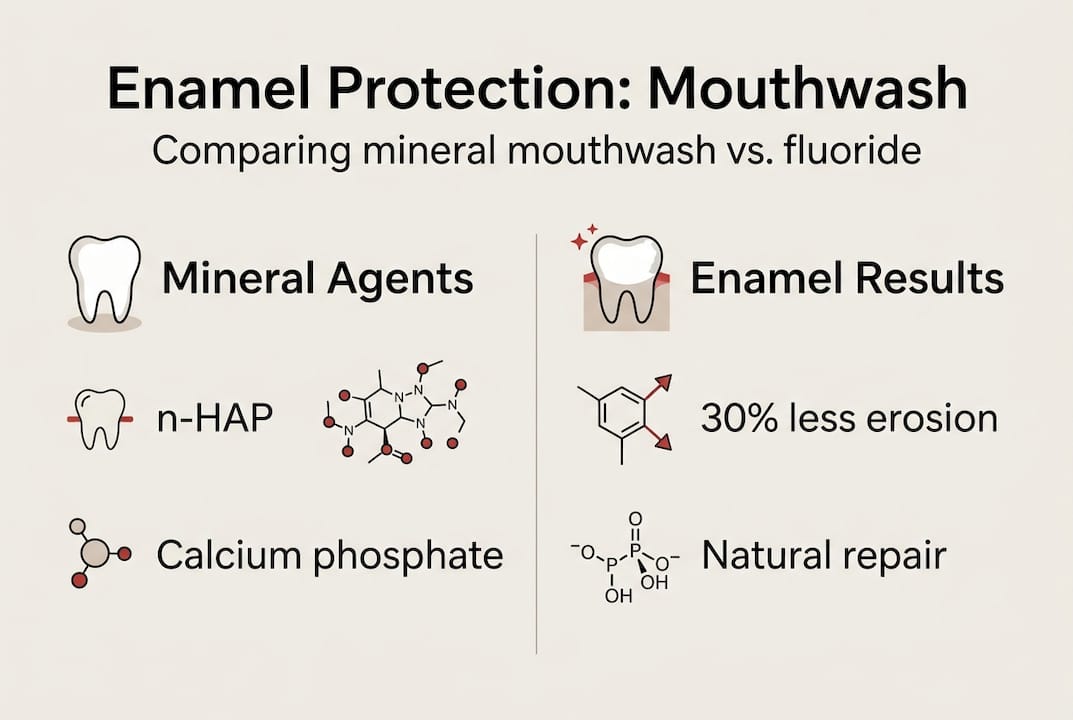
Here’s a side-by-side comparison of the two main approaches:
| Feature | Fluoride mouthwash | Remineralizing mouthwash (n-HAP/CaP) |
|---|---|---|
| Enamel microhardness gain | High | Comparable (n-HAP) |
| Demineralization reduction | Moderate | Up to 30% better (CaP) |
| Fluorosis risk | Yes (especially in children) | None |
| Sensitivity relief | Limited | Strong (tubule occlusion) |
| Safe for daily use | With limits | Yes |
| Natural ingredient profile | No | Yes |
“Nano-hydroxyapatite particles mimic enamel’s structure and increase microhardness comparably to fluoride, making them a credible fluoride-free alternative for enamel protection.” — Based on findings from the nano-hydroxyapatite study
For those already using a remineralizing toothpaste guide to choose their paste, pairing it with a compatible mouthwash amplifies the mineral delivery throughout the day.
Who benefits most from remineralizing mouthwash?
Not everyone needs to switch from fluoride, but certain groups have compelling reasons to consider remineralizing mouthwash as their primary or supplementary rinse. Understanding where you fit helps you make a smarter choice.
People at risk for fluorosis are a clear fit. Fluorosis occurs when too much fluoride is ingested during tooth development, causing white spots or pitting. Children and adults in areas with naturally high fluoride in drinking water benefit from reducing their total fluoride load. Remineralizing mouthwash delivers enamel protection without adding to that burden.
Those with sensitive teeth see some of the most dramatic benefits. n-HAP occluded dentinal tubules more effectively than control products over 28 days, which directly reduces the nerve sensitivity that makes hot, cold, or sweet foods painful. This is a physical, measurable result, not just a soothing effect.
Here are the user profiles that benefit most:
- Fluoride-avoiders: People managing fluorosis risk, thyroid concerns, or personal health preferences around fluoride exposure.
- Sensitive teeth sufferers: Those dealing with dentinal hypersensitivity who need tubule occlusion, not just desensitizing agents.
- Dry mouth patients: Saliva is the body’s natural remineralizer. When saliva production drops, mouthwash for dry mouth with mineral content steps in to compensate.
- Post-whitening users: Whitening treatments temporarily increase porosity. Remineralizing mouthwash helps restore mineral density faster.
- Natural health-focused consumers: Those who prioritize clean, non-synthetic formulations and want their oral care to align with their broader wellness values.
Research also confirms that remineralizing mouthwash is ideal for fluoride-avoiders seeking natural alternatives, and it can complement fluoride routines without necessarily replacing them. For those dealing with gum tissue sensitivity, sensitivity relief mouthwash with Dead Sea minerals adds an anti-inflammatory layer that standard fluoride rinses don’t provide.
Pro Tip: If you’re managing both sensitivity and enamel erosion, look for a formula that combines n-HAP with xylitol. The xylitol lowers oral acidity, which makes the environment more favorable for n-HAP to deposit minerals effectively.
Choosing and using remineralizing mouthwash wisely
Knowing that remineralizing mouthwash works is one thing. Choosing a product that actually delivers on that promise is another. The market has grown fast, and not every product labeled “remineralizing” contains meaningful concentrations of active minerals.
Start with the ingredient list. The active remineralizing agent should appear near the top, not buried after a long list of preservatives and flavoring agents. n-HAP matches fluoride microhardness gains only when present in sufficient concentration, so vague labeling is a red flag. Look for specific percentages or concentrations when available.
Here’s a comparison of what to prioritize versus what to avoid:
| Criteria | Look for | Avoid |
|---|---|---|
| Active ingredient | n-HAP or calcium phosphate listed early | Mineral listed last or absent |
| Alcohol content | Alcohol-free formula | Ethanol as a main ingredient |
| pH level | Neutral to slightly alkaline | Acidic formulas (below pH 6) |
| Additives | Xylitol, zinc, magnesium | Artificial dyes, SLS, parabens |
| Fluoride combination | Standalone n-HAP or CaP | HAP+F combos (may reduce fluoride bioavailability) |
One important caution: some HAP formulations showed no benefit or even increased tissue loss in erosion and abrasion models. This is why formulation quality matters more than the label claim. A product with poorly processed HAP particles or an acidic base can do more harm than good.
Here’s how to use remineralizing mouthwash for best results:
- Rinse after brushing, not before. This allows the minerals to contact clean enamel without competing with toothpaste residue.
- Use for 60 seconds, swishing thoroughly to ensure full contact with all tooth surfaces.
- Don’t rinse with water afterward. Let the minerals sit on the enamel surface for maximum absorption.
- Use twice daily for the first four weeks, then once daily for maintenance once sensitivity improves.
- Pair with a compatible toothpaste. If your toothpaste contains n-HAP, your mouthwash should complement it, not duplicate or counteract it.
For those managing gum health alongside enamel concerns, mouthwash for receding gums and mouthwash for gum disease formulas often overlap with remineralizing options, since mineral-rich rinses support both enamel and gum tissue health. If gum disease is a concern, reviewing the best gum disease mouthwash options alongside remineralizing products gives you a fuller picture.
Pro Tip: Consistency beats brand loyalty every time. A mid-range product used twice daily for 30 days will outperform a premium product used sporadically. Build the habit first, then optimize the formula.
Explore safe, effective remineralizing oral care
If this article has shifted how you think about enamel protection, you’re not alone. More people are moving away from fluoride-dependent routines and looking for formulas that work with the body’s natural processes rather than overriding them.
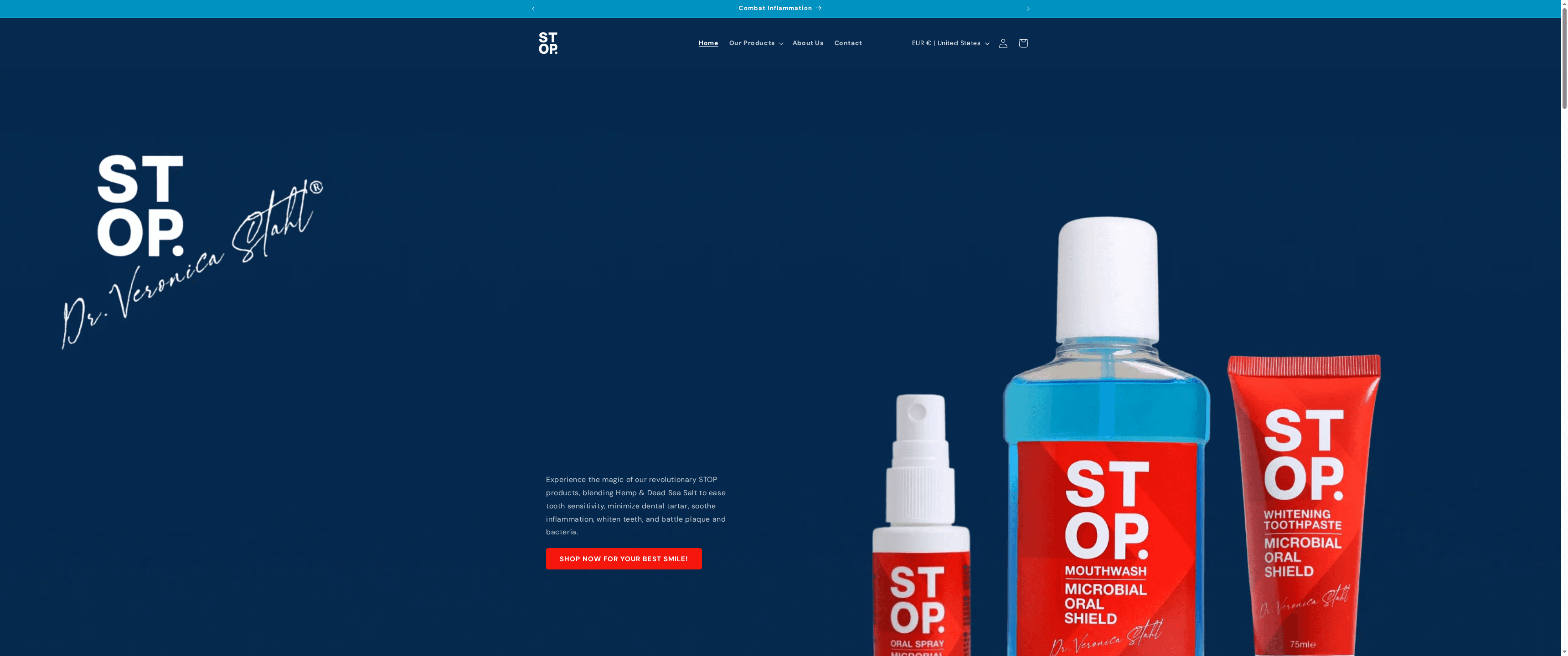
At stop-oralcare.com, you’ll find a curated line of fluoride-free oral care products developed by Dr. Veronica Stahl, combining the mineral science covered in this article with hemp and Dead Sea mineral formulations. Every product is built around the same principles: high mineral concentration, clean ingredients, and documented efficacy. Whether you’re starting with a remineralizing mouthwash or building a complete natural oral care routine, the resources and products available there are designed to support real, measurable results.
Frequently asked questions
What minerals are best for remineralizing mouthwash?
Nano-hydroxyapatite and calcium phosphate are the top choices because they directly restore the mineral composition of enamel. n-HAP increases enamel microhardness comparably to fluoride, making it the gold standard for fluoride-free remineralization.
Is remineralizing mouthwash as effective as fluoride?
For many users, yes. Calcium phosphate mouthwash reduced demineralization by 30% compared to a standard fluoride rinse, though results depend heavily on the specific formulation and how consistently it’s used.
Who should avoid remineralizing mouthwash?
Anyone considering combining HAP with fluoride should consult a dentist first, since HAP and fluoride combinations can reduce fluoride bioavailability and some HAP formulations have shown no benefit in erosion models.
How fast does remineralizing mouthwash work?
Sensitivity relief typically begins within 28 days of consistent use. n-HAP occluded dentinal tubules more effectively than controls over that same period, which is the mechanism behind faster sensitivity reduction.
Recommended
- Enamel Protection: 30% Stronger Teeth Without Fluoride – Stop Oral Care
- Effective Natural Mouthwash for Gum Disease: 5 Home Remedies Backed by – Stop Oral Care
- How botanicals enhance fluoride-free toothpaste benefits – Stop Oral Care
- How to Choose the Best Enamel Protection Toothpaste for Stronger Smile – Stop Oral Care