

The assumption that fluoride is the only ingredient capable of protecting teeth from decay has persisted for decades, yet current evidence challenges this position. Nano-hydroxyapatite remineralizes enamel comparably to fluoride, and bioactive compounds derived from hemp and Dead Sea minerals demonstrate measurable antimicrobial and anti-inflammatory properties. This guide examines the scientific basis for these alternatives, evaluates their clinical relevance, and provides a structured framework for selecting oral care products that align with both safety standards and evidence-based efficacy. Whether you are managing sensitivity, gum inflammation, or cavity risk, the ingredient profile of your oral care products matters more than most consumers realize.
Table of Contents
- Why oral care ingredients matter: Safety, efficacy, and EU priorities
- Fluoride: Still the gold standard or time for alternatives?
- Biomimetic breakthrough: Nano-hydroxyapatite and its benefits
- Plant-powered innovation: Hemp seed oil and CBD for gum health
- Mineral magic: How Dead Sea minerals support your teeth and gums
- Other evidence-based natural oral care ingredients
- How to choose and transition: Practical tips for ingredient-first oral care
- Discover ingredient-driven oral care that fits your values
- Frequently asked questions
Key Takeaways
| Point | Details |
|---|---|
| nHA matches fluoride | Nano-hydroxyapatite offers a safe, effective, fluoride-free option for cavity prevention and remineralization. |
| Hemp and Dead Sea minerals | Both offer unique, evidence-supported benefits for gum health and plaque reduction without harsh chemicals. |
| Transition tips | Shifting to natural oral care takes 3–8 weeks; ingredient-first choices make the process smoother and safer. |
| EU ingredient focus | European regulations prioritize proven, transparent ingredients, making safe oral care more accessible. |
Why oral care ingredients matter: Safety, efficacy, and EU priorities
Ingredient selection in oral care is not a matter of preference alone. Regulatory frameworks in Europe increasingly reflect the scientific consensus that certain conventional additives carry unacceptable risk profiles. The EU has restricted titanium dioxide due to genotoxicity concerns, signaling a broader shift toward evidence-based formulation standards. For health-conscious consumers, this regulatory context reinforces the importance of scrutinizing product labels rather than relying on marketing claims.
Understanding the distinction between natural vs conventional toothpaste requires more than identifying familiar ingredients. It demands an assessment of each compound’s mechanism of action, its safety data, and its demonstrated efficacy in peer-reviewed research. The following criteria are essential when evaluating any oral care product:
- Ingredient transparency: Full disclosure of active and inactive compounds
- Regulatory compliance: Alignment with EU cosmetic and safety directives
- Evidence base: Peer-reviewed support for claimed benefits
- Absence of restricted substances: No titanium dioxide, triclosan, or high-abrasive silica
- Biocompatibility: Ingredients that support rather than disrupt the oral microbiome
“The shift toward ingredient-first oral care is not a trend. It is a response to accumulating evidence that conventional formulations carry risks that safer, well-studied alternatives can eliminate.”
Fluoride: Still the gold standard or time for alternatives?
Fluoride has been the dominant active ingredient in preventive dentistry for over 60 years, and its efficacy in reducing caries incidence is well-documented. However, the debate over fluoride is no longer limited to efficacy. Concerns about dental fluorosis from overexposure, particularly in children, and questions about systemic accumulation have prompted researchers and clinicians to evaluate alternatives with comparable protective mechanisms.
Natural options like nHA can match fluoride in remineralization, offering a biomimetic pathway that integrates directly into enamel crystalline structure without the risk of fluorosis. For consumers seeking enamel protection without fluoride, the evidence now supports a credible transition.
| Ingredient | Remineralization | Fluorosis risk | Biocompatibility | EU regulatory status |
|---|---|---|---|---|
| Fluoride | High | Present | Moderate | Approved with limits |
| Nano-hydroxyapatite | High | None | High | Approved |
| Xylitol | Moderate (indirect) | None | High | Approved |
| Theobromine | Moderate | None | High | Approved |
For those ready to switch to fluoride-free dental care, the transition is supported by a growing body of clinical literature and an expanding range of high-quality products.
Pro Tip: If you are cavity-prone, prioritize products containing nano-hydroxyapatite at concentrations of 10% or higher, as this range has demonstrated the most consistent remineralization outcomes in clinical trials.
Biomimetic breakthrough: Nano-hydroxyapatite and its benefits
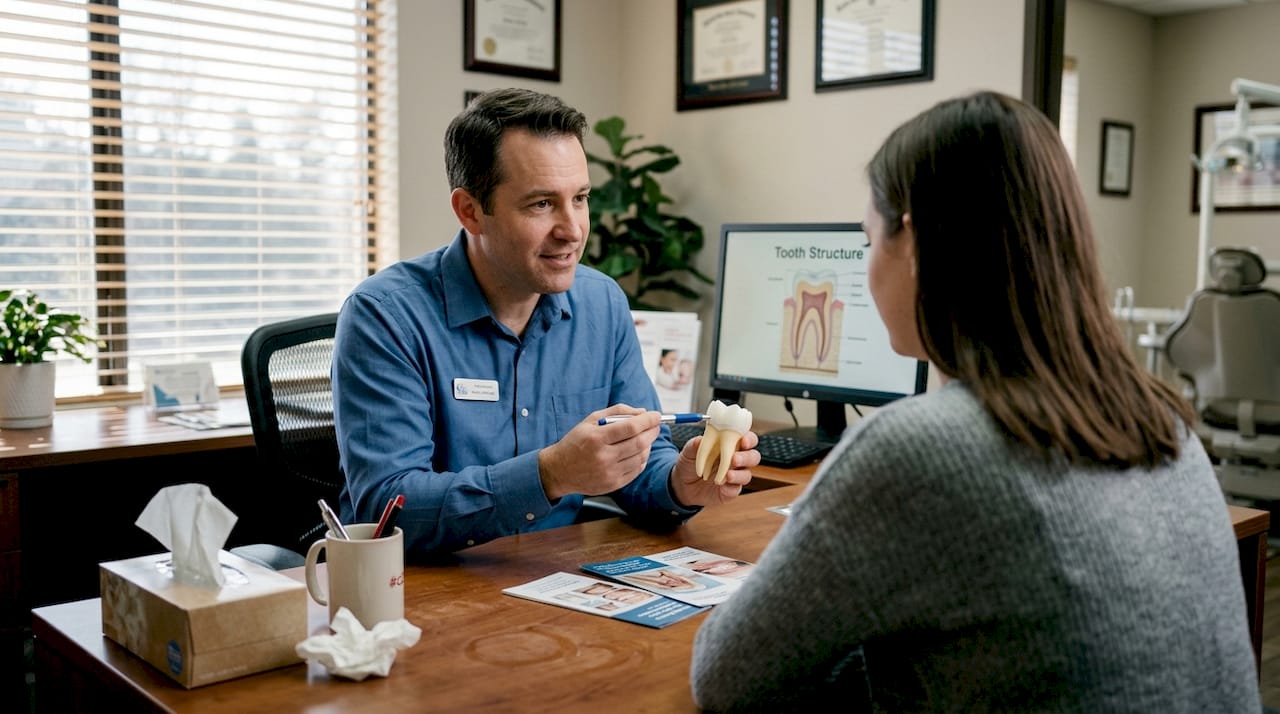
Nano-hydroxyapatite is a synthetic form of the mineral that constitutes approximately 97% of tooth enamel and 70% of dentin. Its nanoscale particle size allows it to integrate directly into enamel surface defects, physically occluding dentinal tubules and restoring mineral density. This mechanism is fundamentally different from fluoride, which works by converting hydroxyapatite into fluorapatite, a compound foreign to natural tooth structure.
Clinical data confirms that nHA remineralizes enamel with comparable or superior efficacy to fluoride in controlled studies. The following table summarizes key performance parameters:
| Parameter | Nano-hydroxyapatite | Fluoride toothpaste |
|---|---|---|
| Enamel mineral recovery | 85-95% | 80-90% |
| Dentinal tubule occlusion | High | Moderate |
| Sensitivity reduction | Significant | Moderate |
| Systemic safety | No known risk | Fluorosis risk |
| Suitable for children | Yes | With supervision |
For individuals with stronger teeth without fluoride as a goal, nHA represents the most rigorously studied fluoride-free option currently available.
Pro Tip: Look for nHA listed as “nano-hydroxyapatite” or “hydroxylapatite” on ingredient labels. Concentrations below 5% are unlikely to deliver meaningful remineralization benefits.
Plant-powered innovation: Hemp seed oil and CBD for gum health
Beyond remineralization, periodontal health requires targeted anti-inflammatory and antimicrobial intervention. Hemp-derived ingredients, specifically hemp seed oil and cannabidiol (CBD), have attracted significant research interest for their capacity to modulate inflammatory pathways in oral soft tissue.
Hemp seed oil reduces gum bleeding and irritation within days of consistent use, attributed to its high concentration of omega-3 and omega-6 fatty acids, which inhibit pro-inflammatory cytokine production. This makes it particularly relevant for individuals managing early-stage gingivitis or chronic gum sensitivity.
For a detailed review of the evidence, the CBD oral health benefits literature is expanding, though CBD for oral pain and inflammation remains an area where dental-specific clinical trials are still needed.
When selecting hemp-based oral care products, the following quality indicators are critical:
- Certificate of Analysis (COA): Third-party lab verification of cannabinoid content and absence of contaminants
- Full-spectrum vs. isolate: Full-spectrum formulations may offer broader anti-inflammatory activity
- THC content: Must comply with EU regulations (below 0.2% THC)
- Sourcing transparency: Organically grown hemp with documented supply chain
- Formulation stability: Hemp compounds are sensitive to oxidation; packaging matters
“Hemp seed oil’s fatty acid profile provides a biochemical basis for its anti-inflammatory activity in gingival tissue, making it a scientifically credible addition to periodontal-focused oral care formulations.”
Mineral magic: How Dead Sea minerals support your teeth and gums
The Dead Sea contains one of the most concentrated and diverse mineral profiles found in any natural water source, including magnesium, calcium, potassium, and bromide at levels far exceeding those of standard seawater. These minerals interact with oral tissues through multiple mechanisms, including disruption of bacterial biofilm, modulation of inflammatory mediators, and direct contribution to enamel remineralization.
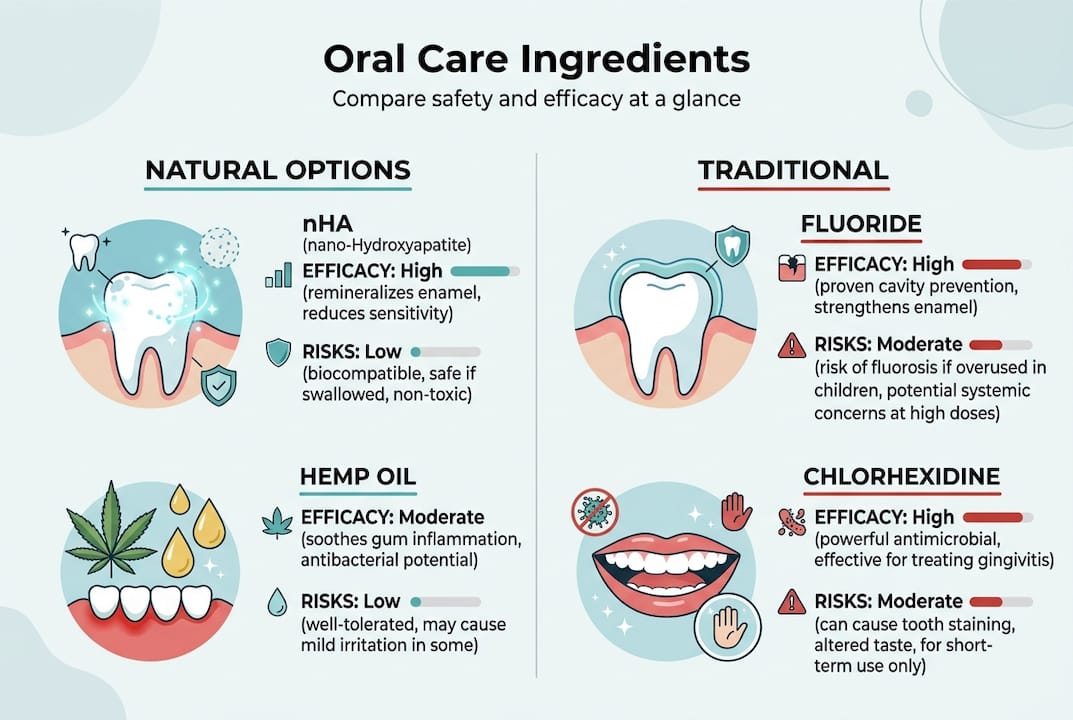
Dead Sea minerals aid remineralization and plaque reduction, with antimicrobial and anti-inflammatory effects comparable to chlorhexidine but without the associated staining and taste disruption. This positions Dead Sea mineral formulations as a clinically relevant alternative to conventional antiseptic rinses for long-term use.
| Property | Dead Sea minerals | Chlorhexidine |
|---|---|---|
| Antimicrobial activity | High | High |
| Anti-inflammatory effect | Documented | Limited |
| Remineralization support | Yes | No |
| Tooth staining | None | Significant |
| Suitable for daily use | Yes | Short-term only |
For a structured overview of applications, the Dead Sea minerals dentistry guide provides detailed formulation and usage context. Consumers interested in rinse-based delivery can also review the evidence for Dead Sea minerals mouthwash as a daily adjunct to brushing.
Statistic callout: Magnesium, one of the primary minerals in Dead Sea water, is present at concentrations up to 40 times higher than in standard ocean water, contributing directly to its documented antimicrobial potency.
Other evidence-based natural oral care ingredients
The field of natural oral care extends beyond hemp and Dead Sea minerals. Several additional compounds have accumulated sufficient clinical evidence to warrant inclusion in a science-based oral care routine.
- Xylitol: A sugar alcohol that inhibits Streptococcus mutans adhesion to enamel surfaces, reducing cariogenic biofilm formation. The xylitol mouthwash benefits are well-documented across multiple systematic reviews.
- Theobromine: A methylxanthine compound derived from cacao that promotes enamel remineralization by stimulating hydroxyapatite crystal growth. It is increasingly incorporated into fluoride-free formulations.
- Activated charcoal: Despite widespread marketing, activated charcoal carries a high abrasivity index that can accelerate enamel wear with regular use. It lacks peer-reviewed support for whitening or detoxification claims.
- Baking soda (sodium bicarbonate): Effective for plaque disruption and pH neutralization at low concentrations, but abrasive at high concentrations. Formulation matters significantly.
The transition to natural oral care requires awareness that not all “natural” labels indicate safety or efficacy. Charcoal and high-abrasive silica are common examples of ingredients that carry risk despite their natural origin.
Pro Tip: When evaluating a new oral care product, cross-reference its Relative Dentin Abrasivity (RDA) value. Products with an RDA above 150 are considered potentially harmful for daily use, regardless of whether they are marketed as natural.
How to choose and transition: Practical tips for ingredient-first oral care
Applying the evidence reviewed above requires a structured approach to product selection and routine adaptation. The following steps provide a practical framework:
- Assess your primary oral health concern: Cavity prevention, sensitivity, gum inflammation, or general maintenance each call for different active ingredients.
- Read ingredient labels critically: Active ingredients should appear in the first five listed compounds. Avoid products that list water or glycerin before any active agent.
- Verify regulatory compliance: Confirm that products meet EU cosmetic directive standards and carry no restricted substances.
- Introduce one new product at a time: This allows accurate attribution of any changes in oral health status.
- Allow adequate adaptation time: Transitioning to natural oral care may take 3 to 8 weeks, during which the oral microbiome rebalances and salivary chemistry adjusts.
- Monitor outcomes objectively: Track changes in sensitivity, bleeding on brushing, and plaque accumulation at regular intervals.
For a detailed protocol on switching to natural oral products safely, structured guidance is available that addresses common transition challenges. The 3 to 8 week adaptation period is well-supported in the literature, with xylitol and nHA identified as the most effective bridging ingredients during this phase.
Pro Tip: Keep a simple log of your oral health observations during the first eight weeks of transition. Noting changes in sensitivity, gum color, and morning breath provides objective data that helps you and your dental professional assess progress accurately.
Discover ingredient-driven oral care that fits your values
The evidence reviewed throughout this guide points consistently toward one conclusion: ingredient selection is the most consequential decision in oral care. Products formulated with nano-hydroxyapatite, hemp seed oil, CBD, and Dead Sea minerals offer scientifically supported alternatives to conventional fluoride-based formulations, with safety profiles that align with EU regulatory priorities.
Stop Oral Care offers a curated selection of natural and innovative oral care options developed under the scientific direction of Dr. Veronica Stahl, integrating full ingredient transparency with EU-compliant formulations. Each product in the range is formulated to address specific oral health concerns, from enamel remineralization to periodontal inflammation, using only ingredients with documented clinical support. For consumers ready to align their oral care routine with both scientific evidence and personal health values, the Stop Oral Care product range provides a structured, credible starting point.
Frequently asked questions
What is the safest alternative to fluoride for cavity prevention?
Nano-hydroxyapatite is biomimetic to natural tooth enamel and remineralizes enamel with efficacy comparable to fluoride, without the risk of fluorosis. It is currently the most rigorously studied fluoride-free option for cavity prevention.
How quickly do hemp seed oil and CBD improve gum health?
Hemp seed oil reduces gum bleeding and sensitivity in as little as 7 to 10 days of consistent use. Evidence for CBD in oral health is promising, though dental-specific clinical trials are still accumulating.
Are Dead Sea minerals effective for oral health?
Dead Sea minerals disrupt plaque and support remineralization with antimicrobial effects comparable to chlorhexidine, but without the staining associated with conventional antiseptic rinses. They are suitable for daily long-term use.
How long does it take to transition to a natural oral care routine?
The adaptation period for natural oral care typically spans 3 to 8 weeks, during which the oral microbiome adjusts. Ingredients like nHA and xylitol support a smoother transition by maintaining remineralization and microbial balance throughout.
Recommended
- How to Choose Safe Oral Products Naturally and Effectively – Stop Oral Care
- Natural Ingredients In Dental Care – Why They Matter – Stop Oral Care
- Natural oral health benefits: fluoride-free care guide – Stop Oral Care
- Workflow for Safer Oral Hygiene Using Natural Products – Stop Oral Care
- Nonstick Alternatives Explained: Understanding Safe Options – Brass & Steel