

Behavioral modification and professional non-surgical care can reliably halt the progression of gingival recession, but lost gum tissue does not regenerate on its own. Restoring the gum margin requires surgical intervention, with the subepithelial connective tissue graft combined with a coronally advanced flap (CTG + CAF) representing the most clinically validated technique for predictable root coverage, as recognized by the American Academy of Periodontology (AAP) and the National Institute of Dental and Craniofacial Research (NIDCR). Natural and home-based remedies, including salt rinses, aloe vera, and botanical antiseptics, can reduce local inflammation and sensitivity, but no high-quality evidence supports their ability to regrow gingival tissue.
The practical hierarchy for managing gingival recession is:
- Stop progression first: correct brushing technique, soft-bristle brush, and professional scaling and root planing (SRP) address the most common drivers.
- Manage symptoms: desensitizing toothpastes, topical fluoride varnish, and evidence-backed natural rinses reduce sensitivity during the stabilization phase.
- Restore when indicated: surgical grafting or validated biomaterial alternatives are required when root exposure threatens function, aesthetics, or causes uncontrolled sensitivity.
- Maintain: structured periodontal maintenance and daily oral hygiene prevent recurrence after treatment.
Pro Tip: If you notice visible root surfaces or persistent cold sensitivity, document it with a photograph and bring it to your next dental appointment. Early documentation allows your clinician to track progression objectively over time.
Key Takeaways
Gingival recession requires a tiered approach: behavioral and professional non-surgical care stops progression, while surgical grafting with CTG + CAF remains the only reliably validated method for restoring lost gum tissue.
| Point | Details |
|---|---|
| Stop progression first | Correct brushing technique, a soft-bristle brush, and professional SRP address the most common modifiable drivers of recession. |
| Natural remedies manage symptoms only | Salt rinses, aloe vera, and botanical antiseptics can reduce inflammation and sensitivity but do not regenerate lost gingival tissue. |
| Surgery restores tissue | CTG combined with CAF is the most predictable technique for root coverage; biomaterial alternatives reduce donor-site morbidity with some trade-off in predictability. |
| Ask the right questions | Before any surgical procedure, confirm expected root coverage percentage, donor-site requirements, recovery timeline, and insurance pre-authorization. |
| Stop-oralcare for maintenance | Stop-oralcare’s fluoride-free, hemp- and mineral-formulated products serve as adjuncts for sensitivity control and gum maintenance between professional visits. |
Table of Contents
- What is gingival recession and why does it matter?
- What causes gingival recession?
- How do clinicians diagnose recession?
- What non-surgical care reliably stops recession from progressing?
- Which surgical procedures can restore the gum margin?
- What do natural and home remedies actually accomplish?
- How to protect your gums every day after treatment
- When should you see a periodontist, and what questions should you ask?
- What does gum recession treatment cost in the United States?
- A clinician’s perspective on realistic expectations
- Stop-oralcare supports gum health between professional visits
- Sources
What is gingival recession and why does it matter?
Gingival recession is the apical displacement of the gingival margin below the cementoenamel junction (CEJ), resulting in exposure of the root surface. It is clinically distinct from gingivitis, which involves reversible gingival inflammation without attachment loss, and from periodontitis, which involves progressive destruction of the supporting alveolar bone and periodontal ligament. Recession can occur with or without concurrent periodontitis, and its etiology is multifactorial.
The NIDCR describes recession as a loss of gum tissue that exposes tooth roots, increasing sensitivity and the risk of root caries. The clinical consequences are well-established:
- Dentin hypersensitivity: exposed root dentin lacks the protective enamel layer, making affected teeth acutely sensitive to thermal, osmotic, and tactile stimuli.
- Root caries risk: cementum and dentin are more susceptible to acid demineralization than enamel, raising the risk of cervical cavities.
- Aesthetic concerns: recession creates a “longer tooth” appearance and visible color differences between the crown and root surface.
- Tooth support compromise: when recession accompanies attachment loss, the remaining periodontal support is reduced, which can affect long-term tooth prognosis.
Recession prevalence increases with age and is associated with both inflammatory and non-inflammatory etiologies, making it one of the more common findings in adult dental examinations.
What causes gingival recession?
Understanding the cause of recession is prerequisite to selecting the appropriate remedy. Causes fall into four broad categories: mechanical, inflammatory, anatomical, and restorative.
Mechanical causes are among the most modifiable:
- Aggressive brushing with a medium or hard-bristle brush abrades the gingival margin and is a primary driver of recession on buccal surfaces, particularly in patients with good oral hygiene but poor technique.
- Oral piercings and habits such as nail biting or pen chewing can traumatize the gingival margin locally.
Inflammatory causes are driven by microbial biofilm:
- Periodontitis causes progressive apical migration of the junctional epithelium and loss of alveolar bone, leading to recession as a secondary consequence.
- Tobacco use impairs gingival vascular response and immune surveillance, masking early inflammation and accelerating attachment loss.
Anatomical factors are largely non-modifiable but important to recognize:
- A thin gingival biotype (thin, scalloped tissue with minimal keratinized gingiva) is significantly more susceptible to recession than a thick, flat biotype.
- Malpositioned teeth, particularly those positioned labially outside the alveolar housing, have reduced or absent buccal bone, predisposing the overlying gingiva to recession.
- A high frenum attachment can exert traction on the gingival margin, contributing to recession in the anterior mandible.
- Bruxism and parafunctional occlusal loading can contribute to recession, particularly in patients with thin biotypes.
Restorative factors are clinically underappreciated. Subgingival restoration margins and overhangs promote plaque accumulation and local inflammation, which can drive recession at the affected site. Clinical reviews note that restorative margin position and finish quality directly affect gingival health outcomes, and correcting these margins is often a prerequisite to surgical coverage procedures.
Pro Tip: Examine the bristle wear pattern on your toothbrush. If the outer bristles splay outward after fewer than three months of use, you are applying excessive lateral pressure. A soft-bristle brush used with a gentle circular or modified Bass technique should maintain bristle alignment for the full recommended replacement interval.
How do clinicians diagnose recession?
Symptoms that prompt patients to seek evaluation include thermal sensitivity, a visually elongated tooth, and accumulation of plaque or calculus at the exposed root surface. Clinicians confirm and characterize recession through a structured examination:
- Recession depth: measured in millimeters from the CEJ to the free gingival margin at the mid-buccal and proximal surfaces.
- Probing depth: distinguishes shallow sulci (common in non-inflammatory recession) from deeper pockets associated with periodontitis.
- Keratinized tissue (KT) height: the width of attached gingiva apical to the recession; reduced KT height is a risk factor for progression and influences surgical planning.
- Clinical attachment level (CAL): the sum of recession depth and probing depth, representing total attachment loss.
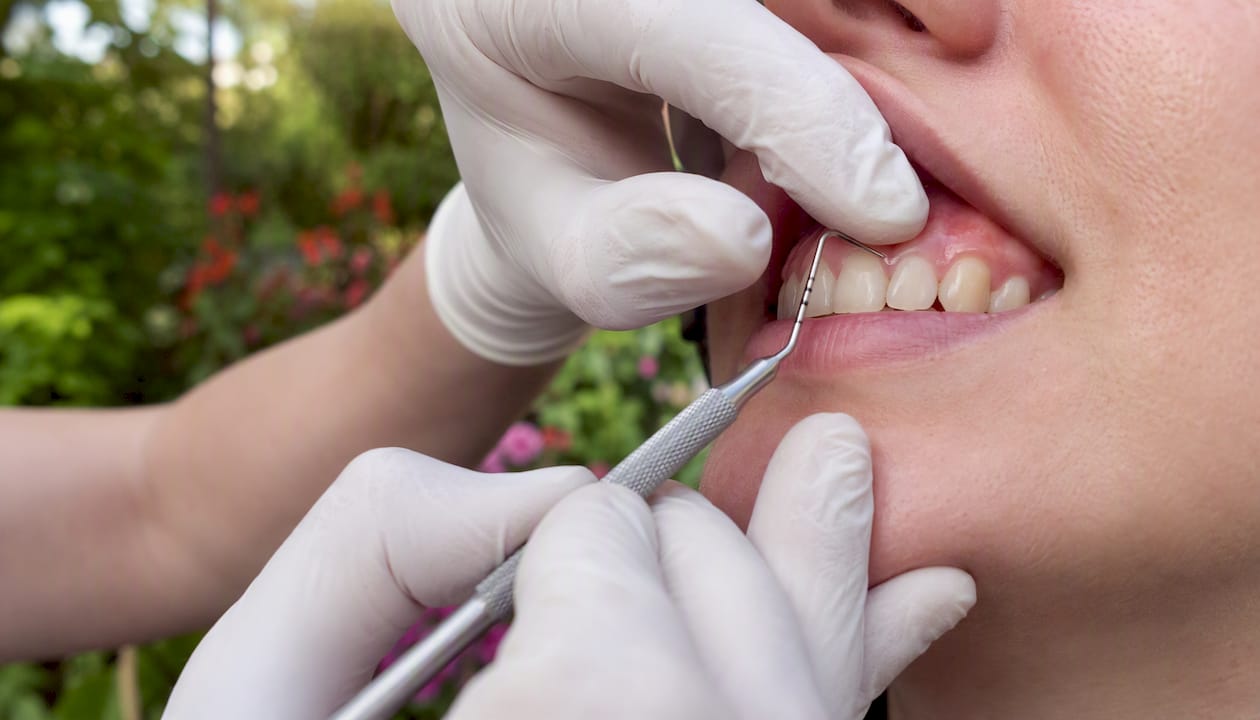
- Photographic documentation: standardized clinical photographs at baseline and follow-up visits allow objective tracking of progression or stability.
The Cleveland Clinic notes that early-stage recession may be managed with improved hygiene and professional cleaning, while advanced cases often require grafting. Referral to a periodontist is appropriate when:
- Recession is progressive across multiple sites despite improved home care.
- Probing depths exceed 4 mm or bone loss is evident radiographically.
- Persistent inflammation is present after two cycles of SRP.
- Aesthetic or sensitivity concerns are not controlled by conservative measures.
- Surgical coverage is being considered and the patient requires specialist evaluation.
What non-surgical care reliably stops recession from progressing?
Non-surgical management addresses the modifiable drivers of recession and is the appropriate first-line intervention for most patients. It stabilizes the condition and controls symptoms, but it does not restore lost gingival tissue.
Behavioral modifications:
- Transition to a soft-bristle manual or powered toothbrush and adopt the modified Bass technique: position bristles at a 45-degree angle to the gingival margin, use short horizontal vibrations, and avoid scrubbing strokes.
- Eliminate abrasive toothpastes with high relative dentin abrasivity (RDA) values; select formulations specifically designed for sensitive teeth and gum health.
- Discontinue tobacco use. Smoking cessation reduces inflammatory burden and improves tissue vascularity, which is relevant both for stabilization and for surgical healing if grafting is later indicated.
Professional non-surgical care:
- Scaling and root planing (SRP) removes subgingival calculus and disrupts the microbial biofilm driving inflammatory recession. For recession associated with periodontitis, SRP is the foundational treatment.
- Correction of subgingival restoration overhangs removes a local plaque-retentive factor that perpetuates inflammation.
- Localized antibiotic delivery (e.g., minocycline microspheres) may be indicated at specific sites with persistent deep pockets after SRP.
- Periodontal maintenance visits every three to four months are recommended for patients with a history of periodontitis or progressive recession, rather than the standard six-month interval.
Home-care adjuncts for sensitivity:
- Desensitizing toothpastes containing potassium nitrate or stannous fluoride occlude exposed dentinal tubules and reduce hypersensitivity over several weeks of consistent use.
- Topical fluoride varnish applied professionally provides additional root-surface protection and reduces caries risk at exposed sites.
- Evidence-backed natural rinses, such as those formulated with botanical antimicrobials, can serve as adjuncts for inflammation control. For a review of mouthwash options for receding gums, Stop-oralcare provides clinically oriented guidance on selecting rinses appropriate for this indication.
A systematic review published in BMC Oral Health found that combined periodontal-restorative treatment reduced dentin sensitivity in some trials compared with periodontal treatment alone, but showed no statistically significant advantage for most long-term periodontal parameters, with evidence certainty rated as low. This underscores that sensitivity management and tissue stabilization are achievable non-surgically, but tissue restoration requires a different intervention category.
Pro Tip: Ask your dentist to record recession measurements in millimeters at each visit and provide you with a copy. A written baseline allows you to verify stability or detect progression between appointments, which is the most reliable trigger for escalating to specialist care.
Which surgical procedures can restore the gum margin?
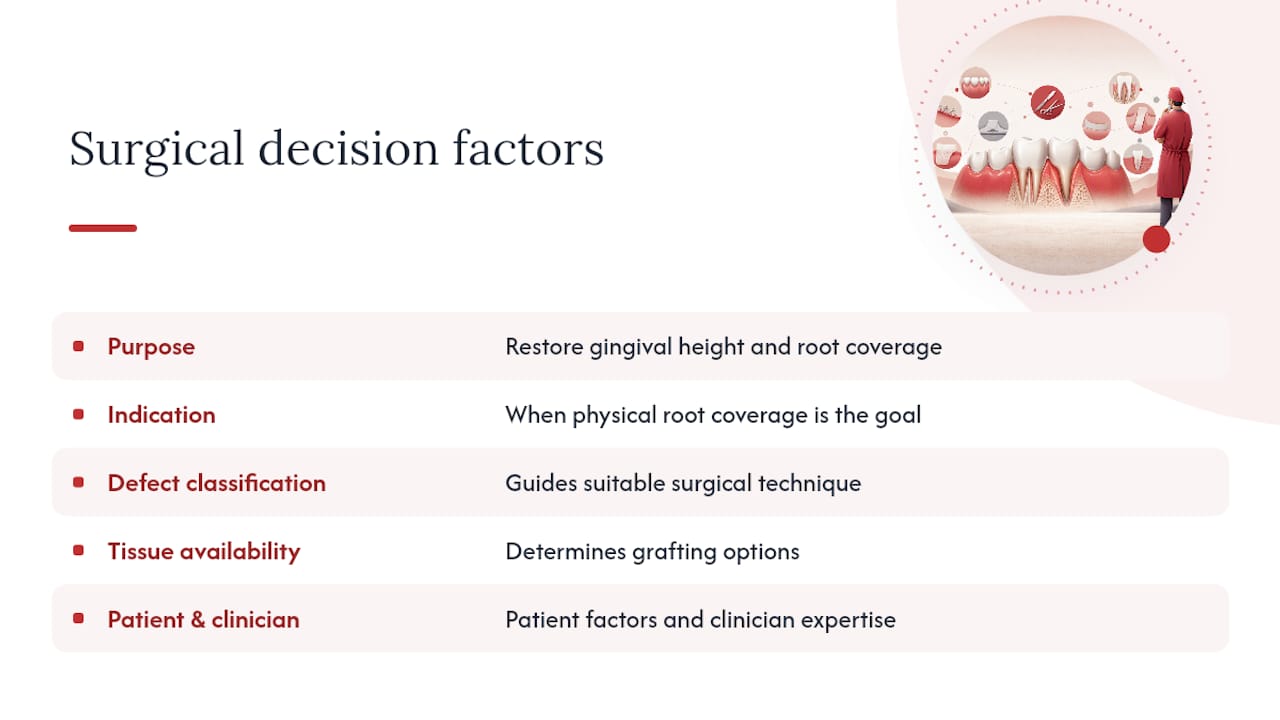
Surgical intervention is required when the clinical objective is to physically restore gingival height and achieve root coverage. The selection of technique depends on defect classification, tissue availability, patient factors, and clinician expertise.
The gold standard: CTG combined with coronally advanced flap
The subepithelial connective tissue graft (CTG) harvested from the palate, combined with a coronally advanced flap (CAF), is identified in multiple clinical reviews as the most predictable technique for root coverage in both single and multiple recession defects. The CTG provides a vascularized connective tissue scaffold beneath the repositioned flap, supporting tissue thickness and long-term stability. Root coverage outcomes with CTG + CAF are consistently superior to CAF alone for most defect types.
Alternative surgical techniques
- Tunneling with CTG: a minimally invasive approach in which the CTG is threaded through a tunnel created beneath the gingival tissue without vertical releasing incisions, reducing scarring and improving aesthetics in multiple adjacent recessions.
- CAF without CTG: appropriate when existing tissue thickness and keratinized tissue height are sufficient; offers lower morbidity but reduced predictability compared with CTG-augmented procedures.
- Free gingival graft (FGG): more predictable for augmenting keratinized tissue width than for root coverage; typically reserved for sites with critically insufficient attached gingiva rather than as a primary coverage technique.
- Pinhole surgical technique (PST): a minimally invasive option involving small access incisions and collagen membrane placement; short-term results are favorable in selected patients, but long-term randomized controlled trial data remain limited compared with CTG-based procedures.
Biomaterials and biologics
Practitioner-level reviews confirm that CTG harvest from the palate increases morbidity and recovery time, which has driven adoption of biomaterial alternatives:
- Acellular dermal matrices (ACDM) and collagen matrices (CM): act as scaffolds and can increase tissue thickness; some studies show lower root-coverage outcomes than CTG, but they eliminate donor-site surgery and are appropriate when patients decline palatal harvest.
- Enamel matrix derivative (EMD): a biologic adjunct that may enhance periodontal regeneration at the root surface when used alongside grafting procedures.
- Platelet-rich fibrin (PRF): an autologous biologic concentrate that may support wound healing and tissue integration; short-term data are promising, but long-term comparative evidence against CTG is still accumulating. Modern dental technology platforms increasingly incorporate PRF and similar biologics into minimally invasive periodontal protocols.
Clinical reviews consistently report that CTG-based procedures achieve the highest and most stable root coverage rates across defect types, with biomaterial alternatives offering a clinically acceptable trade-off when donor-site morbidity is a primary concern.
Pro Tip: Before surgery, ask your periodontist specifically: “What percentage of root coverage is realistic for my defect type, and what is the evidence base for the technique you are recommending?” A clinician who can answer with reference to defect classification and published outcomes is demonstrating the level of planning your case requires.
What do natural and home remedies actually accomplish?
The short, evidence-based answer is that natural remedies can reduce local inflammation and provide symptomatic relief, but no high-quality clinical evidence supports their ability to regenerate lost gingival tissue. This distinction is clinically significant: using home remedies as a substitute for professional care delays the interventions that actually stop progression.
Commonly used remedies and their evidence profiles:
- Saline rinses: isotonic salt solutions reduce mucosal irritation and support wound healing post-procedurally; anti-inflammatory benefit in small studies, no tissue regeneration.
- Aloe vera gel: demonstrates anti-inflammatory and antimicrobial properties in vitro and in small clinical trials; may reduce gingival inflammation as an adjunct to mechanical debridement, not as a standalone treatment.
- Oil pulling (typically sesame or coconut oil): some small trials report reductions in plaque index and gingival inflammation; evidence quality is low and no tissue regrowth has been demonstrated.
- Clove oil and botanical antiseptics: eugenol-containing preparations have documented local analgesic and antimicrobial activity; useful for short-term symptom relief, not for structural tissue restoration.
- CBD-based formulations: emerging evidence suggests anti-inflammatory activity relevant to gingival conditions; for a detailed review of the evidence, Stop-oralcare’s guide on CBD for gum disease addresses the current state of the literature for this adjunctive application.
The appropriate role for natural remedies is as adjuncts within a professionally supervised treatment plan, not as primary interventions. Patients who rely exclusively on home remedies while recession progresses risk reaching a point where more extensive surgical correction is required.
Pro Tip: When incorporating natural rinses or gels into your routine, use them after mechanical debridement (brushing and interdental cleaning), not instead of it. The anti-inflammatory benefit of botanical adjuncts is most clinically relevant when the biofilm load has already been mechanically reduced.
How to protect your gums every day after treatment
A structured daily maintenance routine is the primary defense against recession recurrence after treatment and against progression in patients managing early-stage recession conservatively.
Daily oral hygiene protocol:
- Brush twice daily with a soft-bristle brush using the modified Bass technique; powered toothbrushes with pressure sensors reduce the risk of mechanical trauma.
- Use interdental brushes or dental floss once daily to remove interproximal biofilm that a toothbrush cannot reach.
- Select a toothpaste formulated for gum health that avoids high-abrasivity ingredients; desensitizing formulations containing stannous fluoride or potassium nitrate are appropriate for patients with exposed root surfaces.
- Use an alcohol-free antimicrobial mouthwash where clinically indicated; alcohol-containing rinses can dry the oral mucosa and are not recommended for long-term daily use in patients with gingival sensitivity.
Lifestyle and systemic factors:
- Smoking cessation is the single most impactful lifestyle modification for periodontal health; tobacco use impairs healing and accelerates attachment loss regardless of the quality of local oral hygiene.
- Patients with bruxism should use a custom-fabricated occlusal night guard to reduce parafunctional loading on the periodontium.
- Systemic conditions including poorly controlled diabetes are associated with impaired periodontal healing; managing systemic health is an integral component of periodontal maintenance.
Professional maintenance frequency:
- Patients with a history of periodontitis or progressive recession require professional maintenance every three to four months rather than the standard six-month interval.
- Post-surgical patients should adhere to the periodontist’s prescribed recall schedule, which typically involves more frequent visits during the first year after grafting.
When should you see a periodontist, and what questions should you ask?
Referral to a periodontist is appropriate under several clinical conditions. Recognizing these triggers allows patients to seek specialist evaluation before recession advances to a point requiring more extensive intervention.
Referral triggers:
- Recession that is progressive across multiple sites despite corrected brushing technique and professional cleaning.
- Multiple adjacent recessions affecting aesthetic zones or causing uncontrolled sensitivity.
- Persistent probing depths greater than 4 mm or radiographic bone loss after SRP.
- Aesthetic or functional concerns that conservative management has not resolved.
Questions to ask during a periodontist consultation:
- What percentage of root coverage is realistic for my specific defect type and classification?
- Is a palatal donor site required, or are biomaterial alternatives appropriate for my case?
- What is the expected recovery timeline, and what restrictions apply post-operatively?
- What are the realistic complications, and how are they managed if they occur?
- What is the estimated cost, and which components are likely to be covered by my dental insurance?
- How many maintenance visits will be required in the first year after surgery?
Documentation to bring:
- Standardized clinical photographs showing recession extent and distribution.
- Records of prior dental work, including restorations near affected sites.
- Any history of orthodontic treatment, as tooth position affects tissue availability.
- A brief written history of brushing habits, tobacco use, and any parafunctional habits.
What does gum recession treatment cost in the United States?
Cost is a practical consideration that affects treatment decisions, particularly when surgical options are involved. The following ranges reflect typical U.S. market pricing and are subject to regional variation, the number of teeth treated, and whether biologics are incorporated.
Non-surgical procedures:
- Scaling and root planing (SRP): typically $150–$350 per quadrant, depending on severity and geographic region; most dental insurance plans cover SRP when medical necessity is documented.
- Periodontal maintenance visits: typically $100–$200 per visit; coverage varies by plan, with many insurers covering two to four maintenance visits per year for patients with documented periodontitis.
Surgical procedures:
- Connective tissue graft (CTG) with coronally advanced flap: typically $600–$1,200 per tooth or per surgical site; costs increase when multiple adjacent teeth are treated in a single session.
- Biomaterial-based procedures (ACDM or CM): comparable to CTG in procedural fees, with material costs potentially adding $200–$500 per site depending on the product used.
- Pinhole surgical technique: fees vary widely by provider; the technique is not universally offered and is not consistently covered by insurance.
Insurance and financial planning:
- Dental insurance typically covers SRP and periodontal maintenance under medical necessity criteria; gum grafting coverage depends on the plan and whether the procedure is classified as restorative versus cosmetic.
- Submit a pre-treatment estimate (predetermination) to your insurer before scheduling surgery; this provides a written statement of expected coverage and patient responsibility.
- Ask for an itemized written estimate from the periodontist’s office that separates surgical fees, anesthesia, and any biologic or material costs.
- Staged treatment across multiple benefit periods can reduce out-of-pocket costs when multiple sites require grafting.
- Many periodontal practices offer financing through third-party plans; confirm terms before committing.
For context on how restorative work at the gingival margin intersects with periodontal health, general dentistry practices that coordinate restorative and periodontal care can reduce the risk of recession recurrence at restored sites.
A clinician’s perspective on realistic expectations
The most common error patients make with gingival recession is conflating symptom control with tissue restoration. Desensitizing toothpastes, natural rinses, and improved brushing technique are genuinely useful, and they are the correct starting point. But they address the consequences of recession, not the structural deficit. A patient who manages sensitivity well with a desensitizing dentifrice may feel that the problem is resolved when, in fact, the root surface remains exposed and the risk of root caries and further recession persists.
The clinical evidence is unambiguous on this point: surgery is the only intervention that physically restores gingival height. The decision about whether and when to pursue surgical correction should be based on defect severity, the patient’s functional and aesthetic priorities, and a realistic discussion of expected outcomes with a periodontist. Not every recession requires grafting. Shallow, stable recessions with adequate keratinized tissue and no sensitivity may be monitored conservatively for years. But progressive recession, thin biotype, and root exposure in aesthetic zones are indications for timely specialist referral, not indefinite conservative management.
Natural and adjunctive products, including fluoride-free formulations with botanical and mineral actives, have a legitimate role in the maintenance phase: reducing inflammation, supporting tissue health, and managing sensitivity between professional visits. Stop-oralcare’s product line, formulated with hemp-derived actives and Dead Sea minerals, is positioned precisely in this adjunctive role. The evidence for botanical anti-inflammatory activity is real; the claim that any topical product regrows lost gingival tissue is not supported by current clinical data.
Shared decision-making between patient and clinician, grounded in accurate information about what each intervention can and cannot achieve, produces the best long-term outcomes.
Stop-oralcare supports gum health between professional visits
Patients managing gingival recession need products that reduce inflammation and sensitivity without introducing abrasive or irritating ingredients that worsen the condition. Stop-oralcare’s fluoride-free formulations, developed with hemp-derived actives and Dead Sea minerals, are designed as evidence-informed adjuncts for exactly this phase: maintaining gingival health, controlling sensitivity, and supporting the tissue environment between professional cleanings and after surgical recovery.
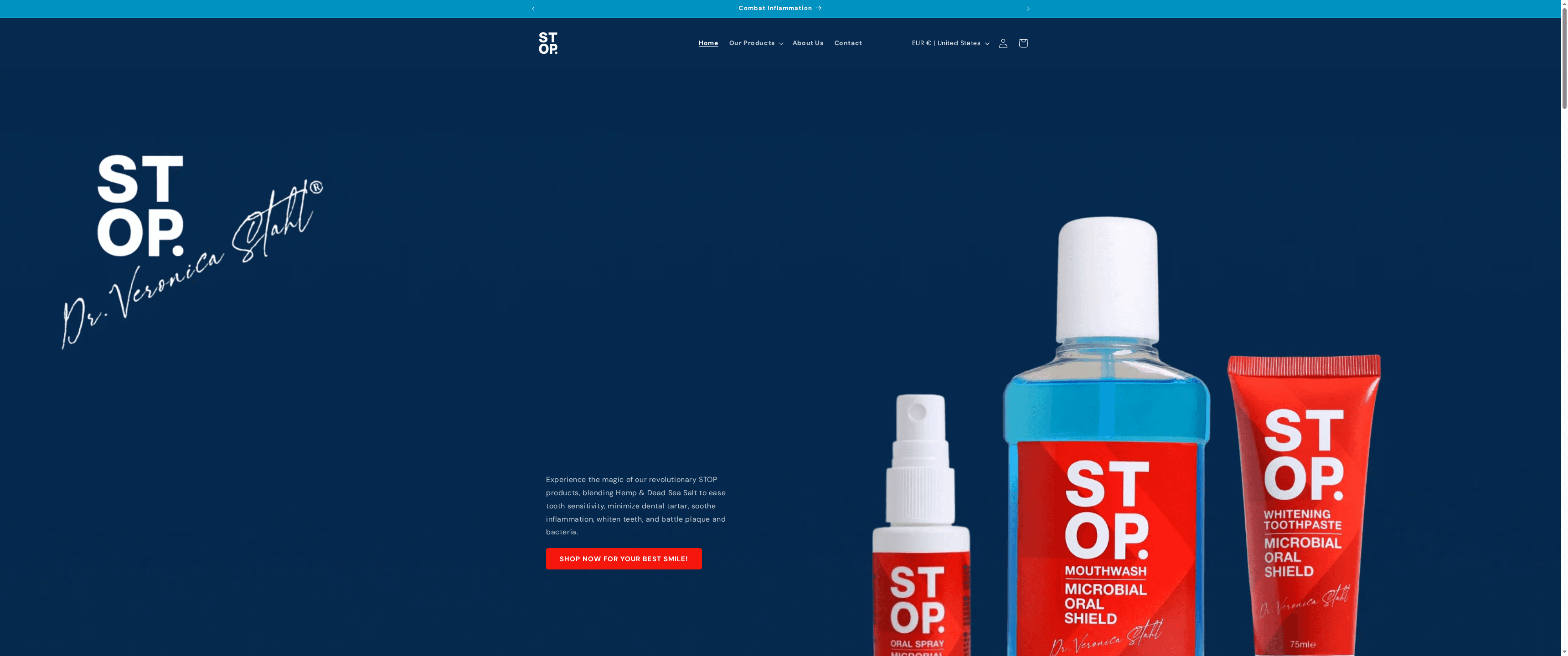
These products do not replace scaling, grafting, or the clinical interventions that stop progression and restore tissue. They complement them. For patients who have completed non-surgical stabilization or post-surgical recovery and are looking for a daily care regimen that supports gum health without fluoride or synthetic additives, Stop-oralcare offers a natural oral care line formulated with that specific clinical context in mind. Visit the site to review the full product range and select the formulations appropriate for your maintenance phase.
Sources
The following sources provide peer-reviewed and institutional guidance on gingival recession diagnosis, treatment, and prevention:
- Treatment of Gingival Recession: When and How? - PMC
- NIDCR Oral Health pages
- Receding Gums: Causes, Treatment, and Prevention | Cleveland Clinic
This article is general information, not a substitute for advice from a qualified doctor. Consult a qualified healthcare professional about your own circumstances before acting on anything here.
Recommended
- Understanding gumbleeding: A Practical Guide to Prevention and Care – Stop Oral Care
- How to Prevent Gingivitis Naturally: Simple Steps for Healthy Gums – Stop Oral Care
- Best Mouthwash for Receding Gums: Top Picks for Healthy Gums in 2026 – Stop Oral Care
- Natural Remedy for Bleeding Gums: A Step‑by‑Step Guide to Healing Your – Stop Oral Care