

Rinse with a saltwater solution (½ teaspoon salt in 8 ounces of warm water), gently brush the sore area with a soft-bristle brush, and apply a cold compress against the cheek to bring down swelling fast. Topical aloe gel or a diluted clove application can ease pain in the meantime. These steps calm symptoms, but they don’t fix the underlying cause. See a dentist if swelling is severe, spreads to your face, or lasts longer than a couple of weeks.
TL;DR:
- Saltwater rinses, cold compresses, and topical gels can temporarily reduce swelling and pain, but do not address underlying causes of gum inflammation.
- Plaque buildup and gingivitis are the primary triggers, with factors like food debris, ill-fitting dental work, and hormonal shifts also playing significant roles.
- Natural remedies such as aloe vera and curcumin rinses show clinical benefits only when used in standardized, tested formulations, not homemade mixes.
- Avoid using undiluted essential oils, alcohol mouthwashes, and hot or acidic foods, as they can worsen inflammation or cause tissue damage.
- Persistent swelling beyond two weeks, facial swelling, bleeding, loose teeth, or signs of infection require prompt professional dental evaluation.
Table of Contents
- What Causes Swollen Gums in the First Place?
- Home Remedies That Actually Relieve Swollen Gums
- Using Remedies Safely: What to Avoid and When to Stop
- The Daily Routine That Prevents Gum Inflammation From Coming Back
- What the Research Actually Supports (and Where It Stops)
- Why Natural Doesn’t Mean Unregulated
- Stop-oralcare: Supportive Products for Sensitive, Swollen Gums
- Sources
- FAQ
What Causes Swollen Gums in the First Place?
Plaque buildup along the gumline is the leading cause of swollen gums, and it’s the reason gingivitis is so common. Bacteria in plaque irritate gum tissue, causing redness, puffiness, and bleeding when you brush. Left alone, plaque hardens into tartar, which a toothbrush cannot remove. At that point, only a dental hygienist can clear it with professional instruments.
Plaque isn’t the only trigger. A piece of popcorn skin or a seed lodged between teeth can inflame a single spot within hours. Ill-fitting dentures, a cracked filling, or a new orthodontic wire can rub gum tissue raw. Hormonal shifts during pregnancy or puberty make gums more reactive to the same amount of plaque that wouldn’t bother them otherwise. Diabetes, certain blood pressure medications, and chemotherapy drugs also raise the risk of gum swelling independent of oral hygiene.
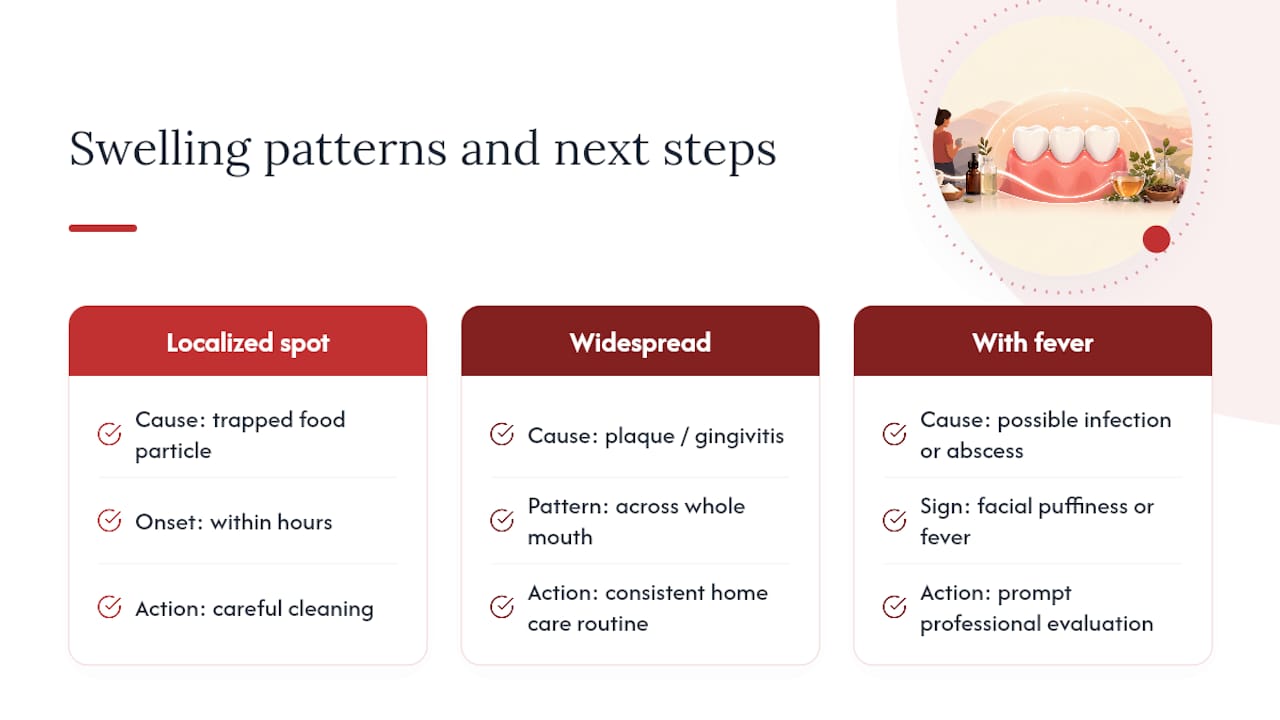
Matching your symptoms to a likely cause changes what you should do next. A single swollen spot near a trapped food particle usually resolves with careful cleaning. Widespread puffiness across the whole mouth points toward plaque and gingivitis, and calls for a more consistent home care routine, not just a one-time fix. Swelling paired with fever or facial puffiness suggests infection, which home remedies cannot resolve on their own.
Home Remedies That Actually Relieve Swollen Gums
Start with the basics before reaching for anything exotic. A saltwater rinse remains the most reliable natural remedy for swollen gums because it’s cheap, low-risk, and genuinely reduces bacterial load along the gumline. Mix ½ teaspoon of salt into 8 ounces of warm water, swish for 30 seconds, and spit. Do this two to three times a day. Never swallow the solution, and skip it for young children who are likely to swallow rather than spit.
Compresses work on the swelling itself rather than the bacteria causing it. Use a cold compress against the outside of your cheek for the first 24 hours when swelling is fresh and puffy; ten minutes on, ten minutes off, works well. If the soreness is more of a dull ache without visible puffiness, a warm compress can relax the area instead.

Aloe vera and curcumin (the active compound in turmeric) have real research behind them, but the evidence applies to prepared, standardized rinses, not kitchen improvisation. A randomized trial found aloe vera mouthwash reduced plaque and gingivitis compared with placebo, though the effect was smaller than chlorhexidine in some comparisons. Curcumin rinses show a similar pattern in short-term studies. Mixing raw turmeric paste at home does not replicate a lab-tested formulation, and absorption varies wildly depending on preparation method.
Here’s how to use the remaining remedies without doing damage:
- Clove oil: Dilute a drop or two in a carrier oil (coconut or olive) before dabbing on the sore spot; undiluted clove oil can burn tissue.
- OTC oral analgesic gels: Apply a pea-sized amount directly to the swollen area, following package frequency limits.
- Hydrogen peroxide rinse: Use only a 3% solution diluted 1:1 with water, swish briefly, and spit; never use concentrated peroxide.
- Oil pulling: Swishing coconut oil for several minutes has limited evidence behind it and works, at best, as a mild adjunct, not a substitute for brushing.
Pro Tip: Keep a small bottle of pre-mixed saltwater rinse in the fridge during a flare. Cold rinse combines the antibacterial benefit of salt with a mild soothing effect, similar to a compress.
Using Remedies Safely: What to Avoid and When to Stop
Every remedy above works best under a few ground rules: dilute anything concentrated, spit rather than swallow, patch-test new topical products on a small area first, and stop immediately if burning or increased swelling shows up. Gum tissue is thinner and more absorbent than skin, which is why concentrations that seem mild elsewhere can still irritate it.
Certain habits actively work against healing. Avoid these while gums are inflamed:
- Undiluted essential oils or clove oil applied directly to tissue.
- Alcohol-based mouthwashes, which dry and irritate already-sensitive gums.
- Smoking or vaping, both of which slow tissue healing.
- Acidic foods, very hot foods, or crunchy snacks that can further scrape inflamed areas.
Know the red flags that mean it’s time to stop self-treating. Facial or neck swelling that affects breathing, swallowing, or speaking is a medical emergency, not a home-remedy situation. Persistent bleeding, loose teeth, visible pus, mouth ulcers that don’t heal, or any swelling lasting beyond two weeks all warrant a dental visit.
On timing: most plaque-related gum swelling improves within 3 to 5 days of consistent gentle brushing and rinsing. Full resolution, especially with tartar involved, typically requires professional cleaning, after which most people see visible improvement within one to two weeks.
The Daily Routine That Prevents Gum Inflammation From Coming Back
Home remedies treat the flare. Daily habits treat the cause. The routine below, grounded in ADA and NHS guidance, keeps plaque from accumulating enough to trigger swelling again.
- Brush for two full minutes, twice daily, with a soft-bristle brush; a hard brush scrapes gum tissue without cleaning any better.
- Replace your toothbrush roughly every three months, sooner if the bristles fray.
- Clean between teeth daily using floss or interdental brushes; interdental brushes tend to work better for wider gaps or bridge work, while floss suits tighter contacts.
- Add an antimicrobial mouthrinse as a supplement to brushing, not a replacement, ideally used at a different time of day than brushing so the active ingredients aren’t rinsed away immediately.
- Book a professional cleaning roughly every six months, since tartar buildup below the gumline can’t be removed with a toothbrush at home.
Keep brushing gently through a flare rather than avoiding the sore spot. Skipping cleaning around inflamed gums lets plaque sit right at the gumline, which tends to prolong the swelling rather than give it a rest.
What the Research Actually Supports (and Where It Stops)
The strongest evidence for natural gum remedies comes from standardized aloe vera and curcumin rinses tested in controlled trials, both of which showed measurable reductions in plaque and gingival inflammation compared with placebo. That’s meaningfully different from raw turmeric paste or homemade clove mixtures, which haven’t been validated in the same way even though they use the same base ingredients.
Both the NHS and the ADA frame rinses, herbal or otherwise, as an adjunct to mechanical cleaning, never a replacement for brushing, interdental cleaning, or professional care when tartar or infection is involved.
That’s the gap Stop-oralcare’s fluoride-free toothpaste, mouthwash, and oral spray are built to sit inside: gentle, hemp and Dead Sea mineral formulations designed to support a daily routine rather than promise a cure. For readers who want the mechanics of a saltwater rinse or a properly diluted natural mouthwash recipe, those step-by-step guides walk through exact ratios and timing.
Why Natural Doesn’t Mean Unregulated
Readers searching for a swollen gums home remedy often assume “natural” is shorthand for “harmless in any amount.” That assumption causes more irritation than it solves. Undiluted clove oil, concentrated hydrogen peroxide, and homemade turmeric pastes all carry a real risk of burning gum tissue precisely because they’re unregulated in strength. The trials that validate aloe vera and curcumin rinses used specific, tested concentrations, not whatever a home cook happened to mix in a bowl.
The more useful mindset is treating natural remedies the way you’d treat any active ingredient: respect the dose, respect the dilution, and don’t assume more is better. Daily plaque control does more for long-term gum health than any single rinse ever will, natural or otherwise. Consult a dentist when swelling doesn’t resolve on schedule; a supportive product routine should never delay that visit.
— Veronica
Stop-oralcare: Supportive Products for Sensitive, Swollen Gums
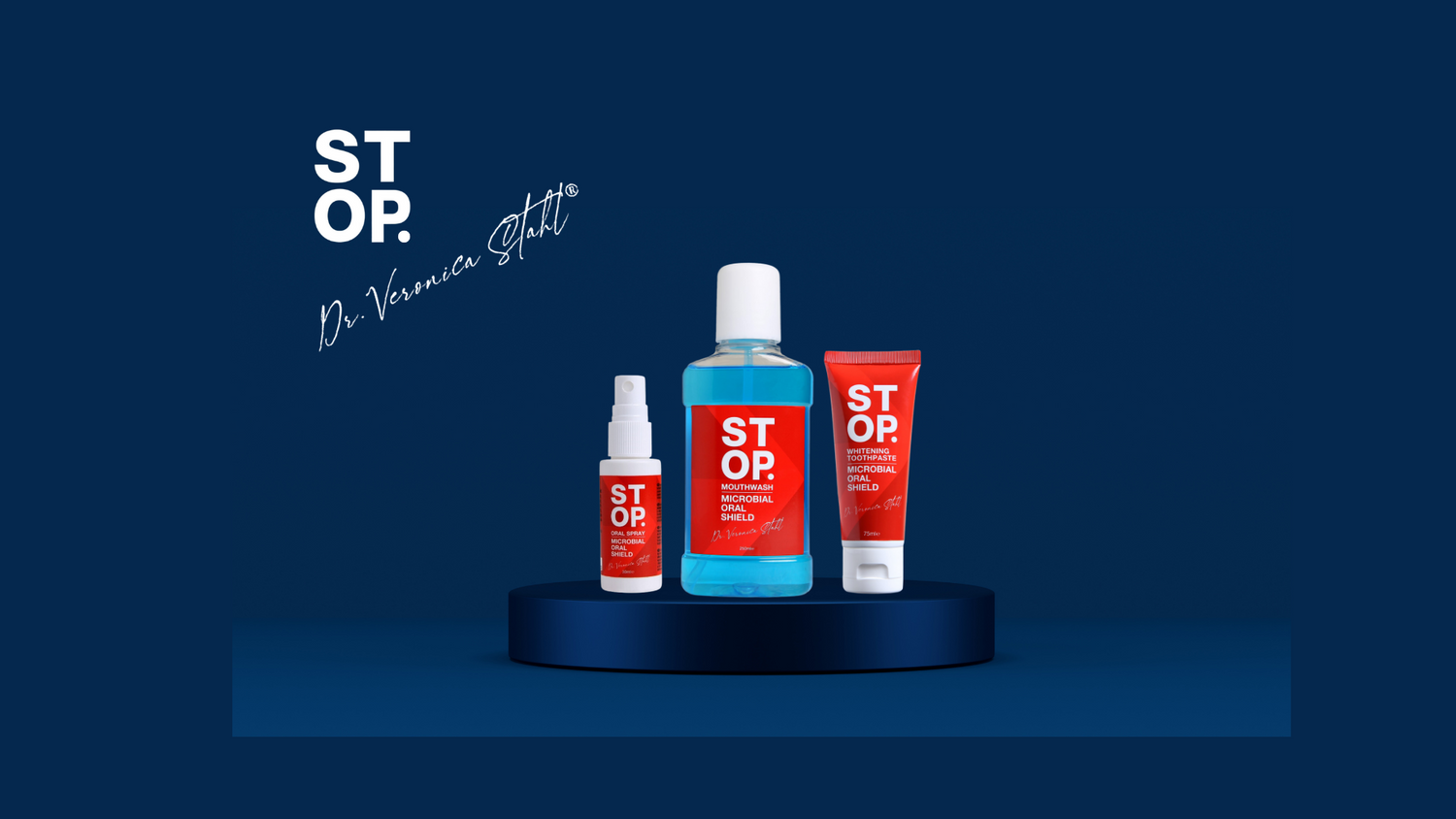
If you’re rebuilding your routine after a flare, the products matter as much as the rinsing schedule. Stop-oralcare’s fluoride-free line, formulated with hemp and Dead Sea minerals, gives you a toothpaste, mouthwash, and oral spray built around gentle, non-irritating ingredients rather than the alcohol and harsh detergents found in many conventional formulas.

When you’re shopping for anything to use on inflamed gums, check the label for alcohol-free mouthwashes and skip anything listing strong essential oils high on the ingredient list, since those are the irritants most likely to undo your progress. The STOP Protective & Whitening Toothpaste, STOP Mouthwash, and STOP Protective Oral Spray are priced at €12.99, €20.00, and €11.99 respectively, each sold as a one-off purchase. If your gums are still sensitive from a recent flare, pair one of these with the saltwater rinse routine outlined earlier and check the current lineup on the Stop-oralcare product page before your next order.
Sources
- Toothache - NHS
- Swollen gums: Causes & Treatment - Cleveland Clinic
- Aloe vera mouthwash trial - PubMed
- Home Oral Care - American Dental Association
FAQ
What Is the Fastest Way to Heal Swollen Gums?
The fastest safe approach combines a saltwater rinse two to three times a day, gentle brushing with a soft-bristle brush, and a cold compress against the cheek for the first day. Most plaque-related swelling starts improving within 3 to 5 days of consistent care, though full resolution may need a professional cleaning.
What Causes Swollen Gums?
Plaque buildup and gingivitis cause most cases of swollen gums, but trapped food, ill-fitting dental work, hormonal shifts, and conditions like diabetes can also trigger swelling. Red, sore, or bleeding gums should be checked by a dentist if they don’t improve with better home care.
Which Medicine Is Best for Gum Swelling?
Over-the-counter oral analgesic gels applied directly to the swollen area can relieve pain, and a diluted hydrogen peroxide rinse (3% solution mixed 1:1 with water) can help reduce bacteria. Neither replaces a dentist’s care if swelling persists beyond two weeks or if you notice pus, loose teeth, or facial swelling.
What Kills Gum Disease Naturally?
Nothing “kills” established gum disease naturally; tartar below the gumline requires professional removal. Standardized aloe vera and curcumin rinses have shown measurable reductions in plaque and gingivitis in clinical trials, but they work as adjuncts to brushing and interdental cleaning, not standalone cures.
Does Stop-oralcare Help With Gum Swelling?
Some fluoride-free toothpastes, mouthwashes, and oral sprays are formulated with hemp and Dead Sea minerals to support a gentle daily routine for sensitive or inflamed gums. They’re designed as supportive products alongside good brushing habits, not a substitute for professional care when swelling is severe or persistent.