

TL;DR:
- Natural botanical agents like neem, green tea, and aloe effectively reduce gingivitis with fewer side effects.
- A gentle routine with soft brushes, fluoride-free toothpaste, and herbal rinses supports long-term gum health.
- Consistent evaluation of gum response helps tailor natural care and identify when professional intervention is necessary.
Persistent gum sensitivity interferes with eating, speaking, and maintaining consistent oral hygiene, yet most conventional dental products contain ingredients that further irritate already compromised gum tissue. For individuals seeking fluoride-free, non-irritating solutions, the landscape of available options can seem limited and poorly documented. This article presents an evidence-based, stepwise approach to natural gum care, identifying the principal causes of gum sensitivity, the most effective botanical agents supported by current research, and a practical protocol for soothing inflamed gum tissue safely and consistently at home.
Table of Contents
- What causes gum sensitivity and why it matters
- What you need to soothe sensitive gums naturally
- Step-by-step: How to calm sensitive gums safely
- Check your results and adjust your routine
- Why your approach to soothing sensitive gums matters more than the product
- Explore innovative, gentle gum care solutions
- Frequently asked questions
Key Takeaways
| Point | Details |
|---|---|
| Soothing needs a gentle approach | Choose safe, natural methods and adjust them based on your gum’s response for best results. |
| Natural care can match conventional | Herbal rinses like aloe and neem work as well as standard products, with fewer side effects. |
| Routine matters more than product | Consistent, mindful oral care brings better results than relying on one solution. |
| Adjust with your progress | Track improvements and modify your routine for ongoing comfort and optimal gum health. |
What causes gum sensitivity and why it matters
Gum sensitivity is not a uniform condition. It arises from a range of physiological and environmental triggers, each of which requires a distinct management strategy. Understanding the underlying mechanism is essential before selecting any topical or rinse-based intervention.
The most frequently documented causes include:
- Aggressive or improper brushing technique, which abrades the gingival margin and causes mechanical irritation of sensitive soft tissue
- Dietary acidity, particularly from citrus fruits, vinegars, and carbonated beverages, which lowers intraoral pH and weakens the epithelial barrier of gingival tissue
- Early-stage gingivitis and subclinical gum disease, which produce localized inflammatory responses characterized by erythema, edema, and bleeding on probing
- Dental products containing harsh detergents or synthetic abrasives, including sodium lauryl sulfate (SLS) and certain whitening compounds, which disrupt the gingival sulcular epithelium
When sensitivity is left unaddressed, the inflammatory cascade can progress from reversible gingivitis to irreversible periodontitis, ultimately resulting in gingival recession and alveolar bone loss. Early intervention with gentle, well-tolerated agents is, therefore, not merely a matter of comfort but of long-term oral structural preservation.
Research consistently demonstrates that botanical agents offer a clinically relevant alternative to synthetic formulations. Herbal agents in oral health such as neem, green tea, and aloe vera show comparable efficacy to chlorhexidine in reducing gingivitis scores, while presenting a markedly superior safety profile with fewer reports of tissue irritation, staining, and dysgeusia.
“Natural products like neem, green tea, and aloe demonstrate comparable efficacy to chlorhexidine in reducing gingivitis, with fewer adverse side effects.” — MDPI Dentistry Journal, 2024
Readers seeking a foundational overview of natural gum remedies will find that the scientific literature consistently supports plant-based approaches as a first-line option for mild to moderate gum sensitivity, particularly for individuals who are intolerant of conventional chemical formulations.
The critical point is that natural interventions are most effective when applied early and consistently, before chronic inflammation has altered the structural integrity of gingival tissue. The window for non-invasive care is widest at the earliest stages of gum sensitivity.
What you need to soothe sensitive gums naturally
Once the underlying causes are identified, assembling the appropriate materials for a natural gum care routine is the logical next step. The following components represent the minimum viable toolkit for evidence-supported, at-home gum sensitivity management.
Core materials and agents:
- Soft or extra-soft bristle toothbrush: Bristle hardness directly influences the degree of mechanical trauma to gingival tissue; ultra-soft variants are strongly recommended for individuals with active sensitivity
- Fluoride-free, SLS-free toothpaste: Formulations containing natural soothing agents such as aloe vera gel, Dead Sea minerals, or hemp-derived compounds are preferable for minimizing chemical irritation
- Aloe vera oral rinse: Aloe’s anti-inflammatory and antimicrobial glycoproteins directly reduce gingival inflammation without altering the oral microbiome adversely
- Neem-based mouthwash or oil: Neem contains nimbidin and other limonoids (compounds with documented antibacterial activity against periodontal pathogens) that reduce plaque accumulation and gingival bleeding
- Green tea rinse: Epigallocatechin gallate (EGCG), the primary catechin in green tea, inhibits the growth of Porphyromonas gingivalis, a key pathogen in periodontal disease
- Diluted clove oil: Clove oil’s analgesic properties are well established; eugenol, its active constituent, provides local analgesia and anti-inflammatory relief when applied in diluted form to sore gum tissue
Preparation guidelines:
| Agent | Recommended dilution | Frequency of use | Primary benefit |
|---|---|---|---|
| Aloe vera rinse | Undiluted or 1:1 with water | Once or twice daily | Anti-inflammatory, tissue soothing |
| Neem mouthwash | As per product directions | Once daily | Antimicrobial, plaque reduction |
| Green tea rinse | Brewed, cooled | Once or twice daily | Antioxidant, antibacterial |
| Clove oil | 1-2 drops in 1 tsp carrier oil | Maximum 2x daily, short-term | Analgesia, anti-inflammation |
The concentration of active compounds in topical agents significantly determines both efficacy and safety. Undiluted essential oils, including clove oil, can cause chemical burns to already sensitized gingival tissue and should never be applied without a carrier oil such as coconut or olive oil. Reviewing mouthwash ingredients for sensitive gums before selecting a commercial rinse will help ensure that no additional irritants are inadvertently introduced into the routine.
Pro Tip: Before introducing any new rinse or topical agent, apply a small amount to the inner cheek mucosa and wait 24 hours. If no irritation develops, proceed with gingival application. This patch-test protocol is especially important for concentrated botanical extracts. Additional tips for natural gum care can further support the safety of your routine.
Step-by-step: How to calm sensitive gums safely
With the appropriate materials assembled, a structured protocol ensures that each intervention is applied correctly, at the right frequency, and in an order that maximizes therapeutic benefit while minimizing further tissue disruption.
Step 1: Rinse first with a botanical mouthwash Before brushing, rinse for 30 to 60 seconds with an aloe vera or neem-based mouthwash to reduce the bacterial load on the gingival surface and soften any adhered biofilm. This pre-brush rinse reduces the mechanical force required during brushing.
Step 2: Brush with controlled technique Use a soft-bristle toothbrush and a gentle, circular motion, directing the brush at a 45-degree angle toward the gumline. Apply minimal pressure. Use a fluoride-free, SLS-free toothpaste to avoid introducing chemical irritants to already sensitive tissue. Brush for a minimum of two minutes.

Step 3: Floss gently with unwaxed or water-based flossing Interdental cleaning removes biofilm from areas inaccessible to toothbrush bristles. Use a gentle, C-shaped flossing technique to avoid snapping floss against the gingival papilla. Water flossers set to low pressure are a suitable alternative for individuals with significant sensitivity.
Step 4: Apply diluted clove oil if acute soreness is present When acute localized soreness is present, apply one to two drops of clove oil diluted in a carrier oil directly to the affected area using a clean cotton swab. Allow the preparation to remain in contact with the tissue for no more than two minutes before rinsing. Clove oil analgesic relief is well documented, but repeated application beyond twice daily can cause mucosal sensitization and should be avoided.
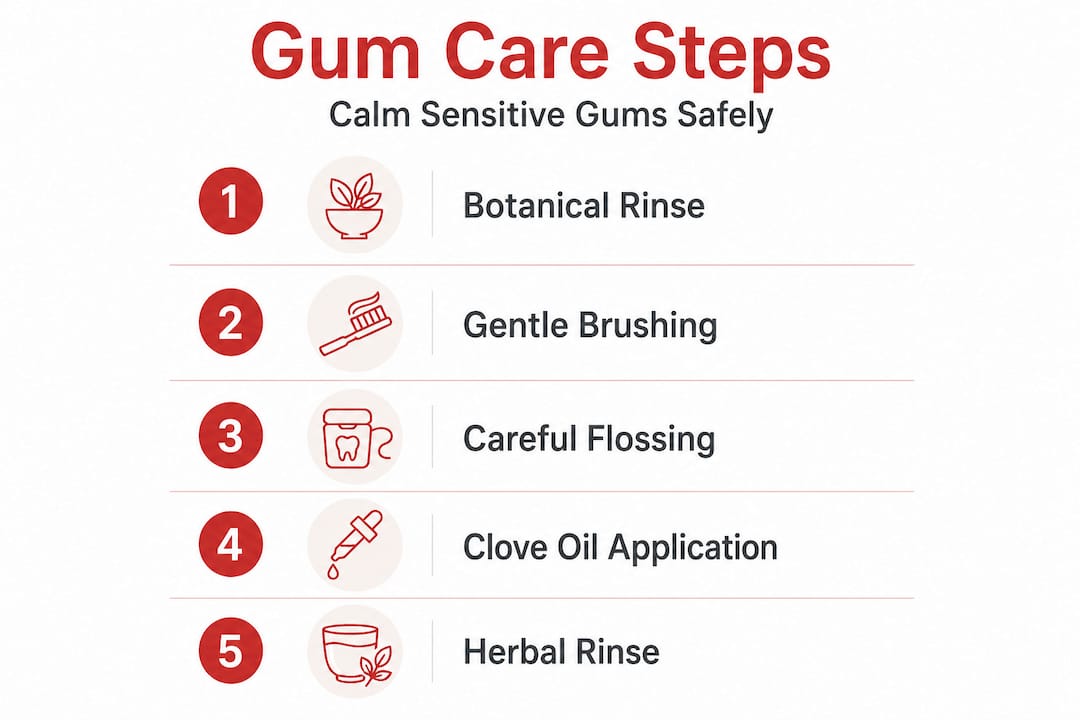
Step 5: Follow with a post-brush herbal rinse After brushing and flossing, rinse again with green tea or aloe vera to deposit active anti-inflammatory compounds on the gingival surface. Allow this rinse to remain in the oral cavity for 60 to 90 seconds before expectorating.
Comparison of herbal rinses versus conventional mouthwashes:
| Attribute | Herbal rinse (aloe, neem, green tea) | Conventional chlorhexidine mouthwash |
|---|---|---|
| Gingivitis reduction | Comparable efficacy | High efficacy |
| Gingival staining | None reported | Frequent |
| Taste alteration | Minimal | Common (bitter metallic) |
| Oral microbiome impact | Selective antimicrobial | Broad disruption |
| Safety for sensitive gums | High | Moderate |
| Fluoride-free option | Yes | Typically no |
Herbal agents comparable efficacy to chlorhexidine in plaque and gingivitis reduction has been confirmed across multiple randomized controlled trials, making this a clinically justified substitution for individuals who cannot tolerate conventional formulations.
Maintaining a consistent natural oral care routine is more predictive of long-term improvement than any single product selection. Individuals with receding gums will also benefit from reviewing guidance on the best mouthwash for receding gums, which outlines additional protective strategies.
Pro Tip: Wait at least 30 minutes after consuming acidic foods or beverages before brushing. Acidic pH temporarily softens enamel and gingival surfaces, and brushing during this window increases abrasive damage to already sensitized tissue.
Check your results and adjust your routine
After establishing a consistent natural gum care protocol, objective monitoring of gingival response is essential to determine whether the selected agents and techniques are producing measurable improvement or require modification.
Signs of positive gingival response:
- Reduction in bleeding on brushing or flossing within 7 to 14 days of consistent care
- Decreased erythema (redness) and swelling along the gingival margin
- Reduced tenderness during routine brushing and dietary function
- Return of a pale pink, stippled (textured) gingival surface, which indicates healthy keratinized tissue
- No new recession of the gingival margin compared to baseline observations
Signs requiring prompt dental evaluation:
- Persistent or increasing bleeding beyond two weeks of consistent care
- Deep pocketing sensation along the gingival sulcus (the groove between tooth and gum)
- Spontaneous pain in the absence of mechanical stimulation
- Visible gum recession progressing beyond what was previously observed
- Loose teeth or significant changes in bite alignment
“Consistent monitoring of gingival response is as important as the selected therapeutic agent. Failure to adjust the protocol based on observed outcomes reduces the overall efficacy of the intervention.” — Clinical Periodontics Consensus, 2023
Common errors that undermine progress:
- Overuse of concentrated essential oils, particularly undiluted clove or tea tree oil, which causes chemical irritation that mimics the original sensitivity
- Inconsistent application of the rinse protocol, typically skipping the post-brush rinse step
- Continuing to use toothbrushes with medium or hard bristles despite gingival sensitivity
- Failing to modify dietary patterns, particularly continued high-frequency consumption of acidic or sugary foods
Oral health checklist resources provide structured tracking tools for recording gingival changes week by week, facilitating more objective assessments of routine efficacy. Maintaining a written log of sensitivity levels, bleeding frequency, and observed tissue color changes enables iterative refinement of the care protocol based on evidence rather than subjective perception alone.
Empirical evidence confirms that herbal rinse efficacy in plaque reduction is comparable to conventional agents, which means that if a well-executed natural protocol is not yielding improvement within three to four weeks, the issue is more likely related to technique, consistency, or an underlying condition requiring professional assessment than to the inherent limitations of botanical formulations.
Why your approach to soothing sensitive gums matters more than the product
The dominant consumer narrative around oral care positions product selection as the primary determinant of gum health outcomes. This framing is commercially convenient but clinically inaccurate. The scientific literature is consistent on one point: technique, consistency, and individualization of care protocols produce superior outcomes compared to any single product used in isolation.
Natural oral hygiene tips consistently emphasize that rotating botanical rinses, adjusting brushing technique in response to gingival feedback, and modifying dietary habits represent the most evidence-supported pathway to sustained gum comfort. A premium natural mouthwash applied once per week with aggressive brushing will never outperform a modest herbal rinse used correctly and consistently twice daily.
The American Dental Association (ADA) formally emphasizes fluoride as the standard for cavity prevention, while simultaneously acknowledging clinical evidence for other therapeutic agents in reducing periodontal inflammation. This distinction is important: it means that fluoride-free approaches are not categorically inferior, but they must be chosen and applied deliberately, based on the individual’s specific risk profile, sensitivity triggers, and oral microbiome composition.
Herbal agents matching chlorhexidine in clinical trials underscores this point. The finding is not an argument that every individual should abandon conventional products, but rather that evidence-based natural alternatives are a legitimate, clinically documented option, particularly for those who experience adverse reactions to standard chemical formulations.
The approach that produces the most durable benefit is one that is personalized, iterative, and grounded in observable outcomes rather than brand loyalty or marketing claims.
Explore innovative, gentle gum care solutions
Ready to advance your gum care routine with natural, science-backed options?
Stop Oral Care offers a curated line of fluoride-free oral health products, formulated with hemp-derived compounds, Dead Sea minerals, and botanical agents specifically chosen for their documented efficacy and safety in sensitive gum management. Each product in the range reflects the research-driven approach developed by Dr. Veronica Stahl, whose work bridges clinical dentistry and evidence-based natural medicine.

Whether you are establishing a new natural oral care routine or refining an existing protocol, the Stop Oral Care product range provides clinically informed options for toothpaste, mouthwash, and oral sprays designed to support gingival health without the synthetic additives that compromise tissue comfort. Educational resources accompany each product, ensuring that your choices are grounded in current scientific evidence.
Frequently asked questions
What is the best natural remedy for soothing sensitive gums?
Diluted clove oil and herbal rinses such as aloe vera and neem demonstrate documented analgesic and anti-inflammatory activity for sensitive gum tissue, though clove oil must be diluted in a carrier oil and limited to two applications per day to avoid mucosal irritation.
How often should I use natural mouthwashes for sensitive gums?
Most herbal mouthwashes formulated with aloe, neem, or green tea can be used safely once or twice daily, but frequency should be adjusted based on individual tolerance and any observed changes in gingival tissue response.
Can I avoid fluoride completely if I have sensitive gums?
Natural rinses matching conventional efficacy in plaque and gingivitis reduction indicates that fluoride-free care is clinically viable for many individuals, though your dentist should assess your specific cavity risk profile and provide guidance tailored to your oral health history.
How can I tell if my gum sensitivity is serious?
Frequent spontaneous bleeding, pronounced swelling, persistent pain, or visible gum recession that progresses despite consistent care are indicators of potential periodontitis or another underlying condition requiring prompt professional dental evaluation rather than continued self-management alone.
Recommended
- Smart tips for protecting sensitive gums naturally – Stop Oral Care
- How to Choose CBD Mouthwash for Sensitive Gums: A Complete 2026 Guide – Stop Oral Care
- Effective Natural Mouthwash for Gum Disease: 5 Home Remedies Backed by – Stop Oral Care
- 7 Examples of Safe Mouthwash Ingredients for Sensitive Gums – Stop Oral Care
- Guide til Tandpasta Mod Tandsten: Hold Tænderne Sunde og Rene — The Lab Shop