

If you’ve ever winced at cold water hitting your gums or felt discomfort while brushing, you’re not alone. Gum sensitivity affects millions of adults and can stem from inflammation, early gum disease, or even overzealous brushing habits. The good news? Natural remedies backed by science, combined with innovative oral care products, can provide genuine relief without harsh chemicals. This guide walks you through proven techniques to soothe sensitive gums, protect your oral health, and restore comfort to your daily routine.
Table of Contents
- Key takeaways
- Understanding sensitive gums: causes and early care
- Natural remedies to soothe and protect sensitive gums
- Innovative and product-based solutions for lasting relief
- Best practices and when to seek professional care
- Explore expert oral care solutions to relieve gum sensitivity
- Frequently asked questions
Key Takeaways
| Point | Details |
|---|---|
| Saltwater rinses reduce bacteria | Dissolve half to one teaspoon of salt in warm water, swish for 30 seconds, and rinse two to three times daily to reduce bacteria and soothe inflamed tissue. |
| Turmeric paste reduces inflammation | Mix one teaspoon of turmeric powder with enough water to form a thick paste, apply to affected gums, leave for 10 minutes and rinse. |
| Aloe vera supports healing | Use pure aloe vera gel and gently massage a small amount onto your gums twice daily. |
| Green tea supports gums | Steep a green tea bag for three minutes, let it cool to a comfortable temperature, place it against affected gums for five minutes. |
Understanding sensitive gums: causes and early care
Gum sensitivity rarely appears overnight. It typically signals inflammation or the early stages of periodontal disease, conditions that worsen without intervention. Your gums might feel tender, appear swollen, or bleed easily during routine care. Understanding what triggers these symptoms helps you choose the right remedies and avoid making things worse.
Several factors contribute to gum sensitivity. Aggressive brushing strips away protective tissue and irritates delicate gum lines. Plaque buildup harbors bacteria that release inflammatory compounds. Some people react to ingredients in oral care products, particularly sodium lauryl sulfate (SLS), which can trigger allergic responses. Hormonal changes during pregnancy increase blood flow to gums, making them more reactive. Tobacco use restricts blood flow and impairs healing, creating a perfect environment for sensitivity.
The foundation of relief starts with technique. Proper oral care for sensitive teeth begins with a soft-bristled toothbrush held at a 45-degree angle to your gum line. Use gentle, circular motions rather than aggressive back-and-forth scrubbing. Floss daily, but slide the floss carefully between teeth instead of snapping it against your gums. These basic adjustments prevent further trauma while your gums heal.
Key prevention strategies include:
- Replace your toothbrush every three months or when bristles fray
- Avoid whitening toothpastes with abrasive particles during sensitivity flare-ups
- Rinse your mouth after acidic foods or drinks to neutralize pH levels
- Schedule regular dental cleanings to remove hardened plaque you can’t reach at home
Early intervention matters because mild inflammation can progress to periodontitis, a serious condition that damages the bone supporting your teeth. Catching sensitivity early gives you the best chance of reversing damage naturally.
Natural remedies to soothe and protect sensitive gums
Nature provides powerful tools for reducing inflammation and bacterial load. These remedies work through distinct mechanisms, some targeting bacteria while others calm inflamed tissue. Used consistently alongside proper hygiene, they deliver measurable results.
-
Saltwater rinses: Dissolve half to one teaspoon of salt in warm water. Swish for 30 seconds to reduce bacteria and soothe inflamed tissue. The osmotic effect draws out fluid from swollen gums while creating an inhospitable environment for harmful microbes. Use this salt water rinse technique two to three times daily, especially after meals.
-
Turmeric paste: Mix one teaspoon of turmeric powder with enough water to form a thick paste. Apply directly to affected gums and leave for 10 minutes before rinsing. Curcumin fights inflammation and bacteria as effectively as some commercial mouthwashes. The bright yellow compound inhibits enzymes that trigger inflammatory responses.
-
Aloe vera gel: Use pure aloe vera gel (not the kind with added ingredients for sunburn). Gently massage a small amount onto your gums twice daily. Up to 68% of users report improvement after three months of consistent use. Aloe’s polysaccharides accelerate tissue repair while reducing irritation.
-
Green tea bags: Steep a bag in hot water for three minutes, let it cool to a comfortable temperature, then place it against affected gums for five minutes. Tannins in green tea constrict blood vessels, reducing swelling and discomfort. The catechins provide additional antibacterial benefits.
Pro Tip: Combine remedies strategically rather than using everything at once. Start with saltwater rinses for immediate relief, then add turmeric or aloe vera as your primary treatment. This approach helps you identify which remedy works best for your specific situation.
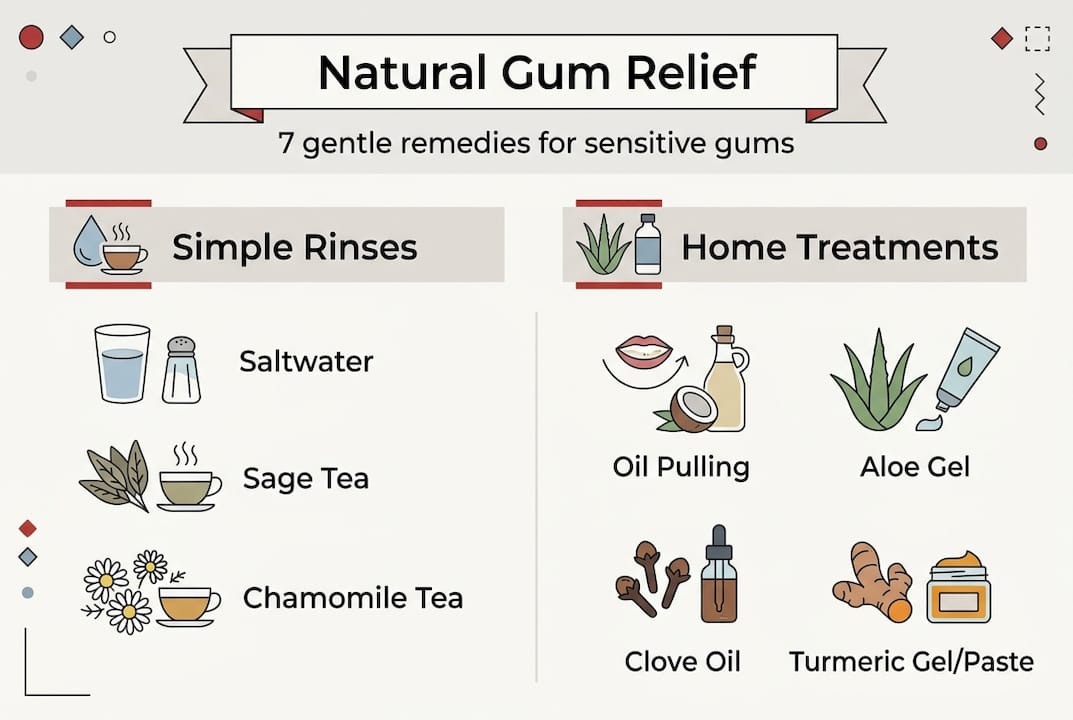
These natural treatments complement safe mouthwash ingredients for sensitive gums rather than replacing your entire oral care routine. Think of them as targeted interventions that support, not substitute for, daily brushing and flossing. For broader antimicrobial support, explore natural mouthwash options that work alongside these remedies.

Innovative and product-based solutions for lasting relief
While home remedies provide excellent first-line defense, some situations call for more advanced interventions. Product-based solutions offer concentrated active ingredients and delivery systems designed for maximum effectiveness.
Propolis stands out as a clinically validated option. This resinous compound collected by bees contains over 300 bioactive substances. Propolis reduces plaque by 25-30% and decreases gingival inflammation comparable to chlorhexidine, the gold standard antimicrobial agent. Unlike chlorhexidine, propolis causes no tooth staining or taste alteration. You can use it as a mouthwash or in chewing gum form. Both delivery methods show equal efficacy, so choose based on your preference and lifestyle.
Calcium-phosphate technologies represent another breakthrough. ReminGel uses amorphous calcium phosphate to remineralize enamel and seal exposed tubules that transmit pain signals. Applied via custom trays for just minutes daily, it provides lasting sensitivity relief by addressing the structural deficits that cause discomfort. This fluoride-free approach appeals to those seeking natural alternatives without sacrificing effectiveness.
Understanding desensitizing mechanisms helps you choose the right product:
| Mechanism | How it works | Examples | Best for |
|---|---|---|---|
| Neural desensitizers | Block nerve signals from reaching the brain | Potassium nitrate, strontium chloride | Quick symptom relief |
| Tubule occluders | Physically seal exposed dentin channels | Nanohydroxyapatite, calcium phosphate | Long-term structural repair |
| Anti-inflammatory agents | Reduce tissue swelling and immune response | Propolis, curcumin, aloe vera | Active inflammation |
| Remineralizing compounds | Rebuild weakened enamel structure | Calcium phosphate, bioactive glass | Prevention and repair |
Natural options like nanohydroxyapatite mimic your tooth’s mineral composition, integrating seamlessly with existing enamel. Chemical alternatives work faster but may not address underlying structural issues. Your choice depends on whether you prioritize immediate relief or long-term rebuilding.
Pro Tip: Rotate between neural desensitizers for immediate comfort and tubule occluders for lasting results. Use potassium-based products during acute sensitivity episodes, then switch to remineralizing treatments once symptoms calm down.
For comprehensive guidance on incorporating these products into your routine, review this natural mouthwash usage guide. Pairing innovative products with proper technique maximizes results. Consider following an oral health checklist to ensure you’re covering all bases in your sensitivity management plan.
Best practices and when to seek professional care
Consistent daily habits prevent sensitivity from returning once you’ve achieved relief. Small adjustments to your routine make a significant difference in maintaining healthy, comfortable gums.
Adopt these protective practices:
- Brush twice daily for two minutes using gentle pressure and circular motions
- Floss once daily, taking care to curve the floss around each tooth rather than forcing it straight down
- Rinse with water after consuming acidic foods like citrus, tomatoes, or vinegar-based dressings
- Avoid abrasive whitening products during sensitivity episodes
- Check ingredient labels for SLS and other potential irritants if you notice reactions
- Stay hydrated to maintain saliva production, which naturally buffers acids and delivers minerals to teeth
Common mistakes undermine even the best intentions. Brushing immediately after acidic foods scrubs softened enamel away. Using hard-bristled brushes damages gum tissue over time. Skipping flossing allows plaque to accumulate between teeth where brushing can’t reach. Rinsing vigorously after applying desensitizing products washes away active ingredients before they can work.
Knowing when to escalate care protects you from serious complications. Persistent symptoms beyond 7-10 days warrant professional evaluation. Your dentist can identify underlying issues like cavities, cracked teeth, or advancing periodontal disease that require intervention beyond home care. Pregnancy-related gum changes, severe bleeding, pus formation, or fever accompanying gum sensitivity demand immediate attention.
Professional treatments offer options unavailable at home. Deep cleaning removes calculus below the gum line. Prescription-strength fluoride treatments strengthen enamel more effectively than over-the-counter products. Laser therapy targets bacteria in periodontal pockets. Gum grafts cover exposed root surfaces in severe cases. These interventions complement your home care routine rather than replacing it.
Pro Tip: Schedule dental visits every six months even when you feel fine. Early detection of problems prevents them from progressing to painful, expensive stages. Think of these appointments as preventive maintenance, not just emergency response.
For daily maintenance strategies, explore these 2026 oral hygiene tips tailored to natural sensitive care. Combining professional guidance with consistent home care delivers the best long-term outcomes. Use this oral health checklist to track your progress and ensure you’re maintaining all aspects of your oral health routine.
Explore expert oral care solutions to relieve gum sensitivity
Now that you understand the science behind gum sensitivity and proven relief methods, you can take the next step toward lasting comfort. Stop Oral Care offers a carefully curated selection of natural, fluoride-free products formulated with hemp and Dead Sea minerals to support your sensitive gums.

Our expert-developed solutions combine traditional natural ingredients with cutting-edge oral health science. Whether you’re looking to establish an effective oral care routine for sensitive teeth or seeking targeted treatments like natural mouthwash for gum disease, you’ll find comprehensive guidance and products designed specifically for adults experiencing gum sensitivity. Each product undergoes rigorous testing to ensure it meets the highest standards for safety and effectiveness, giving you confidence in your choice.
Frequently asked questions
What causes sensitive gums?
Sensitive gums typically result from inflammation or early gum disease triggered by plaque buildup, aggressive brushing, or hormonal changes. Other contributing factors include allergic reactions to oral care ingredients like SLS, tobacco use that restricts blood flow, and certain health conditions. Identifying your specific triggers helps you select the most effective remedies and adjust habits that worsen sensitivity.
How often should I use a saltwater rinse for sensitive gums?
Use saltwater rinses 2-3 times daily with half to one teaspoon of salt dissolved in warm water for optimal bacteria reduction and soothing effects. Swish for 30 seconds after meals and before bed. Avoid exceeding this frequency, as overuse can dry out gum tissue and create new irritation. For detailed instructions, review this salt water rinse guide.
When should I see a dentist for gum sensitivity?
Seek professional care if sensitivity persists beyond 7-10 days or worsens despite home treatment. Immediate evaluation is necessary if you experience severe bleeding, pus discharge, fever, or extreme pain that interferes with eating. Early professional intervention prevents progression to serious periodontal disease and identifies issues like infections or structural damage requiring specialized treatment.
Can natural remedies completely cure gum disease?
Natural remedies effectively manage mild inflammation and early-stage gum sensitivity, but advanced periodontal disease requires professional intervention. Home treatments work best for prevention and supporting healing alongside proper oral hygiene. They reduce symptoms, control bacterial growth, and promote tissue repair, but cannot reverse bone loss or treat deep infections. Combine natural approaches with regular dental care for comprehensive gum health management.
Are fluoride-free products as effective for sensitive gums?
Fluoride-free alternatives using nanohydroxyapatite, calcium phosphate, or propolis demonstrate comparable effectiveness to traditional fluoride products for sensitivity relief and enamel protection. These natural compounds remineralize teeth, seal exposed tubules, and reduce inflammation through different mechanisms. Many people prefer fluoride-free options to avoid potential side effects while achieving similar clinical outcomes. Choose based on your personal health philosophy and specific sensitivity triggers.