

TL;DR:
- Oral sprays deliver active ingredients directly onto the buccal mucosa for rapid absorption, bypassing first-pass metabolism. Their effectiveness depends on mucoadhesive polymers, device engineering, and formulation strategies that extend mucosal contact and enhance permeation. These sprays provide symptomatic relief for dry mouth and oral health but do not replace natural saliva or address underlying causes.
Oral sprays are defined as liquid formulations delivered directly onto the oral mucosa to enable rapid absorption of active ingredients without swallowing. The science behind oral sprays centers on the buccal mucosa, a richly vascularized tissue lining the inner cheeks that allows compounds to pass into systemic or local circulation far more directly than the gastrointestinal route. Products like Biotène and MucoPEG™ demonstrate how formulation chemistry, mucoadhesive polymers, and device engineering combine to produce clinically meaningful results. Understanding this mechanism is the foundation for evaluating any oral spray, whether designed for dry mouth relief, breath freshening, or broader oral hygiene maintenance.
How does the science behind oral sprays work at the mucosal level?
The buccal mucosa is a non-keratinized epithelium with a surface area of approximately 50 square centimeters and a rich submucosal blood supply. This anatomy makes it substantially more permeable than keratinized tissues like the hard palate, which is why formulators target the inner cheek and sublingual floor for spray deposition. Active ingredients deposited here can diffuse through the epithelium and enter capillary networks without first-pass hepatic metabolism, a pharmacological advantage that oral tablets cannot replicate.
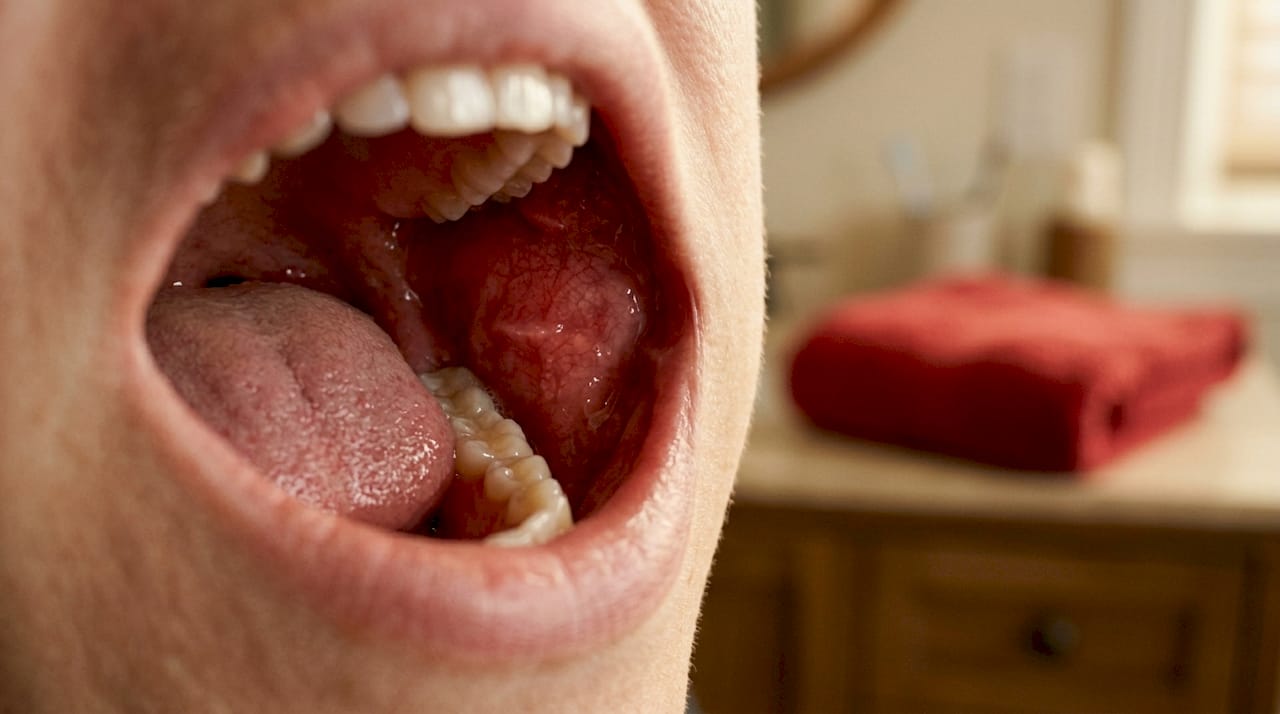
The primary physiological challenge is salivary washout. Saliva clears the oral cavity at a continuous rate, and any spray formulation that does not adhere to mucosal surfaces will be diluted and swallowed before meaningful absorption occurs. Buccal spray drug delivery addresses this by incorporating mucoadhesive polymers such as hydroxypropyl methylcellulose (HPMC), carbopol, and sodium alginate, which form a gel-like layer on contact with mucosal moisture and extend residence time significantly.
Permeation enhancers represent a second layer of formulation science. Compounds like sodium lauryl sulfate, oleic acid, and cyclodextrins temporarily disrupt tight junctions between epithelial cells, widening the paracellular pathway and increasing the flux of active molecules across the mucosal barrier. This is particularly relevant for larger molecules, including peptides and polysaccharides, that cannot cross intact epithelium by passive diffusion alone.
Pro Tip: When evaluating an oral spray product, check the ingredient list for mucoadhesive agents like carbopol or HPMC. Their presence indicates the formulation is engineered for retention rather than simple surface coating.
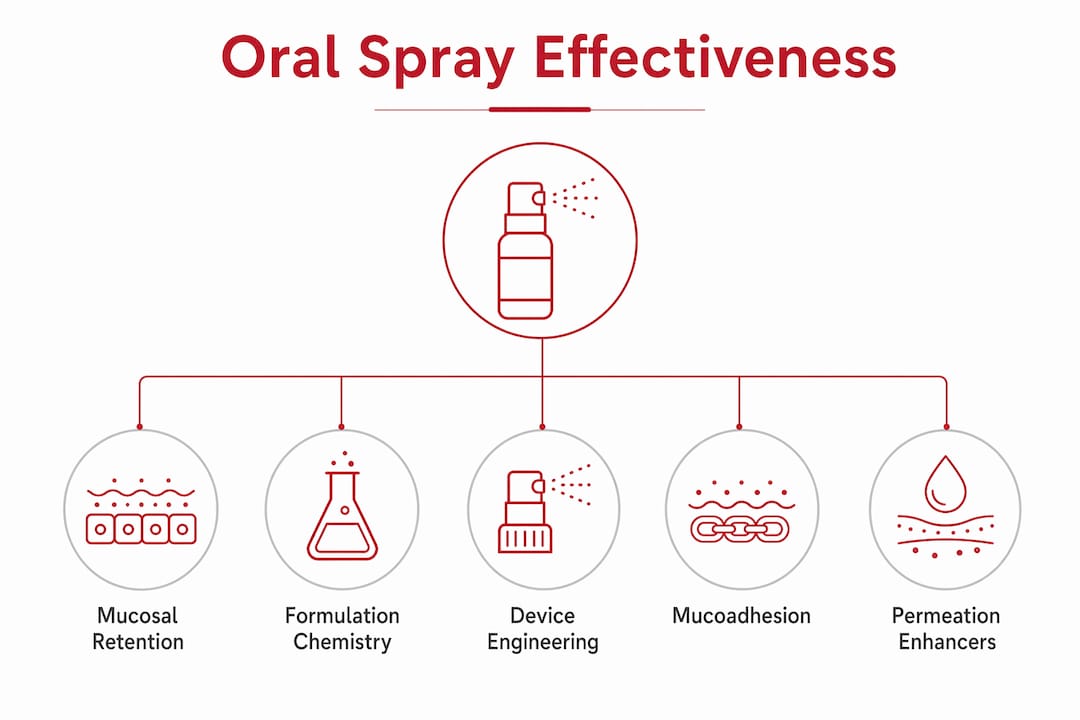
Device engineering is equally determinative. Spray nozzle geometry, droplet size distribution, and actuation force all influence where the formulation deposits and how uniformly it covers mucosal surfaces. A 2026 review confirms that device control for spray uniformity is critical to overcoming physiological clearance challenges, meaning that two products with identical active ingredients can perform very differently based on their delivery mechanism alone.
What scientific strategies improve oral spray effectiveness?
Formulation scientists address the competing demands of mucosal retention, chemical stability, and permeation through several documented strategies. The following represent the primary approaches validated in current literature:
-
Mucoadhesive polymer matrices. Polymers like chitosan and polyacrylic acid bind to mucosal glycoproteins through hydrogen bonding and electrostatic interactions. This prolongs contact time from seconds to several minutes, giving active ingredients a longer window for diffusion.
-
Multilayer and nanoparticle architectures. A 2025 Springer review documents that multilayer nanoparticle systems improve both retention and bioavailability for peptide actives by encapsulating the molecule in a protective shell that resists enzymatic degradation until the particle reaches the mucosal surface.
-
Enzymatic inhibitor co-formulation. The oral cavity contains proteases, esterases, and other enzymes that degrade sensitive actives rapidly. Incorporating enzyme inhibitors such as aprotinin or soybean trypsin inhibitor into the spray matrix protects peptide and protein actives from premature breakdown.
-
pH-adjusted formulations. Mucosal permeability is pH-dependent. Formulations buffered to a slightly acidic pH (approximately 5.5 to 6.5) favor the unionized form of many active molecules, which crosses lipid bilayers more readily than ionized counterparts.
-
Spray device optimization. Actuator design determines droplet size, velocity, and plume geometry. Finer droplets (10 to 50 micrometers) distribute more uniformly across mucosal surfaces and resist gravitational runoff, while coarser droplets pool and are cleared by saliva more quickly.
The interaction between saliva clearance dynamics and mucoadhesive polymer chemistry must be evaluated together to accurately assess bioavailability, not as independent variables. This systems-level thinking distinguishes scientifically rigorous formulations from products that rely solely on active ingredient concentration.
Pro Tip: Products that list both a mucoadhesive polymer and a permeation enhancer in their formulation are applying two complementary mechanisms simultaneously. This dual strategy is the current standard for high-performance oral spray design.
How effective are oral sprays for dry mouth relief and oral health?
Xerostomia, the clinical term for dry mouth, affects a substantial portion of the population, particularly patients undergoing head and neck radiotherapy, individuals on polypharmacy regimens, and older adults. Oral sprays for this condition work through two primary mechanisms: lubrication of mucosal surfaces to reduce friction and discomfort, and moisture retention through humectant chemistry.
MucoPEG™ exemplifies advanced formulation design in this category. Its polyethylene glycol (PEG) derivative binds to oral mucosa through hydrophilic interactions, forming a sustained moisture film that mimics the lubricating properties of natural saliva more closely than simple water-based sprays. This binding property distinguishes it from earlier-generation products that provided only transient relief.
Clinical evidence, however, presents a nuanced picture. A 2026 review of 36 randomized controlled trials found variability across dry mouth therapies due to differences in oral clearance rates and product formulation, with no single therapy consistently relieving symptoms across all patient populations. This finding has direct implications for consumer expectations: oral sprays provide symptomatic comfort, not a physiological replacement for salivary gland function.
| Product type | Mechanism | Duration of relief | Caries protection |
|---|---|---|---|
| Water-based spray | Surface hydration | Very short (minutes) | None |
| PEG-based spray (MucoPEG™) | Mucoadhesive film formation | Moderate (30 to 60 minutes) | Indirect via lubrication |
| Xylitol mucoadhesive disc | Mechanical stimulation plus lubrication | Extended (1 to 8 hours) | Yes, via xylitol |
| Fluoride-containing spray | Remineralization plus moisture | Variable | Direct |
Mucoadhesive xylitol discs, studied in a 2026 randomized crossover trial, release xylitol over 1 to 8 hours to stimulate residual salivary gland activity and lubricate oral tissues. This extended-release mechanism addresses nocturnal xerostomia, a period of elevated caries risk when salivary flow is naturally reduced.
The Merck Manual’s clinical guidance on xerostomia emphasizes that sprays combined with fluoride and medication timing adjustments constitute a more complete management strategy than sprays used in isolation. This positions oral sprays as one component of a broader oral hygiene routine rather than a standalone solution.
How do oral sprays compare with other oral health products?
The pharmacology of oral delivery varies considerably across product formats, and each format carries distinct trade-offs in onset speed, bioavailability, user convenience, and duration of effect.
| Format | Onset speed | Bioavailability | Convenience | Best use case |
|---|---|---|---|---|
| Oral spray | Rapid (seconds to minutes) | High (mucosal route) | High | Acute relief, on-the-go use |
| Mouthwash/rinse | Moderate | Low to moderate | Moderate | Broad surface coverage |
| Lozenge or tablet | Slow (dissolution-dependent) | Moderate | High | Sustained release |
| Gel | Slow to moderate | Moderate to high | Low | Targeted site application |
| Adhesive disc | Slow (hours) | High (sustained contact) | Moderate | Nocturnal or extended relief |
Oral sprays hold a clear advantage in onset speed and portability. The faster onset from sprays compared to swallowing is not guaranteed by the format alone, however. Device design, mucoadhesion, and chemical stability must all be optimized to realize this potential. A poorly engineered spray can underperform a well-formulated lozenge.
Emerging categories are expanding the oral spray market. Breath-freshening sprays that contain chlorine dioxide neutralize sulfur compounds responsible for halitosis through direct chemical oxidation rather than masking. Probiotic sprays introduce beneficial bacterial strains to the oral microbiome to competitively exclude pathogenic species. CBD mouth sprays leverage the sublingual mucosa for rapid cannabinoid absorption, a mechanism documented in pharmaceutical cannabinoid research. For a detailed review of active ingredients in sprays, including natural and hemp-derived options, Stop-oralcare provides formulation-specific guidance.
Consumer selection should prioritize formulation transparency. Products that disclose mucoadhesive agents, permeation enhancers, and active ingredient concentrations allow for evidence-based comparison. Products that list only flavoring agents and water provide surface-level benefits at best.
Key takeaways
Oral spray effectiveness is determined by mucosal retention, formulation chemistry, and device engineering acting together, not by active ingredient concentration alone.
| Point | Details |
|---|---|
| Mucosal absorption mechanism | The buccal mucosa enables direct vascular uptake, bypassing hepatic first-pass metabolism for faster local action. |
| Mucoadhesion is critical | Polymers like HPMC and carbopol extend spray residence time and are the primary defense against salivary washout. |
| Sprays relieve symptoms, not causes | Clinical trials confirm sprays provide temporary lubrication and comfort for dry mouth, not full saliva replacement. |
| Device engineering matters | Droplet size, nozzle geometry, and actuation force determine deposition uniformity as much as the active ingredients do. |
| Combination strategies outperform sprays alone | Pairing sprays with fluoride protection and medication management produces better xerostomia outcomes than sprays in isolation. |
A clinician’s perspective on oral spray science and realistic expectations
The scientific literature on oral sprays is more nuanced than most product marketing acknowledges, and I think that gap deserves direct attention. Formulation science has advanced considerably: multilayer nanoparticle systems, mucoadhesive polymer matrices, and precision spray devices represent genuine progress. What has not advanced at the same pace is consumer education about what these technologies can and cannot accomplish.
Patients frequently present with the expectation that an oral spray will regenerate salivary gland function or permanently resolve xerostomia. The clinical evidence does not support that expectation. Symptomatic sprays serve as palliative measures, providing timed moisture and lubrication during high-risk periods, particularly at night. That is a meaningful clinical benefit, but it is categorically different from addressing the underlying etiology.
What I find most underappreciated is the role of device engineering. Two sprays with identical active ingredient profiles can produce substantially different clinical outcomes based solely on droplet size and nozzle geometry. Consumers who understand this will make better purchasing decisions and have more realistic expectations about product performance.
The future of oral spray science points toward personalized formulations, where polymer selection and permeation enhancer concentration are matched to individual salivary flow rates and mucosal permeability profiles. That level of precision is not commercially available yet, but the foundational science is documented. For now, selecting products with disclosed mucoadhesive agents and clinically studied actives remains the most evidence-aligned approach available to consumers. You can also explore oral sprays for bad breath to understand how different active mechanisms apply to specific oral health goals.
— Veronica
Explore Stop-oralcare’s scientifically formulated oral sprays
Stop-oralcare develops oral health products grounded in the same formulation principles discussed throughout this article, combining natural actives including hemp-derived compounds and Dead Sea minerals with evidence-based delivery science. The product line is designed for consumers who require more than surface-level oral hygiene and want formulations with transparent ingredient profiles.
If you are managing dry mouth, seeking alternatives to conventional oral hygiene products, or evaluating the benefits of oral sprays for your daily routine, Stop-oralcare’s catalog provides fluoride-free options developed under the guidance of Dr. Veronica Stahl. Each product reflects the principle that formulation chemistry and delivery mechanism are as determinative as the active ingredients themselves.
FAQ
What is the primary mechanism of oral spray absorption?
Oral sprays deposit active ingredients on the buccal mucosa, where they diffuse through non-keratinized epithelium into submucosal capillaries. This route bypasses hepatic first-pass metabolism and enables faster local or systemic uptake compared to swallowed formulations.
Why do some oral sprays work better than others?
Performance differences arise from mucoadhesive polymer selection, permeation enhancer inclusion, and spray device engineering. A 2026 review confirms that device control and formulation are as determinative as active ingredient concentration for clinical outcomes.
Can oral sprays fully replace saliva in dry mouth patients?
No. Clinical evidence from a 2026 review of 36 randomized controlled trials confirms that oral sprays provide symptomatic lubrication and moisture retention but do not replicate the enzymatic, antimicrobial, or buffering functions of natural saliva.
How do breath-freshening sprays differ from dry mouth sprays?
Breath-freshening sprays often use chlorine dioxide to chemically neutralize volatile sulfur compounds, while dry mouth sprays rely on humectants and mucoadhesive polymers for lubrication. The active mechanisms are distinct, and the two product categories address different oral health objectives.
What ingredients indicate a high-quality oral spray formulation?
Formulations that disclose mucoadhesive agents such as HPMC or carbopol, permeation enhancers, and clinically studied actives like xylitol or PEG derivatives reflect evidence-based design. Products listing only flavoring agents and water provide minimal mucosal benefit.
Recommended
- Effective Oral Spray for Bad Breath: A Practical Guide – Stop Oral Care
- Therapeutic oral sprays: benefits, ingredients & natural options – Stop Oral Care
- CBD Mouth Spray Benefits: A Practical Guide for Better Oral Health – Stop Oral Care
- CBD Mouth Spray Benefits: A Practical Guide for Better Oral Health – Stop Oral Care