

TL;DR:
- Therapeutic oral sprays deliver active ingredients targeting specific oral health issues beyond masking breath.
- They are alcohol-free, support mucosal integrity, and can aid conditions like dry mouth and gum inflammation.
- Selecting a product involves reviewing ingredients, concentrations, and consulting with a dental professional for best results.
Oral sprays occupy a small section of most pharmacy shelves, yet consumer understanding of what separates a therapeutic product from a basic breath freshener remains limited. Many people assume that any spray misting into the mouth is either cosmetic or laden with synthetic chemicals. That assumption is incorrect, and the consequences are real: consumers seeking natural, fluoride-free care routinely overlook formulas that could address dry mouth, gum irritation, and oral microbiome imbalance more effectively than conventional rinses. This article defines therapeutic oral sprays, examines their active ingredients, contrasts them with competing formats, and provides evidence-based guidance for selecting and using them safely.
Table of Contents
- What is a therapeutic oral spray?
- How do natural therapeutic oral sprays work?
- Therapeutic oral spray vs. other oral care formats
- Choosing and using a therapeutic oral spray safely
- Our perspective: What most consumers miss about therapeutic oral sprays
- Discover natural oral care solutions that work
- Frequently asked questions
Key Takeaways
| Point | Details |
|---|---|
| Natural options prioritized | Therapeutic oral sprays often use herbs and minerals instead of fluoride or alcohol for gentler daily care. |
| Highly portable and effective | Sprays offer convenience and immediate relief compared to rinses or gels, making them easy for everyday use. |
| Not all sprays are equal | Comparing ingredients and formats helps you select the safest and most effective oral spray for your needs. |
| Best results with safe use | Read labels carefully, combine with other gentle products, and follow expert tips for optimal oral health benefits. |
What is a therapeutic oral spray?
Not every spray bottle counts as therapeutic. The distinction matters because it determines which product a consumer should select and what outcomes are realistic to expect.
A therapeutic oral spray is a liquid preparation delivered directly into the oral cavity to produce a measurable health benefit beyond temporary breath masking. According to a peer-reviewed review of herbal mouth sprays, these formulations are designed to address specific pathological or physiological conditions, including xerostomia (dry mouth), periodontal inflammation, halitosis of bacterial origin, and mucosal lesions.
Cosmetic breath sprays, by contrast, rely on flavoring agents and short-acting masking compounds. They do not target the biological cause of a symptom; they temporarily obscure it. Therapeutic sprays introduce pharmacologically active compounds that interact with the oral tissues, the oral microbiome, or both.
Common oral health concerns that therapeutic formulas address include:
- Xerostomia: Inadequate saliva production that increases caries risk and mucosal discomfort
- Halitosis: Volatile sulfur compounds produced by anaerobic bacteria in the oral biofilm
- Gingival inflammation: Early-stage periodontal irritation driven by microbial accumulation
- Oral mucosal lesions: Minor aphthous ulcers and post-procedural tissue irritation
- Microbiome imbalance: Disruption of beneficial bacterial populations by harsh antiseptics
Administration is straightforward: the pump or nozzle delivers a metered dose of 0.1 to 0.2 milliliters per actuation directly onto the mucosa or under the tongue. This sublingual and mucosal route supports rapid absorption because the oral mucosa is highly vascularized, meaning active ingredients can enter systemic or local circulation without passing through the digestive tract first.
“The therapeutic potential of an oral spray depends entirely on what is inside it. Delivery format is secondary to ingredient quality and concentration.”
For a practical breakdown of how one class of natural sprays functions, the CBD mouth spray benefits guide from Stop Oral Care illustrates how bioactive compounds interact with oral tissues when correctly formulated.
How do natural therapeutic oral sprays work?
Natural therapeutic oral sprays distinguish themselves from conventional formulations primarily through ingredient selection. Rather than relying on chlorhexidine, alcohol, or synthetic antiseptics, they deploy compounds with established pharmacological profiles derived from botanical, mineral, or enzymatic sources.
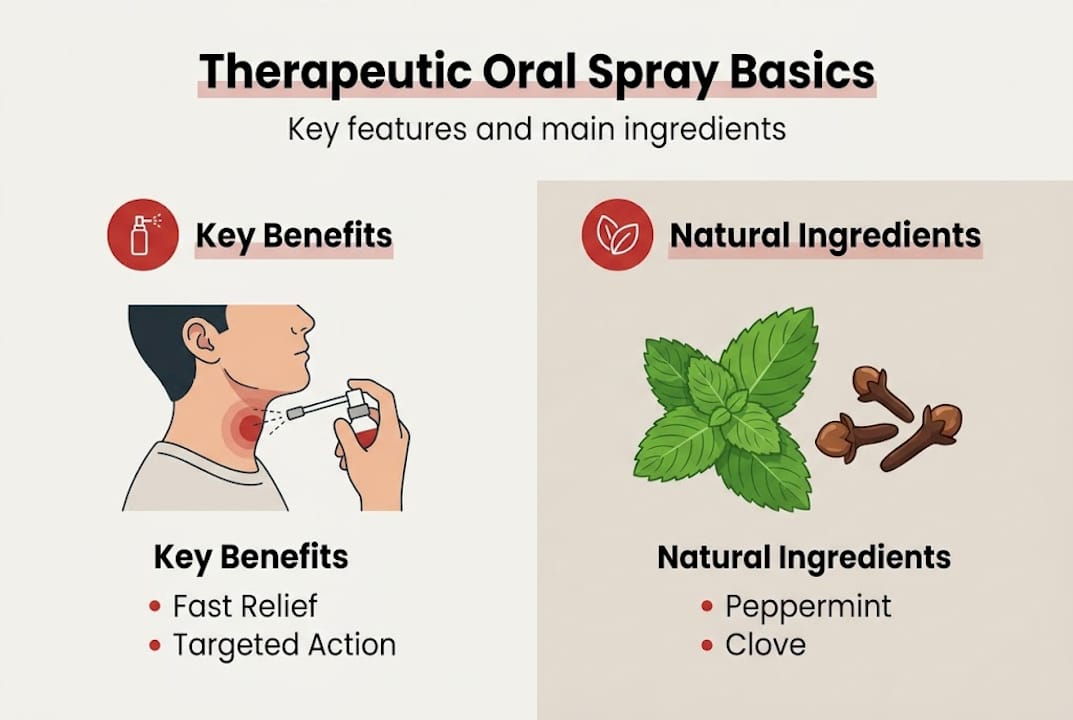
Research published in a PMC peer-reviewed study identifies the following key ingredient categories and their respective mechanisms:
| Ingredient | Primary mechanism | Key benefit |
|---|---|---|
| Peppermint, clove, tulsi | Antimicrobial via phenolic compounds | Reduces pathogenic bacteria in biofilm |
| Hydroxyapatite | Ionic exchange with enamel surface | Remineralizes early enamel lesions |
| Xylitol | Inhibits Streptococcus mutans metabolism | Supports microbiome balance |
| Lactoperoxidase, lysozyme | Enzymatic disruption of bacterial cell walls | Augments natural salivary defense |
| P113 peptide | Histatin-derived antimicrobial peptide | Targets fungal and bacterial species |
Alcohol-free formulation is not merely a marketing point. Ethanol, present in many conventional sprays and rinses at concentrations of 15 to 26 percent, disrupts the oral mucosal barrier, reduces salivary flow, and alters the balance of the microbial community over time. Natural sprays using aqueous or lipid-based carriers preserve mucosal integrity while still delivering active compounds effectively.
The populations that benefit most from natural spray formulations include:
- Adults with chronic dry mouth, whether medication-induced or age-related
- Seniors whose mucosal tissues are more susceptible to ethanol irritation
- Individuals undergoing oncology treatment who require gentle, non-irritating oral care
- Consumers who follow a fluoride-free care guide approach for personal or health-related reasons
- Anyone who has experienced adverse reactions to alcohol-based antiseptic rinses
Botanical actives such as clove eugenol and peppermint menthol provide broad-spectrum antimicrobial coverage at concentrations well below the irritation threshold. Their synergistic action with enzymatic ingredients, such as the lactoperoxidase system, mirrors the body’s own salivary defense mechanisms rather than overriding them. For consumers comparing whole-mouth care strategies, the botanical toothpaste benefits article provides a useful complementary reference.

Pro Tip: When reviewing product labels, look for standardized extracts rather than generic “herbal blend” language. Standardization indicates a measurable concentration of the active compound, which is a marker of quality and predictable efficacy.
Therapeutic oral spray vs. other oral care formats
Understanding how a spray compares to mouthwash, lozenges, and gels is essential for matching the right product to the right situation. Each format carries tradeoffs in absorption efficiency, duration of effect, convenience, and irritation potential.
| Format | Portability | Water required | Contact time | Irritation risk | Best use case |
|---|---|---|---|---|---|
| Therapeutic spray | High | No | Short to moderate | Low (if alcohol-free) | On-the-go, targeted relief |
| Mouthwash | Low | No | Moderate (30-60 sec) | Moderate to high | Whole-mouth rinse at home |
| Lozenge | High | No | Long (dissolves slowly) | Low | Sustained dry mouth relief |
| Gel | Low | No | Long (topical hold) | Low to moderate | Targeted mucosal application |
Sprays are preferred over gels and lozenges for portability and the fact that no water is required for administration, making them the practical choice for professionals, travelers, and anyone managing oral symptoms away from home. Herbal and natural spray options also demonstrate gentler profiles compared to chemical formulations, which can cause tissue irritation with repeated use.
Mouthwashes reach a broad surface area but require significant volume and active rinsing behavior, factors that reduce compliance among elderly users or those with swallowing difficulties. Lozenges dissolve slowly, providing prolonged salivary stimulation, but they cannot deliver antimicrobial compounds to subgingival areas. Gels are excellent for site-specific mucosal applications, such as canker sore relief, but lack the distribution coverage of a spray.
Key considerations when selecting a format:
- Dry mouth at night: A lozenge at bedtime or a lipid-based spray before sleep
- Post-meal freshness and biofilm control: Spray delivers rapid targeted action without a sink
- Whole-mouth antiseptic effect: Alcohol-free mouthwash tips are the more appropriate format
- Gum or mucosal irritation: Spray or gel, depending on localization
For individuals transitioning from conventional rinses, reviewing the evidence behind mouthwash benefits can help clarify when a rinse is still appropriate alongside a spray routine.
Choosing and using a therapeutic oral spray safely
Selecting the correct product requires systematic evaluation rather than relying on packaging claims alone. Follow these steps to make an informed, evidence-based decision.
- Identify your primary concern. Determine whether you are managing dry mouth, gum inflammation, halitosis, or general preventive care. This directs ingredient selection.
- Read the full ingredient list. Avoid products containing ethanol, chlorhexidine in high concentrations for daily use, artificial sweeteners with questionable safety profiles, or undisclosed “proprietary blends.”
- Verify active concentrations. Standardized botanical extracts should list the percentage of active constituents. Xylitol should appear in the first three to four ingredients for meaningful microbiome support.
- Assess fluoride and alcohol status. According to a clinical review, fluoride-free and alcohol-free herbal formulations offer safe, convenient daily care with documented antimicrobial and tissue-healing benefits, combined with higher bioavailability and better patient compliance than conventional rinses.
- Start with a defined protocol. Most therapeutic sprays are designed for two to four applications daily. Use consistently for at least four weeks before assessing outcomes.
- Combine with complementary products. Research supports combining xylitol products with lipid or herbal sprays for persistent dry mouth management, as the combined approach provides both lubrication and microbiome modulation.
- Consult your dental provider. If symptoms persist beyond six to eight weeks or worsen, a clinical evaluation is necessary before continuing self-care.
For targeted relief from oral malodor, the oral spray for bad breath resource provides additional usage protocols grounded in clinical evidence.
Pro Tip: Do not apply a therapeutic spray immediately after brushing with a dentifrice that contains sodium lauryl sulfate, as this surfactant temporarily denatures proteins and can inactivate enzymatic ingredients in the spray. Allow at least five minutes between applications.
Our perspective: What most consumers miss about therapeutic oral sprays
Based on years of oral care research and formulation development, one pattern recurs consistently: consumers underestimate the importance of the label, and overestimate the protection offered by familiar brand names.
The most common error is purchasing a spray based on a single featured ingredient while overlooking the excipients (carrier substances and preservatives) that may undermine the primary benefit. A spray advertising xylitol as its lead compound but using propylene glycol as a carrier, for example, may cause the very mucosal dryness it promises to prevent.
There is also a tendency to view therapeutic sprays as emergency-use products rather than preventive tools. The clinical evidence supports daily, consistent use as the mechanism by which antimicrobial peptides and botanical actives produce durable changes in the oral biofilm. Single-use application following a symptomatic event does little to alter the underlying microbial environment.
Natural and lipid-rich formulations, in particular, deserve more recognition as genuine CBD mouth spray wellness and oral health tools. Their gentle action on the mucosal barrier, combined with enzymatic compatibility, positions them as complements to professional dental care rather than alternatives to it. Integrating a well-formulated spray into a preventive routine and discussing that choice openly with a dental provider represents a measurable step forward in long-term oral health management.
Discover natural oral care solutions that work
If the evidence reviewed here aligns with your oral health priorities, the next step is selecting products formulated to those standards.

At Stop Oral Care, the product line is built around fluoride-free, alcohol-free formulations developed by Dr. Veronica Stahl, integrating hemp-derived compounds and Dead Sea minerals with established botanical and enzymatic actives. Each product reflects the same evidence-based criteria outlined in this article: verified active concentrations, gentle carrier systems, and documented safety for daily use. Whether you are managing dry mouth, gum sensitivity, or seeking a natural preventive routine, the catalog provides targeted options supported by clinical rationale and transparent ingredient disclosure.
Frequently asked questions
What makes a therapeutic oral spray different from regular sprays?
Therapeutic oral sprays use targeted herbs and minerals to address specific mouth health concerns, such as dry mouth or gum inflammation, rather than simply masking breath odor with flavoring agents.
Are natural therapeutic sprays safe for daily use?
Yes. Formulations that are alcohol-free and herb-based are designed for multiple daily applications and avoid the mucosal drying and microbiome disruption associated with ethanol-containing products.
Who should use a therapeutic oral spray?
Anyone managing dry mouth or gum irritation, oral lesions, or seeking a fluoride-free daily care option can benefit from incorporating a therapeutic spray into their routine.
How do I choose the best natural oral spray for me?
Review ingredient labels carefully to confirm the presence of evidence-based actives such as xylitol, hydroxyapatite, or standardized botanical extracts, and avoid products containing alcohol or undisclosed proprietary blends.
Recommended
- cbd oral spray: A Complete Guide to Benefits, Usage, and Buying Tips – Stop Oral Care
- Effective Oral Spray for Bad Breath: A Practical Guide – Stop Oral Care
- Why Oral Sprays for Sensitivity Matter Today – Stop Oral Care
- CBD Mouth Spray Benefits: A Practical Guide for Better Oral Health – Stop Oral Care
- Produits naturels : avantages, preuves et bonnes pratiques – Vitalcup