

Vitamin deficiencies can cause and worsen bleeding gums, with vitamin C carrying the strongest clinical evidence. That said, plaque-induced gingivitis remains the most common underlying cause, and nutritional factors most often act alongside dental disease rather than independently of it. If your gums bleed regularly, three steps are worth taking now:
- Gentle oral care: Switch to a soft-bristled brush, brush twice daily without excess pressure, and use interdental cleaning once daily. Brushing harder does not stop bleeding and can worsen tissue fragility.
- Increase vitamin C intake: Add citrus fruit, bell peppers, kiwi, or strawberries to your daily meals. A short-term supplement of a moderate dose is a reasonable adjunct if dietary sources are limited.
- Book a dental checkup or lab test: If bleeding persists beyond two to three weeks despite improved home care, schedule a periodontal exam and ask your physician about a blood panel covering vitamin C, vitamin D (25(OH)D), B12, folate, and a full blood count.
The sections below cover which specific nutrients are implicated, how strong the evidence is for each, which tests to request, and when to escalate care.
Key Takeaways
Vitamin C deficiency is the single strongest nutritional cause of bleeding gums, with systematic review evidence supporting both the association and its reversal through corrected intake.
| Point | Details |
|---|---|
| Vitamin C is the primary nutritional cause | A systematic review of 1,140 trial participants linked low plasma vitamin C to increased gingival bleeding; 100–200 mg/day is a commonly cited adjunct dose. |
| Vitamin D, K, B12, and folate also matter | Each has documented oral effects; test before supplementing, and treat deficiency at evidence-supported doses. |
| Plaque and gingivitis come first | CDC data show nearly half of adults over 30 have periodontal disease; rule out dental causes before attributing bleeding to nutrition alone. |
| Check medications before supplementing | Vitamin K, high-dose vitamin E, fish oil, and curcumin can all interact with anticoagulants; consult your prescribing clinician first. |
| Expect 4–12 weeks for improvement | Dietary correction and supplementation typically show measurable results within this window; professional SRP often acts faster. |
| Stop-oralcare as a topical adjunct | Stop-oralcare’s fluoride-free, hemp-infused products support gum tissue recovery alongside systemic treatment and professional care. |
Table of Contents
- Which vitamin deficiencies are linked to bleeding gums?
- Vitamin C: the strongest nutritional link to gingival bleeding
- Vitamin D: an adjunct with real but limited evidence
- Vitamin K: clotting, deficiency risk, and a critical medication warning
- B vitamins (B12 and folate): oral signs and who is at risk
- Minerals and adjunct agents: how strong is the evidence?
- Common non-nutritional causes of bleeding gums
- How providers evaluate bleeding gums: who to see and what to bring
- Practical treatment steps and realistic timelines
- Safety cautions and drug interactions
- Topical and natural oral-care adjuncts: what the evidence supports
- An editorial perspective on nutrition and gum health
- Natural oral-care adjuncts from Stop-oralcare
- Sources
Which vitamin deficiencies are linked to bleeding gums?
The nutrients most consistently associated with gingival bleeding, ranked by evidence strength:
- Vitamin C — strongest evidence; systematic review and CDC survey data link low plasma levels directly to increased bleeding on probing, with reversal after correcting intake
- Vitamin D — moderate evidence; observational data show an inverse relationship between serum 25(OH)D and gingival bleeding, with trial data supporting supplementation as an adjunct to professional care
- Vitamin K — mechanistic link; deficiency impairs clotting-factor activation and can produce bleeding at multiple sites, including the gums
- Vitamin B12 and folate (B9) — associative evidence; both deficiencies produce oral mucosal changes, including red, swollen, or bleeding gums and glossitis
- Calcium and phosphorus — supportive role; inadequate intake weakens alveolar bone and supporting structures, indirectly increasing bleeding risk
- CoQ10 and curcumin — adjunct evidence; small randomized controlled trials show reduced gingival inflammation when used topically alongside professional periodontal therapy
Bleeding gums are a nonspecific sign. Plaque and gingivitis account for the majority of cases at the population level, and nutritional deficiencies typically amplify rather than independently cause gingival bleeding.
Vitamin C: the strongest nutritional link to gingival bleeding
Vitamin C is the rate-limiting cofactor in collagen synthesis. Without adequate ascorbic acid, the hydroxylation of proline and lysine residues in collagen precursors fails, producing structurally weak connective tissue throughout the body, including the periodontal ligament and gingival capillary walls. The result is tissue that bleeds with minimal provocation.
A systematic review published in Nutrition Reviews analyzed 15 clinical trials involving 1,140 participants alongside CDC survey data from 8,210 respondents and found that low blood vitamin C levels were directly associated with increased gingival bleeding. Raising vitamin C intake reversed bleeding in individuals with low plasma levels. This is not a marginal finding: the association held across both controlled trials and population-level survey data.
Statistic: The Nutrition Reviews review drew on 1,140 clinical-trial participants and 8,210 CDC survey respondents, making it the largest synthesis of vitamin C and gingival bleeding data to date.
Scurvy, the severe end of vitamin C deficiency, produces hemorrhagic gums, tooth loosening, and widespread capillary fragility. Critically, an open-access PMC review documents that scurvy-related oral signs typically appear after just 30–90 days of inadequate intake. Subclinical deficiency, well short of clinical scurvy, can still increase bleeding on probing, and many people attribute that bleeding to poor brushing technique rather than tissue fragility.
Recommended intake and supplementation
The commonly cited adult intake for vitamin C is usually considered adequate for most adults, with a moderate supplement dose frequently referenced in trials and clinical practice as a short-term adjunct when deficiency is suspected. Moderate doses are well tolerated for most adults; very high doses can cause gastrointestinal discomfort and should be avoided without clinical guidance.
High-vitamin-C food sources
- Bell peppers (red): approximately 190 mg per 100 g
- Kiwi fruit: approximately 93 mg per 100 g
- Strawberries: approximately 59 mg per 100 g
- Citrus fruit (orange): approximately 53 mg per 100 g
- Broccoli (raw): approximately 89 mg per 100 g
Pro Tip: Raw or lightly steamed vegetables retain significantly more vitamin C than boiled ones. If you rely on cooked vegetables as your main source, consider adding one raw fruit or pepper daily to close the gap.
Improvement in gingival bleeding after correcting low vitamin C intake typically becomes noticeable within the 30–90 day window documented in the PMC review, though trial durations vary. Severe deficiency may require longer correction periods under clinical supervision.
Vitamin D: an adjunct with real but limited evidence
Vitamin D’s role in gum health operates primarily through immune modulation rather than structural tissue support. Adequate 25(OH)D levels help regulate the inflammatory cytokine response in periodontal tissues, reducing the magnitude of gingival inflammation triggered by bacterial plaque.
A study of postmenopausal women published in PubMed found that higher serum 25(OH)D was associated with notably lower odds of periodontal disease outcomes by CDC/AAP measures, including reduced gingival bleeding. This is observational data, meaning confounding factors cannot be fully excluded, but the association is consistent across multiple study designs.
A 2024 MDPI review concluded that vitamin D3 has immunomodulatory and anti-inflammatory effects that can reduce gingival inflammation and may enhance outcomes of nonsurgical periodontal therapy when deficiency is present. The key phrase is “when deficiency is present.” Supplementing in individuals with already-adequate serum levels shows minimal additional benefit for gum health.
Statistic: The PubMed postmenopausal cohort study found significantly lower odds of certain periodontal outcomes in women with higher serum 25(OH)D, a signal consistent enough to justify routine vitamin D screening in patients with chronic gingival inflammation.
Practical steps for vitamin D
- Check serum 25(OH)D before supplementing. A level below 20 ng/mL is generally considered deficient; 20–30 ng/mL is insufficient by many clinical guidelines.
- Supplementation doses in trials typically range from 500–2,000 IU/day; higher doses used in some trials require clinician supervision.
- Moderate sun exposure (10–20 minutes of midday sun on arms and legs several times weekly) supports endogenous synthesis. For a detailed guide on safe sun exposure and vitamin D, the bone health resource linked here covers practical strategies.
- Vitamin D is fat-soluble; take supplements with a meal containing fat for better absorption.
- Consult a clinician before exceeding 4,000 IU/day, as toxicity is possible at sustained high doses.
Vitamin D supplementation is an adjunct to professional periodontal therapy, not a replacement for scaling, root planing, or improved home care. Immune support for gums is a related topic worth reviewing alongside vitamin D’s systemic effects.
Vitamin K: clotting, deficiency risk, and a critical medication warning
Vitamin K is required for the gamma-carboxylation of several clotting factors (II, VII, IX, X) and proteins C and S. Without it, the coagulation cascade cannot function normally, and bleeding at any site, including the gums, becomes prolonged or spontaneous in severe cases.
True vitamin K deficiency is uncommon in healthy adults eating a varied diet, because leafy greens, fermented foods, and vegetable oils provide adequate K1 and K2. Higher-risk groups include:
- Newborns (low placental transfer and sterile gut; routine prophylactic vitamin K is given at birth for this reason)
- Individuals with fat malabsorption (Crohn’s disease, celiac disease, short bowel syndrome)
- Those on prolonged broad-spectrum antibiotic courses that disrupt gut flora
- People following severely restricted diets with minimal green vegetable intake
Patients taking warfarin or other vitamin K antagonists should not self-supplement with vitamin K without explicit guidance from their prescribing clinician. Vitamin K directly opposes the anticoagulant effect of warfarin, and even modest changes in dietary or supplemental K intake can shift the INR outside the therapeutic range, creating either clotting or bleeding risk. For broader context on vitamin K and bone and clotting biology, the linked resource provides useful background.
The Cleveland Clinic’s clinical overview confirms vitamin K deficiency as a recognized cause of bleeding and flags supplement-medication interactions as a key safety concern.
Action steps if vitamin K deficiency is suspected:
- Review your full medication list with your prescribing physician before changing vitamin K intake.
- If bleeding is unexplained and persists despite good dental care, request a coagulation panel (PT/INR, aPTT) from your GP.
- Refer to hematology when a bleeding disorder cannot be excluded by initial testing.
B vitamins (B12 and folate): oral signs and who is at risk
B12 and folate deficiencies produce some of the most visible oral changes of any nutrient shortfall. The oral mucosa is one of the fastest-renewing tissues in the body, and it depends heavily on adequate B12 and folate for DNA synthesis and cell division. When either is insufficient, mucosal integrity breaks down.
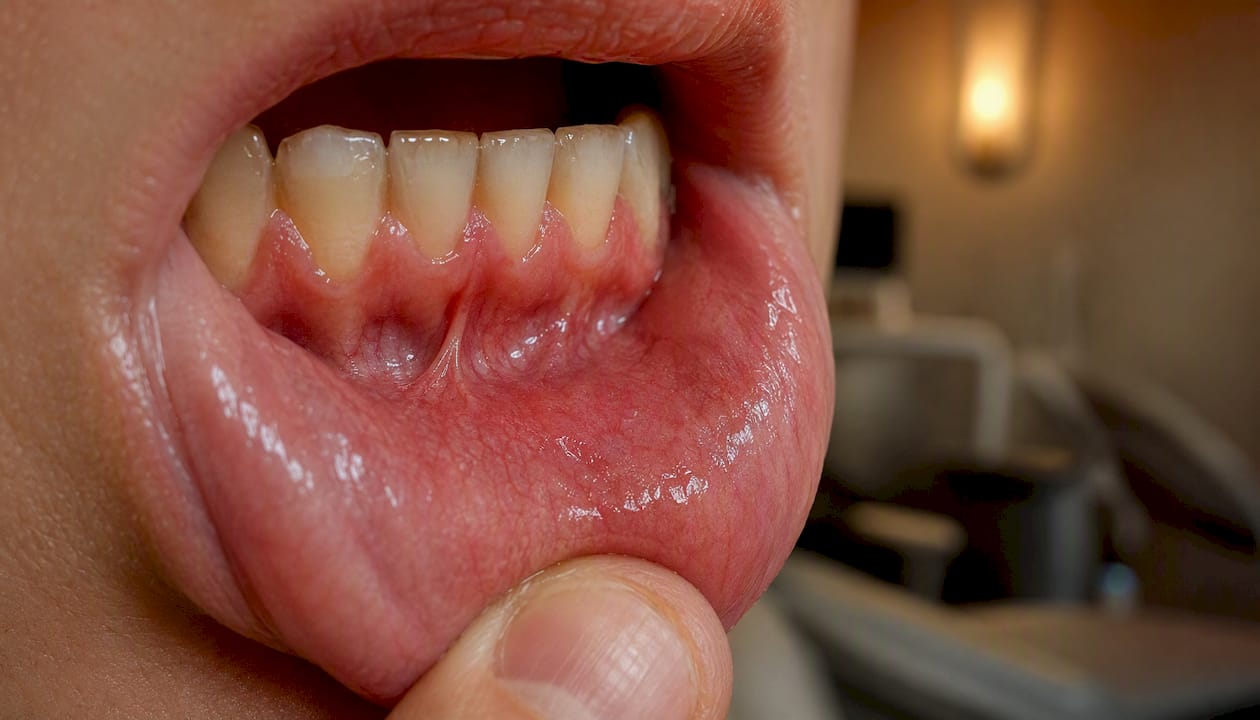
Oral signs associated with B12 and folate deficiency include red, swollen, or bleeding gums; glossitis (a smooth, painful, red tongue); angular cheilitis (cracking at the corners of the mouth); and generalized mucosal pallor. The PMC open-access review documents these oral manifestations across multiple deficiency states, and the Cleveland Clinic lists both nutrients among recognized contributors to gingival bleeding.
Who tends to be at risk
- Older adults (reduced gastric acid and intrinsic factor production impairs B12 absorption)
- Strict vegetarians and vegans (B12 is found almost exclusively in animal products)
- Individuals with pernicious anemia or atrophic gastritis
- Those with Crohn’s disease, celiac disease, or other malabsorption conditions
- People on long-term metformin therapy (reduces B12 absorption)
- Individuals with chronically low folate intake or alcohol use disorder
Tests clinicians typically order
- Serum B12 (levels below 200 pg/mL are generally considered deficient)
- Methylmalonic acid (MMA) — elevated MMA is a more sensitive functional marker of B12 deficiency than serum B12 alone
- Serum folate or red blood cell (RBC) folate (RBC folate reflects longer-term status)
- Complete blood count (CBC) — macrocytic anemia is a common downstream finding in both deficiencies
- Homocysteine — elevated in both B12 and folate deficiency; useful when both are borderline
Abnormal results in any of these tests warrant follow-up with a physician to determine whether oral supplementation, intramuscular B12 injections (for pernicious anemia or severe malabsorption), or dietary counseling is the appropriate correction.
Minerals and adjunct agents: how strong is the evidence?
Calcium and phosphorus support alveolar bone density and the structural integrity of the periodontium. Their deficiency does not directly cause gingival bleeding in the way vitamin C does, but chronic inadequacy weakens the bony support around teeth, making the gum tissue more susceptible to inflammation and recession over time. Evidence for a direct bleeding-reduction effect from calcium or phosphorus supplementation alone is weak; their role is primarily structural and preventive.
CoQ10 and curcumin have attracted more direct clinical attention for gingival bleeding:
- CoQ10 (topical or oral): Small randomized controlled trials report reduced gingival inflammation and bleeding scores over 4–12 weeks. Effect sizes are modest, and most trials are short-term with small sample sizes. CoQ10 is generally well tolerated.
- Curcumin (topical gel): A small RCT found that topical curcumin gel reduced gingival inflammation and bleeding compared with placebo over four weeks. Anti-inflammatory and antioxidant mechanisms are well characterized in vitro; clinical translation is promising but limited by trial scale.
- Green tea extracts: Observational and small trial data suggest catechins reduce gingival inflammation. Evidence is preliminary.
| Agent | Evidence Level | Primary Mechanism | Best Use Case |
|---|---|---|---|
| Vitamin C | Strong (systematic review + RCT) | Collagen synthesis, capillary integrity | Dietary correction + short-term supplement |
| Vitamin D | Moderate (observational + RCT adjunct) | Immune modulation, anti-inflammatory | Adjunct to professional periodontal therapy |
| CoQ10 (topical) | Weak-moderate (small RCTs) | Antioxidant, mitochondrial support | Adjunct to scaling and root planing |
| Curcumin (topical) | Weak (small RCT, 4 weeks) | Anti-inflammatory | Short-term adjunct post-SRP |
| Calcium/Phosphorus | Weak (structural, indirect) | Alveolar bone support | Dietary adequacy, not acute bleeding |
A consistent finding across adjunct trials is that these agents show their greatest benefit when combined with professional periodontal therapy, specifically scaling and root planing, rather than used as standalone treatments.
Common non-nutritional causes of bleeding gums
Vitamin deficiency is one explanation for bleeding gums, but it is far from the most common. The CDC’s oral health data consistently identifies plaque-induced gingivitis as the leading population-level cause. Accurate self-assessment requires ruling out these causes first:
- Plaque and gingivitis: Bacterial biofilm at the gum line triggers inflammation, capillary dilation, and bleeding on contact. This is the most prevalent cause.
- Periodontitis: Advanced gum disease with bone loss; bleeding is often a late sign of a process that began as gingivitis.
- Hormonal changes: Pregnancy gingivitis is well documented; elevated progesterone increases gingival vascular permeability.
- Medications: Anticoagulants (warfarin, rivaroxaban), antiplatelets (aspirin, clopidogrel), and some antihypertensives (calcium channel blockers causing gingival hyperplasia) all affect bleeding risk.
- Trauma: Aggressive brushing, ill-fitting dentures, or orthodontic appliances can cause localized bleeding unrelated to systemic factors.
- Systemic disease: Diabetes impairs immune response and wound healing; blood disorders (thrombocytopenia, leukemia) can present with spontaneous gingival bleeding.
Red flags requiring urgent care:
- Heavy or spontaneous bleeding that does not stop within 10 minutes
- Tooth mobility combined with bleeding
- Fever, swollen lymph nodes, or facial swelling alongside gum bleeding
- Unexplained bruising elsewhere on the body concurrent with gum bleeding
- Rapid gum recession or tissue necrosis
Any of these signs warrants same-day or emergency medical attention, not a wait-and-see approach.
Statistic: CDC data show that a substantial proportion of American adults aged 30 and older have some form of periodontal disease, underscoring that plaque-related causes vastly outnumber nutritional ones in the general population.
How providers evaluate bleeding gums: who to see and what to bring
The diagnostic pathway for persistent gum bleeding follows a logical sequence, and knowing it in advance helps you use appointments efficiently.
- Start with a dental exam and periodontal probing. A dentist or periodontist measures pocket depths, records bleeding on probing at each tooth site, and assesses plaque levels. This step rules in or out the most common cause before any blood test is ordered.
- Escalate to your GP if bleeding persists or systemic signs are present. Request a blood panel that includes: full blood count (CBC) with platelet count, coagulation panel (PT/INR, aPTT), serum vitamin C (where available), serum 25(OH)D, serum B12, RBC folate, and blood glucose or HbA1c if diabetes is a concern.
- Refer to hematology or oral medicine when a bleeding disorder cannot be excluded, when coagulation results are abnormal, or when oral mucosal changes suggest a systemic condition beyond simple deficiency.
Tests to expect at a GP visit for unexplained gum bleeding:
- Full blood count and differential
- Platelet count
- PT/INR and aPTT (coagulation screen)
- Serum 25(OH)D
- Serum B12 and RBC folate
- Methylmalonic acid (if B12 is borderline)
- Blood glucose and HbA1c
- Serum vitamin C (not universally available; request specifically)
Pro Tip: Bring a written list of every medication, supplement, and herbal product you take, including doses and frequency, plus a rough three-day diet history. Both pieces of information directly affect how a clinician interprets your results and whether they adjust your supplement plan.
Practical treatment steps and realistic timelines
Effective management of nutritionally related gum bleeding combines home care, dietary correction, targeted supplementation, and professional treatment. These are not sequential choices; they work best in parallel.
Home-care checklist
- Brush twice daily with a soft-bristled brush, using gentle circular or modified Bass technique
- Floss or use interdental brushes once daily; bleeding during flossing typically improves within one to two weeks of consistent use
- Use a salt rinse (half a teaspoon of salt in 250 mL of warm water) or a clinician-recommended antiseptic rinse for acute inflammation
- Avoid tobacco in all forms; smoking impairs gingival blood flow and masks bleeding by causing vasoconstriction
- For additional natural home-care steps, Stop-oralcare’s step-by-step guide covers complementary approaches in detail
Expected timeline by intervention
| Intervention | Typical Onset of Improvement | Notes |
|---|---|---|
| Dietary vitamin C increase | 4–8 weeks | Faster if baseline was severely low |
| Vitamin C supplement (100–200 mg/day) | 4–8 weeks | Combine with dietary sources |
| Professional scaling and root planing (SRP) | 2–3 weeks | Most reliable intervention for plaque-related bleeding |
| Vitamin D correction (deficient patients) | 8–12 weeks | Adjunct to SRP; serum level monitoring recommended |
| Topical curcumin or CoQ10 adjunct | 4–8 weeks | Small trial data; combine with SRP |
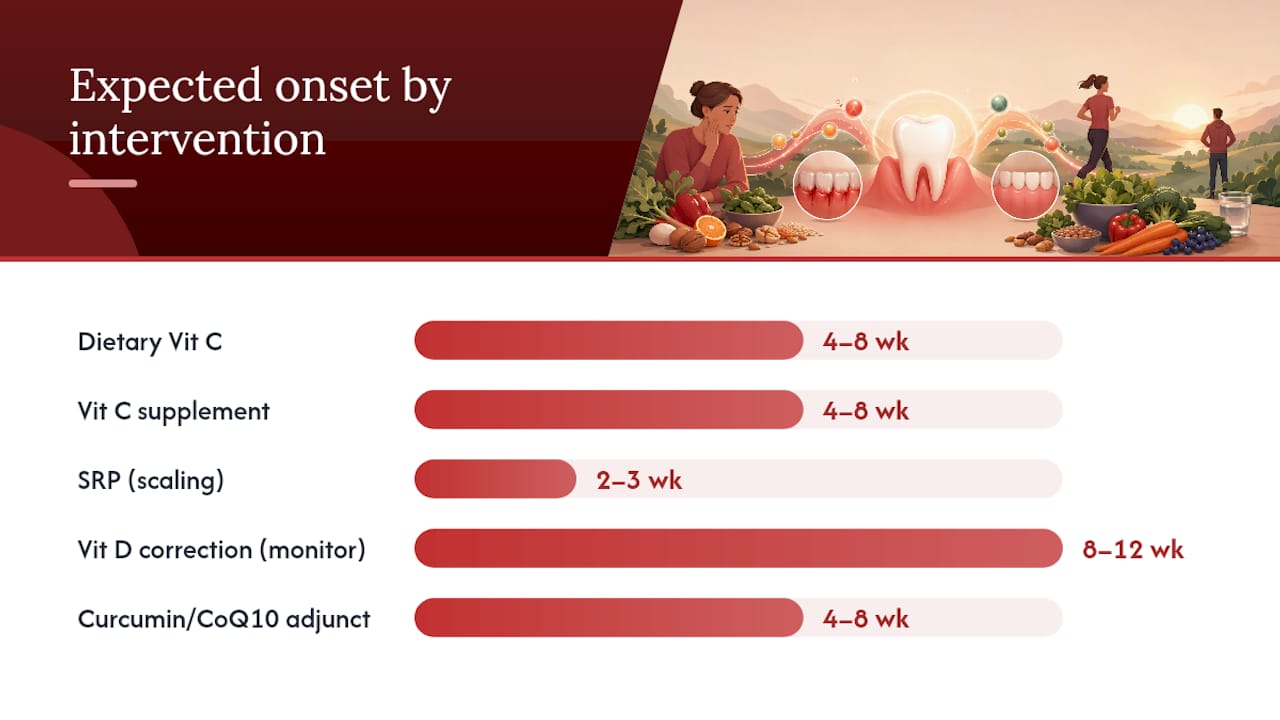
Return to your dentist or physician if bleeding has not improved meaningfully after six weeks of consistent home care and dietary correction, or sooner if any red-flag signs appear.
Safety cautions and drug interactions
Supplementing without awareness of drug interactions can create serious harm, particularly for individuals on anticoagulant or antiplatelet therapy.
Key interactions to know:
- Vitamin K and warfarin: Even moderate increases in dietary or supplemental vitamin K can reduce warfarin’s anticoagulant effect, raising clot risk. Patients on warfarin should keep vitamin K intake consistent rather than suddenly increasing it.
- High-dose vitamin E (above 400 IU/day) and fish oil (above 3 g/day): Both can potentiate anticoagulation and increase bleeding risk, particularly when combined with antiplatelet drugs.
- High-dose vitamin C (above 1,000 mg/day): Can interfere with certain lab assays (glucose oxidase-based glucose tests) and, at very high doses, may affect uric acid levels. Doses of 100–200 mg/day carry no meaningful interaction risk for most adults.
- Curcumin: Has mild antiplatelet properties; use with caution alongside anticoagulants or antiplatelets.
- CoQ10: May have a mild blood-pressure-lowering effect; monitor if on antihypertensive therapy.
Avoid high-dose single-nutrient supplementation without clinical monitoring. A targeted, test-guided approach, correcting documented deficiencies at evidence-supported doses, is safer and more effective than broad-spectrum megadosing.
Topical and natural oral-care adjuncts: what the evidence supports
Topical agents occupy a specific and well-defined role in gum care: they can reduce local inflammation, support wound healing after professional treatment, and provide antimicrobial activity at the gum line. They do not correct systemic deficiencies, and they are not substitutes for scaling, root planing, or dietary correction.
The agents with the most consistent trial support include:
- Topical curcumin gels: Anti-inflammatory via NF-κB pathway inhibition; small RCTs show reduced gingival index and bleeding scores over four weeks when used alongside SRP
- CoQ10 topical formulations: Antioxidant activity in periodontal tissues; pilot trials report reduced bleeding on probing over 8–12 weeks
- Green tea catechin rinses or gels: Antimicrobial and anti-inflammatory; preliminary trial data, effect sizes modest
- Vitamin C–enriched pastes: Support collagen synthesis at the tissue level and may accelerate post-SRP wound healing, per the PMC review on topical adjuncts
What to look for in a topical product
- Clinically reported concentrations of the active agent (not just “contains curcumin”)
- Absence of harsh alcohols (ethanol above 20%) in rinses intended for fragile or inflamed gums
- Low-abrasion formulation for toothpastes used on sensitive or bleeding tissue
- Preservative profiles that do not irritate compromised mucosa
Pro Tip: When selecting a toothpaste or rinse for bleeding gums, check whether the formulation avoids sodium lauryl sulfate (SLS). SLS can disrupt the mucosal barrier in sensitive individuals and may worsen tissue fragility in the short term.
Stop-oralcare’s fluoride-free, hemp-infused oral care products are formulated with Dead Sea minerals and designed to support gum health without harsh chemical agents, making them consistent with the selection criteria above. For a checklist of healthy gum care steps that integrates topical and systemic approaches, the Stop-oralcare resource covers the full picture.
An editorial perspective on nutrition and gum health
Most articles on this topic treat vitamin deficiency and dental disease as separate lanes. The clinical reality is messier and more instructive. Gingival tissue sits at the intersection of systemic nutrition, local microbial load, immune competence, and mechanical hygiene. A patient with mild vitamin C insufficiency and moderate plaque accumulation will bleed more than either factor alone would predict, because the two insults compound each other at the tissue level.
What tends to get underweighted in standard dental advice is the subclinical deficiency problem. Full scurvy is rare in high-income countries. Mild-to-moderate vitamin C insufficiency, the kind that does not produce classic scurvy signs but still compromises collagen turnover and capillary integrity, is far more common and far more likely to be missed. A patient told their gums bleed “because of poor brushing” may spend months intensifying mechanical cleaning while the underlying tissue fragility goes uncorrected.
The more productive clinical question is not “is this dental or nutritional?” but “which factors are present, and which ones can be corrected quickly?” Vitamin C correction is low-risk, inexpensive, and often produces measurable improvement within weeks. Vitamin D testing is underutilized in periodontal patients despite consistent observational evidence. B12 and folate screening takes one blood draw and can uncover deficiencies that affect far more than gum health.
The evidence does not support replacing professional periodontal care with supplements. It does support using nutritional assessment as a routine part of managing persistent gum bleeding, particularly when mechanical causes have been addressed and bleeding continues.
Natural oral-care adjuncts from Stop-oralcare
Correcting a vitamin deficiency addresses the systemic side of gum bleeding. The local environment, the gum tissue itself, also benefits from gentle, well-formulated topical support during recovery.

Stop-oralcare’s fluoride-free oral care line, formulated with hemp extract and Dead Sea minerals, is designed specifically for individuals with sensitive or inflamed gums who want to avoid harsh chemical agents during the healing process. The products are not medical treatments and do not replace professional periodontal care or clinician-guided supplementation. They are adjuncts, intended to support the gum tissue environment while systemic correction and professional treatment do the primary work.
If you are taking blood thinners or have a complex medical history, discuss any new oral care product with your provider before use. To review the full product range and find the formulation suited to your situation, visit Stop-oralcare’s natural oral care products.
Sources
- Nutrition Reviews systematic review (as cited by Harvard/Washington coverage)
- Open-access review on oral manifestations of vitamin deficiencies (PMC)
- Cleveland Clinic: Bleeding gums and vitamin deficiency overview
- Plasma 25-hydroxyvitamin D concentrations and periodontal disease in postmenopausal women (PubMed)
- The Role of Vitamin D3 in Periodontal Health (MDPI)
This article provides general health information and is not a substitute for professional dental or medical advice. If you have persistent bleeding gums, consult a dentist or physician to determine the appropriate diagnosis and treatment for your specific situation.