

Salt rinses, bicarbonate rinses, topical honey, and cold compresses are the four measures worth trying the moment an aphte appears. Most canker sores heal within about one to two weeks regardless of treatment, so these remedies mainly reduce pain rather than significantly shorten that window. Skip honey for infants under 12 months, and always dilute essential oils before they touch mucosa.
TL;DR:
- Natural remedies mainly offer pain relief and support healing rather than shorten the typical 7 to 14-day recovery period.
- The most effective home treatments include saline rinses, bicarbonate solutions, honey, aloe vera, and cold compresses, used in a specific sequence.
- Dilution ratios and timing are crucial; remedies like essential oils must be properly diluted and avoided by pregnant women, infants, and allergy sufferers.
- Combining remedies with proper hygiene and lifestyle adjustments, such as avoiding irritant foods and managing stress, can reduce recurrence frequency.
- Persistent sores lasting over two weeks, or accompanying symptoms like fever or large ulcers, require professional evaluation and possibly stronger medical treatment.
Table of Contents
- Aphtes Remèdes Naturels: What Actually Relieves the Pain
- Which Home Remedies for Mouth Ulcers Give the Fastest Relief?
- How Do You Combine These Remedies Without Overdoing It?
- What Diet and Lifestyle Changes Actually Cut Down Recurrences?
- When Should You Stop Home Care and See a Dentist?
- Expert Guidance From Dr. Veronica Stahl: Evidence-Savvy Tips and a Simple Protocol
- Stop Oral Care’s View on Gentle, Evidence-Backed Oral Care
- A Ready-Made Option When You Want Consistency Over Improvising
- Sources
Aphtes Remèdes Naturels: What Actually Relieves the Pain
The honest answer is that natural remedies for canker sores work as pain management, not a cure. Clinical and practitioner overviews consistently report that home remedies like salt rinses, bicarbonate, honey, and aloe vera relieve pain and support healing, but the lesion still runs its natural course over 7 to 14 days. That timeline matters because it resets expectations: no rinse or paste dissolves an aphte overnight. What these remedies genuinely do is calm the burning, reduce friction against food and teeth, and in some cases modestly speed the healing phase.
In French, “aphte” refers to what English speakers call a canker sore or mouth ulcer, a shallow, round lesion on the inner cheek, lip, tongue, or gum that stings on contact with acidic or salty food. The medical term is aphthous stomatitis, and it is distinct from cold sores, which are caused by the herpes simplex virus and appear on the outer lip. Confusing the two leads people to try the wrong remedy, since antiviral creams do nothing for an aphte and salt rinses do little for a cold sore.
This guide walks through the exact recipes, dilutions, and sequencing that make natural care for canker sores effective and safe, drawing on practitioner protocols and the evidence behind each ingredient.
Which Home Remedies for Mouth Ulcers Give the Fastest Relief?
Ten remedies come up again and again in practitioner guidance for treating canker sores naturally, and each has a distinct role, either as an antiseptic rinse, a protective topical, or a short-term numbing agent.
-
Saline rinse. Dissolve one teaspoon of salt in 200 ml of warm water. Swish for 30 seconds, up to four times a day, especially after meals. The sodium chloride draws fluid from the inflamed tissue and creates a mildly antiseptic environment, which is why it remains the first-line home remedy nearly everywhere. For exact technique and timing, a step-by-step salt water rinse guide walks through the dilution ratio in more depth.
-
Bicarbonate rinse or paste. Mix half a teaspoon of baking soda into 100 ml of water for a rinse, or combine it with a few drops of water to form a paste for direct application. Bicarbonate rinses neutralize oral acidity and can limit bacterial buildup around the lesion. Use the rinse form after acidic or spicy meals, and reserve the paste for a more concentrated, localized dab when the sore is especially tender.
-
Topical honey. Raw, thyme, or manuka honey applied directly to the sore two to three times daily can reduce both pain and, in some reports, the duration of the lesion, since honey’s antibacterial and moisture-retaining properties support recovery. Skip it entirely for children under 12 months because of botulism risk, and people managing diabetes should account for the added sugar exposure even in small topical amounts.
-
Aloe vera gel. Use pure, oral-grade aloe vera gel, not a skincare formulation with added fragrance or alcohol, and dab a small amount directly onto the ulcer two to three times a day. Its cooling, mildly astringent texture forms a temporary film that reduces friction against the tongue and teeth.
-
Ice or cold compress. Sucking on an ice chip or holding a chilled compress against the cheek near the sore numbs the area within a minute or two, offering a way to control severe toothache at home. This is the fastest of all the remedies here, though the effect fades within 15 to 20 minutes and needs repeating.
-
Propolis. This bee resin has documented antimicrobial and anti-inflammatory activity, applied either as a diluted tincture dabbed on the lesion or as a small piece chewed slowly. Anyone with a known bee product allergy should avoid it outright, since reactions can range from mild swelling to more serious responses.
-
Coconut oil. Oil pulling, swishing a tablespoon for 5 to 10 minutes, is a traditional practice with limited direct evidence for aphtes specifically, though its lauric acid content has mild antimicrobial properties. Topical application straight onto the sore offers a soothing, greasy barrier but should be treated as a comfort measure rather than a proven accelerant of healing.
-
Chamomile or sage infusion. Steep one tablespoon of dried chamomile or sage in 250 ml of hot water for 10 minutes, let it cool, and use it as a rinse three times daily. Both herbs carry mild anti-inflammatory compounds, and sage in particular has a long history in European folk medicine for mouth irritation.
-
Black tea compress. Press a cooled, damp black teabag directly against the sore for a few minutes. The tannins in black tea provide localized astringent relief, tightening tissue and easing the sting, which makes this one of the simplest kitchen-cabinet fixes available.
-
Diluted essential oils. Clove oil, rich in eugenol, has a genuine local analgesic effect documented in dental literature, but it must never touch mucosa undiluted. Mix one drop into at least one teaspoon of a carrier oil before applying with a cotton swab, and treat this as a short-term option rather than a daily habit.
Pro Tip: Keep a small jar of raw honey and a travel-size aloe vera gel in your bag during flare-up seasons. The two together cover both the antibacterial and the barrier-forming job without needing anything from a pharmacy.
For a broader look at why these ingredients show up in gentle rinse formulations generally, natural mouthwash remedies backed by science breaks down the mechanism behind several of them in more detail.
How Do You Combine These Remedies Without Overdoing It?
Layering remedies without a plan is how people end up irritating a sore further instead of calming it. Practitioner guidance consistently recommends a specific sequence: rinse first, wait, then apply a topical, because a gentle antiseptic rinse followed by a protective application gives the sore a clean surface before you seal it with something soothing.
The sequence looks like this in practice. Rinse with saline or bicarbonate after each meal, wait 10 to 15 minutes so the mouth’s pH settles and no rinse residue interferes with absorption, then apply honey, aloe, or a diluted essential oil directly onto the lesion. Avoid eating or drinking for another 15 to 20 minutes afterward so the topical stays in contact with the tissue instead of washing away.
Dilution ratios matter more than people expect. The safe ceiling for essential oils in the mouth is one drop of essential oil per teaspoon (about 5 ml) of edible carrier oil, applied with a cotton swab, never swallowed, and repeated no more than two to three times a day for a maximum of three days. Beyond that window, concentrated oils risk irritating the surrounding healthy tissue rather than helping the sore.
Certain groups need to sit out specific remedies entirely, not because the ingredient is dangerous in general, but because the oral route changes the risk profile:
- Pregnant women should avoid concentrated essential oils in the mouth, since several common ones (clove, peppermint in high doses) are not established as safe for oral use during pregnancy.
- Infants and children under 12 months must never receive honey in any form due to botulism risk from Clostridium spores.
- People with bee product allergies should skip propolis and be cautious with honey, watching for any swelling or tingling after first use.
- Anyone with a seizure disorder should avoid concentrated essential oils applied near mucous membranes, since some carry a theoretical risk tied to certain terpene compounds.
- People managing diabetes can still use honey topically in small amounts but should track it as a minor sugar exposure, especially with frequent daily use.
On the hygiene side, switch to a soft-bristle toothbrush and an SLS-free toothpaste while the sore is active, since sodium lauryl sulfate is a known irritant for some people prone to recurrent aphtes. Floss gently around the affected area rather than skipping it altogether, since food debris trapped near an open lesion slows things down more than a light flossing pass would.
A significant portion of the general population experiences recurrent aphthous stomatitis at some point, according to figures cited across patient education resources, which is part of why so many people build a personal remedy routine through trial and error rather than a single clinical fix. Stop the home routine and seek advice if a sore does not respond to any combination of these measures within a week, since that is often the point where an underlying trigger needs addressing rather than another topical.
What Diet and Lifestyle Changes Actually Cut Down Recurrences?
Preventing the next aphte matters more than treating the current one once you notice a pattern. A short list of dietary and lifestyle factors accounts for most recurrences, and testing them one at a time is more useful than eliminating everything at once.
- Citrus, tomato, and vinegar-based foods irritate existing lesions and appear to trigger new ones in sensitive people; remove one category for two to three weeks and reintroduce it slowly to see if frequency changes.
- Tree nuts, especially walnuts and almonds, are a documented trigger for some people, likely tied to compounds in the nut skin rather than the nut itself.
- Spicy and heavily salted foods aggravate active sores directly and, in frequent sufferers, seem to correlate with new outbreaks.
- Chronic stress and poor sleep are consistently linked to flare frequency; even simple measures like a fixed sleep window or five minutes of breathing exercises before bed reduce the physiological stress load that seems to precede outbreaks for many people.
- Smoking and heavy alcohol use both dry and irritate oral mucosa, making it more vulnerable to the minor trauma (a bitten cheek, a sharp cracker edge) that often precedes an aphte.
Nutritional deficiencies deserve a closer look if outbreaks happen more than four or five times a year. Low iron, vitamin B12, and folate are the three most commonly cited gaps in people with recurrent aphthous stomatitis, and a simple blood panel through a general practitioner can rule them in or out. Supplementing blindly without testing rarely helps and can mask other issues, so this is one area where a lab result should come before a supplement purchase.
Probiotics and oral microbiome support are the newest and least settled piece of the prevention picture. Early evidence suggests a healthier balance of oral bacteria may reduce inflammation that contributes to lesion formation, but the research base is still thin compared to the diet and stress factors above. If you try a probiotic lozenge or oral-specific strain, treat it as a slow experiment over two to three months rather than expecting a quick change, and don’t abandon the more established measures (diet triggers, sleep, stress) while you wait to see if it helps.
When Should You Stop Home Care and See a Dentist?
Most aphtes resolve on their own, but a few warning signs mean natural remedies have done what they can and it is time for a professional look. Medical evaluation becomes necessary when a lesion crosses one of several thresholds that home care cannot address.
- A sore that lasts more than about two weeks without any sign of shrinking.
- Fever, swollen lymph nodes, or general malaise alongside the mouth lesion.
- An ulcer that is unusually large (wider than a centimeter) or appears to be spreading rather than staying contained.
- Recurrences more than five or six times a year, which suggests an underlying trigger worth investigating rather than repeated one-off treatment.
A dentist or doctor examining a persistent aphte may prescribe a topical corticosteroid to calm inflammation faster, recommend an antiseptic rinse with a stronger active ingredient than salt or bicarbonate, or run basic blood work to rule out an iron or vitamin deficiency behind frequent outbreaks. None of this replaces a proper exam, but knowing the general options helps you understand what a visit will likely involve.
Walking in prepared makes the appointment shorter and more useful. Note when the sore first appeared and roughly how it has changed day to day, take a photo on day one and again before the visit, and list every home remedy already tried, including dilutions and frequency, so the clinician isn’t guessing at what has already failed.
Expert Guidance From Dr. Veronica Stahl: Evidence-Savvy Tips and a Simple Protocol
Dr. Veronica Stahl brings a dual lens to canker sore care, one grounded in clinical dentistry and one shaped by natural medicine, which is part of why her approach to aphtes leans toward barrier-forming, food-grade agents over anything harsher. Her perspective matters here because most natural-remedy advice online treats every ingredient as equally safe, when in practice some (honey, aloe) carry almost no risk for most adults, while others (concentrated essential oils) need real caution.
Barrier-forming agents like honey and aloe vera don’t just soothe. They physically reduce the friction between an open lesion and the food, teeth, and tongue moving across it dozens of times a day, which is often where most of the pain actually comes from.
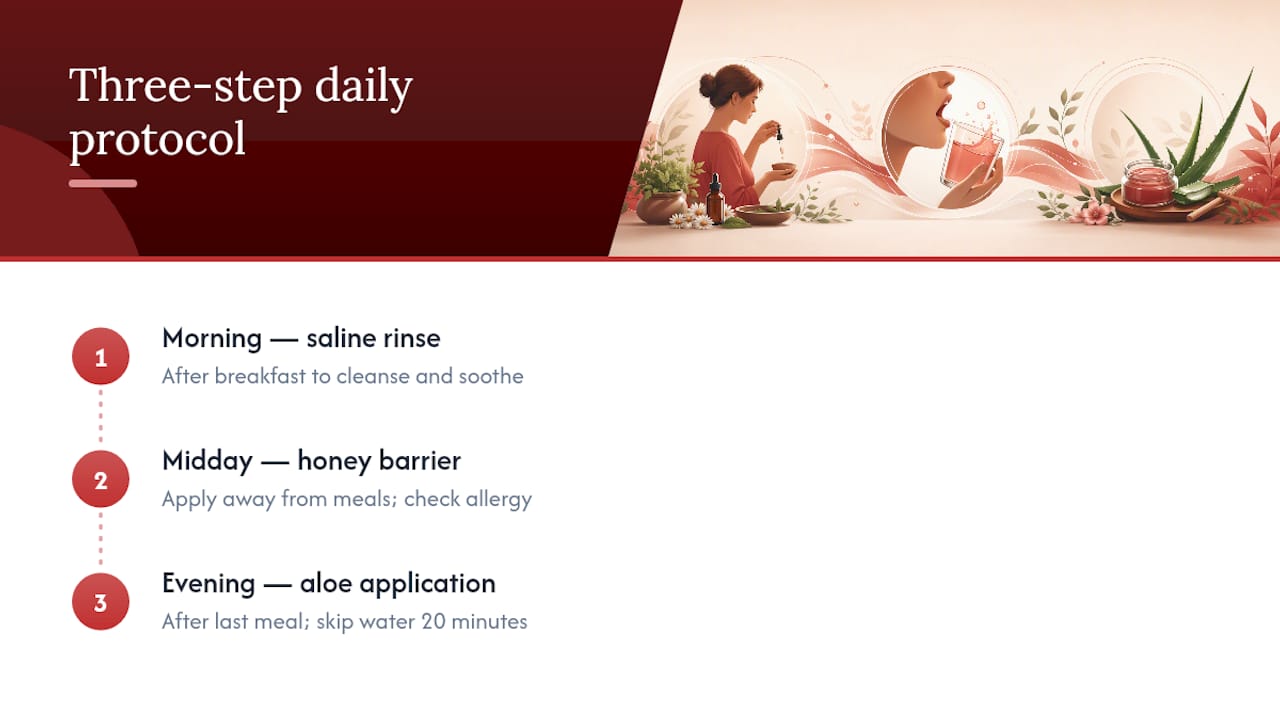
Her sample protocol for an active aphte runs three touchpoints across the day: a saline rinse in the morning after breakfast, a honey application at midday away from mealtimes, and an aloe vera application in the evening before bed, when the mouth has the longest stretch of uninterrupted contact with the topical. Spacing the three this way avoids overloading the tissue while still giving continuous barrier coverage.
Pro Tip: Apply the evening topical right after your last meal and skip water for 20 minutes afterward. That single change keeps the barrier intact overnight instead of rinsing away within minutes.
Before starting any of this, run through a short safety checklist: confirm no known allergy to honey, propolis, or bee products; skip honey entirely for infants; and if pregnant, stick to saline, bicarbonate, and aloe rather than essential oils of any concentration.
Stop Oral Care’s View on Gentle, Evidence-Backed Oral Care
Stop Oral Care builds its formulations around the same principle behind the barrier-forming remedies described above: food-grade, tested topicals outperform harsh chemical alternatives for sensitive oral tissue. That philosophy shows up in the choice to work with hemp extract and Dead Sea minerals rather than synthetic additives, since both categories have documented anti-inflammatory and mineral-support properties that align with what a compromised mucosa actually needs to recover.
The honest way to think about homemade versus over-the-counter remedies is as complementary, not competing. A saline rinse costs nothing and works well as a first response, but a formulated product offers consistency in concentration and testing that a kitchen recipe cannot guarantee batch to batch. Readers weighing hemp-based oral care against improvised remedies should look closely at ingredient lists and any available safety data before committing either way.
Anyone with specific questions about how a given ingredient interacts with an existing condition, an allergy, or a pregnancy should review individual product pages or reach out to customer support directly rather than guessing from a general article.
A Ready-Made Option When You Want Consistency Over Improvising
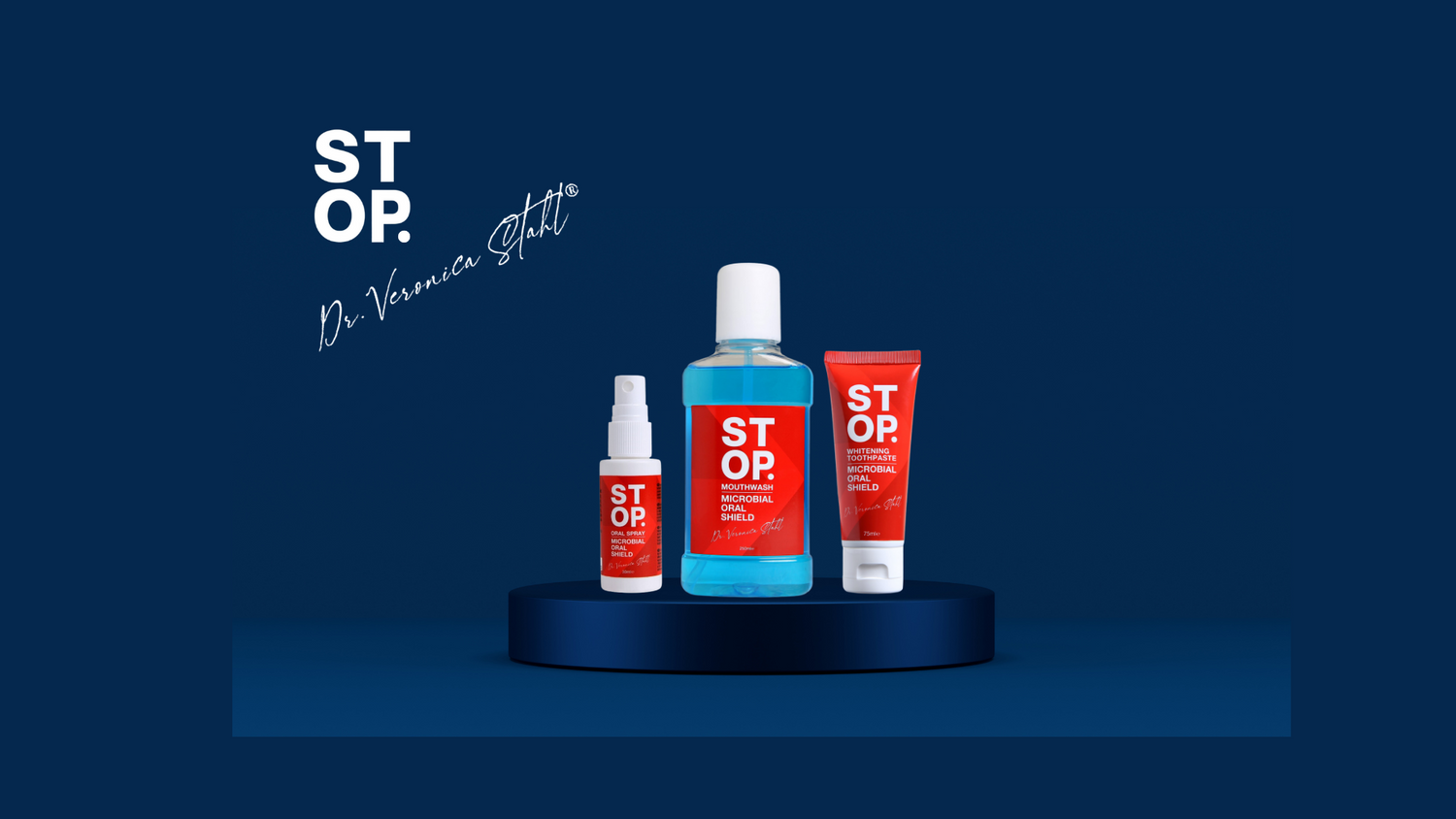
Stop Oral Care exists for the moments when mixing salt water or hunting for oral-grade aloe feels like more effort than the relief is worth. The product line is built around the same soothing, barrier-forming, gentle antiseptic logic covered throughout this guide, hemp extract and Dead Sea minerals in place of synthetic additives, fluoride-free, and formulated with the same batch-to-batch consistency a homemade rinse cannot promise.

Where a DIY protocol asks you to track dilution ratios and rebuy honey or aloe gel every few weeks, a formulated toothpaste, mouthwash, or oral spray gives you the same soothing and protective action without the prep work each time a sore appears. That consistency matters most for anyone managing frequent recurrences, since the whole point of prevention is repeatable habit, not a new recipe every flare-up.
Browse the full range of natural oral care products to see which format, toothpaste, mouthwash, or spray, fits your daily routine best, and check individual product pages for full ingredient breakdowns before you order.
Sources
- Aphtes : remèdes naturels, traitements et comment s’en débarrasser rapidement — Medanta
- Huit remèdes naturels pour soulager rapidement les aphtes — IFSS
- Comment guérir rapidement et naturellement les aphtes? — Care Hospitals
- Aphte traitement : soins et remèdes efficaces — Qare
Persistent or unusual cases always warrant a conversation with a dentist or doctor rather than continued self-treatment.