

TL;DR:
- Dead Sea minerals effectively reduce bacterial toxins and control gum inflammation, supporting periodontal health.
- While they do not whiten teeth, these minerals offer a natural adjunct comparable to chlorhexidine with fewer side effects.
Dead Sea minerals are defined as a high-ionic blend of magnesium, calcium, potassium, bromide, and chloride salts extracted from the hypersaline waters of the Dead Sea, and their primary documented benefits for teeth center on antimicrobial toxin reduction and gum inflammation control rather than cosmetic whitening. Clinical evidence published in 2026 confirms that these minerals reduce leukotoxin by 84% and endotoxin by 40% in periodontal environments. That level of bacterial toxin neutralization places Dead Sea salt among the most studied natural adjuncts in oral care. Limitations exist for enamel remineralization and whitening, and understanding both the strengths and boundaries of these minerals is what separates informed use from marketing-driven expectations.
1. Benefits of Dead Sea minerals for teeth: antimicrobial toxin reduction
The most clinically significant benefit of Dead Sea minerals for teeth is their capacity to neutralize bacterial toxins produced by periodontal pathogens. Leukotoxin, secreted by Aggregatibacter actinomycetemcomitans, and endotoxin, released by gram-negative bacteria, are two primary drivers of gum tissue destruction and bone loss in periodontitis. Dead Sea mineral rinses reduce these toxins measurably, with leukotoxin reduced by 84% and endotoxin by 40% in controlled trial conditions. These are not marginal improvements. They represent a clinically meaningful reduction in the biochemical load that triggers periodontal inflammation.
The mechanism involves the high ionic strength of Dead Sea salts disrupting bacterial membrane integrity and interfering with toxin secretion pathways. This is distinct from simple osmotic flushing, which any saline solution provides. The specific mineral composition of Dead Sea salt, particularly its elevated magnesium and bromide concentrations, contributes to this targeted antimicrobial activity in ways that standard sodium chloride solutions do not replicate.
“Dead Sea mineral solutions demonstrated antiviral activity against HSV-1 and EBV, suggesting a broader role in preventing periodontal disease progression beyond bacterial control.” — Thermal Springs to Saline Solutions
This antiviral dimension is rarely discussed in consumer oral care contexts. Herpesviruses including HSV-1 and Epstein-Barr virus are now recognized as co-factors in aggressive periodontitis, and the capacity of Dead Sea minerals to reduce their viral loads adds a layer of therapeutic relevance that extends well beyond routine plaque management.
2. How Dead Sea minerals compare to chlorhexidine for gum health
Chlorhexidine gluconate is the clinical gold standard for chemical plaque control and gingivitis management. Three-arm controlled trials show no significant difference between Dead Sea salt rinses and chlorhexidine in reducing periodontal inflammation scores. This finding carries substantial weight for individuals seeking natural alternatives without compromising clinical outcomes.
Chlorhexidine carries well-documented side effects including tooth staining, altered taste perception, and mucosal desquamation with prolonged use. Dead Sea mineral rinses, when properly formulated for oral mucosa safety, do not produce these effects at equivalent therapeutic concentrations. This makes them a viable adjunct or short-term alternative for patients who cannot tolerate chlorhexidine or who prefer fluoride-free, naturally derived oral care products.
The comparison is not absolute. Chlorhexidine has a broader substantivity, meaning it binds to oral surfaces and continues releasing antimicrobial agents for hours after rinsing. Dead Sea mineral solutions do not replicate this sustained-release mechanism. Their benefit is best realized through consistent daily use rather than single-application efficacy.
3. Key minerals in Dead Sea salt and their specific dental roles
Dead Sea salt contains a mineral profile that differs substantially from ocean salt or Red Sea salt, with magnesium constituting approximately 33% of its dissolved solids compared to under 4% in standard sea salt. Each mineral contributes a distinct function in the oral environment:
- Magnesium reduces pro-inflammatory cytokine activity in gingival tissue and supports soft tissue repair at the cellular level. Magnesium deficiency is associated with increased susceptibility to periodontal disease, making its topical delivery through mineral rinses physiologically relevant.
- Calcium strengthens teeth and cell membranes, contributing to structural integrity of enamel-adjacent tissues and supporting the remineralization environment when combined with other agents.
- Bromide exerts a calming effect on mucous membranes and contributes to bacterial membrane disruption, particularly against gram-positive oral pathogens.
- Potassium regulates osmotic balance in gingival crevicular fluid and supports the integrity of the epithelial barrier lining the gum sulcus.
These minerals do not act in isolation. Their combined ionic activity creates an oral environment less hospitable to pathogenic biofilm formation. This synergistic effect distinguishes Dead Sea salt from single-mineral supplements or conventional saline rinses.
Pro Tip: Verify that any Dead Sea mineral oral care product you select specifies formulation for oral mucosal safety. Due to the extreme ionic composition of raw Dead Sea salts, undiluted or improperly buffered concentrations can cause mucosal irritation rather than therapeutic benefit.
4. Teeth whitening with Dead Sea minerals: what the evidence actually shows
Teeth whitening with Dead Sea minerals is a claim that requires careful qualification. The 2026 clinical consensus from randomized controlled trials and scoping reviews confirms that Dead Sea minerals provide no significant advantage over conventional whitening agents or fluoride-based treatments for enamel repair. This is a direct finding, not an inference, and it applies to the minerals themselves rather than to all products that contain them.
The whitening effects observed in some Dead Sea mineral toothpaste formulations are attributable to botanical extracts combined with the mineral base, not to the minerals alone. Ingredients such as activated charcoal, papain enzyme, or silica abrasives are responsible for stain removal in these products. The minerals provide the antimicrobial and anti-inflammatory substrate, while the botanicals deliver the cosmetic outcome. Consumers who conflate the two are likely to be disappointed if they expect whitening from mineral content alone.
The table below summarizes the current evidence on whitening and remineralization efficacy across three categories of oral care agents:
| Agent | Whitening efficacy | Enamel remineralization |
|---|---|---|
| Dead Sea minerals (alone) | No significant advantage over controls | Limited direct evidence |
| Fluoride-based treatments | Moderate (via stain prevention) | Well-established clinical evidence |
| Botanical and mineral blends | Moderate (stain removal via abrasives/enzymes) | Variable, formulation-dependent |
Marketing claims of remineralization for Dead Sea mineral products are mostly derived from adjunct ingredients or user perceptions rather than direct mineral effects. Selecting products with transparent ingredient labeling is the most reliable way to evaluate actual whitening or remineralization potential.
5. How Dead Sea mineral oral care products compare to conventional treatments
Dead Sea mineral oral care products perform comparably to chlorhexidine for plaque reduction and gingivitis management in controlled settings, as established by three-arm clinical trials. This positions them as legitimate adjunctive agents rather than experimental novelties. The practical advantages over conventional treatments include the absence of alcohol, artificial preservatives, and synthetic antimicrobials, which are common in standard mouthwashes and toothpastes.
The oral mucositis reduction observed in cancer patients undergoing radiotherapy represents one of the more compelling clinical applications of Dead Sea mineral products. Prospective cohort studies documented reduced severity and incidence of oral mucositis in this population, a finding that extends the therapeutic relevance of these minerals beyond routine oral hygiene into supportive oncology care.
Key considerations when evaluating Dead Sea mineral products against conventional alternatives:
- Plaque and gingivitis control: Comparable to chlorhexidine in clinical trials, with fewer adverse effects on tooth color and taste.
- Mucosal protection: Demonstrated benefit in radiotherapy-associated mucositis, with no equivalent evidence for standard fluoride toothpaste in this context.
- Formulation safety: High mineral concentrations require proper buffering for oral use. Products designed for skin or spa use are not appropriate for intraoral application.
- Fluoride-free positioning: Stop-oralcare formulates its Dead Sea mineral products without fluoride, addressing the preferences of consumers who seek fluoride-free oral care backed by clinical rationale.
Pro Tip: Use Dead Sea mineral rinses and toothpastes as adjuncts to, not replacements for, professional dental care. Their role in oral health is best realized alongside regular scaling, flossing, and dental examinations.
6. Practical guidance for using Dead Sea mineral oral care products safely
Incorporating Dead Sea minerals into a daily oral hygiene routine requires attention to product selection, application frequency, and individual tolerance. The following protocol reflects current clinical guidance for safe and effective use:
- Conduct a tolerance assessment first. Apply a small amount of the product to the inner cheek for 30 seconds and rinse. Wait 24 hours before full use. This identifies sensitivity to high ionic concentrations before committing to daily application.
- Select products formulated specifically for oral use. Dead Sea mineral products designed for dermatological or balneological applications carry different ionic concentrations than those formulated for oral mucosa. The distinction matters clinically.
- Integrate with existing oral hygiene practices. Dead Sea mineral mouthwash or toothpaste functions as an adjunct. Brushing twice daily, flossing once daily, and attending professional cleanings every six months remain the foundation of oral health maintenance.
- Limit application on open sores or ulcers without professional advice. While Dead Sea minerals reduced oral mucositis in clinical settings, self-directed application to active lesions without professional guidance carries the risk of ionic irritation rather than healing.
- Monitor for any mucosal changes. Prolonged use of high-concentration mineral products without proper formulation can alter the oral mucosal environment. If you notice tissue sensitivity, dryness, or altered taste, reduce frequency and consult a dental professional.
- Combine with complementary natural practices. Oil pulling with coconut oil, adequate hydration, and a low-sugar diet each support the antimicrobial environment that Dead Sea minerals help establish. These practices are not substitutes but reinforcing behaviors.
Salt-based oral care has a documented history as an inexpensive antimicrobial adjunct across resource-limited settings globally, and Dead Sea mineral products represent the most scientifically characterized iteration of this practice available in 2026.
Key takeaways
Dead Sea minerals provide their most evidence-backed dental benefits through antimicrobial toxin neutralization and gum inflammation control, not through whitening or enamel repair.
| Point | Details |
|---|---|
| Toxin reduction is the primary benefit | Dead Sea minerals reduce leukotoxin by 84% and endotoxin by 40% in periodontal environments. |
| Comparable to chlorhexidine | Clinical trials show equivalent gum inflammation reduction with fewer side effects like staining. |
| Whitening claims require scrutiny | Whitening effects in mineral products come from botanical additives, not the minerals themselves. |
| Formulation safety is non-negotiable | Oral-grade formulations must buffer ionic concentration to prevent mucosal irritation. |
| Best used as an adjunct | Dead Sea mineral products complement professional dental care rather than replacing it. |
A clinician’s perspective on Dead Sea minerals in oral care
The clinical data on Dead Sea minerals is more rigorous than most natural oral care categories can claim. An 84% reduction in leukotoxin is not a marginal finding. It is the kind of outcome that warrants serious attention from practitioners who manage patients with chronic gingivitis or early-stage periodontitis and who are looking for adjunct options with fewer side effects than chlorhexidine.
What I find consistently underappreciated in consumer discussions is the antiviral dimension. The evidence linking HSV-1 and EBV to aggressive periodontitis has grown substantially over the past decade. A mineral formulation that reduces both bacterial toxins and viral loads simultaneously addresses two pathogenic mechanisms that conventional mouthwashes typically ignore. That is a meaningful clinical distinction, not a marketing point.
Where I urge caution is in the whitening and remineralization space. The research is clear: the minerals themselves do not drive these outcomes. Products that lead with whitening claims for Dead Sea mineral content are, in most cases, attributing the effect to the wrong ingredient. Consumers deserve accurate attribution, and practitioners should help them read labels critically.
The field needs more standardized clinical trials with larger cohorts and longer follow-up periods before Dead Sea minerals can move from adjunct status to standard care recommendations. The safety profile is promising, and the mechanism is plausible. What remains is the rigorous evidence base that would satisfy regulatory and clinical guideline bodies. Until then, thoughtful integration alongside professional dental care is the most defensible position.
— Veronica
Explore natural oral care with Dead Sea minerals from Stop-oralcare
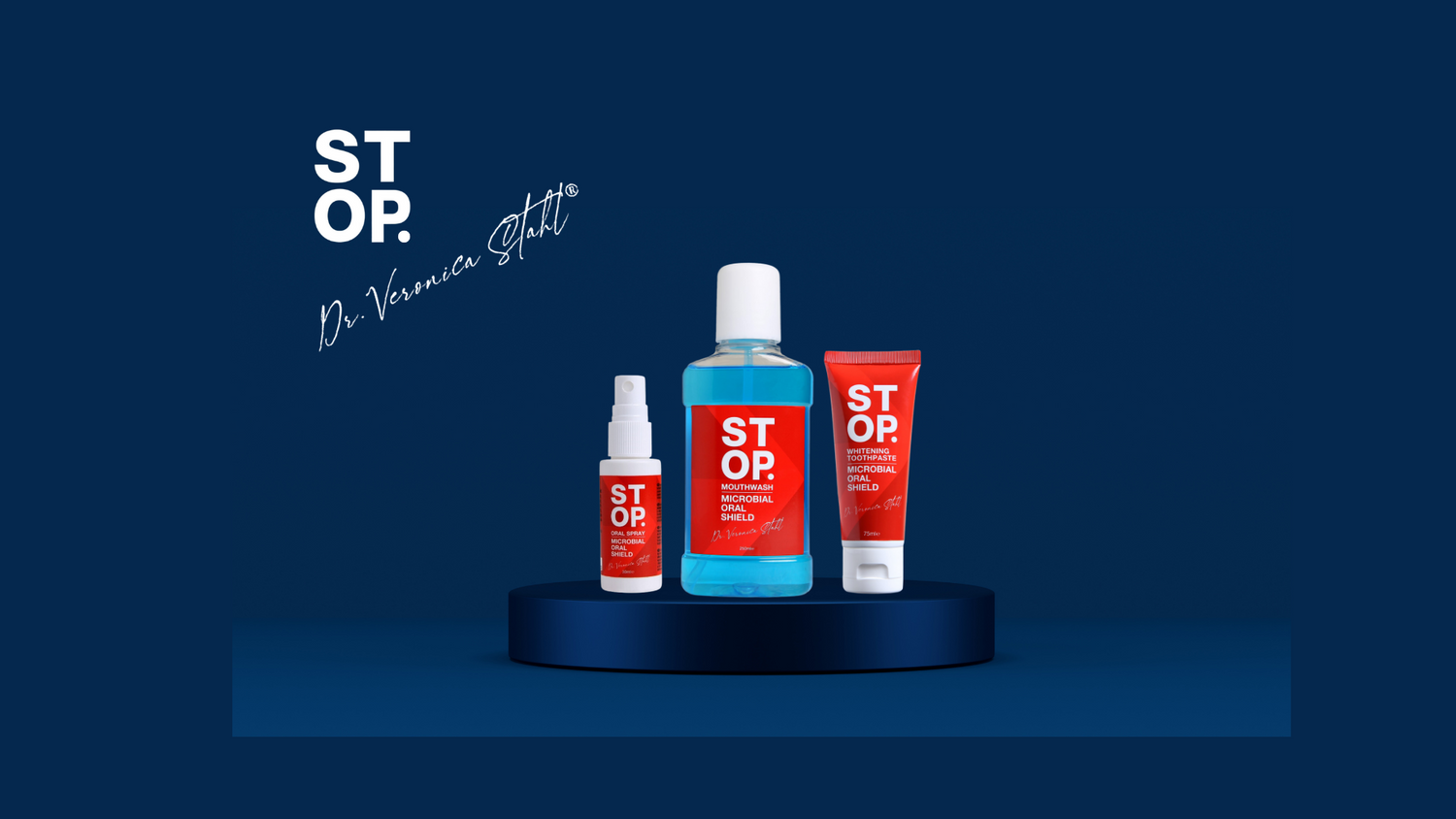
Stop-oralcare develops fluoride-free oral care products formulated with Dead Sea minerals and hemp, grounded in the clinical research reviewed in this article. Each product in the Stop-oralcare line is designed for oral mucosal safety, with mineral concentrations calibrated for daily intraoral use rather than adapted from dermatological formulations.
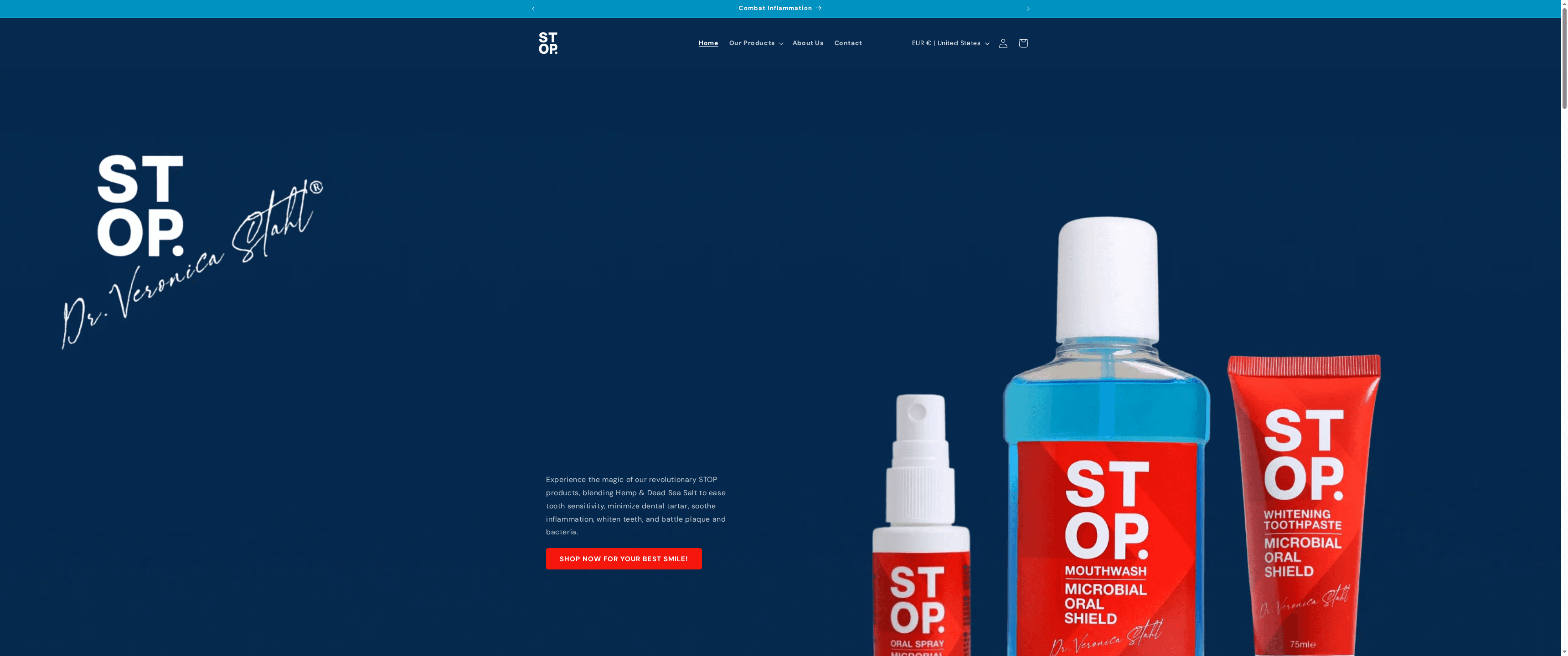
The Stop-oralcare range includes mineral-based toothpaste formulated for gum health, mouthwash with documented sensitivity relief, and oral sprays for targeted application. Dr. Veronica Stahl leads product development, applying both dental and natural medicine expertise to each formulation. For individuals seeking natural alternatives with a clinical foundation, the full product selection is available at Stop-oralcare.
FAQ
What are the main benefits of Dead Sea minerals for teeth?
Dead Sea minerals primarily benefit teeth and gums by reducing bacterial toxins, specifically leukotoxin by 84% and endotoxin by 40%, and by controlling periodontal inflammation at levels comparable to chlorhexidine. Their antimicrobial and anti-inflammatory properties make them a clinically supported natural adjunct for gum health.
Do Dead Sea minerals whiten teeth?
Dead Sea minerals alone show no significant whitening advantage over conventional treatments in 2026 clinical trials. Whitening effects in products containing these minerals are attributable to botanical additives such as enzymes or abrasives, not to the mineral content itself.
Are Dead Sea mineral oral care products safe for daily use?
Products specifically formulated for oral mucosal use are generally safe for daily application, but raw or undiluted Dead Sea salt concentrations can cause irritation. Always select products labeled for intraoral use and conduct a tolerance assessment before committing to regular application.
How do Dead Sea minerals support gum health specifically?
Dead Sea minerals reduce the bacterial toxins that trigger gingival inflammation, disrupt pathogenic biofilm formation, and demonstrate antiviral activity against HSV-1 and EBV, both of which are implicated in periodontal disease progression. This multi-mechanism action supports gum health at both bacterial and viral levels. More detail is available in the science and safety overview published by Stop-oralcare.
Can Dead Sea minerals replace fluoride toothpaste?
Dead Sea minerals do not replicate the enamel remineralization mechanism of fluoride, and current evidence does not support their use as a direct fluoride substitute for caries prevention. They function as adjuncts that address antimicrobial and anti-inflammatory needs, complementing rather than replacing other evidence-based oral care agents.
Recommended
- Dead Sea Minerals: Oral Care Benefits Explained – Stop Oral Care
- Dead Sea Minerals Dental Guide for Natural Oral Care – Stop Oral Care
- Dead Sea minerals in dentistry: natural fluoride-free oral care guide – Stop Oral Care
- Dead Sea Minerals in Mouthwash: Natural Relief for Sensitivity – Stop Oral Care