

TL;DR:
- Dead Sea minerals contain a broad spectrum of biologically active elements that support oral tissue health and antimicrobial defense. Clinical evidence suggests mineral mouthwashes improve plaque and gum indices, but long-term benefits remain unconfirmed. Consumers should choose verified formulations and consult professionals, using mineral products alongside established oral hygiene practices.
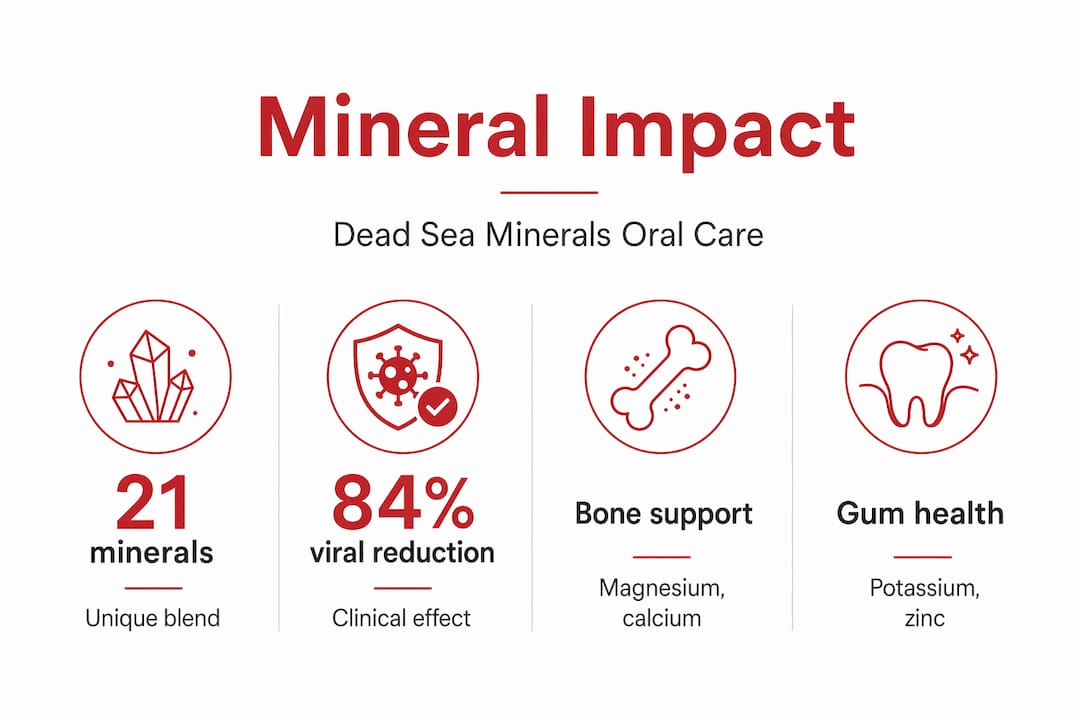
Dead Sea minerals have attracted growing scientific attention as a functional component in natural oral care, and this dead sea minerals dental guide presents the evidence-based rationale for that interest. Consumers managing tooth sensitivity, gum inflammation, or persistent plaque buildup often seek alternatives to conventional products that rely on synthetic antimicrobial agents or high-fluoride concentrations. Dead Sea salts contain 21 distinct minerals including magnesium, calcium, potassium, bromide, sulfur, iodine, and zinc, a mineral profile substantially broader than that of ordinary table salt, and one that carries documented biological relevance to oral tissue physiology.
Table of Contents
- Key takeaways
- The dead sea minerals dental guide to key mineral composition
- How to incorporate Dead Sea minerals safely
- What the research says about effectiveness
- Common misconceptions about Dead Sea minerals in dentistry
- Comparing Dead Sea mineral product types
- My perspective on Dead Sea minerals in natural dental care
- Explore Dead Sea mineral oral care products
- FAQ
Key takeaways
| Point | Details |
|---|---|
| Distinctive mineral profile | Dead Sea salts contain 21 minerals that support enamel integrity, antimicrobial defense, and gingival tissue health. |
| Adjunct, not replacement | Clinical experts recommend using Dead Sea mineral products alongside, not instead of, fluoride and established oral hygiene practice. |
| Mouthwash shows strongest evidence | Research indicates mouthwash formulations demonstrate the most consistent improvements in plaque and gingival indices. |
| Product formulation matters | Efficacy depends directly on verified mineral content and delivery method; generic sea salts are not equivalent substitutes. |
| Realistic expectations required | Short study follow-up periods mean long-term claims on caries prevention or tooth regeneration remain unsupported. |
The dead sea minerals dental guide to key mineral composition
Understanding which minerals are present in Dead Sea salt and why they matter to oral health is the logical starting point for any practical application.
Dead Sea salts contain 21 minerals, several of which have well-characterized roles in dental and periodontal physiology. The table below summarizes the most clinically relevant compounds.
| Mineral | Role in oral health |
|---|---|
| Magnesium | Supports bone density, regulates calcium uptake in enamel, reduces gingival inflammation |
| Calcium | Directly contributes to remineralization of enamel and dentin |
| Potassium | Reduces nerve hypersensitivity in dentinal tubules |
| Zinc | Inhibits plaque biofilm formation and controls sulfur-producing bacteria |
| Bromide | Anti-inflammatory effects on gingival tissue |
| Sulfur | Antimicrobial action against periodontopathogenic bacteria |
| Iodine | Broad-spectrum antiseptic activity relevant to mucosal surfaces |
In vitro research confirms that these minerals are not interchangeable with ordinary sodium chloride. Mineral salts inhibit cariogenic and periodontopathogenic bacteria, as well as their biofilm structures, more effectively than plain sodium chloride alone. This distinction is critical because it explains why Dead Sea mineral products may confer benefits that generic salt rinses cannot replicate.
Compared to table salt, which is composed almost entirely of sodium chloride, Dead Sea salt delivers a multi-mineral matrix that targets several biological mechanisms simultaneously. The anti-inflammatory and antimicrobial properties of this mineral combination help explain observed clinical outcomes, although the magnitude of those outcomes depends significantly on product formulation and dosing concentration. For consumers, this underscores the importance of selecting formulated oral care products rather than using raw mineral salt without guidance.
The role of minerals in oral care has been studied across multiple biological pathways, and Dead Sea minerals interact with several simultaneously, which is one reason researchers continue to investigate their potential.
How to incorporate Dead Sea minerals safely
Practical application of Dead Sea minerals in a dental routine requires attention to delivery method, concentration, and frequency.
The following steps provide structured guidance for consumers beginning or optimizing mineral-based oral care.
- Select a formulated product. Choose commercially prepared toothpaste, mouthwash, or oral rinse products that specify verified mineral content on the label. Raw Dead Sea salt dissolved at home lacks standardized mineral concentrations and increases the risk of mucosal irritation from excessive salinity.
- Follow frequency guidelines for rinses. Saline rinses using mineral-enriched solutions are generally appropriate once or twice daily. More frequent use without clinical indication does not improve outcomes and may disrupt the oral microbiome balance.
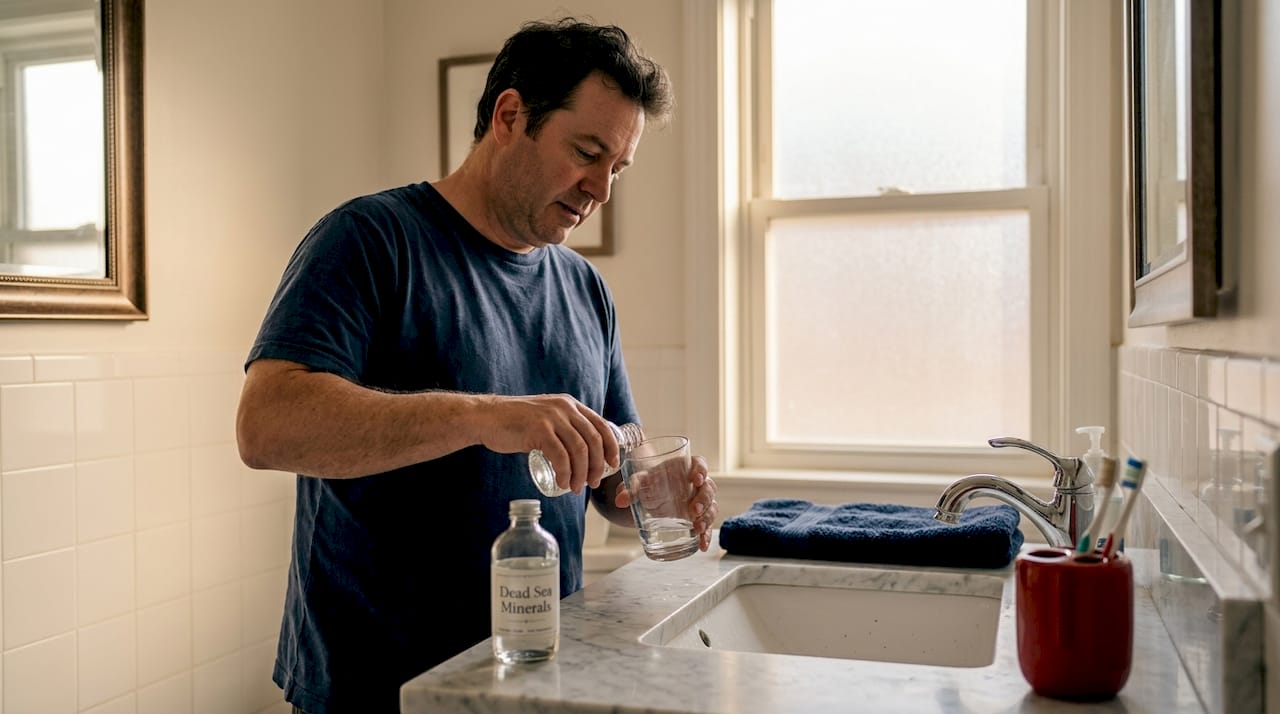
- Prepare home rinses correctly if using them. If a clinician has recommended a salt-based rinse, dissolve approximately 0.25 to 0.5 teaspoons of a specified mineral salt blend in 8 ounces of warm water. Rinse for 30 to 60 seconds and spit; never swallow.
- Time mouthwash use after brushing. Using mineral mouthwash after mechanical brushing and interdental cleaning allows the active minerals to contact surfaces that have already been cleared of gross debris, increasing their contact time with gingival tissue.
- Complement mineral products with standard hygiene. Twice-daily mechanical brushing, daily interdental cleaning, and regular professional scaling remain the foundation of periodontal health. Mineral oral care products support these practices; they do not replace them.
- Monitor for irritation. Individuals with mucosal sensitivity, oral ulcerations, or sodium-restricted diets should consult a dental professional before initiating mineral rinse protocols.
Pro Tip: Use your mineral mouthwash in the evening rather than immediately before meals. Allowing contact time with gingival tissue overnight, without subsequent rinsing, maximizes exposure of the mineral matrix to the periodontal environment where inflammation most commonly initiates.
Safety considerations are not incidental to this guide. High-salinity preparations used without dilution can cause mucosal dehydration and exacerbate existing tissue sensitivity. Consumers should also review safe oral care ingredients before combining mineral products with other natural actives such as essential oils or herbal extracts.
What the research says about effectiveness
The clinical evidence base for Dead Sea minerals in dental care has grown meaningfully over the past several years, but it remains incomplete in ways consumers should understand clearly.
A 2025 systematic review identified seven studies showing improvements in periodontal parameters and viral load reduction with Dead Sea salt-containing oral products, with plaque and gingival index reductions comparable in some cases to chlorhexidine, the current gold standard antimicrobial mouthwash in clinical dentistry. That comparison is notable, not because Dead Sea minerals should replace chlorhexidine, but because it establishes a measurable effect size that exceeds the placebo response.
The antiviral data from this review is equally relevant. Formulated Dead Sea mineral mouthwashes produced up to 84% reduction in leukotoxins and significant decreases in HSV-1 viral load. Leukotoxins are bacterial virulence factors produced by Aggregatibacter actinomycetemcomitans, a bacterium strongly associated with aggressive periodontitis.
A prospective cohort study of 54 cancer patients receiving radiation therapy found that Dead Sea mineral oral products reduced mucositis incidence and severity, which represents a clinically meaningful application in a population where oral health is severely compromised and treatment options are limited.
However, a 2026 scoping review introduces necessary caution. Of seventeen studies included in its analysis, the findings were promising but inconclusive for routine clinical use due to methodological variation across studies. Critically, the median follow-up across studies was approximately four weeks, which is insufficient to evaluate long-term outcomes such as caries prevention, bone preservation, or sustained microbiome shifts.
Experts emphasize treating Dead Sea mineral products as adjuncts to, not replacements for, established oral hygiene and fluoride use. No current systematic review supports abandoning conventional care on the basis of mineral product performance alone. (Source)
For further context on the scientific basis of these products, Stop-oralcare provides a detailed review of Dead Sea mineral oral care benefits synthesized from current research.
Common misconceptions about Dead Sea minerals in dentistry
Consumer interest in natural products frequently generates misconceptions that can lead to misuse or unrealistic expectations.
- Misconception: All sea salts are equivalent. Standard sea salt and Dead Sea salt are not interchangeable. The choice of mineral composition determines whether pathogenic biofilms are inhibited at therapeutic concentrations; generic salts lack the specific mineral ratios that produce documented effects.
- Misconception: Dead Sea minerals can regrow lost enamel or teeth. No published clinical evidence supports this claim. Calcium and magnesium in these salts may support remineralization of early demineralized enamel, but regeneration of lost tooth structure requires restorative dentistry.
- Misconception: Natural equals risk-free. High-concentration salt applications can damage soft tissue. Consumers who use undiluted raw mineral products directly on gingival surfaces risk epithelial abrasion and increased sensitivity.
- Misconception: Dead Sea minerals can replace fluoride. As noted by ADA-referenced evidence, no definitive evidence supports replacing fluoride-based protection with mineral salt products for caries prevention. Dead Sea mineral products function as adjuncts in a fluoride-inclusive protocol.
- Misconception: Clinical studies confirm all marketed claims. Consumers often misunderstand natural mineral salts as equally effective antiseptics; clinical evidence shows mixed results that require careful expectation-setting before initiating any new oral care protocol.
Pro Tip: When evaluating a Dead Sea mineral product, look specifically for listed mineral concentrations on the label rather than relying on brand claims alone. Products that specify magnesium, potassium, and calcium content have undergone more rigorous formulation development than those that list only “Dead Sea salt” as an undifferentiated ingredient.
Consulting a dental professional before integrating any new active ingredient into a home oral care routine remains the most reliable safeguard against misuse. Additional guidance on fluoride-free dental care with Dead Sea minerals is available for consumers specifically seeking non-fluoride protocols.
Comparing Dead Sea mineral product types
Product format determines how effectively mineral actives contact relevant oral structures, and the choice between toothpaste, mouthwash, and rinses depends on the specific oral health objective.
| Product type | Primary mechanism | Best application | Limitations |
|---|---|---|---|
| Toothpaste | Mechanical and chemical action on enamel | Daily plaque removal, enamel support | Limited contact time with gingival sulcus |
| Mouthwash | Chemical action on soft tissue and sulcular environment | Gingival inflammation, antimicrobial effect | No mechanical debridement |
| Mineral rinse | Osmotic and chemical tissue interaction | Post-procedure healing, mucositis support | Requires preparation accuracy |
Research supports a clear hierarchy in terms of current evidence. Mouthwash formulations demonstrate stronger effects on plaque and gingival indices than toothpaste in controlled studies, largely because solution-based delivery allows minerals to reach the gingival sulcus and interproximal spaces that a toothbrush cannot access mechanically.
Toothpaste with Dead Sea minerals remains a practical option for consumers seeking daily mineral contact during brushing, particularly when the formulation includes complementary actives such as hemp-derived cannabidiol, which Stop-oralcare incorporates into its product line for additional anti-inflammatory support. Details on toothpaste with Dead Sea minerals and mouthwash for sensitivity relief are available for consumers comparing specific formulations. When reading product labels, prioritize transparency of mineral sourcing, absence of synthetic antimicrobial agents that may counteract the natural mineral environment, and manufacturer disclosure of clinical testing protocols.
My perspective on Dead Sea minerals in natural dental care
I have spent considerable time reviewing the clinical literature on mineral-based oral care, and my position is that Dead Sea minerals represent a genuinely promising category rather than a marketing construction. The peer-reviewed evidence for plaque and gingival index improvements is real. But I’ve seen a consistent pattern where consumer enthusiasm outpaces what the current data can support.
What concerns me most is the tendency to view “natural” as synonymous with “complete.” Dead Sea mineral products work best when they occupy a specific position in a layered oral health protocol, not when they are used as a primary therapy in isolation. I’ve observed that patients who abandon conventional care in favor of natural-only approaches are more likely to present with advanced gingivitis that was allowed to progress under the assumption that mineral rinses were sufficient.
The formulation question is one I feel strongly about. Generic salt from any coastal source is not a substitute for a verified Dead Sea mineral preparation. The specific ratios of magnesium, potassium, bromide, and zinc matter at the cellular level, and products that do not disclose these concentrations should be viewed with appropriate skepticism. From my standpoint, product transparency is the single best proxy for product quality in this category.
What I find genuinely exciting is the antiviral data. The HSV-1 findings, and particularly the leukotoxin reduction data, point to mechanisms that could benefit patients with recurrent oral infections or compromised mucosal barriers. That area deserves more rigorous and longer-term investigation than current studies have provided.
My practical recommendation: use Dead Sea mineral products as a well-selected, evidence-informed complement to fluoride, mechanical hygiene, and regular professional care. Monitor your response, document improvements, and report changes to your clinician.
— Veronica
Explore Dead Sea mineral oral care products
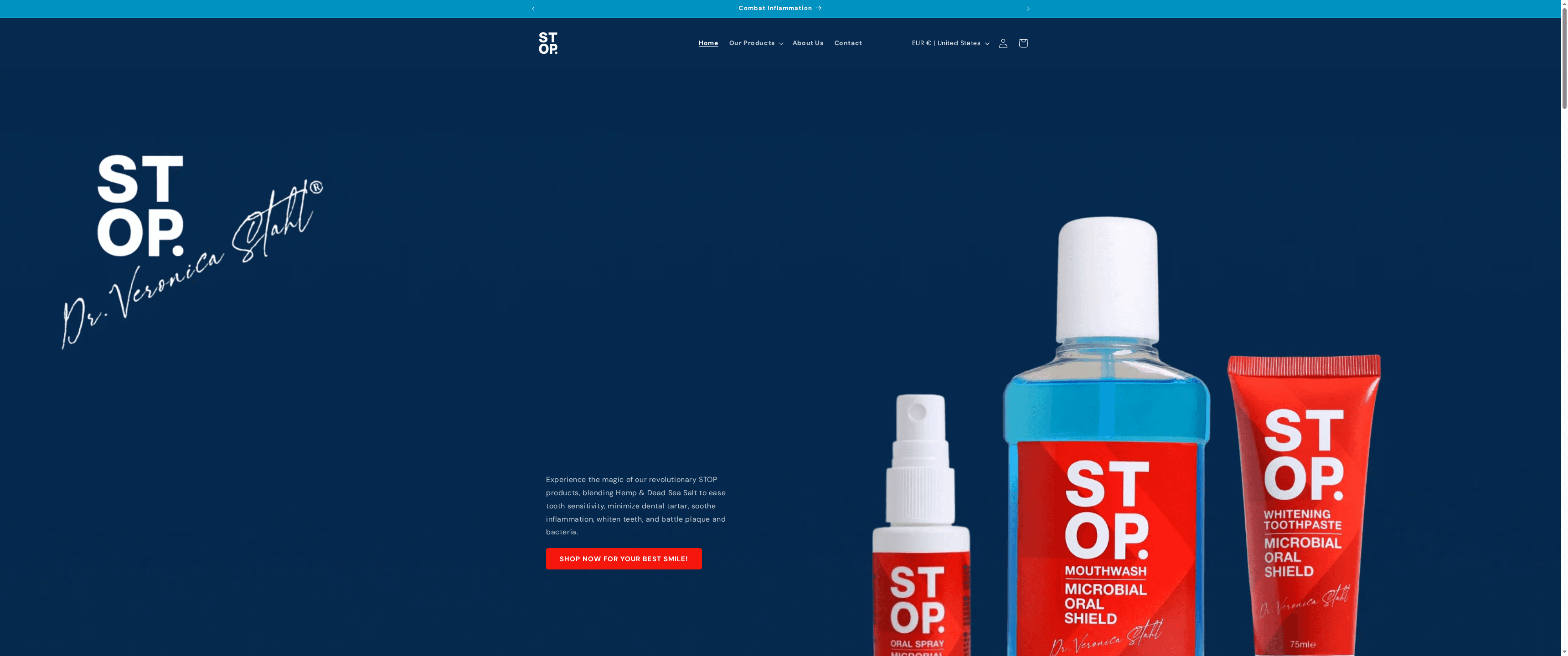
Stop-oralcare formulates its oral care line specifically around verified Dead Sea mineral concentrations combined with hemp-derived actives, producing products designed to provide both antimicrobial and anti-inflammatory support within a fluoride-free framework. If the evidence reviewed in this guide has clarified how Dead Sea minerals function and where they fit in a dental routine, the next step is examining products built on those same principles. The full Stop-oralcare oral care range includes toothpaste, mouthwash, and oral spray options with disclosed mineral content and documented formulation rationale. Each product supports mechanical hygiene rather than replacing it, consistent with the expert consensus this guide has presented throughout.
FAQ
What minerals in Dead Sea salt benefit dental health?
Dead Sea salt contains magnesium, calcium, potassium, zinc, bromide, sulfur, and iodine, each of which supports different aspects of oral health including enamel integrity, biofilm inhibition, and gingival tissue repair.
Can Dead Sea minerals replace fluoride toothpaste?
No. Current evidence does not support replacing fluoride with Dead Sea mineral products for caries prevention. Dental experts recommend using mineral products as adjuncts within an established oral hygiene protocol that includes fluoride.
How often should you use a Dead Sea mineral mouthwash?
Once to twice daily is the general guideline for mineral-based mouthwash use. More frequent application has not been shown to improve outcomes and may disrupt oral microbiome balance.
Are all Dead Sea mineral oral products equally effective?
No. Efficacy depends on verified mineral composition and product formulation. Research confirms that specific mineral mixes inhibit pathogenic biofilms at lower concentrations than generic salt, making product selection and label transparency critically important.
What oral health conditions benefit most from Dead Sea minerals?
Current clinical evidence indicates the strongest benefits for gingival inflammation, plaque reduction, and radiation-induced oral mucositis. Evidence for long-term caries prevention and enamel regeneration remains insufficient based on the short follow-up periods in existing studies.
Recommended
- Dead Sea minerals in dentistry: natural fluoride-free oral care guide – Stop Oral Care
- Dead Sea Minerals: Oral Care Benefits Explained – Stop Oral Care
- Dead Sea Minerals in Mouthwash: Natural Relief for Sensitivity – Stop Oral Care
- Dead Sea minerals in oral care: Science, safety, and fluoride-free ins – Stop Oral Care