

TL;DR:
- Dead Sea mineral oral care products show potential for periodontal health and sensitivity relief, but current evidence remains limited and methodologically diverse. While these formulations may support some oral health domains, they do not yet match the proven efficacy of fluoride or hydroxyapatite in cavity prevention and remineralization. Consumers should carefully verify product ingredients, consult dental professionals, and view claims within the context of emerging scientific research.
Health-conscious consumers increasingly turn to mineral-rich formulations as alternatives to conventional fluoride toothpaste, often expecting that Dead Sea minerals will deliver comparable clinical outcomes. The reality, however, is more nuanced: while salt-based oral interventions show genuine promise across several dental health domains, the evidence base for Dead Sea mineral oral care products remains emerging and methodologically heterogeneous. This article presents a structured, evidence-informed review of what the science currently supports, where significant gaps remain, and how to apply these findings when selecting fluoride-free oral care options in 2026.
Table of Contents
- What are Dead Sea minerals and how are they used in oral care?
- Current scientific evidence for Dead Sea mineral oral care
- How do Dead Sea minerals compare with fluoride and hydroxyapatite?
- Safety, ingredient checks, and real-world usage tips
- A practical perspective: The reality behind natural oral care innovation
- Explore safe, innovative Dead Sea mineral oral care solutions
- Frequently asked questions
Key Takeaways
| Point | Details |
|---|---|
| Evidence is emerging | Dead Sea minerals in oral care show promise, but clinically meaningful results are still limited. |
| Not all products are fluoride-free | Check ingredient labels carefully as some Dead Sea oral care contains fluoride and others don’t. |
| Mineral benefits are diverse | Dead Sea minerals are studied for periodontal health, sensitivity, dryness, and more. |
| Fluoride remains the benchmark | Remineralization and cavity protection are better proven for fluoride than for Dead Sea minerals so far. |
| Safe adoption requires scrutiny | Choose products wisely and confirm scientific support for any oral health claims. |
What are Dead Sea minerals and how are they used in oral care?
Dead Sea minerals refer to the concentrated mixture of salts and trace elements derived from the Dead Sea, a hypersaline lake located between Israel and Jordan. The mineral profile of Dead Sea water differs substantially from ordinary ocean water, containing significantly higher concentrations of magnesium chloride, potassium chloride, calcium chloride, and sodium chloride, alongside trace quantities of bromine and sulfur compounds. This distinctive ionic composition is the primary rationale for its investigation in therapeutic and personal care contexts.
In oral care specifically, Dead Sea mineral derivatives are incorporated into several product categories:
- Toothpaste formulations: Calcium and magnesium ions are positioned as contributors to enamel mineral density and gingival tissue support.
- Mouthwash and rinse solutions: Hypersaline rinses are studied for their antimicrobial and anti-inflammatory properties within periodontal environments.
- Oral sprays: Delivered directly to mucosal surfaces for symptomatic relief of dryness or irritation, particularly in xerostomia (dry mouth) presentations.
- Specialty gels: Used in professional or semi-professional settings for localized tissue contact.
The oral care benefits attributed to these formulations include improved periodontal parameter scores, reduction in oral mucosal lesion severity, symptom relief in hypersensitivity presentations, and modulation of salivary viral load in certain patient populations. As this fluoride-free dentistry guide explains in greater detail, the clinical rationale centers on the ionic interactions between magnesium and calcium in the hypersaline medium and the oral biofilm (the structured microbial community coating tooth surfaces).
“Dead Sea-derived oral interventions have been reported across periodontal parameters and other domains (e.g., xerostomia, viral load, mucositis severity, dentin hypersensitivity).” — MDPI Scoping Review, 2026
Dentin hypersensitivity, the sharp, transient pain triggered by thermal or osmotic stimuli in exposed dentin tubules, is one area where mineral-based formulations receive particular attention. Products formulated with calcium and magnesium compounds seek to occlude exposed dentinal tubules or stabilize the mineral phase at the dentin surface. Separate from this specific claim, general relief for sensitivity is increasingly cited as a rationale for consumer adoption of Dead Sea mineral mouthwash products. It is important to note that while the mechanistic rationale is scientifically coherent, clinical validation specific to Dead Sea mineral products in this domain remains limited.
Current scientific evidence for Dead Sea mineral oral care
The research landscape for Dead Sea mineral oral interventions is best characterized as nascent but directionally promising. A 2026 systematic scoping review published by MDPI evaluated salt-based oral healthcare interventions broadly, encompassing both simple saline solutions and more complex hypersaline Dead Sea derivatives. The clinical evidence emerging from this review offers the most current and structured synthesis available.
A 2026 MDPI scoping review found that salt-based oral healthcare interventions show evidence but that evidence is limited and methodologically heterogeneous, with hypersaline Dead Sea derivatives representing a significant share of the reviewed literature.
The following table summarizes the primary study domains, general findings, and reported limitations:
| Study domain | General findings | Key limitations |
|---|---|---|
| Periodontal parameters | Some improvement in bleeding on probing and pocket depth | Small sample sizes, short follow-up periods |
| Xerostomia (dry mouth) | Symptom relief reported in several trials | Outcome measures vary; subjective reporting common |
| Viral load (oral mucosa) | Reduction noted in specific immunocompromised groups | Narrow, condition-specific populations |
| Mucositis severity | Benefit observed in radiation-induced cases | Limited to oncology contexts; generalization limited |
| Dentin hypersensitivity | Some tubular occlusion and symptom reduction | Minimal product-specific data for Dead Sea formulations |
Key methodological findings from the reviewed literature include the following:
- Median study sample sizes were small, often below 50 participants per trial arm.
- Follow-up periods were frequently less than 12 weeks, limiting conclusions about long-term efficacy.
- Outcome measurement tools varied substantially across studies, reducing cross-study comparability.
- Control group design was inconsistent, with some studies lacking appropriate sham or active comparators.
Statistical note: The proportion of studies achieving a “low risk of bias” designation across the reviewed literature was limited, further emphasizing the need for caution when interpreting favorable outcomes.
The oral care evidence supporting Dead Sea mineral products should therefore be understood as preliminary. For consumers committed to evidence-informed decisions, the Dead Sea mouthwash research domain represents one of the more developed areas within this field, though it too requires larger, more rigorously designed clinical trials before definitive treatment recommendations can be issued.
How do Dead Sea minerals compare with fluoride and hydroxyapatite?
To make informed choices, you’ll want to see how Dead Sea mineral toothpaste compares to what most dentists recommend. Fluoride and hydroxyapatite (a crystalline calcium phosphate mineral naturally present in tooth enamel and bone) represent the two most clinically validated remineralizing agents in modern dentistry. Their efficacy benchmarks provide a useful point of comparison when evaluating Dead Sea mineral formulations.
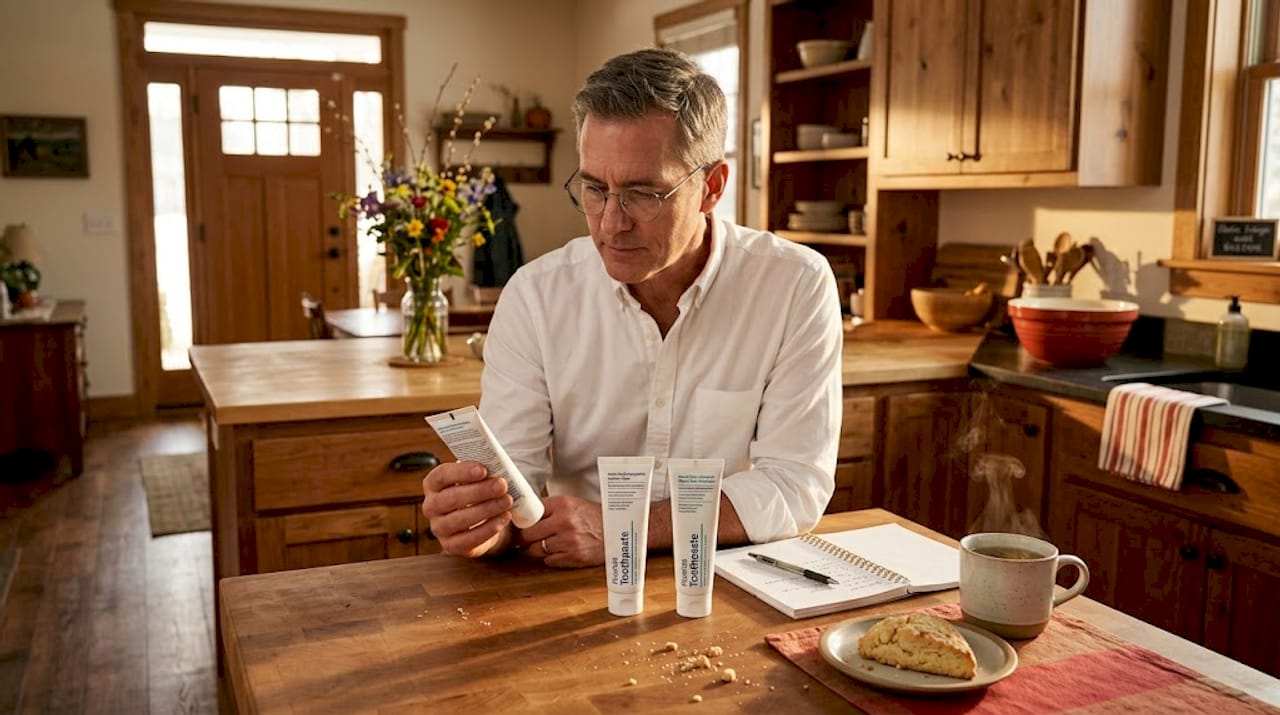
Fluoride functions primarily through two mechanisms: the conversion of hydroxyapatite to fluorapatite (a less acid-soluble crystalline form) and direct inhibition of cariogenic bacterial metabolism, specifically the suppression of glucosyltransferase activity in Streptococcus mutans, a principal organism in dental caries pathogenesis. Decades of randomized controlled trials and population-level epidemiological data support fluoride’s anti-caries efficacy at concentrations of 1,000 to 1,450 parts per million in consumer toothpaste formulations.
Hydroxyapatite, particularly nano-hydroxyapatite, has accumulated substantial clinical trial support over the past two decades, particularly from European and Japanese research centers. Studies indicate that nano-hydroxyapatite achieves tubular occlusion and early enamel lesion repair comparable to fluoride in several head-to-head trials, positioning it as a well-evidenced fluoride-free alternative.
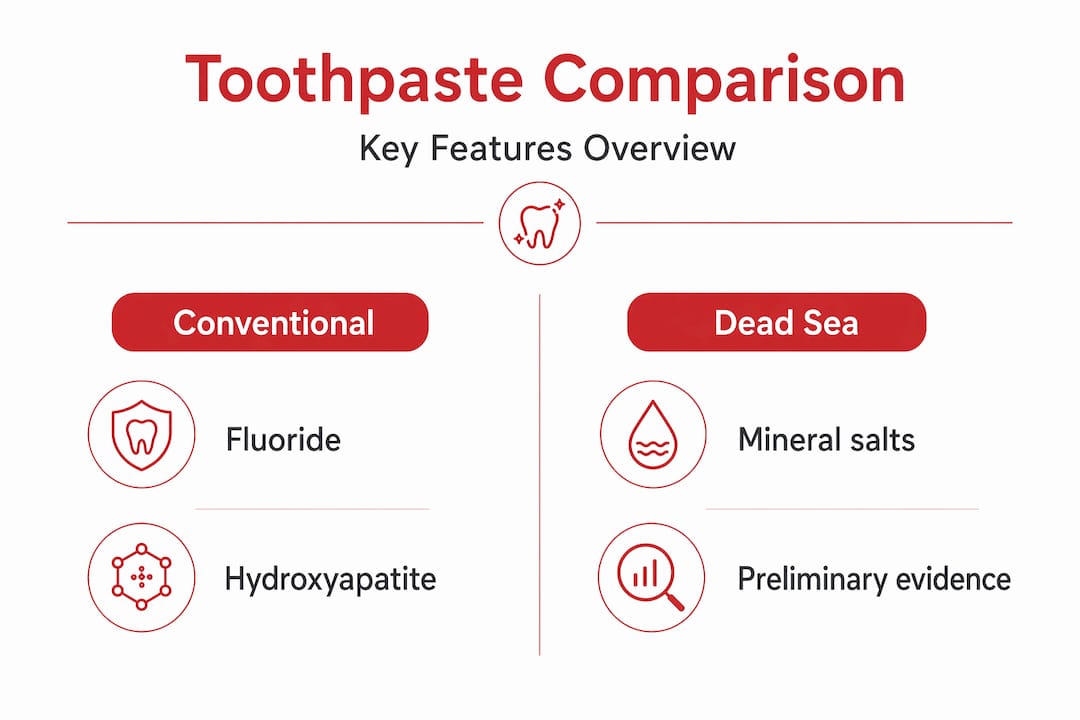
There is little high-quality clinical evidence publicly available tying “Dead Sea minerals” in toothpaste directly to enamel remineralization or cavity reduction at benchmarks matching established fluoride efficacy data.
| Attribute | Fluoride toothpaste | Hydroxyapatite toothpaste | Dead Sea mineral toothpaste |
|---|---|---|---|
| Remineralization evidence | Extensive; decades of RCTs | Substantial; growing RCT base | Preliminary; limited trials |
| Cavity prevention | Well-established | Comparably effective in trials | Not yet established |
| Sensitivity relief | Moderate; stannous fluoride variants | Strong; tubular occlusion data | Emerging; mechanistically plausible |
| Fluoride-free status | No | Yes | Varies by product |
| Regulatory classification | Drug/cosmetic depending on region | Cosmetic in most regions | Cosmetic |
For consumers seeking effective natural alternatives to fluoride, the distinction between hydroxyapatite and Dead Sea mineral formulations is clinically significant. Hydroxyapatite has more direct enamel surface interaction data. This remineralizing toothpaste guide provides a structured comparison for readers evaluating those options.
Dead Sea mineral formulations may, however, offer genuine benefits in domains where fluoride and hydroxyapatite evidence is less developed, specifically periodontal inflammation modulation, salivary environment support, and mucosal health. A reviewed non-toxic toothpaste review confirms that consumer interest in these formulations is growing, though independent reviewers consistently note the absence of product-specific clinical trial data in most commercial Dead Sea mineral product lines. This does not disqualify the formulations from consideration; rather, it appropriately contextualizes the claims. The mineral toothpaste relief context is most accurate when framed around symptom support and adjunctive periodontal care rather than primary cavity prevention.
Pro Tip: When reviewing product claims for Dead Sea mineral toothpaste, distinguish between claims citing the Dead Sea mineral complex specifically and claims rooted in the broader literature on hypersaline or saline oral interventions. These are related but not identical claims, and product labels do not always make this distinction clear.
Safety, ingredient checks, and real-world usage tips
Finally, let’s ensure you’re making safe, evidence-informed choices when shopping for or adopting Dead Sea mineral products. The safety profile of Dead Sea mineral oral care products is generally favorable. The primary minerals involved, magnesium chloride, potassium chloride, and calcium chloride, are recognized as safe oral care ingredients at concentrations used in commercial formulations. However, several practical considerations warrant attention before adoption.
A structured approach to evaluating any Dead Sea mineral oral care product should include the following steps:
- Verify fluoride status explicitly. Some Dead Sea mineral toothpaste products include fluoride as an active ingredient, while others specifically market a fluoride-free formulation. The presence of Dead Sea minerals does not automatically indicate fluoride-free status. Confirm the full ingredient list, particularly whether sodium fluoride, sodium monofluorophosphate, or stannous fluoride appear in the listed ingredients.
- Assess abrasive index where available. Some mineral-rich toothpastes carry a higher Relative Dentin Abrasivity (RDA) than standard formulations. Verify that the product’s RDA falls within the American Dental Association’s recommended range of 0 to 250 for safe daily use.
- Review concentration claims critically. Marketing terminology such as “mineral-rich,” “infused with Dead Sea salts,” or “mineral complex” does not specify the concentration of the active mineral ions. Higher concentrations of magnesium and potassium do not necessarily correlate with greater clinical benefit.
- Follow manufacturer use directions. Independent product descriptions emphasize use directions, but these pages are not clinical-evidence sources and should not be interpreted as therapeutic guidance.
- Consult a licensed dentist when managing active dental disease. Dead Sea mineral products may function appropriately as adjunctive oral hygiene tools but should not replace professionally prescribed treatments for active periodontitis, caries, or oral mucosal disease.
Regarding ingredient check advice, it is important to note that some Dead Sea mineral products include fluoride while others market a fluoride-free profile. Consumers should confirm fluoride status before assuming a product aligns with their oral care philosophy.
For those considering a full transition from conventional oral care, this switch to fluoride-free care resource provides a structured protocol, and this fluoride-free care guide details the biological rationale behind the transition. A complete dental care workflow aligned with 2026 best practices offers further operational guidance for readers integrating natural formulations into a complete oral hygiene routine.
Pro Tip: Request a Cavity Risk Assessment from your dentist before transitioning to a fluoride-free regimen. High caries-risk individuals may require additional protective measures during the transitional period.
A practical perspective: The reality behind natural oral care innovation
The expanding market for natural, mineral-based oral care represents a scientifically legitimate and clinically relevant frontier. The interest is not unfounded. Hypersaline environments have documented antimicrobial and anti-inflammatory properties that extend beyond anecdotal observation and into peer-reviewed research. The problem is not that Dead Sea mineral oral care is ineffective. The problem is that the evidence architecture is still being constructed.
Consumers navigating this space in 2026 encounter a significant asymmetry: product marketing is sophisticated and highly specific, while the published clinical literature remains relatively sparse and methodologically constrained. Mechanistically, the strongest evidence base applies to salt-based or hypersaline Dead Sea derivative interventions broadly. Claims specific to individual toothpaste or mouthwash products should be treated as promising but not yet conclusively validated.
This distinction matters. A consumer purchasing a Dead Sea mineral mouthwash for periodontal adjunct therapy is acting on a mechanistically plausible and partially evidenced rationale. A consumer purchasing the same product expecting it to replace fluoride for caries prevention is operating beyond what current evidence supports. Both decisions involve the same product, but the clinical validity of each expectation differs substantially.
A truly evidence-aware approach to oral care sustainability involves continuous evaluation, not a static commitment to either conventional or natural paradigms. Clinicians and informed consumers alike should monitor the evolving literature and adjust product selection accordingly.
Explore safe, innovative Dead Sea mineral oral care solutions
The scientific landscape reviewed in this article confirms that Dead Sea mineral oral care is a legitimate and actively researched category, particularly for periodontal support, sensitivity management, and fluoride-free oral hygiene. Selecting well-formulated, transparently labeled products remains the central practical challenge.
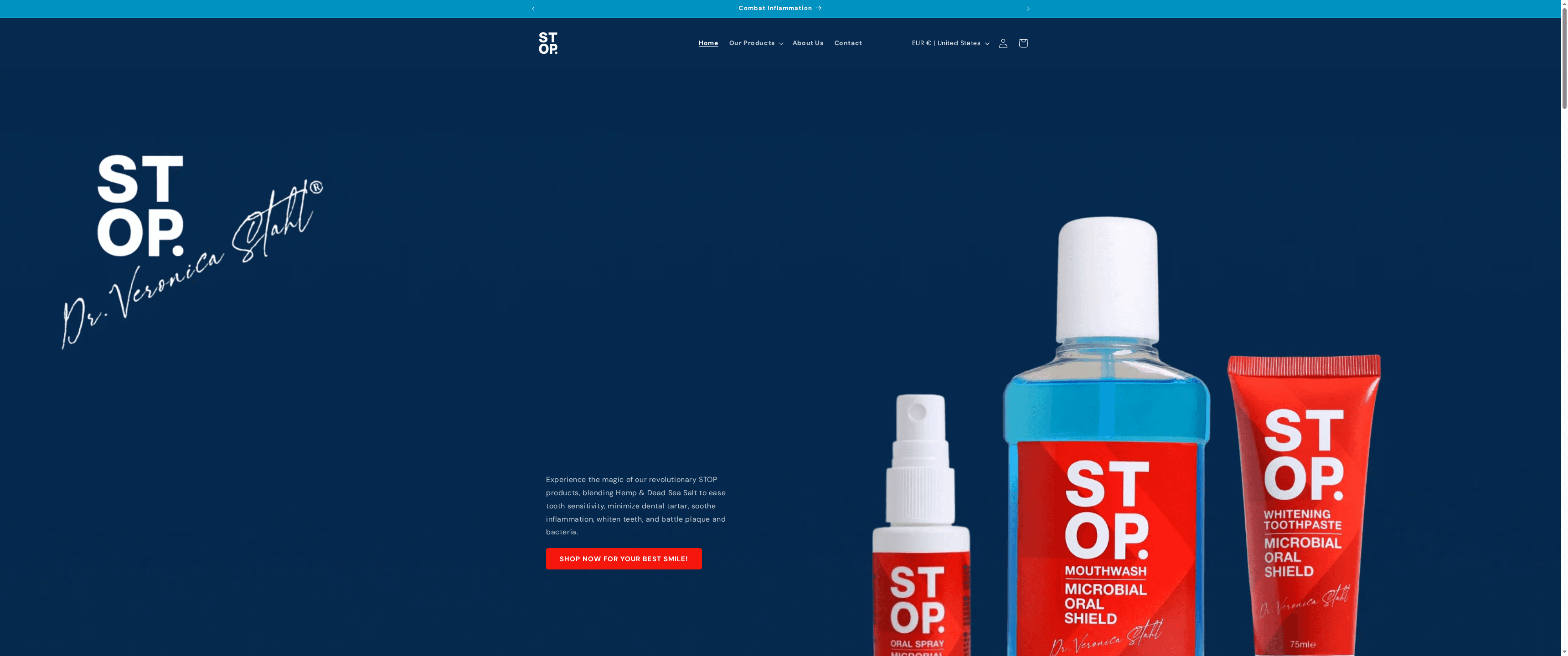
Stop Oral Care solutions offers a curated line of fluoride-free oral care products formulated with Dead Sea minerals and hemp, developed under the clinical guidance of Dr. Veronica Stahl. Each formulation is designed to align with current scientific understanding of natural oral health, providing mineral-rich options for individuals seeking safe, non-fluoride alternatives for daily oral hygiene. Explore the full product range to identify formulations matched to your specific oral health profile, whether that includes sensitivity support, periodontal adjunct care, or comprehensive fluoride-free daily hygiene maintenance.
Frequently asked questions
Do Dead Sea mineral toothpastes help remineralize teeth like fluoride?
Current research does not demonstrate that Dead Sea minerals match fluoride’s remineralizing capacity. There is no high-quality clinical evidence tying Dead Sea minerals in toothpaste directly to enamel remineralization at benchmarks established for fluoride.
Are Dead Sea mineral oral care products always fluoride-free?
Not always. Some Dead Sea mineral products include fluoride as an active ingredient, while others position themselves as fluoride-free. Consumers must review the full ingredient list to confirm fluoride status prior to purchase.
What conditions have Dead Sea mineral oral products been studied for?
Published studies have examined effects on periodontal parameters, xerostomia symptoms, oral mucosal viral load, mucositis severity, and dentin hypersensitivity. The MDPI 2026 review confirms that Dead Sea-derived interventions span all of these clinical domains, though evidence levels vary across each.
Are there clinical trials proving Dead Sea mineral toothpaste is effective?
Few high-quality, product-specific clinical trials exist for commercial Dead Sea mineral toothpaste formulations. The available evidence is limited and methodologically heterogeneous, meaning definitive clinical recommendations are not yet supported by the current literature.
How do I safely switch to Dead Sea mineral oral care?
Verify the fluoride content of your chosen product, follow the manufacturer’s use directions, and consult a dentist if you have active dental disease. Product descriptions provide directional guidance but do not constitute clinical evidence, so maintaining professional dental oversight during any transition is strongly advised.
Recommended
- Dead Sea Minerals in Mouthwash: Natural Relief for Sensitivity – Stop Oral Care
- Role of Minerals in Oral Care: Natural Solutions – Stop Oral Care
- Oral care sustainability explained: Natural alternatives & science – Stop Oral Care
- Oral care ingredients guide: safe, natural solutions explained – Stop Oral Care