

TL;DR:
- Sustainable oral care integrates environmental impact, ingredient sourcing, and health outcomes.
- Fluoride-free options like hydroxyapatite show comparable cavity prevention in certain populations.
- Transparent product lifecycle data and eco-friendly packaging are key to evaluating true sustainability.
Sustainable oral care is frequently mischaracterized as a compromise between ecological responsibility and clinical effectiveness. That characterization is outdated. Emerging evidence positions fluoride-free options like hydroxyapatite as offering comparable or superior caries prevention to conventional fluoride formulas in specific populations. Simultaneously, ingredients such as hemp oil and Dead Sea minerals are attracting rigorous scientific scrutiny. This guide examines the evidence base for leading natural alternatives, explains the mechanics of eco-friendly product design, and provides a structured framework for evaluating sustainable oral care choices without sacrificing clinical outcomes.
Table of Contents
- What does sustainable oral care mean?
- Fluoride-free science: Hydroxyapatite, hemp, and Dead Sea minerals
- Eco packaging and practical sustainability mechanics
- Risks, limitations, and expert opinions on oral care sustainability
- A realistic path: How to balance sustainability and oral health
- Explore more sustainable oral care solutions
- Frequently asked questions
Key Takeaways
| Point | Details |
|---|---|
| Sustainability enhances oral care | Eco options like refillable packaging and natural ingredients reduce waste and environmental footprint. |
| Fluoride-free advances are evidence-backed | Hydroxyapatite, hemp oil, and Dead Sea minerals provide promising natural alternatives, supported by recent studies. |
| Balance risks and benefits | Expert opinions highlight that fluoride is best for high-cavity risk individuals; check scientific support and consult your dentist. |
| Choose transparent, science-driven brands | Pick companies that publish LCA data and clinical research for safer, more sustainable choices. |
What does sustainable oral care mean?
Sustainability in oral care operates across three intersecting dimensions: environmental impact, ingredient sourcing, and long-term health outcomes. A product may qualify as environmentally sustainable through zero-waste packaging while simultaneously relying on synthetically derived active compounds. Conversely, a formula built entirely from plant-based ingredients may generate significant carbon emissions during extraction and transport. Genuine eco-friendly oral hygiene requires evaluating all three dimensions simultaneously rather than optimizing for a single variable.
The environmental mechanics of sustainable oral care are well-documented. Sustainable mechanics include zero-waste packaging, plant-based ingredients, reduced plastic, and water savings as the primary levers for reducing ecological footprint. These mechanics translate into concrete product design choices that consumers can assess at the point of purchase.
Key elements of a genuinely sustainable oral care routine include:
- Zero-waste packaging: Glass jars, compostable pouches, and aluminum tubes eliminate single-use plastic from the waste stream.
- Refillable and modular formats: Toothpaste tablets, concentrate refills, and toothbrushes with replaceable bristle heads reduce per-unit material consumption.
- Water-efficient formulation: Waterless toothpaste formats and concentrated mouthwash refills reduce both shipping weight and water resource consumption.
- Renewable material sourcing: Bamboo handles, plant-derived bioplastics, and FSC-certified paper packaging reduce reliance on petroleum-based materials.
- Green extraction methods: Supercritical CO2 and cold-press extraction techniques reduce solvent use and energy consumption during ingredient processing.
Industry leaders are already operationalizing these principles. TePe, for example, targets nearly 100% renewable or recycled content across its packaging portfolio. The broader oral care sustainability benefits extend beyond waste reduction to include measurable reductions in lifecycle carbon emissions.
“Green extraction methods cut CO2 emissions by 30 to 60 percent compared to conventional solvent-based processes, while packaging redesign alone can save the equivalent of eight toothpaste tubes per person per year.”
Understanding these mechanics is foundational before evaluating specific ingredient claims, because sustainability cannot be assessed by ingredient lists alone. The full lifecycle of a product, from raw material extraction through end-of-life disposal, determines its true environmental footprint. Brands that publish Life Cycle Assessment data provide the most transparent basis for consumer evaluation, as detailed in analyses of eco-friendly dental care practices.
Fluoride-free science: Hydroxyapatite, hemp, and Dead Sea minerals
Three ingredients currently lead the evidence-based fluoride-free movement: hydroxyapatite (HA), hemp oil, and Dead Sea minerals. Each operates through a distinct biochemical mechanism, and each carries a different level of clinical evidence.
Hydroxyapatite is a calcium phosphate compound that constitutes approximately 97% of tooth enamel by weight. Biomimetic HA toothpaste works by depositing mineral ions directly into subsurface enamel lesions, physically restoring crystalline structure rather than chemically inhibiting bacterial metabolism as fluoride does. HA remineralizes enamel and matches fluoride’s caries prevention in well-controlled clinical studies, with one meta-analysis reporting that HA toothpaste inactivated 75% of active caries lesions compared to lower rates in the fluoride comparison group. This is the strongest evidence base among fluoride-free alternatives.

Hemp oil contributes omega-3 and omega-6 fatty acids with documented anti-inflammatory and antimicrobial properties. Hemp oil reduces gum irritation and plaque accumulation through these mechanisms, though the dental-specific evidence base currently relies on general pharmacological properties and user-reported outcomes rather than large randomized controlled trials. The anti-inflammatory pathway is particularly relevant for periodontal health, where chronic inflammation drives tissue destruction.
Dead Sea minerals supply magnesium, calcium, potassium, and trace elements in concentrations not found in standard mineral supplements. Dead Sea minerals strengthen enamel through ionic exchange at the enamel surface, with magnesium in particular supporting hydroxyapatite crystal stability. Clinical support currently derives from user surveys and observational data rather than double-blind trials.
| Ingredient | Primary mechanism | Evidence level | Key benefit |
|---|---|---|---|
| Hydroxyapatite | Enamel remineralization | Moderate to strong (RCTs) | Cavity prevention |
| Hemp oil | Anti-inflammatory, antimicrobial | Preliminary (pharmacological) | Gum health, plaque reduction |
| Dead Sea minerals | Ionic enamel reinforcement | Survey and observational | Enamel strength, trace mineral supply |
For consumers evaluating oral microbiome toothpaste picks, the combination of HA with hemp oil and Dead Sea minerals represents a multi-mechanism approach to fluoride-free protection.
Pro Tip: When selecting a fluoride-free formula, prioritize products that disclose particle size for hydroxyapatite. Nanoparticle HA (below 100 nanometers) requires specific safety documentation; micro-HA formulas with published biocompatibility data are the more conservative and verifiable choice.
Eco packaging and practical sustainability mechanics
Ingredient selection accounts for only part of a product’s environmental profile. Packaging format, supply chain logistics, and product concentration ratios collectively determine whether a sustainable claim holds under lifecycle scrutiny.
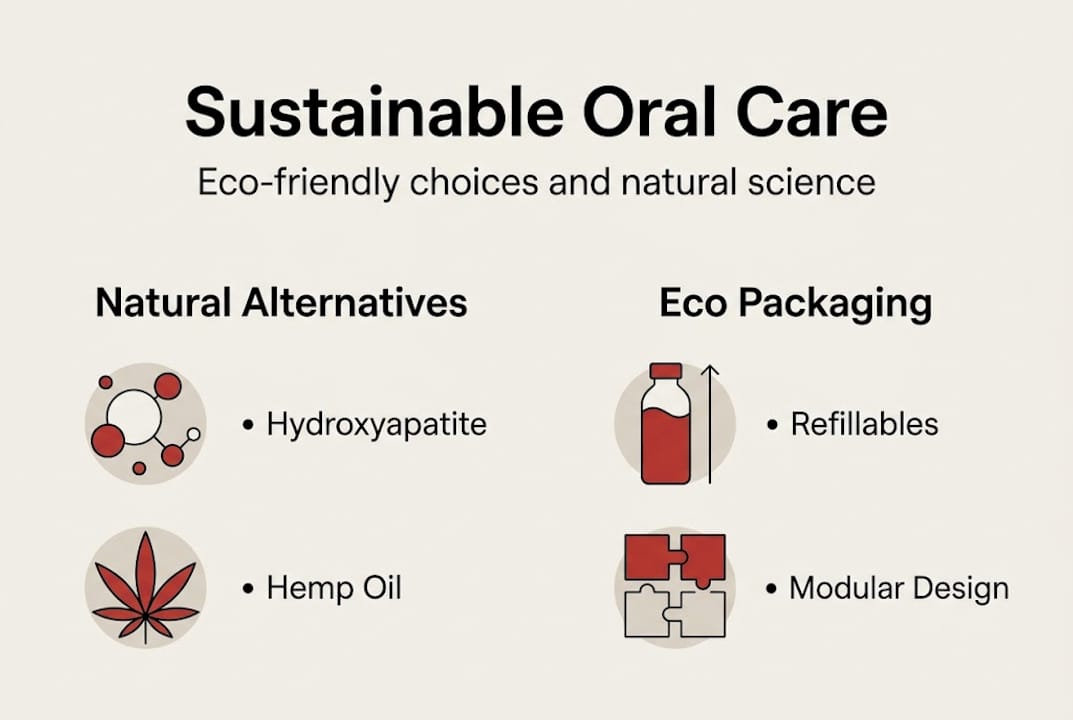
Zero-waste packaging, refillables, and modular designs reduce plastic and water consumption significantly across the product lifecycle. Water savings associated with tablet and refill formats reach approximately 2,400 gallons per person per year when accounting for both formulation water and shipping weight reductions. That figure reflects the cumulative impact of eliminating water as a primary ingredient, which constitutes up to 70% of conventional toothpaste by weight.
| Eco format | Plastic reduction | Water savings | Shelf life advantage |
|---|---|---|---|
| Toothpaste tablets | Up to 90% vs. tube | High (waterless) | Extended (no preservatives needed) |
| Glass jar paste | Moderate (reusable) | Moderate | Standard |
| Refillable concentrate | High (minimal packaging) | Very high | Extended |
| Modular toothbrush | High (head-only replacement) | None | Long handle lifespan |
A structured approach to evaluating product sustainability involves the following steps:
- Identify packaging material: Confirm whether primary and secondary packaging uses recycled, recyclable, or compostable materials.
- Assess product concentration: Higher concentration formulas require less volume per use, reducing both packaging and shipping impact.
- Check for LCA data: Brands that publish Life Cycle Assessment reports provide verifiable environmental performance metrics.
- Evaluate refill availability: Products with a refill program extend the useful life of primary packaging and reduce per-unit waste.
- Review ingredient extraction methods: Green extraction certifications or published extraction protocols indicate lower processing emissions.
Reviewing eco-friendly dental care practices in detail reveals that the most impactful single change most consumers can make is switching from conventional tube toothpaste to a tablet or concentrated paste format, as this addresses packaging, water, and shipping impact simultaneously.
Pro Tip: Request LCA summaries directly from brands before purchasing. Brands that cannot provide this data are making sustainability claims without the documentation to support them.
Risks, limitations, and expert opinions on oral care sustainability
Adopting fluoride-free and eco-formulated oral care products carries genuine clinical trade-offs that require transparent acknowledgment. The evidence base for natural alternatives, while growing, remains uneven across ingredient categories.
Key risks and limitations include:
- Nanoparticle contamination: Some vegan-sourced hydroxyapatite formulas contain nanoparticles or trace heavy metals introduced during synthesis. Without published particle size data and contaminant screening results, consumers cannot verify safety.
- Absence of large-scale hemp RCTs: Hemp oil’s dental benefits are pharmacologically plausible but not yet confirmed by large randomized controlled trials specific to oral health endpoints.
- Fluoride’s continued superiority for high-risk populations: Fluoride reduces cavities by 20 to 40 percent in high-caries-risk individuals, a magnitude of effect that current fluoride-free alternatives do not consistently replicate in this specific population.
- Survey-based evidence limitations: Dead Sea mineral benefits and many hemp oil outcomes rely on user-reported data, which is subject to placebo effects and reporting bias.
- Regulatory variability: Natural oral care products face less standardized regulatory scrutiny than fluoride-containing products in many jurisdictions, creating inconsistency in quality control.
“Dental professionals caution that fluoride-free formulas may not provide adequate protection for patients with elevated caries risk, active decay, or compromised salivary function. Individualized risk assessment remains essential before transitioning away from fluoride.”
A thorough guide to safe oral care emphasizes that the decision to use fluoride-free products should be made in consultation with a dental professional who can assess individual caries risk, salivary pH, dietary patterns, and existing restorations. The Dead Sea mineral oral care guide similarly notes that mineral-based approaches work best as part of a broader preventive protocol rather than as standalone replacements for established preventive agents.
A realistic path: How to balance sustainability and oral health
The pursuit of all-natural oral care labels can obscure the distinction between marketing language and evidence-based formulation. A product described as “100% natural” may lack the clinical documentation necessary to support its efficacy claims, while a conventionally packaged product with published clinical data may deliver superior outcomes for a given patient population. The evidence hierarchy matters more than label terminology.
Hydroxyapatite currently represents the most defensible fluoride-free option for low-to-moderate caries risk individuals, given its mechanistic plausibility and moderate clinical evidence base. However, HA’s effectiveness does not eliminate the need for regular professional examination and personalized preventive guidance. Eco-formulas excel in microbiome balance, but dental professionals emphasize retaining fluoride for high-risk populations where the evidence gap between fluoride and alternatives remains clinically significant.
Brands that publish ingredient sourcing documentation, extraction method disclosures, and Life Cycle Assessment data represent the most credible options for health-conscious consumers. Sustainability and clinical effectiveness are not mutually exclusive objectives, but achieving both requires selecting products with transparent evidence rather than relying on category-level assumptions.
Pro Tip: Align your oral care product selection with a current dental risk assessment. A low-caries-risk individual with healthy salivary function is a strong candidate for HA-based fluoride-free care; a high-risk patient is not.
Explore more sustainable oral care solutions
For those ready to move from research to practice, Stop Oral Care curates a portfolio of fluoride-free, scientifically formulated products that integrate hydroxyapatite, hemp oil, and Dead Sea minerals within eco-conscious packaging frameworks. Each product in the range is accompanied by ingredient sourcing disclosures and formulation rationale grounded in current dental research.
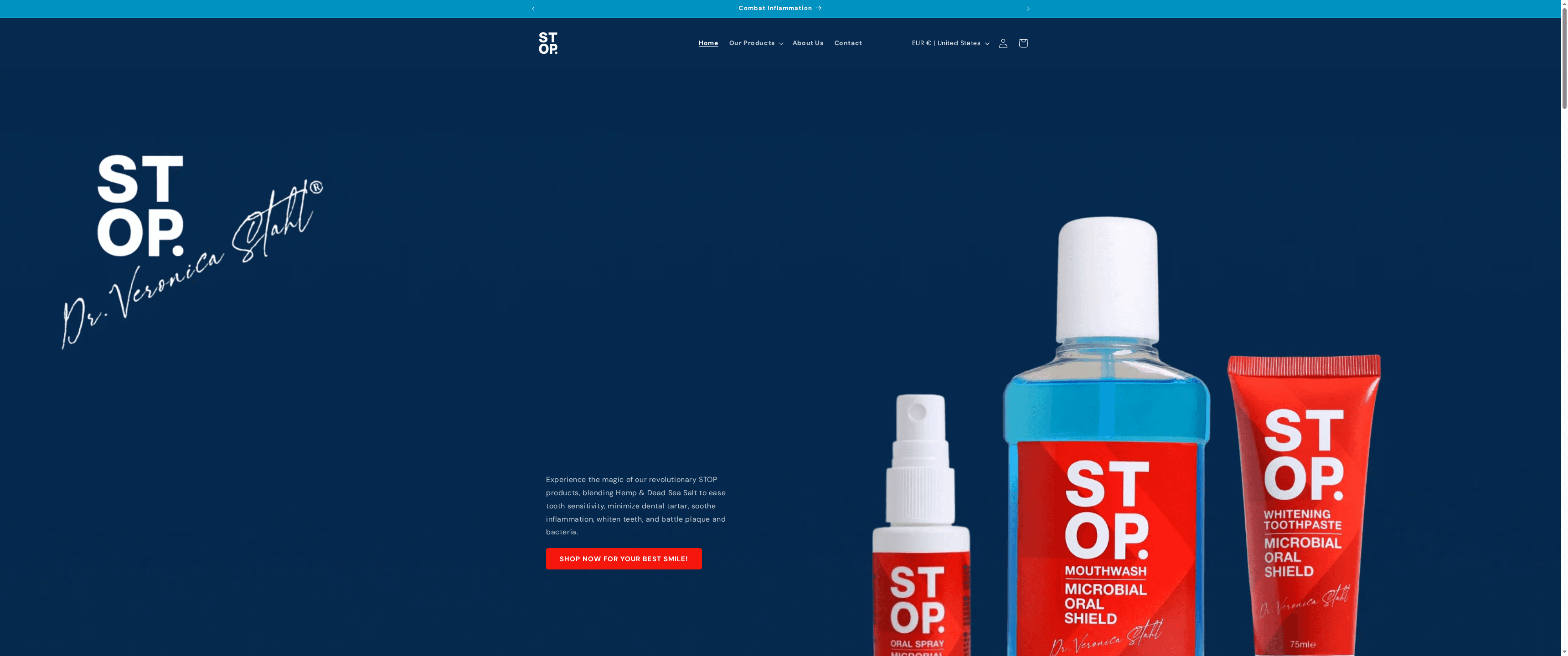
The platform also provides an expanding library of educational resources covering ingredient science, sustainable routine design, and evidence-based product selection. Whether you are evaluating your first fluoride-free toothpaste or optimizing an existing natural oral care protocol, Stop Oral Care offers the product range and informational infrastructure to support evidence-informed decision-making.
Frequently asked questions
Is hydroxyapatite as effective as fluoride for cavity prevention?
Recent studies show hydroxyapatite can offer comparable cavity protection to fluoride in low-to-moderate risk populations, but experts maintain that fluoride remains superior for individuals at high caries risk.
What makes oral care packaging sustainable?
Sustainable packaging uses materials such as glass, refillable containers, and modular designs to reduce plastic waste, lower shipping emissions, and minimize per-unit environmental impact across the product lifecycle.
Are hemp oil and Dead Sea minerals clinically proven for dental health?
Hemp oil demonstrates pharmacological properties consistent with reduced gum inflammation and plaque accumulation, while Dead Sea minerals have user-reported benefits and observational support for enamel strengthening, though large-scale randomized controlled trials for both ingredients remain an active research need.
What are the risks of switching to fluoride-free oral care?
Fluoride-free alternatives present limitations including less robust clinical evidence for high-caries populations, potential nanoparticle contamination in some HA formulas, and absence of large dental-specific RCTs for hemp; consulting a dental professional before transitioning is strongly recommended.
Recommended
- Oral care ingredients guide: safe, natural solutions explained – Stop Oral Care
- Sustainable Oral Care: Benefits and Best Practices – Stop Oral Care
- Oral care science: principles, myths, and natural solutions – Stop Oral Care
- Sustainable dental care: eco-friendly practices explained – Stop Oral Care
- Specialist dentistry explained: Your guide to advanced care