

TL;DR:
- Dead Sea minerals are a concentrated blend of minerals like magnesium, bromide, calcium, and potassium from the saltiest natural body of water. They improve skin hydration, reduce inflammation, and support joint health through therapeutic mineral absorption. Regular use over weeks enhances skin barrier function and alleviates chronic skin and joint conditions.
Dead Sea minerals are defined as a concentrated blend of magnesium, bromide, calcium, and potassium extracted from the world’s saltiest natural body of water, delivering clinically validated benefits for skin health and musculoskeletal wellness. The Dead Sea’s salinity reaches 34.2%, compared to roughly 3.5% in the ocean. That extreme concentration produces a mineral profile with no equivalent in conventional sea salts. Dead sea minerals benefits extend from measurable improvements in skin hydration and barrier function to documented relief from inflammatory joint conditions, making them a subject of serious dermatological and rheumatological research.
What are Dead Sea minerals and how do they differ from regular salts?
Dead Sea minerals represent a chemically distinct category from standard sea salts. Ocean salt is roughly 85% sodium chloride. Dead Sea salt contains far less sodium and far more of the minerals that drive therapeutic effects.
The mineral profile includes magnesium at 36–50 times the concentration found in ocean water, bromide at 80 times ocean levels, and significant quantities of calcium and potassium. That ratio matters because sodium chloride draws moisture out of skin cells, while magnesium and potassium support moisture retention. Dead Sea salt is therefore less drying and more hydrating than conventional sea salt.
Dead Sea water contains more than 21 identified minerals. The high magnesium content (35–46 g/L) and bromide content (4.2–5.6 g/L) enable deeper penetration through the skin’s outer layers. This absorption pathway is what makes Dead Sea mineral treatments therapeutically active rather than merely cosmetic.
| Mineral | Dead Sea concentration | Ocean concentration |
|---|---|---|
| Magnesium | 35–46 g/L | ~1.3 g/L |
| Bromide | 4.2–5.6 g/L | ~0.065 g/L |
| Potassium | ~7.5 g/L | ~0.38 g/L |
| Sodium chloride | ~80 g/L | ~27 g/L |
| Calcium | ~17 g/L | ~0.41 g/L |
The low sodium profile is the key differentiator. Standard sea salts used in bath products deliver mostly sodium chloride, which can strip the skin’s lipid barrier. Dead Sea salt’s mineral ratios replicate a therapeutic environment that clinical protocols have studied for decades.
1. Enhanced skin hydration and barrier function
Magnesium acts as a cofactor for more than 300 enzymatic reactions, including those that regulate skin cell differentiation and lipid barrier synthesis. Its hygroscopic properties draw water into the skin and hold it there. Bathing in Dead Sea salt solutions reinforces the stratum corneum, the outermost skin layer responsible for preventing water loss.
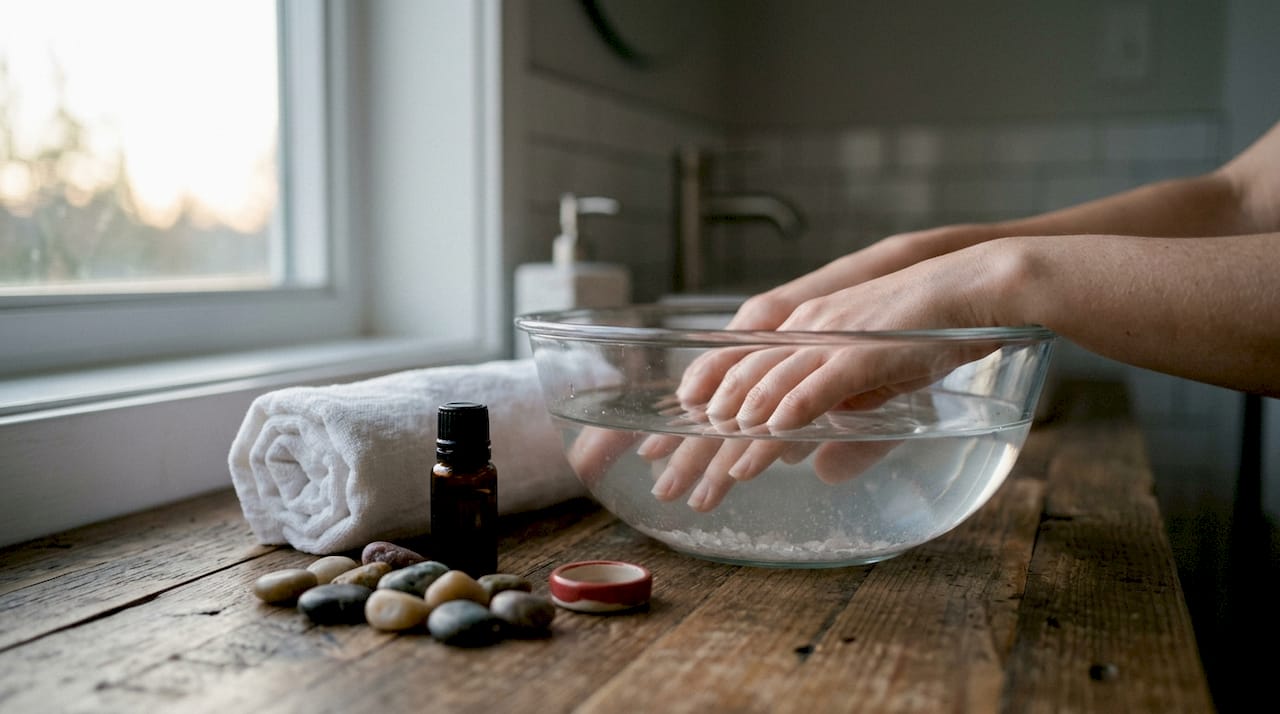
Skin care with Dead Sea minerals produces measurable hydration improvements within weeks of consistent use. The barrier repair effect is especially relevant for people with chronically dry or compromised skin.
2. Reduction of inflammatory skin conditions
Bathing in a 5% Dead Sea salt solution for 15 minutes, three times a week over 6 weeks improves skin roughness by 40% and reduces redness in atopic dermatitis patients. That result reflects a clinically significant reduction in the visible and tactile signs of inflammation. Psoriasis and eczema both respond to this protocol because magnesium suppresses pro-inflammatory cytokines while bromide calms nerve-mediated itch responses.
3. Anti-aging effects and improved skin elasticity
Magnesium supports collagen synthesis by activating the enzymes that cross-link collagen fibers. Consistent mineral bathing improves skin elasticity and reduces the appearance of fine lines over time. The mechanism is structural: stronger collagen networks resist mechanical deformation, which translates to firmer, smoother skin.
4. Exfoliation and removal of dead skin cells
Dead Sea salt crystals provide physical exfoliation when used in scrubs or bath soaks. The mineral content simultaneously supports cell turnover at the biochemical level. Calcium, present at roughly 17 g/L in Dead Sea water, regulates keratinocyte differentiation, the process by which new skin cells mature and replace old ones.
5. Calming effects and redness reduction
Bromide minerals provide sedative and anti-itch effects that complement magnesium’s anti-inflammatory properties for enhanced skin calming. Bromide acts on neurological pathways, reducing the sensory signals that produce itch and irritation. This dual action makes Dead Sea mineral baths particularly effective for people with reactive or rosacea-prone skin.
The combination of magnesium and bromide is more effective in relieving inflammatory skin conditions than magnesium alone. That synergy explains why isolated magnesium supplements applied topically produce weaker results than full Dead Sea mineral formulations. For a deeper look at how magnesium functions in skin moisture regulation, the magnesium in skincare research from Fierce Nature provides useful context on its enzymatic role.
6. Support for wound healing and skin cell regeneration
Zinc and magnesium both accelerate wound closure by supporting fibroblast activity and collagen deposition. Dead Sea minerals deliver both in bioavailable form through transdermal absorption. Clinical observations show faster healing of minor skin lesions in people who use mineral baths regularly, though full wound healing protocols require medical supervision.
7. Antimicrobial properties and acne support
Dead Sea minerals create an osmotic environment that disrupts bacterial cell membranes. This effect reduces the bacterial load on skin surfaces, which is relevant for acne management. Sulfur, present in smaller quantities in Dead Sea water, has a documented history in dermatology as an antimicrobial and keratolytic agent.
Pro Tip: For acne-prone skin, use a diluted Dead Sea salt toner (approximately 1–2% concentration) applied with a cotton pad rather than a full bath soak. This delivers antimicrobial mineral contact without the drying effect of prolonged immersion.
8. Detoxification and improved skin texture
Mineral baths draw interstitial fluid toward the skin surface through osmotic pressure, which supports the removal of metabolic waste products from skin tissue. Regular Dead Sea mineral treatments produce a measurable improvement in skin texture, reducing the appearance of enlarged pores and uneven tone. The effect is cumulative and requires consistent application over several weeks.
9. Relaxation and neurological calming from bromide
Bromide’s sedative properties extend beyond skin-level itch relief. Transdermal bromide absorption during mineral baths produces mild systemic calming effects, reducing muscle tension and supporting sleep quality. This is one of the advantages of Dead Sea minerals that distinguishes them from purely cosmetic treatments. The therapeutic bathing tradition at the Dead Sea has documented this effect for centuries, and modern clinical research has confirmed the neurological mechanism.
10. Recovery from UV damage and photodamage
Full-scale Dead Sea climatotherapy combining mineral bathing, mud application, and sun exposure achieves 80–88% psoriasis clearance with benefits lasting approximately 8 months. The mineral environment supports DNA repair mechanisms in skin cells exposed to ultraviolet radiation. Magnesium activates nucleotide excision repair enzymes, which remove UV-induced DNA lesions from keratinocytes.
Dead Sea minerals in joint and musculoskeletal health: balneotherapy benefits
Balneotherapy is the clinical term for therapeutic bathing in mineral-rich water. Dead Sea balneotherapy has a documented evidence base for rheumatoid arthritis and osteoarthritis, making it one of the most studied applications of these minerals outside dermatology.
Clinical studies show Dead Sea mineral balneotherapy reduces joint pain, morning stiffness, and improves mobility in rheumatoid arthritis and osteoarthritis patients. Multi-week protocols combining bathing and mud application produce sustained joint relief that persists beyond the treatment period. The mechanism involves both transdermal mineral absorption and the physical properties of the water itself.
Dead Sea water density of approximately 1.24 g/mL provides significant buoyancy, reducing the load on weight-bearing joints during immersion. This allows patients with severe joint pain to move through a full range of motion without the mechanical stress that makes land-based exercise painful. The buoyancy effect complements mineral absorption rather than replacing it.
Mud application adds a thermal component. Dead Sea mud retains heat and delivers minerals directly to the skin surface over extended contact periods. The combination of heat, mineral absorption, and reduced joint loading produces outcomes that no single element achieves alone.
Pro Tip: For joint health applications, clinical protocols use 20-minute mineral bath sessions at 37°C (98.6°F), repeated three to four times per week over a minimum of four weeks. Shorter or less frequent sessions produce temporary relief rather than sustained improvement.
How to safely use Dead Sea minerals at home for skincare and wellness
Home use of Dead Sea minerals is safe and effective when applied at the concentrations validated in clinical research. The standard therapeutic concentration is 5%, which translates to approximately 500 grams of Dead Sea salt dissolved in a standard bathtub (roughly 100 liters of water).
Key guidelines for safe home use:
- Concentration: Use a 5% salt solution as the clinical standard. Higher concentrations increase the risk of stinging, particularly on broken or sensitive skin.
- Session duration: Limit baths to 15–20 minutes. Longer immersion does not increase mineral absorption and may cause skin dehydration.
- Frequency: Three sessions per week over six weeks is the protocol with the strongest clinical evidence for skin condition improvement.
- Product selection: Choose products that list Dead Sea salt or Dead Sea minerals as a primary ingredient. Generic sea salt products do not replicate the mineral ratios responsible for therapeutic effects.
- Post-bath care: Rinse with fresh water and apply a moisturizer immediately after bathing to lock in the hydration benefits.
- Sensitive skin caution: Test a diluted solution (1–2%) on a small skin area before full immersion. Broken or inflamed skin may react to even moderate concentrations.
Consistent, repeated Dead Sea mineral bathing protocols over weeks are necessary to achieve lasting improvements in chronic skin conditions. Single uses offer temporary relief only. This is the most common error in home use: people stop after one or two sessions and conclude the treatment is ineffective.
Pro Tip: Authentic Dead Sea salt has a distinctly lower sodium content than standard sea salt. If a product tastes or smells strongly of sodium chloride, it is likely diluted or substituted with ocean salt. Purchase from suppliers who provide mineral composition certificates.
The benefits of Dead Sea salt extend beyond bathing. Topical creams, serums, and scrubs formulated with Dead Sea minerals deliver localized benefits without full immersion. These formats are practical for daily use and allow targeted application to problem areas such as the face, hands, or knees.
Key Takeaways
Dead Sea minerals deliver clinically validated skin and joint benefits through a unique combination of magnesium, bromide, calcium, and potassium that no conventional sea salt replicates.
| Point | Details |
|---|---|
| Unique mineral profile | Dead Sea salt contains magnesium at 36–50x ocean levels, driving its therapeutic effects. |
| Skin barrier repair | A 5% solution used three times weekly for six weeks reduces redness and roughness by 40%. |
| Synergistic mineral action | Magnesium and bromide together outperform either mineral alone for inflammatory skin relief. |
| Joint health evidence | Balneotherapy protocols reduce pain and stiffness in rheumatoid arthritis and osteoarthritis patients. |
| Consistency is required | Lasting improvements in chronic conditions require repeated sessions over multiple weeks. |
What I have observed after years of working with mineral-based formulations
After years of clinical work in natural dentistry and mineral-based therapeutics, the pattern I observe most consistently is this: people underestimate the importance of mineral ratios and overestimate the value of concentration alone.
Patients who switch from generic sea salt baths to authentic Dead Sea mineral protocols report a qualitatively different experience within two to three weeks. The skin feels different, not just cleaner. The calming effect is noticeable, and for those with chronic inflammatory conditions, the reduction in itch and redness is often the first objective sign of progress.
What the clinical data does not fully capture is the cumulative nature of these benefits. A single mineral bath produces temporary osmotic effects. Six weeks of consistent bathing produces structural changes in the skin barrier. That distinction matters enormously for people managing psoriasis, eczema, or joint conditions. The minerals are not a quick fix. They are a sustained biochemical intervention.
The parallel I draw in my own practice is to oral health. The Dead Sea minerals for teeth research shows the same principle: consistent mineral exposure over time produces measurable tissue-level changes that isolated treatments cannot replicate. The skin and the oral mucosa respond to the same mineral signals through the same cellular mechanisms.
My recommendation for anyone integrating Dead Sea minerals into a natural skincare routine is to treat the first six weeks as a calibration period. Track your skin’s response, adjust concentration if irritation occurs, and resist the temptation to increase frequency beyond what clinical protocols support. More is not always better with mineral therapy.
— Veronica
Natural mineral-based care, supported by science
Stop-oralcare applies the same evidence-based approach to oral health that Dead Sea mineral research has established for skin and joint care. The mineral profile that repairs the skin barrier also supports gum tissue integrity and oral mucosal health.
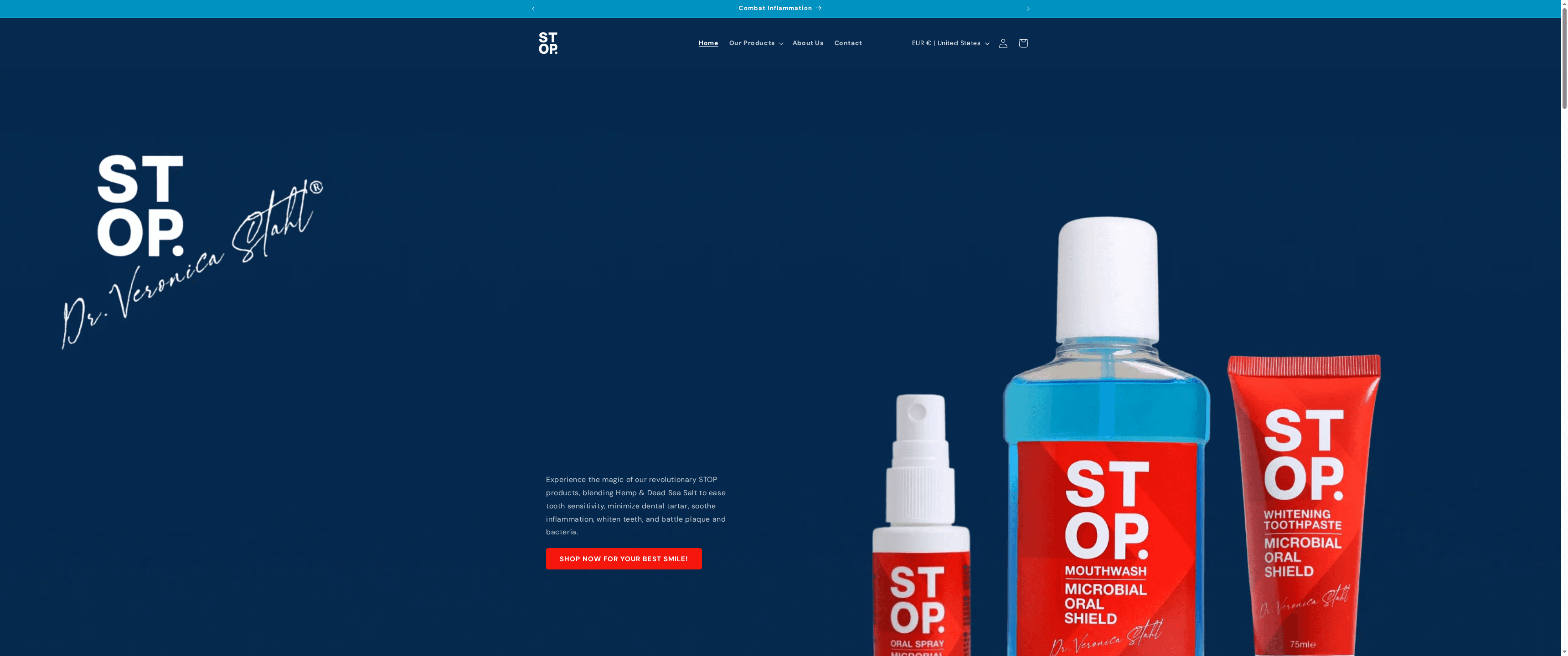
Readers interested in the broader applications of Dead Sea minerals for health will find detailed clinical context at Stop-oralcare’s natural oral care resource center. The site covers fluoride-free formulations developed by Dr. Veronica Stahl, combining Dead Sea minerals with hemp for oral health applications grounded in the same mineral science discussed here. For those specifically researching mineral benefits for oral health, Stop-oralcare provides a focused clinical overview of how these minerals function in the oral environment.
FAQ
What minerals are in Dead Sea salt?
Dead Sea salt contains more than 21 minerals, with the highest concentrations of magnesium (35–46 g/L), bromide (4.2–5.6 g/L), calcium (~17 g/L), and potassium (~7.5 g/L). Its sodium chloride content is significantly lower than ocean salt.
How long does it take to see results from Dead Sea mineral treatments?
Clinical protocols show measurable skin improvements after six weeks of bathing three times per week. Single sessions produce temporary effects only; consistent repetition is required for lasting results.
Are Dead Sea minerals safe for sensitive skin?
Dead Sea minerals are safe at a 5% concentration for most skin types, but high concentrations may cause stinging on broken or sensitive skin. A patch test at 1–2% concentration is recommended before full immersion.
Can Dead Sea minerals help with joint pain?
Clinical studies confirm that Dead Sea balneotherapy reduces joint pain and morning stiffness in rheumatoid arthritis and osteoarthritis patients. The buoyancy of the water also allows painless joint movement during treatment sessions.
What is the difference between Dead Sea salt and regular sea salt?
Dead Sea salt contains magnesium at 36–50 times the concentration of ocean water and far less sodium chloride. That ratio makes it hydrating rather than drying, and therapeutically active rather than merely cosmetic.