

TL;DR:
- Dead Sea minerals contain unique magnesium, calcium, potassium, bromide, and sulfate salts that support oral health. Clinical research shows they reduce harmful bacterial toxins and inflammation, offering a natural alternative to chlorhexidine with fewer side effects. However, they do not provide significant whitening or enamel remineralization benefits and are best used alongside standard dental care.
Dead Sea minerals are defined as a naturally occurring complex of magnesium, calcium, potassium, bromide, and sulfate salts extracted from the Dead Sea basin, with documented antimicrobial and anti-inflammatory properties that directly benefit oral health. Recent 2026 clinical research confirms that these minerals reduce harmful bacterial toxins in the oral cavity at rates comparable to chlorhexidine mouthwash, making them a scientifically credible option for individuals managing sensitive teeth and gum disease. Stop-oralcare formulates fluoride-free dental products around this mineral profile, drawing on peer-reviewed findings published in sources such as the Thermal Springs to Saline Solutions: Salt-Based Oral Healthcare 2026 Review (MDPI). This article details the top dental benefits of Dead Sea minerals, their mineral composition, clinical evidence, and practical application methods.
1. What are the unique minerals in Dead Sea salts that benefit dental health?
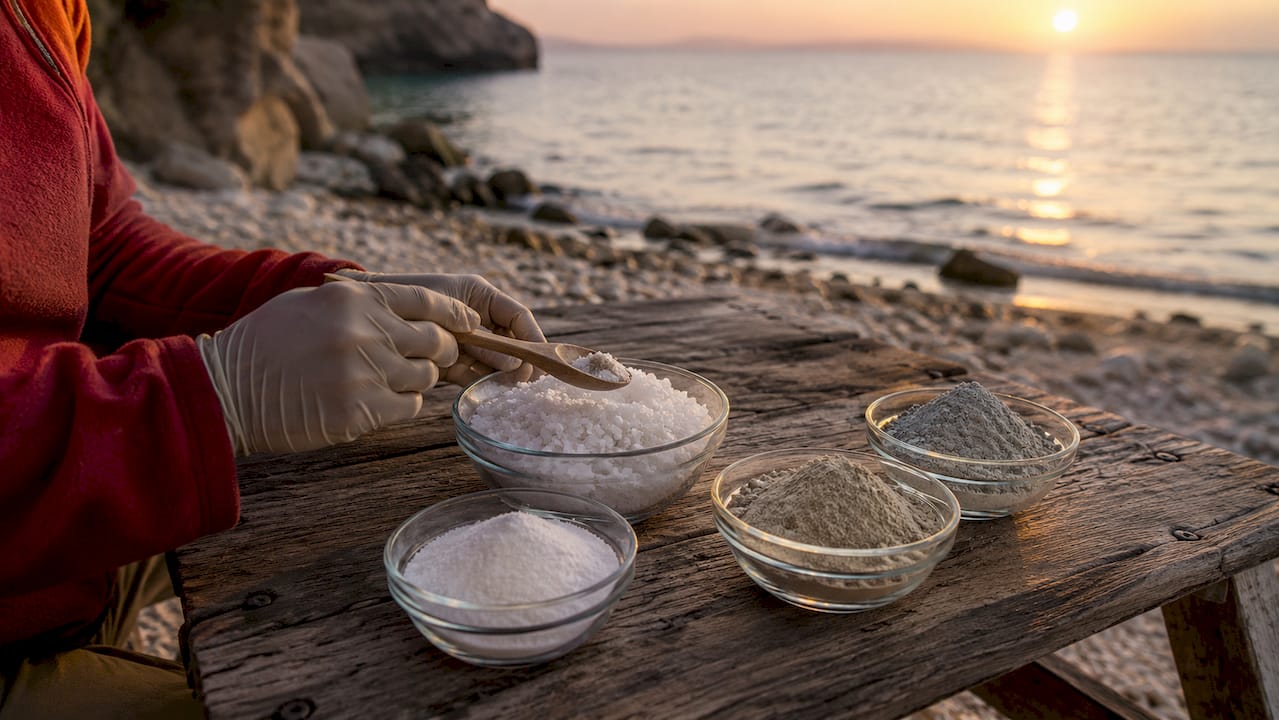
The Dead Sea mineral profile is fundamentally different from standard ocean salt. Regular seawater contains roughly 3% total dissolved salts, while the Dead Sea reaches concentrations above 30%, with a composition weighted heavily toward magnesium, potassium, and bromide rather than sodium chloride.
Key minerals and their oral health roles include:
- Magnesium: Magnesium concentration in Dead Sea salts is approximately 36 times that of ocean water. Magnesium ions modulate inflammatory cytokines and support tissue repair in the oral mucosa, the same mechanisms documented in dermatological research.
- Calcium: Calcium supports structural integrity of tooth enamel and maintains gum tissue density. It is a cofactor in several enzymatic processes that regulate periodontal ligament health.
- Potassium: Potassium reduces nerve sensitivity in dentinal tubules, which is the primary mechanism behind relief for sensitive teeth.
- Bromide: Bromide carries well-documented antimicrobial properties and contributes to the inhibition of pathogenic bacterial growth in oral biofilm.
- Sulfate: Sulfate compounds assist in detoxifying the oral environment by binding to and neutralizing certain bacterial metabolites.
The therapeutic efficacy of these minerals is tied directly to their natural synergistic ratios. Synthetic salt mixtures that replicate individual components do not reproduce the same clinical outcomes, because the interaction between magnesium, bromide, and potassium at naturally occurring concentrations drives the anti-inflammatory and antimicrobial effects.
Pro Tip: When selecting a Dead Sea mineral oral care product, verify that the ingredient label lists magnesium chloride, potassium chloride, and calcium chloride as distinct components. Products that list only “sea salt” as a single ingredient are unlikely to deliver the same mineral density.
2. How Dead Sea minerals reduce oral bacterial toxins and support gum health
The most clinically significant dead sea minerals dental benefits involve bacterial toxin reduction. Periodontal disease is driven not only by bacterial presence but by the toxins those bacteria produce, specifically leukotoxins from Aggregatibacter actinomycetemcomitans and lipopolysaccharide endotoxins from gram-negative anaerobes.
A 2026 scoping review published in MDPI documents an 84% reduction in leukotoxins and a 40% reduction in endotoxins following Dead Sea salt-based oral interventions. These reductions translate directly to lower gingival inflammation scores and improved periodontal pocket depth measurements in the studied cohorts.
Dead Sea mineral mouthwashes also demonstrate antiviral activity. The same 2026 review reports significant viral load reductions for HSV-1 and Epstein-Barr virus (p<0.001) in participants using Dead Sea salt mouthwash. This matters because both viruses are associated with periodontal disease progression and recurrent oral ulceration.
Additional documented effects include:
- Reduced plaque index scores after four weeks of consistent use
- Improved gingival bleeding scores comparable to chlorhexidine 0.12% rinse
- Reduced radiation-induced mucositis severity in oncology patients using Dead Sea mineral therapy
- Antimicrobial activity against Candida albicans, documented in laboratory testing of Dead Sea mud preparations
The effectiveness comparable to chlorhexidine is particularly relevant for individuals with sensitive gums. Chlorhexidine produces well-known side effects including tooth staining, altered taste perception, and oral mucosal irritation. Dead Sea mineral formulations in the reviewed studies produced fewer adverse effects at equivalent efficacy levels.
Pro Tip: For individuals with gum sensitivity, use a Dead Sea mineral mouthwash diluted to half strength for the first two weeks. This allows the oral mucosa to acclimate to the mineral concentration before progressing to full-strength use.
3. What are the limits of Dead Sea minerals for whitening and enamel remineralization?
The role of Dead Sea minerals in oral hygiene is strongest in infection control. Their application to tooth whitening and enamel remineralization is a separate question, and the current evidence does not support strong claims in those areas.
The 2026 scoping review found no significant advantage in tooth whitening or enamel remineralization for Dead Sea mineral products compared to control products. This finding is important for setting realistic expectations. The minerals excel at reducing bacterial load and inflammation, but they do not contain the peroxide compounds required for oxidative whitening, and they do not deliver fluoride ions for enamel remineralization.
Practical implications for users:
- Dead Sea mineral toothpaste should not replace fluoride toothpaste if enamel remineralization is a clinical priority.
- Whitening claims on Dead Sea mineral products are not supported by current controlled trial data.
- Individuals with active caries risk should discuss fluoride supplementation with their dentist before switching entirely to fluoride-free mineral formulations.
- Dead Sea minerals work best as an adjunct to standard oral hygiene, not as a complete replacement.
The distinction matters because overstated claims undermine trust in products that do have genuine, documented benefits. The antimicrobial and anti-inflammatory evidence is strong. The cosmetic evidence is not. Treating these as separate categories produces more accurate expectations and better clinical outcomes.
4. Top 5 practical ways to use Dead Sea minerals for sensitive teeth and healthy gums
The following methods reflect clinical study protocols and product formulations currently available in the natural oral care market.
-
Dead Sea mineral mouthwash. Rinse with 15–20 mL for 60 seconds twice daily. This delivery method produces the most direct contact with gingival tissue and has the strongest evidence base for reducing gum inflammation. Avoid eating or drinking for 30 minutes after rinsing to allow mineral absorption.
-
Dead Sea mineral toothpaste. Use as a direct replacement for conventional toothpaste during twice-daily brushing. The gum health benefits of mineral-enriched toothpaste are most pronounced when used consistently over a minimum of four weeks, consistent with the median follow-up period in reviewed studies.
-
Saltwater rinse with Dead Sea salt. Dissolve 1/4 teaspoon of Dead Sea salt in 8 ounces of warm water. Use as a rinse after meals or following dental procedures to reduce bacterial load and support mucosal healing. This method is cost-effective and appropriate for daily use.
-
Topical oral gels containing Dead Sea minerals. Apply directly to inflamed gum tissue or aphthous ulcers using a clean fingertip or cotton swab. Gel formulations allow prolonged contact time with the affected tissue, which increases mineral absorption at the site of inflammation.
-
Dead Sea mud applications. Laboratory data documents antimicrobial activity of Dead Sea mud against Candida albicans and other oral pathogens. Mud-based preparations are less common in commercial oral care but are available as specialty products for targeted periodontal use.
Pro Tip: Combine a Dead Sea mineral mouthwash with a mineral-enriched toothpaste in the same daily routine. Using both delivery formats increases total mineral contact time with gingival tissue and may amplify the anti-inflammatory response documented in clinical studies.
5. Comparison of Dead Sea mineral dental products and alternatives
The table below compares the primary product categories for individuals evaluating natural minerals for dental care against conventional options.
| Product | Key active ingredients | Primary dental benefit | Suitable for sensitive gums | Known limitations |
|---|---|---|---|---|
| Dead Sea mineral mouthwash | Magnesium, potassium, bromide chlorides | Bacterial toxin reduction, gum inflammation control | Yes, fewer side effects than chlorhexidine | No whitening effect; limited enamel remineralization |
| Dead Sea mineral toothpaste | Mineral salt complex, no fluoride | Plaque control, gum health support | Yes | Does not replace fluoride for caries prevention |
| Chlorhexidine 0.12% mouthwash | Chlorhexidine gluconate | Broad-spectrum antimicrobial, plaque reduction | Moderate; causes staining and taste alteration | Tooth staining, mucosal irritation with long-term use |
| Fluoride toothpaste | Sodium fluoride or stannous fluoride | Enamel remineralization, caries prevention | Generally yes | Does not address bacterial toxin reduction directly |
| Dead Sea salt rinse (DIY) | Natural mineral salt complex | Mucosal healing, post-procedure recovery | Yes | Inconsistent mineral concentration; no standardized dosage |
| Topical Dead Sea mineral gel | Concentrated mineral extract | Targeted gum inflammation, ulcer relief | Yes | Limited commercial availability; shorter evidence base |
Chlorhexidine remains the clinical gold standard for short-term antimicrobial treatment, but its side effect profile limits long-term use. Dead Sea mineral products occupy a distinct position: they deliver comparable antimicrobial outcomes over four-week study periods with a more favorable tolerability profile, making them appropriate for individuals who require ongoing gum support rather than acute intervention.
Key takeaways
Dead Sea minerals reduce oral bacterial toxins and gum inflammation at clinically documented rates, but they do not provide proven benefits for tooth whitening or enamel remineralization.
| Point | Details |
|---|---|
| Bacterial toxin reduction | An 84% reduction in leukotoxins and 40% reduction in endotoxins is documented in 2026 research. |
| Comparable to chlorhexidine | Dead Sea mineral mouthwash matches chlorhexidine efficacy with fewer side effects over four-week periods. |
| Not proven for whitening | Current clinical trials show no significant whitening or remineralization advantage over control products. |
| Magnesium is the key driver | Magnesium at 36 times ocean water concentration drives the anti-inflammatory and tissue repair effects. |
| Best used as an adjunct | Dead Sea mineral products perform best alongside standard oral hygiene, not as a complete replacement. |
My clinical perspective on Dead Sea minerals in oral care
I have followed the research on mineral-based oral care for several years, and the 2026 MDPI scoping review represents the most structured evidence to date. What stands out is not the headline numbers but the consistency of the antimicrobial findings across different study designs. When multiple small cohort studies converge on similar outcomes, that pattern carries weight even before large-scale randomized controlled trials are completed.
The area where I see the most misapplication is whitening. Patients frequently arrive expecting Dead Sea mineral products to address tooth color, and the evidence simply does not support that expectation. Redirecting that expectation toward gum health and bacterial load reduction produces better outcomes and more satisfied patients. The minerals do what they do very well. Asking them to do something outside their documented mechanism is where the disappointment originates.
The current research is preliminary, and experts are right to call for larger, standardized trials before these products become primary treatment recommendations. That said, the tolerability advantage over chlorhexidine is clinically meaningful for patients who need long-term gum support. Chlorhexidine staining and taste disturbance are real compliance barriers. A product with comparable short-term efficacy and fewer side effects fills a genuine gap in the natural oral care category.
My recommendation is to use Dead Sea mineral products as a documented adjunct within a broader oral hygiene protocol, monitor your gingival response over four to six weeks, and revisit the decision with your dental professional using objective measurements.
— Veronica
Explore natural oral care with Dead Sea minerals
Stop-oralcare develops fluoride-free oral care products formulated with Dead Sea mineral complexes, drawing directly on the clinical evidence reviewed in this article. The product line includes mouthwash and toothpaste formulations designed for individuals managing gum sensitivity and chronic inflammation.
If you want to understand the full scope of proven mineral advantages before making a product decision, the Stop-oralcare blog provides detailed breakdowns of the research behind each formulation. For a broader overview of the science and safety behind fluoride-free mineral oral care, the site covers clinical mechanisms, ingredient sourcing, and usage protocols in depth. Visit Stop-oralcare to review the current product catalog and determine which formulation fits your oral health needs.
FAQ
What are the main dead sea minerals dental benefits?
Dead Sea minerals reduce oral bacterial toxins, lower gingival inflammation, and demonstrate antiviral activity against HSV-1 and Epstein-Barr virus. These effects are documented in the 2026 MDPI scoping review across multiple small clinical cohorts.
Are Dead Sea mineral products safe for sensitive gums?
Yes. Clinical studies show Dead Sea mineral mouthwashes produce fewer adverse effects than chlorhexidine 0.12% rinse at comparable antimicrobial efficacy. Individuals with sensitive gums may benefit from starting at half-strength concentration.
Do Dead Sea minerals whiten teeth?
No. Current clinical trials find no significant whitening advantage for Dead Sea mineral products over control products. Their documented benefits are antimicrobial and anti-inflammatory, not cosmetic.
How long does it take to see gum health improvements?
The reviewed studies used a median follow-up period of four weeks. Consistent daily use of Dead Sea mineral mouthwash or toothpaste over this period produced measurable reductions in plaque index and gingival bleeding scores.
Can Dead Sea mineral products replace fluoride toothpaste?
Dead Sea mineral products are best used as an adjunct to standard oral hygiene rather than a complete replacement. Individuals with active caries risk should consult their dentist before discontinuing fluoride-based products, as Dead Sea minerals do not provide enamel remineralization benefits.