

TL;DR:
- Dead Sea minerals, rich in magnesium, calcium, potassium, and trace elements, support gum health and inflammation reduction. They are less effective for whitening or enamel repair but show promising benefits for mucositis relief and periodontal improvements. Proper formulations with disclosed mineral concentrations are essential for safe and targeted natural oral care.
Dead Sea minerals are defined as a concentrated blend of magnesium, calcium, potassium, bromide, and trace elements extracted from the hypersaline waters of the Dead Sea, and clinical evidence confirms their targeted advantages for oral health, particularly in periodontal improvement and inflammation control. The advantages of dead sea minerals for teeth are most clearly supported in the areas of gum health, mucositis relief, and sensitivity management, rather than in broad whitening or enamel remineralization. A 2026 scoping review published in MDPI’s Dentistry Journal analyzed salt-based oral interventions and found that while evidence quality varied widely, specific therapeutic outcomes were consistently observed across multiple studies. Stop-oralcare formulates its fluoride-free toothpaste and mouthwash lines around this mineral profile, combining Dead Sea salts with hemp-derived compounds to address the oral conditions where the science is strongest.
1. What are the key minerals in Dead Sea salt and how do they affect teeth?

Dead Sea salt is not standard sea salt. Its mineral composition differs substantially from oceanic salt, which is approximately 97% sodium chloride. Dead Sea salt contains a far more complex profile of bioactive minerals, each with distinct roles in oral tissue function.
The primary minerals and their oral health relevance include:
- Magnesium: Supports anti-inflammatory responses and oral mucosal barrier integrity. Magnesium reduces inflammation and improves tissue integrity in ways that directly benefit gum tissue exposed to bacterial biofilm.
- Calcium: Contributes to the structural integrity of tooth enamel and dentin. Its role in remineralization is recognized, though evidence shows limitations compared to fluoride for broad enamel repair.
- Potassium: Potassium chloride comprises approximately 13% of Dead Sea salts by weight, supporting cellular hydration and moisture retention in gum tissue.
- Bromide: Functions as a mild antiseptic and may contribute to the antibacterial environment in the oral cavity.
- Trace elements: Zinc, sulfur, and iodine appear in smaller concentrations and contribute to antimicrobial and anti-inflammatory activity.
Standard sea salt delivers primarily sodium chloride with minimal trace minerals. This distinction matters clinically because the therapeutic effects attributed to Dead Sea products depend on the full mineral matrix, not sodium chloride alone. Effective products disclose mineral concentration, particularly magnesium content, rather than relying on the “Dead Sea” label as a quality signal.
Pro Tip: When evaluating Dead Sea mineral toothpaste or mouthwash, check the ingredient label for specific mineral compounds such as magnesium chloride or potassium chloride rather than accepting a generic “Dead Sea minerals” claim at face value.
2. How Dead Sea minerals help with sensitive teeth and gum inflammation
Dentin hypersensitivity and gingival inflammation are two of the most common complaints among patients seeking natural dental care alternatives. Dead Sea minerals address both through distinct but complementary mechanisms.
For sensitive teeth, the evidence is promising but not yet definitive. The 2026 MDPI scoping review assessed dentin hypersensitivity outcomes across salt-based intervention studies and found heterogeneous, inconclusive results. Methodological inconsistencies across trials prevent a formal clinical recommendation at this time. That said, the osmotic and anti-inflammatory properties of the mineral blend provide a plausible biological mechanism for sensitivity reduction.
For gum inflammation, the evidence is considerably stronger. Key findings include:
- Dead Sea mineral mouthwashes reduced gum bleeding and swelling in multiple study populations.
- Salt’s osmotic effect draws excess fluid from swollen gingival tissue, reducing volume and localized inflammation.
- Periodontal improvements observed in clinical studies were comparable to those achieved with chlorhexidine, the current gold standard antiseptic rinse.
- Radiation-induced oral mucositis severity was reduced in patients using Dead Sea mineral rinses, suggesting a protective role for oral mucosal tissue.
The anti-inflammatory contribution of magnesium is central to these outcomes. Gingival tissue exposed to chronic bacterial challenge benefits from magnesium’s capacity to modulate inflammatory cytokine activity. This mechanism is well-established in dermatological research and is now being applied to oral mucosal contexts.
Pro Tip: Combining Dead Sea mineral mouthwash with a soft-bristled toothbrush and twice-daily brushing produces more consistent gum health improvements than using mineral products as a standalone intervention.
3. Comparing Dead Sea mineral oral care products: what works best?
The format and formulation of a Dead Sea mineral product determine its clinical utility. Not all products deliver equivalent mineral concentrations or target the same oral conditions.
| Product Type | Key Ingredients | Best Use Case | Limitations |
|---|---|---|---|
| Mineral toothpaste | Magnesium chloride, calcium, plant extracts | Daily gum care, sensitivity management | Lower mineral contact time than rinses |
| Mineral mouthwash | Potassium chloride, magnesium, saline base | Gum inflammation, mucositis relief | Requires consistent use for measurable effect |
| Mineral rinse/saline spray | Dilute Dead Sea salt solution | Post-procedure oral care, acute gum swelling | Minimal mechanical cleaning action |
| Mineral scrub | Coarser salt particles, essential oils | Occasional plaque disruption | Abrasive; not suitable for sensitive teeth |
| Mud mask (oral) | Dead Sea mud, trace minerals | Experimental; limited oral use data | Insufficient clinical evidence for oral application |
Toothpastes and mouthwashes represent the most clinically studied formats. The Dead Sea mineral mouthwash category shows the strongest evidence for gum inflammation reduction, largely because rinse formulations maintain prolonged mucosal contact compared to toothpaste, which is rinsed away within seconds.
Some formulations incorporate plant-derived compounds such as hemp extract or aloe vera alongside Dead Sea minerals. These adjunct ingredients may contribute additional anti-inflammatory activity, though their individual contributions are difficult to isolate in current studies. Fluoride-free formulations, such as those produced by Stop-oralcare, substitute mineral remineralization support for fluoride, which is appropriate for patients seeking fluoride-free alternatives with awareness of the trade-offs.
Pro Tip: For patients with sensitive teeth, a mineral mouthwash with a controlled, low-concentration saline base is preferable to abrasive mineral scrubs, which can mechanically compromise exposed dentin.
4. Are Dead Sea minerals effective for tooth whitening and enamel remineralization?
The 2026 MDPI scoping review found no demonstrated advantage of Dead Sea mineral products over conventional systems for tooth whitening or enamel remineralization. This finding is significant for consumers who encounter marketing claims suggesting mineral-based products can replace peroxide whitening or fluoride remineralization treatments.
Several factors explain why mineral presence alone does not guarantee these outcomes:
- Whitening mechanisms require either chemical oxidation (hydrogen peroxide or carbamide peroxide) or physical abrasion to remove extrinsic staining. Minerals do not perform either function at clinically relevant concentrations in standard formulations.
- Enamel remineralization depends on the availability of calcium and phosphate ions in a form that integrates into the hydroxyapatite crystal lattice. Dead Sea calcium is present, but current pilot studies have short follow-up periods (median four weeks) and small sample sizes, limiting conclusions about durable enamel repair.
- Fluoride’s mechanism involves the conversion of hydroxyapatite to fluorapatite, which is more acid-resistant. No mineral compound in Dead Sea salt replicates this specific chemical transformation.
- Study design limitations mean that even positive preliminary findings on remineralization may reflect measurement variability rather than true enamel structural change.
Realistic expectations are important here. Dead Sea minerals contribute to an oral environment that is less hospitable to the bacteria responsible for enamel demineralization. That is a meaningful indirect benefit. It is not, however, equivalent to the direct remineralization achieved by fluoride or the whitening achieved by peroxide-based systems. Patients seeking whitening or enamel repair should use clinically validated treatments for those specific outcomes and consider Dead Sea mineral products as complementary support for gum and mucosal health.
5. How to safely incorporate Dead Sea minerals into your oral care routine
Integrating Dead Sea mineral products into an existing oral hygiene protocol requires attention to concentration, frequency, and individual tolerance. The following sequence supports safe and effective use:
- Start with a mineral mouthwash at low concentration (0.9% to 1.5% saline equivalent) once daily for the first two weeks to assess mucosal tolerance before increasing frequency.
- Introduce mineral toothpaste as a direct replacement for conventional toothpaste, using a soft-bristled brush with gentle circular strokes. Avoid applying additional pressure to compensate for the absence of fluoride.
- Avoid mineral scrubs if you have exposed dentin, gum recession, or active sensitivity. Reserve abrasive formats for individuals with healthy enamel and no sensitivity complaints.
- Patch test any new mineral product on the inner cheek mucosa for 24 hours before full use, particularly if you have a history of contact sensitivity or oral allergy syndrome.
- Maintain conventional dental hygiene alongside mineral product use. Dead Sea mineral products complement professional cleaning, interdental brushing, and regular dental examinations. They do not replace any of these practices.
- Consult your dentist before substituting fluoride toothpaste with a fluoride-free mineral alternative, particularly if you have a documented history of caries or enamel erosion.
The science and safety profile of Dead Sea mineral oral care products supports their use as adjunct therapy rather than primary treatment. Consistency over weeks rather than days is required to observe measurable gum health improvements.
Pro Tip: Select products from manufacturers who provide third-party mineral content verification or reference peer-reviewed clinical data. A “Dead Sea” label without disclosed mineral concentrations offers no clinical guarantee.
Key takeaways
Dead Sea minerals deliver the most clinically supported benefits in periodontal health and oral mucosal protection, not in whitening or enamel remineralization.
| Point | Details |
|---|---|
| Targeted therapeutic benefits | Dead Sea minerals reduce gum inflammation and mucositis, with effects comparable to chlorhexidine in some studies. |
| Whitening claims are unsupported | Current evidence shows no advantage over conventional whitening systems; peroxide treatments remain the standard. |
| Mineral composition matters | Magnesium, potassium, and calcium each serve distinct oral health functions; product labels should disclose specific compounds. |
| Evidence quality is limited | The median study in the 2026 MDPI review had 41 participants and four weeks of follow-up, limiting broad clinical conclusions. |
| Complementary use is the standard | Dead Sea mineral products work best alongside conventional dental hygiene, not as replacements for it. |
A clinician’s perspective on Dead Sea minerals in natural dental care
I have reviewed the clinical literature on Dead Sea mineral oral interventions extensively, and my position is that the therapeutic value is real but narrow. Patients who come to me asking about natural alternatives to chlorhexidine or fluoride often arrive with expectations shaped by marketing rather than evidence. The honest answer is that Dead Sea minerals perform well for gum inflammation and mucositis relief. For those specific indications, the evidence is consistent enough to support their use as adjunct therapy.
Where I push back is on the whitening and remineralization claims. The oral health benefits documented in peer-reviewed literature do not include superior enamel repair or extrinsic stain removal. Patients who substitute fluoride toothpaste with a mineral-only alternative and expect equivalent caries protection are taking a risk that the evidence does not justify.
What I find genuinely useful in clinical practice is the osmotic and anti-inflammatory effect of mineral rinses for patients undergoing radiation therapy or those with chronic gingivitis who cannot tolerate chlorhexidine’s side effects. In those cases, Dead Sea mineral mouthwash is a credible, evidence-adjacent option. The key is matching the product to the clinical indication rather than assuming broad oral health improvement from mineral exposure alone. Product formulation quality, mineral concentration disclosure, and consistent use over at least four to six weeks are the variables that determine whether a patient sees measurable benefit.
— Veronica
Explore natural oral care with Dead Sea minerals at Stop-oralcare
Stop-oralcare develops fluoride-free oral care products formulated with clinically relevant concentrations of Dead Sea minerals and hemp-derived compounds, targeting the specific oral conditions where the evidence is strongest: gum inflammation, mucosal protection, and sensitivity management.
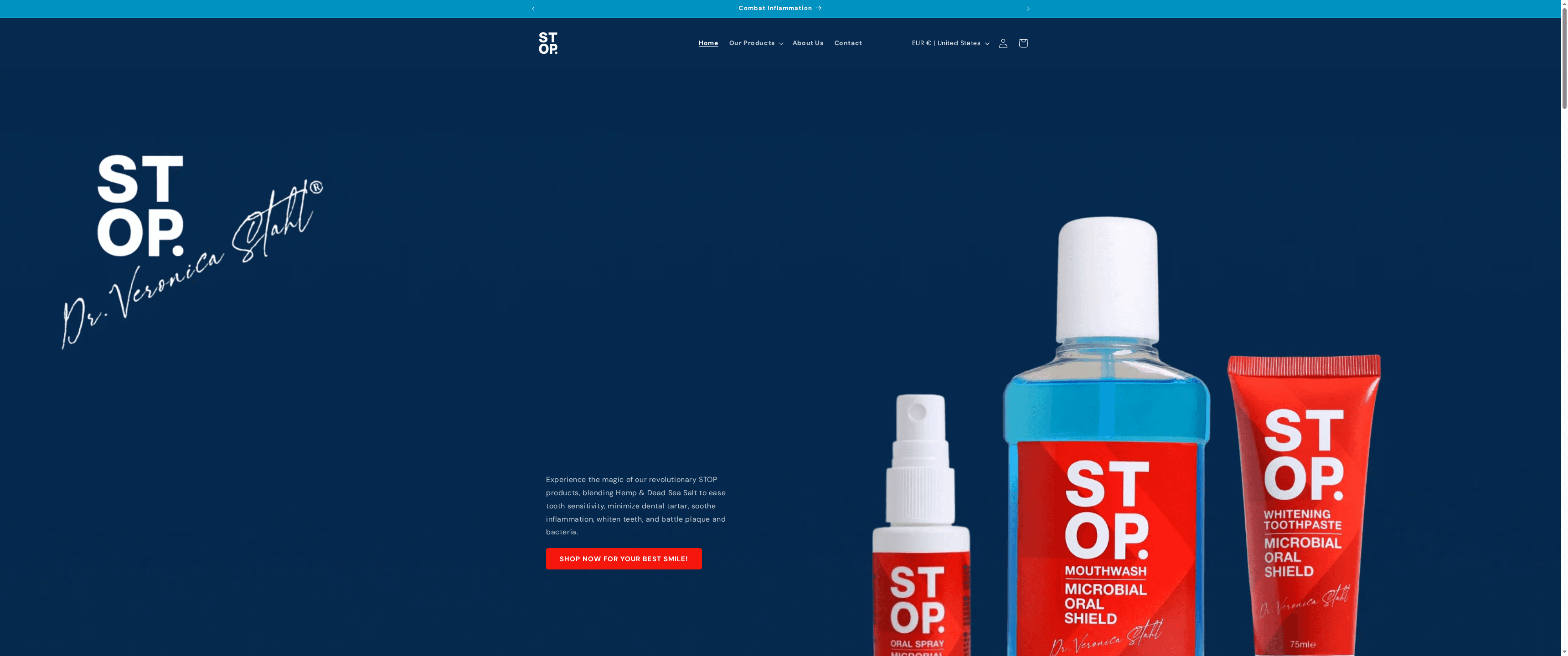
The product range at Stop-oralcare includes toothpaste, mouthwash, and oral sprays designed for patients who require effective natural alternatives to conventional antiseptic and fluoride-based products. Each formulation is developed under the guidance of Dr. Veronica Stahl, with reference to current clinical research. Detailed product guides, ingredient disclosures, and evidence summaries are available on the site to support informed purchasing decisions for individuals managing sensitive teeth or chronic gum conditions.
FAQ
What are the main advantages of Dead Sea minerals for teeth?
The primary advantages are reduction of gum inflammation, periodontal improvement, and relief from radiation-induced oral mucositis, with effects in some studies comparable to chlorhexidine. Benefits for tooth whitening or enamel remineralization are not currently supported by strong clinical evidence.
Can Dead Sea mineral toothpaste replace fluoride toothpaste?
Dead Sea mineral toothpaste can serve as a fluoride-free alternative for patients who choose to avoid fluoride, but it does not replicate fluoride’s specific mechanism of converting hydroxyapatite to acid-resistant fluorapatite. Patients with a history of caries should consult their dentist before making this substitution.
How long does it take to see results from Dead Sea mineral oral care products?
Clinical studies on salt-based oral interventions used follow-up periods of approximately four weeks, which represents the minimum duration for observing measurable gum health changes. Consistent daily use over four to six weeks is the evidence-based timeframe for evaluating product effectiveness.
Are Dead Sea minerals safe for people with sensitive teeth?
Mineral mouthwashes and toothpastes with controlled concentrations are generally well-tolerated by individuals with sensitive teeth. Abrasive formats such as mineral scrubs are not recommended for patients with exposed dentin or active sensitivity, as mechanical abrasion can worsen the condition.
What should I look for on a Dead Sea mineral product label?
Look for disclosed concentrations of specific compounds such as magnesium chloride, potassium chloride, and calcium. A generic “Dead Sea minerals” claim without quantified mineral content provides no clinical assurance of therapeutic benefit, as effective formulations require verified mineral concentrations alongside well-designed delivery systems.
Recommended
- Dead Sea Minerals: Oral Care Benefits Explained – Stop Oral Care
- Dead Sea minerals in dentistry: natural fluoride-free oral care guide – Stop Oral Care
- Dead Sea Minerals Dental Guide for Natural Oral Care – Stop Oral Care
- Dead Sea minerals in oral care: Science, safety, and fluoride-free ins – Stop Oral Care