

TL;DR:
- Dental ingredient safety involves scientifically evaluating substances in dental products to ensure they are biocompatible and non-toxic for daily oral use. Regulatory standards vary based on product classification, with therapeutic claims requiring extensive testing, while cosmetic products often have less safety disclosure. Consumers should review ingredient lists, seek safety certifications, and consult professionals to choose safer, transparency-driven dental care options.
Dental ingredient safety is the scientific evaluation and regulation of substances used in dental products to confirm they are biocompatible, non-toxic, and appropriate for daily oral use. Understanding what is dental ingredient safety matters because the mouth is a highly absorptive environment. Ingredients in toothpaste, mouthwash, and oral sprays contact oral mucosa, gingival tissue, and saliva proteins every day. Regulatory frameworks including ISO 14971 risk management and ISO 10993 biocompatibility testing exist precisely because those daily exposures accumulate. Common ingredients such as Sodium Lauryl Sulfate, triclosan, and concentrated fluoride have documented irritant profiles that consumers deserve to understand before purchasing.
What is dental ingredient safety and how is it defined?
Dental ingredient safety is the controlled process of assessing whether each component in a dental product causes harm to oral tissues, systemic health, or both. The industry term for this process is biocompatibility evaluation, and it covers cytotoxicity, irritation, sensitization, and genotoxicity testing. Both terms appear throughout this article because each serves a distinct purpose. “Biocompatibility” is the recognized scientific standard; “dental ingredient safety” is the practical consumer framing that connects lab findings to purchasing decisions.

The distinction between product categories matters here. Products that make therapeutic claims, such as enamel remineralization or hypersensitivity relief, are classified as medical devices requiring full ISO 14971 risk management and ISO 10993 toxicological review. That classification means manufacturers must document cytotoxicity, irritation, and sensitization data before any product reaches a pharmacy shelf. Products marketed purely as cosmetics face a lighter regulatory burden, which is one reason ingredient transparency varies so widely across the oral care category.
Consumers reading labels benefit from knowing which standard applies to the product they hold. A toothpaste claiming to reduce sensitivity is a medical device in most jurisdictions. A toothpaste claiming only to clean teeth is a cosmetic. The regulatory pathway determines how much safety evidence the manufacturer must generate and disclose.
How are dental ingredients tested and regulated for safety?
Dental products with therapeutic claims undergo a structured regulatory workflow before market release. The steps below reflect the process required under ISO and Medical Device Regulation frameworks.
- Formulation review. Each ingredient is identified, and its concentration is compared against established toxicological thresholds.
- ISO 10993 biocompatibility testing. Laboratory assays assess cytotoxicity, irritation potential, and sensitization risk for each component and the finished formulation.
- ISO 14971 risk management. Manufacturers document all identified hazards, estimate probability and severity of harm, and implement controls to reduce risk to acceptable levels.
- Conformity declaration. The manufacturer issues a declaration confirming the product meets applicable safety standards before it enters the market.
- Post-market surveillance. Adverse event reports and consumer feedback are monitored continuously to detect safety signals that laboratory testing may not have predicted.
Products for sensitivity relief or enamel protection must complete every stage of this process. That requirement exists because oral tissues are in contact with these products twice or more daily, and cumulative exposure can produce effects that single-dose lab tests underestimate.
Pro Tip: When evaluating a dental product label, look for explicit references to ISO 10993 compliance or CE marking in European markets. Their absence on a product making therapeutic claims is a signal to ask the manufacturer for safety documentation.
The gap between cosmetic and medical device regulation also explains why some products with aggressive ingredient profiles remain on shelves without detailed safety disclosures. Consumers who understand this gap are better positioned to ask the right questions and select products with documented dental product safety records.
Which dental ingredients are considered safe and which raise concern?
No single ingredient is universally ideal for every person. Balancing antibacterial efficacy while preserving beneficial oral flora and avoiding irritants is the central challenge in formulation science. That balance shifts depending on concentration, frequency of use, and individual biology.
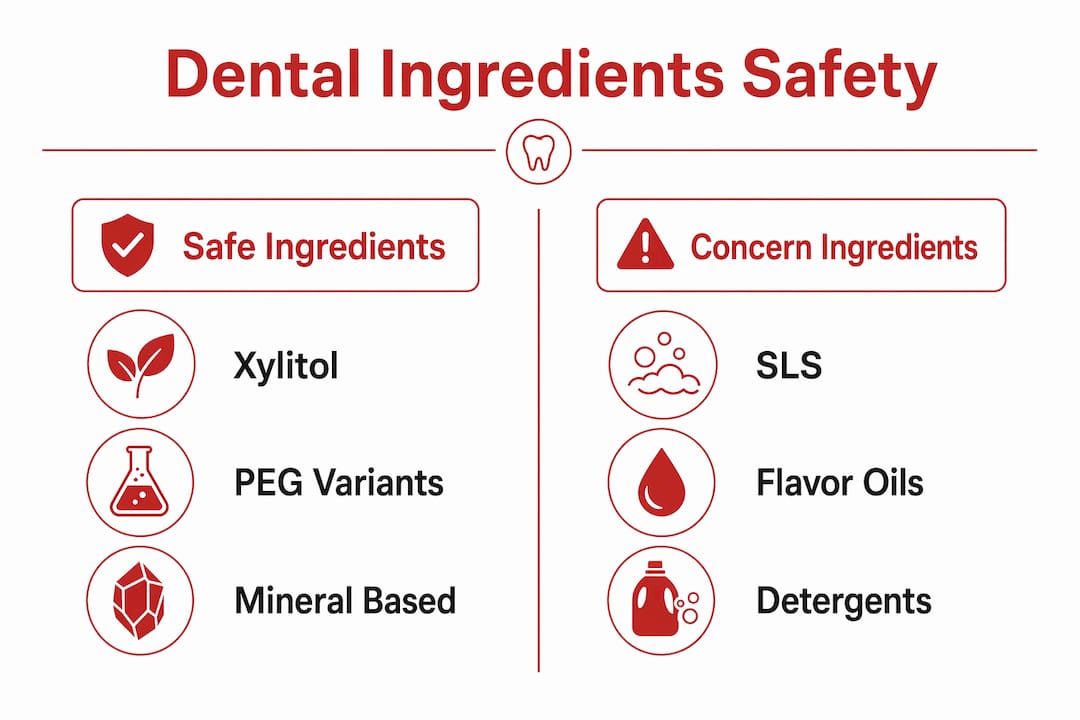
The table below summarizes selected ingredients by safety profile, common function, and documented effects.
| Ingredient | Common use | Safety profile | Potential effects |
|---|---|---|---|
| Xylitol | Caries prevention | Generally well tolerated | Minimal irritation at standard concentrations |
| Sodium Lauryl Sulfate (SLS) | Foaming agent | Irritant at commercial concentrations | Disrupts mucosal proteins; causes irritation |
| Triclosan | Antibacterial | Regulatory concern; restricted in some markets | Endocrine disruption potential; oral microbiome disruption |
| Peppermint oil | Flavoring | Cytotoxic in vitro at higher concentrations | Epithelial cell damage; sensitization in some individuals |
| Cinnamon oil | Flavoring | Cytotoxic in vitro | Contact stomatitis; mucosal irritation |
| Fluoride (standard dose) | Remineralization | Safe at regulated concentrations | Toxic at high doses; regulatory limits apply |
| PEG variants (low molecular weight) | Humectant, binder | Low acute toxicity | Minimal at standard use concentrations |
Flavoring oils and detergents are the primary irritant categories identified in recent in vitro research. That finding matters because these ingredients are present in nearly every commercial toothpaste, often at concentrations that exceed cytotoxicity thresholds established in laboratory assays.
SLS deserves particular attention. SLS concentrations in commercial toothpastes exceed toxicology test thresholds by over 40-fold. That excess disrupts protective mucosal proteins and impairs the immune defense components in saliva, producing irritation rather than a classic allergic response. Consumers who experience recurring mouth ulcers or mucosal sensitivity after brushing should consider SLS as a likely contributor.
Pro Tip: Check the ingredient list for “sodium lauryl sulfate” or “sodium laureth sulfate.” If either appears in the first five ingredients, the product contains a high concentration. Seek SLS-free formulations, especially if you have a history of aphthous ulcers or mucosal sensitivity.
Xylitol and low-molecular-weight PEG variants represent the safer end of the spectrum. Both are well tolerated at standard concentrations and carry minimal cytotoxic risk. Reviewing a safe oral care ingredients list helps consumers identify which components to prioritize and which to avoid.
How do personal health conditions affect dental ingredient safety?
Individual biology determines whether a generally safe ingredient becomes a clinical problem. Dental professionals should cross-reference patient health histories, including allergies, asthma, and autoimmune diseases, with product ingredient lists before recommending any oral care product. Standard regulatory safety data reflects population averages, not individual susceptibility.
Several health conditions create specific ingredient risks that standard labeling rarely addresses:
- Asthma. Flavoring agents, particularly peppermint and spearmint, can trigger bronchospasm in sensitive individuals. Propylene glycol, used as a humectant, is also a documented asthma trigger at elevated concentrations.
- Autoimmune diseases. Patients with conditions such as lupus or Sjögren’s syndrome have compromised mucosal barriers. Ingredients that are mildly irritating in healthy individuals can cause significant tissue damage in these patients.
- Nut allergies. Some dental products use nut-based resins as binders or coating agents. These are rarely highlighted on labels and represent a genuine anaphylaxis risk for sensitized individuals.
- Milk protein allergy. Casein derivatives appear in certain remineralizing products. Patients with milk protein allergy must verify that any remineralization product is casein-free.
- Contact dermatitis history. Cinnamon aldehyde, a component of cinnamon flavoring, is a well-documented contact allergen. It causes perioral dermatitis and intraoral stomatitis in predisposed individuals.
Patients with asthma, autoimmune disorders, or allergies face hidden triggers in dental products that clinicians frequently overlook. Manufacturer transparency and allergen-free certification represent best practice for this population. Consumers in these groups should request full ingredient disclosure from manufacturers and discuss their health history with their dental provider before switching products.
Pro Tip: Ask your dental provider to review the ingredient list of any new oral care product against your medical history before you use it. This step takes under five minutes and eliminates a significant source of preventable adverse reactions.
What practical steps can consumers take to choose safer dental products?
Selecting safer dental products requires a structured approach rather than reliance on marketing claims. The criteria below give consumers a repeatable framework for evaluation.
- Read the full ingredient list. Ingredients are listed in descending order of concentration. Prioritize products where known irritants such as SLS, triclosan, and synthetic flavoring oils do not appear in the first five entries.
- Look for recognized safety certifications. ISO 10993 compliance, CE marking for medical device-classified products, and third-party allergen-free certifications indicate that safety testing has been conducted and documented.
- Cross-reference with personal health history. Any allergy, autoimmune condition, or chronic mucosal sensitivity changes which ingredients are acceptable for you specifically.
- Consult your dental provider. Disclose all known sensitivities before adopting a new product, particularly one making therapeutic claims about enamel or sensitivity.
- Prioritize mineral-based and non-toxic formulations. The World Health Organization recommends mercury-free, minimally invasive dental care materials that reduce toxicological load while maintaining clinical effectiveness. Mineral-based formulations align with this principle.
- Evaluate the manufacturer’s transparency. Companies that publish full ingredient rationale, safety testing summaries, and allergen declarations demonstrate a higher standard of consumer accountability than those that do not.
Natural ingredients in dental care are not automatically safe, but mineral-based and plant-derived formulations developed under rigorous biocompatibility standards offer a credible alternative to conventional products with high irritant loads. The WHO’s emphasis on sustainability and reduced toxicological burden supports a shift toward these formulations as both a public health and environmental priority. Consumers who want to understand the science behind these alternatives can review resources on non-toxic dental care to compare formulation approaches.
Key Takeaways
Dental ingredient safety is defined by biocompatibility standards, individual health context, and manufacturer transparency, and no single ingredient profile is safe for every consumer.
| Point | Details |
|---|---|
| Biocompatibility testing is mandatory for therapeutic products | ISO 10993 and ISO 14971 apply to products making enamel or sensitivity claims. |
| SLS exceeds safety thresholds in most commercial toothpastes | Concentrations over 40-fold above cytotoxicity limits disrupt mucosal proteins and cause irritation. |
| Personal health history changes ingredient risk | Autoimmune conditions, asthma, and allergies create specific vulnerabilities that standard safety data does not capture. |
| No ingredient is universally ideal | Balancing antibacterial efficacy with low irritant potential requires formulation-specific evaluation. |
| WHO supports mineral-based, low-toxicity formulations | Sustainable, minimally invasive dental materials reduce toxicological load while maintaining clinical effectiveness. |
A clinician’s perspective on ingredient transparency and consumer responsibility
The most consistent gap I observe in dental product safety is not in the regulatory frameworks. Those frameworks, when applied correctly, are rigorous. The gap is in how rarely consumers and even clinicians apply them to everyday purchasing decisions.
Regulatory classification determines how much safety evidence a manufacturer must produce. A product classified as a cosmetic can reach the market with far less biocompatibility documentation than a medical device. Consumers who do not know this distinction have no way to calibrate their trust in a product’s safety claims. That asymmetry of information is the real problem.
Emerging research on cytotoxic flavoring agents and SLS irritation is shifting how formulation scientists think about ingredient selection. The direction is clearly toward lower irritant loads, greater allergen transparency, and mineral-based alternatives that work with oral biology rather than against it. I expect regulatory bodies to tighten cosmetic classification thresholds for oral care products within the next decade, driven by accumulating in vitro evidence.
My practical recommendation is this: treat your oral care product selection with the same scrutiny you would apply to a supplement or a topical medication. Read the full ingredient list. Cross-reference it with your health history. Ask your dental provider to review it with you. The science to make informed choices already exists. The responsibility is to use it.
— Veronica
Science-backed oral care resources at Stop-oralcare
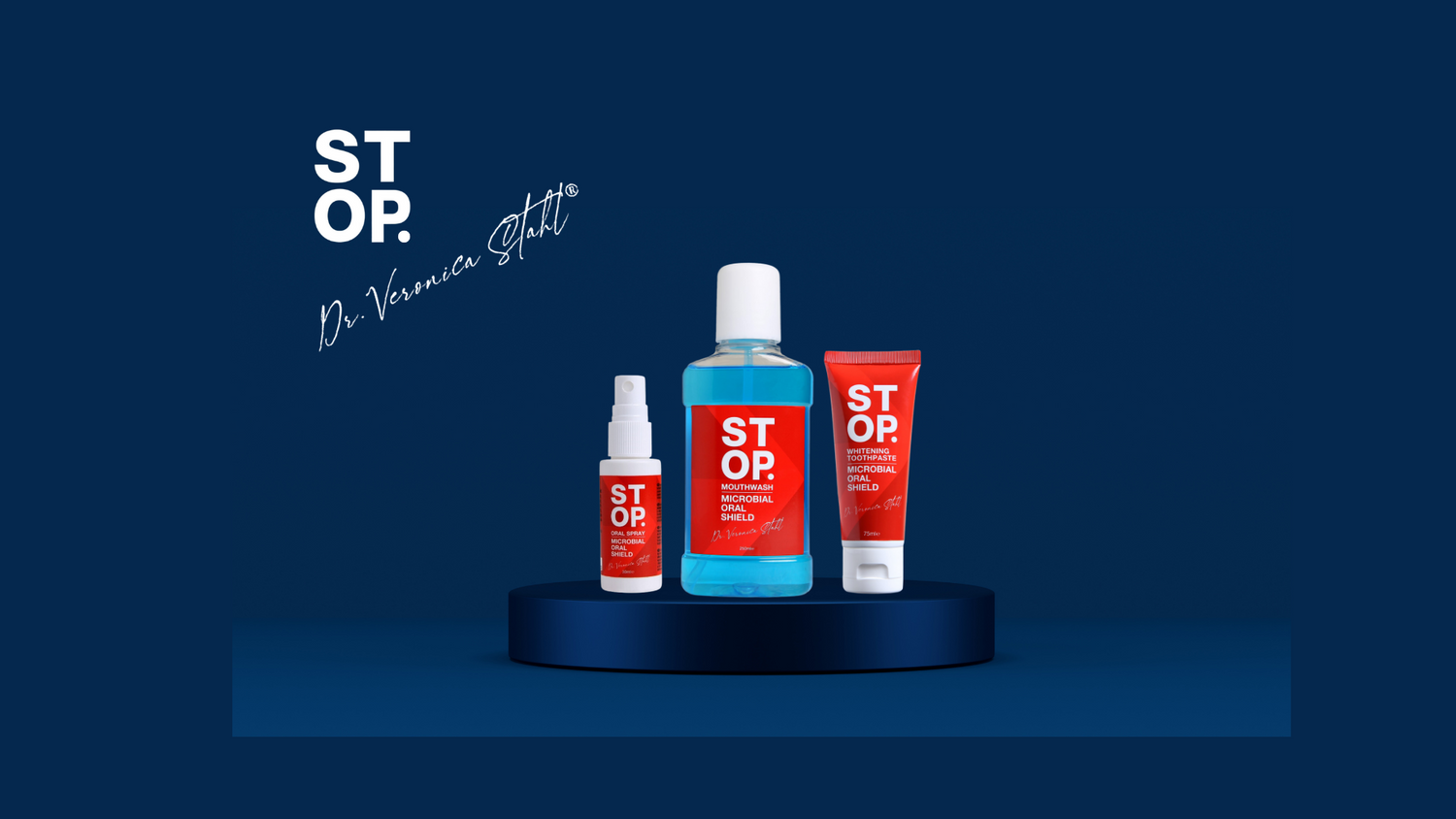
Stop-oralcare was founded on the principle that dental product safety should be transparent, evidence-based, and accessible to every consumer. The platform, led by Dr. Veronica Stahl, publishes detailed ingredient rationale, biocompatibility research summaries, and formulation science for its line of fluoride-free, mineral-based oral care products.
Consumers who want to apply the safety criteria outlined in this article to real product choices can explore the full Stop-oralcare product range and its supporting educational content. Each product page includes ingredient transparency and links to the scientific literature behind the formulation decisions. For dental professionals seeking to understand how dental SEO for patient education intersects with ingredient safety communication, Stop-oralcare’s content library offers a practical reference point.
FAQ
What is dental ingredient safety in simple terms?
Dental ingredient safety is the process of scientifically evaluating each substance in a dental product to confirm it does not harm oral tissues or overall health during regular use. It covers biocompatibility testing, irritation assessment, and regulatory compliance.
Which toothpaste ingredients are most likely to cause irritation?
Sodium Lauryl Sulfate, triclosan, cinnamon oil, and peppermint oil have documented cytotoxic and irritant effects in laboratory studies. SLS concentrations in commercial toothpastes exceed established safety thresholds by over 40-fold.
How do I know if a dental product has been safety tested?
Look for ISO 10993 compliance statements, CE marking for medical device-classified products, or third-party allergen-free certifications on the label or manufacturer’s website. Products making therapeutic claims are legally required to complete biocompatibility testing before market release.
Are natural dental ingredients automatically safer than synthetic ones?
Not automatically. Natural flavoring oils such as cinnamon and peppermint show cytotoxic effects in vitro at higher concentrations. Balancing efficacy and safety requires formulation-specific evaluation regardless of whether an ingredient is natural or synthetic.
What should I do if I have allergies and use dental products?
Cross-reference the full ingredient list with your known allergens and disclose your health history to your dental provider before using any new product. Patients with autoimmune disorders or allergies face hidden triggers in dental products that standard labeling rarely highlights.