

Dry mouth is a common pregnancy symptom, driven mainly by hormonal shifts, higher fluid needs, and nasal congestion that pushes you into mouth-breathing. It is normal in most cases, and simple measures like steady hydration and sugar-free gum usually bring relief. Symptoms that persist, worsen, or come with unusual thirst or white patches in the mouth warrant a call to your obstetrician.
TL;DR:
- Dry mouth during pregnancy is mainly caused by hormonal changes that alter saliva flow, increased blood volume, and nasal congestion prompting mouth-breathing.
- Symptoms often begin in the first trimester with nausea and vomiting, peak in the second trimester around gestational diabetes screening, and worsen in the third with nasal issues.
- Simple home remedies like hydration, sugar-free gum, and humidifiers are effective, but persistent symptoms require medical attention to rule out gestational diabetes or oral thrush.
- Maintaining good oral hygiene and using alcohol-free, gentle oral care products helps prevent cavities and thrush, especially when saliva flow decreases.
- Signs such as unrelenting thirst, dark urine, mouth patches, or severe sleep disturbances should prompt immediate consultation with a healthcare professional.
Table of Contents
- What Causes Dry Mouth in Pregnancy?
- When Does Dry Mouth Start and How Long Does It Last?
- How Can You Relieve Dry Mouth Safely During Pregnancy?
- Protecting Your Teeth and Gums When Saliva Runs Low
- When Should You See a Doctor About Dry Mouth?
- Why Ingredient Choices Matter for Pregnancy Oral Care
- What Actually Matters Most for Dry Mouth Relief
- A Gentler Way to Support Your Mouth During Pregnancy
- Sources
What Causes Dry Mouth in Pregnancy?
Rising estrogen and progesterone alter the composition and flow of saliva, and the significant increase in blood volume during pregnancy shifts fluid distribution throughout the body. Together, these changes leave the mouth feeling drier than usual, even when you are drinking normally.
Dehydration compounds the problem. Nausea and vomiting, especially in the first trimester, reduce fluid intake right when your body needs more of it. Watch for dark urine, headaches, or dizziness alongside the dryness. Nasal congestion, common in pregnancy due to swollen mucous membranes, forces mouth-breathing overnight, and that alone can leave you waking up parched.
Several other factors can worsen dry mouth during pregnancy:
- Antihistamines and decongestants taken for allergies or colds
- Preexisting conditions like Sjögren’s syndrome that already limit saliva production
- Snoring or sleep-disordered breathing that increases nighttime mouth-breathing
- High salt or spicy food intake, which increases thirst without addressing the underlying cause
Some pregnancy-linked conditions deserve special attention. Gestational diabetes can cause excessive thirst alongside dry mouth, oral thrush thrives when saliva flow drops and creates a favorable environment for yeast, and sleep apnea, which becomes more common as pregnancy progresses, dries out the mouth through repeated breathing interruptions overnight.
When Does Dry Mouth Start and How Long Does It Last?
Dry mouth in pregnancy rarely shows up alone. You might also notice a sore throat on waking, a metallic or altered sense of taste, difficulty swallowing dry foods, or bad breath that a quick brushing doesn’t fully fix.
Timing varies by trimester:
- First trimester: often tied to nausea, vomiting, and early hormonal surges
- Second trimester: frequently coincides with gestational diabetes screening around weeks 24 to 28, since increased thirst can be an early clue
- Third trimester: more likely linked to nasal congestion, snoring, or sleep apnea as the growing uterus affects breathing
Duration is inconsistent. Some people notice dry mouth for a few weeks and then adjust; others deal with it on and off until delivery. Once an underlying cause like thrush or gestational diabetes is treated, dryness related to that condition typically improves within days to a few weeks.
How Can You Relieve Dry Mouth Safely During Pregnancy?
Most cases respond well to habits you can start today. None require a prescription, and all are considered safe during pregnancy when used as directed.
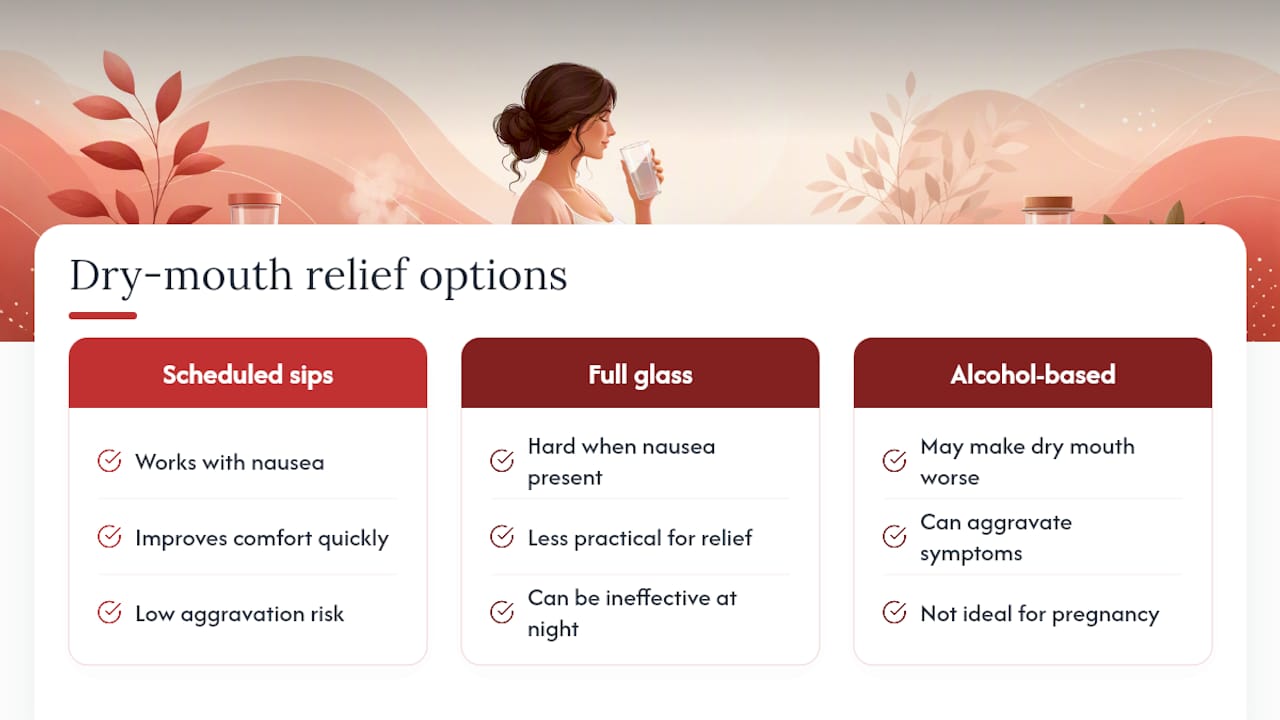
- Sip water consistently. Aim for a range around 8 to 12 cups of fluids daily, adjusting for your body size and activity level. If nausea makes big glasses unappealing, switch to small, scheduled sips every 20 to 30 minutes instead of trying to catch up all at once.
- Stimulate saliva flow. Chewing sugar-free gum or sucking on sugar-free lozenges signals your salivary glands to work, and it’s one of the most commonly recommended remedies for pregnancy-related dryness.
- Use ice chips or flavored ice. Sucking on ice, or ice made with small pieces of safe fruit, keeps moisture in your mouth without the volume that can trigger nausea.
- Add humidity while you sleep. A cool-mist humidifier in the bedroom counteracts the drying effect of mouth-breathing overnight.
- Treat congestion directly. A saline nasal spray clears passages so you can breathe through your nose again, which reduces the need to mouth-breathe in the first place.
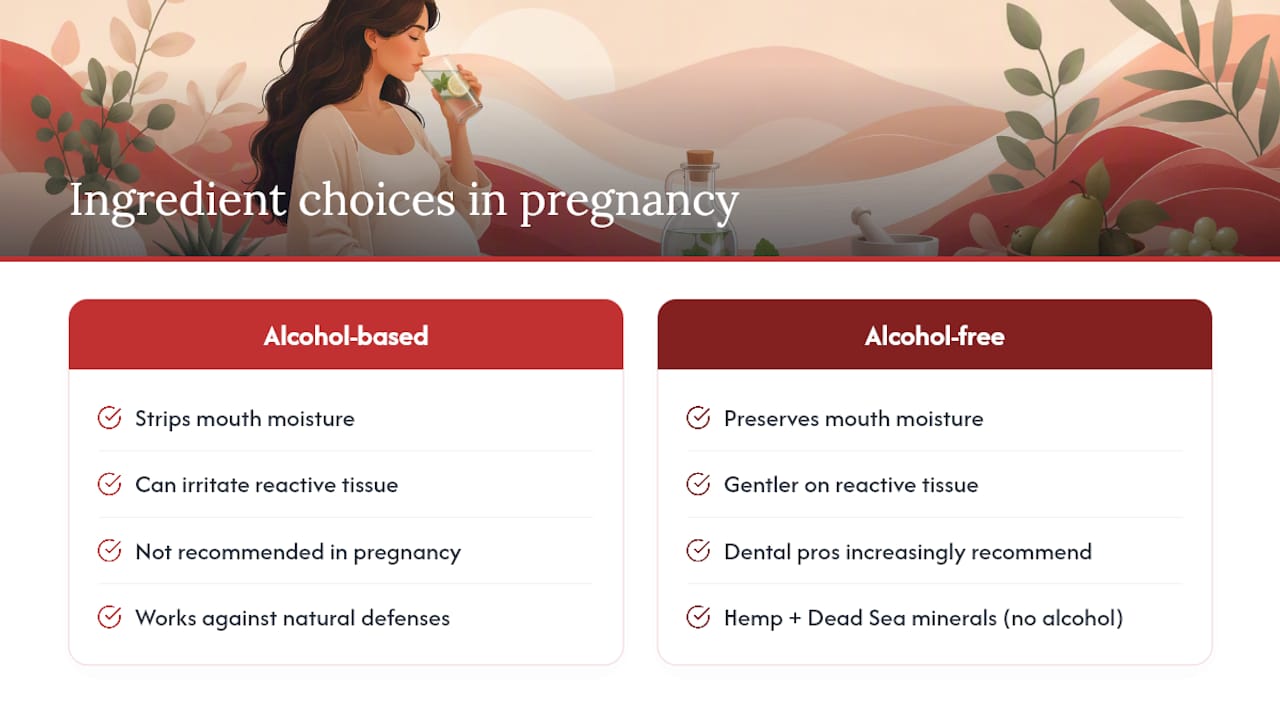
- Rethink your mouthwash. Skip alcohol-based rinses, which strip moisture from oral tissue, and choose an alcohol-free formula instead.
- Cut back on caffeine and salty or spicy foods. These increase thirst and can leave your mouth feeling drier within an hour of eating.
Pro Tip: Keep a small water spray bottle or an oral moisturizing spray in your bag. A quick mist to the inside of your cheeks works even when a full glass of water feels like too much, especially on nauseous days.
Protecting Your Teeth and Gums When Saliva Runs Low
Saliva does more than keep your mouth comfortable. It neutralizes acid, washes away food particles, and delivers minerals that reinforce tooth enamel. When saliva flow drops, cavity risk climbs and thrush finds it easier to take hold.
A few adjustments make a real difference:
- Brush twice daily with a soft-bristle brush to avoid irritating already-sensitive gum tissue
- Floss once a day to clear plaque from areas saliva can no longer reach as effectively
- Swap alcohol-based rinses for alcohol-free options, which won’t dry out tissue further
- Ask your dentist about fluoride guidance appropriate for pregnancy, since recommendations can vary by individual risk factors
- Keep your routine dental cleanings on schedule. Standard exams and cleanings are considered safe throughout pregnancy
If gum tenderness or bleeding shows up alongside dryness, that combination often points to pregnancy gingivitis rather than dry mouth alone. Our guide to pregnancy gingivitis remedies breaks down what helps. For rinse options, see our roundup of alcohol-free mouthwash picks or learn how to make a natural mouthwash at home. Early gum symptoms deserve attention, too. This overview of early gum-disease signs explains what to watch for beyond pregnancy-specific changes.
When Should You See a Doctor About Dry Mouth?
Most dry mouth in pregnancy is manageable at home, but certain signs call for a clinician’s input rather than another glass of water.
- Thirst that feels unquenchable no matter how much you drink
- Urine that’s consistently dark despite steady fluid intake
- White, cottage-cheese-like patches on the tongue or inner cheeks, a hallmark of oral thrush
- Loud snoring, gasping during sleep, or severe daytime fatigue
- New cavities forming quickly or mouth pain that doesn’t resolve
Persistent dry mouth combined with excessive thirst is worth mentioning at your next prenatal visit, since it can be an early signal tied to gestational diabetes screening, typically done between weeks 24 and 28. Depending on what your doctor finds, treatment might include antifungal medication for thrush, a diabetes management plan, a sleep study referral with possible CPAP for apnea, or a simple swap of a medication that’s contributing to the dryness.
Why Ingredient Choices Matter for Pregnancy Oral Care
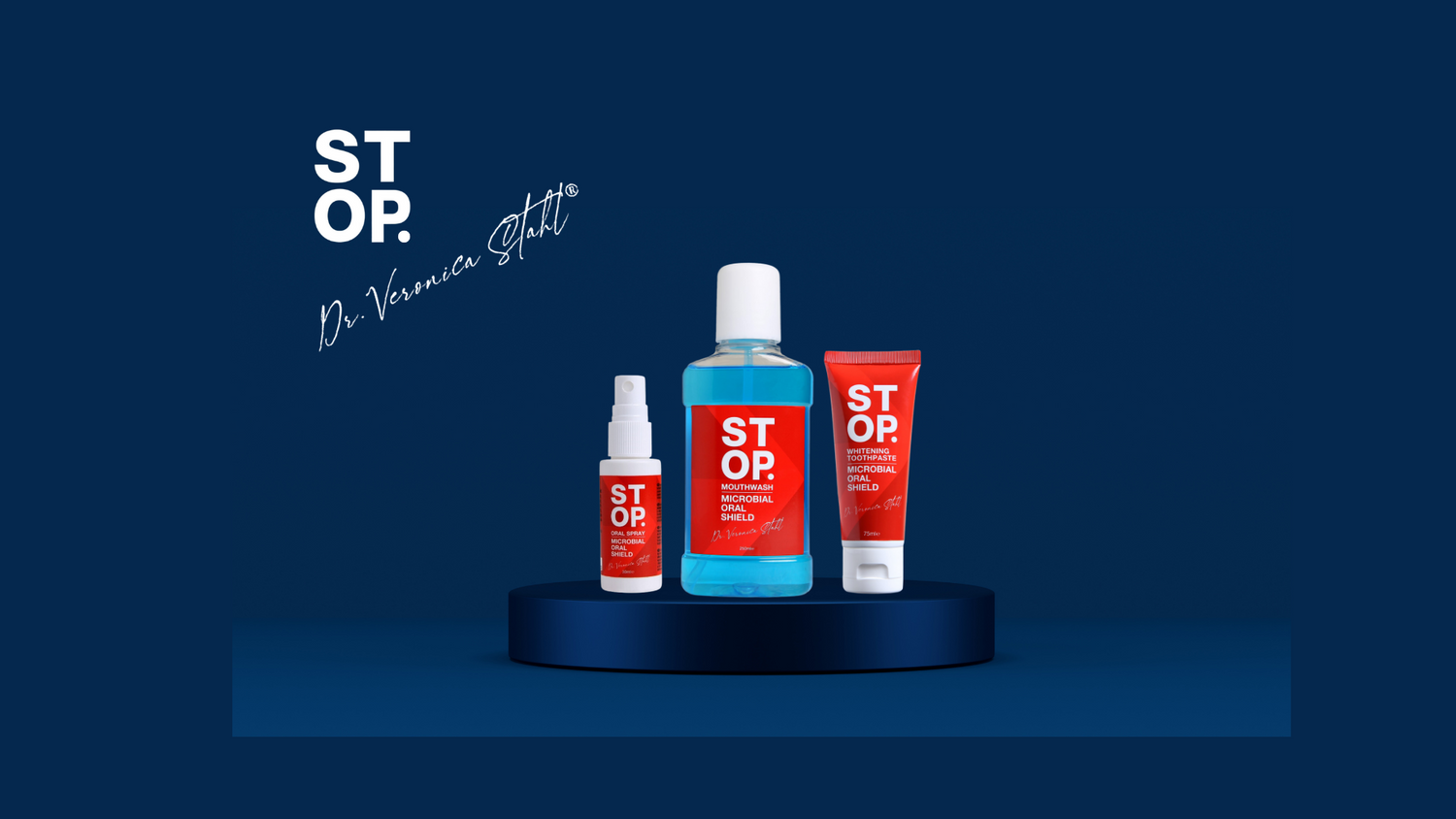
Dr. Veronica Stahl, whose background spans dentistry and natural medicine, built Stop Oral Care around the idea that oral products shouldn’t add irritants to an already sensitive system. That principle matters more during pregnancy, when tissue is more reactive and saliva is already working overtime.
Alcohol-free formulations preserve the moisture your mouth needs instead of stripping it, which is why dental professionals increasingly steer pregnant patients away from alcohol-based rinses. Stop Oral Care’s approach, built on hemp and Dead Sea mineral ingredients rather than fluoride or alcohol, reflects that same logic: support the mouth’s natural defenses instead of working against them.
If you want more on this, our guides to pregnancy gingivitis remedies and natural mouthwash recipes go deeper into ingredient safety.
What Actually Matters Most for Dry Mouth Relief
Most advice on pregnancy dry mouth buries the practical stuff under generic hydration reminders. That’s backwards. The reader dealing with a parched mouth at 2 a.m. doesn’t need to be told water is good for her. She needs to know that scheduled sipping beats forcing down a full glass when nausea is in charge, and that an alcohol-based mouthwash she’s used for years might now be making things worse.
The conventional wisdom also underplays timing. Dry mouth showing up with unusual thirst in the second trimester isn’t just an annoyance. It’s worth mentioning at a prenatal visit precisely because gestational diabetes screening happens in that same window. Waiting it out because “dry mouth is normal in pregnancy” can mean missing an early signal.
My take: treat the simple remedies as your first move, but treat persistent or unusual symptoms as information your doctor needs, not something to tough out.
— Veronica
A Gentler Way to Support Your Mouth During Pregnancy
Alcohol-based mouthwash is one of the fastest ways to make pregnancy dry mouth worse, yet it’s still the default on most store shelves. Stop-oralcare built its entire product line around the opposite approach: fluoride-free, alcohol-free formulas made with hemp and Dead Sea minerals, designed for sensitive, reactive mouths rather than in spite of them.

For pregnant readers dealing with dryness, that means a mouthwash that won’t strip away the moisture you’re already fighting to keep, along with toothpaste and oral sprays formulated to support gum comfort and plaque control without harsh additives. If dry mouth has left your gums tender or your mouth generally uncomfortable, browse the Stop-oralcare product line and find a rinse or toothpaste built for exactly this kind of sensitivity.
This article is general information, not a substitute for advice from a qualified doctor. Consult a qualified healthcare professional about your own circumstances before acting on anything here.
Sources
- Dry mouth in pregnancy: Causes and more
- Dry Mouth in Pregnancy: Causes, Symptoms, and Treatments
- Gestational diabetes - NHS