

The safest, most effective way to manage pregnancy gingivitis is to start a pregnancy-safe daily oral-care routine today and schedule a dental checkup in the second trimester. Bleeding gums during pregnancy are common, and professional dental care during that window is usually safe and often preferred.
Do this now:
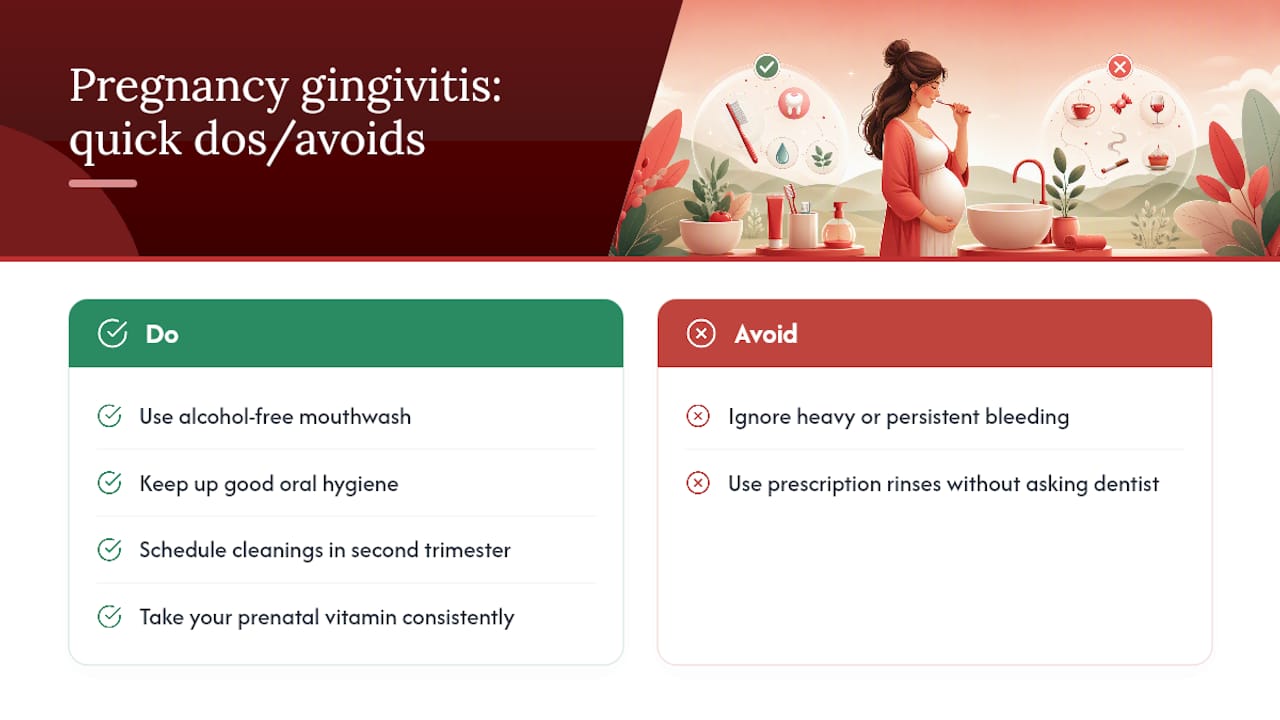
- Brush twice daily for two minutes with a soft-bristled brush.
- Floss once a day, even if your gums bleed at first.
- Rinse with warm salt water after brushing or after vomiting.
- Switch to an alcohol-free mouthwash if your dentist recommends one.
- Call your prenatal care provider before starting any new medication or supplement.
Pro Tip: Dental X-rays and local anesthesia are considered safe when clinically indicated during pregnancy, so don’t skip a needed exam or procedure out of fear.
Key Takeaways
Pregnancy gingivitis responds best to a consistent home routine started immediately, paired with a professional dental visit timed for the second trimester whenever possible.
| Point | Details |
|---|---|
| Start today, not later | Soft-brush twice daily, floss once daily, and rinse with warm salt water when gums feel irritated. |
| Hormones drive the risk | Estrogen and progesterone amplify your gums’ reaction to plaque, with symptoms often peaking in the second trimester. |
| Professional care is safe | Cleanings, SRP, X-rays, and local anesthesia are generally safe in pregnancy, and often preferred in the second trimester. |
| Watch for red flags | Fever, pus, spreading swelling, or sudden tooth mobility mean you should call your dentist right away. |
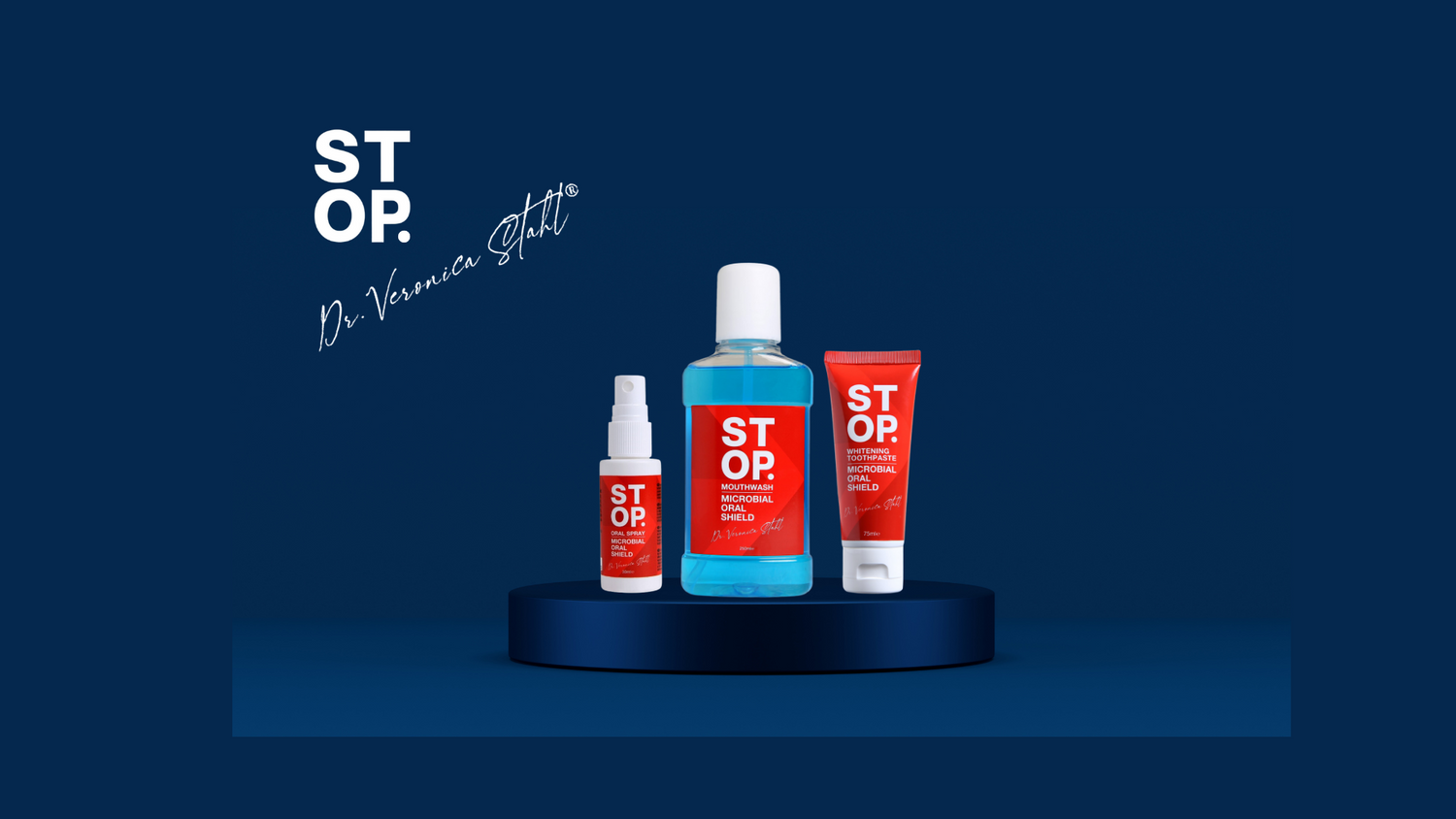
| Consider gentle daily products | Fluoride-free, alcohol-free options like Stop-oralcare’s hemp and Dead Sea mineral line can support sensitive gums alongside professional care. |
Where to Read More
- BMC Pregnancy and Childbirth meta-analysis: the strongest evidence linking periodontal treatment to pregnancy outcomes.
- Cleveland Clinic patient guide: practical home-care checklist.
Discuss any findings here with your dentist and prenatal provider before changing your care plan.
Table of Contents
- What Is Pregnancy Gingivitis and When Does It Start?
- Daily Home Remedies That Reduce Bleeding and Swelling
- Is It Safe to Get Dental Treatment While Pregnant?
- When Should You See a Dentist Right Away?
- How Can You Prevent Gum Problems Before and During Pregnancy?
- What Does the Research Say About Treating Gum Disease in Pregnancy?
- A Dentist’s View on Treating Gum Inflammation Safely
- A Gentle Product Option for Sensitive, Pregnant Gums
- Frequently Asked Questions
- Sources
What Is Pregnancy Gingivitis and When Does It Start?
Pregnancy gingivitis is gum inflammation marked by redness, swelling, and bleeding, most often during brushing or flossing. It stems from two forces acting together: rising levels of estrogen and progesterone that make gum tissue more reactive to irritation, and ordinary plaque buildup along the gumline.
Hormones alone don’t cause the problem. They amplify your gums’ response to the bacterial biofilm that forms daily on your teeth, which is why consistent plaque removal matters even more once you’re pregnant.
Symptoms can begin as early as the first trimester, but most people notice a peak in the second trimester, when hormone levels climb sharply. Government public-health guidance confirms that hormonal shifts raise gingivitis risk throughout pregnancy and recommends brushing twice daily and flossing daily as the baseline defense. For most people, symptoms fade within weeks after delivery, once hormone levels return to normal, though that doesn’t mean you should ignore them in the meantime.
Daily Home Remedies That Reduce Bleeding and Swelling
A consistent routine controls inflammation better than any single product. Here’s a sequence dental professionals commonly recommend for expecting mothers:
- Brush gently for two minutes, morning and night, with a soft-bristled brush and fluoride toothpaste unless your provider has told you otherwise.
- Floss once daily, working the floss along the gumline rather than snapping it between teeth.
- Rinse with warm salt water (about half a teaspoon of salt in a cup of warm water) whenever gums feel irritated.
- If your dentist suggests a mouthwash, choose an alcohol-free formula. Chlorhexidine rinses are sometimes prescribed for more stubborn inflammation, but only use one under a dentist’s direction during pregnancy.
Favor: water throughout the day, low-sugar snacks, and vitamin C–rich foods or your prenatal vitamin. A vitamin deficiency can worsen bleeding gums, so nutrition is part of the treatment, not an afterthought.
Avoid: brushing immediately after vomiting, and starting any systemic antibiotic or over-the-counter topical gum treatment without checking with your prenatal provider first.

Pro Tip: Morning sickness makes brushing miserable for a lot of pregnant people. If toothpaste flavor triggers nausea, switch to a milder one, brush before eating rather than after, and if you’ve just vomited, rinse with a solution of one teaspoon baking soda in a cup of water and wait about an hour before brushing. Brushing right after vomiting can wear down softened enamel.
Always confirm with your prenatal provider before adding any new supplement, herbal rinse, or medication, even one marketed as natural.
Is It Safe to Get Dental Treatment While Pregnant?
Yes, and for gingivitis that isn’t responding to home care, professional treatment is often the faster path to relief. Dentists typically use a mix of these approaches:
- Professional cleaning (prophylaxis) to remove plaque and tartar you can’t reach with a toothbrush.
- Scaling and root planing (SRP) for deeper inflammation below the gumline, when indicated.
- A prescription mouthwash for cases that need more than salt water and an alcohol-free rinse.
- Targeted topical care applied directly by your dental team.
Many clinicians prefer to schedule non-emergency procedures like SRP in the second trimester, which avoids the early window of fetal organ development and sidesteps the discomfort of lying back in a dental chair late in the third trimester, according to clinical guidance on procedure timing. That doesn’t mean waiting is required if you’re in pain or infection is present. Dental X-rays and local anesthesia are generally considered safe when clinically indicated, though tetracycline antibiotics should be avoided during pregnancy. Your dentist and prenatal provider should coordinate on anything beyond routine cleaning.
SRP itself is a straightforward, non-surgical procedure: your dentist or hygienist removes plaque and tartar from tooth surfaces and smooths root surfaces so gums can reattach. It carries far less risk than leaving inflamed, infected gum tissue untreated.
When Should You See a Dentist Right Away?
Most pregnancy gingivitis responds to home care and a routine cleaning. But certain symptoms mean you shouldn’t wait for your next scheduled visit:
- Swelling that’s severe, spreading, or getting worse day to day.
- Any visible pus around the gumline.
- Fever alongside gum pain or swelling.
- Bleeding that’s heavy or won’t stop with normal brushing and flossing.
- A tooth that suddenly feels loose.
- Pain severe enough to interfere with eating or sleeping.
If swelling starts affecting your breathing or swallowing, or you develop a fever, treat that as an emergency and seek care immediately. Otherwise, call both your dentist and your prenatal care provider, mention that you’re pregnant, and describe your symptoms clearly so they can prioritize your visit appropriately.
How Can You Prevent Gum Problems Before and During Pregnancy?
If you’re planning a pregnancy, a dental checkup and cleaning before conception gives you the best head start, since treating existing gum disease ahead of time reduces the inflammation hormones would otherwise amplify. Already pregnant? Prevention still works, just with a tighter routine.
- Get a professional cleaning as early in pregnancy as your dentist recommends.
- Brush twice daily and floss once daily without exception, even when nausea makes it unappealing.
- Quit smoking, which independently raises gum disease risk.
- Eat a balanced diet and take your prenatal vitamins consistently.
- Mention your oral health at prenatal appointments, not just dental ones.
Public-health guidance treats oral care as a core part of prenatal health, not an optional extra. A natural gum-disease prevention routine built before pregnancy carries forward easily once you’re expecting.
What Does the Research Say About Treating Gum Disease in Pregnancy?
A 2024 meta-analysis of nine randomized controlled trials, covering 3,985 pregnant women, found that scaling and root planing combined with mouthwash was linked to a pooled risk reduction of 56% for preterm birth and 67% for low birth weight. The heterogeneity between studies was substantial, so these numbers describe an association worth taking seriously, not a guarantee.
- The European Federation of Periodontology treats periodontal health as a core part of prenatal care.
- EFP guidance states that periodontal therapy is safe during pregnancy and is often best timed for the second trimester.
The clinical takeaway is simple: the evidence supports acting rather than waiting. Untreated inflammation carries more downside than a properly timed cleaning or SRP session, which is exactly why the short action plan at the top of this article starts with brushing tonight and ends with a dental appointment, not the other way around.
A Dentist’s View on Treating Gum Inflammation Safely
Routine dental care during pregnancy is not something to postpone out of caution. Most pregnancy gingivitis improves after delivery on its own, but treating it while you’re pregnant reduces discomfort now and protects against complications later. Before starting any prescription rinse or unfamiliar product, loop in both your dentist and your prenatal provider. That two-way check costs you a phone call and saves you guesswork.
A Gentle Product Option for Sensitive, Pregnant Gums
Between brushing sessions, the right tools matter as much as technique. A soft-bristle brush, an alcohol-free mouthwash, and a calming toothpaste formulated without fluoride can help take the edge off sensitivity while you’re following your dentist’s care plan, not replace it. Stop-oralcare’s hemp and Dead Sea mineral formulas were built around that gentler standard, without the fluoride or alcohol that some pregnant patients are told to limit.
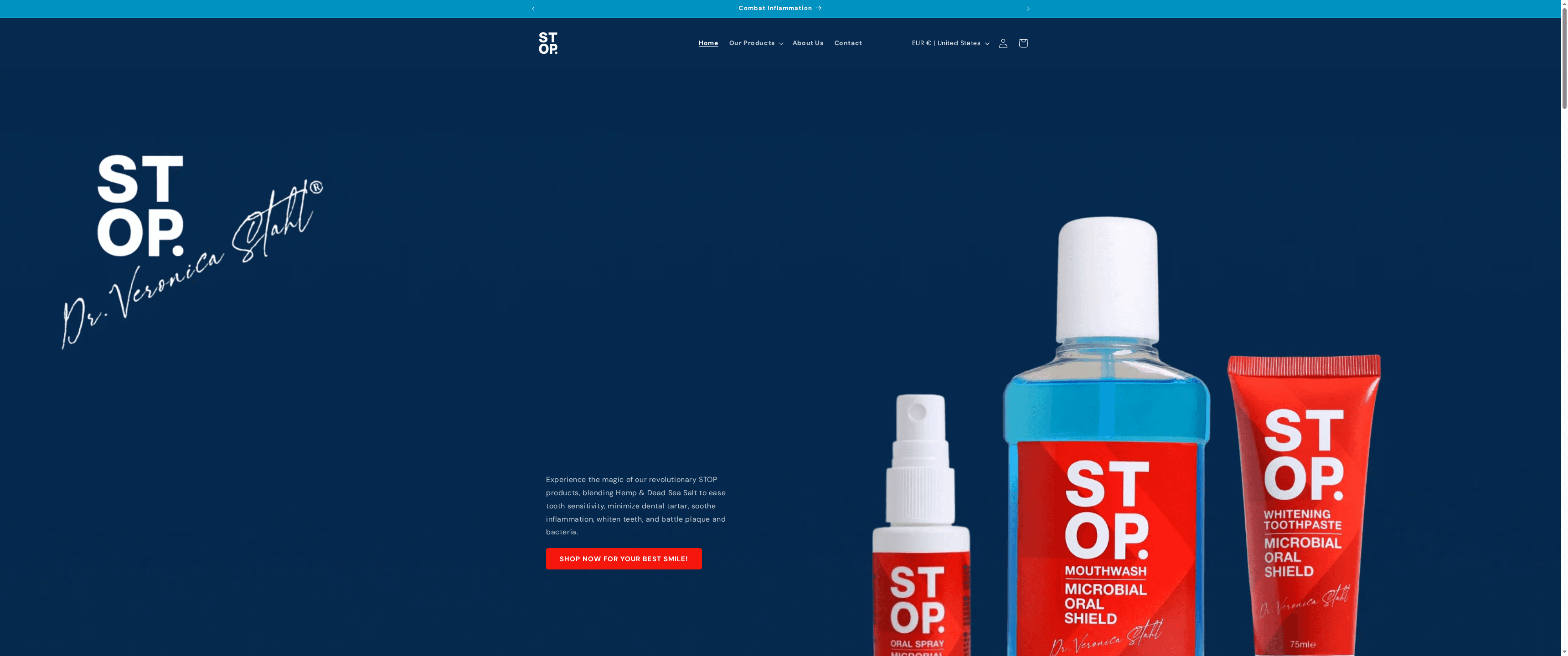
As always, check with your prenatal provider before adding any new product to your routine, and leave prescription-strength treatments like chlorhexidine rinses to your dentist’s direction. If you want to see what a fluoride-free, hemp-based routine looks like, you can browse Stop-oralcare’s oral care line and find a toothpaste or mouthwash suited to sensitive, pregnancy-affected gums.
Frequently Asked Questions
Is bleeding gums during pregnancy always a sign of gingivitis? Usually, yes. Bleeding during brushing or flossing in pregnancy is typically pregnancy gingivitis, but persistent or heavy bleeding still deserves a dentist’s evaluation to rule out other issues.
Can I use regular mouthwash while pregnant? Alcohol-free mouthwash is generally the safer choice during pregnancy. Ask your dentist before using a prescription rinse like chlorhexidine.
Will pregnancy gingivitis go away after I give birth? For most people, yes. Symptoms typically improve within weeks after delivery as hormone levels normalize, though continuing good oral hygiene helps it resolve faster.
Is it safe to get a dental cleaning while pregnant? Yes. Professional cleanings and SRP are generally safe throughout pregnancy, and many dentists prefer scheduling non-emergency procedures in the second trimester.
What foods help with pregnancy gingivitis? Vitamin C-rich foods, plenty of water, and low-sugar snacks support gum health, along with taking your prenatal vitamin consistently.
This article is general information, not a substitute for advice from a qualified doctor. Consult a qualified healthcare professional about your own circumstances before acting on anything here.
Sources
- The impact of scaling and root planning combined with mouthwash during pregnancy on preterm birth and low birth weight: a systematic review and meta-analysis | BMC Pregnancy and Childbirth
- Oral health and pregnancy — European Federation of Periodontology (EFP)
- Dental care and pregnancy timing: procedural safety considerations (PMC5564152)
- Pregnancy Gingivitis: Bleeding Gums, Treatment & …
- Canada
Recommended
- Early Periodontitis Remedies: What to Do Now – Stop Oral Care
- How to Prevent Gingivitis Naturally: Simple Steps for Healthy Gums – Stop Oral Care
- Gingival Recession: Remedies, Treatments, and Prevention – Stop Oral Care
- Effective Natural Mouthwash for Gum Disease: 5 Home Remedies Backed by – Stop Oral Care