

If you have been diagnosed with early-stage periodontitis, the single most effective response is to begin strict daily interdental cleaning and twice-daily brushing with a soft-bristled or electric toothbrush, use an antiseptic rinse if your clinician recommends one, stop smoking immediately, and schedule a dental appointment for professional scaling and root planing within 2–4 weeks.
Start with these steps today:
- Clean between every tooth once daily using interdental brushes sized to fit each space without forcing.
- Brush twice daily for two minutes using a soft-bristled or oscillating electric toothbrush and a gentle technique (see the Modified Bass method below).
- Rinse with a 0.12–0.2% chlorhexidine mouthwash only if your dentist has recommended it; do not use it indefinitely.
- Stop all tobacco use. Smoking significantly impairs periodontal healing and increases recurrence risk.
- Avoid alcohol-based or highly acidic rinses that can irritate inflamed tissue.
- Contact a dental practice in Belgium to book a scaling and root planing session within 2–4 weeks.
Pro Tip: When selecting interdental brushes, choose the largest size that passes through each space without resistance. Forcing an oversized brush tears healing tissue. Your pharmacist or dental hygienist can help you identify the correct sizes for different areas of your mouth.
Do not self-prescribe systemic antibiotics or substitute natural remedies for professional care; both decisions delay the clinical treatment that is necessary to halt bone loss.
Key Takeaways
Early periodontitis requires immediate professional scaling and root planing combined with rigorous daily home care; natural adjuncts support but cannot replace clinical treatment.
| Point | Details |
|---|---|
| Start home care immediately | Begin daily interdental cleaning and twice-daily soft-bristled brushing before your first dental appointment. |
| Book professional SRP within 2–4 weeks | Scaling and root planing is the first-line treatment; it reduces pocket depth by approximately 1.1 mm for 4–6 mm pockets. |
| Antibiotics require a prescription | Chlorhexidine, local antimicrobials, and systemic antibiotics are clinician-prescribed adjuncts, not self-administered treatments. |
| Natural adjuncts are supportive only | Probiotics (L. reuteri) and vitamins C and D show modest benefits alongside SRP; they do not remove subgingival calculus. |
| Stop-oralcare as a maintenance adjunct | Stop-oralcare’s alcohol-free, hemp-formulated products are available in Belgium for use alongside professional periodontal maintenance. |
Table of Contents
- What is early-stage periodontitis, and how is it different from gingivitis?
- Home-care measures you can start today to reduce inflammation
- What does a dentist do for early-stage periodontitis?
- When are antiseptics, local antimicrobials, and systemic antibiotics indicated?
- Which lifestyle factors accelerate periodontitis, and how do you modify them?
- Do natural remedies help with early gum disease?
- When should you see a dentist or periodontist?
- What is the realistic long-term outlook after treatment?
- Why early action matters more than most patients realize
- Stop-oralcare natural oral care: a practical adjunct for Belgian patients
- Sources
What is early-stage periodontitis, and how is it different from gingivitis?
Gingivitis is a reversible inflammation of the gingival tissue caused by bacterial plaque accumulation. Early-stage periodontitis, by contrast, involves the formation of periodontal pockets (typically around 4 mm depth) and the beginning of alveolar bone loss, changes that cannot be fully reversed. The CDC classifies periodontitis as a chronic inflammatory condition that leads to progressive tissue and bone destruction; professional treatment can slow and manage it, but not undo structural damage already sustained.
Common signs of early periodontitis include:
- Bleeding on brushing or flossing, which signals active gingival inflammation.
- Pocket depths of approximately 4 mm on probing by a clinician.
- Persistent halitosis not resolved by brushing.
- Mild gum recession exposing the root surface.
- Occasional tenderness or sensitivity along the gumline.
Early-stage periodontitis is manageable but not fully reversible. The clinical goal is to halt progression and stabilize the attachment level, not to regenerate lost bone through home care alone. The European Federation of Periodontology (EFP) provides patient-facing assessment tools and S3-level guideline recommendations for staging and managing periodontitis, including Stage I and Stage II disease relevant to early presentations.
The NHS confirms that early-stage gum disease is often controlled by improved home care and professional cleanings, but once the disease has progressed beyond gingivitis, professional management is required to halt further deterioration.
Home-care measures you can start today to reduce inflammation
Effective self-care after a periodontitis diagnosis goes well beyond routine brushing. The MSD Manual specifies that professional subgingival debridement must be paired with a strict personal oral-hygiene program; home care alone cannot remove subgingival calculus, but it substantially reduces the bacterial load that drives inflammation between professional visits.
Toothbrushing technique
Use a soft-bristled manual brush or an oscillating-rotating electric toothbrush. The Modified Bass technique is the standard recommendation for periodontal patients:
- Position the brush at a 45-degree angle to the gumline, with bristle tips directed toward the sulcus.
- Apply light pressure and use short horizontal vibrating strokes (approximately 2 mm amplitude).
- Roll the brush coronally after several strokes to sweep debris away from the gumline.
- Brush all surfaces (buccal, lingual, occlusal) for a minimum of two minutes, twice daily.
Electric toothbrushes with oscillating-rotating heads consistently outperform manual brushes for plaque removal in clinical comparisons; if manual dexterity is limited, an electric brush is the more reliable option. For a detailed step-by-step gum care protocol, the Y-Brush gum care guide provides practical brushing mechanics.
Interdental cleaning
Interdental brushes are the preferred tool for periodontal patients because they access the concave root surfaces adjacent to pockets more effectively than floss. Use floss only in tight contacts where an interdental brush cannot pass. For a comprehensive overview of interdental brush sizing, water flossers, and flossing technique, the interdental cleaning guide from CWD Dental Group covers the full range of options. After scaling and root planing, avoid vigorous flossing in treated areas for the first 48–72 hours to allow initial tissue healing.
Rinses and comfort measures
- Chlorhexidine (0.12–0.2%): Use short-term as directed by your dentist. It reduces bacterial load effectively but causes tooth staining and taste alteration with prolonged use.
- Salt-water rinse: Dissolve half a teaspoon of salt in 250 mL of warm water and rinse gently for 30 seconds. This provides short-term comfort and mild antimicrobial benefit. Follow the step-by-step salt rinse guide for correct preparation and frequency.
- Alcohol-free essential-oil rinses: These are a reasonable maintenance option after the acute phase; avoid alcohol-containing formulations, which dehydrate inflamed tissue.
- Avoid: Undiluted apple cider vinegar, hydrogen peroxide at concentrations above 1.5%, and any abrasive home preparations that can erode enamel or irritate healing tissue.
For pain management during acute inflammation, acetaminophen (paracetamol) or ibuprofen at standard doses is generally appropriate; confirm with your clinician if you take anticoagulants or have renal concerns.
Pro Tip: Link your interdental cleaning to an existing daily habit, such as showering or preparing for bed, and keep your interdental brushes visible on the bathroom counter. Patients who attach new oral-hygiene steps to established routines show significantly higher long-term compliance. See the healthy gums checklist for a structured daily routine.
What does a dentist do for early-stage periodontitis?
The first-line clinical intervention for all forms of periodontitis is professional subgingival debridement, commonly called scaling and root planing (SRP) or, in French-language clinical contexts, détartrage-surfaçage radiculaire (DSR). According to the MSD Manual’s professional edition, antibiotics and surgery are reserved for persistent or advanced disease; SRP combined with a strict oral-hygiene program is the recommended first phase.
What happens during scaling and root planing
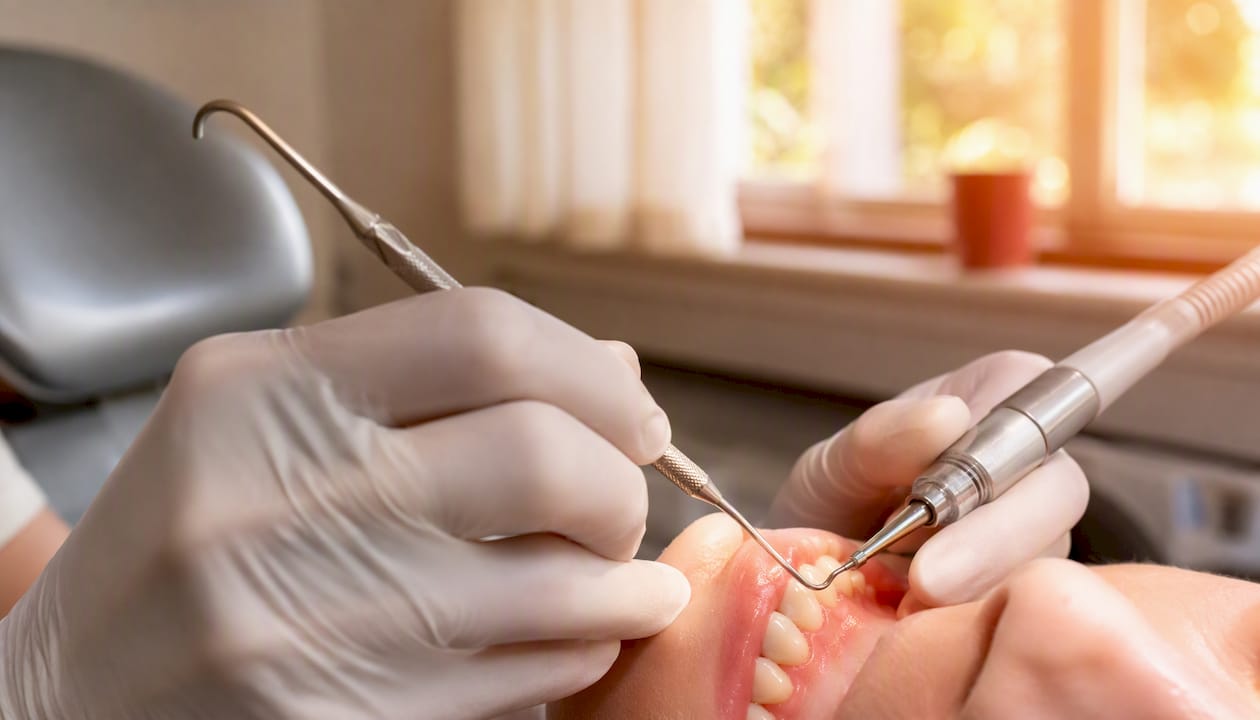
A typical SRP course for early-stage disease involves 2–4 sessions, usually organized by quadrant or half-mouth. The clinician uses hand instruments (curettes) and/or ultrasonic scalers to remove calculus and disrupted biofilm from root surfaces below the gumline. Local anesthesia is used when pockets are deep or the patient reports sensitivity. At the end of each session, antiseptic irrigation (commonly chlorhexidine) is applied within the treated pockets. Mayo Clinic confirms that topical or oral antibiotics may be added as adjuncts in selected cases.
Expected outcomes and reevaluation
Meta-analyses and clinical reviews show that SRP reduces pocket depth by approximately 1.1 mm for pockets in the 4–6 mm range and by approximately 2.2 mm for pockets greater than 7 mm, with formal reevaluation typically scheduled at 6–8 weeks post-treatment. Residual pockets greater than 5 mm after reevaluation may indicate a need for surgical intervention; early-stage disease rarely requires surgery when home care is rigorous.
Realistic expectations: inflammation and bleeding on probing typically reduce substantially within 2–4 weeks. Pocket depth improvements are measurable at the 6–8 week reevaluation. Alveolar bone that has already been lost does not regenerate through nonsurgical treatment alone.
Approximate costs in Belgium
Professional periodontal treatment costs in Belgium vary by practice, location, and the number of sessions required. As a general orientation, a single SRP session (per quadrant or half-mouth) typically ranges from approximately €60 to €150 per session in private practice; some costs may be partially reimbursed through Belgian mandatory health insurance (INAMI/RIZIV) depending on the patient’s coverage category and the specific nomenclature codes applied. Verify current reimbursement conditions directly with your dental practice and your mutualité/ziekenfonds before treatment.
| Treatment category | What it involves | When used | Typical follow-up |
|---|---|---|---|
| Nonsurgical (SRP) | Subgingival scaling and root planing | First-line for all stages | Reevaluation at 6–8 weeks |
| Surgical | Flap surgery, bone grafting, guided regeneration | Residual pockets >5 mm post-SRP | 4–6 weeks post-op, then maintenance |
| Maintenance | Professional cleaning, pocket monitoring | Lifelong after active treatment | Every 3–4 months |
When are antiseptics, local antimicrobials, and systemic antibiotics indicated?
Chlorhexidine (CHX) as an antiseptic adjunct
It is used short-term as an adjunct to SRP, not as a standalone treatment. Typical short-term protocols run 2–4 weeks. Prolonged use causes extrinsic tooth staining, taste alteration, and, in some patients, mucosal irritation. Chlorhexidine does not penetrate subgingival biofilm effectively enough to substitute for mechanical debridement.
Locally applied antimicrobials
When isolated pockets persist after SRP, clinicians may place locally delivered antibiotic formulations directly into the pocket. Examples used in periodontal practice include:
- Minocycline microspheres: Delivered into residual pockets by the clinician; provide sustained local antibiotic concentration without systemic exposure.
- Doxycycline gel (e.g., Atridox): A biodegradable gel placed subgingivally; releases doxycycline over approximately 7 days.
These agents are applied by the clinician, not self-administered. The Merck Manual’s professional edition specifies that locally applied agents are adjuncts for isolated persistent pockets, not first-line therapy for all patients.
Systemic antibiotics: indications and safety
Systemic antibiotics are prescribed by the dentist for specific clinical indications, not routinely for early-stage disease. Common protocols referenced in periodontal literature include:
- Amoxicillin ± metronidazole: Used for aggressive or refractory periodontitis, typically in combination.
- Doxycycline (low-dose): Sometimes used for its anti-inflammatory properties in adjunctive protocols.
Which lifestyle factors accelerate periodontitis, and how do you modify them?
Periodontitis progression is substantially influenced by modifiable systemic and behavioral risk factors. Addressing these factors in parallel with professional treatment improves both healing and long-term stability.
- Smoking cessation: Tobacco use impairs neutrophil function, reduces gingival blood flow, and masks clinical signs of inflammation, making disease harder to detect and treat. Smokers show significantly poorer SRP outcomes than non-smokers. Belgian patients can access cessation support through their general practitioner, the Tabacstop program (0800 111 00), and INAMI-reimbursed nicotine replacement therapy.
- Blood sugar control: Poorly controlled diabetes (HbA1c above 7%) is associated with more severe periodontal disease and slower healing. If you have diabetes, request an HbA1c measurement before or concurrent with periodontal treatment and share the result with your dental team.
- Medication review for xerostomia: Dozens of commonly prescribed drugs, including antihypertensives, antihistamines, and antidepressants, reduce salivary flow. Saliva is a critical antimicrobial defense. Discuss dry mouth with your prescribing physician; saliva substitutes, sugar-free xylitol gum, and adequate hydration can partially compensate.
- Occlusal factors and dental appliances: Bruxism (tooth grinding) and poorly fitting restorations can create additional mechanical stress on the periodontium. Inform your dentist if you grind at night; an occlusal splint may be part of the overall treatment plan.
Pro Tip: Smoking cessation produces measurable improvements in periodontal pocket depth and bleeding scores within 6–12 months of quitting. Patients who stop smoking before SRP consistently achieve better pocket-depth reductions than those who continue. Quitting before your first SRP session, not after, maximizes the clinical benefit of professional treatment.
Do natural remedies help with early gum disease?
Natural and complementary approaches can serve as adjuncts to professional periodontal care, but they cannot remove subgingival calculus or substitute for mechanical debridement. This distinction is clinically non-negotiable.
The most evidence-supported adjuncts, as summarized by Oral Health HQ’s review of science-backed methods, include:
- Oral probiotics (Lactobacillus reuteri): A 2020 systematic review found that probiotics used alongside SRP show modest improvements in probing depth and bleeding on probing compared to SRP alone. These are modest but reproducible improvements. Probiotic lozenges or chewable tablets containing L. reuteri DSM 17938 and ATCC PTA 5289 are the strains most studied in periodontal trials.
- Vitamin C: Ascorbic acid is required for collagen synthesis and gingival tissue integrity. Deficiency is associated with more severe gingival inflammation. Supplementation at 250–500 mg daily is reasonable for patients with low dietary intake, though evidence for supplementation in non-deficient patients is limited.
- Vitamin D: Low serum vitamin D is associated with increased periodontal disease severity in observational studies. Supplementation at 800–2,000 IU daily is within established safety ranges and may support immune modulation in the periodontium.
- Coenzyme Q10 (CoQ10): Small trials suggest topical and oral CoQ10 may reduce gingival inflammation as an adjunct; evidence quality is low to moderate and effect sizes are modest.
- Omega-3 fatty acids: Anti-inflammatory properties of EPA and DHA have been studied in periodontal contexts; some trials report modest reductions in gingival inflammation with supplementation at 1–3 g daily.
For guidance on evidence-backed natural rinse options, the natural mouthwash guide provides a structured review of home rinse options with safety notes. Additional strategies for improving gum health naturally are covered in the Stop-oralcare natural gum health guide.
What to avoid
- Undiluted apple cider vinegar: Highly acidic; erodes enamel and irritates inflamed tissue. If used at all, dilute to no more than 1 teaspoon per 250 mL water and do not use daily.
- Undiluted essential oils (clove, oregano, tea tree): Cytotoxic to gingival fibroblasts at high concentrations; use only in formulated, concentration-controlled products.
- Unregulated antibiotic substitutes: Colloidal silver and similar products lack clinical evidence and carry safety risks; they are not recognized in evidence-based periodontal guidelines.
- Oil pulling as a primary treatment: May provide mild plaque reduction as an adjunct but has no evidence for subgingival effect; it cannot replace brushing, interdental cleaning, or professional care.
When should you see a dentist or periodontist?
Book an appointment within 2–4 weeks of noticing signs of early periodontitis. If you experience acute pain, rapid gum recession, tooth mobility, or a periodontal abscess, seek care within 24–48 hours.
What the dentist will assess
- Full-mouth pocket charting (recording depths at 6 sites per tooth).
- Bleeding on probing scores to quantify active inflammation.
- Periapical or panoramic radiographs to assess alveolar bone levels.
- Medical history review, including medications, systemic conditions, and smoking status.
- Diagnostic threshold: pockets at or above 4 mm with radiographic bone loss confirm periodontitis staging.
Questions to ask at your appointment
- What stage and grade of periodontitis do I have, and does that change the treatment plan?
- How many SRP sessions will I need, and what is the total estimated cost?
- Will antibiotics be prescribed, and if so, which type and for how long?
- What is the reevaluation schedule, and what criteria determine whether I need surgery?
- Is my coverage through my mutualité/ziekenfonds applicable to any part of this treatment?
What to bring
- A complete list of current medications (including supplements).
- Most recent HbA1c result if you have diabetes.
- Smoking history (pack-years and current status).
- Any previous dental radiographs if available.
If your general dentist does not perform SRP or if your disease is more advanced, request a referral to a periodontist (parodontologue). Periodontists in Belgium practice in private specialist clinics and in university dental centers such as those affiliated with KU Leuven, UCLouvain, and UGent.
What is the realistic long-term outlook after treatment?
Early-stage periodontitis treated promptly carries a favorable prognosis. The typical healing trajectory after SRP follows a predictable sequence:
- Weeks 1–4: Acute inflammation resolves; bleeding on probing decreases; tissue color and contour normalize.
- Weeks 6–8: Formal reevaluation; pocket depth reductions are measurable (approximately 1.1 mm for 4–6 mm pockets, per clinical meta-analysis data).
- Months 3–6: Continued tissue maturation; patients with rigorous home care show stable or further improved attachment levels.
Periodontitis is a chronic condition. The MSD Manual emphasizes that initial professional therapy functions as a clinical reset; long-term control depends on daily interdental cleaning and regular professional monitoring. Without maintenance, recurrence is common within 12–24 months.
Maintenance schedule and costs in Belgium
| Maintenance parameter | Typical recommendation |
|---|---|
| Periodontal maintenance interval | Every 3–4 months for the first 1–2 years; may extend to every 6 months if stable |
| Monitoring at each visit | Pocket charting, bleeding scores, radiographs as indicated |
| Approximate cost per maintenance visit (Belgium) | €60–€120 per session (varies by practice; partial INAMI/RIZIV reimbursement may apply) |
Alveolar bone lost before treatment does not typically regenerate through nonsurgical care. Bone regeneration, when clinically indicated, requires surgical procedures such as guided bone regeneration or bone grafting, which are outside the scope of Stage I management but relevant if disease has progressed further. The gum disease prevention guide provides additional context on long-term prevention strategies applicable to patients in maintenance.
Why early action matters more than most patients realize
The clinical evidence on early periodontitis is unambiguous on one point: the window between diagnosis and professional treatment is the most consequential variable in long-term outcomes. Patients who begin SRP within weeks of diagnosis, rather than months, consistently show better pocket-depth reductions and lower rates of disease progression. Natural adjuncts, including probiotics, vitamins, and carefully formulated rinses, contribute meaningfully to this picture, but only when layered onto professional treatment, not substituted for it.
What tends to be underestimated is the chronic nature of periodontal management. Many patients complete their initial SRP course, see their symptoms resolve, and reduce the frequency of professional visits. That pattern is precisely how recurrence develops. The maintenance phase, every 3–4 months of professional monitoring combined with rigorous daily interdental cleaning, is not optional follow-up. It is the treatment.
Natural products formulated with anti-inflammatory and antimicrobial ingredients can support the maintenance phase in a meaningful way, particularly for patients who are committed to daily home care but want to optimize the quality of their rinse or toothpaste. The evidence base for specific natural ingredients, including hemp-derived compounds and mineral-rich formulations, continues to develop. Selecting products with transparent ingredient disclosure and a documented rationale for their formulation is the appropriate standard for adjunctive home care.
Stop-oralcare natural oral care: a practical adjunct for Belgian patients
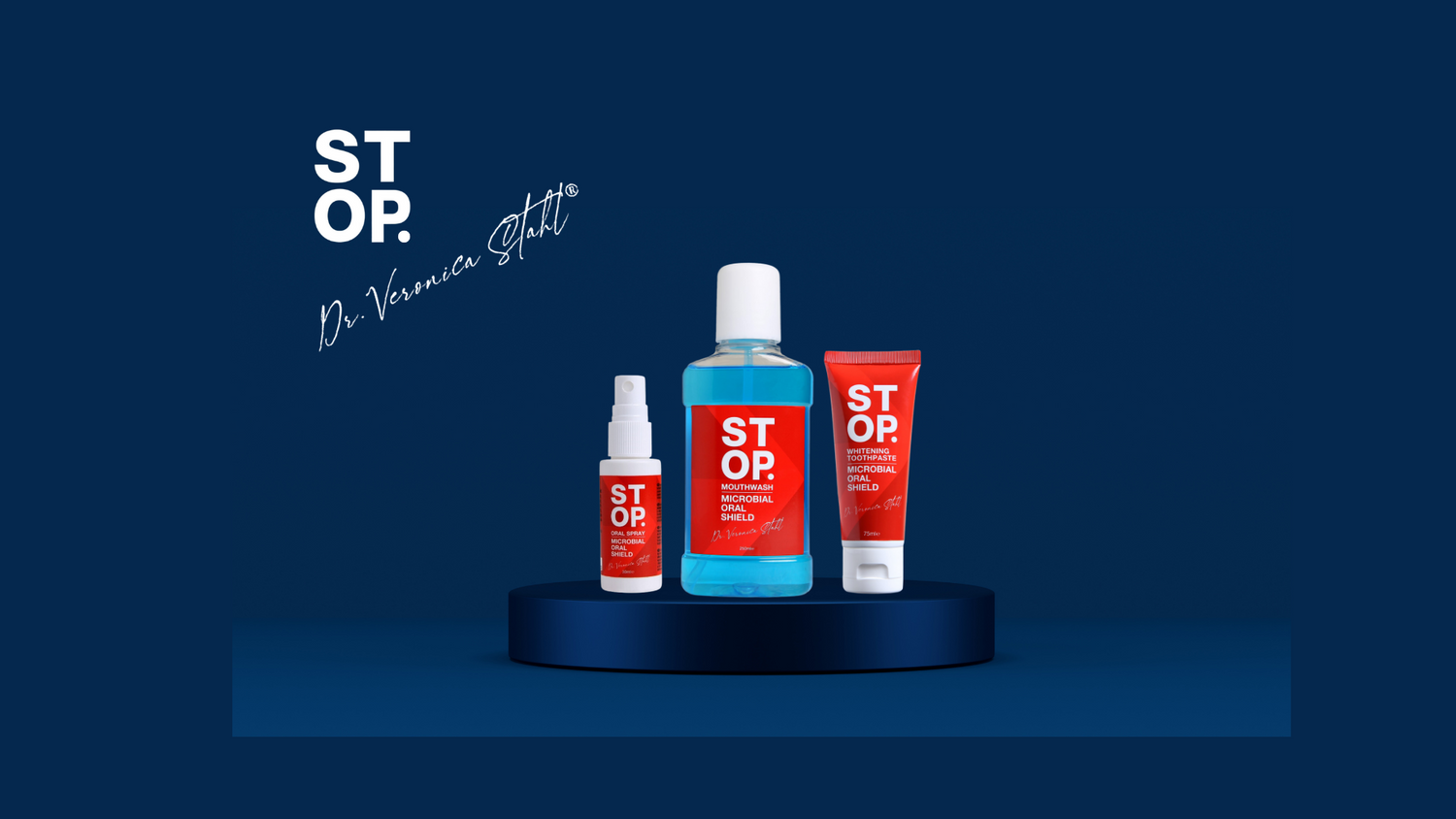
For patients managing early periodontitis, the quality of daily home care products matters alongside technique. Stop-oralcare offers a fluoride-free oral care line formulated with hemp and Dead Sea minerals, designed specifically for patients with sensitive gums and those seeking natural, alcohol-free alternatives to conventional products.
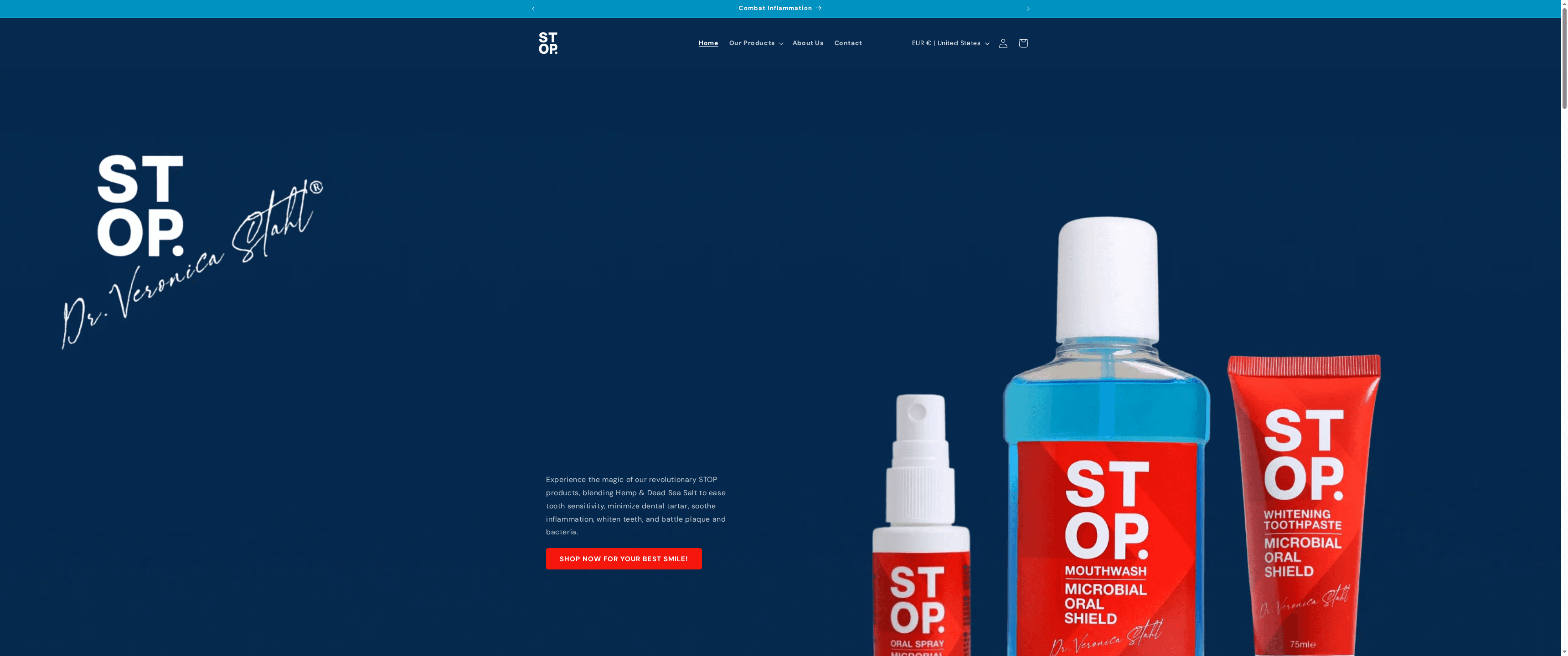
The Stop-oralcare range, including toothpaste, mouthwash, and oral spray, is available for direct order in Belgium and is formulated to complement, not replace, professional periodontal treatment. The alcohol-free mouthwash is particularly relevant for patients in the post-SRP healing phase, where alcohol-containing rinses can irritate recovering tissue. Before adding any new oral care product to your regimen, discuss it with your treating dentist, particularly if you are on medications or have specific mucosal sensitivities.
Patients committed to the maintenance phase of periodontal care can explore the full Stop-oralcare product range and place an order directly at Stop-oralcare.
Sources
The following authoritative resources were used in preparing this article and are recommended for deeper reading:
- About Periodontal (Gum) Disease | Oral Health | CDC
- Parodontite - Chirurgie dentaire - Édition professionnelle du Manuel MSD
- Periodontitis - Diagnosis and treatment - Mayo Clinic
- EFP — Assess your gum health
For local cost and reimbursement details specific to Belgium, contact your dental practice directly and consult your mutualité/ziekenfonds for current INAMI/RIZIV nomenclature coverage applicable to periodontal treatment.
This article provides general health information and is not a substitute for professional dental or medical advice. Consult a qualified dental professional for diagnosis, treatment planning, and guidance specific to your clinical situation.
Recommended
- Effective Natural Mouthwash for Gum Disease: 5 Home Remedies Backed by – Stop Oral Care
- Natural Mouthwash for Periodontal Disease: A Practical Guide to Safer – Stop Oral Care
- Natural Remedy for Bad Breath: A Practical How‑To Guide – Stop Oral Care
- Natural Remedy for Bleeding Gums: A Step‑by‑Step Guide to Healing Your – Stop Oral Care