


Dietary change can lower gingival bleeding within four to eight weeks when layered onto normal brushing and flossing. Randomized trials from the Journal of Clinical Periodontology and a BMC Oral Health pilot study show measurable drops in bleeding on probing after four weeks of a low-carbohydrate, omega-3 and antioxidant-rich diet. The Swiss Society of Periodontology now treats nutrition as a legitimate adjunct to periodontal therapy, not a replacement for it. Diet changes the terrain your gums live in, but it does not remove plaque your toothbrush missed.
TL;DR:
- Reducing ultra-processed foods can lower gum bleeding by about half within four weeks, even if plaque levels remain unchanged.
- Omega-3 fatty acids, vitamin C, antioxidants, and fiber are key nutrients linked to decreased gingival inflammation and improved clinical outcomes.
- Improving gum health through diet alone is limited if smoking, poor blood sugar control, or inadequate oral hygiene persist beyond eight weeks.
- Plant-based omega-3 sources like flaxseed have lower conversion rates to active forms, so supplements are advisable if fish isn’t regularly eaten.
- Consistent adherence to a low-carbohydrate, antioxidant-rich diet combined with regular brushing and professional cleanings offers the best chance for reducing gum inflammation.
Table of Contents
- Gingival Inflammation Diet: What the Clinical Evidence Actually Shows
- Foods That Reduce Gum Inflammation: What to Eat Daily
- Foods That Increase Gum Inflammation and What to Swap Instead
- A 4 to 8 Week Plan to Heal Gum Inflammation With Diet
- How Diet Fits Into Your Overall Gum Care Routine
- What the Research Still Doesn’t Tell Us
- Medications, Diet, and Gum Health: What to Watch For
- The Real Takeaway on Diet and Gum Health
- Adjunct Products for an Anti-Inflammatory Gum Care Routine
- Sources
- FAQ
Gingival Inflammation Diet: What the Clinical Evidence Actually Shows
The strongest data on a gingival inflammation diet comes from a small but well-designed pilot trial published in BMC Oral Health. Researchers put an experimental group on a diet low in refined carbohydrates and high in omega-3 fatty acids, vitamin C, antioxidants, and fiber, while a control group kept eating normally. The gingival index dropped alongside it.
Here is the detail that should get your attention: plaque scores barely moved between groups. The people whose gums bled less were not necessarily brushing better or flossing more diligently. Their inflammatory response to the same amount of plaque had simply changed. That is a host-modulation effect, meaning diet altered how the immune system reacted to bacterial buildup rather than reducing the buildup itself.
A separate trial reported in PMC reinforces this pattern. Investigators used regression analysis to connect specific dietary variables, carbohydrate reduction and omega-3 intake among them, directly to improvements in bleeding on probing (BOP) and gingival index (GI) scores. The tighter someone stuck to the lower-carbohydrate, higher-omega-3 protocol, the better their clinical numbers looked.
A 2025 randomized controlled trial published in the Journal of Clinical Periodontology adds a newer angle. Instead of prescribing a complex nutrient checklist, researchers simply advised patients to cut ultra-processed foods. That single instruction predicted greater reductions in full-mouth bleeding scores at eight and sixteen weeks, and the dietary improvements held up over the longer follow-up window.
What patterns show up across these trials:
- Reductions in gingival bleeding often appear within four weeks of dietary change.
- Bleeding improves even when plaque scores stay flat, pointing to an immune and inflammatory mechanism rather than a purely mechanical one.
- Omega-3 fatty acids, vitamin C, antioxidants, and fiber appear repeatedly as the nutrients driving clinical change.
- Ultra-processed food reduction alone, without a full nutrient overhaul, produces measurable gains at 8 to 16 weeks.
Trials consistently found bleeding on probing dropping by approximately half within a month of dietary change, even before any change in how much plaque patients were carrying. That is the clearest signal in the current research: what you eat changes how aggressively your gums react to the bacteria already there.
The catch is sample size. These are pilot studies and single-center trials with a few dozen participants each, not the thousand-patient trials that anchor most nutrition guidelines. The direction of the effect is consistent across independent research groups, which carries weight, but the exact magnitude you should expect from your own gums remains an open question.
Foods That Reduce Gum Inflammation: What to Eat Daily
Translating the trial diets into a plate is straightforward once you know which nutrients did the work. Four categories show up again and again in the research: omega-3 fatty acids, vitamin C, polyphenols and antioxidants, and fiber.
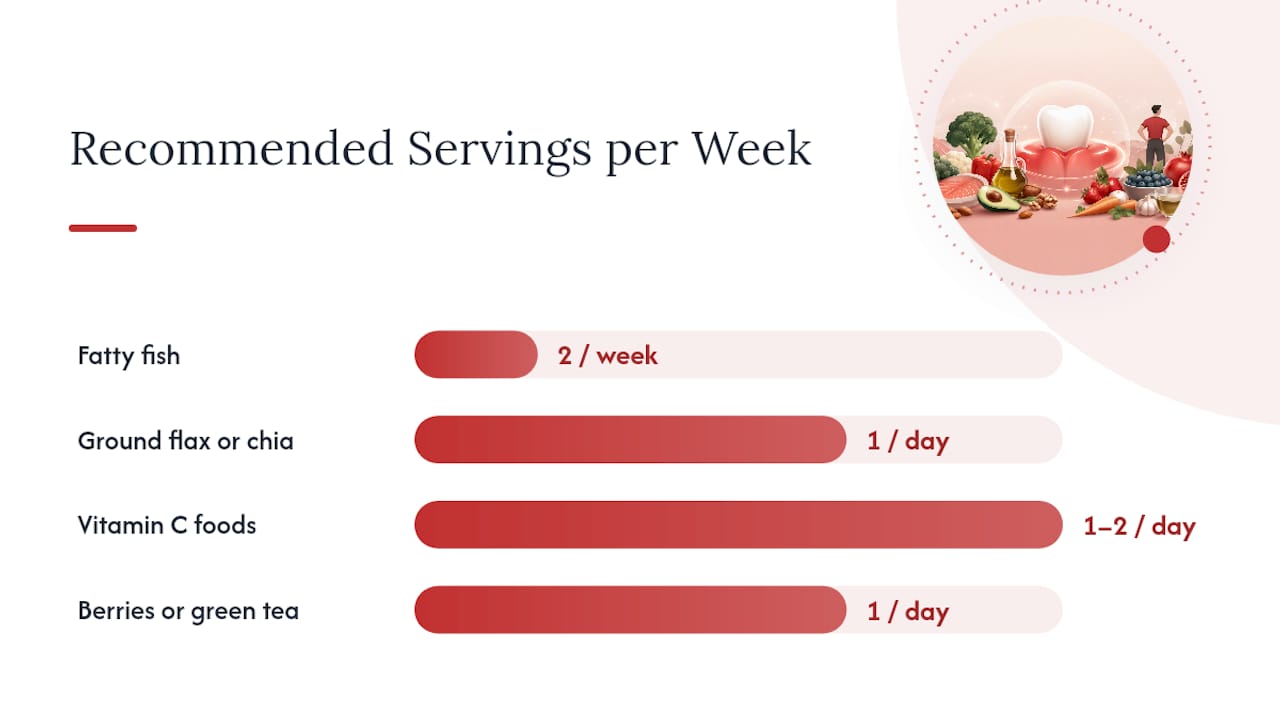
Omega-3 fatty acids anchor most successful protocols. Fatty fish like salmon, mackerel, and sardines twice a week supplies the EPA and DHA forms directly, the versions your body uses most efficiently. If fish isn’t part of your routine, a daily tablespoon of ground flaxseed or chia seeds delivers ALA, the plant-based omega-3. Multiple clinical studies link higher omega-3 intake to lower periodontal inflammation and reduced inflammatory cytokines, the signaling molecules that drive tissue swelling.
Vitamin C matters specifically for gum tissue because it is required to build and repair collagen, the structural protein holding gingival fibers together. Two kiwis or one red bell pepper covers a full day’s need in a single serving. Citrus fruits, strawberries, and broccoli work as easy rotations if you want variety rather than the same snack daily.
Polyphenols and antioxidants come from berries, green tea, and coffee, and a narrative review in the International Journal of Molecular Sciences ties Mediterranean-style eating patterns and green tea compounds like EGCG to better periodontal outcomes across multiple studies. A daily cup of green tea alongside a handful of blueberries or blackberries checks this box without much effort.
Fiber from vegetables and legumes does double duty. It feeds a healthier oral and gut microbiome, and it slows the absorption of any carbohydrates eaten alongside it, which blunts the blood sugar spike that can worsen systemic inflammation.
A practical daily target looks like this:
- 2 servings of fatty fish per week, or a daily tablespoon of ground flax or chia if you skip fish
- 1 to 2 vitamin C-rich foods daily (citrus, bell pepper, kiwi, broccoli)
- A daily serving of berries or green tea for polyphenols
- Vegetables or legumes at most meals for fiber and glycemic control
- Nuts (almonds, walnuts) as a snack in place of refined-carbohydrate options
Pro Tip: If you’re vegetarian or vegan and relying on flax or chia for omega-3s, know that ALA conversion to the more bioactive EPA and DHA forms is inefficient in most people, often under 10%. Consider an algae-based omega-3 supplement if fish isn’t on the table at all.
Foods That Increase Gum Inflammation and What to Swap Instead
The 2025 randomized controlled trial on ultra-processed food reduction offers the clearest mechanism for what to avoid. Highly processed meals and sugary foods spike blood sugar quickly, and that postprandial glucose spike triggers a short-term inflammatory response throughout the body. Repeat that spike several times a day, every day, and you’re feeding chronic low-grade inflammation that shows up in gum tissue along with everywhere else. These foods also tend to disrupt the balance of bacteria in the mouth, a shift researchers call dysbiosis, favoring the species most associated with gingivitis.
The main offenders, in order of impact:
- Sugary drinks (soda, sweetened coffee, fruit juice concentrates) deliver the fastest, largest blood sugar spikes of anything in a typical diet.
- Refined flour products (white bread, most crackers, pastries) break down into sugar almost as quickly as drinking it straight.
- Packaged snack foods combine refined carbohydrates with preservatives and additives that offer no nutritional counterbalance.
- Fried foods raise levels of oxidized fats that contribute to systemic inflammation.
- High omega-6 seed oils (soybean, corn, sunflower used heavily in processed food) shift the body’s fatty acid balance away from the anti-inflammatory profile omega-3s support.
- Trans fats, still present in some margarines and commercially fried items, are among the most consistently flagged fats in dietary intervention protocols for gum health.
None of this requires eliminating entire food groups. Swap soda for sparkling water with citrus, trade white bread for whole grain, and cook with olive oil instead of a seed oil blend. Keep a simple shopping checklist: whole fruit instead of fruit snacks, nuts instead of chips, and home-cooked meals instead of packaged ones whenever your schedule allows it.
A 4 to 8 Week Plan to Heal Gum Inflammation With Diet
The trials that produced measurable results didn’t ask patients to overhaul their entire life overnight. They asked for consistent adherence to a handful of specific changes, tracked over a defined window. You can build the same structure at home.
A sample day that hits the targets from the research:
- Breakfast: Greek yogurt with a tablespoon of chia seeds, a handful of blueberries, and a drizzle of honey instead of sugar.
- Mid-morning: One kiwi or a small handful of almonds.
- Lunch: A large salad with leafy greens, grilled salmon or chickpeas, olive oil dressing, and a side of whole grain bread.
- Afternoon: Green tea and a piece of dark chocolate (70% or higher cocoa).
- Dinner: Roasted vegetables, a lean protein, and a fiber-rich side like lentils or quinoa instead of white rice.
Track your progress the way the trials did. Check for bleeding when you brush each morning and note it in a phone app or a simple notebook. Take a photo of your gums weekly under the same lighting so you have a visual comparison. The BMC pilot trial found the biggest early changes by week four, with further stabilization by week eight, so those are the two checkpoints worth marking on a calendar.
Adherence, not perfection, decides whether this works. Meal prep on a weekend day so the ultra-processed snack in the pantry isn’t the easiest option at 3 p.m. on a Tuesday. If you share a kitchen with a partner or family, get them eating the same berries and fish, because a household stocked with chips undermines your own resolve faster than willpower can compensate.
Pro Tip: Don’t wait for a special occasion to start. The four-week clock begins the day you make the first swap, so start with breakfast tomorrow instead of planning a “clean start” for next Monday.
How Diet Fits Into Your Overall Gum Care Routine
Diet is an adjunct, not a substitute. The Swiss Society of Periodontology’s position paper is explicit that nutrition should be integrated across every stage of periodontal care, from active treatment through long-term maintenance, but always alongside mechanical therapy, not instead of it. Brushing twice daily, flossing, and regular professional cleanings remain the foundation.
The reason clinical bleeding can drop without a matching drop in plaque comes back to host response. Diet dials down the immune system’s inflammatory reaction to the bacteria already present. It does not physically remove tartar sitting below the gumline, and it will not fix a poorly fitted crown irritating one specific tooth.
Watch for signs that diet alone isn’t enough and you need a dental visit:
- Bleeding that persists past eight weeks of consistent dietary change
- Gum pockets that feel deeper or that your dentist has flagged as increasing
- Any tooth mobility, which signals bone or ligament involvement diet cannot reverse
- Persistent bad breath alongside bleeding, which often points to deeper periodontal involvement
If you’re bringing this up at your next appointment, three questions get you further than a general “any diet tips?”:
- “Based on my current gum measurements, would a structured anti-inflammatory diet make sense alongside my cleaning schedule?”
- “Should I be tracking bleeding or using photos between visits, and what should trigger an earlier follow-up?”
- “Are there specific nutrient deficiencies, like vitamin C, worth checking given my symptoms?”
What the Research Still Doesn’t Tell Us
Every trial behind the gingival inflammation diet story shares the same structural weakness: small sample sizes. The BMC pilot study, the PMC regression trial, and even the newer UPF reduction RCT worked with a few dozen to a couple hundred participants each, not the thousands needed to rule out chance entirely.
Follow-up periods run short too. Four weeks is enough to see an initial signal. It’s not enough to know whether the effect holds at six months or a year, or whether patients relapse into old eating habits once the novelty of a study protocol wears off.
Confounders complicate interpretation further:
- Smoking independently suppresses gum bleeding by constricting blood vessels, which can mask inflammation and make a smoker’s “improvement” look better than it is.
- Diabetes and blood sugar control interact directly with the same inflammatory pathways diet targets, so an undiagnosed or poorly managed case can blunt dietary benefits substantially.
- Obesity is linked to elevated systemic inflammation independent of diet quality.
- Inconsistent oral hygiene during a trial period can obscure whether diet or brushing behavior drove the observed change.
Bleeding on probing fell significantly in four weeks in the BMC pilot trial, a meaningful drop, but it came from one small study population, and individual results vary based on the confounders above. If you try a structured gingival inflammation diet for eight weeks and see a modest rather than dramatic change, that does not mean the approach failed. It likely means your starting inflammation, hygiene routine, or an underlying condition is shaping the outcome as much as your plate is. When bleeding stays severe despite genuine dietary effort, that’s the signal to prioritize clinical periodontal therapy over further diet tweaks.
Medications, Diet, and Gum Health: What to Watch For
Several common medications interact with both diet and gum tissue in ways worth knowing about. Calcium channel blockers, prescribed widely for high blood pressure, are well documented to cause gingival overgrowth in some patients, and that overgrowth can trap plaque in ways an anti-inflammatory diet alone won’t resolve. Anticoagulants and antiplatelet medications, including daily aspirin, increase gum bleeding independent of inflammation levels, which can make it harder to judge whether a dietary change is actually working or whether the medication is simply doing what it does.
Vitamin K intake deserves a specific mention if you take warfarin. Leafy greens like spinach and kale, two of the better fiber and antioxidant sources on any anti-inflammatory eating plan, are also high in vitamin K, which can interfere with anticoagulant dosing. That doesn’t mean avoiding greens. It means keeping your intake consistent day to day and discussing any significant dietary shift with the doctor managing your prescription, so your medication dose can be adjusted if needed.
If you’re on any long-term prescription and starting a structured gum-focused diet, mention it at your next medical or dental appointment. A quick conversation prevents the two most common problems: a medication that masks whether diet is working, and a dietary change that unintentionally affects how a medication performs.
The Real Takeaway on Diet and Gum Health
The evidence here is more solid than most nutrition claims that circulate online, but it’s not a cure story, and treating it as one does readers a disservice. What impresses me most is the host-modulation finding: bleeding dropped in these trials even when plaque didn’t budge. That tells you diet is doing something biologically real, not just encouraging people to brush better because they feel virtuous about their salad.
Where conventional advice falls short is the vague “eat healthier for your gums” framing you see everywhere. It’s not actionable. Specific levers, cutting ultra-processed foods, adding two fish meals a week, hitting a vitamin C source daily, are what the actual trials tested and what produced results in four to eight weeks.
Start with the ultra-processed food cut before anything else. It’s the single change with the newest, most robust supporting trial, and it requires no nutrient math. Everything else in this article layers on top of that one decision.
— Veronica
Adjunct Products for an Anti-Inflammatory Gum Care Routine
Diet changes the internal terrain. What you put on your gums and teeth every day still matters, and that’s the gap Stop-oralcare’s fluoride-free line was built to fill. The formulas use hemp and Dead Sea minerals instead of fluoride, positioned as a natural alternative for people managing sensitivity, plaque, and gum inflammation who want their daily oral care routine aligned with the same anti-inflammatory thinking behind their diet.

The protective and whitening toothpaste is designed for daily brushing alongside the dietary changes covered above. The mouthwash offers a rinse-based option for the times when you want an added layer between meals. The protective oral spray is a portable format for midday touch-ups when brushing isn’t practical.
None of these replace a dentist’s chair or the dietary shifts outlined in this article. They’re built to sit alongside both. If you’re already cutting ultra-processed foods and adding omega-3s to your plate, pairing that effort with a fluoride-free routine formulated for gum health is worth discussing with your dentist as your next practical step. Browse the full range and check current pricing directly on the product page before your next reorder.
Sources
- An oral health optimized diet can reduce gingival and periodontal inflammation in humans - a randomized controlled pilot study | BMC Oral Health
- Influence of a Low‑Carbohydrate and Rich in Omega‑3 Fatty Acids, Ascorbic Acid, Antioxidants, and Fiber Diet on Clinical Outcomes in Patients with Chronic Gingivitis
- Traditional Foods, Oral Microbiome, and Systemic Health: Molecular Pathways Linking Nutrition and Oral Disease Prevention
- Ultra‑Processed Foods Reduction Enhances Clinical Outcomes and Dietary Profiles in Patients With Gingivitis: Results From a Randomised Controlled Trial
FAQ
What should I eat if I have gum inflammation?
Focus on fatty fish or flaxseed for omega-3s, vitamin C sources like citrus and bell peppers, and fiber-rich vegetables and legumes. Trials combining these food groups into a low-carbohydrate, antioxidant-rich diet showed measurable bleeding reduction within four weeks.
How do you reduce gingival inflammation with diet?
Cut refined carbohydrates and ultra-processed foods while increasing omega-3s, vitamin C, and fiber, the same pattern used in the randomized trials that produced clinical improvement. Pair the dietary change with consistent brushing and flossing rather than replacing your hygiene routine.
What should I eat if I have gingivitis?
The same anti-inflammatory pattern applies: fatty fish, leafy greens, berries, citrus fruits, and green tea, while limiting sugary drinks and refined flour. A 2025 randomized trial found that reducing ultra-processed foods alone improved gingivitis outcomes over 8 to 16 weeks.
What kills gingivitis naturally?
No single food or nutrient eliminates gingivitis on its own. Consistent brushing and flossing remove the plaque driving the disease, while an anti-inflammatory diet and, for some people, a fluoride-free routine like Stop-oralcare’s toothpaste and mouthwash support the gum tissue’s response alongside that mechanical care.
How long does it take to see results from a gingival inflammation diet?
Clinical trials show measurable reductions in gum bleeding within four weeks of consistent dietary change, with further improvement often visible by eight weeks. Individual timing varies based on your starting inflammation level, hygiene consistency, and factors like smoking or blood sugar control.