

Choosing a clearly labeled gluten-free toothpaste is a reasonable precaution for people with celiac disease, active symptoms, or young children who tend to swallow toothpaste. Most commercial toothpastes rarely contain gluten at clinically significant levels, but inconsistent labeling on nonfood products makes verification difficult. If you fall into a higher-risk group, prioritize explicit gluten-free labeling or contact the manufacturer directly rather than guessing from an ingredient list.
TL;DR:
- Most toothpaste contains trace gluten sources like sorbitol or maltodextrin derived from grains, but only about 6% exceeded the 20 ppm gluten threshold in tests.
- Labels often do not specify ingredient sources, so verification requires contacting manufacturers or seeking third-party gluten-free certification.
- Active celiac patients or children at higher risk should prioritize gluten-free labeling and avoid ambiguous ingredients like hydrolyzed wheat protein.
- The main benefit of choosing gluten-free toothpaste is reducing uncertainty, not improving oral health, since ingredient functions are unaffected by gluten status.
- Normal use involves spitting out toothpaste, which significantly limits gluten exposure, but active or symptomatic celiacs and children should still choose explicitly labeled products.
Table of Contents
- Does Toothpaste Actually Contain Gluten?
- What Gluten-Free Toothpaste Actually Delivers
- Reading the Label: Ingredients and Questions Worth Asking
- How Risky Is Toothpaste, Really?
- A Simple Checklist for Choosing and Using Gluten-Free Toothpaste
- What Ingredient Transparency Should Look Like
- Why the Conventional Advice Falls Short Here
- Where to Find Ingredient-Transparent Oral Care
- Sources
Does Toothpaste Actually Contain Gluten?
Gluten rarely enters toothpaste as a deliberate ingredient, but it can hitch a ride through excipients that manufacturers source from grain or non-grain plants interchangeably. Sorbitol, maltodextrin, and flavor extracts are the usual suspects. Each can be derived from wheat, corn, or another starch source, and the finished product’s label often doesn’t say which. A 2023 review of 387 oral-care products found food-derived allergens present with sourcing frequently left off the packaging entirely.
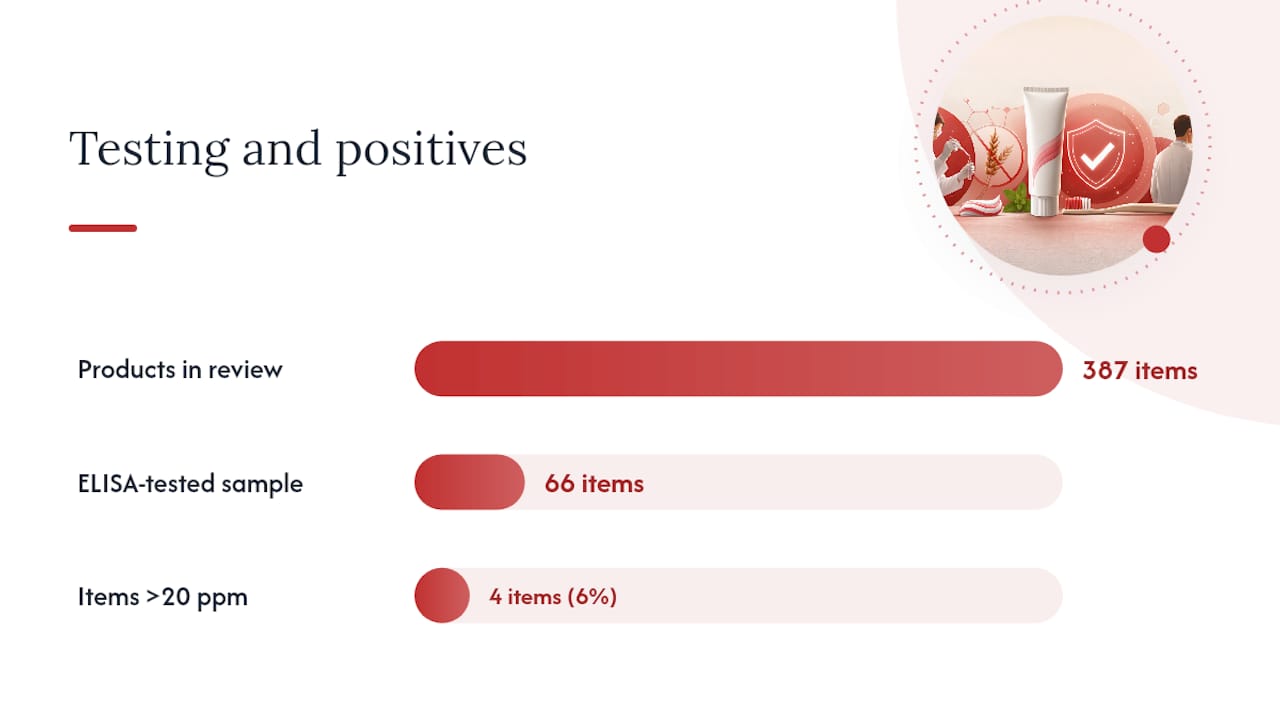
Laboratory testing backs up the concern, though it also shows the risk is limited. In an Italian sample of 66 oral hygiene products tested by ELISA for gluten content above 20 parts per million, four items, or 6%, exceeded that threshold. That’s a small fraction, but it’s not zero, and the same review noted that non-food exposure is unlikely to be a major source of gluten for most people with celiac disease.
The regulatory gap explains why this uncertainty persists:
- Food labeling laws require gluten disclosure above set thresholds; nonfood items like toothpaste and mouthwash typically fall outside that requirement.
- Manufacturers aren’t obligated to state whether an excipient like sorbitol came from corn or wheat.
- ELISA testing methods and sampling sizes vary study to study, so contamination rates aren’t perfectly comparable across research.
Toothpaste isn’t a food, so it doesn’t answer to food-safety rules, and that single fact drives most of the confusion consumers run into.
What Gluten-Free Toothpaste Actually Delivers
The real benefit of gluten-free toothpaste isn’t a dental one. It’s the removal of uncertainty. For someone managing celiac disease strictly, checking every ingredient source on every tube adds a quiet, constant mental tax. A product labeled gluten-free lifts that burden without requiring a phone call to customer service every time you run out.
Oral-health performance, on the other hand, has nothing to do with gluten status. Ingredients like xylitol for decay prevention or hydroxyapatite for remineralization work the same whether or not gluten is present. Don’t confuse a gluten-free claim with a stronger cavity-fighting formula. They’re separate questions entirely.
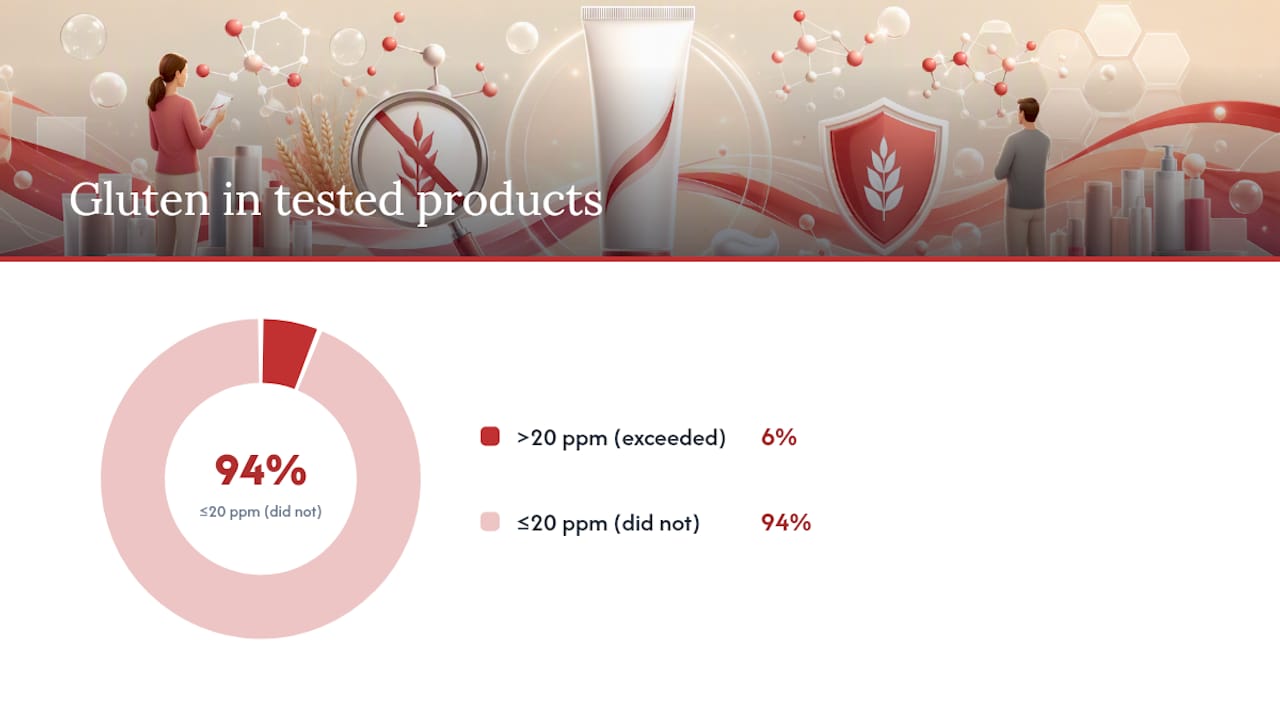
Only about 6% of the tested oral hygiene products in the MDPI study exceeded 20 ppm of gluten, which puts the baseline risk in perspective for most users.
Choosing labeled gluten-free products matters most in a few specific scenarios:
- Active celiac disease with ongoing intestinal healing, where trace exposure could slow recovery.
- Unexplained symptoms despite a strict gluten-free diet, where hidden sources like toothpaste deserve a second look.
- Young children, who are far more likely to swallow toothpaste than spit it out.
Reading the Label: Ingredients and Questions Worth Asking
Four ingredient categories deserve a second look every time you pick up a new tube:
- Sorbitol. A common sweetening and moisturizing agent, sorbitol can be corn based or wheat based depending on the supplier.
- Maltodextrin. Used as a thickener or flavor carrier, maltodextrin is frequently grain derived and rarely labeled by source.
- Hydrolyzed wheat protein. Sometimes added for texture in specialty formulas, this one is a direct red flag when present.
- Flavor extracts. Natural and artificial flavorings can carry gluten-containing carrier agents that never appear by name on the label.
Beyond the ingredient list, look for signals that resolve the ambiguity outright: an explicit “gluten-free” statement on the product page, a third-party certification mark, or a direct sourcing confirmation from the manufacturer. Industry coverage has flagged that nonfood items aren’t held to food labeling standards, which means the absence of a gluten warning tells you nothing on its own.
When in doubt, ask directly. Good questions to put to customer support or your dentist include: “Is the sorbitol in this formula corn-derived?” and “Has this product been tested for gluten by ELISA?”
Pro Tip: Save the manufacturer’s written response. Sourcing can change between production runs, so a confirmation from a year ago isn’t a guarantee for the tube you’re buying today.
How Risky Is Toothpaste, Really?
The honest answer is: not very, for most adults, but not zero for everyone. The 6% contamination rate found in the MDPI oral hygiene study reflects a small subset of products, and most toothpaste gets spit out rather than swallowed, which limits actual gluten ingestion during normal use.
That changes for two groups. Strict celiac patients with persistent symptoms despite dietary vigilance may be dealing with trace, cumulative exposure from sources like toothpaste that most people never need to consider. Children are the other exception, since younger kids are prone to swallowing toothpaste outright rather than expectorating it.
A few behavioral habits close most of the remaining gap:
- Supervise young children’s brushing and use only a pea-sized amount.
- Avoid swallowing toothpaste as a general rule, gluten concerns aside.
- Choose explicitly labeled gluten-free products if celiac disease is currently active or symptomatic.
A Simple Checklist for Choosing and Using Gluten-Free Toothpaste
- Look for explicit labeling first. A clear “gluten-free” statement or third-party certification removes the guesswork that ingredient lists alone can’t resolve.
- Scan for the usual suspects. Sorbitol, maltodextrin, hydrolyzed wheat protein, and flavor extracts all warrant a source check before you commit to a product.
- Contact the manufacturer when labeling is silent. Ask whether the product has been tested by ELISA or whether sourcing documentation is available; if you get no answer, consider an alternative formulation without the ambiguous ingredients.
- Use it correctly. Pea-sized amounts for children, supervised brushing, and no swallowing apply regardless of gluten status, and they meaningfully reduce whatever residual risk remains.
Pro Tip: If you’re managing celiac disease and unexplained symptoms persist despite a clean diet, mention your toothpaste and mouthwash brands to your gastroenterologist. It’s an overlooked variable that clinical reviews specifically flag as worth disclosing to your care team.
What Ingredient Transparency Should Look Like
Dr. Veronica Stahl has long argued that oral-care formulation should be held to the same scrutiny as anything else you put in your mouth daily. That means declared ingredient sources, not vague catch-all terms; testing data readers can actually see; and labeling that doesn’t require a phone call to decode.
Some oral care brands reflect that standard: fluoride-free formulations built around hemp extract and mineral blends, with attention paid to where each ingredient originates rather than defaulting to whatever the cheapest supplier offers.
Readers evaluating any brand, not just this one, should expect the same level of disclosure before trusting a gluten-free claim at face value.
Why the Conventional Advice Falls Short Here
Most articles on this topic either overstate the danger, treating every unlabeled tube as a threat, or dismiss it entirely because contamination rates look small in aggregate. Both miss the point. The actual evidence supports a narrower, more useful conclusion: contamination is uncommon, but the labeling system that would let you confirm that for your specific tube barely exists for nonfood products.
That gap is the real story, not the contamination rate itself. Only a source statement or a certification does that. I’d argue the conventional advice to just “check the ingredients” is close to useless for sorbitol and maltodextrin, since neither ingredient name reveals its origin.
What should change first is reader behavior, not manufacturer trust. Ask for source confirmation before you assume it, especially if you’re buying for a child or managing active celiac symptoms. Certification and direct manufacturer answers beat label-reading every time.
— Veronica
Where to Find Ingredient-Transparent Oral Care
Stop-oralcare builds its fluoride-free toothpaste, mouthwash, and oral spray line around hemp extract and Dead Sea minerals, with sourcing questions answered up front rather than buried in fine print. That matters most for readers who just spent this article learning how often standard labeling leaves sourcing questions unanswered.
If you have sensitive teeth or gums and want a formulation built with disclosed ingredients from the start, the ingredient checklist and selection guide walks through what to look for beyond gluten status alone, including remineralizing and anti-inflammatory ingredients that matter regardless of dietary restrictions. Browse the current lineup at Stop-oralcare and check ingredient sourcing details on any product page before adding it to your routine.
This article is general information, not a substitute for advice from a qualified doctor. Consult a qualified healthcare professional about your own circumstances before acting on anything here.
Sources
The claims above draw on a peer-reviewed review of allergens in oral-care products, an ELISA-based testing study on non-food gluten exposure, celiac-specific dental care guidance from Beyond Celiac, and reporting on nonfood labeling gaps from Today’s Dietitian. The ADA’s toothpaste product resources round out the dental-safety context.
- Food allergens in oral care products (PMC)
- The contribution of non-food-based exposure to gluten (MDPI)
- Hidden gluten in nonfood products (Today’s Dietitian)