

TL;DR:
- Synthetic ingredients are linked to increased health risks such as cancer, hypertension, and endocrine disruption. Regulated differently across regions, these chemicals can accumulate through daily use of multiple products, emphasizing the importance of informed label reading and targeted reduction. Choosing products with verified natural ingredients and lower packaging-derived contaminants can better protect health over time.
Synthetic ingredients are chemical compounds manufactured through industrial processes and added to foods, cosmetics, and personal care products to extend shelf life, improve appearance, or reduce production costs. The reasons to avoid synthetic ingredients are grounded in documented evidence: epidemiological studies link specific additives to increased cancer risk, endocrine disruption, hypertension, and chronic inflammatory conditions. Regulatory bodies in the European Union and the United States apply vastly different safety standards, leaving consumers in many markets with limited protection. Understanding the specific mechanisms and compounds involved allows for more informed, evidence-based product choices.
1. What health risks are linked to synthetic food additives?
Synthetic food additives carry measurable health risks that extend well beyond general concern. Food coloring additives are linked to a 14% increased overall cancer risk. That figure reflects population-level exposure from routine daily consumption, not isolated or extreme intake.
Preservatives carry their own distinct risk profiles. Potassium sorbate (E202) is associated with a 39% higher hypertension risk, while caramel color (E150a) is tied to a 15% higher cancer risk. These are not theoretical projections. They come from large-scale epidemiological studies conducted by Inserm, France’s national health research institute.
The pattern across these findings is consistent: repeated, low-dose exposure to multiple synthetic additives compounds risk over time. A single serving of a product containing E202 or E150a is unlikely to cause harm. The danger lies in cumulative intake across dozens of products consumed daily over years.
Pro Tip: Read ingredient labels for E-number codes. E202 appears in bread, cheese, and fruit products; E150a appears in cola drinks, sauces, and baked goods. Reducing these specific additives is more targeted than avoiding all processed food.
2. How synthetic ingredients in personal care products affect skin health
Synthetic chemicals in personal care products create both dermatologic and systemic health risks. Bisphenols are found in 39% of personal care products and are linked to obesity, diabetes, and reproductive dysfunction. That prevalence means the average person encounters these compounds multiple times each day through routine product use.
Microplastics present a separate but related concern. These particles penetrate the skin barrier, triggering localized inflammation and accelerating visible aging. Phthalates, used as fragrance carriers and plasticizers, are associated with hormonal disruption and dermatitis. The skin is not an impermeable barrier. Lipophilic compounds in particular absorb readily and enter systemic circulation.
Synthetic chemicals can leach from plastic packaging into product formulations, meaning bisphenol exposure often comes from the container rather than the listed ingredients. Consumers who scrutinize ingredient lists may still be exposed through packaging alone.
Product labeling does not currently require disclosure of packaging-derived contaminants. This creates a significant gap between what consumers read on a label and what they actually apply to their skin. Choosing products in glass or certified non-leaching containers reduces this specific exposure pathway.
Pro Tip: Look for personal care products that list packaging material certifications alongside ingredient declarations. Products stored in amber glass or BPA-free, phthalate-free containers carry a lower risk of packaging-derived contamination.
3. What global regulations reveal about synthetic ingredient safety
Regulatory frameworks differ sharply across regions, and those differences have direct consequences for consumer safety. The EU has banned more than 1,400 cosmetic ingredients, while the United States bans fewer than 20. That gap is not a minor procedural difference. It reflects fundamentally different standards for what constitutes acceptable risk.
Substances restricted in the EU include formaldehyde, a known carcinogen used in some nail products and hair straighteners; phthalates, linked to developmental and reproductive harm; and PFAS compounds, associated with cancer and immune disruption. Many of these remain legal and in active use in US-marketed products.
| Regulatory Area | EU Approach | US Approach |
|---|---|---|
| Banned cosmetic ingredients | More than 1,400 | Fewer than 20 |
| Formaldehyde in cosmetics | Restricted | Permitted in some categories |
| Phthalates | Broadly restricted | Partially restricted |
| PFAS compounds | Restricted | Limited restrictions |
| Pre-market safety review | Required | Not required |
The absence of pre-market safety review in the US means products reach consumers before independent safety data is established. Regulatory approval in one country does not guarantee safety. Consumers who rely on country-of-origin as a proxy for safety receive an incomplete picture.
Pro Tip: When evaluating personal care products, check whether the formulation complies with EU cosmetic regulations even if you are purchasing in the US. Brands that voluntarily meet EU standards typically apply a higher ingredient safety threshold.
4. How cumulative exposure amplifies the dangers of synthetic ingredients
Single-product exposure is rarely the primary concern with synthetic ingredients. Cumulative daily exposure across multiple personal care products is the key driver of endocrine disruption and skin barrier damage. The average adult uses between six and twelve personal care products each day, each potentially containing multiple synthetic compounds.
The cumulative load matters because many synthetic chemicals share the same biological targets. Phthalates, bisphenols, and certain preservatives all interact with estrogen receptors. When multiple compounds act on the same receptor simultaneously, the combined effect exceeds what any single compound would produce at the same dose. This is known as the cocktail effect in toxicology.
Oral care products represent a particularly significant exposure route. Toothpaste and mouthwash contact mucous membranes, which absorb compounds more readily than intact skin. Understanding dental ingredient safety is therefore not a peripheral concern. It is central to managing total synthetic chemical load.
5. What are the real benefits and challenges of natural alternatives?
Natural ingredients reduce exposure to synthetic chemical compounds, but they carry their own documented limitations. Natural products are prone to pesticide residues, microbial contamination, and batch variability that synthetics do not share. A botanical extract from two different harvests may differ significantly in active compound concentration.
The benefits of choosing natural formulations are nonetheless substantial when the alternatives are well-characterized:
- Reduced exposure to endocrine-disrupting compounds found in synthetic preservatives and fragrances.
- Lower risk of accumulating petrochemical derivatives through daily use.
- Access to antioxidant and anti-inflammatory compounds with established biological activity, such as cannabidiol (CBD) and Dead Sea mineral complexes.
- Alignment with cleaner beauty standards recognized by third-party certification bodies like COSMOS and ECOCERT.
Some hazardous substances have been detected in products labeled as “natural,” including unauthorized mercury compounds and banned phthalates. The “natural” label carries no legal definition in most markets, making third-party certification the only reliable verification method.
Greenwashing is a documented risk in this category. Brands that use the word “natural” without certification may still contain synthetic compounds at concentrations comparable to conventional products. Consumers benefit from learning to identify natural ingredients using standardized INCI nomenclature rather than relying on front-of-pack claims.
Pro Tip: COSMOS and ECOCERT certifications require verified percentages of natural-origin ingredients and restrict synthetic compounds by category. These seals are more reliable than any marketing claim printed on the front of a package.
6. Why questioning artificial ingredients starts with reading labels
Label literacy is the most direct tool consumers have for reducing synthetic ingredient exposure. Ingredient lists on food and personal care products follow standardized formats: INCI nomenclature for cosmetics and E-number coding for food additives. Both systems allow consumers to identify specific compounds once they know what to look for.
The challenge is that ingredient lists are often long, printed in small type, and use chemical names unfamiliar to most readers. Potassium sorbate reads as a neutral technical term. Its association with a 39% higher hypertension risk is not communicated anywhere on the label. This information gap is structural, not accidental.
Oral care products deserve particular scrutiny because they are used twice daily and contact mucous membranes directly. Reviewing a safe oral care ingredients list provides a practical reference for identifying which compounds to avoid and which natural alternatives have documented efficacy.
7. How to balance evidence with consumer decision-making
Evidence-based decision-making requires acknowledging that not all synthetic ingredients carry equal risk. Avoiding all additives without scientific basis can worsen nutritional outcomes and increase food waste. Some synthetic additives serve critical safety functions, including preventing microbial growth in products that would otherwise spoil rapidly.
The productive approach is selective reduction rather than blanket avoidance. Prioritize eliminating compounds with the strongest documented risk profiles: potassium sorbate, caramel color, phthalates, bisphenols, and PFAS. These have the most consistent evidence linking them to cancer, hypertension, and endocrine disruption across multiple independent study populations.
Synthetic ingredients’ controlled manufacturing ensures consistent purity and reduces allergen variability compared to botanical extracts. This is a genuine advantage in specific contexts, particularly for consumers with known plant allergies. The goal is not ideological purity. It is reducing documented risk while maintaining product safety and efficacy.
Key Takeaways
Synthetic ingredients with the strongest documented health risks include potassium sorbate, caramel color, phthalates, bisphenols, and PFAS, and reducing exposure to these specific compounds is more effective than avoiding all additives indiscriminately.
| Point | Details |
|---|---|
| Food additive cancer risk | Food colorings are linked to a 14% higher cancer risk; potassium sorbate to a 39% higher hypertension risk. |
| Packaging as an exposure source | Bisphenols leach from plastic containers, creating exposure beyond what ingredient lists disclose. |
| Regulatory gap | The EU bans more than 1,400 cosmetic ingredients; the US bans fewer than 20, leaving consumers less protected. |
| Cumulative load matters | Daily use of multiple synthetic-containing products compounds endocrine disruption beyond single-product risk. |
| Natural label limitations | “Natural” carries no legal definition in most markets; third-party certification is the only reliable safety signal. |
Why I focus on cumulative exposure, not individual ingredients
Consumers tend to evaluate products one at a time. They check a toothpaste label, feel satisfied with what they see, and move on. What that approach misses is the total synthetic chemical load accumulated across an entire daily routine. Toothpaste, mouthwash, moisturizer, shampoo, and deodorant each contribute. When several of those products contain phthalates or bisphenols, the combined effect on endocrine function is not additive. It is synergistic.
The research on this is clear enough that I consider cumulative exposure the single most underappreciated factor in consumer health decisions. Most public discussion focuses on whether a single ingredient is “safe” at a given dose. That framing misses the point entirely. The relevant question is what happens when that ingredient combines with five others that act on the same biological pathway, applied twice daily for years.
My recommendation is to start with the highest-frequency, highest-absorption products. Oral care products contact mucous membranes twice daily and are therefore a priority for ingredient review. Reducing synthetic compounds in toothpaste and mouthwash alone meaningfully lowers total daily exposure. From there, work outward to skin care and then hair care. Systematic reduction by product category is more sustainable than attempting to overhaul an entire routine at once.
The evidence does not support fear-driven avoidance of every synthetic compound. It does support targeted, informed reduction of the specific compounds with the strongest documented risk profiles. That distinction matters for making decisions that are both scientifically grounded and practically achievable.
— Veronica
Natural oral care as a practical step toward reducing synthetic exposure
Oral care is one of the highest-leverage categories for reducing daily synthetic chemical exposure. Products contact mucous membranes directly, twice daily, making ingredient quality particularly consequential.

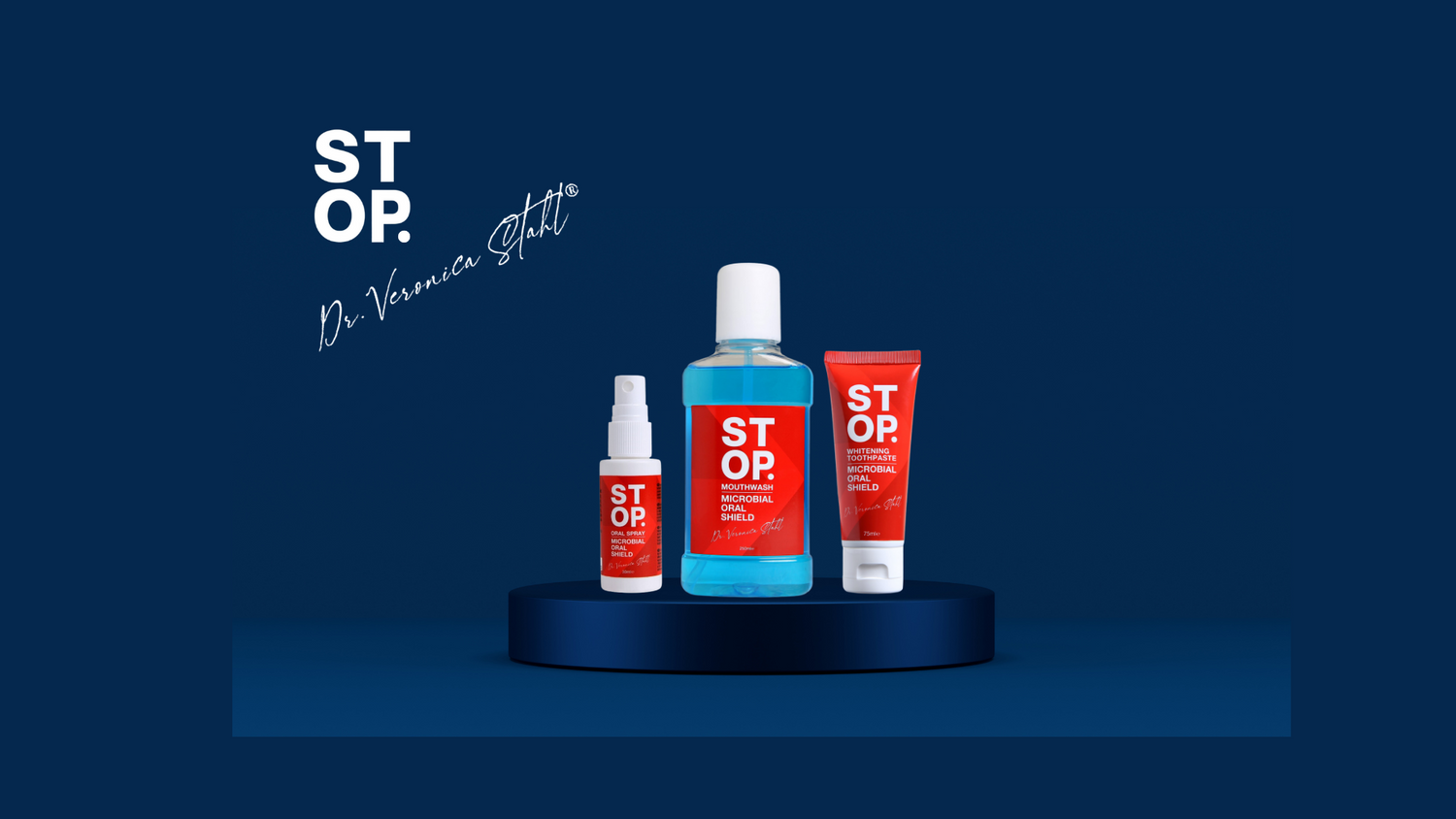
Stop-oralcare formulates its toothpaste, mouthwash, and oral sprays without fluoride, synthetic preservatives, or petrochemical derivatives. The product line uses hemp-derived compounds and Dead Sea minerals, both of which have documented antimicrobial and anti-inflammatory properties. For consumers who have already reviewed the evidence on synthetic ingredient risks and are ready to act on it, Stop-oralcare’s natural oral care products offer a formulated alternative grounded in the same evidence-based approach this article applies. Ingredient purity in oral care is not a marketing position. It is a measurable factor in daily chemical exposure.
FAQ
What synthetic ingredients carry the highest documented health risks?
Potassium sorbate (E202), caramel color (E150a), phthalates, bisphenols, and PFAS carry the strongest evidence linking them to cancer, hypertension, and endocrine disruption. These compounds appear across food, cosmetic, and personal care product categories.
Are natural ingredients always safer than synthetic ones?
Natural ingredients reduce exposure to synthetic chemicals but carry their own risks, including pesticide residues, microbial contamination, and batch variability. Third-party certifications like COSMOS and ECOCERT provide the most reliable safety verification for natural formulations.
Why does the EU ban more cosmetic ingredients than the US?
The EU applies a precautionary regulatory standard that restricts ingredients before market approval if credible safety concerns exist. The US system does not require pre-market safety review for cosmetic ingredients, resulting in fewer than 20 banned substances compared to more than 1,400 in the EU.
How does cumulative exposure increase the health risks of synthetic additives?
Using multiple products that each contain low concentrations of endocrine-disrupting compounds produces a combined effect that exceeds what any single product would cause. Compounds like phthalates and bisphenols act on shared biological pathways, amplifying their combined impact.
Does avoiding synthetic ingredients in oral care products make a measurable difference?
Oral care products contact mucous membranes, which absorb compounds more readily than intact skin. Removing synthetic preservatives and plasticizers from twice-daily oral care use meaningfully reduces total daily synthetic chemical load across the full product routine.