

TL;DR:
- Sea minerals support gum health by reducing inflammation, promoting tissue repair, and preserving the oral microbiome. A 2026 clinical study confirmed sea salt rinses significantly lowered plaque and gingival inflammation. Incorporating mineral rinses and toothpaste into daily routines offers a natural adjunct to professional periodontal care.
Sea minerals are defined as the complex mixture of trace elements extracted from ocean and saline water sources that directly reduce gum inflammation, inhibit periodontal bacteria, and accelerate tissue repair. The role of sea minerals in gum care extends well beyond simple antisepsis. Key minerals including magnesium, zinc, calcium, and sulfur work together to support collagen synthesis, regulate oral pH, and modulate immune responses in gum tissue. A 2026 clinical pilot study by Shubhangi Mani, MDS, confirmed that sea salt-based oral rinses produce measurable reductions in plaque and gingival inflammation. These findings position ocean-derived minerals as a scientifically supported adjunct to conventional periodontal care, not merely a folk remedy.
What scientific evidence supports sea minerals in gum health?
Clinical research on sea minerals for dental health has accelerated in recent years. The most direct evidence comes from a 2026 pilot study by Shubhangi Mani, MDS, which evaluated sea salt-based oral rinses in gingivitis patients. The study demonstrated notable improvements in both plaque index scores and gingival inflammation markers. This result is significant because it places sea salt rinses within a measurable clinical framework rather than anecdotal tradition.
“Sea salt-based oral rinses significantly reduce plaque and gingival inflammation when used alongside conventional oral hygiene practices, as demonstrated in the 2026 clinical pilot study by Shubhangi Mani, MDS. The mineral composition of sea salt mimics human extracellular fluid, reducing tissue stress and supporting cellular healing at the gum margin.”
A broader scoping review of salt-based oral interventions found that saline solutions demonstrate antimicrobial effects and promote healing in resource-limited settings where chemical antiseptics are unavailable. The review also noted that clinical heterogeneity across studies means sea mineral rinses function best as adjunct therapies. That distinction matters: the evidence supports supplementary use, not replacement of professional periodontal treatment.
Red Sea salt contains 82 trace minerals, including magnesium, calcium, sulfur, bromide, potassium, sodium, and zinc. That mineral density is what separates sea salt from refined table salt in oral care applications. Each element contributes a distinct biological function, from immune modulation to structural tissue support.
The current evidence base has real limitations. Most trials are small, and study designs vary widely in concentration, frequency, and patient population. Researchers call for larger randomized controlled trials to establish standardized protocols. Still, the direction of the evidence is consistent: sea minerals reduce gingival inflammation and support healing when used correctly.
How do specific sea minerals support gum repair and health?
Gum tissue requires both structural minerals for physical integrity and immunological minerals for infection control. Sea minerals provide both, which explains their broad utility in periodontal support.
The four minerals with the strongest evidence for gum repair are:
- Magnesium: Magnesium supports collagen synthesis and contributes to alveolar bone formation, the bone that anchors teeth in the jaw. Magnesium deficiency correlates with reduced bone mineral density and impaired tissue repair. Without adequate magnesium, the scaffolding of gum tissue weakens progressively.
- Zinc: Zinc plays a direct role in neutrophil function, immune defense, and wound healing within gum tissue. Zinc deficiency impairs the immune cells responsible for controlling periodontal bacteria, which delays healing and allows bacterial biofilm to establish more easily. Zinc also inhibits plaque buildup by disrupting bacterial adhesion.
- Calcium: Calcium maintains the bone density that anchors teeth in the alveolar socket. The calcium-magnesium balance directly affects the strength of alveolar bone and periodontal ligament attachment. Magnesium is required for the body to utilize calcium correctly, making the two minerals functionally interdependent.
- Sulfur and bromide: These trace elements contribute to immune modulation and tissue detoxification. Sulfur supports the cross-linking of collagen fibers, which gives gum tissue its tensile strength. Bromide has mild antiseptic properties that reduce microbial load at the gum margin.
Sea minerals also regulate oral pH. Minerals like zinc and magnesium maintain pH balance in the oral cavity, which discourages the growth of acidogenic bacteria responsible for both caries and periodontal disease. A stable oral pH protects enamel and creates an environment where beneficial bacteria can compete effectively against pathogens.
Pro Tip: When selecting a sea mineral oral care product, check that it lists magnesium and zinc as active components. Products containing only sodium chloride lack the trace mineral profile needed for meaningful gum tissue support.

How can sea mineral-based oral care be practically integrated?
Sea mineral oral care works best when integrated into an existing hygiene routine rather than used as a standalone treatment. The following protocol reflects current clinical guidance:
- Sea salt rinse after brushing: Dissolve a small amount of natural sea salt in warm water and rinse for 30 seconds after brushing. This reduces residual bacterial load and soothes inflamed gum tissue. Saltwater rinses avoid the burning sensation associated with alcohol-based mouthwashes and do not disrupt the oral microbiome the way chemical antiseptics can.
- Mineral-enriched toothpaste: Use a toothpaste formulated with Dead Sea minerals or sea salt extracts as a daily replacement for conventional fluoride paste if you prefer a fluoride-free approach. Stop-oralcare formulates its toothpaste with Dead Sea minerals specifically for this purpose, combining mineral density with natural healing compounds.
- Mineral mouthwash: A mineral-based mouthwash used once daily provides sustained contact between the mineral solution and gum tissue. This is particularly useful for people with chronic gingivitis or early-stage periodontal disease.
- Frequency and concentration: Rinse once or twice daily. Higher concentrations of salt do not improve outcomes and can cause tissue irritation. A mild solution used consistently outperforms a concentrated solution used irregularly.
- Professional care remains non-negotiable: Sea mineral interventions complement but do not replace professional scaling, root planing, or periodontal therapy. Anyone with active gum disease should consult a periodontist before relying on mineral rinses as a primary treatment.
Pro Tip: Pair your sea mineral rinse with a natural fluoride-free care routine that includes interdental cleaning. Minerals reach the gum margin most effectively when plaque is removed first.
How do sea minerals compare with other natural and conventional gum care methods?
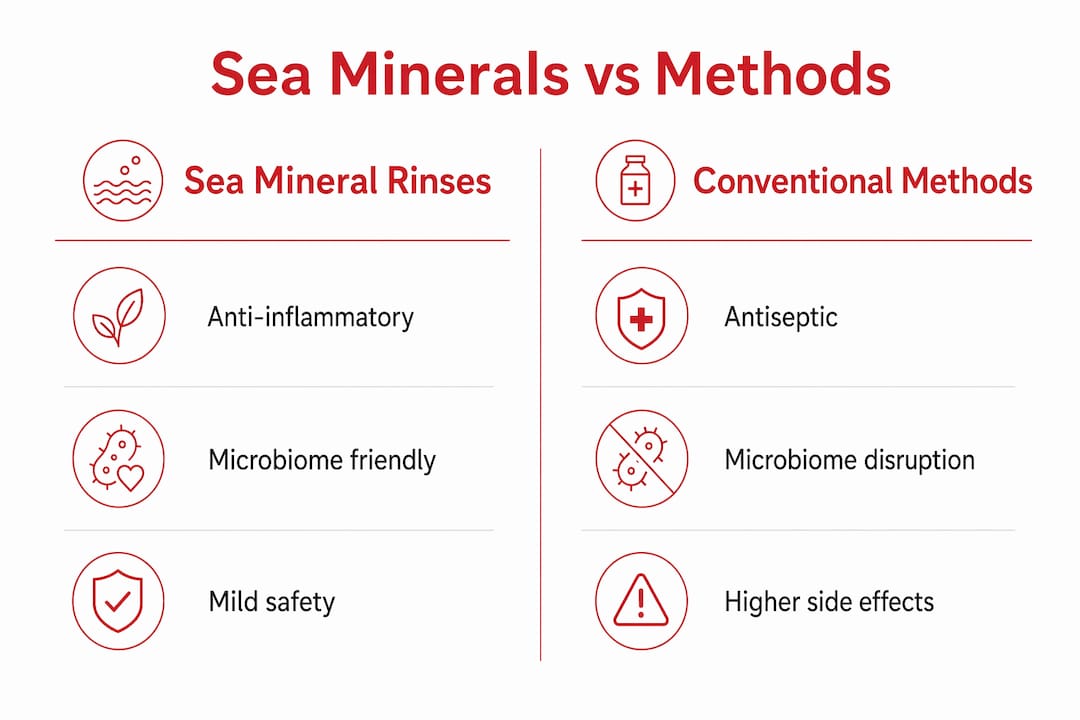
Sea minerals occupy a specific position in the gum care spectrum. They are more targeted than general dietary changes but less aggressive than chemical antiseptics. The table below compares sea mineral care with other common approaches.
| Approach | Mechanism | Microbiome impact | Evidence level |
|---|---|---|---|
| Sea mineral rinses | Anti-inflammatory, antimicrobial, pH regulation | Preserves balance | Emerging clinical evidence |
| Chemical antiseptics (e.g., chlorhexidine) | Broad-spectrum antimicrobial | Disrupts microbiome | Strong short-term evidence |
| Simple saline rinses | Osmotic, mild antimicrobial | Neutral | Moderate evidence |
| Dietary mineral supplementation | Systemic tissue support | Indirect | Moderate evidence |
| Professional scaling and root planing | Mechanical biofilm removal | Neutral | Strong evidence |
Salt-based oral care products offer a favorable safety profile compared to antiseptics like chlorhexidine, which can cause staining, taste disruption, and microbiome imbalance with extended use. Sea mineral rinses avoid these side effects while still delivering measurable antimicrobial and anti-inflammatory effects.
Systemic nutrient intake also matters. Vitamin and mineral deficiencies in vitamin C, D, zinc, and magnesium correlate with worse periodontal outcomes by impairing collagen production and immune responses. Topical sea mineral application addresses the local environment, while dietary intake addresses systemic mineral status. Both are necessary for optimal gum health. Resources on mineral supplementation for gums provide further detail on how to address both dimensions simultaneously.
For people seeking natural gum care remedies, sea minerals represent the most evidence-supported option that also preserves the oral microbiome. Chemical antiseptics are effective but blunt instruments. Sea minerals work with the biology of gum tissue rather than against it. Complementary products such as the Nusmile Pro Enamel Care kit illustrate how natural mineral-based approaches are gaining traction across the broader oral care market.
Key Takeaways
Sea minerals reduce gum inflammation, support tissue repair, and preserve oral microbiome balance through the synergistic action of magnesium, zinc, calcium, and sulfur.
| Point | Details |
|---|---|
| Clinical evidence is real | A 2026 pilot study confirmed sea salt rinses reduce plaque and gingival inflammation in gingivitis patients. |
| Mineral synergy drives results | Magnesium, zinc, calcium, and sulfur each serve distinct biological roles that collectively support gum repair. |
| Adjunct use is the standard | Sea mineral rinses complement professional care; they do not replace scaling or periodontal treatment. |
| Microbiome safety matters | Sea mineral products preserve oral microbiome balance, unlike broad-spectrum chemical antiseptics. |
| Systemic intake amplifies topical benefits | Dietary deficiencies in zinc and magnesium worsen gum disease; topical and systemic mineral support work together. |
Why I believe sea minerals deserve more clinical attention
From my clinical experience, the most underappreciated aspect of mineral-based gum care is the microbiome argument. Practitioners frequently default to chlorhexidine for gingivitis management because the evidence is established and the mechanism is straightforward. What that approach misses is the collateral damage to commensal bacteria that protect the gum margin over the long term.
Patients who use sea mineral rinses consistently report less tissue sensitivity and fewer episodes of acute gum irritation compared to those using alcohol-based products. That observation aligns with the scoping review data showing that salt-based interventions preserve microbiome balance. The clinical implication is that sea minerals may reduce the frequency of acute flare-ups even when they do not fully resolve underlying periodontal disease.
The 2026 Mani study is a starting point, not a conclusion. What the field needs now are larger trials with standardized mineral concentrations and longer follow-up periods. The Dead Sea minerals research emerging from natural oral care contexts is beginning to fill that gap, and I expect the next five years to produce substantially stronger evidence.
My practical recommendation is this: use sea mineral products as a daily adjunct, maintain professional cleaning schedules, and address systemic mineral status through diet. That combination addresses gum health at every level, from the cellular to the microbiological.
— Veronica
Natural oral care with Dead Sea minerals
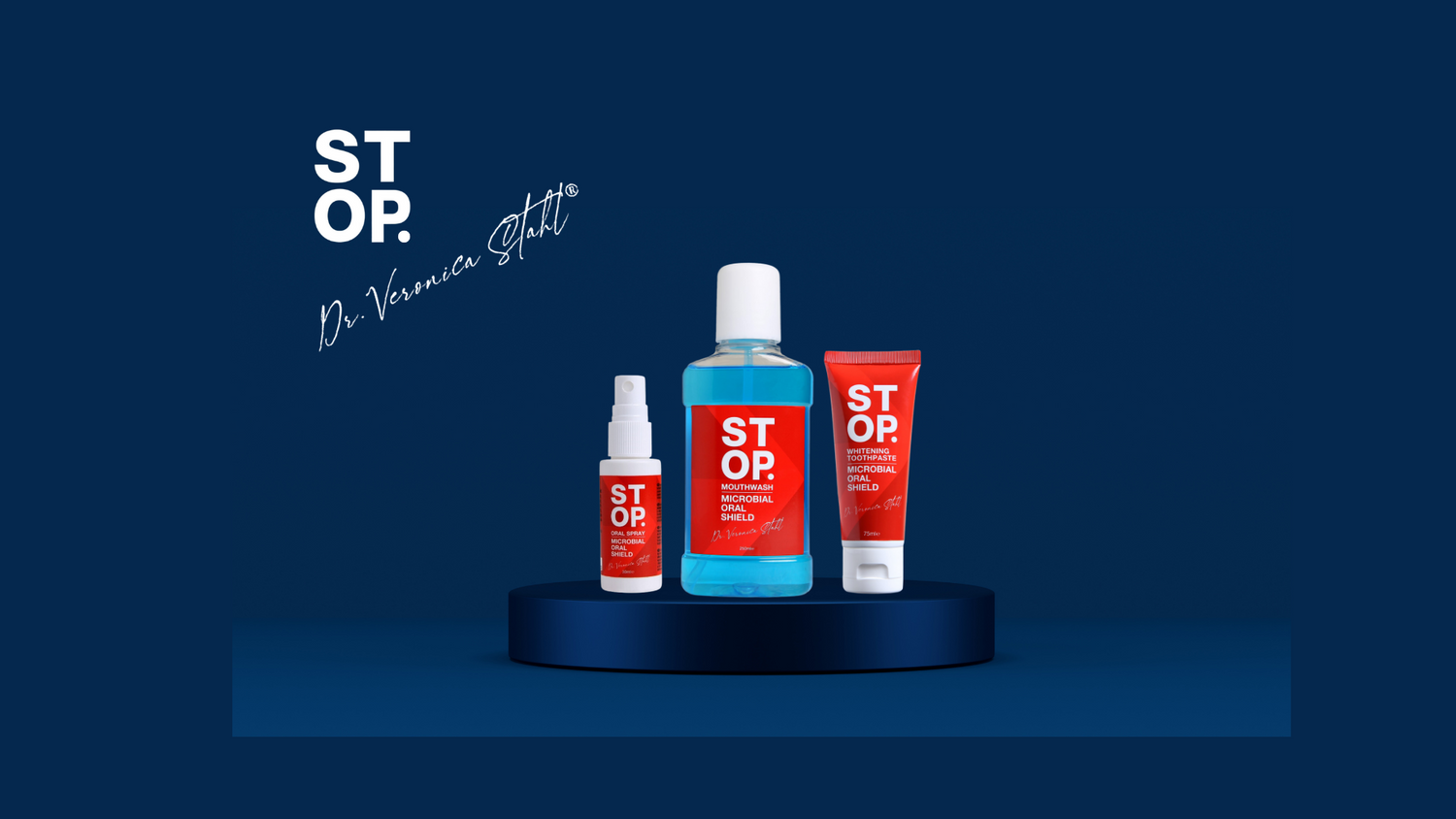
Stop-oralcare develops fluoride-free oral care products formulated with Dead Sea minerals, combining the trace mineral profile documented in clinical research with natural healing compounds. The product line includes toothpaste, mouthwash, and oral sprays designed for daily use alongside conventional hygiene.
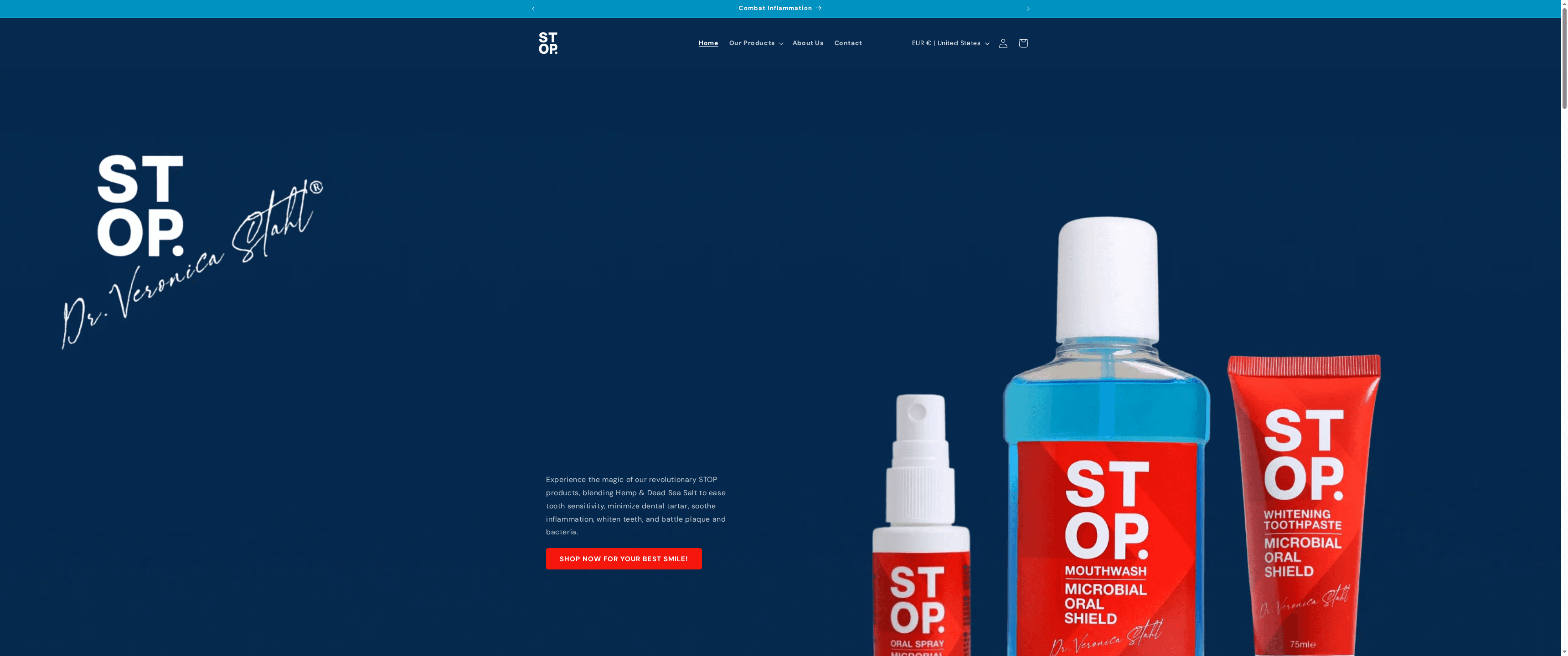
For people seeking a mineral-based approach to gum health that avoids synthetic chemicals, Stop-oralcare’s formulations provide a practical entry point. Each product is developed under the guidance of Dr. Veronica Stahl, with formulations grounded in the same mineral science reviewed in this article. Visit Stop-oralcare to review the full product range and find the option that fits your oral care routine.
FAQ
What minerals in sea salt benefit gum health most?
Magnesium, zinc, calcium, and sulfur are the primary minerals that support gum health. Zinc controls periodontal bacteria and accelerates wound healing, while magnesium and calcium maintain the bone and tissue structure anchoring the teeth.
How often should a sea salt rinse be used for gum care?
Once or twice daily is the recommended frequency for sea salt rinses. Consistent use at a mild concentration produces better outcomes than infrequent use of a concentrated solution.
Can sea mineral rinses replace professional dental treatment?
Sea mineral rinses are adjunct therapies, not replacements for professional care. Clinical evidence confirms they reduce inflammation and support healing, but active gum disease requires professional scaling and periodontal evaluation.
Do sea minerals affect the oral microbiome?
Sea mineral rinses preserve oral microbiome balance, unlike broad-spectrum antiseptics such as chlorhexidine. This makes them a safer long-term option for daily gum care maintenance.
Are fluoride-free, mineral-based products effective for gum health?
Fluoride-free products formulated with Dead Sea minerals address gum inflammation and tissue repair through mineral action rather than fluoride chemistry. They are effective for gum health support when the formulation includes the full trace mineral profile found in natural sea salt.