


TL;DR:
- Mineral supplementation for gums targets nutrients like calcium, magnesium, phosphorus, and vitamin D to support tissue integrity and immune function.
- Evidence shows these supplements improve periodontal outcomes when used alongside professional therapy, especially in deficiency correction.
Mineral supplementation for gums is defined as the targeted intake of specific minerals, including calcium, magnesium, phosphorus, and vitamin D, to support periodontal tissue integrity, immune function, and healing capacity. Gum disease affects a significant portion of the adult population, and nutritional deficiencies are a recognized contributor to impaired tissue repair and increased susceptibility to periodontal inflammation. Understanding why mineral supplementation for gums is clinically relevant requires examining both the biological roles of these nutrients and the evidence from recent clinical research. This article presents a structured, evidence-based review of the mechanisms, benefits, and practical applications of mineral supplementation as an adjunct to professional periodontal care.
Why mineral supplementation for gums is clinically significant
Gum tissue, the alveolar bone, and the periodontal ligament all depend on a continuous supply of specific minerals to maintain structural integrity and mount effective immune responses. Adequate intake of calcium, phosphorus, and magnesium supports oral tissue homeostasis, immune function, and periodontal disease prevention. When these nutrients are deficient, tissue repair slows, inflammatory responses become dysregulated, and the periodontium becomes more vulnerable to pathogenic bacteria.
The four minerals most directly implicated in gum health are:
- Calcium: Provides structural support to alveolar bone and contributes to enamel remineralization. Calcium deficiency reduces bone density around the tooth socket, accelerating attachment loss in periodontitis.
- Magnesium: Participates in bone mineralization and modulates inflammatory signaling. Low magnesium intake is associated with more severe periodontitis, while adequate supplementation may reduce disease progression.
- Phosphorus: Works synergistically with calcium to form hydroxyapatite, the primary mineral component of bone and tooth structure. Without sufficient phosphorus, calcium cannot be effectively incorporated into bone tissue.
- Vitamin D: Regulates calcium absorption in the gut and modulates immune responses in the periodontal tissues. Vitamin D deficiency impairs both bone metabolism and the host’s ability to control bacterial infection at the gingival margin.
Deficiencies in any of these nutrients disrupt the balance between tissue destruction and repair that characterizes periodontal disease progression. The role of minerals in oral tissue integrity extends beyond structural support to include regulation of the innate immune response and modulation of the oral microbiome.
Pro Tip: Before initiating any mineral supplementation protocol, request a serum 25-hydroxyvitamin D test and a dietary mineral assessment from your healthcare provider. Supplementation corrects deficiencies; it does not provide additional benefit when baseline levels are already adequate.

What does scientific evidence say about mineral benefits for gums?
Clinical research published through 2026 consistently positions mineral and nutritional supplements as effective adjuncts to mechanical periodontal therapy, not as standalone treatments. The evidence base has grown substantially, with several meta-analyses now available to guide clinical decisions.
A network meta-analysis incorporating 79 randomized controlled trials demonstrated that vitamin D and antioxidants combined with scaling and root planing significantly improved clinical attachment levels at both three-month and six-month follow-ups. This finding is clinically meaningful because clinical attachment level is the primary outcome measure for periodontal therapy success.
| Supplement | Mechanism | Evidence Level | Outcome Measured |
|---|---|---|---|
| Vitamin D | Immunomodulation, bone metabolism | Network meta-analysis (79 RCTs) | Clinical attachment level |
| Calcium | Alveolar bone support, remineralization | Observational and clinical trials | Bone density, probing depth |
| Magnesium | Bone mineralization, inflammation balance | Cross-sectional and observational | Periodontal severity scores |
| Probiotics | Oral microbiome modulation | RCT (40 patients, 4 weeks) | Probing depth, inflammatory markers |
A separate randomized controlled trial with 40 periodontitis patients demonstrated that probiotic supplementation alongside scaling and root planing produced significantly better outcomes at four weeks compared to mechanical therapy alone. While probiotics are not minerals, this finding is relevant because magnesium directly influences oral microbial ecology. Low magnesium intake can lead to oral dysbiosis linked to periodontitis and caries, suggesting that mineral status and microbial balance are interconnected.
“Mineral supplements improve periodontal outcomes mainly when correcting deficiencies and as adjuncts to mechanical plaque control; effects manifest over weeks to months.” — Mineral Supplementation and Periodontal Therapy
One important distinction from the research concerns calcium phosphate biomaterials used in surgical regenerative procedures. Hydroxyapatite and tricalcium phosphates show variable outcomes in scoping reviews and are applied in surgical contexts. These materials differ mechanistically from systemic dietary supplements. Readers should not conflate the evidence for surgical biomaterials with the evidence for oral mineral supplementation.
How to choose and use mineral supplements effectively for gum health
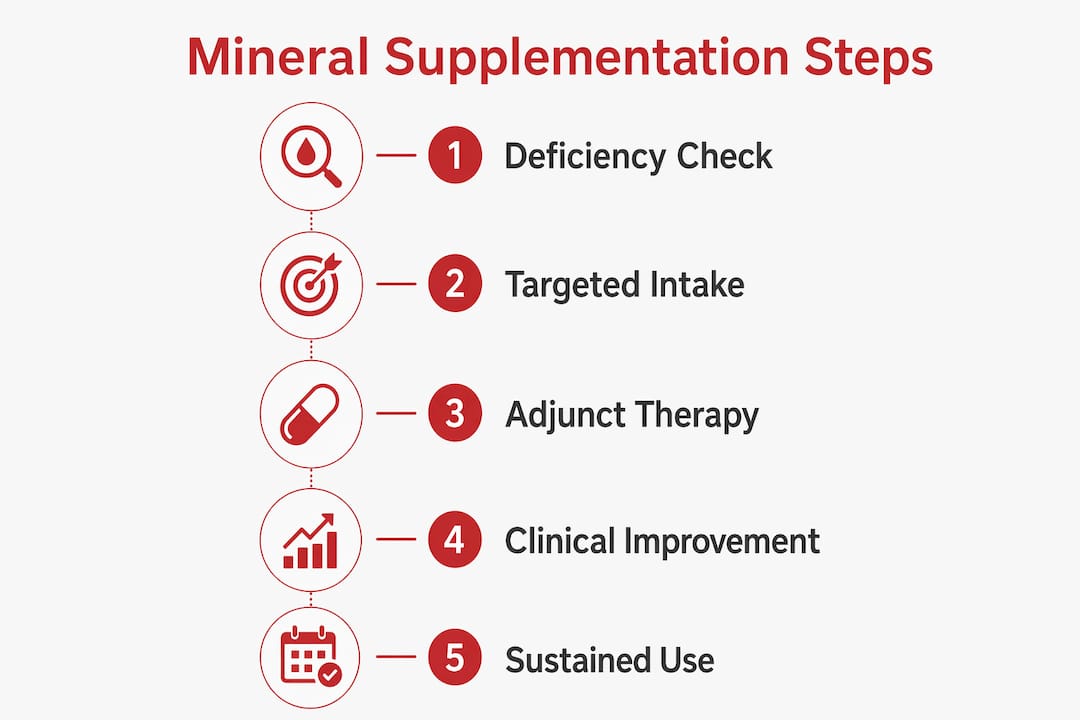
Selecting and using mineral supplements for periodontal support requires a structured approach that accounts for individual nutritional status, supplement bioavailability, and integration with professional dental care.
-
Assess baseline nutritional status first. Supplementation corrects deficiencies. If serum vitamin D, dietary calcium, and magnesium intake are already within reference ranges, additional supplementation is unlikely to produce measurable periodontal benefit. A blood panel and dietary recall assessment provide the necessary baseline data.
-
Prioritize bioavailable mineral forms. Not all supplement formulations deliver minerals in forms the body can readily absorb. Calcium citrate absorbs more efficiently than calcium carbonate, particularly in individuals with reduced gastric acid production. Magnesium glycinate and magnesium malate demonstrate superior bioavailability compared to magnesium oxide.
-
Time supplementation to complement periodontal therapy. Clinical improvements with mineral adjuncts appear gradually, typically over weeks to months. Beginning supplementation two to four weeks before a scheduled scaling and root planing procedure allows tissue levels to stabilize before mechanical debridement.
-
Incorporate mineral-rich oral care products as topical adjuncts. Toothpastes and mouthwashes formulated with calcium phosphate or Dead Sea minerals deliver minerals directly to the gingival margin, where they can support remineralization and local tissue defense. Reviewing calcium phosphate mouthwash options provides practical guidance on selecting products with documented mineral content.
-
Support supplementation with dietary modifications. Dairy products, leafy green vegetables, nuts, and seeds provide calcium, magnesium, and phosphorus in food matrix forms that enhance absorption. Dietary sources and supplements work synergistically rather than redundantly.
Pro Tip: Vitamin D supplementation is most effective when taken with a meal containing dietary fat, as vitamin D is a fat-soluble nutrient. Pairing it with calcium supplementation at the same meal further supports absorption and bone metabolism.
How do mineral supplements compare with other nutrient interventions for gums?
Mineral supplementation occupies a specific position within the broader category of nutritional adjuncts for periodontal health. Comparing minerals with vitamins and antioxidants clarifies where each intervention provides the most benefit and how combined strategies outperform single-nutrient approaches.
Vitamins D and C show the most critical support for adjunctive periodontitis management through immunomodulation, antioxidant effects, and bone stabilization. Vitamin C is required for collagen synthesis in the periodontal ligament and gingival connective tissue. Without adequate vitamin C, collagen cross-linking is impaired, gingival integrity declines, and bleeding on probing increases. Minerals, by contrast, primarily support the mineralized structures, including alveolar bone and cementum, and regulate immune signaling rather than directly building soft connective tissue.
Antioxidants such as coenzyme Q10, resveratrol, and green tea polyphenols reduce oxidative stress in gingival tissues and have demonstrated reductions in gingival bleeding in clinical studies. These compounds address a different biological pathway than minerals. Minerals regulate structural and immune functions; antioxidants neutralize reactive oxygen species generated during periodontal inflammation.
The most evidence-supported approach combines minerals with vitamins and antioxidants rather than relying on any single nutrient category:
- Calcium and phosphorus maintain alveolar bone density and support remineralization at the gingival margin.
- Magnesium modulates inflammatory cytokine production and supports microbial balance in saliva.
- Vitamin D enhances calcium absorption and regulates the innate immune response in periodontal tissues.
- Vitamin C provides the substrate for collagen synthesis in the periodontal ligament.
- Antioxidants reduce oxidative tissue damage during active periodontal inflammation.
Supplements are adjuncts to scaling and root planing and other mechanical treatments. No nutritional intervention replaces professional plaque control. The evidence consistently shows that the greatest clinical gains occur when supplements are layered onto, not substituted for, mechanical debridement and consistent oral hygiene practice. Readers seeking a structured comparison of mineral-based oral care products can find detailed efficacy comparisons to guide product selection.
Key takeaways
Mineral supplementation for gums produces measurable clinical benefit primarily by correcting nutritional deficiencies and supporting the biological processes that mechanical periodontal therapy cannot address directly.
| Point | Details |
|---|---|
| Deficiency correction is the primary goal | Supplementation benefits plateau when baseline mineral levels are already adequate. |
| Calcium, magnesium, and vitamin D are the core minerals | Each targets a distinct biological pathway: bone support, inflammation balance, and immune regulation. |
| Evidence supports adjunctive use only | Network meta-analyses confirm supplements improve outcomes when combined with scaling and root planing. |
| Bioavailability determines supplement effectiveness | Calcium citrate and magnesium glycinate outperform oxide and carbonate forms in absorption. |
| Clinical results require sustained adherence | Mineral-related improvements in periodontal parameters typically emerge over weeks to months, not days. |
What I have observed about mineral supplementation in clinical practice
Having worked at the intersection of dentistry and natural medicine for many years, I have seen a consistent pattern: patients who arrive expecting mineral supplements to resolve active gum disease without professional treatment are almost always disappointed. The research is clear on this point, and so is clinical observation. Minerals support the biological environment in which healing occurs. They do not remove calculus, eliminate pathogenic biofilm, or restore attachment that has already been lost.
What I find genuinely underappreciated is the role of magnesium specifically. Most patients and many practitioners focus on calcium and vitamin D, which are well-publicized. Magnesium’s influence on both inflammatory signaling and oral microbial ecology receives far less attention, yet the mechanistic evidence connecting magnesium status to oral dysbiosis is compelling. Patients with chronically low magnesium intake often present with a microbial profile that is more conducive to periodontal disease, independent of their oral hygiene practices.
I also caution against the assumption that more supplementation produces better outcomes. Vitamin D and C supplementation efficacy depends on individual status and bioavailability. Blanket high-dose supplementation without baseline assessment is not supported by the evidence and introduces unnecessary risk of toxicity with fat-soluble vitamins. The most effective approach is precise: test, identify the deficiency, correct it with an appropriate bioavailable form, and monitor response over three to six months alongside professional periodontal care.
— Veronica
Explore mineral-based oral care from Stop-oralcare

Stop-oralcare formulates its oral care products around the principle that minerals delivered directly to the gingival environment complement systemic supplementation. The product line, developed under the guidance of Dr. Veronica Stahl, includes fluoride-free toothpastes and mouthwashes incorporating Dead Sea minerals, which provide calcium, magnesium, and trace elements in forms that support gum tissue and local immune defense. These products are designed to function as topical adjuncts to professional periodontal therapy and dietary mineral intake. For individuals seeking natural gum health solutions grounded in clinical evidence, Stop-oralcare offers a structured starting point. Explore the full product range at Stop-oralcare.
FAQ
What minerals are most important for gum health?
Calcium, magnesium, phosphorus, and vitamin D are the minerals most directly linked to periodontal health. Each supports a distinct function: calcium and phosphorus maintain alveolar bone density, magnesium modulates inflammation and microbial balance, and vitamin D regulates immune responses at the gingival margin.
Can mineral supplements replace professional dental treatment for gums?
Mineral supplements cannot replace scaling and root planing or other mechanical periodontal treatments. Clinical evidence positions supplements as adjuncts that improve outcomes when combined with professional therapy, not as standalone interventions.
How long does it take for mineral supplements to improve gum health?
Clinical improvements with mineral adjuncts typically appear over weeks to months rather than days. Sustained adherence to supplementation alongside consistent professional care is required to observe measurable changes in periodontal parameters.
Is magnesium deficiency linked to gum disease?
Yes. Low magnesium intake is associated with more severe periodontitis, and low salivary magnesium levels can promote oral dysbiosis, a microbial imbalance that increases susceptibility to periodontal disease.
Are topical mineral products effective for gum support?
Toothpastes and mouthwashes containing calcium phosphate or Dead Sea minerals deliver minerals directly to the gingival margin and support local remineralization and tissue defense. They function as topical adjuncts to systemic supplementation and professional periodontal care, not as replacements for either.