

TL;DR:
- Mineral-based mouthwashes using hydroxyapatite, sea salt, and zinc compounds support enamel repair and sensitivity relief.
- These formulations are generally alcohol-free, safe for daily use, and backed by clinical evidence.
- Choice depends on specific sensitivity concerns, with nano-hydroxyapatite best for enamel, and zinc compounds for gingivitis.
Selecting a mouthwash that adequately addresses sensitivity without causing further irritation presents a genuine clinical challenge for many individuals. Conventional formulations frequently contain alcohol, artificial preservatives, or high fluoride concentrations that may exacerbate discomfort in patients with compromised enamel or inflamed gingival tissue. Mineral-based mouthwashes, including those formulated with hydroxyapatite, sea salt, and zinc-carbonate hydroxyapatite, offer a scientifically grounded alternative that prioritizes gentle remineralization alongside antimicrobial activity. This article examines the evidence supporting these mineral compounds, presents real-world product examples, and provides a structured comparison to assist health-conscious individuals in selecting the most appropriate option for their oral health needs.
Table of Contents
- How minerals support oral health
- Top mineral-based mouthwash options
- Comparing mineral-based mouthwash for sensitivity
- How to choose the right mineral-based mouthwash
- Why mineral-based mouthwash is reshaping oral care: Our take
- Explore more safe, mineral-based oral care
- Frequently asked questions
Key Takeaways
| Point | Details |
|---|---|
| Minerals aid sensitivity | Mineral-based mouthwashes like hydroxyapatite and sea salt help soothe and protect sensitive teeth and gums. |
| Fluoride-free efficacy | Certain mineral mouthwashes rival traditional fluoride for remineralizing early enamel lesions. |
| Compare before choosing | Evaluate active minerals, alcohol-free status, and safety ratings to select the best fit for your oral health needs. |
| Nano-mineral safety debate | Consider the evolving evidence on nano-particle safety when choosing hydroxyapatite mouthwashes. |
How minerals support oral health
Minerals serve a foundational role in dental physiology, forming the structural basis of both enamel and dentin. When these tissues are compromised through acid exposure, mechanical wear, or bacterial activity, mineral supplementation through oral care products can support the repair and strengthening process. For individuals with sensitive teeth or gums, this mechanism is particularly relevant because it addresses the root cause of discomfort rather than simply masking symptoms.
Three mineral compounds appear most frequently in evidence-based mouthwash formulations:
- Hydroxyapatite (nHA): A calcium phosphate mineral that constitutes approximately 96% of enamel by weight. Nano-sized particles of this compound, known as nano-hydroxyapatite, are small enough to penetrate enamel micro-defects and dentin tubules, filling voids that contribute to thermal and tactile sensitivity.
- Sea salt: A naturally derived mineral blend containing sodium chloride, trace magnesium, and potassium. It supports a mild osmotic environment in the oral cavity that discourages bacterial proliferation without disrupting healthy microbial balance.
- Zinc-carbonate hydroxyapatite: A modified form of hydroxyapatite in which zinc ions are incorporated into the crystal lattice, conferring additional antimicrobial and anti-inflammatory properties relevant to gingival health.
Nano-hydroxyapatite remineralizes enamel and actively supports sensitive teeth by depositing calcium phosphate directly onto erosive lesions. This process is distinct from fluoride’s mechanism, which promotes fluorapatite formation rather than restoring the native hydroxyapatite structure of enamel.
“Mineral-based oral care compounds operate through direct structural restoration rather than chemical substitution, offering a biologically compatible approach to enamel defense.”
Sea salt mouthwash is rated low hazard by the Environmental Working Group (EWG), which evaluates product safety based on ingredient toxicology and exposure risk. This rating supports its suitability for daily use among sensitive populations. Additionally, alcohol-free mouthwash formulations are increasingly associated with reduced mucosal irritation, making them a preferred format for delivering mineral-based ingredients. For those interested in understanding how these compounds function in a broader context, remineralizing mouthwash literature provides additional mechanistic detail.
With a solid understanding of the role minerals play, we can now look at specific mouthwash examples.
Top mineral-based mouthwash options
Understanding the ingredients sets the stage for reviewing actual product examples. Several commercially available mouthwashes currently demonstrate meaningful mineral-based formulation approaches, each with distinct active compounds and clinical rationales.
Just Ingredients Remineralizing Mouth Wash is formulated with nano-hydroxyapatite and colloidal silver. Colloidal silver and hydroxyapatite work together to support a balanced oral environment, with the hydroxyapatite targeting enamel remineralization and the colloidal silver providing broad-spectrum antimicrobial activity. The formula is alcohol-free, which reduces the risk of mucosal dryness and maintains a more stable oral pH. This product is particularly relevant for individuals managing early enamel erosion alongside mild gingival sensitivity.
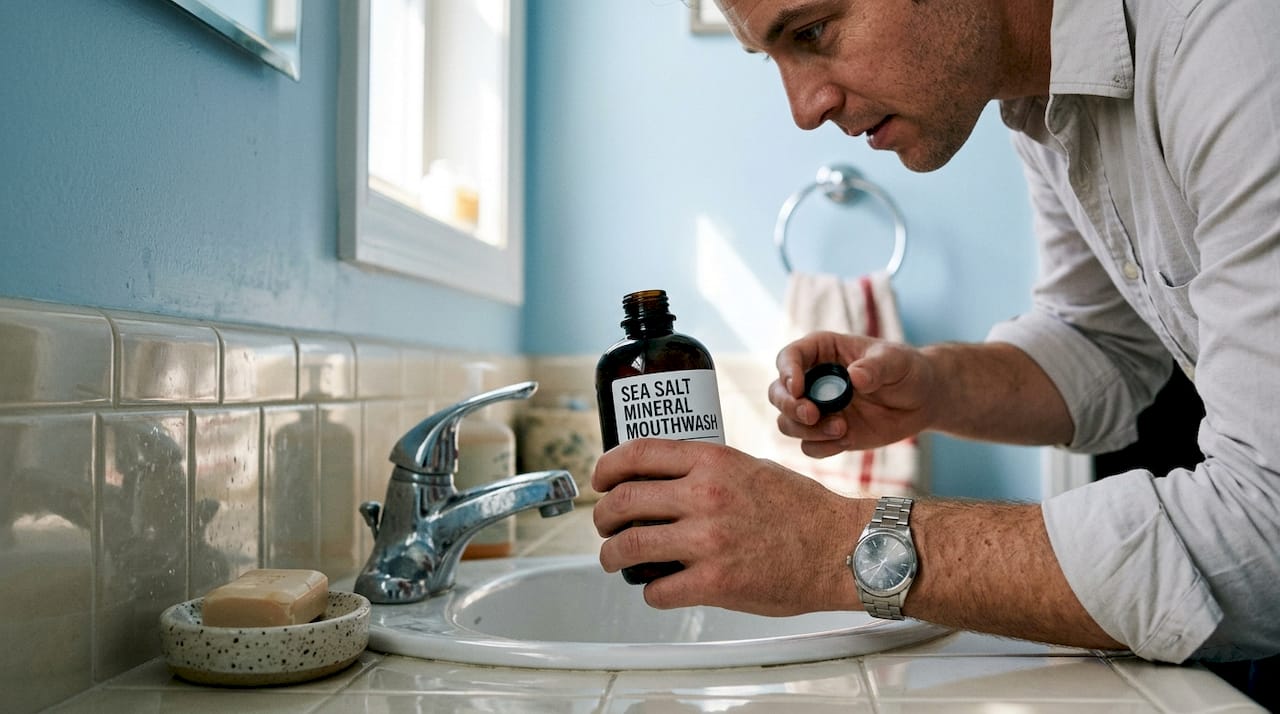
H2Ocean Healing Rinse relies on natural sea salt as its primary active mineral component. Sea salt and alcohol-free formulations such as H2Ocean are specifically designed for sensitive oral environments, providing a gentle osmotic action that supports tissue healing without chemical irritants. The product’s EWG rating further validates its safety profile for long-term use.
Biorepair Mouthwash utilizes zinc-carbonate hydroxyapatite nanocrystals, a patented mineral complex that adheres directly to enamel and dentin surfaces. This formulation has been studied in controlled clinical settings for its capacity to reduce plaque accumulation and gingivitis severity.
Key characteristics across these three products include:
- All three are alcohol-free, minimizing mucosal irritation
- Active minerals span hydroxyapatite, sea salt, and zinc-carbonate hydroxyapatite
- Each product is designed for sensitivity-prone users
- Formulations vary in their antimicrobial approach: colloidal silver, osmotic salt action, and zinc-modified crystals
Pro Tip: If you are new to mineral-based mouthwash, beginning with a sea salt formulation allows you to assess mineral tolerance before progressing to nano-particle options such as nHA or zinc-carbonate hydroxyapatite.
For a broader evaluation framework, the natural mouthwash guide provides context on how these products fit into a complete natural oral care routine. Those seeking additional ingredient transparency may benefit from reviewing safe mouthwash ingredients that are clinically documented for gum sensitivity.
Comparing mineral-based mouthwash for sensitivity
Having reviewed individual options, it is now appropriate to directly compare their attributes for sensitive oral care. The following table presents a structured assessment across the most clinically relevant parameters.
| Product | Active mineral | Alcohol-free | Clinical evidence | EWG/safety rating | Best suited for |
|---|---|---|---|---|---|
| Just Ingredients Remineralizing | Nano-hydroxyapatite | Yes | Remineralization studies | Not listed | Early enamel erosion |
| H2Ocean Healing Rinse | Natural sea salt | Yes | EWG low hazard rated | Low hazard | Sensitive gums, daily use |
| Biorepair Mouthwash | Zinc-carbonate nHA | Yes | Gingivitis RCTs | Not listed | Plaque, gingivitis |
Nano-hydroxyapatite and zinc-carbonate hydroxyapatite mouthwash formulations have demonstrated capacity to control plaque and gingivitis at levels comparable to fluoride and chlorhexidine-based rinses in clinical evaluations. This finding carries significant weight for individuals who seek fluoride-free and chlorhexidine-free alternatives due to sensitivity or personal preference.
Biorepair mouthwash controls plaque-induced gingivitis at a rate comparable to chlorhexidine, which is considered the clinical gold standard for antimicrobial mouthwash activity. This positions zinc-carbonate hydroxyapatite as a genuinely evidence-supported option, not merely a marketing alternative.
“Zinc-carbonate hydroxyapatite nanocrystals adhere to oral surfaces and deliver sustained mineral and antimicrobial action, making them a clinically credible choice for gingivitis management in sensitive patients.”
Key distinctions among these products for sensitive users:
- Enamel remineralization: Nano-hydroxyapatite is the strongest candidate
- Gingival support: Zinc-carbonate hydroxyapatite provides the most documented anti-gingivitis effect
- Simplest formulation: Sea salt provides mineral support with the fewest ingredients and the lowest risk profile
For individuals managing gingival recession, the mouthwash for receding gums resource offers additional clinical context. Those exploring the role of specific geological minerals may also find value in reviewing the Dead Sea mineral mouthwash literature, which covers a distinct but related mineral category.
How to choose the right mineral-based mouthwash
With options clearly compared, it is practical to address the decision process for selecting the most appropriate mineral-based mouthwash based on individual oral health needs and preferences.
The following numbered framework assists in structuring that decision:
- Identify your primary sensitivity concern. Enamel erosion and thermal sensitivity respond best to nano-hydroxyapatite. Gingival inflammation and bleeding benefit more from zinc-carbonate hydroxyapatite.
- Confirm the formula is alcohol-free. Alcohol is a known mucosal irritant that can worsen sensitivity. All three reviewed products are alcohol-free, but always verify the ingredient list before purchase.
- Evaluate clinical evidence. Products supported by randomized controlled trials, such as Biorepair, carry more weight than those supported only by in vitro data or company-sponsored claims.
- Assess nano-particle comfort level. Some individuals prefer to avoid nano-particle formulations due to unresolved long-term safety questions. In such cases, sea salt mouthwash provides mild mineral support without nano-particle exposure.
- Review ingredient transparency. Products that fully disclose inactive ingredients allow for better assessment of potential allergens or sensitivities.
- Start with a lower concentration or simpler formula. Individuals with severe sensitivity should introduce new mouthwash formulations gradually to monitor tolerability.
Pro Tip: Cross-reference any mouthwash ingredient list against the EWG Skin Deep database or equivalent safety resource before committing to daily use, particularly if you have a documented sensitivity to specific minerals or preservatives.
For those managing active gum disease alongside sensitivity, consulting best natural mouthwash resources for gum disease provides a more targeted framework. Evidence-supported gum disease home remedies backed by science can also complement a mineral-based mouthwash regimen when professionally guided.
Why mineral-based mouthwash is reshaping oral care: Our take
Mineral-based mouthwash is not simply a consumer trend. It represents a measurable shift in how clinicians and researchers approach enamel defense and gingival health without reliance on conventional chemical agents. The evidence now demonstrates that nano-hydroxyapatite is non-inferior to fluoride for managing early enamel lesions, though debate continues regarding long-term nano-particle safety. That debate is scientifically legitimate and should not be dismissed.
For health-conscious individuals who are cautious about nano-particle exposure, sea salt mouthwash remains a defensible, low-risk option with meaningful mineral activity. The decision should not be driven by marketing positioning but by a transparent evaluation of clinical evidence and individual tolerance.
We recommend that sensitive users prioritize verified alcohol-free formulas, seek products with published clinical trial data, and remain open to adjusting their choice as new evidence emerges. Those ready to switch to alcohol-free mouthwash will find a well-documented body of evidence supporting that transition as a first step toward more comfortable daily oral care.
Explore more safe, mineral-based oral care
For individuals committed to evidence-based, fluoride-free oral health, the educational journey does not end with a single product choice.
At Stop Oral Care, the focus is on formulations that combine scientific rigor with ingredient transparency, specifically for those managing sensitivity, gum vulnerability, or a preference for natural mineral compounds. Whether you are beginning to explore mineral-based rinses or refining an established natural oral care routine, mineral-based oral care resources and products are designed to support informed, comfortable decisions at every stage. Evidence and comfort are not mutually exclusive, and the right formulation exists for your specific oral health profile.
Frequently asked questions
Are mineral-based mouthwashes safe for daily use?
Most mineral mouthwashes including sea salt and hydroxyapatite present as low hazard for daily use, though formulations containing nano-particles warrant additional consideration regarding long-term systemic exposure.
Do mineral mouthwashes help with sensitive teeth?
Nano-hydroxyapatite supports sensitivity by remineralizing enamel and occluding dentin tubules, while zinc-carbonate hydroxyapatite provides additional anti-inflammatory benefits that reduce gingival discomfort.
Are mineral mouthwashes a good alternative to fluoride?
Clinical trials demonstrate that nano-hydroxyapatite is non-inferior to fluoride for early enamel lesions, though fluoride remains more effective for advanced carious lesions and should be considered in those cases.
What ingredients should I look for in mineral mouthwash if I have sensitive gums?
Alcohol-free formulas with hydroxyapatite or sea salt are the most appropriate starting points for sensitive gums, offering mineral activity without chemical irritants that commonly trigger gingival discomfort.
Recommended
- Natural Mouthwash Usage Guide for Sensitive Teeth – Stop Oral Care
- 7 Best Examples of Mineral-Based Toothpaste Explained – Stop Oral Care
- 7 Examples of Safe Mouthwash Ingredients for Sensitive Gums – Stop Oral Care
- Benefits of Botanical Mouthwash for Sensitive Gums – Stop Oral Care
- 7 Beispiele ästhetische Zahnheilkunde für Ihr schönstes Lächeln