

TL;DR:
- Alcohol-free mouthwashes are as effective as alcohol-based ones for reducing plaque and gingivitis.
- They offer safety benefits for children, sensitive mouths, and individuals with dry mouth conditions.
- Active ingredients like cetylpyridinium chloride and essential oils provide antimicrobial effects without alcohol.
A widespread assumption in oral care holds that alcohol is a necessary component of effective mouthwash. Clinical evidence challenges this view directly. Alcohol-free formulas demonstrate comparable reductions in plaque and gingivitis relative to their alcohol-containing counterparts, while offering additional safety and comfort advantages that are particularly relevant for sensitive users, children, and individuals committed to daily long-term use. This article defines alcohol-free mouthwash, examines its active mechanisms, reviews the comparative research, and provides a structured framework for selecting the most appropriate formula based on individual oral health priorities.
Table of Contents
- What is alcohol-free mouthwash?
- How does alcohol-free mouthwash work?
- Alcohol-free vs. alcohol-based: What does the research say?
- Choosing the best alcohol-free mouthwash for your needs
- Our perspective: The overlooked upsides and caveats of alcohol-free mouthwash
- Start your healthier oral care routine today
- Frequently asked questions
Key Takeaways
| Point | Details |
|---|---|
| Alcohol-free is effective | Studies confirm alcohol-free mouthwashes work just as well for reducing plaque and gingivitis. |
| Safer, gentler option | Alcohol-free formulas are ideal for sensitive mouths, children, and daily long-term use. |
| Choose based on ingredients | Different alcohol-free mouthwashes use active ingredients like CPC, essential oils, or herbs—pick what matches your needs. |
| Third-party certification matters | Look for products with ADA or similar certification for proven safety and effectiveness. |
| Supports holistic care goals | Alcohol-free and natural formulas align well with those seeking cleaner, safer oral-health routines. |
What is alcohol-free mouthwash?
Now that the premise that mouthwash effectiveness depends on alcohol has been challenged, it is important to clarify precisely what alcohol-free mouthwash means in formulation and regulatory terms.
Alcohol-free mouthwash is defined as any oral rinse that does not contain ethanol or comparable short-chain alcohols commonly used in traditional antiseptic formulas. Conventional alcohol-based rinses typically incorporate ethanol at concentrations ranging from 6% to 27%, primarily as a solvent and antimicrobial carrier. Alcohol-free formulas achieve equivalent or comparable antimicrobial activity through alternative active agents, including cetylpyridinium chloride (CPC), essential oils such as thymol and eucalyptol, xylitol, or herbal extracts including aloe vera and chamomile.
Consumer interest in alcohol-free options has grown for several well-documented reasons:
- Safety for children and adolescents: Ethanol-containing rinses pose ingestion risks for younger users, making alcohol-free formulas the standard recommendation for pediatric oral care.
- Reduced mucosal irritation: Alcohol can cause a burning sensation and temporary dryness of oral tissues, which discourages consistent daily use among sensitive individuals.
- Compatibility with dry mouth conditions: Ethanol is a desiccant that can exacerbate xerostomia (dry mouth), a condition affecting a significant portion of older adults and individuals on certain medications.
- Suitability for long-term daily use: The absence of alcohol makes these rinses more appropriate for sustained, routine application without cumulative tissue effects.
- Alignment with fluoride-free and natural oral care preferences: Many consumers seeking benefits of alcohol-free mouthwash also prioritize formulas free from synthetic additives.
From a regulatory standpoint, the American Dental Association (ADA) evaluates mouthwash products based on demonstrated safety and effectiveness, not on the presence or absence of alcohol. The ADA Seal of Acceptance is awarded to products meeting established standards for anticavity protection, antiplaque activity, or antigingivitis efficacy, regardless of whether the formula is alcohol-based or alcohol-free. This distinction is critical for consumers evaluating label claims.
“Both alcohol-containing and alcohol-free mouthwashes may qualify for ADA certification, provided they meet the same evidence-based standards for safety and clinical effectiveness.”
For a detailed comparison of formulation types, reviewing whether alcohol-free mouthwash is better provides additional clinical context.
How does alcohol-free mouthwash work?
With a solid understanding of what defines alcohol-free mouthwash, the next step is to examine how these products function at a mechanistic level to support oral health.
Alcohol-free mouthwashes rely on a range of active agents, each with distinct mechanisms of antimicrobial or tissue-protective action:
- Cetylpyridinium chloride (CPC): A quaternary ammonium compound that disrupts bacterial cell membranes, reducing viable bacterial counts in the oral biofilm.
- Essential oils (thymol, eucalyptol, menthol, methyl salicylate): These compounds penetrate the bacterial cell wall, inhibiting enzyme activity and reducing biofilm formation.
- Xylitol: A sugar alcohol that inhibits the growth of Streptococcus mutans, the primary cariogenic (cavity-causing) bacterium, by disrupting its metabolic pathways.
- Herbal extracts (aloe vera, chamomile, green tea): These agents offer anti-inflammatory and mild antimicrobial properties, making them relevant for soothing irritated gingival tissue.
Clinical research confirms that alcohol-free CHX and essential oils are as effective as alcohol-based versions for reducing plaque and gingivitis. This equivalence is particularly significant for users who previously assumed that the burning sensation from alcohol was an indicator of antimicrobial potency.
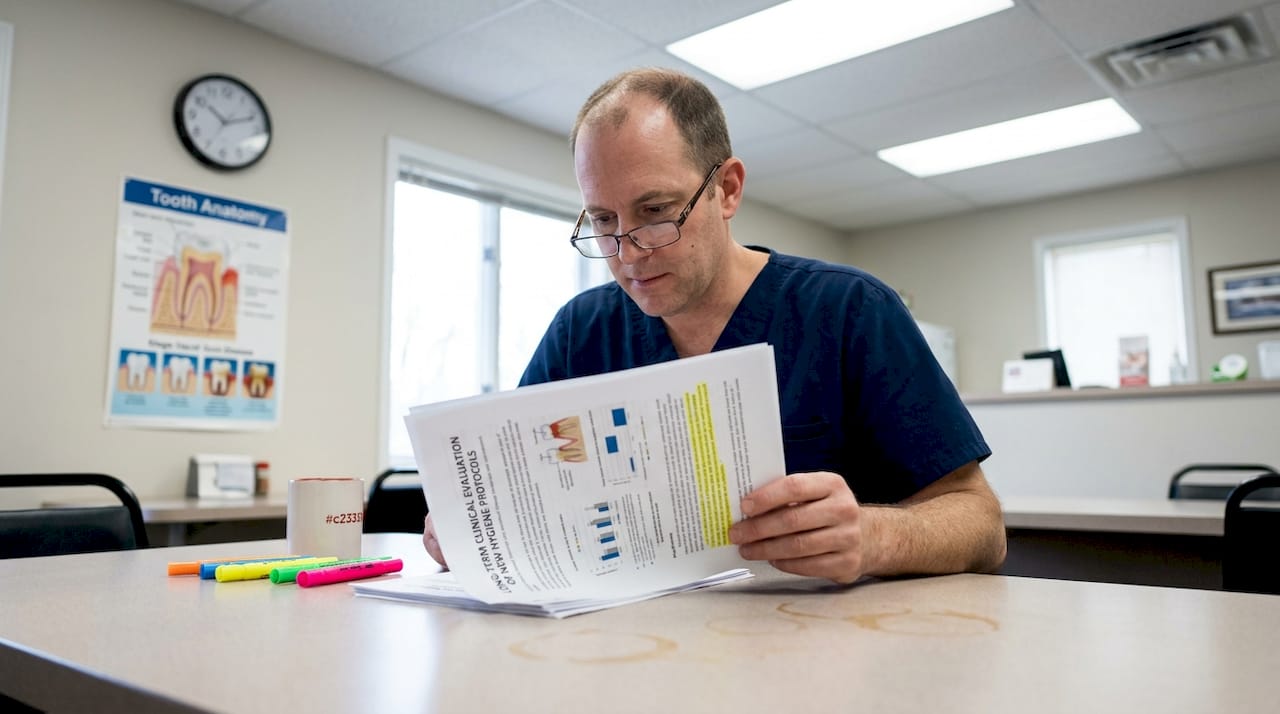
A growing segment of alcohol-free formulas targets oral microbiome balance rather than broad-spectrum bacterial elimination. This approach, which favors selective inhibition of pathogenic species while preserving commensal flora, aligns with holistic oral care principles. However, the ADA notes that natural and fluoride-free options prioritizing microbiome support and herbal actives currently have less empirical data compared to established antiseptics like CPC or chlorhexidine.
Pro Tip: If you are evaluating herbal alcohol-free mouthwash examples, cross-reference the active ingredient list against peer-reviewed efficacy data rather than relying solely on label claims.
For users specifically concerned with periodontal health, natural gum disease mouthwash options that incorporate clinically studied actives represent the most evidence-supported choices within the natural oral care category.
Alcohol-free vs. alcohol-based: What does the research say?
Knowing how alcohol-free mouthwashes work, it is important to assess how they compare against traditional alcohol-containing formulas in controlled clinical contexts.
The comparative evidence base is now substantial. Clinical studies consistently demonstrate comparable plaque and gingivitis reduction between alcohol-free and alcohol-containing mouthwashes when the active antimicrobial agents are equivalent. The presence of ethanol does not independently contribute to greater clinical efficacy; it functions primarily as a solvent and preservative.
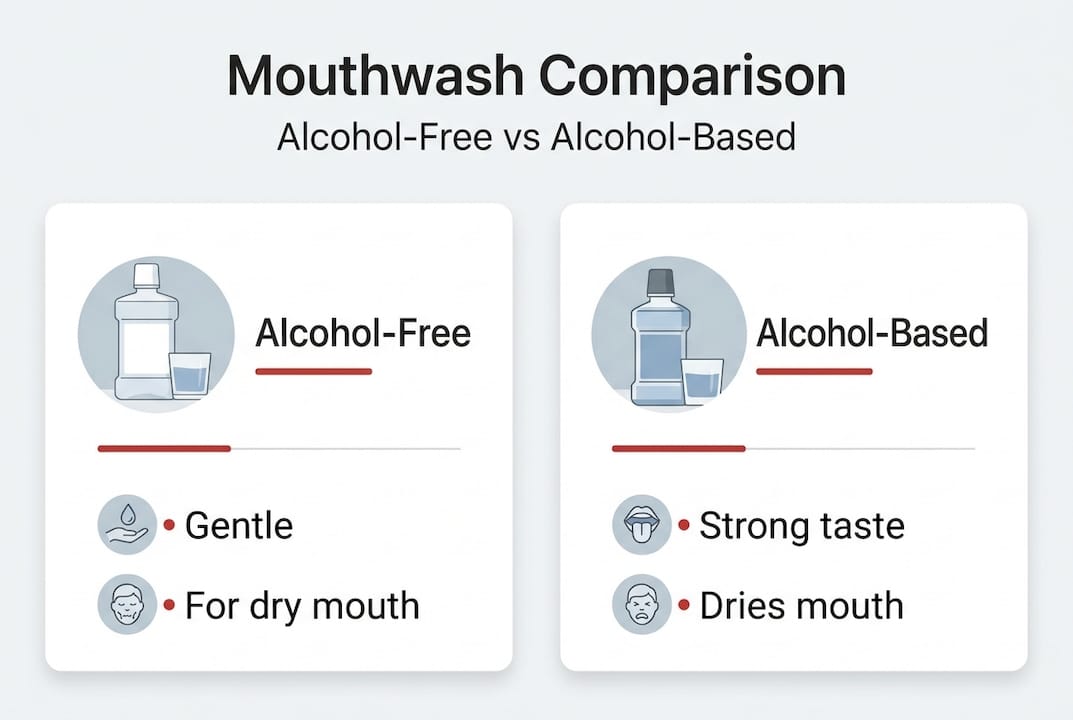
| Parameter | Alcohol-based mouthwash | Alcohol-free mouthwash |
|---|---|---|
| Plaque reduction | Clinically significant | Comparable (equivalent actives) |
| Gingivitis reduction | Clinically significant | Comparable (equivalent actives) |
| Mucosal irritation | Higher (burning, dryness) | Lower (better tissue tolerance) |
| Suitability for dry mouth | Not recommended | Preferred |
| Pediatric safety | Not recommended | Appropriate |
| Dental material impact | No significant roughness change | No significant roughness change |
| Aerosol reduction (CHX) | Standard | Enhanced (alcohol-free CHX preferred) |
Research examining the effect of mouthwash on restorative dental materials is particularly relevant for patients with composite restorations. Studies on composite roughness report no significant difference in surface texture after 24-hour immersion in either alcohol-based or alcohol-free formulas, indicating that both types are safe for use with common dental restorations.
One area where alcohol-free formulas demonstrate a distinct advantage is in clinical settings requiring aerosol reduction. Alcohol-free chlorhexidine (CHX) has been shown to reduce oral aerosol bacterial load more effectively than standard formulations, a finding with direct implications for dental practice infection control protocols.
“The clinical equivalence of alcohol-free mouthwashes across key efficacy parameters, combined with superior tolerability profiles, supports their suitability for long-term daily oral hygiene regimens.”
For users seeking long-term alcohol-free benefits, particularly those managing alcohol-free for dry mouth conditions, the research profile strongly supports the transition away from ethanol-containing formulas.
Choosing the best alcohol-free mouthwash for your needs
Armed with scientific comparisons, the next step is to translate this evidence into practical selection criteria aligned with individual oral health goals.
The active ingredient is the most critical determinant of a mouthwash’s clinical utility. The following table summarizes the primary alcohol-free active agents, their mechanisms, and their primary indications:
| Active ingredient | Primary mechanism | Best suited for |
|---|---|---|
| Cetylpyridinium chloride (CPC) | Membrane disruption, broad antimicrobial | Plaque control, gingivitis prevention |
| Essential oils (thymol, eucalyptol) | Biofilm penetration, enzyme inhibition | General antimicrobial, breath freshening |
| Xylitol | S. mutans inhibition | Cavity prevention, dry mouth support |
| Chlorhexidine (CHX), alcohol-free | Broad-spectrum bactericidal | Post-surgical, high-risk periodontal cases |
| Herbal extracts (aloe, chamomile) | Anti-inflammatory, mild antimicrobial | Sensitive gums, tissue soothing |
| Hemp and Dead Sea minerals | Emerging; anti-inflammatory, microbiome support | Holistic, fluoride-free oral care |
A structured selection process improves the likelihood of matching the right product to your clinical needs:
- Define your primary oral health objective: Cavity prevention, gingivitis control, dry mouth management, microbiome support, or fluoride-free formulation.
- Review the active ingredient list: Match the active agent to your objective using the table above.
- Check for third-party certification: The ADA Seal of Acceptance confirms that a product has met evidence-based standards for its stated claims.
- Assess ingredient transparency: Formulas with clearly disclosed active and inactive ingredients allow for more informed comparisons.
- Consider your sensitivity profile: Users with reactive gingival tissue, xerostomia, or pediatric users should prioritize formulas specifically formulated for sensitive mouths.
Pro Tip: For users prioritizing oral microbiome health, look for formulas that specify selective rather than broad-spectrum antimicrobial activity, as these are less likely to disrupt beneficial commensal bacteria.
Users managing periodontal concerns such as receding gums should consult a dental professional before selecting a formula, as clinical-grade actives like CHX may be indicated. For those focused on bad breath solutions, essential oil-based formulas with demonstrated volatile sulfur compound (VSC) reduction are the most evidence-supported option.
Our perspective: The overlooked upsides and caveats of alcohol-free mouthwash
As the evidence base for alcohol-free mouthwash continues to expand, a frank assessment of both its genuine advantages and its limitations is warranted.
Alcohol-free mouthwash is not simply a reformulation that removes one ingredient. It represents a shift in the underlying philosophy of oral antisepsis, moving away from the assumption that a strong solvent is necessary for efficacy and toward a more tissue-compatible approach to daily oral hygiene. This shift is particularly meaningful for families with young children, individuals managing chronic dry mouth, and users with reactive mucosal tissue who have historically avoided mouthwash due to discomfort.
At the same time, the natural and fluoride-free segment of the alcohol-free market requires careful evaluation. The alignment with holistic health and clean beauty principles is legitimate, but some products in this category carry marketing claims that exceed the available clinical evidence. Formulas incorporating hemp-derived compounds and Dead Sea minerals, for example, show promise in anti-inflammatory and microbiome support applications, but consumers should seek products backed by transparent research rather than broad wellness claims.
For a grounded review of natural gum disease remedies within this category, cross-referencing ingredient lists with peer-reviewed data remains the most reliable approach. Realistic expectations, combined with evidence-informed selection, define the most effective use of alcohol-free oral care products.
Start your healthier oral care routine today
Ready to make the switch or upgrade your routine? Here’s where to find trusted alcohol-free mouthwash choices.
For consumers who have reviewed the evidence and are prepared to transition to an alcohol-free oral care regimen, the selection process need not be complicated. The key is identifying products that combine clinical transparency with formulation quality.
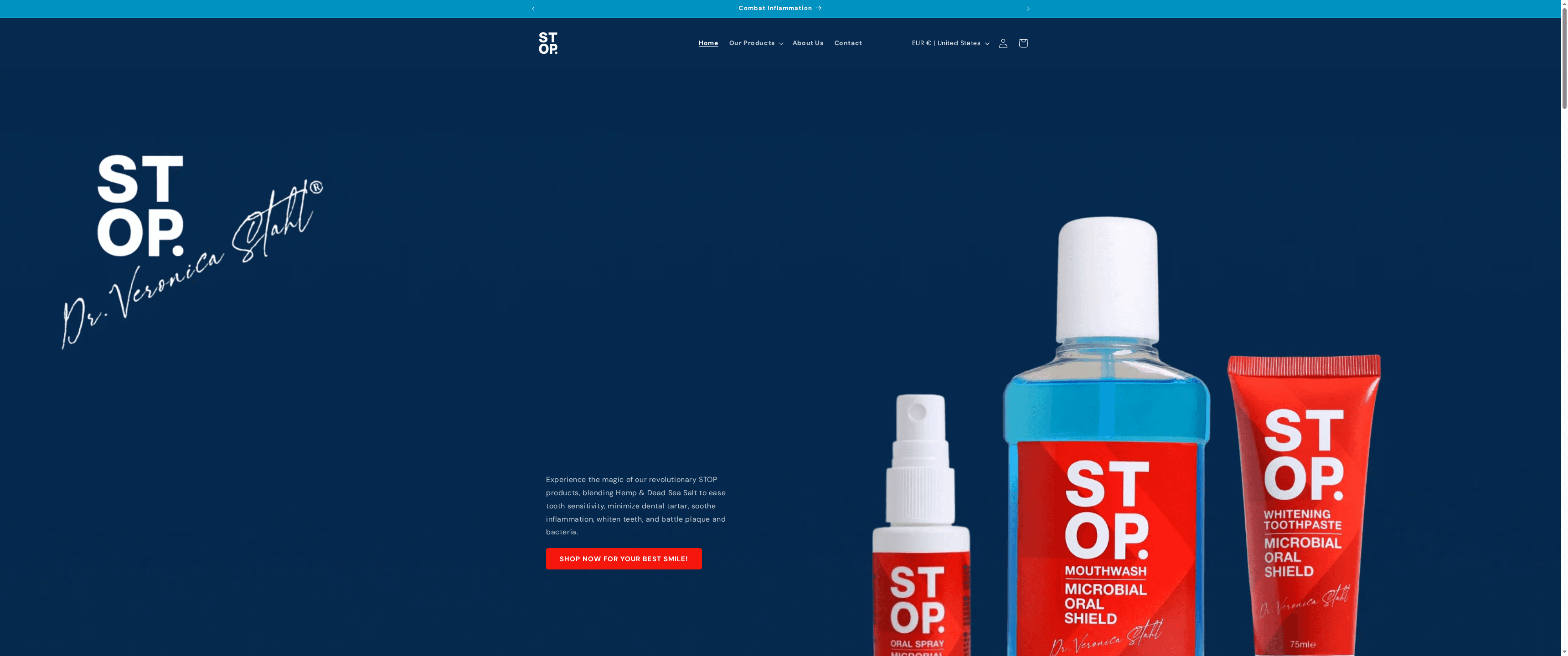
At Stop Oral Care, you will find a curated selection of alcohol-free mouthwash options formulated with natural actives, including hemp-derived compounds and Dead Sea minerals, designed to support oral health without ethanol, fluoride, or synthetic additives. Each product is developed with scientific backing and positioned for daily use across a range of oral health priorities, from gum support to microbiome balance. Explore the full range to identify the formula that best aligns with your clinical needs and personal health values.
Frequently asked questions
Are alcohol-free mouthwashes as effective as those with alcohol?
Yes. Clinical research confirms that alcohol-free mouthwashes containing CHX or essential oils reduce plaque and gingivitis as effectively as alcohol-based versions when equivalent active agents are used.
Is alcohol-free mouthwash safer for kids and sensitive mouths?
Alcohol-free mouthwash is generally safer for children and individuals with sensitive oral tissue because it eliminates the burning sensation, dryness, and ingestion risk associated with ethanol. The ADA recommends alcohol-free formulas for long-term daily use and for users with health or safety concerns.
Does alcohol-free mouthwash help with dry mouth?
Yes. Because ethanol is a desiccant that can worsen xerostomia, alcohol-free formulas are the preferred option for individuals with dry mouth, as supported by ADA guidance on mouthrinse selection for sensitive users.
Can I get alcohol-free mouthwash that is also fluoride-free and natural?
Many alcohol-free mouthwashes are available in fluoride-free and herbal formulations, though efficacy varies. The ADA notes that natural options prioritizing microbiome support currently have less empirical data compared to conventional antiseptic actives.
Does alcohol-free mouthwash change the feel or appearance of dental work?
No. Research on composite roughness shows no significant change in the surface texture of dental restorations after exposure to alcohol-free mouthwash, confirming its safety for patients with composite or other restorative materials.
Recommended
- Alcohol Free Mouthwash Benefits: 5 Reasons to Make the Switch Today – Stop Oral Care
- Best Natural Mouthwash for Gum Disease: 5 Effective Options Reviewed – Stop Oral Care
- Effective Natural Mouthwash for Gum Disease: 5 Home Remedies Backed by – Stop Oral Care
- Is Alcohol-Free Mouthwash Better? A Practical Guide to Choosing the Ri – Stop Oral Care