

Nearly half of U.S. adults over 30 are affected by some form of gum disease, yet many of these individuals brush and floss regularly. This disconnect points to a fundamental gap in how conventional oral care is often understood. Gum health is not determined solely by mechanical cleaning. It is shaped by nutrition, systemic inflammation, microbial balance, and the chemical composition of the products used daily. Holistic gum health addresses these root causes through evidence-backed natural strategies, and this article examines what that approach involves, how it compares to conventional dentistry, and how you can apply it effectively.
Table of Contents
- What holistic gum health means
- Core principles and methods of holistic gum care
- Holistic gum care versus traditional dentistry: Key differences
- Is holistic gum care effective? Evidence and limitations
- Is holistic gum care right for you? Practical tips to start
- Explore holistic gum health solutions
- Frequently asked questions
Key Takeaways
| Point | Details |
|---|---|
| Whole-person approach | Holistic gum health addresses diet, stress, and lifestyle, not just surface cleaning. |
| Science-backed natural options | Remedies like propolis, enzyme pastes, and healthy diets can reduce gum inflammation and plaque. |
| Prevention and gentleness | Holistic care focuses on prevention with biocompatible materials and milder methods. |
| Limits of natural treatment | Early gum disease may be reversible naturally but advanced cases require dental intervention. |
| Personalization is key | Choose evidence-based, natural products tailored to your sensitivities and consult a professional when in doubt. |
What holistic gum health means
Many believe good oral hygiene alone protects gums, but the holistic approach draws a clear distinction between symptom management and root-cause resolution. Holistic gum care treats the oral cavity as an integrated component of whole-body physiology. Inflammation in the gums, for example, is not viewed in isolation but as a potential signal of systemic imbalance involving diet, stress, or toxic exposure.
According to a peer-reviewed overview, holistic dentistry integrates nutrition, lifestyle modification, natural antimicrobials, and biocompatible materials into a unified protocol. This stands in contrast to conventional approaches that often focus on mechanical debridement and pharmacological intervention after disease has already progressed.
A standard holistic gum protocol typically includes:
- Dietary modification to reduce systemic inflammation
- Elimination of synthetic chemicals from oral care products
- Use of natural antimicrobial agents such as propolis, neem, and tea tree oil
- Stress reduction practices that lower cortisol-driven immune suppression
- Regular evaluation of oral microbiome composition
For those interested in improving gum health naturally, understanding this broader framework is the necessary first step before selecting specific interventions.
Core principles and methods of holistic gum care
Understanding the philosophy is important. Next, let’s break down the specific methods holistic practitioners use and what the clinical literature says about each.
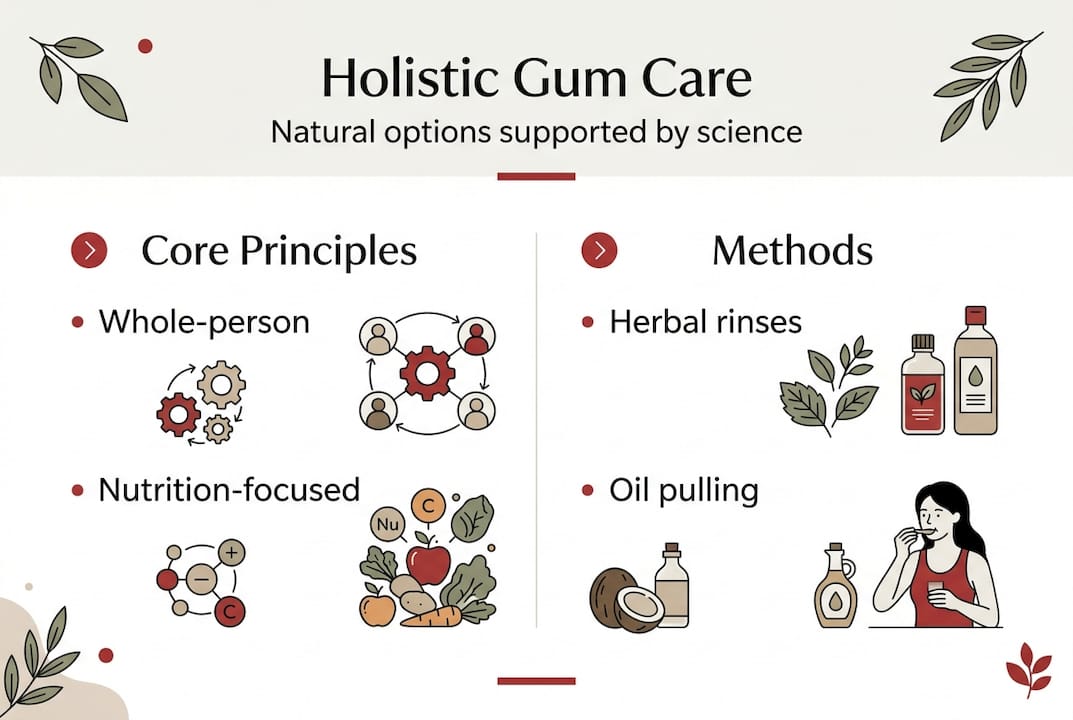
Nutritional support forms the foundation of holistic gum care. Anti-inflammatory diets rich in omega-3 fatty acids, high-fiber vegetables, and low in refined carbohydrates reduce the systemic inflammatory burden that drives periodontal tissue breakdown. Vitamins C and D, along with zinc, are particularly well-documented for their roles in collagen synthesis and immune regulation within gingival tissue.
Natural oral care agents represent the second major category. Oil pulling with coconut oil, herbal rinses containing propolis or neem, and enzyme-based toothpastes have all been studied in clinical settings. Research confirms that propolis rinse and enzyme toothpastes reduce plaque indices and gingivitis scores in controlled trials.

Fluoride-free formulations using hydroxyapatite, xylitol, and enzyme complexes are gaining traction as alternatives that support remineralization and oral microbiome balance without disrupting the microbial ecosystem. A systematic review of nutritional interventions and oral health confirmed empirical support for diet, propolis, enzyme toothpaste, and zinc in improving gingival outcomes.
The following table summarizes the primary interventions and their documented effects:
| Intervention | Documented effect | Evidence level |
|---|---|---|
| Propolis rinse | Reduces plaque and gingival index | RCT-supported |
| Enzyme toothpaste | Lowers plaque accumulation | Clinical trial |
| Vitamin C and D supplementation | Supports collagen and immune function | Systematic review |
| Xylitol-based products | Inhibits Streptococcus mutans growth | Multiple RCTs |
| Oil pulling | Modest reduction in oral bacteria | Pilot studies |
| Zinc supplementation | Anti-inflammatory gingival effect | Observational data |
For practical guidance on selecting products, see these tips for healthy gums and a detailed review of fluoride-free care benefits.
Pro Tip: When evaluating natural oral care products, prioritize those with published clinical data or peer-reviewed ingredient studies. Marketing claims alone are insufficient. Look for specific active concentrations and trial outcomes listed in product documentation.
Holistic gum care versus traditional dentistry: Key differences
With methods in mind, let’s see how holistic strategies compare to the typical dental office experience across several key dimensions.
| Dimension | Holistic approach | Conventional approach |
|---|---|---|
| Treatment focus | Root causes, systemic health | Symptom management, mechanical repair |
| Materials used | Biocompatible, mercury-free | Synthetic composites, amalgam possible |
| Microbiome consideration | Central to protocol | Often secondary |
| Patient role | Active lifestyle participant | Passive recipient of treatment |
| Prevention emphasis | Primary goal | Secondary to intervention |
| Chemical exposure | Minimized | Standard clinical agents used |
A key distinction involves material selection. Holistic approaches use biocompatible materials and avoid mercury-containing amalgam, while conventional dentistry may still employ synthetic materials depending on the clinical context and practitioner preference.
“The integration of microbiome-aware protocols and biocompatible materials represents a meaningful shift in how periodontal health is conceptualized, moving from reactive treatment toward systemic prevention.”
It is important to note that these approaches are not mutually exclusive. Patients switching to fluoride-free dental care can still benefit from professional scaling, radiographic monitoring, and evidence-based conventional interventions when clinically indicated. Emerging digital dentistry approaches are also beginning to bridge the gap between precision diagnostics and minimally invasive care.
Is holistic gum care effective? Evidence and limitations
If you are evaluating real-world results, the research offers meaningful but nuanced findings. Clinical trials and systematic reviews support several holistic interventions, though the evidence base is not uniform across all methods.
What the research supports most strongly:
- Propolis mouthwash: Randomized controlled trials show propolis and diet reduce gingival inflammation and plaque scores, with statistically significant outcomes (p=0.003 for gingival index reduction in multiple trials)
- Enzyme toothpastes: Consistent reduction in plaque accumulation across multiple clinical studies
- Anti-inflammatory diet: Associated with lower periodontal disease prevalence in large observational cohorts
- Xylitol: Well-documented inhibition of cariogenic bacteria with secondary benefits for gingival health
- Vitamin C and D: Deficiency strongly correlated with periodontal tissue degradation
However, limitations exist. Not every natural remedy has been tested in high-quality trials, and effect sizes vary. Critically, advanced periodontitis and bone loss require professional dental intervention. Holistic methods are most effective as preventive and adjunctive strategies, not as replacements for clinical care in moderate to severe disease.
For those exploring natural mouthwash options, selecting products with documented active concentrations of propolis or antimicrobial enzymes is advisable. Gum health also has direct implications for implant longevity, as documented in research on gum health and implant success.
Pro Tip: Schedule professional periodontal evaluations at least twice per year even when following a holistic protocol. Early detection of pocket depth changes or bone loss allows timely intervention before irreversible damage occurs.
Is holistic gum care right for you? Practical tips to start
Knowing the strengths and boundaries of holistic gum health, here is how you can put these concepts into practice systematically.
- Evaluate your current habits. Identify products containing sodium lauryl sulfate, artificial preservatives, or alcohol-based rinses. These agents can disrupt the oral microbiome and irritate gingival tissue.
- Transition to fluoride-free formulations. Replace conventional toothpaste and mouthwash with hydroxyapatite, xylitol, or enzyme-based alternatives. A structured fluoride-free dental hygiene guide can support this transition.
- Optimize your diet. Increase intake of leafy greens, fatty fish, and vitamin C-rich foods. Reduce refined sugars and processed carbohydrates that feed pathogenic oral bacteria.
- Add targeted natural products. Introduce a propolis-based rinse or an enzyme toothpaste with documented clinical backing. Review best gum health toothpastes to identify formulations with verified active ingredients.
- Consult a professional when needed. Certain populations, including smokers, individuals with diabetes, and those with existing implants, face elevated periodontal risk. Research confirms that advanced periodontitis requires professional care, and that habits such as smoking significantly reduce the effectiveness of natural interventions.
Special populations should approach holistic gum care as a complement to, not a substitute for, professional monitoring. Chronic illness, immunosuppression, and implant maintenance all require clinical oversight that natural products alone cannot provide.
Pro Tip: Read ingredient labels carefully. Effective natural products list specific active compounds (e.g., propolis extract at defined concentrations, hydroxyapatite percentage) rather than vague botanical blends. Specificity in formulation correlates with clinical reliability.
Explore holistic gum health solutions
As you apply the principles outlined in this article, accessing products that are both scientifically validated and formulated with natural, biocompatible ingredients can make the transition more effective. Stop Oral Care offers a curated range of fluoride-free products and expert guides developed under the direction of Dr. Veronica Stahl, integrating hemp-derived compounds and Dead Sea minerals with documented antimicrobial and anti-inflammatory properties.

For readers seeking to understand the broader rationale behind natural formulations, the platform’s educational resources on the benefits of natural oral care provide detailed ingredient-level analysis and clinical context. Whether you are beginning your transition or refining an existing protocol, these resources offer structured, evidence-informed guidance aligned with current periodontal research.
Frequently asked questions
Are holistic gum treatments safe for sensitive gums?
Most holistic treatments prioritize gentle, biocompatible materials with fewer harsh chemicals, making them generally well-tolerated by sensitive gums. However, individual allergies to botanical ingredients such as propolis or tea tree oil should be assessed before use.
Can I reverse gum disease naturally?
Early-stage gingivitis can often be reversed with holistic methods and thorough mechanical cleaning, particularly when dietary and lifestyle factors are also addressed. Advanced periodontitis involving bone loss requires professional clinical intervention and cannot be managed through natural care alone.
Do holistic approaches work if I avoid fluoride?
Yes. Fluoride-free alternatives including hydroxyapatite, xylitol, and enzyme-based toothpastes have demonstrated efficacy in reducing plaque and supporting gingival health in randomized controlled trials. The evidence base for these compounds continues to grow.
Is there scientific proof for herbal rinses like propolis or neem?
Clinical trials confirm that propolis rinses reduce plaque accumulation and gingival inflammation with statistically significant results. Evidence for other herbal agents such as neem and tea tree oil is promising but less consistent across study designs.
Does holistic gum care help with dental implants?
Maintaining healthy gingival tissue through holistic protocols supports the peri-implant environment, but implant longevity also depends on professional follow-up, proper occlusal loading, and regular clinical monitoring that natural care alone cannot replace.
Recommended
- Effective Natural Mouthwash for Gum Disease: 5 Home Remedies Backed by – Stop Oral Care
- How to Improve Gum Health Naturally: Simple Steps for a Brighter Smile – Stop Oral Care
- Holistic Oral Care: Natural Solutions for Optimal Health – Stop Oral Care
- Tips for healthy gums: natural and fluoride-free care – Stop Oral Care
- Gum health and dental implant success: All-on-4 guide