

TL;DR:
- Dental botanicals use plant compounds to combat bacteria, reduce inflammation, and support a healthy oral microbiome. They work by disrupting biofilms, inhibiting bacterial communication, and neutralizing free radicals, offering alternatives to traditional antiseptics like chlorhexidine. Standardized formulations with multiple phytochemicals enhance effectiveness and minimize side effects for long-term oral health.
Dental botanicals are defined as plant-derived compounds used in oral care to combat pathogenic bacteria, reduce inflammation, and support a balanced oral microbiome through multiple biochemical mechanisms. The science behind dental botanicals has advanced significantly, with clinical research confirming that phytochemicals from plants like green tea, neem, pomegranate, and aloe vera deliver antimicrobial and anti-inflammatory effects comparable to synthetic agents such as chlorhexidine, but with fewer adverse effects. These compounds do not act through a single pathway. They disrupt bacterial biofilms, inhibit quorum sensing, and scavenge free radicals simultaneously. That multi-targeted action is what separates botanical compounds in dentistry from conventional single-mechanism antimicrobials.
What are the antibacterial and anti-inflammatory properties of dental botanicals?
The antibacterial activity of dental botanicals centers on their ability to suppress Streptococcus mutans, the primary bacterial driver of dental caries. Polyphenols and alkaloids found in plants interfere with bacterial cell membranes, inhibit enzyme activity, and disrupt the formation of complex biofilms on tooth surfaces. This is not a mild effect. Research confirms that cardamom essential oil at 5.0% concentration reduces Streptococcus mutans biofilm formation and cell viability by over 75%. That level of biofilm inhibition places cardamom essential oil in the same performance tier as established antiseptic agents.

Anti-inflammatory activity is equally well documented. Gingivitis and periodontal disease both involve chronic inflammatory responses triggered by bacterial toxins in the gingival tissue. Botanical compounds interrupt this cycle by suppressing pro-inflammatory cytokines and reducing oxidative stress at the tissue level.
Key botanicals with documented clinical evidence include:
- Green tea polyphenols: Inhibit Streptococcus mutans adhesion and reduce gingival inflammation through catechin activity.
- Pomegranate extract: Delivers ellagic acid and punicalagins, which show strong antibiofilm and antioxidant properties.
- Neem: Contains nimbidin and nimbin, compounds with proven antibacterial and antifungal effects against oral pathogens.
- Aloe vera: Reduces plaque index scores and gingival bleeding in clinical trials, comparable to chlorhexidine gel.
- Sage: Exhibits antimicrobial activity against both gram-positive and gram-negative oral bacteria.
- Cardamom essential oil: Demonstrates a minimum inhibitory concentration of 2.5% against Streptococcus mutans, with bactericidal effects at 5.0%.
The comparison to chlorhexidine is significant. Chlorhexidine remains the gold standard in chemical plaque control, but it causes tooth staining, taste disturbance, and microbiome disruption with prolonged use. The benefits of dental botanicals include a more favorable side-effect profile, making them viable for long-term daily use.
How do dental botanicals work: mechanisms behind their oral health benefits
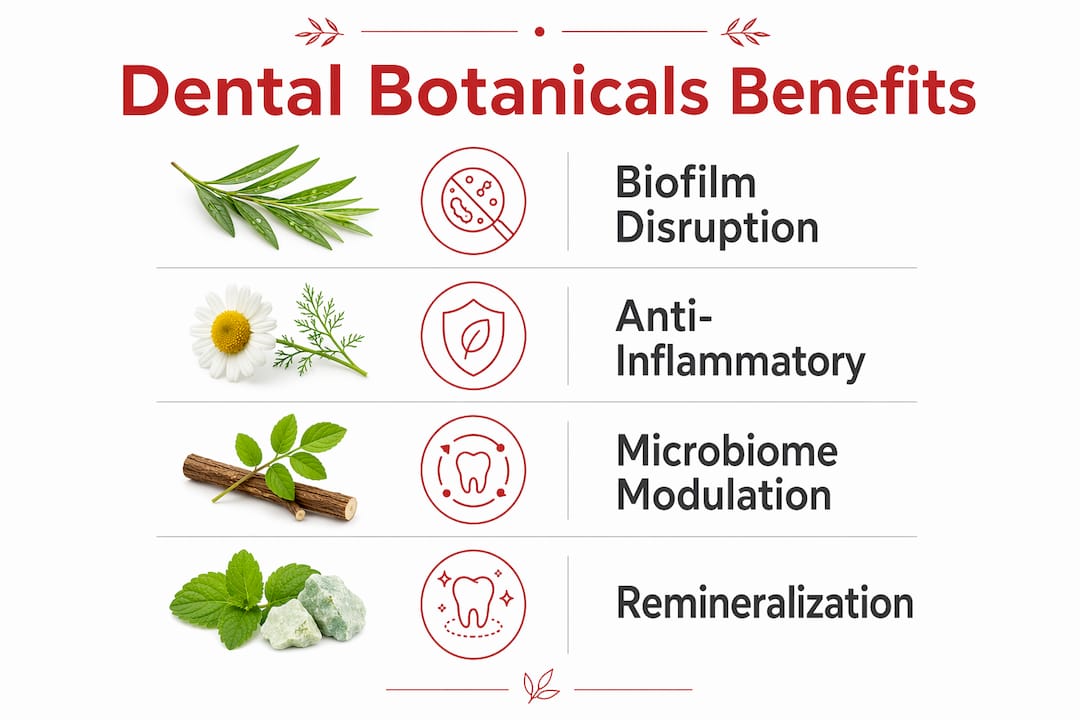
Dental botanicals exert their effects through at least three distinct biochemical mechanisms operating at the same time. This multi-targeted approach is the core scientific argument for their use in natural oral care.
-
Biofilm disruption: Polyphenols and terpenes penetrate the extracellular matrix of bacterial biofilms, destabilizing their structural integrity. Biofilms are the primary protective mechanism bacteria use to resist both immune responses and antimicrobial agents. Disrupting the biofilm exposes individual bacteria to the host’s defenses.
-
Quorum sensing inhibition: Bacteria coordinate virulence behaviors through chemical signaling called quorum sensing. Botanical compounds, particularly flavonoids and terpenoids, interfere with these signaling molecules. When quorum sensing is blocked, bacteria cannot coordinate biofilm formation, toxin production, or antibiotic resistance gene expression.
-
Antioxidant and free radical scavenging: Oxidative stress in gingival tissue accelerates periodontal breakdown. Polyphenols from green tea and pomegranate neutralize reactive oxygen species, reducing tissue damage independent of their direct antibacterial activity.
A fourth mechanism is gaining prominence in current research: microbiome modulation. Rather than sterilizing the oral cavity, botanical compounds selectively suppress pathogenic species while preserving beneficial commensal bacteria. Research confirms this shift from sterilization to balance represents the future direction of dental botanical science. This is a fundamental departure from conventional antiseptics, which indiscriminately reduce bacterial populations.
Synergistic polyherbal combinations amplify these mechanisms. Combined botanical ingredients such as L-arginine, ginger, and eggshell-derived hydroxyapatite outperform single-extract products in both antibacterial efficacy and enamel remineralization. Each ingredient addresses a different biological target, and their combined action produces effects greater than any single component alone.
Pro Tip: When evaluating a botanical oral care product, check whether it contains a combination of phytochemical classes, such as polyphenols alongside essential oils or minerals. Single-extract products deliver narrower effects than polyherbal formulations.
The resistance argument is also scientifically sound. Because botanical compounds attack multiple bacterial targets simultaneously, pathogens cannot develop resistance through a single genetic mutation. This contrasts with synthetic antibiotics, where resistance emerges rapidly when bacteria modify the single protein or pathway the drug targets.
What are the challenges in formulating effective botanical dental products?
The scientific evidence for dental botanicals is strong, but translating that evidence into reliable consumer products presents real obstacles. These challenges do not undermine the science. They define the quality threshold that separates effective products from ineffective ones.
The primary challenge is standardization. Plant-derived compounds vary in potency depending on growing conditions, harvest timing, extraction method, and storage. Batch-to-batch variability is a significant consumer challenge, meaning two bottles of the same product may deliver different concentrations of active phytochemicals. This variability directly affects clinical outcomes.
Key formulation challenges include:
- Concentration inconsistency: Without standardized extract specifications, the active compound content can differ substantially between production batches.
- Regulatory gaps: Botanical oral care products occupy a regulatory space between cosmetics and therapeutic agents in many jurisdictions, limiting the clinical trial requirements manufacturers must meet.
- Stability issues: Many polyphenols and essential oils degrade when exposed to light, heat, or oxygen, reducing shelf-life efficacy.
- Drug interactions and allergenic potential: Botanical extracts carry interaction risks with certain medications and can trigger allergic reactions in sensitive individuals. The “natural” label does not eliminate pharmacological activity.
Pro Tip: Select botanical oral care products that list standardized extract concentrations on the label, such as “green tea extract standardized to 45% EGCG.” This specification indicates quality-controlled manufacturing.
Consumers with systemic health conditions, those taking anticoagulants, or those with known plant allergies should consult a dental or medical professional before adopting botanical oral care products. Long-term effects on the oral microbiome are still under active investigation, and treating these compounds as pharmacologically inert because they are plant-derived is scientifically incorrect.
What practical applications and emerging trends exist for dental botanicals?
Botanical compounds now appear across the full range of oral hygiene product categories. Toothpastes, mouthwashes, gels, and oral sprays all incorporate phytochemical actives, and the formulation science behind these products is advancing rapidly.
The most significant emerging application is remineralization. Experimental tooth gels combining L-arginine, ginger, and eggshell-derived hydroxyapatite demonstrate efficacy in neutralizing plaque acids and promoting enamel remineralization comparable to commercial fluoride products. This was validated across 50 bovine enamel specimens in laboratory testing. The implication is direct: botanical formulations can address enamel erosion, not just bacterial load.
The table below summarizes current product categories and their primary botanical mechanisms:
| Product category | Primary botanical actives | Key mechanism |
|---|---|---|
| Toothpaste | Green tea, neem, aloe vera | Biofilm disruption, anti-inflammatory |
| Mouthwash | Sage, pomegranate, cardamom oil | Antibacterial, antioxidant |
| Remineralizing gel | L-arginine, ginger, hydroxyapatite | Acid neutralization, enamel repair |
| Oral spray | Essential oil blends | Quorum sensing inhibition |
| Probiotic-botanical hybrid | Prebiotic fibers plus polyphenols | Microbiome modulation |
Nano-encapsulation is the most consequential emerging technology in this space. Encapsulating botanical actives in nano-scale carriers protects them from degradation, extends their contact time with oral tissues, and improves penetration into biofilm matrices. This technology addresses the stability limitations that have historically constrained botanical product performance.
The oral health trends of 2026 point clearly toward microbiome-friendly, bioactive formulations as the dominant direction. Consumers selecting botanical oral care products should prioritize formulations with documented clinical testing, standardized extract concentrations, and transparent ingredient sourcing. Products that combine multiple phytochemical classes, as Stop-oralcare’s fluoride-free formulations do with hemp and Dead Sea minerals, reflect the polyherbal synergy principle that research consistently validates.
Key Takeaways
Dental botanicals deliver clinically meaningful oral health benefits through multi-targeted biochemical mechanisms, but their efficacy depends entirely on standardized formulation, validated concentrations, and evidence-based ingredient combinations.
| Point | Details |
|---|---|
| Multi-targeted action | Botanical compounds disrupt biofilms, inhibit quorum sensing, and scavenge free radicals simultaneously. |
| Cardamom oil efficacy | At 5.0% concentration, cardamom essential oil reduces Streptococcus mutans biofilm by over 75%. |
| Polyherbal synergy | Combined ingredients like L-arginine, ginger, and hydroxyapatite outperform single-extract formulations. |
| Standardization matters | Batch variability is the primary quality risk; seek products with standardized extract concentrations. |
| Microbiome modulation | The leading research direction is selective pathogen suppression, not broad-spectrum sterilization. |
What the research actually tells us about botanical oral care
I have spent years reviewing the clinical literature on natural oral care, and the most common mistake I see is treating botanical ingredients as gentle background additives rather than pharmacologically active agents. That framing undersells the science and leads to poor product choices.
The cardamom essential oil data is a good example. A greater than 75% reduction in Streptococcus mutans biofilm is not a marginal effect. That is a result that would generate serious attention if it came from a synthetic compound. The fact that it comes from a plant does not make it less significant. It makes it more interesting, because the mechanism involves multiple simultaneous pathways that pathogens cannot easily circumvent.
What I find most compelling in current research is the microbiome modulation angle. The old model of oral care was essentially about killing bacteria. The emerging model is about maintaining a microbial ecosystem where beneficial species hold competitive advantage over pathogens. Botanical polyphenols appear to support that balance in ways that broad-spectrum antiseptics cannot. That is a genuine scientific advance, not marketing language.
My practical recommendation is to apply the same scrutiny to botanical products that you would apply to any therapeutic agent. Ask for standardized extract concentrations. Ask about clinical testing. Understand that “natural” describes origin, not safety profile. The science supports botanical oral care strongly. Your job as an informed consumer is to select formulations that actually deliver what the science promises.
— Veronica
Stop-oralcare’s approach to science-backed botanical oral health
Stop-oralcare builds its product line on the same principles the research validates: polyherbal synergy, standardized active concentrations, and formulations designed to support the oral microbiome rather than disrupt it.

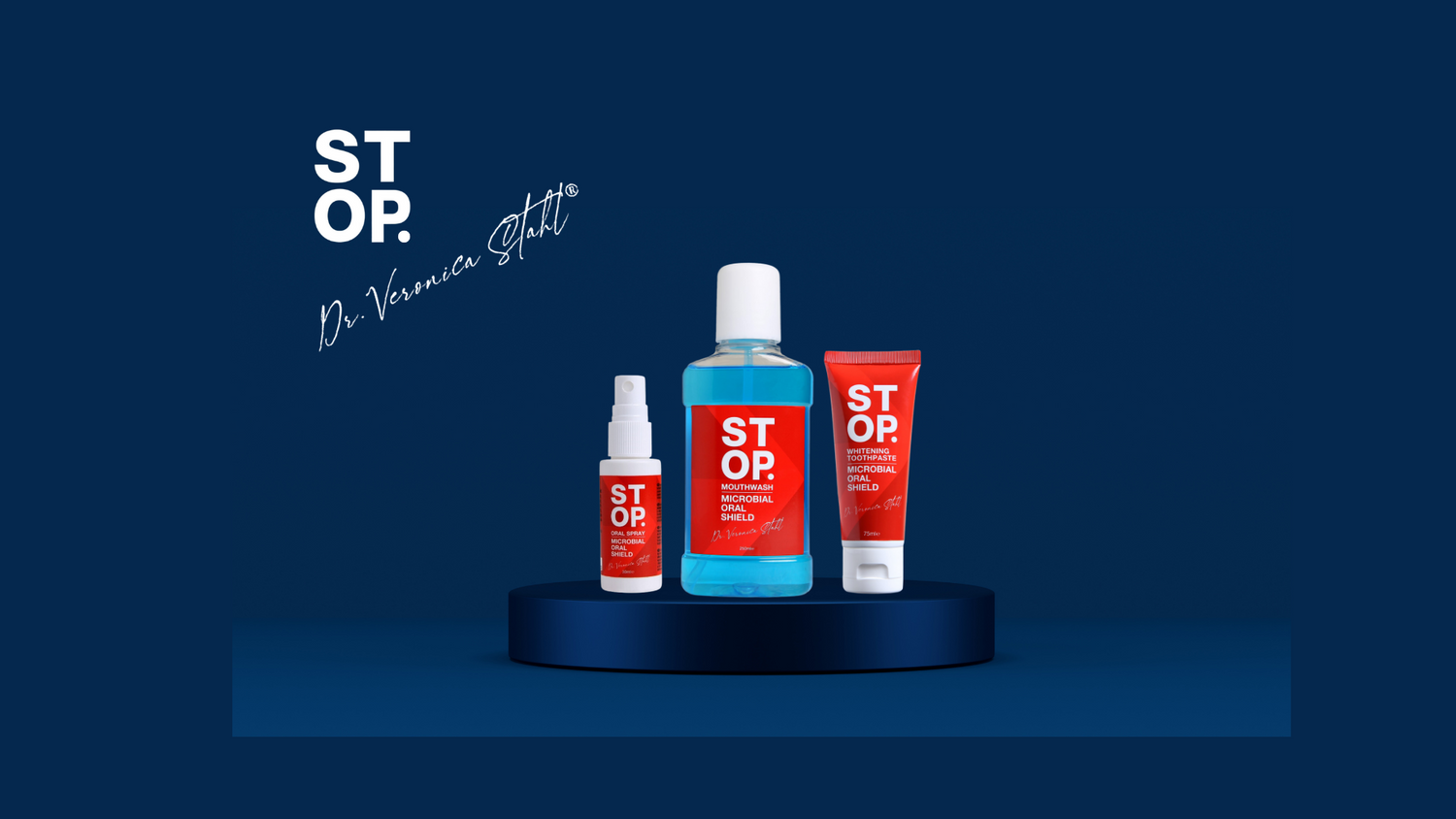
The fluoride-free toothpaste, mouthwash, and oral spray formulations from Stop-oralcare combine hemp-derived phytochemicals with Dead Sea minerals, reflecting the multi-targeted approach that clinical evidence consistently supports. Each product is developed under the guidance of Dr. Veronica Stahl, whose background in both dentistry and natural medicine informs the formulation decisions. Readers seeking a deeper understanding of botanical oral hygiene and how these ingredients function in daily practice can find detailed resources at Stop-oralcare.
FAQ
What are dental botanicals?
Dental botanicals are plant-derived compounds, including polyphenols, alkaloids, and essential oils, used in oral care products to inhibit pathogenic bacteria, reduce inflammation, and support a balanced oral microbiome.
How do dental botanicals work against oral bacteria?
Botanical compounds disrupt bacterial biofilms, block quorum sensing signals, and scavenge free radicals through simultaneous biochemical pathways, making it difficult for pathogens like Streptococcus mutans to develop resistance.
Are dental botanicals as effective as chlorhexidine?
Clinical evidence shows that phytochemicals from green tea, pomegranate, neem, aloe vera, and sage manage gingivitis comparably to chlorhexidine, with fewer adverse effects such as staining and taste disturbance.
What are the risks of using botanical oral care products?
Botanical extracts carry interaction risks with certain medications and can cause allergic reactions. Individuals with systemic health conditions should consult a dental professional before use.
How do I choose a reliable botanical dental product?
Select products that list standardized extract concentrations, have undergone clinical testing, and combine multiple phytochemical classes. Standardized extracts reduce batch variability and deliver more consistent therapeutic outcomes.