

A burning sensation after brushing most often reflects an irritant reaction to an ingredient such as sodium lauryl sulfate, menthol or cinnamon flavoring, rather than a true allergy. The appropriate first action is to stop using the product and rinse the mouth thoroughly with lukewarm water. Facial or tongue swelling, or any difficulty breathing, warrants urgent medical attention rather than home management. In most other cases, switching temporarily to a bland, SLS-free toothpaste resolves the discomfort within days.
TL;DR:
- Most burning sensations from toothpaste result from irritants like sodium lauryl sulfate, menthol, or cinnamon rather than an allergy, and switching to SLS-free products usually relieves symptoms within days.
- Checking ingredient lists for specific chemicals such as SLS, menthol, cinnamon flavoring, hydrogen peroxide, silica, or stannous fluoride helps identify potential irritants or allergens.
- Immediate measures include rinsing with lukewarm water, avoiding spicy or acidic foods, and using a soft toothbrush, while avoiding whitening pastes until irritation subsides.
- Symptom improvement within a few days after discontinuing the suspect product indicates a product-related issue, but persistent burning or new patches require professional evaluation.
- Severe symptoms like difficulty breathing, rapid swelling, or bleeding need urgent medical care, and recurrent reactions suggest underlying sensitivities requiring formal diagnosis.
Table of Contents
- What causes the burning sensation in your gums
- Ingredient checklist: what to look for on the label
- Immediate self-care steps to reduce burning and protect your gums
- How to test whether your toothpaste caused the problem
- When to see a dentist and what an assessment involves
- Gentle alternatives and safer shopping choices
- Publisher perspective: an ingredient-focused approach to sensitive mouths
- Try a gentle option built for sensitive mouths
- Sources
- FAQ
What causes the burning sensation in your gums
Several distinct mechanisms can produce a burning feeling after brushing, and identifying which one applies helps determine the right response. Sodium lauryl sulfate (SLS), a detergent used to create foam in most toothpaste formulas, has been associated in a scoping review of clinical evidence with mucosal desquamation, irritation and, in some cases, ulceration of the oral lining. This detergent effect explains why gums can feel raw or stripped shortly after brushing with a high-foaming paste.

Menthol and peppermint oil act on cooling receptors in the mouth, and in a mouth already sensitized by irritation or dryness, this cooling signal can register as an intense burning or stinging sensation rather than freshness. Cinnamon flavoring and other essential oils carry a separate risk: case reports describe contact stomatitis, a localized inflammatory reaction confined to areas of direct exposure. Whitening agents containing hydrogen peroxide, along with abrasive particles like silica, can chemically or physically irritate already inflamed tissue.
Burning is not always caused by toothpaste at all. Several other conditions produce a similar symptom and should be considered when the pattern does not track cleanly with product use:
- Dry mouth reduces the saliva that normally buffers irritants against the mucosa.
- Acid reflux can expose oral tissue to stomach acid overnight.
- Oral thrush, a fungal overgrowth, often causes burning alongside white patches.
- Burning-mouth syndrome is a distinct condition, described by Mayo Clinic, in which burning persists without an identifiable irritant.
Ingredient checklist: what to look for on the label
Reading past marketing language on the front of the tube and checking the ingredient list on the back is the most reliable way to identify a likely irritant.
- Sodium lauryl sulfate (SLS) or sodium laureth sulfate, the detergents most frequently linked to mucosal irritation and ulceration.
- Menthol or peppermint oil, which can intensify burning in a mouth that is already sensitized.
- Cinnamaldehyde or cinnamon flavoring, associated with contact stomatitis in case reports.
- Hydrogen peroxide, used in whitening formulas, which can chemically irritate inflamed gum tissue.
- Silica or calcium carbonate, abrasive agents that can aggravate tissue already compromised by irritation.
- Stannous fluoride or other tin compounds, tied to rare but confirmed cases of allergic contact cheilitis in patch-tested patients.
A product labeled “natural” or “herbal” offers no guarantee against irritation, since essential oils and flavoring compounds in these formulas can be just as reactive as their synthetic counterparts. Anyone relying on fluoride for cavity protection should check the fluoride concentration, measured in parts per million, before switching to a new formula, since some gentle or natural options carry little or none.
Immediate self-care steps to reduce burning and protect your gums
The first response to a burning sensation is mechanical: rinse the mouth thoroughly with lukewarm water to clear residual product from the tissue. Hot, spicy or acidic foods, along with alcohol-based mouthwash, should be avoided until the irritation settles, since each can compound the existing inflammation.
- Switch to a single bland SLS-free toothpaste rather than testing several alternatives at once.
- Use a very soft-bristled toothbrush and continue gentle cleaning rather than stopping oral hygiene altogether.
- Consider a short course of a soothing rinse, such as benzydamine, when recommended by a clinician for symptomatic relief.
- Avoid immediate rechallenge with the suspected product and skip abrasive whitening pastes until symptoms resolve.
Pro Tip: Keep the replacement toothpaste in its original box for a few days so you can check the ingredient list again if symptoms persist or change.
How to test whether your toothpaste caused the problem
A simple elimination approach can clarify whether a specific product is responsible, provided it is done one variable at a time.
- Stop the suspected toothpaste and switch to one bland, SLS-free alternative exclusively for several days.
- Avoid changing your mouthwash, floss or other oral products simultaneously, since multiple changes make the cause harder to isolate.
- Keep a brief note of which product you used and when symptoms appeared or eased.
- Skip deliberate rechallenge with the suspected product if you experienced swelling, large ulcers or breathing difficulty, and seek clinical testing instead.
Symptom improvement within a few days after stopping the suspected product supports a product-related trigger, a pattern consistent with elimination guidance summarized by Mayo Clinic. Burning that persists despite the switch points toward another cause and needs professional evaluation.
When to see a dentist and what an assessment involves
Some symptoms require prompt clinical attention rather than continued home management.
- Breathing or swallowing difficulty, or swelling that spreads rapidly, is a medical emergency.
- Severe ulceration or unexplained bleeding needs same-day evaluation.
- Burning that persists after stopping the suspected toothpaste, or white or red patches that do not resolve, warrants a non-urgent but timely dental visit.
- Repeated episodes tied to different products suggest an underlying sensitivity worth investigating formally.
A clinical assessment typically includes an oral examination, a review of current medications and any dental appliances, and, where an allergy is suspected, patch testing of specific ingredients such as stannous compounds. Blood tests may be used to rule out nutrient deficiencies contributing to mucosal fragility. Mild irritant exposures generally clear within days of stopping the product, while allergic or lichenoid reactions, including the whitening-toothpaste hypersensitivity case described in 2025, can take weeks to fully resolve and sometimes recur on re-exposure.
Gentle alternatives and safer shopping choices
Once symptoms have settled, choosing a replacement product carefully reduces the likelihood of a repeat episode. Look for formulas that are SLS-free, low-flavor or unflavored, and, where cavity protection matters, check the fluoride concentration rather than assuming a gentle formula still meets your needs. A randomized crossover study found that SLS-free toothpaste reduced ulcer duration and pain in people prone to recurrent oral ulceration, supporting a symptom-driven switch for anyone in that category.
- Avoid whitening or peroxide-based toothpaste and strongly flavored essential-oil formulas until the tissue has fully healed.
- Consider an alcohol-free mouthwash, or pause mouthwash entirely for a short period, to reduce chemical exposure.
- Choose a soft-bristled toothbrush to limit mechanical irritation while gums recover.
- Remember that terms like “natural,” “herbal” or “fluoride-free” describe formulation choices, not guaranteed gentleness, so the ingredient list still matters more than the label.
Pro Tip: When comparing toothpaste for sensitive gums, scan for the same handful of irritant names each time rather than trusting front-of-box claims alone.
Publisher perspective: an ingredient-focused approach to sensitive mouths
Stop Oral Care is led by Dr. Veronica Stahl, whose focus on evidence-informed formulation reflects a broader case for treating oral care choices as an ingredient decision rather than a brand decision. A symptom-driven switch, made one product at a time, remains a more reliable path to relief than trial-and-error shopping based on packaging claims. Cavity protection needs should factor into any change rather than being set aside in favor of comfort alone. Persistent or severe symptoms call for a clinical review, not indefinite product switching on your own.
— Veronica
Try a gentle option built for sensitive mouths
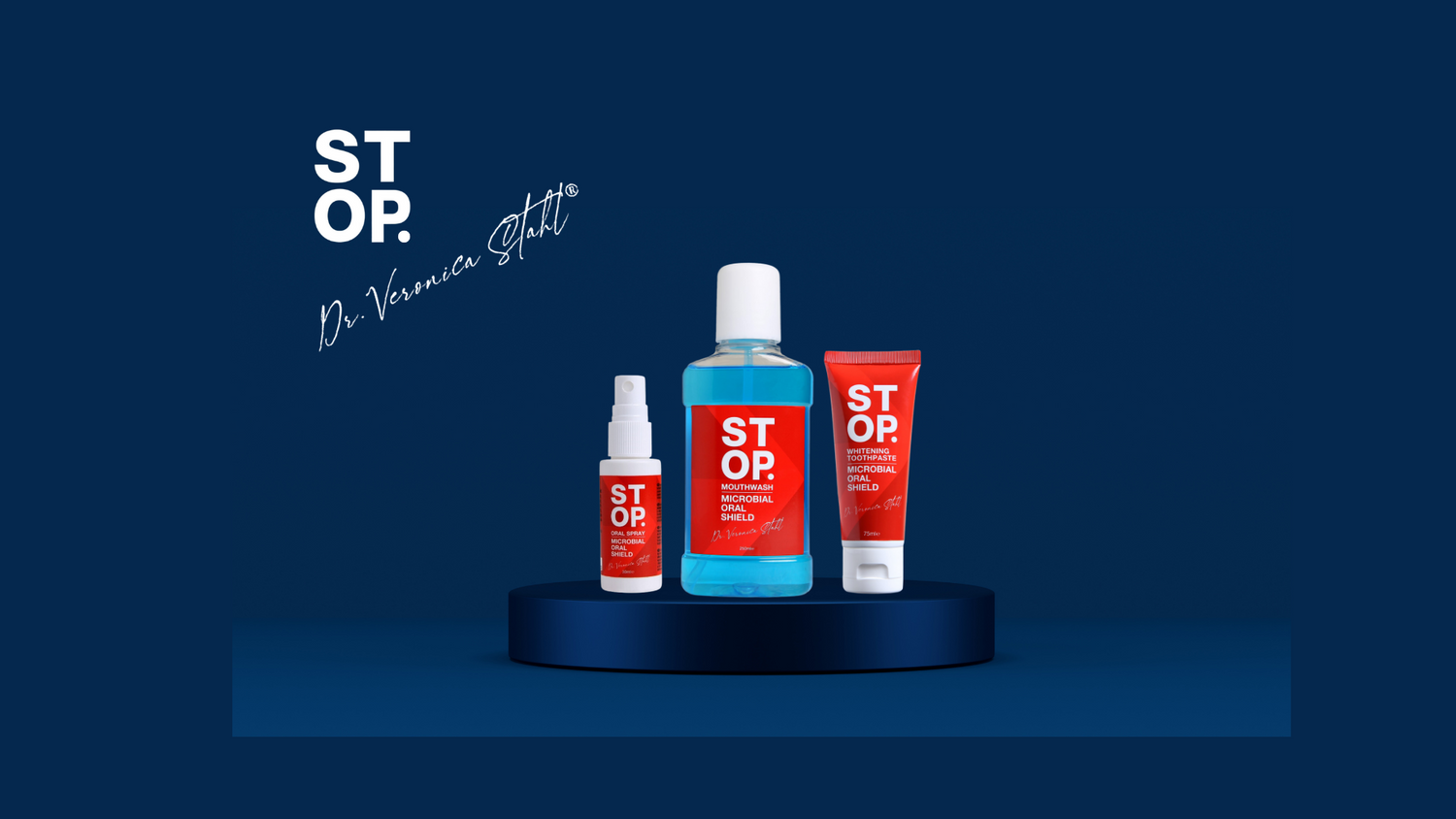
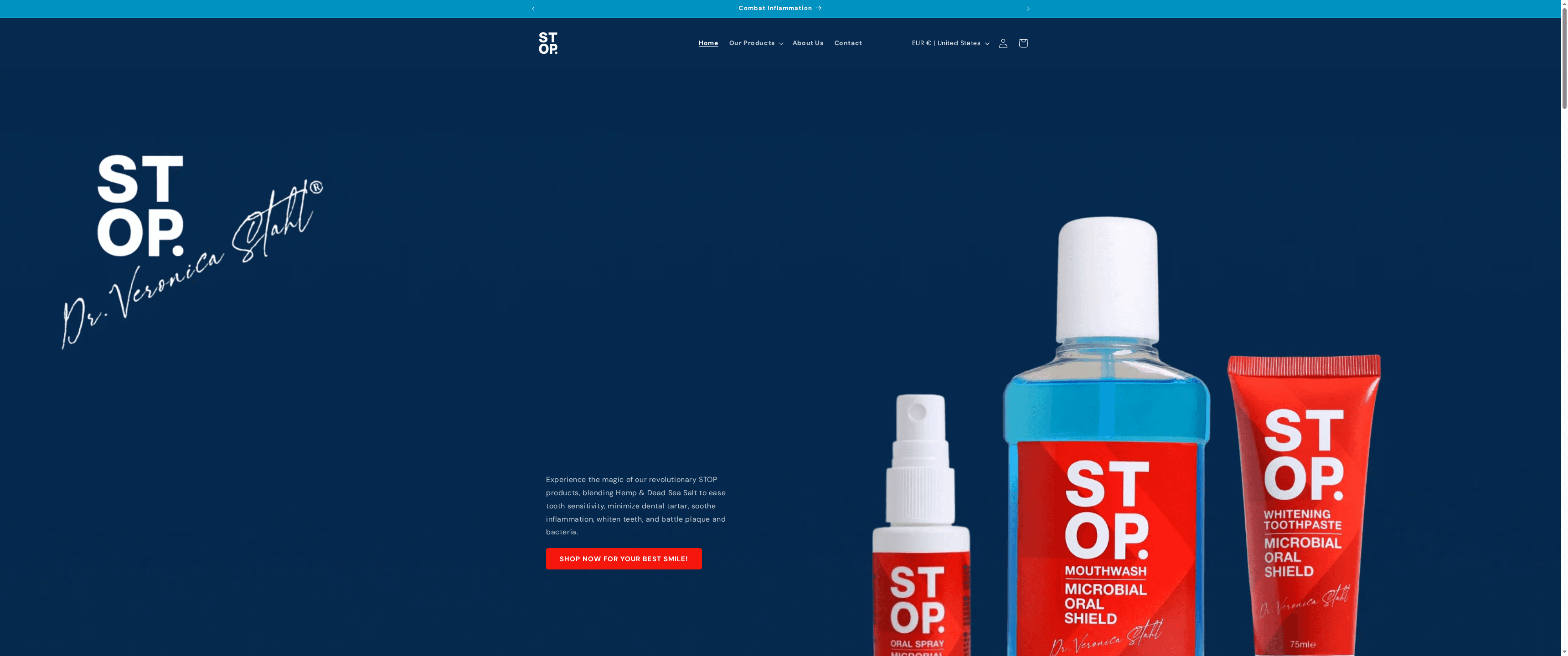
There are small, fluoride-free oral care ranges formulated with hemp and Dead Sea minerals designed for people whose gums react to conventional formulas. These lines include distinct options such as protective and whitening toothpaste, mouthwash, and protective oral sprays, which can be tried one at a time while monitoring symptoms.
Introduce a single product and give it several days before judging the result, and see a clinician if burning is severe, spreads, or does not improve. Browse the full range at Stop-oralcare.
Sources
- Burning Mouth Syndrome - Mayo Clinic
- Side effects of sodium lauryl sulfate applied in toothpastes: A scoping review
- Study on toothpaste SLS and recurrent aphthous ulcers (PubMed)
- Whitening toothpaste-induced oral mucosal hypersensitivity reaction resembling oral lichenoid reaction: a case report (Frontiers, 2025)
This article is general information, not a substitute for advice from a qualified doctor. Consult a qualified healthcare professional about your own circumstances before acting on anything here.
FAQ
Why does toothpaste make my gums burn?
Burning most often results from an irritant ingredient such as sodium lauryl sulfate, menthol or cinnamon flavoring reacting with sensitive gum tissue. A scoping review found SLS specifically linked to mucosal irritation and desquamation in some users.
Do toothpaste burns go away on their own?
Mild irritant reactions typically clear within a few days once the offending product is stopped, based on the elimination pattern described by Mayo Clinic. Allergic or lichenoid reactions, including the pattern described in the Frontiers 2025 case report, can take longer and may need clinical follow-up.
How long does a toothpaste allergic reaction last?
Recovery time depends on the type of reaction: simple irritation tends to resolve within days of stopping the product, while lichenoid or allergic patterns documented in case reports can persist for weeks. Reactions that do not improve after switching products, or that recur, should be evaluated by a dentist rather than managed indefinitely at home.
Why does my mouth burn when I use mint toothpaste?
Menthol and peppermint oil stimulate cooling receptors in the mouth, and in tissue already inflamed or sensitized, that cooling signal can be perceived as burning rather than freshness. Switching to an unflavored or mild-flavor formula often reduces this effect quickly.