

If your mouth burns after brushing, the most probable cause is an irritant reaction to a toothpaste ingredient, specifically sodium lauryl sulfate (SLS), strong flavoring oils, peroxide-based whitening agents, or stannous fluoride. The immediate clinical step is straightforward: discontinue the suspected product, rinse thoroughly with cool water, and substitute a bland, SLS-free, flavor-free paste or brush with water alone until symptoms subside.
Immediate actions:
- Stop using the current toothpaste at once.
- Rinse with cool water for 30–60 seconds to dilute residual surfactants and flavor compounds.
- Switch to a fragrance-free, SLS-free paste or plain water brushing for the next 48–72 hours.
Diagnostic checklist — product irritation vs. medical red flag:
- Likely product-driven: burning begins or worsens immediately after brushing, improves within hours of stopping, no visible lesions or systemic symptoms.
- Possible medical concern: visible white or red patches persisting beyond two weeks, spreading sores, swelling, difficulty swallowing, or breathing difficulty.
If severe swelling or any airway compromise occurs, seek emergency care without delay.
Pro Tip: Run a four-week elimination trial: remove all mint- or cinnamon-flavored products simultaneously, including gum, mints, flavored floss, and alcohol-based mouthwash. Layered exposures to everyday oral-care irritants often accumulate to a threshold that triggers burning even when no single product would do so alone.
Key Takeaways
Most toothpaste-related burning is an irritant reaction to SLS, flavor oils, or peroxide agents; stopping the product and completing a four-week elimination trial with an SLS-free, flavor-free paste resolves symptoms in the majority of cases.
| Point | Details |
|---|---|
| Stop the product first | Discontinue the suspected toothpaste immediately and rinse with cool water as the first clinical step. |
| SLS and flavor oils are primary triggers | Stannous fluoride, peroxide, and strong essential oils are also documented causes; scan labels for all four categories. |
| Four-week elimination trial | Use one SLS-free, flavor-free paste exclusively and remove all other flavored oral products to isolate the trigger. |
| Red flags require professional evaluation | White or red patches persisting beyond two to four weeks, systemic symptoms, or breathing difficulty warrant prompt clinical assessment. |
| Stop-oralcare as a trial candidate | Stop-oralcare’s fluoride-free, mineral-based toothpaste avoids SLS, peroxide, and strong flavor oils, making it a suitable option for the elimination trial. |
Table of Contents
- Why toothpaste makes your mouth burn: ingredient mechanisms and oral conditions
- Which toothpaste ingredients to avoid and what to use instead
- What to do right now to soothe burning and protect your mouth
- How long irritation lasts and when to see a dentist or doctor
- Why mineral-based and hypoallergenic formulas offer a rational clinical alternative
- How medications and pre-existing conditions can intensify toothpaste-related burning
- A practical perspective on managing toothpaste sensitivity
- Stop-oralcare offers a low-irritant option for the elimination trial
- Sources
Why toothpaste makes your mouth burn: ingredient mechanisms and oral conditions
How specific ingredients damage or sensitize oral mucosa
Sodium lauryl sulfate (SLS) is a surfactant that disrupts the phospholipid layer of mucosal epithelial cells. Laboratory analysis has found that SLS concentrations in some commercial formulations may be approximately 40 times higher than concentrations associated with adverse mucosal effects in experimental settings, which helps explain why some patients experience rapid sensory changes after switching pastes.
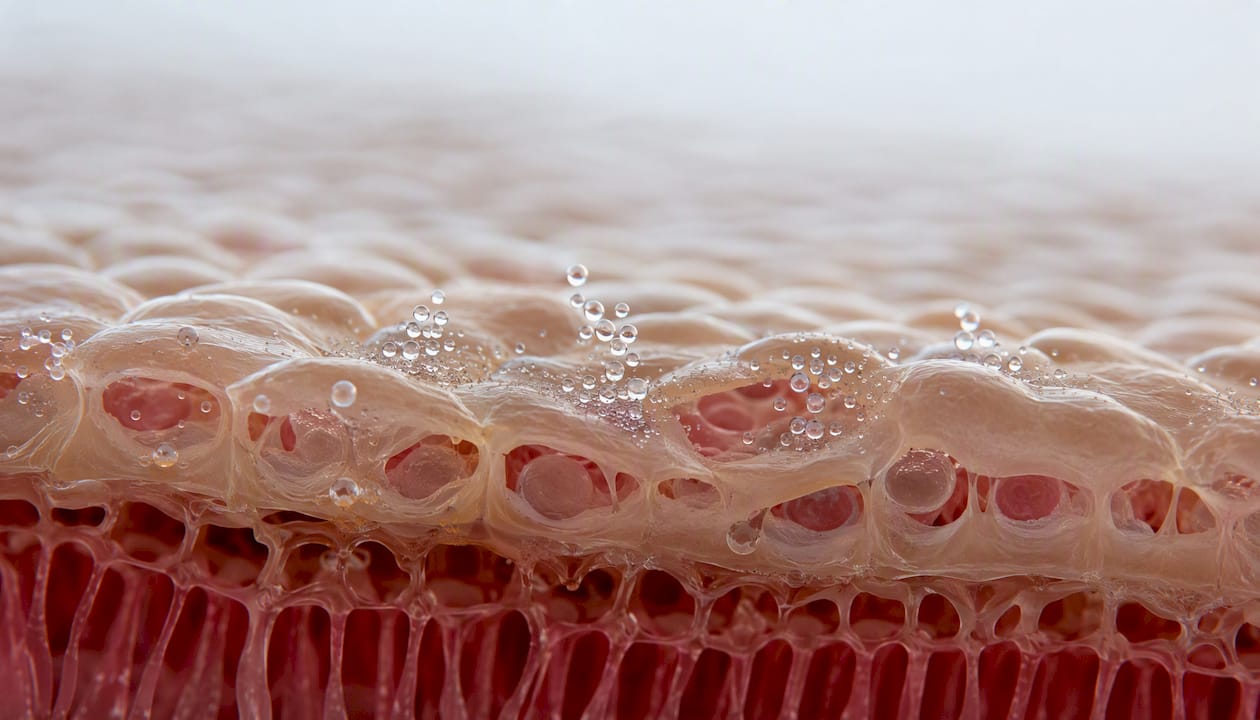
Flavoring oils — peppermint, menthol, cinnamon aldehyde — activate TRPV1 and TRPM8 thermoreceptors in oral mucosal nerve endings. These receptors normally detect heat and cold; strong flavor compounds chemically mimic thermal stimuli, producing a burning or stinging sensation without any actual tissue temperature change.
Peroxide-based whitening agents (hydrogen peroxide, carbamide peroxide) generate reactive oxygen species that can oxidize epithelial proteins and disrupt tight junctions. A 2025 Frontiers in Oral Health case report documented an oral mucosal hypersensitivity reaction resembling oral lichenoid disease triggered by a whitening toothpaste; symptoms resolved after discontinuation and recurred on rechallenge, directly implicating whitening and abrasive agents.
Stannous fluoride has been associated with eruptive white oral lesions and burning in a case series of 15 patients; lesions resolved after stopping the toothpaste and recurred on re-challenge, suggesting a causal relationship in those cases.
Distinguishing irritant contact stomatitis from allergic contact stomatitis and BMS
| Condition | Onset | Typical presentation | Expected exam finding |
|---|---|---|---|
| Irritant contact stomatitis | Minutes to hours after exposure | Diffuse burning, erythema, no discrete lesions | Generalized mucosal redness |
| Allergic contact stomatitis | Hours to days after exposure | Localized swelling, vesicles, ulceration | Discrete erosions or lichenoid plaques |
| Burning mouth syndrome (BMS) | Chronic, often daily | Burning without visible lesion, dry mouth, taste changes | Normal mucosa on examination |
Burning mouth syndrome may be primary (idiopathic, likely neuropathic) or secondary to local triggers such as oral hygiene products, dry mouth, or gastroesophageal reflux. Product-driven irritation and BMS can coexist, which is why removing suspected products before pursuing a BMS diagnosis is clinically prudent.
Oral conditions that increase susceptibility
Certain pre-existing conditions lower the threshold at which toothpaste ingredients produce a burning sensation:
- Oral candidiasis (thrush): disrupted mucosal integrity allows surfactants and flavor oils to penetrate more deeply.
- Oral lichen planus: atrophic or erosive forms leave denuded epithelium that is acutely sensitive to any chemical irritant.
- Geographic tongue: areas of desquamated filiform papillae are structurally more permeable to SLS and flavor compounds.
- Xerostomia (dry mouth): reduced salivary dilution and buffering concentrates irritants at the mucosal surface.
- Gastroesophageal reflux: repeated acid exposure erodes the epithelial barrier, compounding chemical sensitivity.
Contact reactions to toothpaste are well-documented in the clinical literature; avoidance of the suspected product is the standard first-line intervention and frequently leads to resolution.
Which toothpaste ingredients to avoid and what to use instead
Primary irritants to remove from your label scan
- Sodium lauryl sulfate (SLS) / sodium dodecyl sulfate (SDS): the most commonly implicated surfactant; listed on ingredient panels as “sodium lauryl sulfate.”
- Peppermint oil, menthol, cinnamon bark oil, spearmint oil: potent TRPV1/TRPM8 activators; present in the vast majority of mainstream pastes.
- Hydrogen peroxide / carbamide peroxide: whitening agents with documented mucosal reactivity.
- Stannous fluoride: associated with contact stomatitis in susceptible individuals; distinct from sodium fluoride, which carries a lower irritation profile.
- High-abrasive silicas: can physically abrade already-inflamed mucosa, compounding chemical irritation.
- Alcohol (in some gel formulations): desiccates mucosal surfaces and potentiates surfactant penetration.
Safe alternatives to consider
When selecting a replacement paste, look for formulations labeled SLS-free, flavor-free or fragrance-free, and low-abrasion. Mineral-based options that use hydroxyapatite or Dead Sea mineral complexes as active agents avoid the surfactant and peroxide chemistry associated with mucosal reactions. Pediatric pastes are generally milder in flavor concentration and surfactant load, making them a practical short-term substitute for adults during a diagnostic trial. A detailed guide to SLS-free toothpaste options explains the ingredient differences and what to look for on a label.
Pro Tip: During the four-week trial, remove all other flavored oral products simultaneously: flavored floss, whitening strips, alcohol mouthwash, and mint gum. Cumulative TRPV1 receptor activation across multiple products can sustain burning even when the primary toothpaste has been replaced.
Four-week elimination trial protocol
- Select one SLS-free, flavor-free, low-abrasion paste as the sole oral hygiene product.
- Discontinue all flavored gum, mints, whitening products, and alcohol-based mouthwash.
- Log symptoms daily: location, intensity (1–10), time of onset relative to brushing.
- At week two, assess whether burning has decreased. If yes, continue. If no change, consult a clinician.
- At week four, if symptoms have resolved, reintroduce products one at a time at weekly intervals to identify the specific trigger.
For practical guidance on switching to a natural toothpaste, including what to expect during the transition period, a stepwise protocol is available.
What to do right now to soothe burning and protect your mouth
Step-by-step first aid
- Stop the product immediately. Do not finish brushing with the current paste.
- Rinse with cool water for at least 30–60 seconds to remove residual surfactants and flavor compounds from mucosal surfaces.
- Brush gently with water only or a bland, SLS-free paste for the next 48–72 hours.
- Avoid thermal and chemical irritants: hot beverages, spicy foods, citrus, and carbonated drinks can sustain mucosal inflammation.
- Use a bland saline rinse (one-quarter teaspoon of non-iodized salt in eight ounces of water) two to three times daily to support mucosal recovery without introducing additional chemical stimuli.
- Avoid alcohol-based mouthwashes during recovery; they desiccate mucosa and compound surfactant-related damage. A mineral-based mouthwash without alcohol is a suitable substitute.
Over-the-counter options and cautions
Topical anesthetic gels containing benzocaine may provide short-term relief for discrete painful areas, though they should not be used continuously or on large mucosal surfaces without clinical guidance. Antihistamines and topical corticosteroids should only be used under clinician direction; self-prescribing these agents can mask symptoms that warrant diagnostic evaluation.
Seek emergency care if you experience rapid swelling of the lips, tongue, or throat, difficulty breathing, or generalized urticaria. These signs suggest a systemic allergic response rather than a localized irritant reaction.
Pro Tip: Switch to a pediatric or flavor-free paste for 48–72 hours and note whether burning diminishes. Rapid improvement within that window strongly suggests an irritant mechanism rather than a primary mucosal disease, and supports continuing the elimination trial rather than pursuing immediate specialist referral.
How long irritation lasts and when to see a dentist or doctor
For most product-driven irritant reactions, symptoms begin to improve within days of discontinuing the offending toothpaste and typically resolve within one to four weeks. The case series linking stannous fluoride to oral contact stomatitis reported lesion resolution after stopping the product, with recurrence on rechallenge confirming the causal relationship.
Red flags that require prompt professional evaluation
- White or red mucosal patches persisting beyond two to four weeks after product discontinuation.
- Progressive ulceration or lesions that spread beyond the initial site.
- Systemic symptoms: fever, lymphadenopathy, skin rash, or fatigue accompanying oral burning.
- Difficulty swallowing or breathing at any point.
- Burning that is constant, bilateral, and unrelated to brushing (a pattern more consistent with primary BMS or a neurological etiology).
Referral guidance
A dentist is the appropriate first contact for localized mucosal lesions, suspected contact stomatitis, or lesions requiring biopsy. Primary care or an ENT specialist is more appropriate when systemic symptoms are present or when the oral findings suggest a dermatological condition such as lichen planus. A dermatologist may perform patch testing to identify specific contact allergens if the elimination trial does not resolve symptoms. Bring product photographs, ingredient lists, and your symptom log to the appointment; this information substantially accelerates the diagnostic process.
NIDCR resources on burning mouth syndrome note that multidisciplinary evaluation may be warranted when standard elimination approaches fail to produce improvement.
Why mineral-based and hypoallergenic formulas offer a rational clinical alternative
The rationale for this approach is grounded in receptor pharmacology and mucosal physiology. SLS strips the protective salivary pellicle and disrupts epithelial tight junctions, allowing flavor compounds and other chemical agents to access subepithelial nerve endings more readily. Flavor oils then activate TRPV1 and TRPM8 receptors at concentrations well below those required when the mucosal barrier is intact. Peroxide-based whitening agents add an oxidative stress component that can further sensitize nociceptive fibers. Removing all three classes of irritants simultaneously, rather than sequentially, accelerates the diagnostic signal.
From a clinical standpoint, if topical corticosteroids or diagnostic patch testing is being considered, removing all suspected oral products for at least two to four weeks beforehand reduces the risk of false-negative results. An inflamed mucosa with ongoing chemical exposure can suppress or alter patch test responses, leading to inconclusive findings.
Mineral-based formulations that rely on Dead Sea mineral complexes or hydroxyapatite as active agents avoid the surfactant and peroxide chemistry associated with mucosal reactivity. They provide a chemically inert platform for the elimination trial, making it easier to attribute symptom changes to the product switch rather than to confounding variables. The benefits of hydroxyapatite for sensitive teeth are documented in the clinical literature and represent a well-characterized alternative to conventional fluoride-surfactant formulations.
How medications and pre-existing conditions can intensify toothpaste-related burning
Several systemic medications alter mucosal physiology in ways that amplify the irritant effects of standard toothpaste ingredients. Angiotensin-converting enzyme (ACE) inhibitors, commonly prescribed for hypertension, can induce oral mucosal changes and dry mouth, reducing the dilution and buffering capacity that normally attenuates surfactant and flavor oil exposure. Antidepressants and antihistamines with anticholinergic properties similarly reduce salivary flow, concentrating irritants at the mucosal surface.
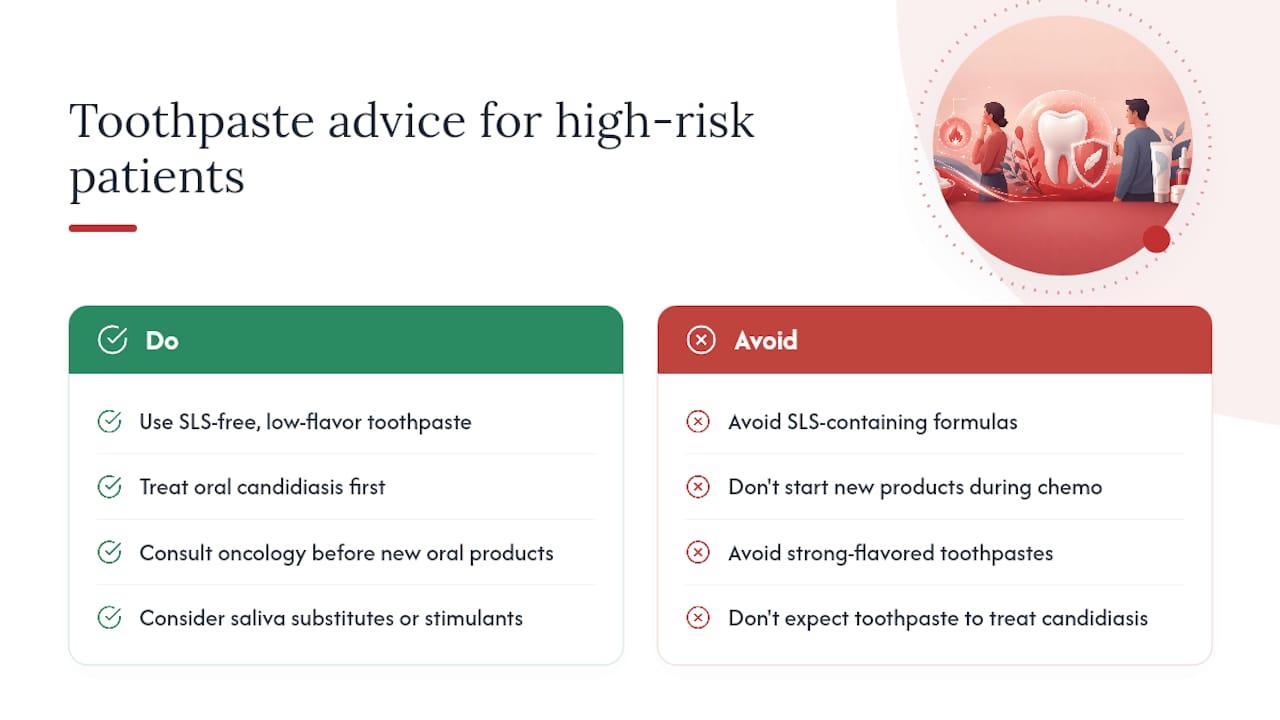
Chemotherapy and radiation therapy directed at the head and neck region cause mucositis, a condition in which the mucosal epithelium is severely compromised. Patients in these treatment phases should use only the mildest available formulations and consult their oncology team before introducing any new oral care product.
Immunosuppressive medications used in autoimmune conditions can predispose patients to oral candidiasis, which itself disrupts mucosal integrity and heightens sensitivity to chemical irritants. In these cases, treating the underlying candidal infection is a prerequisite for meaningful improvement from a toothpaste switch alone.
Patients taking medications that cause xerostomia as a side effect, including many antihypertensives, diuretics, and psychotropic agents, face a compounded risk: reduced saliva means less mechanical clearance of toothpaste residue, less chemical buffering, and a drier mucosal surface that is structurally more vulnerable to SLS-mediated damage. Clinicians managing these patients should prioritize SLS-free, low-flavor formulations and may consider saliva substitutes or stimulants as adjunctive measures.
A practical perspective on managing toothpaste sensitivity
The clinical and published evidence consistently supports a stepwise elimination approach before pursuing invasive diagnostic testing. True allergic contact reactions to toothpaste ingredients are less common than simple irritant reactions; the majority of patients who experience a burning sensation from toothpaste will find meaningful relief by switching to a hypoallergenic, SLS-free, flavor-free formulation and removing other flavored oral products simultaneously.
This is a reassuring finding. It means that for most people, the path to relief does not require patch testing, specialist referral, or prescription medication. A deliberate, documented product swap, conducted over four weeks with a symptom log, provides both therapeutic benefit and diagnostic information.
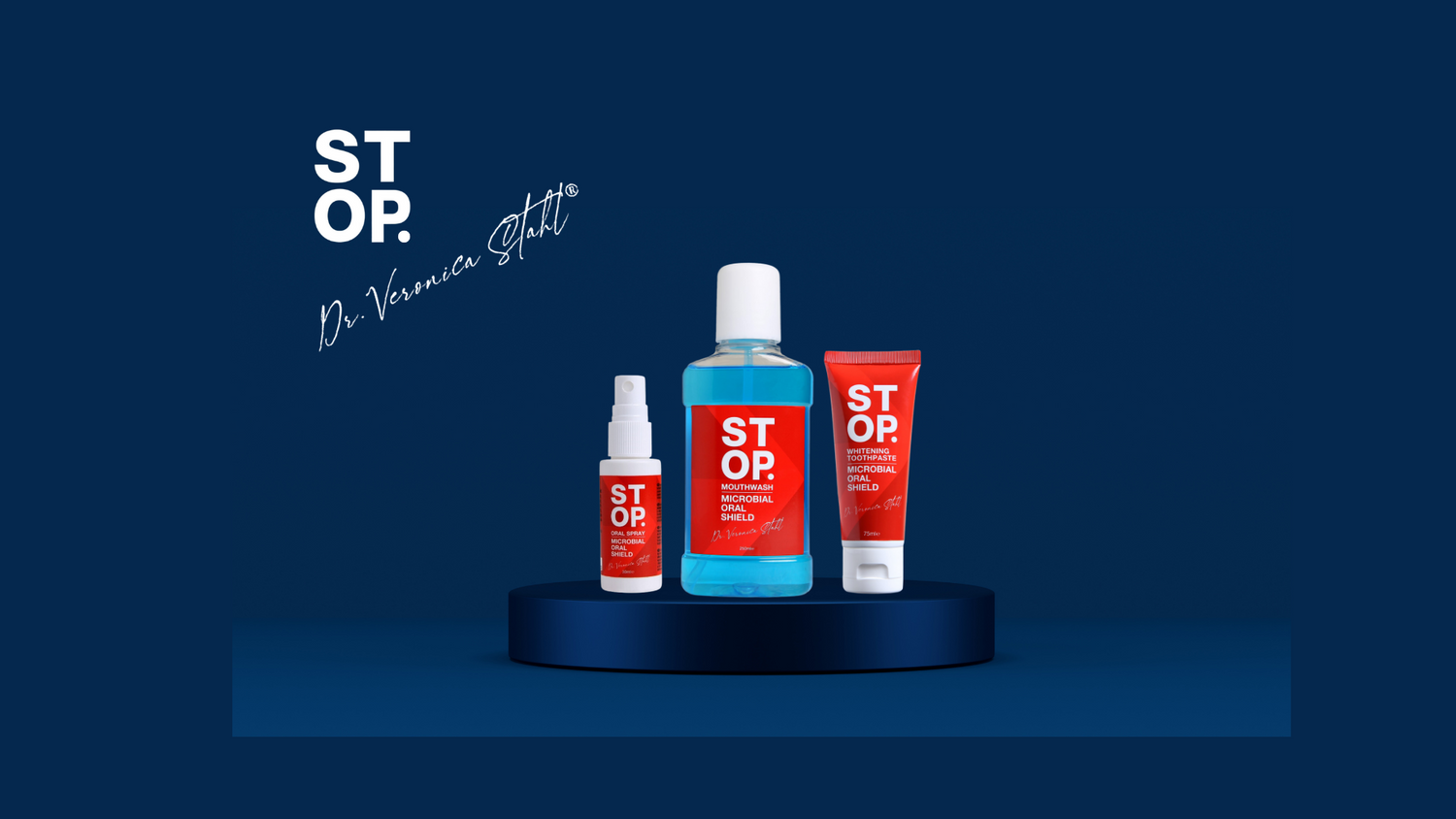
Stop-oralcare’s fluoride-free, hemp and Dead Sea mineral toothpaste is formulated without SLS, without strong flavor oils, and without peroxide-based whitening agents, positioning it as a candidate for the elimination trial described throughout this article. Readers who want to explore a low-irritant, mineral-based option as part of their self-directed trial may find it a practical starting point.
Stop-oralcare offers a low-irritant option for the elimination trial
For individuals whose mouth burns after brushing and who are ready to test a different formulation, Stop-oralcare’s fluoride-free toothpaste provides a mineral-based, hemp-infused alternative formulated without SLS, peroxide, or strong flavor oils. The formula draws on Dead Sea mineral complexes and is designed for patients with mucosal sensitivity, gum inflammation, and sensitive teeth.
The product fits directly into the four-week elimination trial protocol described above: introduce it as the single new variable, log symptoms daily, and assess the response at two and four weeks. Because it avoids the primary chemical classes associated with toothpaste-induced burning, any symptom change during the trial period is more readily attributable to the formulation switch.
For full product details, ingredient transparency, and access to Stop-oralcare’s clinical resources, visit the Stop-oralcare product page. If symptoms are severe, persistent beyond four weeks, or accompanied by any of the red flags described above, consult a licensed clinician before continuing self-directed management.
Sources
The following sources provide clinical detail and primary evidence for the mechanisms and management strategies described in this article. Bringing printed excerpts or links to a clinical appointment can help your clinician contextualize your symptom history.
- Burning mouth syndrome - Symptoms and causes - Mayo Clinic
- Contact reactions to toothpaste and other oral hygiene products - DermNet NZ
- Oral contact stomatitis related to toothpaste use: A report of 15 cases - Wiley Online Library
- Whitening toothpaste-induced oral mucosal hypersensitivity reaction resembling oral lichenoid reaction: a clinically diagnosed case report - Frontiers in Oral Health
- When “Fresh Mint” Burns: Everyday Oral-Care Products and Snacks That Mimic Burning Mouth Syndrome - ePainAssist
This article provides general informational content and does not constitute medical or dental advice. Readers should confirm current clinical guidance with a licensed dentist, physician, or other qualified healthcare professional, particularly if symptoms are severe, persistent, or accompanied by systemic signs.
This article is general information, not a substitute for advice from a qualified doctor. Consult a qualified healthcare professional about your own circumstances before acting on anything here.
Recommended
- Guide to Toothpaste Types: The Rise of Plant-Infused Options – Stop Oral Care
- How a Plaque Removing Mouthwash Can Transform Your Oral Health – Stop Oral Care
- Does Mouthwash Kill Good Bacteria? A Practical How-To Guide – Stop Oral Care
- Top 5 Toothpaste for Halitosis Solutions to Freshen Your Breath – Stop Oral Care