

Yes. Toothpaste can cause or worsen mouth ulcers in a meaningful subset of people, primarily through sodium lauryl sulfate (SLS) and, less often, through flavoring agents, preservatives, or high-concentration pyrophosphates. If you get recurrent sores, the most practical step is a 30-day trial of an SLS-free toothpaste while you track how often ulcers appear and how long they take to heal.
- NHS guidance and comparable dental association resources list avoiding SLS as a reasonable self-care option for recurrent ulcers.
- Clinical trials indexed on PubMed show mixed but often favorable results for SLS-free formulas.
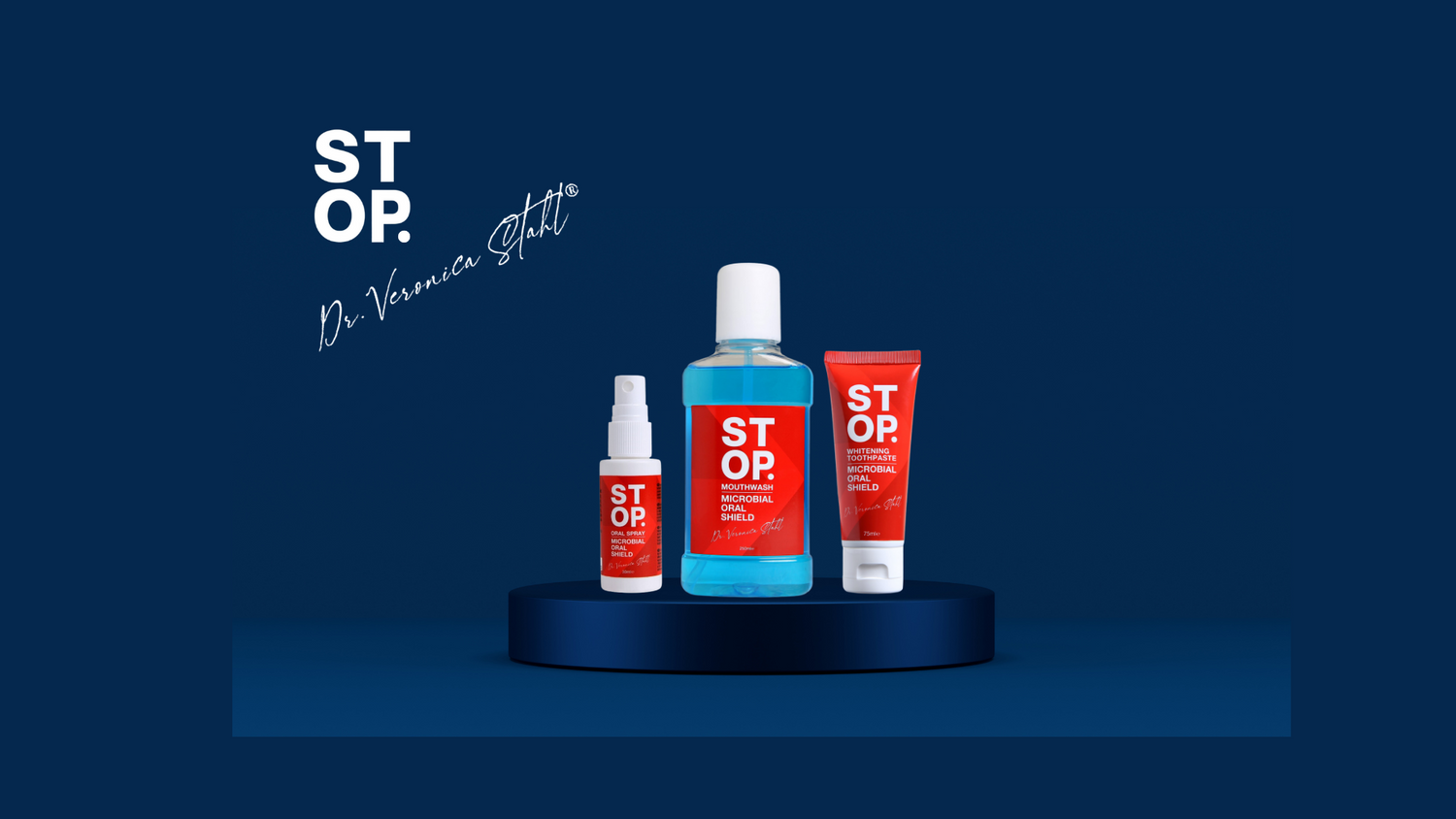
- Stop-oralcare’s fluoride-free, SLS-free toothpaste is one ready option if you want to start the trial without formulating your own ingredient checklist first.
Key Takeaways
Toothpaste, particularly SLS, is a documented but not universal contributor to recurrent mouth ulcers, and a 30-day SLS-free trial is the most practical way to find out if it’s yours.
| Point | Details |
|---|---|
| SLS is the main suspect | It disrupts the mucin layer and causes desquamation, raising vulnerability to ulcers. |
| Evidence is supportive, not unanimous | Systematic reviews and crossover trials show benefit for some patients, none for others. |
| Run a 30-day stop-and-rechallenge test | Track sore count, healing days, and pain level while keeping other habits stable. |
| Watch for red flags | Large, spreading, or long-lasting ulcers with fever need a dentist or doctor, not just a toothpaste swap. |
| Stop-oralcare offers a ready SLS-free option | Its hemp and Dead Sea mineral toothpaste gives you a formulated starting point for the trial. |
Table of Contents
- Why Toothpaste Ingredients Trigger Mouth Sores
- Does the Research Actually Support SLS-Free Toothpaste?
- How Do You Know If Your Toothpaste Is Causing Your Ulcers?
- What to Switch To: Reading Labels and Choosing a Replacement
- When Should You See a Dentist Instead of Just Switching Toothpaste?
- What I’ve Observed With SLS-Free Regimens
- Try an SLS-Free Toothpaste Built for Sensitive Mouths
- Sources
Why Toothpaste Ingredients Trigger Mouth Sores
Sodium lauryl sulfate is a detergent added to toothpaste to create foam, and it does more than clean. SLS strips away part of the protective mucin layer that coats the inside of your cheeks and gums, a process researchers call desquamation, essentially the shedding of surface cells. Once that layer thins, the tissue underneath becomes more exposed to irritation, which can trigger a new ulcer or aggravate one that’s already forming. A 2022 scoping review in the American Journal of Dentistry links SLS exposure to measurable mucosal irritation and ulceration across several studies, with typical toothpaste concentrations commonly ranging within low single-digit percentages.
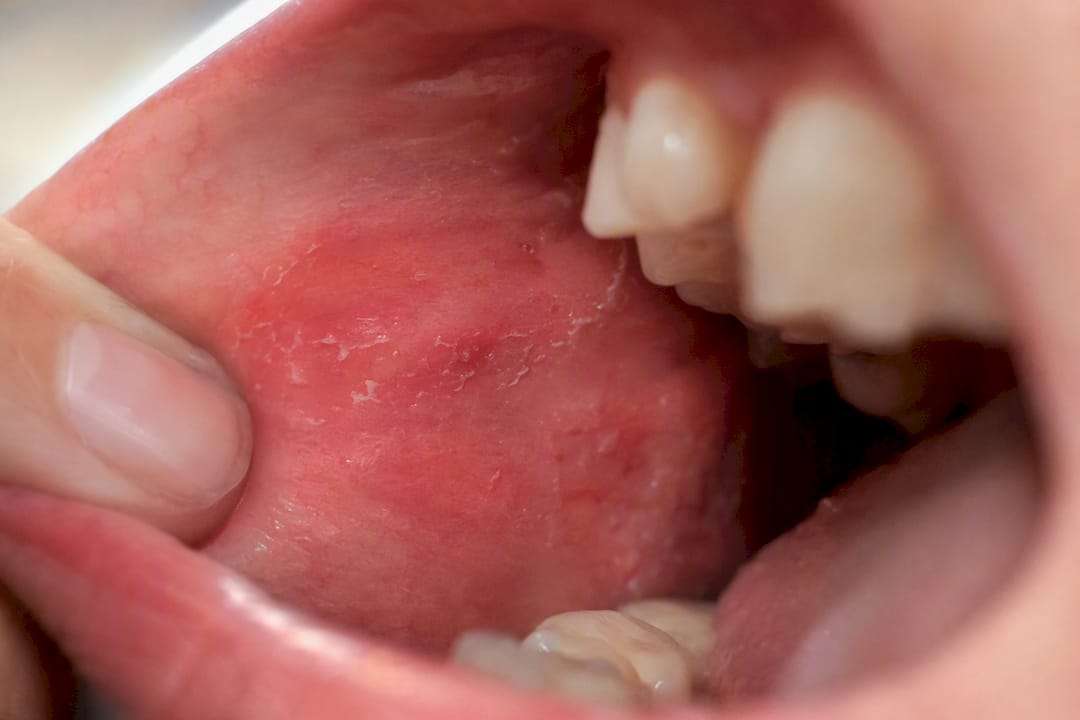
SLS isn’t the only suspect. Mint-derived flavorings, certain preservatives, and the high-concentration pyrophosphates used in tartar-control formulas can all provoke contact stomatitis, an irritant reaction that looks and feels a lot like an ulcer flare. DermNet NZ documents burning, redness, swelling, and peeling as the hallmark signs of this kind of reaction.
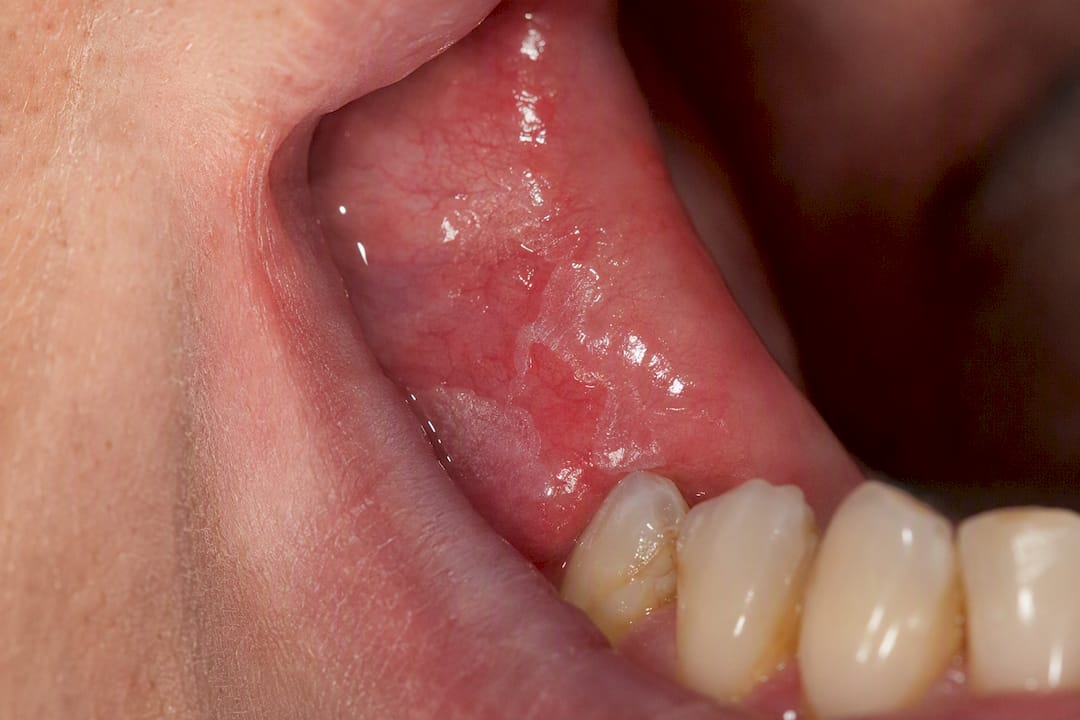
Exposure time matters too.
When scanning a label, watch for:
- Sodium lauryl sulfate or sodium dodecyl sulfate
- Sodium laureth sulfate
- Strong pyrophosphates in whitening or tartar-control lines
- Concentrated mint-derived flavoring compounds
Does the Research Actually Support SLS-Free Toothpaste?
The evidence leans supportive, but it isn’t unanimous. A 2019 systematic review concluded that patients with recurrent aphthous ulcers may see reduced ulcer duration and pain from SLS-free dentifrices, while noting that trial designs vary enough to limit firm conclusions. Randomized crossover trials, including work by Herlofson and Barkvoll and a 2012 study by Shim and colleagues, report shorter healing times and less pain in some participants, though others showed no significant change in how often ulcers appeared.
What one trial found: Patient-summary reporting on switching studies notes that some participants experienced more ulcers when using SLS-containing toothpaste compared to SLS-free formulas, though exact figures vary, according to a Washington Post wellness feature summarizing the trial data. Exact figures vary by study.
Here’s the practical read:
- If you have recurrent aphthous stomatitis, an SLS-free switch is a reasonable, low-risk experiment.
- If your ulcers are occasional or tied to something else entirely (a bitten cheek, stress, a nutrient gap), the toothpaste swap may do little.
- No trial guarantees results, but the downside risk of trying an SLS-free formula for a month is close to zero.
How Do You Know If Your Toothpaste Is Causing Your Ulcers?
A stop and rechallenge test is the most reliable way to isolate toothpaste as a cause, and it doesn’t require a lab, just consistency.
- Track the pattern first. Note when sores appear relative to brushing, and whether you notice any peeling or rawness on your cheeks or tongue after using your current toothpaste.
- Stop the suspected product. Switch to an SLS-free toothpaste while keeping everything else the same: same toothbrush, same diet, no new mouthwash.
- Track outcomes over 30 days. Log the number of sores, how many days each takes to heal, and a simple pain score from 1 to 10.
- Rechallenge if you want confirmation. If sores return after switching back to your original toothpaste, that’s a strong signal it was the trigger.
Pro Tip: Keep a small notes app entry or a paper log right by your toothbrush. People routinely underestimate how many sores they’ve had over a month until they write it down day by day.
Some signs point away from toothpaste entirely and deserve faster attention: ulcers larger than half an inch, sores that spread across multiple areas of your mouth, fever, or lesions that persist beyond two weeks without improvement.
What to Switch To: Reading Labels and Choosing a Replacement
Once you’ve decided to test the SLS theory, the shopping part is straightforward if you know what to scan for.
Avoid or minimize:
- Sodium lauryl sulfate / sodium dodecyl sulfate
- Sodium laureth sulfate
- Concentrated mint-derived flavoring agents if you’ve reacted to strong-mint pastes before
- Tartar-control formulas with high pyrophosphate content
Look for instead:
- A clear “SLS-free” label
- Milder surfactants such as cocamidopropyl betaine (CAPB), sodium cocoyl glutamate, or sodium lauroyl sarcosinate
- Fluoride still listed if cavity protection matters to you. Going SLS-free does not mean giving up fluoride; the two are unrelated formulation choices, and many SLS-free pastes still include it.
Expect a different brushing experience. SLS-free formulas foam less and can feel milder on your gums, which sometimes throws people off in the first few days. That’s a texture change, not a sign the product isn’t working. Buying a single tube or a travel size for your 30-day trial keeps the experiment cheap if it turns out toothpaste wasn’t your trigger after all. Readers who also notice a burning sensation after brushing may find it worth reviewing why toothpaste burns your mouth alongside the ulcer trial, since the same ingredients often drive both complaints. If you’re also using mouthwash daily, it’s worth knowing that certain mouthwash formulas cause similar irritation, which can muddy your results if you don’t hold that variable steady too.
When Should You See a Dentist Instead of Just Switching Toothpaste?
A toothpaste trial is reasonable for recurring, mild-to-moderate ulcers with no other symptoms. See a dentist or physician sooner if you notice:
- Ulcers larger than about half an inch or unusually painful for their size
- Sores lasting longer than two weeks without healing
- Fever, weight loss, or lesions appearing in other parts of your body
- Trouble swallowing or breathing
A dentist can evaluate local causes; a primary care doctor or ENT is the better call if you have systemic symptoms or lesions beyond your mouth. Bring your trial notes. Timing and pattern data make the visit far more productive.
What I’ve Observed With SLS-Free Regimens
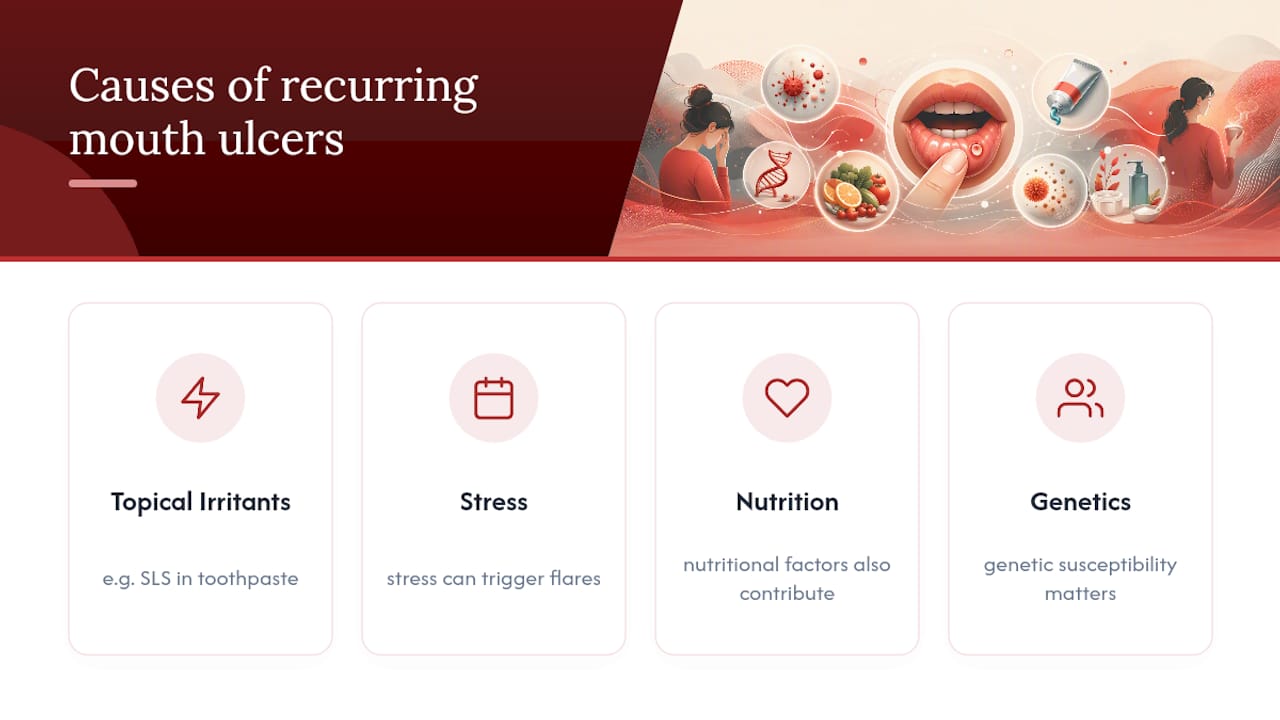
In clinical conversations, a recurring pattern shows up: patients who switch off SLS-containing toothpaste for a few weeks often report noticeably fewer sores and less pain, even when the change doesn’t eliminate ulcers entirely. That variability isn’t a flaw in the advice, it’s a reflection of how multifactorial recurrent aphthous stomatitis really is. Stress, nutrition, and genetics all play a role alongside topical irritants. A short, careful trial remains one of the lowest-risk ways to find out if your toothpaste is part of your problem, and it’s why Stop-oralcare formulates without SLS for readers who want a straightforward place to start.
Try an SLS-Free Toothpaste Built for Sensitive Mouths
If you’re ready to start your 30-day trial, Stop-oralcare’s fluoride-free toothpaste is formulated without SLS, built instead around hemp extract and Dead Sea minerals aimed at calming irritation rather than adding to it.
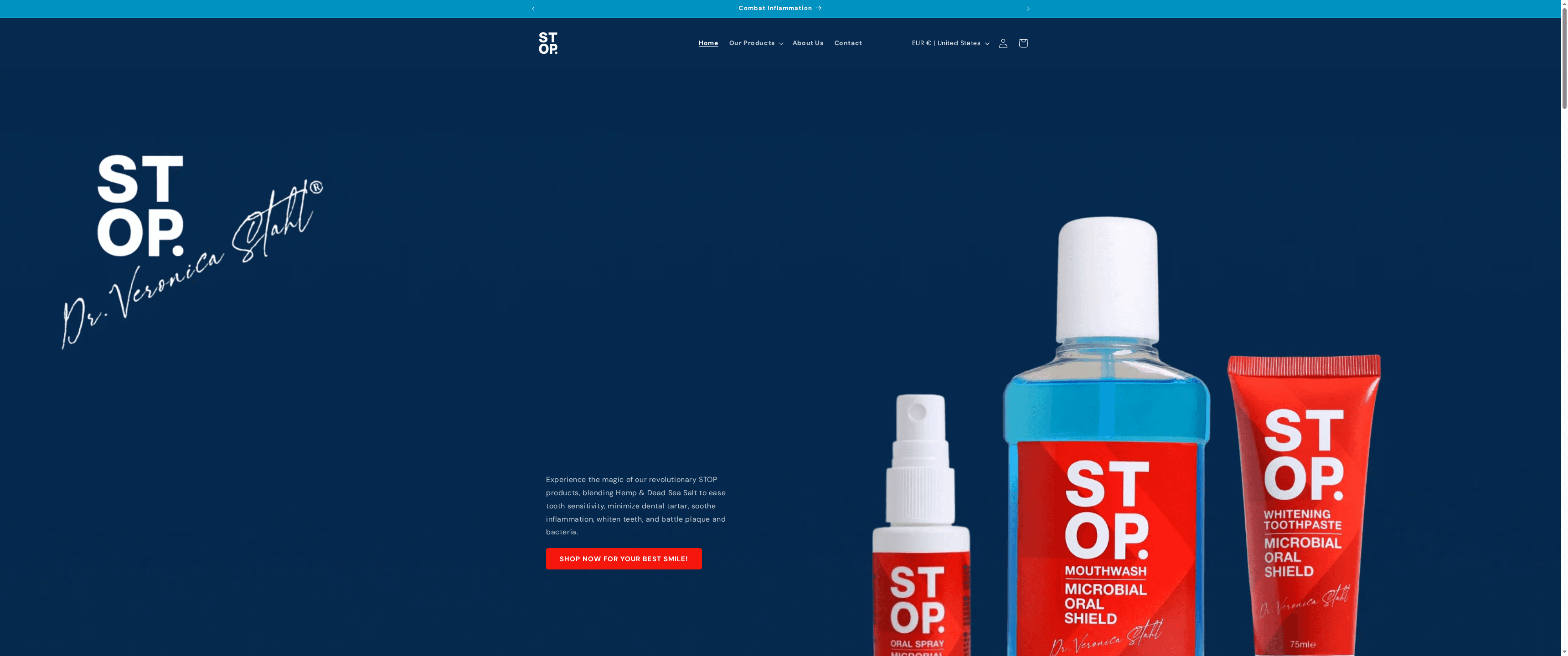
That mineral-and-botanical approach gives you a milder daily formula without asking you to give up fluoride entirely if cavity protection matters to you; several Stop-oralcare formulas are available with it included. For the trial itself, a single tube is really all you need. Track your sores for 30 days the way outlined above, and compare notes against your old paste. Readers curious about the mineral formulation specifically can see how Dead Sea mineral toothpaste works for sensitive mouths before deciding. When you’re ready to start, browse Stop-oralcare’s toothpaste line and pick the tube that fits your routine.
Sources
- Effect of sodium lauryl sulfate on recurrent aphthous stomatitis (systematic review) — Semantic Scholar
- Side effects of sodium lauryl sulfate applied in toothpastes: A scoping review — American Journal of Dentistry (2022)
- DermNet NZ — Contact reactions to toothpaste and other oral hygiene products
- Washington Post — Got canker sores? Try switching your toothpaste (2024)
A systematic review carries more weight than a single trial, and a single trial carries more weight than a case report. Bring these sources to your dentist if you want a second opinion on your own pattern.
This article is general information, not a substitute for advice from a qualified doctor. Consult a qualified healthcare professional about your own circumstances before acting on anything here.