

Feeling a sharp twinge every time you sip something cold or bite into your favorite snack can make even simple pleasures stressful. For many people across Europe and Florida, searching for relief from sensitive teeth often leads to questions about the best, most natural solution. This guide clarifies how sensitivity relief toothpaste—especially gentle, fluoride-free options—works to target discomfort and what key ingredients deliver noticeable comfort without harsh chemicals.
Table of Contents
- Defining Sensitivity Relief Toothpaste Clearly
- How Sensitivity Relief Toothpaste Reduces Discomfort
- Key Ingredients in Natural Relief Formulas
- Comparing Natural Vs. Fluoride-Based Toothpastes
- Common Mistakes and Effectiveness Concerns
Key Takeaways
| Point | Details |
|---|---|
| Sensitivity Relief Toothpaste Functionality | It specifically blocks nerve signals and creates a protective barrier against sharp pain from exposed dentin. |
| Consistency is Key | Regular application is necessary over weeks for noticeable relief; one-time use won’t yield results. |
| Proper Technique Matters | Use gentle brushing motions to avoid exacerbating sensitivity and ensure active ingredients work effectively. |
| Natural vs. Fluoride Options | Both types provide sensitivity relief, but natural formulas focus on mineral-based ingredients, while fluoride-based options also prevent cavities. |
Defining Sensitivity Relief Toothpaste Clearly
Sensitivity relief toothpaste is a specialized dental product designed to reduce sharp, sudden pain caused by exposed tooth sensitivity. When the protective layers of your teeth wear away or gums recede, exposed dentin transmits stimuli directly to the nerve inside the tooth, creating that sharp sensation. Sensitivity relief toothpaste blocks this transmission pathway, offering real relief.
Unlike regular toothpaste, sensitivity formulas contain active desensitizing agents that work in two ways:
- Block nerve signals before they reach the inner tooth
- Create a protective barrier over exposed areas
These products don’t provide instant relief. Multiple applications over several days are typically required before you notice meaningful improvement in sensitivity reduction.
How It Works Differently
Standard toothpaste focuses on cleaning and whitening. Sensitivity relief formulas prioritize nerve protection. The desensitizing compounds in these products work specifically against heat, cold, acids, and tactile sensitivity—the four major triggers that cause discomfort.
Proper oral hygiene combined with sensitivity toothpaste delivers the best results. You cannot simply use sensitivity toothpaste once and expect lasting relief; continuous application maintains effectiveness over time.
Key Characteristics to Know
- Active ingredients block dentin tubule stimulation
- Natural formulations often include mineral compounds and plant-based desensitizers
- Fluoride-free options are available for those seeking alternatives
- Gentle abrasivity prevents further enamel damage
- Gradual effectiveness requires consistent daily use
Sensitivity relief toothpaste works best when combined with proper brushing technique and daily use, not as a one-time treatment.
For individuals across Europe and Florida experiencing sensitivity, understanding this distinction matters. Your teeth require targeted protection, not generic cleaning. European regulations often emphasize ingredient transparency, while American consumers increasingly seek natural formulations with proven efficacy.
Pro tip: Apply sensitivity toothpaste directly to sensitive areas using a soft-bristled toothbrush and gentle circular motions rather than brushing with your typical pressure—this maximizes contact time with the active ingredients and protects weakened enamel from further abrasion.
How Sensitivity Relief Toothpaste Reduces Discomfort
Sensitivity relief toothpaste works by interrupting the pain signal pathway from your tooth surface to the nerve inside. When you experience sensitivity, the problem originates at the dentin layer—the exposed tissue beneath your enamel that contains tiny tubules connecting to your nerve. These products block that connection, stopping discomfort before it reaches your brain.

The mechanism is straightforward but effective. Active ingredients like potassium nitrate or stannous fluoride form a protective barrier that prevents stimuli from traveling down the tubules. Potassium-containing formulations reduce hypersensitivity by calming the nerve response, particularly for air blast and tactile sensitivity after consistent use.
The Two-Step Relief Process
Discomfort reduction happens through two distinct mechanisms:
- Nerve signal blocking: Active compounds interrupt electrical impulses traveling toward your nerve
- Barrier formation: Minerals and desensitizing agents seal exposed tubules and prevent stimuli access
The blocking effect takes time. Clinical trials demonstrate statistically significant sensitivity reduction after several weeks of daily application, not overnight. Your consistency matters more than the product strength.
What Triggers Improvement
Desensitizing toothpaste blocks transmission of painful stimuli64995-3/fulltext) from your tooth surface to nerve endings, addressing the four major sensitivity triggers:
- Cold beverages and ice cream
- Hot foods and drinks
- Acidic substances
- Mechanical pressure from brushing
Each application builds protection. Your teeth don’t gain relief from one use; instead, the active ingredients accumulate with repeated exposure, creating lasting comfort.
The effectiveness of sensitivity relief toothpaste increases significantly with consistent daily use—missing applications allows the protective barrier to diminish.
For European and Florida residents seeking natural alternatives without fluoride, mineral-based desensitizing agents like hydroxyapatite and potassium compounds offer the same nerve-blocking benefits. These ingredients work identically to synthetic desensitizers while aligning with your preference for natural formulations.
Pro tip: Keep your sensitivity toothpaste on your teeth for at least 60 seconds during brushing to maximize contact time with the active desensitizing ingredients—this extended application period significantly enhances the nerve-blocking effect.
Key Ingredients in Natural Relief Formulas
Natural sensitivity relief toothpaste relies on specific active compounds rather than synthetic chemicals to reduce discomfort. Understanding what makes these formulas effective helps you choose products aligned with your health-conscious approach. The best natural options combine proven desensitizing agents with gentle, plant-based components.
Calcium sodium phosphosilicate forms a protective mineral layer over exposed dentin, sealing the tubules that trigger sensitivity. This ingredient works mechanically—it literally plugs the pathways where stimuli travel toward your nerve. Unlike harsh chemical desensitizers, this mineral compound feels gentle on your tissues while delivering real relief.
Potassium nitrate remains a cornerstone ingredient in natural formulations. It calms nerve activity rather than blocking it, reducing the electrical signals that create sharp pain. European dental standards increasingly favor this compound for its safety profile and proven effectiveness across clinical trials.
Here’s a summary of how key ingredients in sensitivity relief toothpaste address different causes of discomfort:
| Ingredient | Main Action | Best For | Notable Benefit |
|---|---|---|---|
| Potassium nitrate | Calms nerve response | Air and touch sensitivity | Safe for daily use |
| Stannous fluoride | Seals exposed dentin | Hot and cold triggers | Also strengthens enamel |
| Calcium sodium phosphosilicate | Forms mineral barrier | Acid and pressure pain | Gentle on gums |
| Plant-based extracts | Reduce inflammation | Mild sensitivities | Minimal risk of irritation |
Natural Active Ingredients Working Together
Effective natural relief formulas combine multiple protective mechanisms:
- Calcium sodium phosphosilicate: Seals exposed tubules with a mineral barrier
- Potassium nitrate: Reduces nerve excitability and signal transmission
- Plant extracts: Provide anti-inflammatory support and soothing properties
- Gentle abrasives: Clean without damaging weakened enamel
- Natural flavorings: Avoid irritating synthetic additives
These ingredients work synergistically. The mineral compounds handle the mechanical protection while botanical extracts support overall tissue healing and comfort. This layered approach produces more sustainable relief than single-ingredient products.
What to Avoid in Relief Toothpaste
Natural formulations specifically exclude harsh chemicals and irritating substances. Products using natural ingredients in dental care eliminate sodium lauryl sulfate, artificial colorants, and abrasive particles that damage sensitive teeth further. Your gums especially benefit from this gentler approach.
Floride-free options preserve your choice while maintaining effectiveness through mineral-based desensitizers. Dead Sea minerals, in particular, provide trace elements that support enamel integrity without chemical burden.
Natural sensitivity relief formulas achieve comparable effectiveness to synthetic products by combining mineral-based tubule sealers with plant-derived anti-inflammatory compounds.
For Florida and European residents, ingredient transparency matters. Natural formulas typically disclose every component, allowing you to understand exactly what you’re applying to your teeth.
Pro tip: Check ingredient lists for “calcium sodium phosphosilicate” or “potassium nitrate” as primary active ingredients—these proven compounds should appear near the beginning of the list, indicating sufficient concentration for actual sensitivity relief.
Comparing Natural vs. Fluoride-Based Toothpastes
Choosing between natural and fluoride-based sensitivity relief toothpaste depends on your health priorities, ingredient preferences, and specific oral health needs. Both approaches effectively reduce sensitivity, but they work through different mechanisms and philosophies. Understanding their strengths helps you make an informed decision aligned with your values.
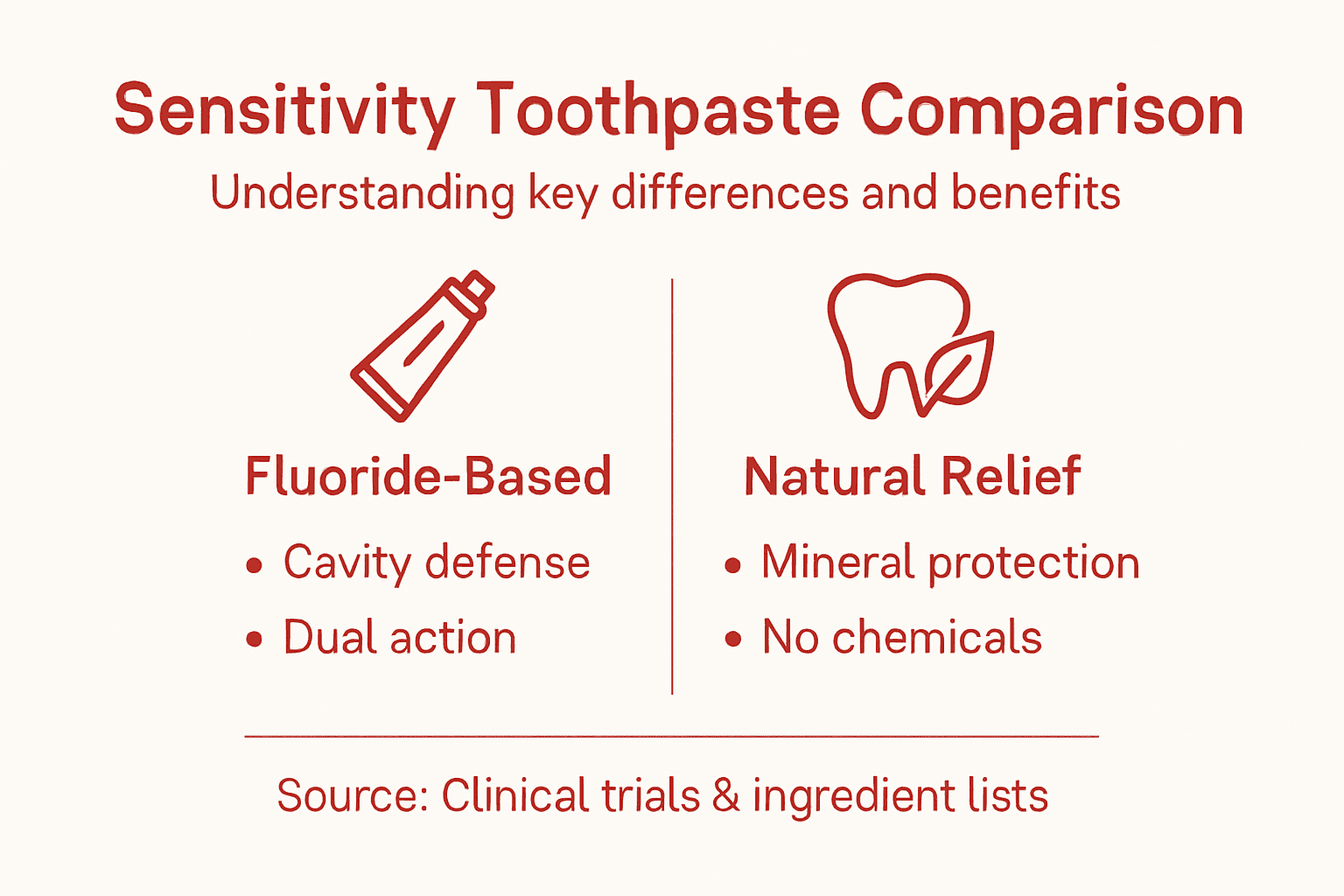
Fluoride-based toothpastes deliver dual benefits: cavity prevention and sensitivity relief. Fluoride strengthens enamel and prevents cavities while compounds like potassium nitrate address sensitivity simultaneously. Dental professionals widely recommend these products for comprehensive oral health protection. They work quickly and deliver proven results backed by decades of clinical research.
Natural toothpastes eliminate fluoride and synthetic chemicals entirely. They rely on mineral-based occluders like calcium sodium phosphosilicate and plant-derived compounds for sensitivity relief. This approach appeals to health-conscious individuals concerned about chemical exposure. Natural formulas prioritize ingredient transparency and gentle formulation over broad cavity prevention.
Key Differences at a Glance
| Feature | Fluoride-Based | Natural |
|---|---|---|
| Cavity prevention | Yes, clinically proven | Limited evidence |
| Sensitivity relief | Yes, with potassium nitrate | Yes, with mineral occluders |
| Chemical content | Includes synthetic ingredients | Avoids harsh chemicals |
| Ingredient transparency | Varies by brand | Typically detailed |
| Clinical evidence | Extensive research | Growing but limited |
| Cost | Generally affordable | Often premium-priced |
Effectiveness for Sensitivity
Both formulations reduce sensitivity when used consistently. Fluoride-based options combine cavity prevention with sensitivity agents, offering broader oral health benefits. Natural alternatives excel at sensitivity relief through mineral sealing without fluoride content. Your choice depends on whether you prioritize maximum cavity protection or ingredient minimalism.
Natural products may appeal if you have allergies to synthetic components or prefer avoiding fluoride. However, fluoride-based options provide extra protection beyond sensitivity management. European regulations increasingly support ingredient transparency in both categories, making informed choices easier.
Natural and fluoride-based sensitivity toothpastes both reduce discomfort effectively—your choice should reflect your broader oral health goals and ingredient preferences.
Hydroxyapatite toothpaste options provide a middle ground, delivering natural mineral protection with clinical efficacy comparable to fluoride for many users. This emerging category bridges the gap between chemical-free preferences and proven effectiveness.
Pro tip: If choosing natural sensitivity relief, verify that calcium sodium phosphosilicate or potassium nitrate appears in the first five ingredients—this ensures sufficient concentration for actual relief rather than minimal token amounts.
Common Mistakes and Effectiveness Concerns
Many people use sensitivity relief toothpaste incorrectly, limiting their results. Understanding common pitfalls helps you maximize the product’s effectiveness and achieve real comfort. The right approach combines proper technique with realistic expectations about timing and underlying conditions.
The most frequent mistake is expecting immediate relief. Sensitivity toothpaste requires consistent daily use for weeks before noticeable improvement appears. Patients who discontinue prematurely after three or four days miss the cumulative protection that builds over time. Inconsistent use or premature discontinuation significantly reduces effectiveness60601-2/fulltext), so commitment matters more than the product itself.
Aggressive brushing worsens sensitivity rather than improving it. Hard-bristled toothbrushes and vigorous scrubbing accelerate enamel wear and gum recession, creating more exposure. You cannot brush your way out of sensitivity; gentle, circular motions with soft bristles protect your teeth while the toothpaste works.
This table clarifies common mistakes and how to avoid reducing the effectiveness of sensitivity relief toothpaste:
| Mistake | Result | How to Avoid |
|---|---|---|
| Stopping after a few days | Lost barrier protection | Continue for several weeks |
| Brushing too hard | Worsened sensitivity | Use gentle, circular motions |
| Skipping applications | Delayed or no relief | Brush twice daily consistently |
| Using abrasive products | Erodes enamel further | Choose low-abrasion formulas |
Mistakes That Sabotage Your Relief
- Harsh brushing technique: Damages enamel and increases sensitivity
- High-abrasive toothpaste: Wears protective layers faster
- Frequent whitening treatments: Creates additional enamel damage
- Acidic diet without protection: Softens enamel before brushing
- Irregular application: Breaks the protective barrier buildup
Underlying Conditions Mask Toothpaste Benefits
Some sensitivity persists despite correct toothpaste use because of hidden problems. Cavities, gum disease, or cracked teeth require professional treatment that sensitivity toothpaste alone cannot address. If discomfort continues after six weeks of consistent use, schedule a dental exam to rule out structural issues.
Gum recession reveals root surfaces that lack protective enamel. While sensitivity toothpaste helps, it cannot reverse recession or regenerate lost tissue. Your dentist may recommend gum grafting or other interventions depending on severity.
Persistent sensitivity despite proper toothpaste use often signals underlying dental conditions requiring professional diagnosis, not product failure.
European and Florida residents sometimes assume natural formulas work instantly like pharmaceutical products. Natural ingredients like calcium sodium phosphosilicate require the same commitment timeline as traditional desensitizers. Patience and consistency produce results; switching products weekly prevents any formula from working.
Pro tip: Set a daily reminder to use your sensitivity toothpaste at the same time each morning and night—consistent timing builds the protective barrier faster than sporadic application, and you’ll notice improvement within three to four weeks.
Experience Real Relief with Natural Sensitivity Solutions
If you are tired of the sharp pain caused by exposed tooth sensitivity and want a gentle yet effective approach to protect your nerves and rebuild your oral comfort, your search ends here. The challenge discussed in the article highlights the need for consistent use of sensitivity relief toothpaste with active ingredients like potassium nitrate and calcium sodium phosphosilicate. It also emphasizes avoiding harsh chemicals and abrasive treatments that worsen your discomfort. For those seeking a scientifically backed natural alternative that prioritizes safety and healing, exploring unique formulas containing hemp and Dead Sea minerals could transform your daily routine.

Discover how our carefully formulated, fluoride-free products at Stop Oral Care offer a revolutionary blend of nature and science created under the guidance of Dr. Veronica Stahl. Each product is developed to gently block nerve signals and form protective mineral barriers to reduce sensitivity triggers such as cold, heat, acids, and pressure. Do not let sensitivity control your life. Visit https://stop-oralcare.com now to explore our toothpaste, mouthwash, and oral sprays designed for lasting comfort. Take the first step to break free from painful sensitivity with natural care that works when you commit. Your smile deserves natural protection and soothing relief today.
Frequently Asked Questions
What is sensitivity relief toothpaste?
Sensitivity relief toothpaste is a specialized toothpaste designed to reduce sharp pain caused by tooth sensitivity. It contains active desensitizing agents that block nerve signals and create a protective barrier over exposed areas of the teeth.
How often should I use sensitivity relief toothpaste for effective results?
For best results, sensitivity relief toothpaste should be used consistently, typically two times a day. It may take several weeks of daily application to notice a significant reduction in sensitivity.
What are the key ingredients in sensitivity relief toothpaste?
Common key ingredients include potassium nitrate and stannous fluoride, which help block nerve signals and seal exposed dentin. Natural formulations may also include calcium sodium phosphosilicate and plant-based extracts for relief from sensitivity.
How should I apply sensitivity relief toothpaste for maximum effectiveness?
To maximize effectiveness, apply sensitivity relief toothpaste directly to the sensitive areas using a soft-bristled toothbrush. Use gentle circular motions and ensure to let the toothpaste sit on your teeth for at least 60 seconds to enhance contact with the active ingredients.
Recommended
- Why Oral Sprays for Sensitivity Matter Today – Stop Oral Care
- Benefits of Natural Toothpaste for Sensitive Teeth – Stop Oral Care
- The Benefits of Hydroxyapatite Toothpaste for Sensitive Teeth: A Compr – Stop Oral Care
- Choosing Toothpaste Without Fluoride for Sensitive Teeth: A Practical – Stop Oral Care
- Food Sensitivity Terminology – How It Affects Daily Wellbeing