


Finding lasting relief for gum sensitivity often feels like searching for answers in a maze of chemical-based products and conflicting advice. For many health-minded Europeans, the biggest misconception is believing enamel loss is the only cause, while the truth is that gum health plays a crucial role in sensitivity. This guide cuts through the confusion, unveiling what really triggers sensitive gums and how simple, fluoride-free habits can help restore your comfort naturally.
Table of Contents
- Gum Sensitivity Explained: Causes and Misconceptions
- Types and Symptoms of Gum Sensitivity
- Biological and Lifestyle Triggers Revealed
- Risks, Complications, and Mistakes to Avoid
- Natural Relief and Prevention Strategies
Key Takeaways
| Point | Details |
|---|---|
| Understanding Sensitivity Causes | Gum sensitivity arises from various factors, including gum recession, gum disease, and aggressive brushing techniques. Proper diagnosis is crucial for effective treatment. |
| Common Misconceptions | Many people incorrectly believe that enamel damage is the only cause of sensitivity, overlooking the role of gum health. Not all sensitivity requires harsh treatments. |
| Treatment and Prevention | Effective management combines good oral hygiene practices with lifestyle adjustments, such as gentle brushing and avoiding acidic foods. Consistent care can significantly improve gum health. |
| Health Risks of Neglect | Untreated gum sensitivity can lead to serious systemic health complications, including tooth loss and increased risk of heart disease. Early intervention is key to preventing long-term damage. |
Gum Sensitivity Explained: Causes and Misconceptions
Gum sensitivity is far more complex than many people realize. Most individuals assume tooth enamel wear is the sole culprit, but this misconception overlooks the critical role that gum health plays in sensitivity development.
When your gums recede, the underlying root surfaces become exposed. These roots lack the protective enamel covering your tooth crown and connect directly to the nerve center of your tooth. Exposed roots create the perfect conditions for pain signals to travel quickly when triggered.
The Real Causes Behind Gum Sensitivity
Gum sensitivity stems from multiple sources, not just one. Understanding each cause helps you identify what’s happening in your own mouth:
- Gum recession - The tissue pulls back from tooth surfaces, exposing sensitive root areas
- Gum disease - Inflammation and infection break down gum tissue and bone support
- Vigorous brushing - Aggressive scrubbing accelerates gum recession over time
- Tooth decay - Cavities compromise the structure protecting nerve pathways
- Cracked or worn teeth - Physical damage creates pathways for stimuli to reach nerves
- Grinding and clenching - Bruxism wears down tooth structure and stresses gum tissue
Sensitive teeth can originate from various causes including gum recession and inflammation60601-2/fulltext), making proper diagnosis essential for effective treatment.
Inside each tooth lies a complex arrangement. The center contains dentin, which houses microscopic tubules connecting directly to your tooth’s nerve. When dentin becomes exposed, any stimulus—hot, cold, acidic, or tactile—travels through these tubules and triggers pain.
Common Misconceptions About Gum Sensitivity
Many European consumers seeking natural oral care solutions encounter misleading information about gum sensitivity. Let’s address the most persistent myths:
Myth 1: Only enamel damage causes sensitivity. This overlooks gum recession entirely. Your gums protect far more of your tooth than enamel does, particularly below the gum line where the root sits unarmored.
Myth 2: Sensitivity means you need harsh treatments. Most cases respond well to proper oral hygiene and targeted care. You don’t require aggressive intervention for every sensitivity issue.
Myth 3: If sensitivity exists, you have a cavity. Decay causes some sensitivity cases, but gum disease, recession, and erosion create sensitivity without any cavity present.
Gum sensitivity involves both structural exposure and inflammation—neither factor alone tells the complete story about what’s happening in your mouth.
Myth 4: Whitening products cause permanent sensitivity. While some whitening can temporarily trigger sensitivity, proper application and timing minimize this effect significantly.
Understanding these distinctions changes how you approach treatment. When you know the actual cause—whether recession, disease, or erosion—you can address it directly rather than masking symptoms with generic solutions.
Pro tip: Identify your specific sensitivity trigger by noting when pain occurs—during brushing, while eating, or with temperature exposure—then address that particular cause rather than treating all sensitivity identically.
Types and Symptoms of Gum Sensitivity
Gum sensitivity manifests differently depending on the underlying condition. Some people experience mild discomfort, while others face serious complications that threaten tooth stability.

The type of gum sensitivity you experience depends largely on whether you have gingivitis or periodontitis. These conditions represent different stages of gum disease, each with distinct symptoms and severity levels.
Early-Stage Sensitivity: Gingivitis
Gingivitis is the mildest form of gum disease and the most reversible. It typically causes sensitivity without significant pain, making it easy to overlook until symptoms worsen.
Common signs of gingivitis include:
- Bright or dark red gums - Healthy gums appear pale pink, not vibrant red
- Swollen, puffy tissue - Gums lose their firm, stippled texture
- Bleeding during brushing or flossing - Even gentle cleaning triggers bleeding
- Tenderness when touching gums - Direct pressure causes discomfort
- Persistent bad breath - Odor lingers despite good oral hygiene
The key characteristic of gingivitis is that it typically causes no pain. Many people ignore these warning signs because they assume bleeding gums are normal. This oversight allows the condition to progress unchecked.
Gingivitis presents symptoms such as red swollen gums that bleed easily, but untreated cases can advance to more severe periodontitis with permanent tissue damage.
Advanced Sensitivity: Periodontitis
When gingivitis goes untreated, it progresses to periodontitis—a chronic, destructive disease that causes permanent damage. This stage involves gum recession, pocket formation, and potential tooth loss.
Symptoms of periodontitis include:
- Severe gum recession - Teeth appear longer as gums pull away from roots
- Deep gum pockets - Gaps form between teeth and gums where bacteria accumulate
- Loose or shifting teeth - Bone loss destabilizes tooth foundations
- Increased sensitivity to temperature - Exposed roots react to hot and cold
- Pus or discharge - Infection creates visible drainage between teeth and gums
- Changes in bite alignment - Tooth positions shift as support structure deteriorates
Periodontitis creates the conditions for severe sensitivity because it exposes root surfaces. Unlike gingivitis, periodontitis causes permanent changes to your gum and bone structure.
Here’s how early-stage and advanced gum sensitivity differ:
| Stage | Main Changes | Typical Symptoms | Prognosis |
|---|---|---|---|
| Gingivitis | Mild inflammation, reversible damage | Red, swollen, bleeding gums | Fully reversible with care |
| Periodontitis | Severe tissue, bone loss | Receding gums, loose teeth | Irreversible damage, needs ongoing management |
Distinguishing Between the Two
The difference between these conditions matters for treatment. Gingivitis can be reversed with proper oral hygiene and professional cleaning. Periodontitis requires ongoing management because the damage to bone structure is permanent.
Sensitivity intensity helps indicate severity. Mild sensitivity with bleeding suggests gingivitis. Sharp, persistent pain combined with loose teeth points toward periodontitis.
Proper treatment depends on accurate diagnosis. A dental professional can determine which stage you’re experiencing and recommend appropriate care strategies.
Pro tip: Watch for bleeding during your daily oral care routine—this is often the first sign of gum sensitivity and the earliest opportunity to reverse the condition before permanent damage occurs.
Biological and Lifestyle Triggers Revealed
Gum sensitivity doesn’t develop in isolation. It results from a combination of biological factors and lifestyle choices that work together to compromise gum health and expose sensitive tooth structures.
Your oral environment contains thousands of bacterial species. When conditions favor certain bacteria, they multiply rapidly and trigger inflammation. At the same time, daily habits either protect or damage your gums, determining whether sensitivity worsens or improves.
Biological Triggers Within Your Mouth
Your body’s immune response to bacteria creates much of the sensitivity you experience. Understanding these biological factors helps explain why some people struggle with sensitivity despite good oral hygiene.
Key biological triggers include:
- Bacterial plaque accumulation - Biofilm buildup triggers inflammatory response from your immune system
- Genetic predisposition - Some individuals inherit greater susceptibility to gum disease
- Hormonal fluctuations - Menstrual cycles, pregnancy, and menopause increase gum inflammation
- Systemic diseases - Diabetes and autoimmune conditions disrupt immune function and oral health
- Oral microbiome imbalance - Pathogenic bacteria outcompete beneficial species in your mouth
Biological triggers include bacterial plaque buildup causing gum inflammation and immune response, which disrupts the balance of your oral microbiome and creates conditions for infection.
Hormonal changes deserve special attention for European women seeking natural care solutions. Pregnancy can intensify gum sensitivity temporarily, as can certain phases of your menstrual cycle. These biological shifts are normal but require consistent oral care during vulnerable periods.
Lifestyle Factors That Accelerate Sensitivity
Your daily habits either reinforce or undermine gum health. Many lifestyle triggers are entirely within your control, making them the first targets for sensitivity management.
Common lifestyle triggers include:
- Poor oral hygiene - Infrequent brushing and flossing allow plaque to accumulate
- Smoking - Tobacco smoke irritates gums and impairs healing responses
- Aggressive brushing - Hard toothbrushes and forceful scrubbing damage gum tissue
- Acidic food and beverages - Citrus fruits, wine, and carbonated drinks erode tooth structure
- Teeth grinding - Bruxism wears down tooth surfaces and stresses gum tissue
- Inadequate nutrition - Deficiencies in vitamins and minerals weaken gum resilience
Lifestyle habits like smoking and inadequate oral hygiene exacerbate sensitivity by promoting gum irritation and enamel erosion, creating a destructive cycle that worsens over time.
Many European consumers exploring natural oral care solutions benefit from recognizing that acidic food and aggressive brushing represent modifiable risks. Switching to gentler brushing techniques and reducing consumption of acidic beverages produces noticeable improvements in weeks.
The Interaction Between Biological and Lifestyle Factors
These triggers don’t operate independently. A genetic predisposition to gum disease combined with smoking creates far more severe sensitivity than either factor alone. Poor oral hygiene amplifies the impact of hormonal changes.
Addressing one category while ignoring the other limits your progress. Effective sensitivity management requires attention to both biological realities and lifestyle choices.
This table summarizes key biological and lifestyle factors that contribute to gum sensitivity:
| Trigger Type | Example Factor | Effect on Gums |
|---|---|---|
| Biological | Genetic susceptibility | Increases disease risk |
| Biological | Hormonal changes | Heightens inflammation |
| Lifestyle | Smoking | Slows gum healing |
| Lifestyle | Poor brushing technique | Promotes recession and irritation |
Pro tip: Identify which triggers apply specifically to you, then prioritize lifestyle changes first—they offer immediate results while you address any underlying biological factors with professional guidance.
Risks, Complications, and Mistakes to Avoid
Untreated gum sensitivity creates a cascade of problems that extends far beyond your mouth. What begins as mild discomfort can evolve into serious health complications affecting your entire body.
Ignoring early sensitivity signs ranks among the most costly mistakes you can make. Each month of delay allows gum disease to progress deeper, making reversal increasingly difficult and expensive.
Serious Health Complications from Neglect
Gum sensitivity isn’t merely a cosmetic or comfort issue. The bacteria driving gum disease can enter your bloodstream and trigger systemic conditions that threaten your overall health.
Potential complications include:
- Tooth loss - Progressive bone and tissue destruction eventually removes tooth support
- Spreading bacterial infection - Oral bacteria can travel to vital organs
- Heart disease - Periodontal bacteria trigger inflammation affecting cardiovascular function
- Diabetes complications - Gum disease worsens blood sugar control and vice versa
- Respiratory infections - Oral pathogens can migrate to lungs and airways
- Cognitive decline - Recent research links periodontal disease to dementia risk
Untreated gum sensitivity includes risks such as progression of gum disease leading to tooth loss and bacterial infection spreading to systemic diseases, affecting heart function and overall health outcomes significantly.
These aren’t theoretical risks. European healthcare systems increasingly recognize the bidirectional relationship between oral health and systemic disease, making early sensitivity management a critical preventive strategy.
Common Mistakes That Worsen Sensitivity
Many people inadvertently accelerate gum damage through well-intentioned but harmful practices. Understanding these mistakes helps you avoid them.
Critical mistakes to avoid:
- Ignoring bleeding gums - Dismissing early warning signs allows disease to progress unchecked
- Brushing too aggressively - Hard scrubbing damages gums faster than it removes plaque
- Skipping dental appointments - Professional cleaning removes tartar that brushing cannot address
- Using harsh commercial products - Abrasive toothpastes and mouthwashes irritate already-sensitive tissue
- Smoking - Tobacco severely impairs gum healing and increases infection risk
- Poor plaque control - Inconsistent oral hygiene allows bacterial overgrowth
Complications of neglected gum sensitivity include deepening gum pockets, bone and tissue loss, and eventually tooth loss, with early treatment being key to preventing irreversible damage.
The Cost of Delayed Action
Waiting to address sensitivity creates exponential costs. Early intervention requires minimal intervention, while advanced disease demands extensive and expensive treatment. Some damage becomes permanently irreversible.
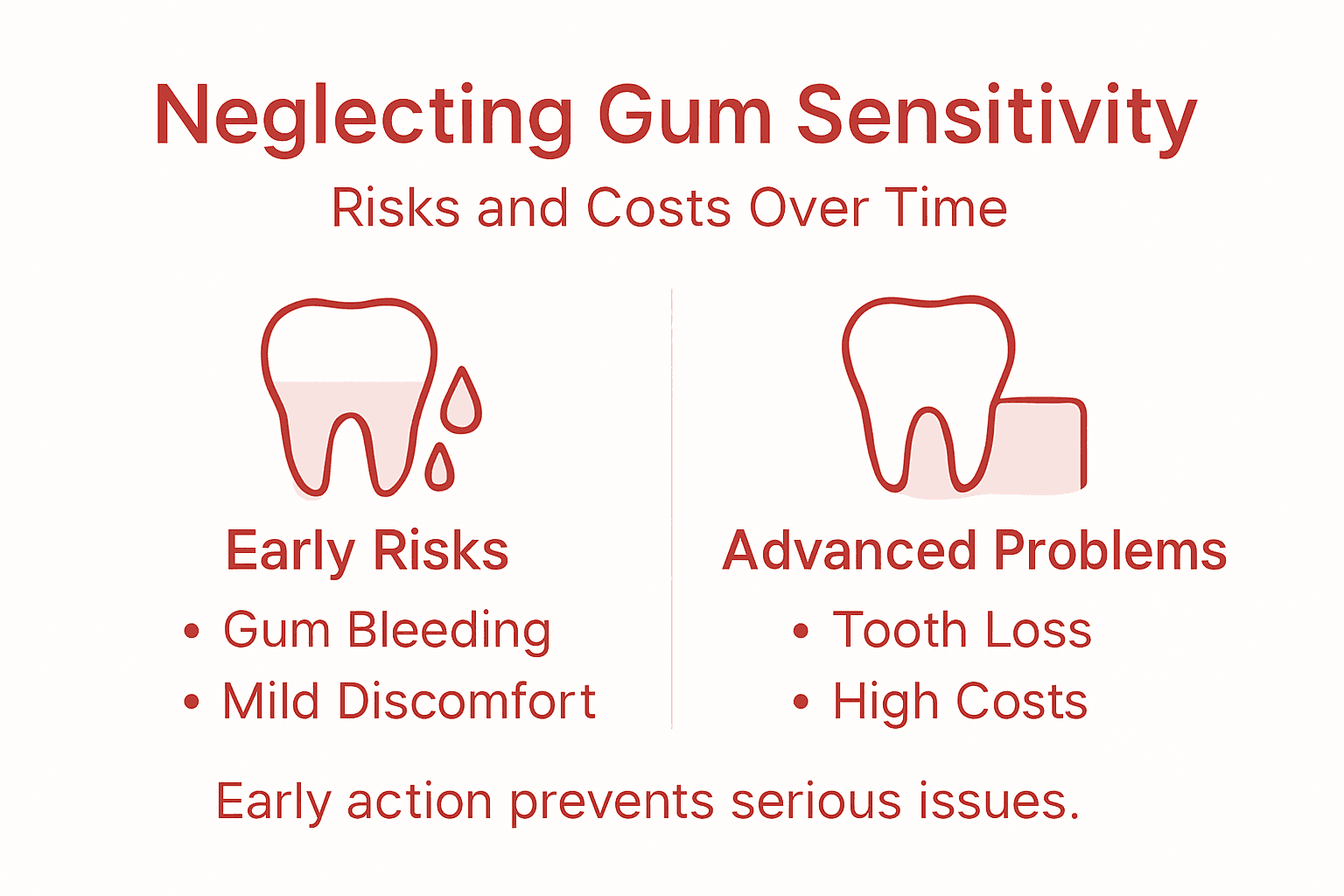
Gingivitis responds well to improved oral hygiene and professional cleaning. Periodontitis requires ongoing management because bone loss cannot be fully restored. This distinction makes early action invaluable.
The progression timeline varies, but most untreated gum disease advances noticeably within 12-24 months. Sensitivity that worsens over weeks suggests active disease progression requiring immediate professional attention.
Pro tip: Schedule dental visits at the first sign of sensitivity or bleeding, not when pain becomes unbearable—early intervention prevents complications that later require extensive treatment or tooth extraction.
Natural Relief and Prevention Strategies
Addressing gum sensitivity requires both immediate relief and long-term prevention. The good news is that natural approaches combined with consistent oral care produce measurable improvements without harsh chemicals or invasive treatments.
Your daily habits determine whether sensitivity worsens or improves. Small changes to your routine create compound benefits over weeks and months, restoring gum health naturally.
Daily Prevention Practices
Prevention starts with fundamental oral hygiene habits. These aren’t complicated, but consistency matters far more than intensity.
Core prevention strategies include:
- Brush twice daily with soft bristles - Hard toothbrushes damage gum tissue and accelerate recession
- Floss daily - Removes plaque from between teeth where brushing cannot reach
- Use gentle circular motions - Avoid aggressive scrubbing that irritates sensitive gums
- Avoid tobacco products - Smoking severely impairs gum healing capacity
- Limit acidic foods and beverages - Citrus, wine, and carbonated drinks erode tooth structure
- Maintain balanced nutrition - Vitamins and minerals strengthen gum resilience
Good oral hygiene practices include brushing teeth at least twice daily and flossing daily to avoid tobacco, which together form the foundation of natural gum disease prevention.
Many European consumers seeking fluoride-free products overlook the importance of brushing technique. Switching from hard to soft-bristled toothbrushes alone produces noticeable sensitivity reduction within 2-3 weeks for many people.
Natural Relief Methods
When sensitivity causes discomfort, several natural remedies provide soothing relief without chemical irritants.
Tested natural relief approaches include:
- Saltwater rinses - Mix one-half teaspoon salt in eight ounces warm water, rinse gently twice daily
- Herbal mouthwashes - Chamomile and calendula possess anti-inflammatory properties that calm irritated tissue
- Oil pulling - Swishing coconut or sesame oil for 10-15 minutes may reduce bacterial load
- Cold water rinses - Temporary numbing effect provides immediate comfort during flare-ups
- Anti-inflammatory diet - Foods rich in omega-3 fatty acids reduce systemic inflammation affecting gums
- Proper hydration - Adequate water intake supports immune function and gum tissue repair
Prevention of gum sensitivity involves maintaining the balance of the oral microbiome through effective brushing and flossing, combined with avoiding smoking and reducing inflammation through proper diet.
Professional Support Combined with Natural Care
Natural approaches work best alongside professional dental guidance. Regular dental visits identify problems early before they become serious, while natural methods maintain health between appointments.
Schedule dental checkups every six months or more frequently if you have active gum disease. Professional cleanings remove tartar that your toothbrush cannot address, providing relief that natural methods alone cannot achieve.
Your dentist can recommend specific products suited to your sensitivity type. Some individuals benefit from effective natural mouthwash formulated for gum disease, while others need targeted topical treatments applied to specific sensitive areas.
Pro tip: Begin with gentle brushing technique and daily flossing for two weeks before expecting significant results—these foundational habits create the conditions where any additional natural remedy can work effectively.
Discover Natural Solutions to Gum Sensitivity You Can Trust
Gum sensitivity is more than a minor irritation it is a clear sign that your oral health needs gentle yet effective care. From gum recession and inflammation to the impact of lifestyle factors this article highlights how complex gum sensitivity really is. If you are struggling with symptoms like bleeding gums tender tissue or sharp pain triggered by hot and cold stimuli you deserve a solution that targets the root cause without harsh chemicals or aggressive treatments.

Explore a natural approach that combines the power of hemp and Dead Sea minerals to support and restore your gum health. At Stop-Oralcare, our fluoride-free dental products are specially formulated to promote healing and reduce inflammation safely and scientifically. Do not wait for sensitivity to worsen or cause permanent damage. Take control now by visiting Stop-Oralcare and learn how you can protect your smile with reliable natural care designed by Dr. Veronica Stahl. Your gums will thank you.
Frequently Asked Questions
What are the common causes of gum sensitivity?
Gum sensitivity can be caused by several factors including gum recession, gum disease, aggressive brushing, tooth decay, cracked or worn teeth, and grinding or clenching. Understanding these causes is vital for effective treatment.
How can I effectively relieve gum sensitivity at home?
To relieve gum sensitivity at home, practice good oral hygiene by brushing gently with a soft-bristled toothbrush, flossing daily, using saltwater rinses, and considering herbal mouthwashes with anti-inflammatory properties. Additionally, maintaining a balanced diet helps support gum health.
When should I seek professional dental help for gum sensitivity?
If you experience persistent gum sensitivity, especially accompanied by bleeding, swelling, or loose teeth, it’s crucial to seek professional dental help. Early intervention can prevent further progression of gum disease and possible tooth loss.
Is there a connection between gum sensitivity and systemic health issues?
Yes, untreated gum sensitivity can lead to serious health complications, including tooth loss and systemic diseases such as heart disease and diabetes. The bacteria causing gum disease can enter the bloodstream and affect other parts of the body, making it essential to manage gum health proactively.
Recommended
- 7 Examples of Safe Mouthwash Ingredients for Sensitive Gums – Stop Oral Care
- 7 Essential Oral Health Tips 2025 for Sensitive Teeth – Stop Oral Care
- Find the Ideal Mouthwash for Sensitive Gums: Expert Tips & Comparisons – Stop Oral Care
- Oral Care Routine for Sensitive Teeth Naturally Explained – Stop Oral Care
- 6 Key Symptoms of Food Sensitivity Explained