

Chlorhexidine commonly causes tooth and tongue staining, taste disturbance, and increased tartar buildup, especially with regular oral rinse use. Rare but serious reactions, including anaphylaxis, mucosal ulceration, and skin injury with certain topical products, have also been documented. Stop using any chlorhexidine product and seek emergency care if you notice facial swelling, throat tightness, or breathing difficulty. For persistent staining, altered taste, or worsening irritation, schedule a dental evaluation rather than waiting it out.
TL;DR:
- Regular use of chlorhexidine mouthwash can lead to noticeable and sometimes heavy tooth staining, especially with prolonged use over several months.
- Taste disturbance, including a bitter or metallic aftertaste, usually resolves within a day but can cause discomfort during treatment.
- Topical chlorhexidine may cause skin irritation, allergic reactions, or chemical burns in neonates, while accidental eye exposure is a medical emergency.
- Although rare, severe allergic reactions like anaphylaxis can occur within minutes of exposure, requiring immediate emergency intervention.
- The product should be used for short courses as long-term use increases risks without significant benefits beyond initial treatment.
Table of Contents
- Common Oral Side Effects of Chlorhexidine Mouthwash
- Chlorhexidine Skin and Topical Side Effects
- Can Chlorhexidine Cause Anaphylaxis?
- Why Chlorhexidine Stains Teeth and How to Stop It
- How Long Can You Safely Use Chlorhexidine?
- Who Should Avoid Chlorhexidine or Use It With Caution
- What Dr. Veronica Stahl Says About Using Chlorhexidine Safely
- A Clinical Perspective on Chlorhexidine’s Place in Oral Care
- Sources
- FAQ
Common Oral Side Effects of Chlorhexidine Mouthwash
Staining is the side effect nearly everyone experiences with regular chlorhexidine rinse use, and it isn’t subtle. Prescribing data cited in the DailyMed chlorhexidine gluconate rinse label shows that many users of chlorhexidine oral rinse develop measurable anterior tooth staining over several months of use, with a smaller proportion experiencing heavy staining, compared to fewer cases in control groups.
Pro Tip: Staining tends to track with how much plaque and tartar you already have on your teeth, so a professional cleaning before starting chlorhexidine often means less visible discoloration later.
Taste disturbance is the second most reported complaint. Users typically describe a lingering bitter or metallic taste that can dull the flavor of food for several hours after rinsing. It usually fades within a day of stopping the product, though some people notice it easing gradually over the full course of treatment.
Minor mucosal changes round out the common list. These include a coated or “furry” tongue and mild peeling of the inner cheek lining, both usually harmless and self-limiting.
Practical steps that reduce day-to-day discomfort:
- Rinse for the exact time your dentist recommends, usually 30 seconds, no longer.
- Avoid rinsing with water right after using the product, since this increases bitterness.
- Brush and floss before rinsing, not after, to limit interaction with food debris.
- Watch for any mucosal peeling that worsens instead of improving after a few days.
Chlorhexidine Skin and Topical Side Effects
Topical chlorhexidine, used in surgical skin prep and some antiseptic washes, carries a different risk profile than the mouth rinse. Most reactions are limited to the application site.
- Localized redness, itching, or a burning sensation at the site of application.
- Contact dermatitis in people with an existing skin sensitivity to chlorhexidine.
- Chemical burns in neonates have been reported, which is why topical use isn’t recommended for infants under two months.
- Eye exposure is a genuine emergency: chlorhexidine can cause corneal injury, so accidental contact needs immediate irrigation with water and prompt evaluation by an eye care professional.
Stop topical use and get medical review if redness spreads, blistering develops, or irritation persists more than a day or two after you discontinue the product.
Can Chlorhexidine Cause Anaphylaxis?
Yes, though it’s rare. Anaphylaxis to chlorhexidine typically develops within minutes of exposure, whether from a mouthwash, a topical wash, or catheter coatings used in medical settings. Watch for hives, swelling of the face, tongue, or throat, difficulty breathing, a racing heart, or sudden lightheadedness.
By the numbers: Case reports and postmarketing surveillance describe chlorhexidine anaphylaxis as uncommon but real, with documented fatalities in medical contexts where exposure went unrecognized, according to a review of chlorhexidine anaphylaxis cases.
Beyond anaphylaxis, case-based literature also documents unusual oral reactions, including mucosal ulceration and allergic-type rashes tied to mouthwash use, in a case-based review of unusual chlorhexidine side effects. Small children who swallow chlorhexidine mouthwash can show alcohol-intoxication-like symptoms, which is a separate concern from allergy but equally urgent.
If you suspect a severe reaction, act in this order:
- Stop using the product immediately and rinse your mouth or skin with water.
- Call emergency services if you notice throat swelling, wheezing, or breathing trouble.
- Use an epinephrine auto-injector if one has been prescribed for a known allergy.
- Report the reaction to your pharmacist or national pharmacovigilance program once you’re stable.
- Follow up with an allergist to confirm the trigger before using any chlorhexidine product again.
Why Chlorhexidine Stains Teeth and How to Stop It
The staining mechanism comes down to chemistry, not poor hygiene. Chlorhexidine binds to the pellicle, the thin protein film that coats your teeth, and that same binding property lets it also grab onto colored compounds from food and drink. The result is a brownish stain that forms through reactions similar to the Maillard browning you see in cooked food, along with interactions involving dietary iron.
Not every beverage carries equal risk. Research on beverage staining potential found that black tea and red wine cause the most pronounced staining when combined with chlorhexidine, with strong coffee and tobacco use close behind. Brushing helps lift some of this discoloration, but certain stains resist mechanical removal entirely.
Mitigation strategies that actually hold up:
- Rinse at a different time than your coffee or tea, ideally after brushing rather than right after a meal with staining beverages.
- Ask your dentist about anti-discoloration systems (ADS), reformulated rinses that reduce brown staining, though some studies show a possible small trade-off in plaque control.
- Keep dental cleanings on schedule since polishing removes surface stain that daily brushing can’t touch.
- Know that stains on crowns, veneers, or composite fillings can become permanent, unlike stains on natural enamel.
Pro Tip: If you drink tea or coffee daily, rinsing your mouth with plain water 30 to 60 minutes after your cup, rather than immediately, cuts down on how much staining compound is available to bind with chlorhexidine. Reducing the tea stain habit around your rinse schedule matters more than switching toothpaste.
How Long Can You Safely Use Chlorhexidine?
Chlorhexidine rinse is designed for short therapeutic courses, typically a few weeks, not indefinite daily use. Long-term use raises the odds of cumulative staining, tartar buildup, and taste fatigue without necessarily adding extra benefit for most users.
- Follow the exact course length your dentist prescribes rather than continuing “just to be safe.”
- Schedule professional dental cleanings at intervals no longer than six months if you use chlorhexidine regularly.
- Avoid rinsing with water immediately afterward, since it increases bitterness and can blunt the rinse’s effect.
- Reassess with your dentist if you’re still using the product past the recommended window.
| Warning sign | What it usually means | What to do |
|---|---|---|
| Persistent bitter taste beyond a few days | Normal taste disturbance lingering longer than expected | Space rinsing away from meals; ask about a shorter course |
| Progressive tooth or tongue staining | Expected effect intensifying with continued use | Book a cleaning; consider an ADS formulation |
| Mucosal peeling that worsens | Possible irritation beyond typical mild desquamation | Stop use and consult your dentist |
| Facial swelling or breathing trouble | Possible allergic reaction | Stop immediately; seek emergency care |
Who Should Avoid Chlorhexidine or Use It With Caution
Certain groups need extra caution or a different approach entirely.
- Neonates and infants under two months should avoid topical chlorhexidine because of documented chemical burn risk.
- Young children who might swallow mouthwash need supervised dosing, since ingestion can cause intoxication-like symptoms.
- Pregnant or breastfeeding individuals should use chlorhexidine only if a clinician specifically recommends it, since data on this population remains limited.
- Anyone with a known chlorhexidine allergy should avoid all forms of the product and discuss allergy testing before any future exposure.
- People with crowns, veneers, or composite restorations should know that staining on these surfaces can be permanent, unlike natural enamel.
What Dr. Veronica Stahl Says About Using Chlorhexidine Safely
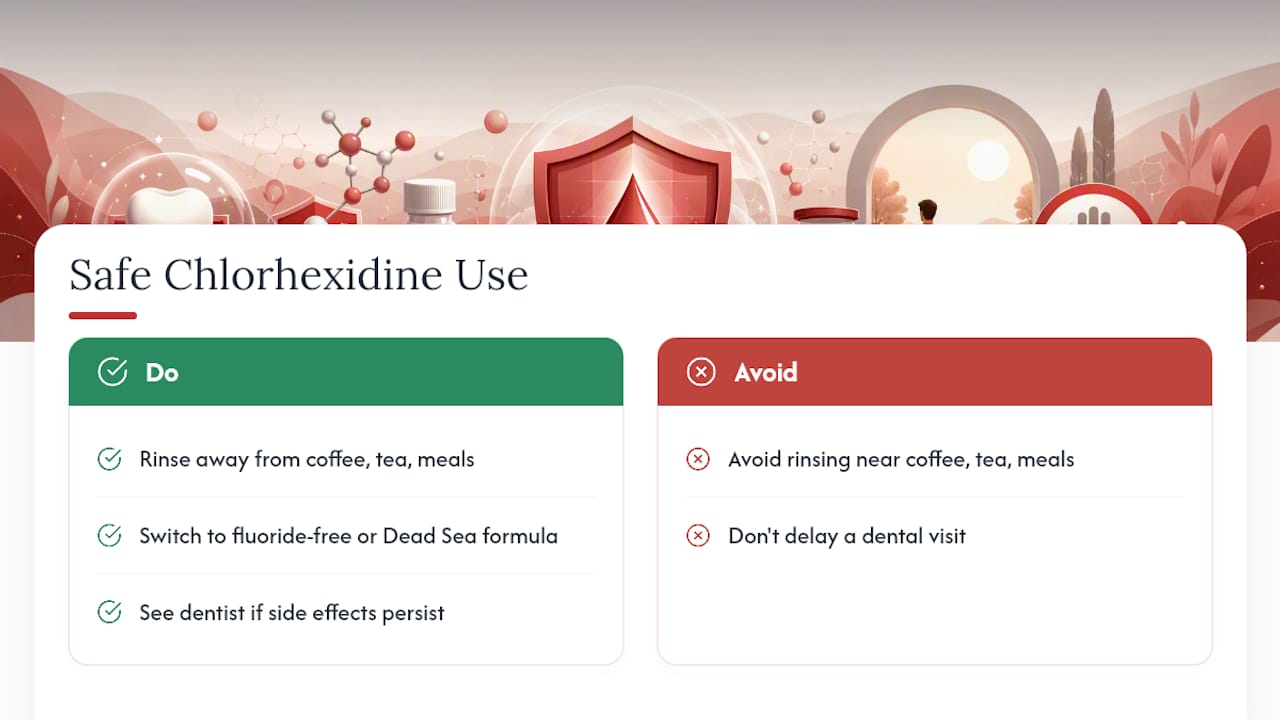
Pro Tip: If taste disturbance or staining is your main concern, timing matters as much as the formula: rinsing away from coffee, tea, or meals reduces both. Dr. Stahl points to fluoride-free, hemp and Dead Sea mineral formulations as a gentler daily alternative once a short chlorhexidine course ends, an approach outlined further in the natural mouthwash usage guide. Anyone with side effects lasting more than a few days after stopping should still see a dental professional.
A Clinical Perspective on Chlorhexidine’s Place in Oral Care
Chlorhexidine earned its reputation because it works, but effectiveness and long-term suitability aren’t the same thing. It remains a reasonable short-term choice after periodontal surgery or during an acute infection, where the antimicrobial benefit clearly outweighs a few weeks of staining risk. Where I diverge from casual recommendations is the drift toward open-ended daily use, which trades a real but temporary problem for a permanent one on restorations. Stop-oralcare exists because people need a fluoride-free, lower-irritation option for the months and years between those short clinical courses, not as a replacement for chlorhexidine when it’s genuinely indicated.
— Veronica
This article is general information, not a substitute for advice from a qualified doctor. Consult a qualified healthcare professional about your own circumstances before acting on anything here.
Sources
- Anaphylaxis to chlorhexidine: a review
- DailyMed - Chlorhexidine gluconate rinse prescribing information
- Chlorhexidine (oral route) - Mayo Clinic
FAQ
What Are the Side Effects of Chlorhexidine?
The most common side effects are tooth and tongue staining, altered or bitter taste, and increased tartar buildup. Rare but serious effects include allergic reactions, anaphylaxis, and mucosal irritation or ulceration.
Why Is Chlorhexidine Not Used Anymore for Long-Term Care?
Chlorhexidine is still used, but mainly for short courses rather than long-term daily care, because cumulative staining, tartar buildup, and taste disturbance tend to reduce compliance the longer someone uses it.
What Happens If You Use Chlorhexidine Too Much?
Overuse increases the likelihood of heavy tooth staining, persistent taste changes, and mucosal irritation, and can raise tartar buildup beyond what typically occurs with recommended short-term use.
When Should You Not Use Chlorhexidine?
Avoid chlorhexidine if you have a known allergy to it, and avoid topical formulations in infants under two months due to chemical burn risk. Pregnant or breastfeeding individuals should use it only under clinical guidance.