

Clinical trials and systematic reviews show that essential-oil mouthwashes reduce plaque and gingival inflammation when used alongside brushing and flossing. Randomized controlled trials and meta-analyses support this as an adjunct benefit, not a replacement for mechanical cleaning, with tolerability that often outperforms chlorhexidine over the long term. Some caution applies around alcohol content, dosing, and individual sensitivity.
TL;DR:
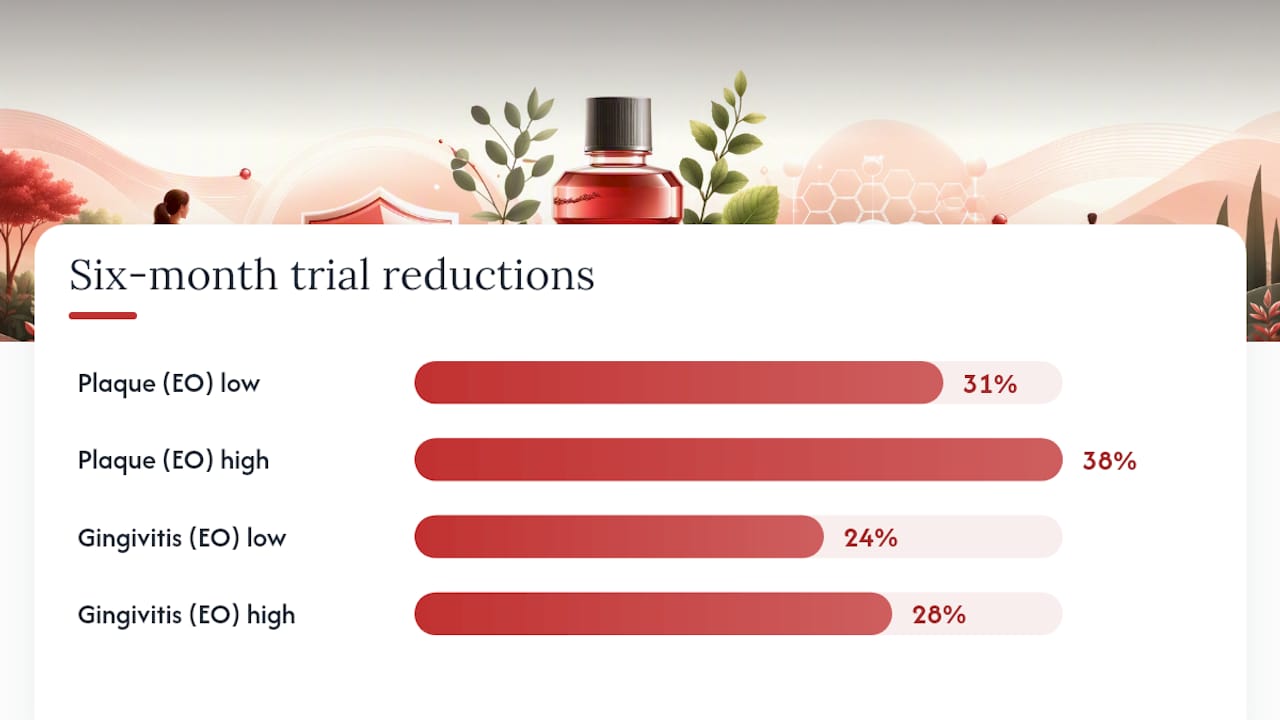
- Essential oil mouthwashes can reduce plaque by approximately 31–38 percent and gingivitis by 24–28 percent over six months, according to randomized trials.
- They match chlorhexidine in plaque and gingivitis reduction but cause fewer long-term side effects such as staining and taste disturbance.
- The effectiveness depends on EO concentration, formulation, and user adherence, with long-term use primarily supported for up to six months.
- Alcohol-free formulations with alternative solubilizers offer comparable antibacterial benefits and better taste, making them preferable for daily use.
- Proper usage involves rinsing twice daily for 20–30 seconds over at least four weeks, with caution for individuals with sensitivities or mucosal issues.
Table of Contents
- Essential Oil Mouthwash Benefits: What the Clinical Trials Show
- How Essential Oils Fight Plaque and Gum Inflammation
- Which Essential Oils Actually Have Evidence Behind Them
- Is Essential Oil Mouthwash Safe? Cytotoxicity and Precautions
- Does Alcohol Content Change the Results?
- How to Use Essential Oil Mouthwash for Real Results
- Interpreting the Research: A Formulation Perspective
- What Happens to Your Mouth’s Soft Tissue and Sense of Taste
- Allergic Reactions and Sensitivity to Essential Oils
- Long-Term Use and What It Means for Your Oral Microbiome
- Why Formulation Choices Matter More Than the Ingredient List
- A Fluoride-Free, Alcohol-Free Path to the Same Clinical Benefits
- Key Studies Behind These Findings
- Sources
Essential Oil Mouthwash Benefits: What the Clinical Trials Show
The strongest evidence for essential-oil (EO) mouthwash comes from randomized controlled trials that track plaque and gingivitis over months, not days. A six-month RCT comparing EO mouthrinse against mechanical oral hygiene alone found plaque reductions of roughly 31 to 38 percent and gingivitis reductions of 24 to 28 percent in the rinse group. Those numbers hold up because the trial ran long enough to capture real biofilm change rather than a temporary dip after a single use.
Systematic reviews pooling multiple trials generally track two standard measurements: the Modified Gingival Index (which scores redness, swelling, and bleeding tendency) and the Plaque Index (which scores visible biofilm buildup at the gumline). Most trials run between four weeks and six months, long enough to distinguish a rinse that works from one that just tastes strong.
Comparisons against chlorhexidine, the prescription-strength antiseptic long considered the benchmark for plaque control, tell an interesting story. A narrative and systematic review found EO rinses deliver plaque and gingivitis reductions in the same range as chlorhexidine, while producing markedly fewer long-term side effects. That tolerability gap matters for anyone planning to use a rinse daily for months rather than the short courses chlorhexidine is typically prescribed for.
A smaller exploratory trial put this head-to-head: a 1% tea tree oil mouthwash matched 0.12% chlorhexidine on plaque and gingival index improvement over 15 days, with both rinses producing statistically significant reductions (p < 0.001). Chlorhexidine reduced bacterial counts slightly more in lab assays, but it also caused more taste disturbance and staining.
What the evidence does not yet settle:
- Study heterogeneity — trials vary in EO concentration, rinse duration, and population, making direct pooling difficult.
- Sample sizes — many RCTs enroll fewer than 100 participants, which widens confidence intervals.
- Population diversity — most trials focus on adults with mild to moderate gingivitis, so evidence in periodontitis patients or children is thinner.
- Publication bias — commercially funded trials on branded EO blends dominate the literature.
None of that erases the core finding. It does mean readers should treat percentage reductions as directional evidence of benefit, not guaranteed personal results.
How Essential Oils Fight Plaque and Gum Inflammation
Essential oils do not work like a single-target drug. They attack the oral biofilm on several fronts at once, which is part of why bacteria have a harder time developing resistance to them.
The primary mechanism is membrane disruption. Compounds like thymol and eucalyptol are lipophilic, meaning they dissolve into the fatty membranes of bacterial cells and destabilize them, leaking cell contents and killing the organism outright. A related mechanism, quorum-sensing inhibition, interferes with the chemical signals bacteria use to coordinate colony behavior, which slows how efficiently a biofilm organizes and matures on the tooth surface.
Laboratory data backs the raw antimicrobial potency here. Testing against key periodontal pathogens including P. gingivalis, T. forsythia, and F. nucleatum shows many essential oils inhibit growth at minimum inhibitory concentrations often below 100 μg/mL, a potency range that puts them in serious contention alongside conventional antiseptics for lab-based antibacterial activity.
Lab potency in numbers: A minimum inhibitory concentration under 100 μg/mL means a very small dose of the oil stops bacterial growth in a petri dish. That is a meaningful signal of raw antimicrobial strength, though it does not by itself guarantee the same result in a living mouth, where saliva, biofilm structure, and rinse contact time change the equation.
Beyond killing bacteria, EOs appear to reshape the oral microbiome rather than just thin it out. Quantitative sequencing research found that twice-daily EO mouthrinse use over four to six weeks shifted the plaque microbiome toward a composition dominated by early-colonizing, health-associated species, alongside a drop in total microbial load. That is meaningfully different from simply reducing bacteria across the board. It suggests a reset toward a healthier baseline community rather than indiscriminate destruction.
Formulation matters here too. Essential oils are poorly soluble in water, which is why many products rely on alcohol or other solubilizers to keep the active compounds suspended and available. Newer delivery approaches, including nanoemulsions and liposomal carriers, aim to improve solubility and bioavailability without depending on alcohol, a detail that becomes relevant when comparing alcohol-free formulas later in this article.
Which Essential Oils Actually Have Evidence Behind Them
Not every oil marketed for oral care carries the same weight of proof. Some have been through multi-month RCTs; others are supported mainly by lab data against isolated bacterial strains. Here is where each stands.
-
Tea tree oil. Clinical trials, including a 15-day head-to-head against chlorhexidine, show measurable reductions in plaque and gingival index scores with fewer side effects than the prescription comparator. Tea tree mouthwash benefits are among the better clinically documented in this category, though most trials remain short-term.
-
Thymol, eucalyptol, menthol, and methyl salicylate blends. This four-ingredient combination is the most extensively studied EO formula in commercial mouthwash, backed by multiple long-term RCTs showing sustained plaque and gingivitis reduction over six-month periods. It is the closest thing this category has to a clinical benchmark.
-
Clove oil (eugenol). Laboratory studies show meaningful antibacterial activity against periodontal pathogens, and eugenol has a long history in dental practice as a mild anesthetic and antiseptic. Clinical trial data specifically on mouthwash formulations is thinner than for tea tree or thymol blends.
-
Peppermint oil. Contributes antimicrobial activity and is one of the most common flavor and freshness agents in oral care, with laboratory evidence supporting antibacterial effects. Clinical endpoint data for peppermint used alone, rather than as part of a blend, is limited.
-
Thyme oil. Lab studies show inhibitory activity against oral pathogens at low concentrations. Clinical trial evidence in finished mouthwash products is mostly emerging rather than established.
The practical takeaway: if you want a formula backed by the deepest well of clinical trial data, look for thymol and eucalyptol combinations or tea tree oil. If you are choosing based on antibacterial breadth in lab testing, clove, peppermint, and thyme all contribute, even where human trial data still needs to catch up with the microbiology.
Is Essential Oil Mouthwash Safe? Cytotoxicity and Precautions
Most people tolerate EO mouthwash well, and the side-effect profile compares favorably to chlorhexidine over extended use. That does not mean essential oils are risk-free at any concentration, and dosing is where the nuance lives.
Common, usually mild side effects include:
- A temporary burning or tingling sensation, especially with alcohol-containing formulas.
- Mild taste alteration immediately after rinsing.
- Occasional dry mouth with frequent use of alcohol-based rinses.
- Rare mucosal irritation in people with pre-existing sensitivity.
By comparison, chlorhexidine’s well-documented long-term issues, including tooth and tongue staining and a more pronounced taste disturbance, are largely absent from EO rinses used at label-recommended concentrations, based on comparative review data.
In vitro cytotoxicity studies have found that essential oils can damage cultured human cells at high concentrations, a finding sometimes cited to argue against EO mouthwash generally. Clinical relevance is the key qualifier: commercial mouthwash formulations dilute active EO compounds well below the concentrations used in cytotoxicity assays, and the exploratory tea tree oil trial that matched chlorhexidine’s clinical results reported no cytotoxic reactions in participants over the study period. Dose and formulation, not the presence of an essential oil, determine whether a rinse is a benefit or a hazard.
Certain groups warrant extra caution:
- People with oral mucositis (from chemotherapy or radiation) should ask a dental professional before using any alcohol-containing rinse, since alcohol can worsen mucosal pain.
- Immunocompromised patients should get individualized guidance rather than choosing a rinse off the shelf.
- Young children should never use adult-strength EO mouthwash due to swallowing risk and higher relative exposure to alcohol or concentrated oils.
- Pregnant individuals should consult a clinician, since dedicated trial data in pregnancy is limited.
Pro Tip: Never use undiluted, pure essential oil as a mouthwash substitute. The concentrations used in clinical trials are carefully formulated and diluted, and a few drops of pure clove or tea tree oil straight from a bottle can burn oral tissue or cause systemic toxicity if swallowed.
If you notice persistent burning, swelling, or irritation beyond the first few uses, stop and switch formulas rather than pushing through it.
Does Alcohol Content Change the Results?
Alcohol content changes some outcomes but not the ones most people worry about. A systematic review and meta-analysis comparing alcohol-containing and alcohol-free EO mouthwashes found alcohol-containing formulas produced somewhat greater plaque control in certain non-brushing trial models, with a mean difference favoring alcohol-containing rinses. For gingival index improvement, the two formulations performed comparably; alcohol was not the deciding factor for gum health outcomes.
Taste told a different story. The same meta-analysis found alcohol-free formulations were rated more favorably on taste perception, a factor that matters for long-term adherence. A rinse with excellent lab data does nothing for your gums sitting unused in a medicine cabinet because you dislike the taste.
The trade-off comes down to formulation chemistry. Alcohol helps dissolve and stabilize essential oil compounds, which is why it became the default solubilizer decades ago. Alcohol-free formulas can retain comparable EO activity when manufacturers use alternative solubilizers, which is part of why modern alcohol-free options have closed much of the historical performance gap.
Alcohol-free formulas are generally the better default for:
- Anyone with dry mouth or reduced saliva flow.
- People with oral mucositis or healing tissue.
- Recovering alcoholics or those avoiding alcohol for religious or personal reasons.
- Children and adolescents.
- Anyone who has stopped using a rinse in the past because of burning or taste aversion.
How to Use Essential Oil Mouthwash for Real Results
Getting results that resemble what clinical trials report depends on matching the trial protocol, not just swishing occasionally when you remember.
- Rinse twice daily. Trial protocols showing plaque and gingivitis reductions typically used a twice-daily regimen, morning and night, as a fixed part of the routine.
- Use the full measured dose for 20 to 30 seconds. Most trials standardized on this contact time; shorter rinsing reduces the antimicrobial exposure the biofilm actually receives.
- Treat it as an adjunct, not a replacement. No trial in this evidence base tested mouthwash instead of brushing and flossing. Use it to reach interdental and posterior areas a toothbrush often misses.
- Give it four to six weeks before judging results. Gingival and plaque index improvements in trials showed up over weeks, not days. Judging a rinse after three uses does not match how the evidence was gathered.
- See a dental professional if bleeding or swelling persists past six weeks. Continued inflammation despite consistent use signals something beyond what a mouthwash can address alone.
Pro Tip: Rinse at a different time than brushing rather than immediately after. Many toothpaste surfactants can interact with mouthwash ingredients, and spacing them out preserves the full effect of both. For more on the sequencing question, see this breakdown of whether mouthwash works better before or after brushing.
Store mouthwash away from heat and direct sunlight, keep the cap tightened between uses to limit evaporation of volatile oils, and always store it out of reach of small children. Swallowing even alcohol-free EO mouthwash in quantity can cause stomach upset in a child.
Interpreting the Research: A Formulation Perspective
The clinical trial data is consistent enough to draw a practical conclusion: essential oils work as an adjunct when the formulation gets three things right. The EO concentration needs to sit in the range shown effective in trials, the delivery system needs to keep those compounds active and bioavailable in the mouth, and the taste needs to be tolerable enough that someone actually keeps using it for the four to six weeks results require.
That third point gets underweighted in most discussions of oral care chemistry, but adherence is where theoretical efficacy turns into an actual reduction in plaque and gingivitis. A rinse with strong laboratory MIC data against periodontal pathogens is irrelevant if it sits unused after one unpleasant swish.
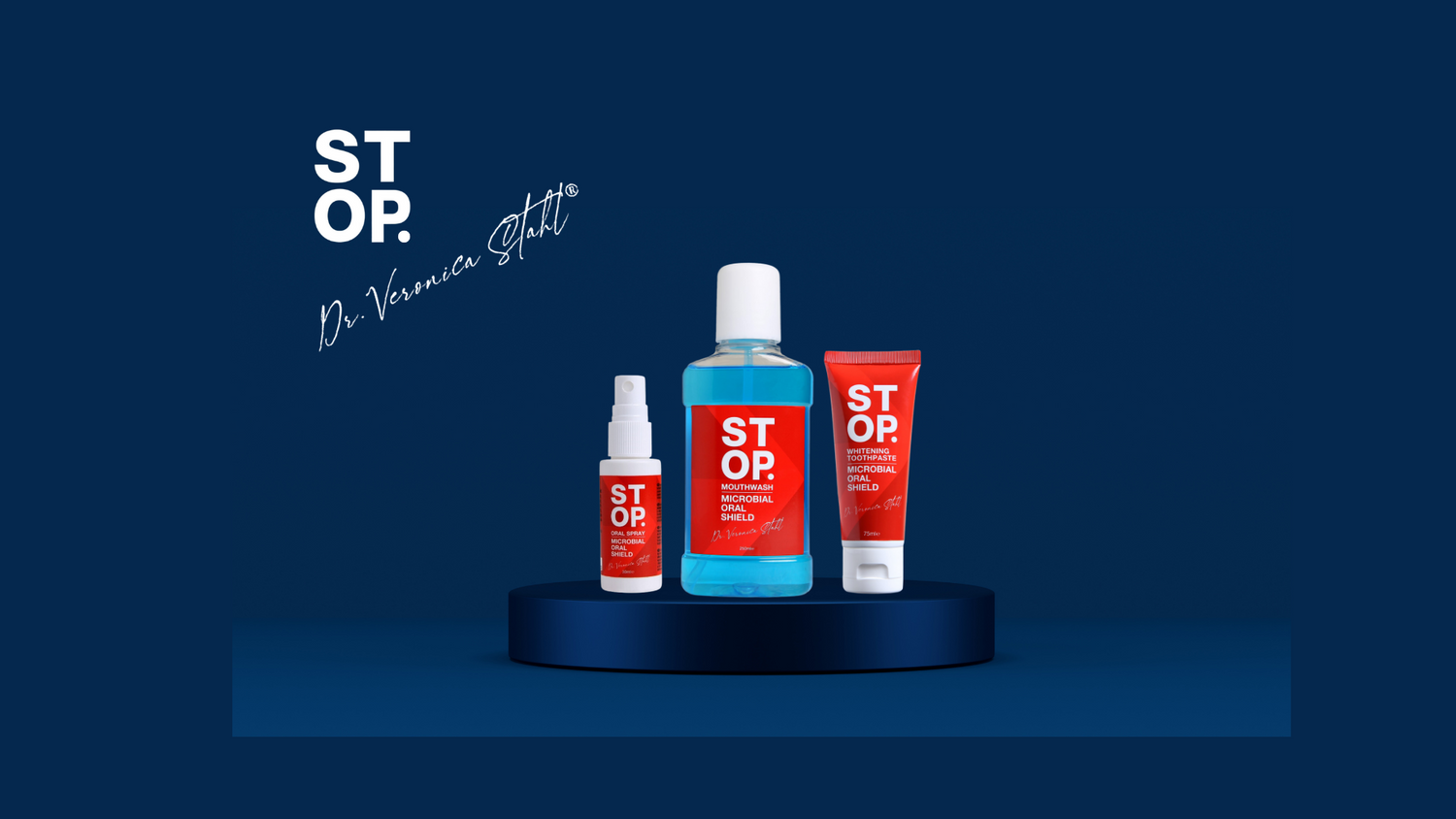
Dr. Veronica Stahl’s formulation work has centered on preserving essential oil activity without leaning on alcohol as the default solubilizer, and pairing it with ingredients like Dead Sea minerals for their established role in gum tissue support. The goal is a rinse a person will actually finish the bottle of, because the evidence base only helps you if you use the product long enough to reach the timelines these trials measured.
Readers evaluating any EO mouthwash, from Stop-oralcare or elsewhere, should look for transparency on EO concentration, alcohol content, and whether the manufacturer references trial-comparable dosing. Products that only trade on the general reputation of essential oils, without disclosing formulation dose, are asking for trust the evidence has not actually verified for that specific bottle.
What Happens to Your Mouth’s Soft Tissue and Sense of Taste
Essential oil mouthwash interacts directly with the oral mucosa, the soft tissue lining your cheeks, gums, and tongue, and that contact is where most of the noticeable, immediate sensations come from. A burning or tingling feeling right after rinsing is typically the oil compounds and any alcohol content interacting with mucosal nerve endings. It is usually transient, fading within a minute or two, and does not indicate tissue damage at label-recommended dilutions.
Taste perception takes a more variable hit. Strong-flavored oils like eucalyptol and menthol can temporarily dull the palate’s sensitivity to subtler flavors for a short window after rinsing, similar to what happens after eating strongly minty gum. This is a short-lived sensory shift, not a lasting change in taste function. Alcohol-containing formulas tend to produce a more pronounced and longer taste disturbance than alcohol-free versions, one of the reasons alcohol-free rinses scored better on taste perception in the comparative research already discussed.
For most people with healthy, intact oral mucosa, repeated use does not cause lasting tissue changes. The exception is people with already compromised or inflamed mucosa, such as those undergoing cancer treatment, where alcohol-containing rinses can aggravate existing soreness. That is precisely the population where alcohol-free formulations, discussed earlier as a category, make the most practical sense.
Allergic Reactions and Sensitivity to Essential Oils
Essential oils are concentrated botanical compounds, and like any concentrated plant extract, they carry a real, if uncommon, risk of allergic or sensitivity reactions in susceptible individuals. This is distinct from the mild, transient burning sensation most users experience. True allergic contact reactions typically involve persistent redness, swelling, itching, or blistering of the oral mucosa or lips that does not resolve shortly after rinsing.
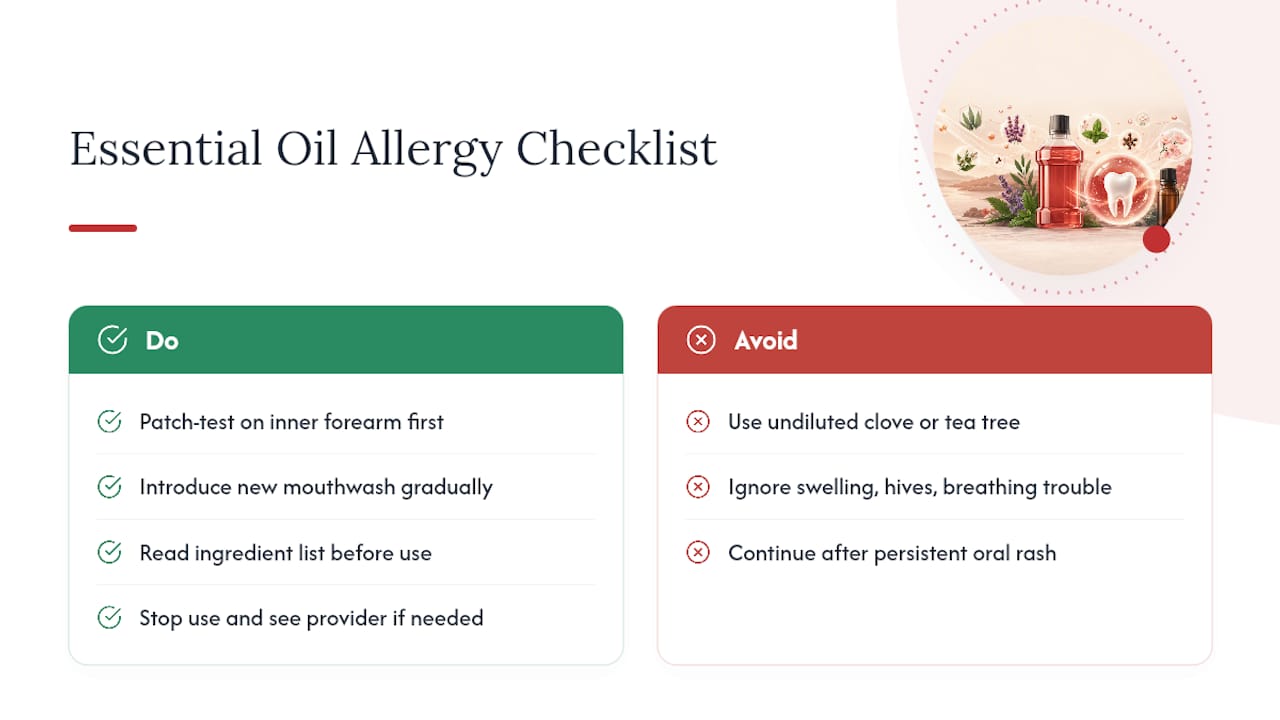
Certain oils carry a higher documented sensitization profile than others. Clove oil (eugenol) and tea tree oil are among those more frequently associated with contact sensitivity in dermatology and dentistry literature, particularly with repeated, undiluted exposure. People with a known history of allergic reactions to essential oils in skincare or aromatherapy products should approach EO mouthwash cautiously and consider patch-testing a small amount on the inner forearm before regular oral use, if they have any uncertainty.
Signs that warrant stopping use immediately include swelling of the lips, tongue, or throat, hives, or any difficulty breathing, which would indicate a more significant allergic response requiring prompt medical attention rather than just product discontinuation. Milder signs, like localized redness or a persistent rash inside the cheek, still justify switching products and, if symptoms continue, consulting a healthcare provider.
Because sensitivity is individual rather than universal, one person’s excellent tolerance of a tea tree formula says nothing about how another person’s mucosa will respond. Reading the ingredient list and introducing a new EO mouthwash gradually, rather than switching cold into daily twice-a-day use, is a reasonable precaution for anyone with a history of plant-based allergies.
Long-Term Use and What It Means for Your Oral Microbiome
Extended, consistent use of EO mouthwash appears to shift the oral microbiome rather than simply suppress it. That distinction, established by quantitative sequencing research on plaque samples, matters for anyone wondering whether months or years of daily rinsing might backfire by wiping out beneficial bacteria along with the harmful ones.
The sequencing data found that four to six weeks of twice-daily EO mouthrinse use reduced total microbial load while shifting the community composition toward early-colonizing, health-associated species rather than eliminating diversity outright. That is meaningfully different from a broad-spectrum antiseptic that suppresses everything indiscriminately. The oral microbiome in that model moves toward a state resembling a healthier baseline rather than toward sterility.
Long-term tolerability data from the trials reviewed earlier supports continued use without the cumulative staining and taste degradation associated with chlorhexidine, which is one reason chlorhexidine is typically prescribed for short defined courses while EO rinses are positioned for ongoing daily use. Still, “long-term” in the published trial evidence generally extends to six months, not multiple years, so claims about indefinite daily use rest more on tolerability data and mechanism than on decade-long trial follow-up.
The practical implication: periodic reassessment makes sense. If gum health and plaque control remain stable after several months, continuing the same routine is reasonable. If you notice new dryness, taste changes, or mucosal irritation emerging after long-term use, that is a signal to reassess concentration or switch to an alcohol-free formulation rather than assuming the product is working exactly as it did on day one.
Why Formulation Choices Matter More Than the Ingredient List
I think about essential oil mouthwash the way I think about any concentrated active ingredient: the compound matters, but the delivery decides whether it actually works in someone’s mouth every day. That is why Stop-oralcare’s formulations lean toward alcohol-free delivery, using solubilizers chosen specifically to keep essential oil compounds active without the burning and taste fatigue that make people quit alcohol-based rinses within weeks.
Pairing essential oils with Dead Sea minerals was not an arbitrary combination. It reflects a formulation philosophy built around what the clinical evidence actually rewards: consistent daily use over months, not a single strong rinse that nobody wants to repeat. As more trial data on nanoemulsion delivery and long-term microbiome outcomes gets published, our approach will keep adjusting to match what the research supports, not what happens to be trending in natural oral care.
— Veronica
A Fluoride-Free, Alcohol-Free Path to the Same Clinical Benefits
If the evidence above convinced you that essential oils belong in your routine, the next question is which formulation actually delivers them without the trade-offs chlorhexidine and alcohol-heavy rinses carry. Stop-oralcare builds its mouthwash around hemp and Dead Sea minerals alongside essential oil compounds, skipping both fluoride and alcohol while keeping the active ingredients formulated for daily use rather than a short prescription course.
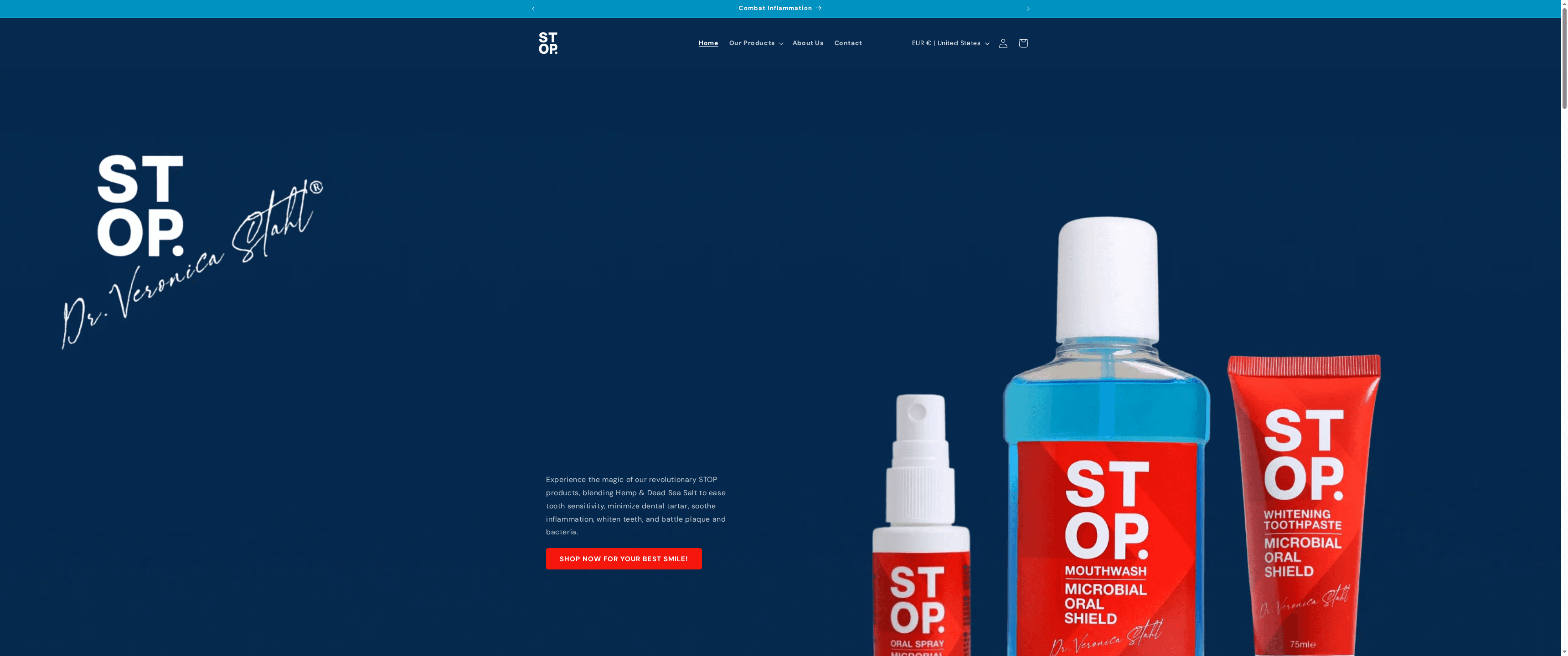
That alcohol-free approach directly addresses the taste-tolerability gap the research keeps surfacing. It gives you a rinse formulated for the twice-daily, months-long use pattern the RCTs behind this article’s findings actually tested. If you are ready to build essential oils into your daily oral care rather than testing them for a week and giving up, visit Stop-oralcare to see the current mouthwash and toothpaste lineup and find the formulation that fits your sensitivity level and gum health goals.
Key Studies Behind These Findings
The clinical claims in this article draw on a specific set of systematic reviews, randomized trials, and laboratory research. Readers who want to verify the numbers or dig deeper into methodology can start here:
- Essential oils mouthwash with or without alcohol: a systematic review and meta-analysis — PMC, 2024
- Effects of essential oil mouthrinses with or without alcohol on plaque and gingivitis: a randomized controlled clinical study — PMC, 2017
- Revisiting the Therapeutic Effects of Essential Oils on the Oral Microbiome — PMC, 2023
- Plant essential oils antibacterial mechanisms against oral pathogens — MDPI, 2024
- Research progress and antibacterial mechanisms of plant essential oils as alternative therapies for periodontitis — Frontiers in Microbiology, 2017
- Effect of a tea tree oil mouthwash on plaque-induced gingivitis compared with chlorhexidine — Frontiers in Oral Health, 2026
- Quantitative analysis of the effects of essential oil mouthrinses on clinical plaque microbiome — BMC Oral Health, 2024
This article is general information, not a substitute for advice from a qualified doctor. Consult a qualified healthcare professional about your own circumstances before acting on anything here.
Sources
- Essential oils mouthwash with or without alcohol in relation to effect on parameters of plaque and gingivitis: a systematic review and meta-analysis — PMC (2024)
- The effects of essential oil mouthrinses with or without alcohol on plaque and gingivitis: a randomized controlled clinical study — PMC (2017)
- Revisiting the Therapeutic Effects of Essential Oils on the Oral Microbiome — PMC (2023)
- Plant essential oils antibacterial mechanisms against oral pathogens — MDPI (2024)