


TL;DR:
- Florida’s oral health in 2026 is shaped by Medicaid contractor changes, the end of community water fluoridation, and expanded outreach programs. These policies increase preventive care responsibilities for clinicians and patients while creating new access challenges and opportunities. Active patient education and community initiatives are essential for maintaining oral health amid these shifts.
Florida oral health trends in 2026 are defined by three converging forces: a Medicaid contractor overhaul, the statewide phase-out of community water fluoridation, and a growing network of community outreach programs targeting underserved populations. These shifts affect millions of Floridians, from seniors navigating coverage gaps to children relying on Medicaid preventive services. Oral health professionals face new compliance demands, altered reimbursement structures, and patients who need more education than ever about maintaining enamel protection without fluoridated tap water. Understanding these developments is not optional for residents or clinicians. It is the foundation for making sound decisions about care in 2026.
What are the Florida oral health trends shaping 2026?
Florida’s dental care landscape in 2026 reflects a state in transition. Policy changes at both the Medicaid and public health levels have created new gaps and new opportunities simultaneously. Residents who understood the system in 2024 may find that the rules have changed significantly.

The most consequential shift is the Medicaid contractor restructuring, which replaced MCNA Dental with DentaQuest and Liberty as the two Prepaid Dental Health Plan managers following MCNA’s exit in 2025. That change affects provider networks, prior authorization workflows, and reimbursement timelines for both adult and pediatric dental care. Clinicians who have not updated their credentialing with both new contractors may find themselves outside the network.
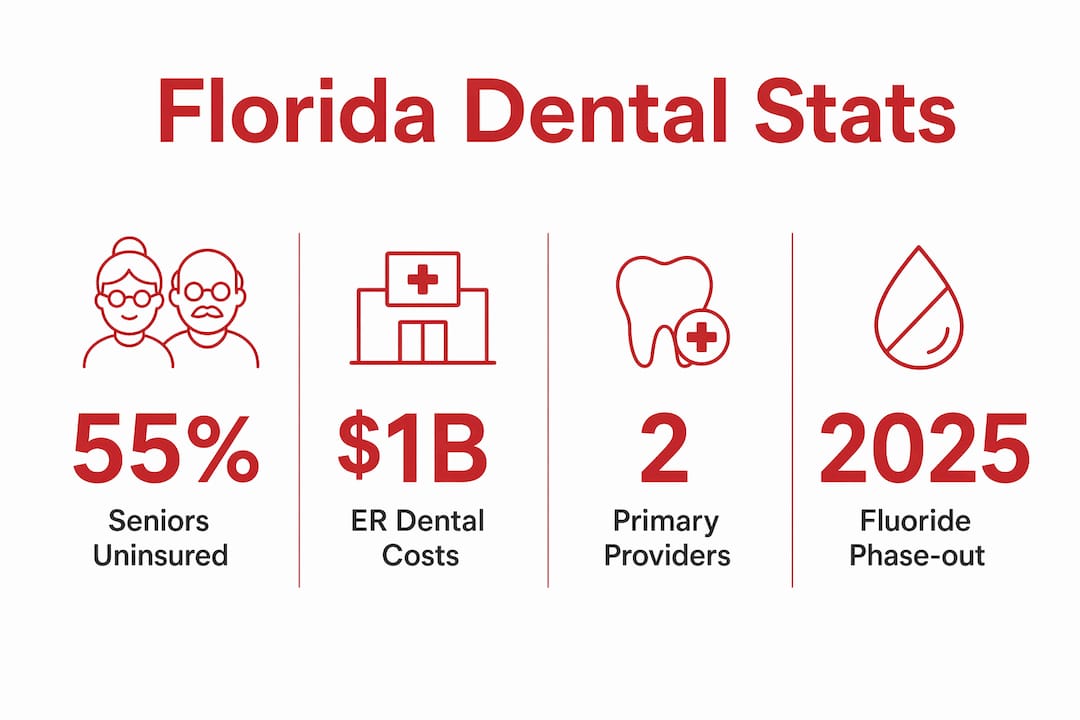
Simultaneously, Florida’s decision to phase out community water fluoridation in late 2025 removed a public health intervention that the CDC credits with reducing tooth decay by approximately 25% in fluoridated communities. That reduction is now at risk for millions of Floridians who relied on tap water as a passive source of enamel protection. The combination of these two policy changes makes 2026 a pivotal year for preventive dentistry in Florida.
What dental coverage options are available to Florida seniors?
55% of Americans over age 65 lack dental benefits, and Florida seniors face this gap acutely. Traditional Medicare does not cover routine dental care, which means cleanings, fillings, and extractions come entirely out of pocket unless a senior enrolls in supplemental coverage. The consequences are measurable: 18% of Florida seniors have untreated tooth decay in 2026.
Untreated decay in older adults does not stay confined to the mouth. Periodontal disease is associated with increased risk of cardiovascular disease, diabetes complications, and aspiration pneumonia. For Florida’s large senior population, the absence of dental coverage is a systemic health issue, not merely a cosmetic one.
Florida seniors currently have four primary coverage pathways:
- Traditional Medicare covers no routine dental care. Emergency extractions may qualify under specific inpatient hospital conditions only.
- Medicare Advantage plans frequently include dental benefits, though coverage limits, network restrictions, and annual maximums vary widely by plan and county.
- Standalone dental insurance carries monthly premiums ranging from $7 to $42 in Florida, with annual maximums that often cap out before major restorative work is complete.
- Dental discount plans function as membership programs with annual fees, offering average savings around 50% on dental procedures with no annual maximums or waiting periods.
Each option carries trade-offs. Medicare Advantage plans offer the broadest benefits but require network compliance. Discount plans offer flexibility but no insurance protection for catastrophic costs.
Pro Tip: Florida dental schools, including those at the University of Florida and Nova Southeastern University, provide quality care at significantly reduced rates. Seniors and low-income patients who qualify can access dental school care as a practical alternative to full-price private practice.
How is Florida Medicaid dental coverage evolving in 2026?
Florida’s Medicaid dental program, formally structured as the Prepaid Dental Health Plan (PDHP), now operates under DentaQuest and Liberty following the 2025 contractor transition. This restructuring affects both the administrative experience for providers and the benefit structure for enrollees. Clinicians must verify which contractor covers each patient before submitting claims.
The benefit structure for children remains the most comprehensive tier. Under the Early and Periodic Screening, Diagnostic and Treatment (EPSDT) mandate, children under 21 receive a broad range of preventive and restorative services. Adults receive more limited coverage, with many services requiring prior authorization and clinical documentation of medical necessity.
Four key developments define the 2026 Medicaid dental environment in Florida:
- DPIP incentive payments reward providers who deliver preventive care to children under 21, with enhanced reimbursement active through september 2026.
- Hospitalization reduction targets are embedded in the Dental Provider Incentive Program, which aims for a 5% reduction in preventable dental hospitalizations in year one, scaling to 9% by year five.
- Provider participation remains limited. Only 41% of U.S. dentists participate in Medicaid nationally, a figure consistent since 2015. Florida mirrors this pattern, creating access bottlenecks in rural and suburban areas.
- Special needs patients face additional barriers. Office readiness for sedation, behavioral support, and physical accommodations determines whether a Medicaid patient with complex needs can actually receive care. Many practices lack these capabilities.
Florida emergency rooms billed nearly $1 billion for preventable dental conditions in 2024. The DPIP program exists precisely because preventive dental visits are far less expensive than emergency hospitalizations. Providers who engage with the incentive program contribute directly to reducing that cost burden.
Pro Tip: When searching for a Medicaid dentist in Florida, call offices directly to ask about plan acceptance and special accommodations. Online directories often lag behind actual provider participation status, and offices may limit new Medicaid patients without listing that restriction publicly.
What impact has removing community water fluoridation had on Florida?
Florida’s phase-out of community water fluoridation in late 2025 represents the most significant public health departure from established dental preventive practice in the state’s modern history. The CDC and the American Dental Association have consistently supported water fluoridation as a safe, cost-effective intervention. The estimated 25% reduction in tooth decay previously attributed to fluoridated water is now absent from Florida’s public health toolkit.
The rationale cited by Florida officials centered on fluoride risk concerns. However, dental and medical professionals note that risk concerns cited by officials far exceed the actual exposure levels historically shown to benefit dental health. Fluoride at the concentrations used in community water systems promotes enamel remineralization and inhibits the bacterial processes that cause cavities.
The removal of fluoride from Florida’s water supply does not eliminate the need for fluoride protection. It transfers the responsibility for that protection from a passive public health system to individual patients and their clinicians. Patients who do not actively replace that protection will face measurably higher cavity risk over time.
The practical implications for Florida residents and clinicians are clear:
- Fluoride toothpaste remains the most accessible daily source of topical fluoride protection and should be used twice daily with a pea-sized amount.
- Fluoride mouthwash adds a second daily exposure point, particularly useful for patients with high cavity risk or dry mouth.
- Prescription fluoride supplements are available for children in non-fluoridated communities and require a dentist or physician prescription.
- Professional fluoride varnish, applied during dental visits, provides months of targeted protection and is quick to administer.
Patients who are exploring fluoride-free dental care as an alternative approach should understand the evidence base for each option they consider. The phase-out creates a genuine need for patient education, not just product substitution.
What initiatives are advancing oral health equity in Florida for 2026?
Access to dental care in Florida is not distributed evenly. Geographic, economic, and systemic barriers prevent many residents from receiving even basic preventive services. Oral health is often treated as a luxury, which makes community-based outreach programs critical for populations who cannot navigate the private insurance market.
The Gainesville Housing Authority and the University of Florida’s Saving Smiles program have partnered to host free Dental Clinic Days. These events use portable dental units to deliver routine screenings, fluoride treatments, and oral health education to youth under 18. Portable equipment removes transportation as a barrier and brings care directly into housing communities where residents already live.
Several program models are gaining traction across Florida in 2026:
- Mobile dental clinics operated by university programs and nonprofit organizations serve rural counties where fixed dental offices are sparse.
- Preventive visit incentive programs offer enhanced payments to providers who complete screenings and sealant applications for Medicaid-enrolled children.
- Community health worker integration places trained navigators in schools and housing developments to connect families with dental appointments and follow-up care.
- Expanded Medicaid provider networks in underserved areas are being supported through DPIP reimbursement enhancements designed to make Medicaid participation financially viable for more practices.
Pro Tip: Florida oral health professionals who want to engage with equity-focused outreach can contact the Florida Dental Association or local university dental programs to identify volunteer and partnership opportunities. These connections also build referral networks that benefit private practices.
The oral health innovations emerging in 2026 extend beyond technology. The most durable gains in population health come from removing structural barriers, not just introducing new clinical tools.
Key Takeaways
Florida’s 2026 oral health environment requires residents and clinicians to actively compensate for reduced public health infrastructure through individual preventive strategies and informed coverage decisions.
| Point | Details |
|---|---|
| Senior coverage gaps are significant | 55% of Americans over 65 lack dental benefits; Florida seniors have four coverage pathways with distinct trade-offs. |
| Medicaid restructuring affects providers | DentaQuest and Liberty replaced MCNA Dental in 2025; clinicians must re-credential and verify plan coverage per patient. |
| Fluoridation removal raises cavity risk | Florida’s phase-out eliminates a 25% decay-reduction benefit; patients must now supplement fluoride protection actively. |
| Preventive care reduces hospitalizations | Florida ERs billed nearly $1 billion for preventable dental conditions in 2024; DPIP targets a 5–9% reduction over five years. |
| Community outreach fills access gaps | Programs like UF Saving Smiles use portable clinics to reach underserved youth and remove transportation barriers. |
What I have learned from Florida’s shifting oral health landscape
The fluoridation phase-out is the development I find most consequential for daily clinical practice. Patients rarely think about where their fluoride exposure comes from until it disappears. Now, every preventive appointment in Florida carries an added responsibility: clinicians must assess each patient’s current fluoride sources and fill the gaps left by the policy change. That conversation takes two minutes and prevents years of restorative work.
The Medicaid contractor transition is administratively disruptive, but the underlying access problem it exposes is older than any contractor. Only 41% of U.S. dentists participate in Medicaid. That number has not moved since 2015. Incentive programs like DPIP are a step in the right direction, but the structural economics of Medicaid reimbursement still make participation difficult for many practices. Professionals who do participate deserve recognition for absorbing that burden.
What gives me genuine confidence about 2026 is the community outreach momentum. Programs like UF Saving Smiles demonstrate that portable equipment and university partnerships can reach populations that the private market never will. The oral health data for Florida consistently shows that access, not awareness, is the primary barrier. When care comes to the patient, utilization rises. That is the model worth scaling.
— Veronica
Natural oral care resources from Stop-oralcare
Florida’s evolving oral health policies place more responsibility on individual patients to maintain their own preventive routines, particularly following the removal of fluoridated water from the public supply.
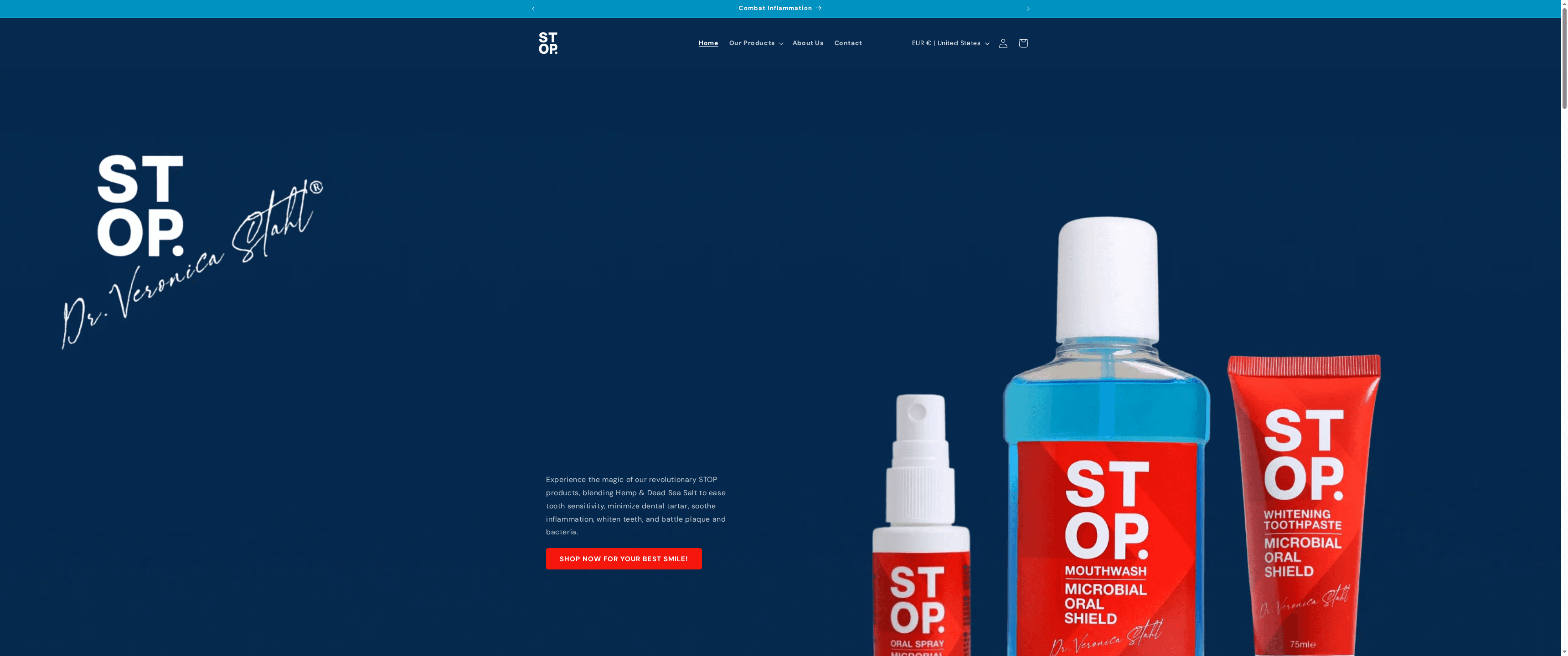
Stop-oralcare offers a scientifically grounded line of natural oral care products formulated with hemp and Dead Sea minerals, developed under the guidance of Dr. Veronica Stahl. For Florida residents seeking alternatives to conventional fluoride-based products, or for clinicians looking to recommend evidence-informed natural options to their patients, Stop-oralcare provides detailed product information, ingredient research, and educational resources. Visit Stop-oralcare’s natural care solutions to review the full product line and access guidance tailored to the 2026 oral health environment.
FAQ
What dental coverage do Florida seniors have in 2026?
Florida seniors can access dental care through Medicare Advantage plans, standalone dental insurance with premiums ranging from $7 to $42 per month, dental discount plans offering around 50% savings, or dental school clinics at reduced rates. Traditional Medicare does not cover routine dental services.
How did Florida’s Medicaid dental program change in 2026?
DentaQuest and Liberty now manage Florida’s Prepaid Dental Health Plan following MCNA Dental’s exit in 2025. Children under 21 receive broad EPSDT benefits, while adults require prior authorization for most services beyond basic preventive care.
Why did Florida remove fluoride from its water supply?
Florida phased out community water fluoridation in late 2025 citing risk concerns, though dental and medical professionals note those concerns exceed the exposure levels historically associated with dental benefit. The CDC supports fluoridation as a safe intervention that reduces tooth decay by approximately 25%.
How can Florida residents replace fluoride protection after the phase-out?
Residents should use fluoride toothpaste twice daily, add fluoride mouthwash to their routine, and ask their dentist about professional fluoride varnish applications, which provide months of targeted enamel protection per treatment.
What free dental resources are available in Florida in 2026?
The Gainesville Housing Authority and UF Saving Smiles host free Dental Clinic Days using portable units to provide screenings, fluoride treatments, and education to youth under 18. University dental school clinics across Florida also offer reduced-cost care to qualifying patients.