


TL;DR:
- Oral health issues in Florida extend beyond aesthetics, influencing systemic diseases like diabetes and cardiovascular problems. Access disparities and high untreated decay rates among youth emphasize the importance of daily natural oral hygiene routines and saliva maintenance. Adapting to fluoride-free practices is increasingly essential following Florida’s fluoride ban, focusing on plaque control, sugar reduction, and mineral support.
Oral health in Florida carries consequences that extend well beyond cavities and aesthetics. Mouth inflammation and infection can contribute to diabetes, cardiovascular disease, and pregnancy complications, making dental care a matter of systemic medical significance. Yet a substantial portion of Floridians still approach oral hygiene as a cosmetic concern rather than a public health priority. This guide examines why oral health matters in Florida from an evidence-based perspective, addresses the state’s unique epidemiological challenges, and outlines practical, fluoride-free natural care strategies for individuals and families seeking alternatives to conventional dental products.
Table of Contents
- Understanding oral health risks unique to Florida
- How oral health affects overall wellness in Florida
- Daily natural oral care routines proven in Florida
- Navigating fluoride-free oral care in Florida’s changing environment
- Preventive strategies for kids and families in Florida
- Why focusing beyond fluoride is essential for Floridians
- Explore natural oral care solutions tailored for Florida
- Frequently asked questions
Understanding oral health risks unique to Florida
Florida’s oral health landscape presents challenges that are both measurable and geographically uneven. 20.7% of Florida’s 9th graders had untreated tooth decay in 2023-24, and 65 of 67 counties face dental professional shortages. These figures reflect a systemic access problem, not simply a matter of individual hygiene habits.
The distribution of dental professionals across the state is critically imbalanced. Nearly 6 million people live in federally designated dental health professional shortage areas, with rural counties bearing a disproportionate burden. Residents in counties such as Glades, Liberty, and Hardee face wait times and travel distances that make routine preventive visits effectively inaccessible.
| Risk factor | Urban counties | Rural counties |
|---|---|---|
| Dental provider availability | Moderate to high | Critically low |
| Untreated decay prevalence | Elevated | Higher |
| Emergency dental visits | Lower | Significantly higher |
| Access to preventive care | More available | Severely limited |
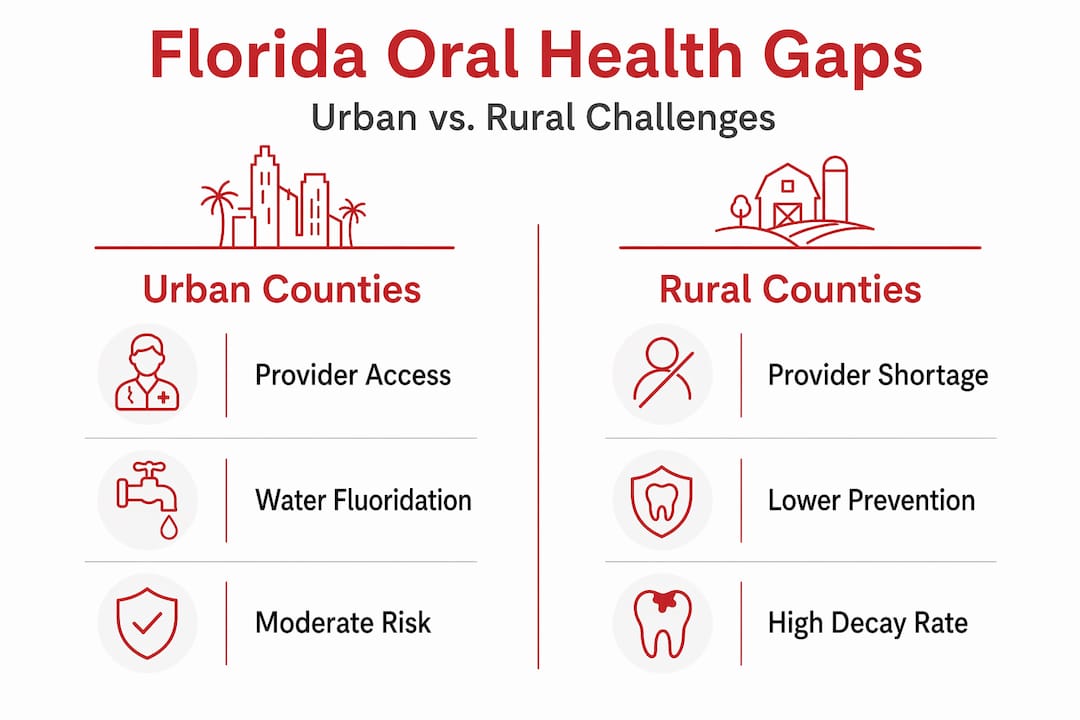
The practical consequence of these shortages is that untreated conditions progress. What begins as early-stage enamel demineralization advances to cavities requiring restoration, then to pulpal infection requiring extraction or endodontic intervention. Emergency department visits for dental pain, a costly and clinically inadequate substitution for preventive care, increase proportionally with access gaps.
Key access and risk factors Floridians should understand include:
- Shortage coverage: 65 of 67 Florida counties are classified as dental health professional shortage areas.
- Youth decay rates: High untreated decay prevalence among school-age children directly affects academic performance and nutrition.
- Urban-rural disparity: Rural Floridians face longer care delays, leading to greater infection risk and more complex treatments.
- Preventive gap: Absence of regular prophylaxis (professional cleaning) allows plaque biofilm to mature and calcify into calculus, increasing periodontal disease risk.
Building natural oral health habits becomes especially critical in communities where professional dental access is limited, since consistent home care serves as the primary defense mechanism against disease progression.
How oral health affects overall wellness in Florida
Understanding Florida’s unique challenges emphasizes why oral health care protects whole-body wellness. The oral cavity is not an isolated anatomical compartment. It functions as a gateway through which microbial activity and inflammatory mediators influence remote organ systems.

Germs from gum inflammation and periodontal disease can worsen diabetes, cardiovascular disease, and pregnancy outcomes. The biological mechanism involves bacteremia, the transient presence of oral bacteria in the bloodstream, and elevated systemic cytokine levels that amplify inflammatory responses in vascular and endocrine tissues.
The systemic connections with specific relevance to Florida’s population include:
- Diabetes: Periodontal inflammation elevates blood glucose regulation difficulty, creating a bidirectional relationship where poor glycemic control worsens gum disease and vice versa.
- Cardiovascular disease: Oral pathogens such as Porphyromonas gingivalis have been identified in arterial plaque, linking periodontal infection to atherosclerotic progression.
- Adverse pregnancy outcomes: Pregnant women with untreated periodontal disease face elevated risks for preterm birth and low birth weight, outcomes with lifelong health implications for the child.
- Nutritional compromise: Tooth loss and oral pain reduce the ability to consume fibrous, nutrient-dense foods, contributing to systemic nutritional deficiency over time.
- Immune burden: Chronic oral infection maintains a low-grade systemic immune activation that can reduce the body’s capacity to respond to other pathogens.
Pro Tip: If you are managing a chronic condition such as type 2 diabetes or cardiovascular disease, discuss your periodontal health explicitly with your physician. The oral-systemic connection is clinically documented and should be part of your care coordination.
Exploring the natural oral health benefits associated with fluoride-free preventive care offers Floridians an evidence-supported path to addressing these systemic risks without dependence on conventional fluoride-based products.
Daily natural oral care routines proven in Florida
With these risks clear, here is how you can take practical control daily with natural care methods. Florida’s climate, dietary patterns, and water policy create specific conditions that require deliberate, structured oral hygiene protocols.
Brush twice daily for 2 minutes with a pea-sized amount of toothpaste, floss daily starting when teeth touch, and manage dry mouth to reduce decay risk. These are not general recommendations. They are minimum thresholds for disrupting the microbial biofilm that colonizes tooth surfaces within 24 hours of inadequate removal.
A structured daily natural oral care routine includes the following steps:
- Morning brushing: Use a soft-bristle toothbrush with a pea-sized amount of natural toothpaste. Brush all surfaces for two full minutes, including the gingival margin (the point where gum meets tooth).
- Interdental cleaning: Floss or use an interdental brush once per day to disrupt biofilm between teeth where bristles cannot reach. Begin at the gum line and curve the floss around each tooth.
- Tongue cleaning: Use a tongue scraper to reduce volatile sulfur compound-producing bacteria associated with halitosis and systemic bacterial load.
- Post-lunch rinsing: Rinse with water after meals to reduce residual fermentable carbohydrate substrate available to cariogenic (cavity-causing) bacteria.
- Evening brushing: Repeat the morning protocol before sleep. Saliva flow decreases during sleep, making nighttime oral bacteria less subject to natural dilution and clearance.
- Dry mouth management: Stay hydrated throughout the day. Limit alcohol and caffeine, which reduce salivary output. Consider xylitol-based products to stimulate saliva and reduce Streptococcus mutans adhesion.
Pro Tip: Do not rinse your mouth with water immediately after brushing. Leaving the toothpaste residue in contact with enamel surfaces for a few minutes extends the antimicrobial and remineralizing contact time, regardless of whether the product contains fluoride.
Reviewing an essential dental care checklist or a natural oral hygiene checklist can help you structure these steps into a consistent, reproducible routine.
Navigating fluoride-free oral care in Florida’s changing environment
Given the new fluoride landscape, adapting your oral care naturally without relying on fluoride requires both knowledge and deliberate product selection. Florida banned adding fluoride to public drinking water as of July 2025, placing Florida and Utah as the only states with such a prohibition. Natural fluoride levels in groundwater vary considerably by county, meaning residents cannot assume consistent baseline mineral exposure.
Focus on sugar intake frequency, saliva maintenance, and plaque control for fluoride-free cavity risk reduction. These three variables represent the primary modifiable factors in caries (cavity) development that function independently of fluoride exposure.
| Prevention strategy | Fluoride-dependent | Fluoride-independent |
|---|---|---|
| Plaque removal via brushing | Complementary | Foundational |
| Dietary sugar frequency reduction | Complementary | Foundational |
| Saliva stimulation and hydration | Complementary | Foundational |
| Professional scaling and prophylaxis | Complementary | Foundational |
| Remineralizing products (hydroxyapatite) | Alternative | Yes |
Key principles for fluoride-free oral care in Florida:
- Hydroxyapatite-based products: Nano-hydroxyapatite (the mineral that composes tooth enamel) has demonstrated remineralizing capability comparable to fluoride in multiple peer-reviewed studies, making it a scientifically supported alternative.
- Dietary discipline: Reducing sugar consumption frequency (not merely total quantity) limits the substrate available for acid-producing bacteria.
- Saliva as protection: Saliva neutralizes oral acids, delivers calcium and phosphate to enamel, and provides antimicrobial peptides. Any habit that reduces salivary flow, including alcohol use and certain medications, compounds fluoride-free cavity risk.
- Natural antimicrobials: Ingredients such as hemp-derived cannabidiol (CBD) have shown antibacterial and anti-inflammatory properties in oral microbiome research, representing a biologically plausible addition to fluoride-free formulations.
Exploring fluoride-free dental alternatives and reviewing a fluoride-free care workflow provides a structured framework for adapting your regimen to Florida’s current regulatory environment.
Preventive strategies for kids and families in Florida
After mastering natural routines for adults, families can take targeted steps to protect children’s oral health from the earliest age. The statistical picture for Florida’s youth is unambiguous in its implications.
Statistic: Florida youth untreated tooth decay stands at 29.3% in 3rd graders and 20.7% in 9th graders, confirming that prevention must begin early and continue through adolescence.
These rates indicate that roughly one in four Florida children reaches middle school with active, unaddressed dental disease. Untreated pediatric caries affect school attendance, speech development, nutritional intake, and long-term oral health architecture.
Evidence-supported family prevention strategies include:
- Start before the first tooth: Wipe infant gums with a clean cloth after feeding to reduce bacterial colonization before tooth eruption.
- Establish brushing before age 1: Begin brushing with an age-appropriate natural toothpaste as soon as the first tooth appears.
- Supervise brushing through age 8: Children lack the manual dexterity for effective independent brushing until approximately the third grade.
- Limit sugar-sweetened beverages: Replace juice and sports drinks with water, particularly during and between meals, to reduce acid exposure frequency.
- Model oral hygiene behavior: Parental brushing and flossing habits are among the strongest predictors of children’s compliance with oral hygiene routines.
- Introduce fluoride-free alternatives early: Familiarizing children with natural product formulations from an early age normalizes these choices as lifelong habits.
Accessing oral care guidance for families and resources on switching to fluoride-free care equips parents with practical tools to implement these strategies within the context of Florida’s current oral health policy environment.
Why focusing beyond fluoride is essential for Floridians
With practical guidance established, a broader perspective is warranted on what truly determines oral health outcomes in Florida’s specific context. The public and professional discourse around the fluoride ban has focused heavily on a single variable, when the evidence base points to a more distributed set of causal factors.
Expert guidance highlights that plaque removal, sugar frequency reduction, and saliva maintenance are foundational regardless of fluoride exposure. These are not secondary measures. They are the primary determinants of cariogenic risk in any population, fluoridated or otherwise.
Florida’s dental access crisis makes this perspective especially important. When 65 of 67 counties face professional shortages, the patient’s own daily oral hygiene practice carries proportionally greater clinical weight. A Floridian who cannot access a dentist for 18 months is entirely dependent on their home care regimen to prevent disease progression. That regimen must be consistent, technically correct, and supported by effective products.
The fixation on fluoride as the central variable in cavity prevention has, in some contexts, created a false sense of security. Communities with fluoridated water still report high caries rates when sugar consumption is excessive and oral hygiene is inadequate. Conversely, populations practicing rigorous plaque control and low-frequency sugar consumption maintain acceptable caries rates without fluoride supplementation.
Hydration deserves particular emphasis in Florida’s subtropical climate. High temperatures and physical activity increase fluid loss, directly reducing salivary output. Saliva’s buffering capacity, antimicrobial peptides, and mineral-delivery functions are physiologically critical to enamel integrity. Dehydration is therefore not merely a comfort issue. It is a measurable oral health risk factor specific to Floridians.
Reviewing oral care sustainability research provides additional evidence on how natural alternatives are positioned within the broader scientific literature on caries prevention and periodontal management.
Explore natural oral care solutions tailored for Florida
Now that you have a detailed understanding of Florida’s oral health challenges and the evidence behind fluoride-free prevention, the next step is applying that knowledge through products formulated to support these principles.

The product line available at Stop Oral Care is developed under the direction of Dr. Veronica Stahl, a dentist with expertise in natural medicine, and formulated with hemp-derived compounds and Dead Sea minerals. These ingredients address the two core mechanisms of oral disease: bacterial biofilm disruption and enamel mineral support. Each product is designed for Floridians seeking scientifically grounded alternatives to conventional fluoride-based dental care, with formulations that align with Florida’s current water fluoridation policy and the growing demand for transparent, natural ingredient profiles.
Frequently asked questions
Why is oral health important beyond my teeth?
Oral health directly influences systemic wellness. Gum diseases spread inflammation that increases risks for diabetes, cardiovascular disease, and pregnancy complications through bacteremia and elevated systemic cytokine activity.
How does Florida’s fluoride ban impact my dental care?
Florida banned adding fluoride to drinking water as of July 1, 2025, making daily plaque removal, saliva maintenance, and reduced sugar frequency the primary cavity-prevention tools for residents.
What can families do to reduce untreated decay in children?
Begin brushing at the first tooth eruption, limit sugar-sweetened beverages, supervise brushing through early school age, and maintain consistent routines into adolescence. High untreated decay rates among Florida’s youth confirm that early and sustained prevention is the most effective intervention available.
How does dry mouth affect oral health in Florida?
Dry mouth reduces saliva’s protective functions, including acid neutralization and debris clearance, increasing cavity and periodontal disease risk. Florida’s heat and physical activity levels make adequate hydration a clinically meaningful daily priority.