

TL;DR:
- Wellness trends in dentistry emphasize prevention, biocompatible materials, and systemic health integration. Patients increasingly view oral health as essential to overall well-being, shifting dental care toward personalized, whole-body wellness assessment and prevention.
Wellness trends in dentistry are defined as the integration of preventive, biocompatible, and systemic health principles into oral care practice. The role of wellness trends in dentistry extends well beyond cleaner toothpaste formulations. According to Delta Dental’s 2026 Oral Health Report, 91% of U.S. adults consider oral health very or extremely important to overall well-being. That figure signals a fundamental shift in how patients understand the mouth’s relationship to the rest of the body. Dental care is no longer a separate category from general health. It is becoming a primary entry point for whole-body wellness assessment, prevention, and personalized care.
How wellness trends shift dental care toward prevention
Preventive dentistry wellness is the most measurable outcome of the broader wellness movement in oral health. The shift from reactive treatment to proactive prevention is not incremental. It is structural.
89% of dental patients sought preventive care in 2025, up from 84% in 2024. That five-point increase in a single year reflects accelerating patient demand, not a gradual cultural drift. Patients are arriving at dental offices with the same expectation they bring to annual physicals: assess risk before disease develops.
Three structural changes are driving this transition:
-
Risk-based recall schedules. The standard six-month universal recall is being replaced by personalized schedules calibrated to each patient’s caries risk, periodontal status, and systemic health factors. Risk-based recall is now supported by JADA clinical practice guidelines, giving clinicians a formal framework to justify individualized appointment intervals.
-
Expanded at-home oral care routines. Patients are investing in water flossers, tongue scrapers, oil pulling, and remineralizing products between visits. This extends the clinical encounter into daily life and shifts some disease prevention responsibility to the patient.
-
Health-outcome messaging in dental communication. Dental practices are reframing their services around systemic health outcomes rather than procedures. A periodontal cleaning is no longer described only as plaque removal. It is positioned as cardiovascular risk reduction.
Pro Tip: When evaluating a dental provider, ask whether they use risk-based recall scheduling. A provider who assigns every patient a six-month interval regardless of individual risk factors is not practicing evidence-based preventive care.
Holistic and integrative dentistry: what patients should know
Holistic dentistry, also called biological dentistry, is defined as a clinical approach that treats the mouth as an integrated component of the whole body, using biocompatible materials and systemic health awareness. Understanding what distinguishes genuine integrative practice from superficial wellness branding is critical for health-conscious patients.

Biocompatible materials vs. conventional restorations
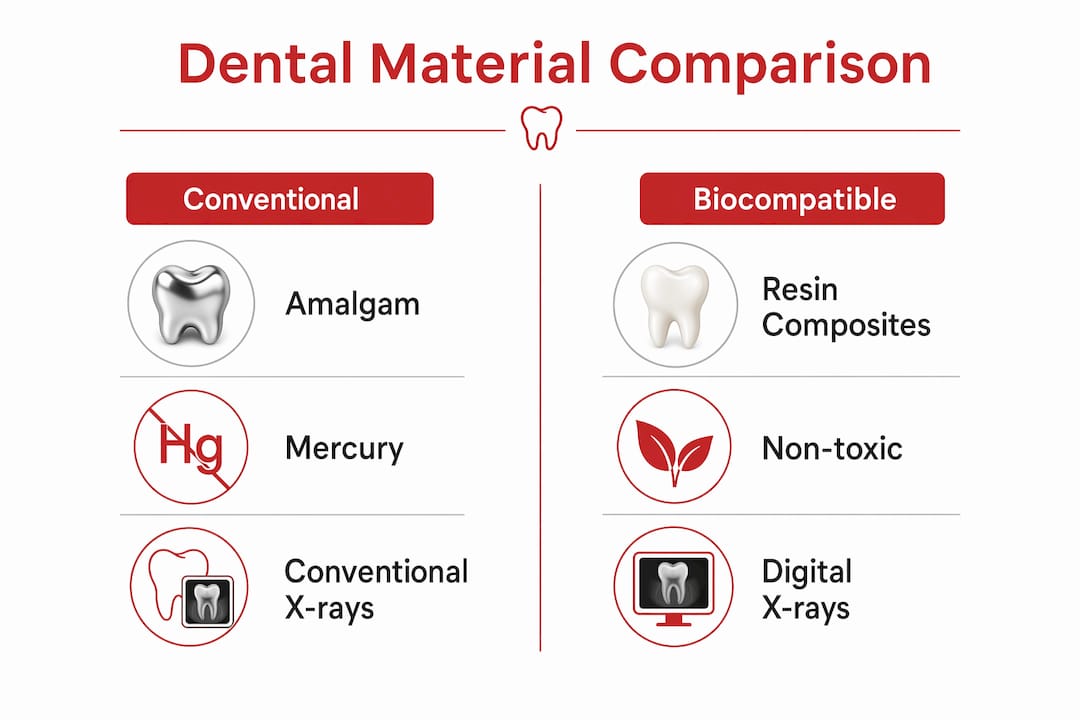
The core material concern in holistic dentistry centers on mercury amalgam, which contains 45–55% elemental mercury by weight. That concentration drives patient demand for safer alternatives. BPA-free composite resins and ceramic restorations now replace amalgam in most wellness-oriented practices. Digital X-rays reduce radiation exposure by up to 90% compared to traditional film X-rays, and 3D CBCT scans detect systemic issues such as airway obstruction that standard 2D films cannot capture.
| Feature | Conventional Dentistry | Holistic/Biological Dentistry |
|---|---|---|
| Restorative materials | Amalgam, standard composites | BPA-free composites, ceramics |
| Imaging technology | Traditional 2D film X-rays | Digital X-rays, 3D CBCT scans |
| Patient intake | Dental history only | Sleep, stress, diet, and breathing data |
| Treatment philosophy | Problem-focused, procedural | Systemic health and prevention-centered |
| Recall scheduling | Universal six-month intervals | Risk-based, personalized intervals |
What genuine integration looks like
True integrative dental clinics share patient records and coordinate treatment plans across disciplines, including dermatology, nutrition, and sleep medicine. A clinic that simply offers a facial alongside a cleaning is not integrative. A clinic that cross-references your sleep study data, nutritional labs, and dental findings before treatment planning is. Comprehensive intake at these practices captures sleep quality, stress levels, dietary patterns, and breathing function per visit.
Pro Tip: Before booking at a clinic marketing itself as integrative, ask whether your dental records are shared with other practitioners in the facility. If the answer is no, the integration is cosmetic, not clinical.
Holistic dental care also requires that 66% of patients who want insurance to cover holistic services are pushing the industry toward broader recognition of these approaches. That demand is already reshaping how dental groups communicate their services.
What does the oral-systemic connection mean for wellness dentistry?
The oral-systemic connection is the documented relationship between oral microbiome health, systemic inflammation, and chronic disease risk. This connection is the scientific foundation of wellness-focused dental treatments.
Periodontal disease is not confined to the gums. Periodontal assessments now function as health screenings with direct implications for cardiology, endocrinology, and obstetrics. A clinician measuring pocket depth is simultaneously gathering data relevant to cardiovascular risk and glycemic control. This is why forward-thinking dental practices are integrating HbA1c testing and blood pressure screening into their patient intake protocols.
Emerging diagnostic tools are expanding the scope of what a dental visit can detect. Salivary diagnostics can now identify bacterial load, inflammatory markers, and early oral cancer signs with improved reliability. A saliva sample collected during a routine visit can yield data that previously required laboratory referrals. This positions the dental office as a front-line diagnostic environment for systemic health.
The oral microbiome is central to this picture. Dysbiosis in the oral microbiome, meaning an imbalance in bacterial populations, correlates with elevated systemic inflammatory markers. Managing that microbial environment through diet, biocompatible products, and targeted hygiene protocols is now a clinical objective, not just a cosmetic one.
Functional nutrition plays a direct structural role in oral health outcomes. Vitamin D deficiency correlates with higher cavity and gum disease rates. Adequate intake of vitamins A, D, E, K, magnesium, and protein supports bone remodeling, saliva production, and microbiome balance. These are not supplementary concerns. They are primary determinants of oral tissue health.
| Nutrient | Role in Oral Health | Deficiency Risk |
|---|---|---|
| Vitamin D | Bone remodeling, enamel mineralization | Higher cavity and gum disease rates |
| Magnesium | Bone density, enamel formation | Weakened tooth structure |
| Vitamin K | Calcium regulation in bone tissue | Impaired remineralization |
| Protein | Tissue repair, collagen synthesis | Delayed gum tissue healing |
Practical dental wellness practices for health-conscious individuals
Applying wellness principles to daily oral care requires specific product choices, routine adjustments, and provider selection criteria. The following practices reflect current evidence in dental wellness and integrative dentistry approaches.
-
Choose fluoride-free, toxin-conscious products. Products formulated without fluoride, BPA, sodium lauryl sulfate, and artificial preservatives align with the biocompatible philosophy of wellness dentistry. Formulations incorporating hydroxyapatite, Dead Sea minerals, or hemp-derived compounds offer scientifically supported alternatives to conventional toothpaste and mouthwash.
-
Prioritize remineralization protocols. Silver diamine fluoride, CPP-ACP (casein phosphopeptide-amorphous calcium phosphate), and hydroxyapatite are non-invasive remineralization options supported by clinical reviews. These protocols address early caries without drilling, consistent with the prevention-first model.
-
Align nutrition with oral health goals. Functional nutrition is foundational to oral tissue health. Prioritize adequate protein, reduce fermentable carbohydrates, and maintain hydration to support saliva production and microbiome balance.
-
Select providers who conduct comprehensive intake. A wellness-oriented dentist collects data on sleep, stress, diet, and breathing patterns, not only dental history. This intake structure enables personalized care plans that address root causes rather than isolated symptoms.
-
Treat lifestyle coaching as part of the dental visit. Wellness dentistry positions patients as active participants in their own care. Expect conversations about sleep hygiene, dietary patterns, and stress management as part of a complete dental wellness visit.
-
Monitor your oral microbiome. Ask your provider about salivary diagnostic testing. Early identification of bacterial imbalances and inflammatory markers allows for targeted intervention before clinical disease develops.
Key takeaways
Wellness trends in dentistry are redefining oral care as a systemic health practice, where prevention, biocompatible materials, and the oral-systemic connection form the clinical foundation.
| Point | Details |
|---|---|
| Prevention is the primary driver | 89% of patients sought preventive care in 2025, reflecting a structural shift from reactive to proactive dentistry. |
| Biocompatible materials matter | BPA-free composites and digital X-rays reduce toxic exposure and support whole-body safety in restorative care. |
| Oral health reflects systemic health | Periodontal assessments now screen for cardiovascular, metabolic, and obstetric risk factors beyond gum disease. |
| Nutrition is a clinical variable | Vitamin D, magnesium, and protein directly affect enamel integrity, bone density, and microbiome balance. |
| Integration requires real coordination | Genuine integrative practices share records across disciplines. Shared location alone does not constitute integration. |
Why the wellness shift in dentistry is deeper than it appears
The transition toward wellness dentistry is not a marketing trend. It reflects a genuine recalibration of what dental care is for.
What I observe most consistently in clinical practice is that patients who arrive with a wellness orientation are better prepared for meaningful conversations about their oral health. They ask about the composition of restorative materials. They want to understand how their diet affects their gum tissue. They are not passive recipients of treatment. They are active participants in a health process.
The challenge is that the wellness label has been applied loosely. A practice that stocks a few natural products or uses the word “holistic” in its branding is not necessarily delivering integrative care. The distinction lies in whether the clinical team actually cross-references medical records, nutritional data, and sleep studies when developing a treatment plan. Most do not. That gap between the wellness claim and the clinical reality is where patients need to exercise discernment.
The deeper implication is this: wellness dentistry places responsibility on both the clinician and the patient. Clinicians must build intake systems that capture systemic health data. Patients must arrive prepared to discuss sleep quality, dietary patterns, and stress load as relevant clinical variables. When both sides meet that standard, the outcomes are measurably different from conventional care.
Holistic gum health and systemic wellness are not separate objectives. They are the same objective approached from different angles.
— Veronica
Explore natural oral care aligned with wellness dentistry

Stop-oralcare develops fluoride-free oral care products formulated with hemp and Dead Sea minerals, grounded in the same biocompatible principles that define wellness dentistry. Each product in the Stop-oralcare line is designed to support oral microbiome balance, remineralization, and gum tissue health without synthetic additives or heavy metal concerns. For health-conscious individuals who want their daily oral care routine to reflect the same standards they apply to the rest of their wellness practice, Stop-oralcare offers science-backed, natural alternatives to conventional dental products. Explore the full product range and the clinical research behind each formulation at Stop-oralcare.
FAQ
What is the role of wellness trends in dentistry?
Wellness trends in dentistry shift clinical focus from treating disease to preventing it, using biocompatible materials, systemic health screening, and personalized care plans. The oral-systemic connection is the scientific basis for this approach.
How does holistic dentistry differ from conventional dentistry?
Holistic dentistry uses BPA-free composites, digital X-rays, and comprehensive patient intake that includes sleep, diet, and stress data, whereas conventional dentistry focuses primarily on procedural, problem-specific treatment.
Can nutrition really affect oral health?
Vitamin D deficiency correlates directly with higher cavity and gum disease rates, and adequate intake of magnesium, vitamins A, D, E, and K supports enamel mineralization, bone density, and microbiome balance.
What should i look for in a wellness-focused dental provider?
A genuine wellness-focused provider uses risk-based recall scheduling, conducts comprehensive intake capturing systemic health data, and coordinates care with other health disciplines through shared records.
Are fluoride-free dental products clinically supported?
Hydroxyapatite and CPP-ACP are non-invasive remineralization agents supported by clinical reviews as effective alternatives to fluoride for enamel protection and early caries management.
Recommended
- Oral Health Trends 2026: Innovations and Natural Solutions – Stop Oral Care
- How CBD Dental Products Are Changing Oral Care: Top 5 Must‑Try Options – Stop Oral Care
- Oral Health Myths Debunked: 10 Facts for 2026 – Stop Oral Care
- Dental wellness explained: Holistic care and fluoride-free solutions – Stop Oral Care