

Despite widespread awareness that oral health matters, 91% of adults believe oral health is integral to overall health, yet very few rate their own dental wellness as excellent. That gap between awareness and action reveals a fundamental misunderstanding: dental wellness is not simply the absence of cavities or gum disease. It is a measurable, evidence-based state of oral and systemic health that requires deliberate, ongoing management. This article examines what dental wellness actually means, how preventive science supports it, and how fluoride-free innovations are reshaping the choices available to health-conscious individuals.
Table of Contents
- What is dental wellness?
- How dental wellness works: Preventive strategies and principles
- Fluoride versus fluoride-free: Science, innovations, and practical choices
- Dental wellness in real life: Personalization, edge cases, and applying the holistic approach
- Explore innovative dental wellness solutions
- Frequently asked questions
Key Takeaways
| Point | Details |
|---|---|
| Holistic dental wellness | Dental wellness means caring for your entire mouth and recognizing its impact on whole-body health. |
| Preventive strategies matter | Routine checkups, proper brushing, and risk assessment play a crucial role in oral wellness. |
| Natural alternatives available | Fluoride-free products using nHA, minerals, and botanicals offer innovative options for remineralization. |
| Personalization is key | Adapt your dental wellness routine based on individual factors, such as pregnancy, dry mouth, or anxiety. |
| Evidence favors fluoride | Fluoride remains most effective for caries prevention, but natural options continue to evolve with promising results. |
What is dental wellness?
Dental wellness is a concept that extends well beyond routine brushing and flossing. According to oral health maintenance research, dental wellness encompasses the teeth, gums, oral-facial system, and overall well-being, integrating physical, mental, and social dimensions of health into a single framework. This definition positions the mouth not as an isolated anatomical region but as a gateway to systemic health.
The oral-systemic connection is well-documented. Periodontal disease, for example, has been associated with cardiovascular disease, diabetes, and adverse pregnancy outcomes. Oral pathogens can enter the bloodstream and trigger inflammatory responses in distant organ systems. This is why holistic dental care treats the mouth as part of the whole body rather than a separate clinical domain.
Key dimensions of dental wellness include:
- Structural integrity: Healthy enamel, dentin, and supporting bone
- Microbial balance: A controlled oral microbiome that limits pathogenic biofilm
- Functional capacity: Adequate chewing, speaking, and swallowing without pain
- Psychosocial well-being: Confidence in appearance and absence of dental anxiety
- Systemic integration: Recognition that oral conditions influence and are influenced by general health
“Dental wellness is not merely the absence of oral disease; it is a positive state of oral health that contributes to physical, mental, and social well-being throughout the life course.”
Now that we have established dental wellness as a holistic concept, let us explore its practical mechanics and preventive strategies.
How dental wellness works: Preventive strategies and principles
Dental wellness is achieved primarily through prevention rather than intervention. The mechanics of oral health maintenance involve saliva buffering, biofilm control, a diet low in fermentable sugars, and active remineralization of enamel. Each of these factors operates continuously, and disruption in any one area accelerates disease progression.
The following sequence outlines a clinically grounded preventive framework:
- Saliva management: Saliva neutralizes acids and delivers calcium and phosphate to enamel surfaces. Understanding the role of saliva in oral hygiene is foundational to any wellness strategy.
- Biofilm disruption: Mechanical removal of plaque through brushing and interdental cleaning prevents the maturation of pathogenic biofilm.
- Dietary modification: Reducing sugar frequency, not just quantity, limits the substrate available to acid-producing bacteria.
- Remineralization support: Fluoride, nano-hydroxyapatite (nHA), and mineral-rich formulations restore enamel integrity between acid challenges.
- Professional assessment: Routine checkups allow early detection of caries, periodontal disease, and mucosal abnormalities before they require invasive treatment.
Data from population surveys indicate that 64% of adults receive at least one preventive dental exam per year, yet a significant proportion still present with untreated disease. This suggests that frequency of visits alone does not determine wellness outcomes; the quality and personalization of the care protocol matter equally.
| Preventive factor | Mechanism | Evidence level |
|---|---|---|
| Fluoride toothpaste | Remineralization, acid resistance | High |
| Saliva stimulation | Buffering, mineral delivery | Moderate |
| Dietary sugar reduction | Limits acid production | High |
| Interdental cleaning | Biofilm disruption | Moderate |
| nHA formulations | Enamel fissure filling | Emerging |
Pro Tip: Establishing a natural dental health routine that addresses all five preventive factors simultaneously produces more consistent outcomes than relying on any single intervention.
Having seen what underpins dental wellness, let us compare mainstream and natural approaches, particularly on the debate over fluoride.
Fluoride versus fluoride-free: Science, innovations, and practical choices
Fluoride has been the dominant remineralizing agent in dentistry for decades. Cochrane review data confirm that fluoride toothpaste reduces caries by 20 to 40%, with higher concentrations producing greater protection. This evidence base is substantial and forms the foundation of most national dental guidelines.
However, a growing body of research supports fluoride-free alternatives, particularly for individuals who prefer to avoid systemic fluoride exposure. The primary candidates include:
- Nano-hydroxyapatite (nHA): A biomimetic mineral that fills enamel fissures and integrates into the tooth surface, restoring hardness and translucency
- Xylitol: A sugar alcohol that disrupts the adhesion and metabolism of Streptococcus mutans, the primary caries-causing bacterium
- Dead Sea minerals: Rich in magnesium, potassium, and calcium, these minerals support remineralization and have demonstrated antimicrobial properties in preliminary research
- Botanical extracts: Plant-derived compounds with documented antibiofilm and anti-inflammatory activity
Key statistic: nHA has demonstrated remineralization efficacy comparable to fluoride in several controlled trials, though the overall certainty of evidence remains lower due to smaller sample sizes and shorter study durations.
For those exploring fluoride-free oral health benefits, the practical comparison is as follows:
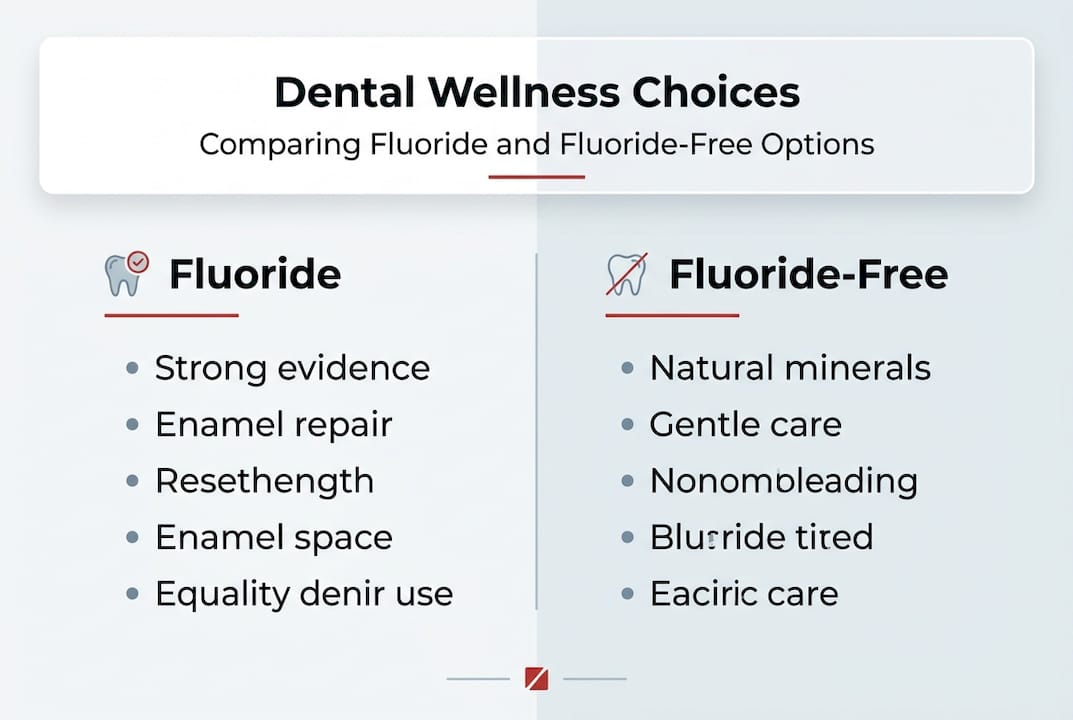
| Criterion | Fluoride | Fluoride-free (nHA/minerals) |
|---|---|---|
| Caries reduction evidence | High certainty | Moderate, emerging |
| Enamel remineralization | Proven | Demonstrated in trials |
| Safety profile | Established; toxicity at high doses | No known systemic toxicity |
| Suitability for children | Dose-dependent | Generally considered safe |
| Availability | Widely available | Growing market |
One practical consideration often overlooked: using a fluoride-free mouthwash immediately after fluoride toothpaste can dilute and remove the fluoride film before it acts. Timing matters. Those seeking stronger teeth without fluoride should select a complete fluoride-free protocol rather than mixing modalities inconsistently. A structured guide to choosing fluoride-free toothpaste can help clarify which formulations deliver consistent remineralization support.
With the main options clarified, let us explore how to practically apply dental wellness for your unique needs and lifestyle.
Dental wellness in real life: Personalization, edge cases, and applying the holistic approach
Dental wellness is not a uniform protocol. It requires individualized risk assessment that accounts for medical history, behavioral factors, and life stage. The medical dentistry model evaluates diet, salivary flow, stress levels, and systemic conditions before recommending any intervention, treating each patient as a unique biological and behavioral profile.
Several populations require particular attention:
- Pregnant individuals: Hormonal changes increase susceptibility to gingivitis and periodontal disease. Maternal periodontal disease has been linked to preterm birth and low birth weight, making oral care during pregnancy a direct infant health concern.
- Individuals with xerostomia (dry mouth): Reduced salivary flow eliminates the primary natural defense against acid and biofilm accumulation, significantly elevating caries and erosion risk.
- Individuals with dental anxiety: Avoidance of professional care due to anxiety leads to delayed diagnosis and more invasive treatment requirements. Behavioral and pharmacological strategies are part of the wellness model.
- Medically complex patients: Conditions such as diabetes, autoimmune disorders, and medications that cause dry mouth or gingival overgrowth require coordinated care between dental and medical providers.
“A wellness-oriented dental practice assesses the whole patient, not just the presenting complaint, integrating systemic health data into every clinical decision.”
From a financial perspective, oral wellness data indicate that individuals who engage in preventive dental care report meaningful reductions in out-of-pocket costs over time. Prevention consistently costs less than restoration.

Pro Tip: If you are considering a transition away from conventional products, a structured approach to switching to fluoride-free dental care reduces the risk of disrupting your existing remineralization balance. Introduce one product at a time and monitor sensitivity and plaque levels over four to six weeks.
The benefits of botanical dental products are increasingly supported by peer-reviewed research, particularly for their antimicrobial and anti-inflammatory properties. These formulations represent a scientifically grounded option for individuals seeking to align their oral care with a broader natural health philosophy.
With practical strategies in place, the next step is identifying products that operationalize these principles consistently.
Explore innovative dental wellness solutions
For individuals committed to a science-backed, fluoride-free approach to oral health, product selection is a critical variable. Stop Oral Care offers a curated line of fluoride-free dental care products formulated with hemp-derived compounds and Dead Sea minerals, two ingredient categories with documented antimicrobial and remineralizing properties. The formulations are developed under the guidance of Dr. Veronica Stahl, whose expertise bridges conventional dentistry and natural medicine.
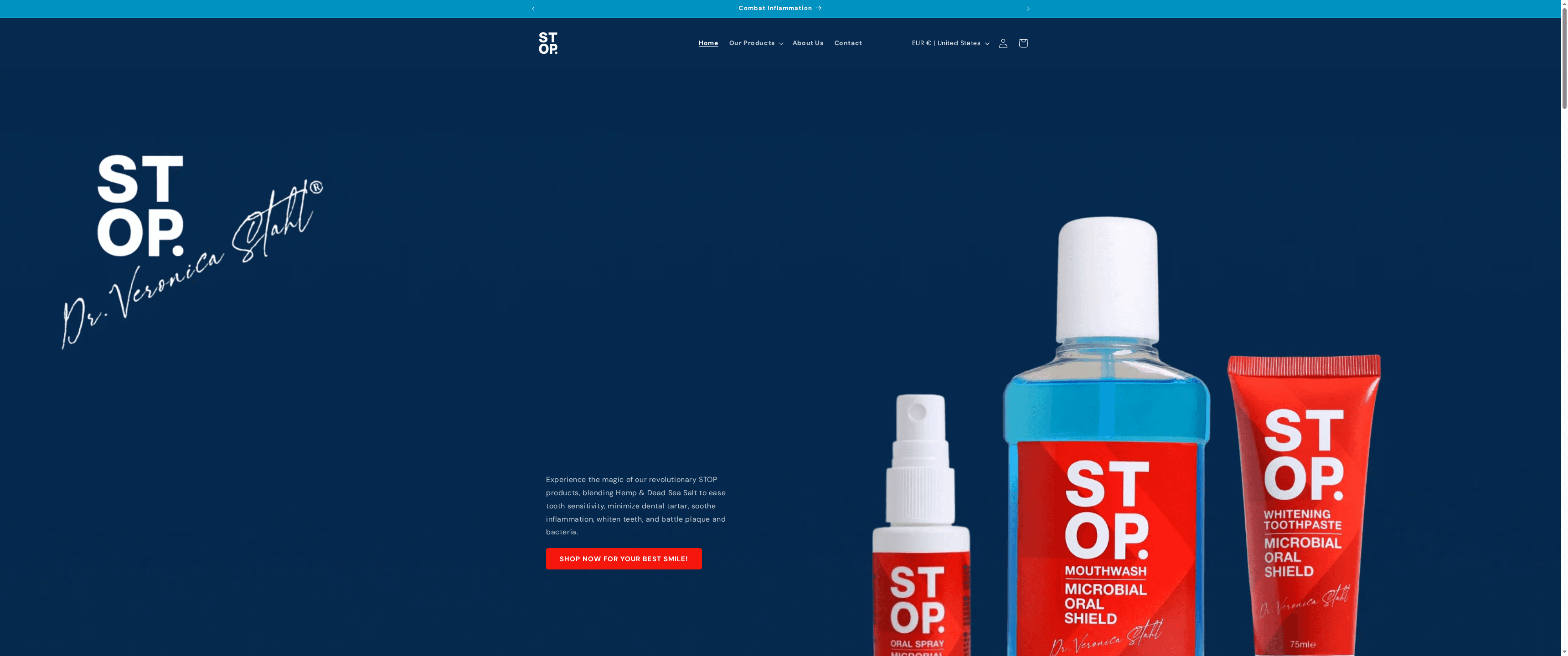
The product range includes toothpaste, mouthwash, and oral sprays designed to address biofilm control, enamel support, and gingival health without synthetic fluoride. Each product reflects the core principles of dental wellness: prevention, systemic awareness, and individualized care. Whether you are managing dry mouth, seeking alternatives to conventional fluoride formulations, or building a complete natural oral care protocol, Stop Oral Care provides evidence-aligned options that support long-term oral wellness.
Frequently asked questions
What is dental wellness and how is it different from basic oral hygiene?
Dental wellness refers to the holistic health of the oral cavity, encompassing physical, mental, and social dimensions, whereas basic oral hygiene focuses narrowly on mechanical cleaning to prevent cavities and gum disease. Wellness integrates systemic health awareness and individualized risk management into every aspect of oral care.
Are fluoride-free products effective for remineralization?
Nano-hydroxyapatite remineralizes enamel by filling enamel fissures and integrating into the tooth surface, with evidence that is promising but currently of lower certainty than the established fluoride evidence base. Xylitol and mineral-rich formulations provide complementary mechanisms that support a complete fluoride-free protocol.
How can I personalize my dental wellness routine?
The medical dentistry model recommends assessing individual risk factors including diet, salivary flow, stress, and medical history before selecting products or procedures. Tailoring your routine to these variables produces more consistent and clinically relevant outcomes than following a generic protocol.
Does dental wellness affect other parts of my health?
Yes. Research documents strong associations between periodontal disease and cardiovascular disease, diabetes, and adverse pregnancy outcomes, reflecting the oral-systemic link that 91% of adults recognize but many do not act upon. Treating oral health as a systemic variable is central to the dental wellness model.
Why do preventive dental care users save more out-of-pocket annually?
Individuals who engage in preventive wellness care report saving approximately $400 per year individually and $1,000 per year for families, primarily because early detection and maintenance prevent the need for costly restorative or surgical interventions. Prevention consistently delivers a favorable cost-to-outcome ratio compared to reactive treatment.