

TL;DR:
- Many common oral health beliefs are incorrect and lead to preventable disease progression when acted upon. Regular dental exams detect hidden issues early, and gentle brushing with interdental cleaning prevents serious periodontal problems. Understanding that systemic health is linked to oral health emphasizes the importance of correcting misconceptions and maintaining evidence-based dental habits.
Many widely held oral health beliefs are clinically incorrect and, when acted upon, lead to preventable disease progression. The field of dentistry has documented how common dental misconceptions, from the idea that pain signals a problem to the belief that white teeth equal healthy teeth, delay diagnosis and worsen systemic outcomes. This article presents the top oral health myths debunked with current evidence, drawing on professional consensus and expert dental sources to replace harmful assumptions with accurate, practice-ready knowledge.
1. You don’t need a dentist unless you feel pain
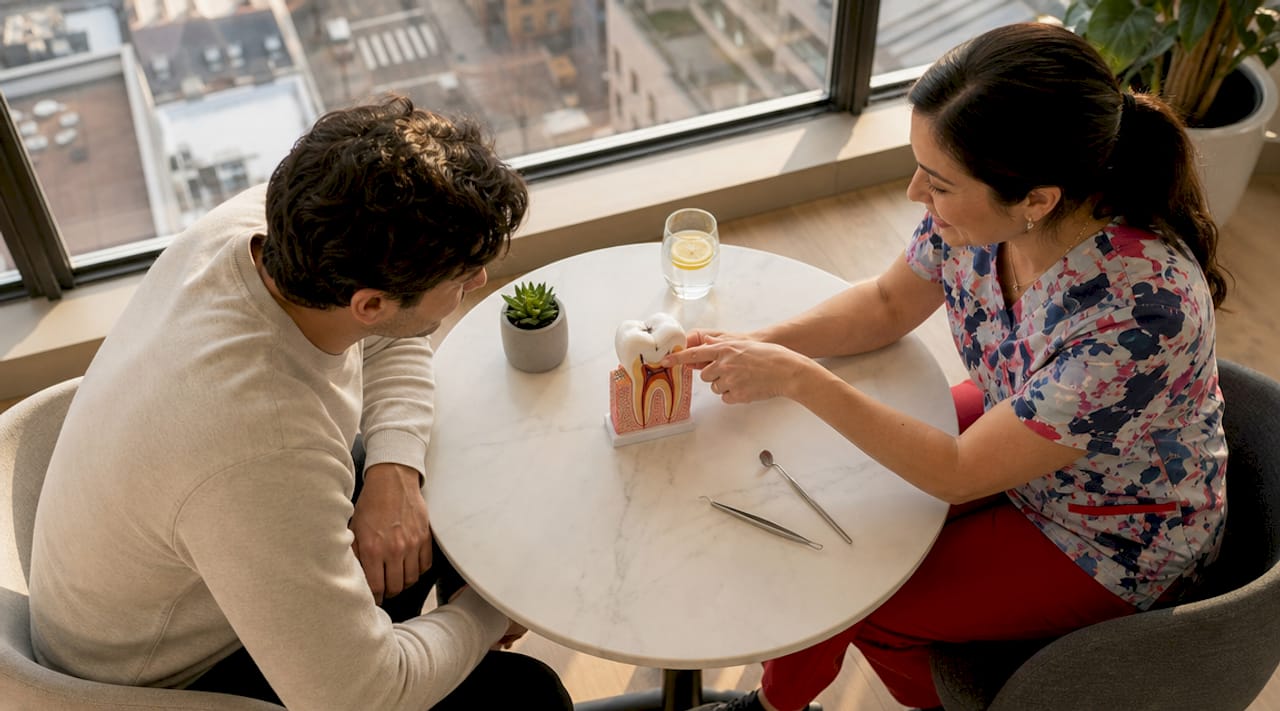
Pain is not a reliable indicator of oral health status. Cavities and periodontal disease develop through bacterial processes that are largely asymptomatic until significant tissue destruction has occurred. By the time discomfort appears, the condition typically requires more invasive and costly restorative procedures. Routine professional examinations, including radiographic imaging and periodontal probing, detect pathology before it becomes symptomatic.
2. Sugar is the only dietary cause of cavities
Starches like bread, rice, and pasta also feed cariogenic bacteria in the oral cavity. Fermentable carbohydrates of all types are metabolized by Streptococcus mutans and related species, producing organic acids that demineralize enamel. This means a diet low in refined sugar but high in processed starches still presents a significant caries risk. Frequency of carbohydrate exposure matters as much as total quantity consumed.
3. Bleeding gums are a normal response to brushing
Healthy gums should never bleed during routine oral hygiene. Bleeding is a clinical sign of gingival inflammation, indicating the presence of bacterial biofilm at or below the gingival margin. Left unaddressed, gingivitis progresses to periodontitis, a condition associated with irreversible alveolar bone loss. Patients who observe signs of bleeding gums should seek professional evaluation rather than reducing brushing frequency.
Pro Tip: If your gums bleed consistently for more than two weeks despite gentle brushing, schedule a periodontal assessment. Early-stage gingivitis is fully reversible with professional cleaning and improved home care.
4. Brushing harder produces a cleaner result
Scrubbing with excessive force causes gingival recession and enamel abrasion, two forms of irreversible hard and soft tissue damage. Effective plaque removal depends on mechanical disruption of the biofilm through gentle circular motions, not on pressure. A soft-bristled toothbrush applied with controlled, methodical strokes is clinically superior to aggressive scrubbing. Enamel abrasion from hard brushing also increases dentinal hypersensitivity over time.
5. Sugar-free sodas are safe for dental enamel
Acids in sugar-free sodas, including citric acid and phosphoric acid, erode enamel and promote plaque biofilm formation regardless of sugar content. The pH of many diet carbonated beverages falls well below the critical threshold of 5.5, at which point enamel demineralization begins. This means the absence of sugar does not neutralize the erosive potential of these drinks. Patients who consume sugar-free carbonated beverages frequently are at elevated risk for erosive tooth wear.
6. White teeth indicate a healthy mouth
Routine exams detect hidden decay and infection beneath teeth that appear visually intact and well-colored. Tooth color is determined by enamel thickness, dentin shade, and extrinsic staining, none of which correlate directly with the presence or absence of caries or periodontal disease. Physicians and dentists stress that professional imaging and probing are the only reliable methods for assessing true oral health status. Cosmetic whiteness is an aesthetic parameter, not a diagnostic one.
7. Flossing is optional if you brush thoroughly
Interproximal surfaces, the contact areas between adjacent teeth, are inaccessible to toothbrush bristles regardless of technique or brush design. Dental floss, interdental brushes, and water flossers are the only tools capable of disrupting biofilm in these regions. Neglecting interproximal cleaning allows plaque to calcify into calculus, which requires professional instrumentation to remove. A consistent dental routine that includes daily interdental cleaning is a non-negotiable component of caries and periodontal disease prevention.
8. Mouthwash can substitute for brushing and flossing
Mouthwash does not replace mechanical cleaning and cannot disrupt the structural integrity of dental plaque biofilm. Rinsing distributes antimicrobial agents over oral surfaces but does not physically remove adherent bacterial colonies. Additionally, alcohol-based rinses reduce salivary flow, and reduced saliva diminishes the mouth’s natural capacity to neutralize acids and remineralize enamel. Overuse or misuse of mouthwash also disrupts oral microbiome balance, potentially eliminating beneficial bacterial species alongside pathogenic ones.
9. Teeth that look fine require no professional attention
Subclinical pathology, including early-stage caries, periapical abscesses, and osseous defects, produces no visible surface changes in the early phases of development. Radiographic examination reveals interproximal and subgingival lesions that are entirely invisible to the naked eye and to the patient. Waiting for visual changes or symptomatic onset before seeking care is a pattern that consistently results in more complex treatment requirements. Professional evaluation at regular intervals remains the standard of care regardless of perceived oral health status.
10. Oral health problems affect only the mouth
Oral health impacts systemic health across multiple physiological systems, including respiratory function, sleep quality, digestion, immune response, and systemic inflammation. Periodontal pathogens can translocate into the bloodstream, triggering inflammatory cascades associated with cardiovascular disease and metabolic dysfunction. The oral microbiome functions as a gateway to whole-body wellness, and its disruption carries consequences well beyond the oral cavity. Treating oral health as isolated from systemic health is one of the most consequential misconceptions in preventive medicine.
Effective habits vs. common misconceptions
The following comparison clarifies which practices are clinically supported and which are based on debunked dental myths.
| Practice | Evidence-based reality | Common misconception |
|---|---|---|
| Brushing technique | Gentle circular motions with a soft-bristled brush disrupt biofilm without tissue damage | Harder brushing removes more plaque and cleans more effectively |
| Interdental cleaning | Daily flossing or use of interdental brushes is required to access contact surfaces | Brushing alone is sufficient if performed correctly |
| Dietary risk factors | Fermentable carbohydrates including starches and acidic beverages contribute to decay | Only sugar causes cavities; sugar-free products are safe |
| Mouthwash use | Adjunct to mechanical cleaning; alcohol-free formulas preferred to protect salivary function | Mouthwash can replace brushing or flossing |
| Cosmetic appearance | White teeth do not indicate absence of disease; imaging is required for accurate assessment | A visually clean, white smile means the mouth is healthy |
Pro Tip: When selecting a mouthwash, choose an alcohol-free, fluoride-containing or antimicrobial formula. Alcohol-based rinses reduce salivary flow, which increases acid exposure time on enamel surfaces.
How oral health myths affect your whole body
The oral-systemic connection is one of the most clinically significant and least publicly understood relationships in medicine. Periodontal disease, when left untreated due to the misconception that it is a localized dental problem, generates a chronic inflammatory burden that affects vascular endothelium, glycemic regulation, and respiratory epithelium.
“Oral health is a gateway to whole-body wellness, affecting multiple physiological systems including breathing, sleep, digestion, immune function, and inflammation.” — Optimal Dental Health
Gingival bleeding, frequently dismissed as normal, signals active bacterial infection at the periodontium. Pathogenic species including Porphyromonas gingivalis and Treponema denticola are capable of systemic dissemination through compromised gingival tissue. Patients who delay treatment based on the myth that bleeding gums are benign are therefore exposed to compounding systemic risk. Timely periodontal intervention reduces both local tissue destruction and the systemic inflammatory load associated with chronic oral infection. Consulting a provider such as Lance Timmerman, DMD who integrates oral and systemic health perspectives can support more complete patient outcomes.
Practical steps to build a myth-free dental routine
Correcting oral health misconceptions requires translating accurate knowledge into consistent behavioral change. The following protocol reflects current clinical guidance:
- Schedule professional examinations at regular intervals, regardless of the absence of pain or visible abnormality. Asymptomatic pathology is the norm, not the exception, in early-stage oral disease.
- Use a soft-bristled toothbrush with gentle circular motions for two minutes, twice daily. Apply minimal pressure and focus on systematic coverage of all tooth surfaces and the gingival margin.
- Perform interdental cleaning once daily using dental floss, interdental brushes, or a water flosser. No brushing technique substitutes for direct interproximal biofilm disruption.
- Reduce consumption of fermentable carbohydrates and acidic beverages, including sugar-free carbonated drinks. Frequency of exposure is as clinically relevant as total quantity.
- Select mouthwash as an adjunct, not a replacement, for mechanical cleaning. Alcohol-free formulas with antimicrobial or fluoride activity are preferred to preserve salivary function and microbiome integrity.
Key takeaways
Oral health myths persist because they align with intuitive but clinically inaccurate assumptions, and correcting them requires both accurate information and consistent behavioral change.
| Point | Details |
|---|---|
| Pain is not a diagnostic indicator | Cavities and gum disease develop silently; waiting for pain leads to advanced, costlier treatment. |
| Diet risk extends beyond sugar | Starches and acidic beverages, including sugar-free sodas, erode enamel and fuel cariogenic bacteria. |
| Bleeding gums require evaluation | Gingival bleeding signals active inflammation, not a normal response to brushing or flossing. |
| White teeth do not equal oral health | Hidden decay and infection require radiographic detection; cosmetic appearance is not a clinical measure. |
| Oral health affects systemic wellness | Periodontal pathogens contribute to cardiovascular, metabolic, and inflammatory systemic conditions. |
Why debunking these myths matters more than ever in 2026
I have observed, across years of clinical practice and research, that the most persistent oral health myths are not held by uninformed patients. They are held by patients who received incomplete or outdated guidance from well-meaning sources, including some dental providers. The myth that bleeding gums are normal during brushing, for example, is one I encounter repeatedly in patients who have been told exactly that by a prior clinician. The clinical consequence is years of unaddressed gingivitis progressing silently toward periodontitis.
What concerns me most in 2026 is the volume of oral care content circulating online that presents misconceptions as fact, often without citation or clinical basis. The truth behind dental myths is not complex. The evidence is consistent and accessible. The barrier is not scientific literacy. It is the absence of a reliable, evidence-based reference point for patients making daily decisions about their oral care.
The systemic consequences of oral health neglect, driven by myths like “no pain means no problem,” are not theoretical. They are documented in the cardiovascular, metabolic, and immunological literature. Treating oral health as a cosmetic concern rather than a systemic health priority is a clinical error with measurable outcomes. Proactive education, grounded in current research and delivered clearly, is the most cost-effective intervention available in preventive dentistry today.
— Veronica
Natural oral care solutions from Stop-oralcare

Stop-oralcare offers a scientifically grounded line of natural oral care products formulated with hemp and Dead Sea minerals, developed specifically for patients seeking alternatives to conventional dental products. Each formulation is designed to support gingival health, microbiome integrity, and enamel protection without synthetic additives or fluoride. For readers who have identified gaps in their current oral care routine through the facts presented in this article, Stop-oralcare’s expert-backed guides and product range provide a practical, evidence-informed starting point. Explore the full resource library at Stop-oralcare to access deeper clinical content on natural dental care myths and build a routine grounded in current dental science.
FAQ
Does no tooth pain mean no dental problems?
No. Cavities and gum disease develop without pain in their early stages, and symptoms typically appear only after significant tissue damage has occurred. Regular professional examinations are required to detect asymptomatic pathology.
Are sugar-free sodas safe for tooth enamel?
Sugar-free sodas are not safe for enamel. Citric and phosphoric acids in these beverages erode enamel below the critical demineralization threshold of pH 5.5, regardless of sugar content.
Is bleeding during brushing a sign of brushing too hard?
Bleeding during brushing is a sign of gingival inflammation, not excessive pressure. Healthy gums do not bleed during routine oral hygiene, and persistent bleeding warrants professional periodontal evaluation.
Can mouthwash replace daily flossing?
Mouthwash cannot replace flossing. It distributes antimicrobial agents over accessible surfaces but does not disrupt the structural biofilm in interproximal spaces that only mechanical cleaning can reach.
Does a white smile indicate a healthy mouth?
Visual whiteness does not reflect oral health status. Hidden decay and infection can exist beneath teeth that appear intact, and only radiographic examination and clinical probing provide accurate diagnostic information.