

TL;DR:
- Dental detox emphasizes restoring oral microbiome balance to improve both oral and systemic health, countering misconceptions about quick cleanses. Scientific evidence links oral microbiome health with reduced systemic inflammation, metabolic regulation, and overall well-being. Supporting practices include hydration, non-toxic products, and professional guidance for safe, sustainable detoxification.
Dental detox is frequently dismissed as a wellness trend with no clinical foundation, yet emerging research positions it as a meaningful component of both oral and systemic health management. Understanding why dental detox matters requires moving beyond the concept of a quick cleanse and examining the underlying physiology of the oral environment. The mouth functions as the primary entry point of the digestive tract, and its microbial and chemical balance directly influences inflammatory processes throughout the body. This article presents the scientific basis for dental detoxification, addresses common misconceptions, and outlines practical approaches grounded in current evidence.
Table of Contents
- Key takeaways
- The oral microbiome and why its balance drives dental health
- Scientific evidence linking dental detox to systemic health
- Myths and facts about dental detoxification
- Practical approaches to support dental detox
- My perspective on dental detox as a health practice
- How Stop-oralcare supports your dental detox goals
- FAQ
Key takeaways
| Point | Details |
|---|---|
| Oral microbiome balance is central | Restoring microbial equilibrium supports enamel strength, gum health, and breath quality more effectively than aggressive cleansing. |
| Dental health affects systemic inflammation | Treating chronic oral infections reduces blood sugar dysregulation and inflammatory markers throughout the body. |
| Not all detox claims are equal | Improper procedures like unguided amalgam removal can increase mercury exposure rather than reduce it. |
| Sustainable practices outperform quick fixes | Daily hydration, diet adjustments, and non-toxic oral care products produce measurable long-term results. |
| Professional guidance remains indispensable | Integrative dental protocols require coordination between dental and general healthcare providers for safe, effective outcomes. |
The oral microbiome and why its balance drives dental health
The oral cavity contains more than 700 identified bacterial species, making it one of the most microbially complex environments in the human body. This community, referred to as the oral microbiome, does not simply colonize surfaces passively. It participates in pH regulation, nutrient metabolism, tissue protection, and the modulation of local immune responses. When this ecosystem is in equilibrium, it contributes to the structural integrity of enamel, the health of gingival tissue, and the control of pathogenic overgrowth.
Disruption of this balance, a condition termed oral dysbiosis, permits acid-producing and proteolytic bacteria to dominate. The downstream effects include demineralization of enamel, inflammatory gum responses, and deterioration of tissue comfort. Oral microbiome imbalance directly correlates with reduced breath quality and increased susceptibility to periodontal disease, as the bacterial metabolic byproducts alter tissue permeability and local immune signaling.
Saliva occupies a central role in the mouth’s natural detoxification capacity. It buffers acids, carries away cellular debris and bacterial waste, and delivers calcium and phosphate ions that participate in enamel remineralization. Saliva’s natural cleansing function maintains oral microbiome balance by neutralizing environmental and dietary acids before they can shift the pH toward conditions favorable to pathogenic species. Conditions that suppress salivary flow, including certain medications, chronic dehydration, and mouth breathing, therefore compromise the oral environment’s primary self-regulatory mechanism.
Key factors that determine oral microbiome stability include:
- Salivary pH maintained above 6.5, which limits acid-tolerant pathogen proliferation
- Dietary composition, particularly the ratio of fermentable carbohydrates to fiber and micronutrient density
- Hydration status, which directly influences salivary volume and buffering capacity
- Oral hygiene consistency, including mechanical removal of biofilm from both tooth and gingival surfaces
- Chemical inputs from toothpaste, mouthwash, and dietary supplements, which can either support or disrupt resident microbial populations
Pro Tip: Rinsing with plain water after meals, rather than immediately brushing, gives saliva time to buffer residual acids and initiate passive remineralization before mechanical intervention disturbs the enamel surface.
Scientific evidence linking dental detox to systemic health
The concept that oral health is isolated from systemic physiology is not supported by current evidence. The mouth serves as the entry point of the digestive tract, and its microbial populations and inflammatory status influence processes well beyond the oral cavity. Periodontal dysbiosis drives systemic inflammation through what researchers now describe as the oral-gut-brain axis, a mechanistic pathway by which periodontal pathogens migrate to intestinal and neural tissue and potentiate inflammatory cascades associated with metabolic and neurodegenerative diseases.

The clinical implications of this connection are considerable. Data published in 2026 indicate that root canal therapy resolves systemic inflammation, with measurable improvements in blood sugar control and inflammatory biomarkers observed over a two-year follow-up period following treatment of chronic tooth infections. This finding positions dental detoxification not as a cosmetic or adjunctive intervention but as a direct contributor to metabolic regulation.
The table below summarizes key research findings on the systemic impact of dental conditions and their treatment:
| Condition or Intervention | Systemic Effect | Evidence Source |
|---|---|---|
| Chronic tooth infection (untreated) | Elevated blood glucose and systemic inflammatory markers | ScienceDaily, 2026 |
| Root canal therapy (resolved infection) | Improved blood sugar control over 24 months | ScienceDaily, 2026 |
| Periodontal dysbiosis | Activation of gut and neuroinflammatory pathways | MDPI Oral-Gut-Brain Axis review |
| Oral microbiome restoration | Reduced gingival inflammation and metabolic stress | Oral microbiome balance research |
Notably, over 40% of U.S. adults carry untreated dental disease, a figure that reflects structural barriers within insurance coverage systems rather than low patient interest. The systemic consequences of this treatment gap extend to metabolic dysfunction, immune dysregulation, and chronic inflammatory conditions that generate substantial healthcare burden across multiple medical specialties.
“The mouth’s status as the digestive tract entry point means oral health influences systemic inflammation and metabolic health in ways that are only beginning to be fully characterized in clinical literature.”
Understanding the oral microbiome’s whole body impact is therefore not peripheral to dental detoxification. It constitutes the primary rationale for why dental detox matters as a health practice rather than a cosmetic preference.
Myths and facts about dental detoxification
A structured understanding of what dental detoxification can and cannot accomplish is necessary before selecting any intervention. Several persistent misconceptions circulate both in consumer wellness media and within certain clinical communities, and these require direct examination.
-
Myth: The oral cavity cannot detoxify itself. The mouth possesses multiple active detoxification mechanisms, primarily through salivary buffering, immune cell activity in gingival tissue, and the competitive inhibition that commensal bacteria exert against pathogenic species. Dental detox restores microbiome balance rather than replacing a function the body lacks.
-
Myth: A short-term dental cleanse produces lasting results. Oral detoxification is a continuous physiological process, not an episodic intervention. Single-course treatments addressing diet, hydration, or supplementation produce temporary improvements unless the underlying conditions sustaining dysbiosis are corrected through sustained behavioral change.
-
Myth: Removing amalgam fillings is a straightforward detox step. Amalgam removal without adherence to established safety protocols presents documented risks. Mercury blood levels can increase over 32% within 48 hours following improper removal, representing a significantly greater toxicological burden than leaving stable amalgam fillings in place. Removal should be conducted exclusively by SMART-certified (Safe Mercury Amalgam Removal Technique) practitioners.
-
Myth: Generic binders clear dental mercury effectively. Common binding agents such as bentonite clay demonstrate limited capacity for mercury chelation. Targeted compounds like glutathione and chlorella demonstrate substantially greater efficacy for dental mercury detoxification and should be used under direct professional supervision rather than self-prescribed.
-
Myth: More aggressive intervention produces better outcomes. The body’s elimination pathways have finite processing capacity. Pulsed detox cycles, structured as approximately 10 days of active supplementation followed by 4 days of rest, reduce strain on the liver, kidneys, and colon and minimize the risk of adverse detox reactions.
Pro Tip: Before pursuing any amalgam removal protocol, request documentation of the practitioner’s SMART certification and ask specifically about the sequential detox schedule they use post-procedure. Absence of a structured post-removal protocol is a significant clinical red flag.
Practical approaches to support dental detox
Supporting the oral environment through consistent, evidence-aligned practices produces more durable outcomes than any single intervention. The following approaches reflect the current understanding of oral detoxification physiology and are compatible with natural care principles.
-
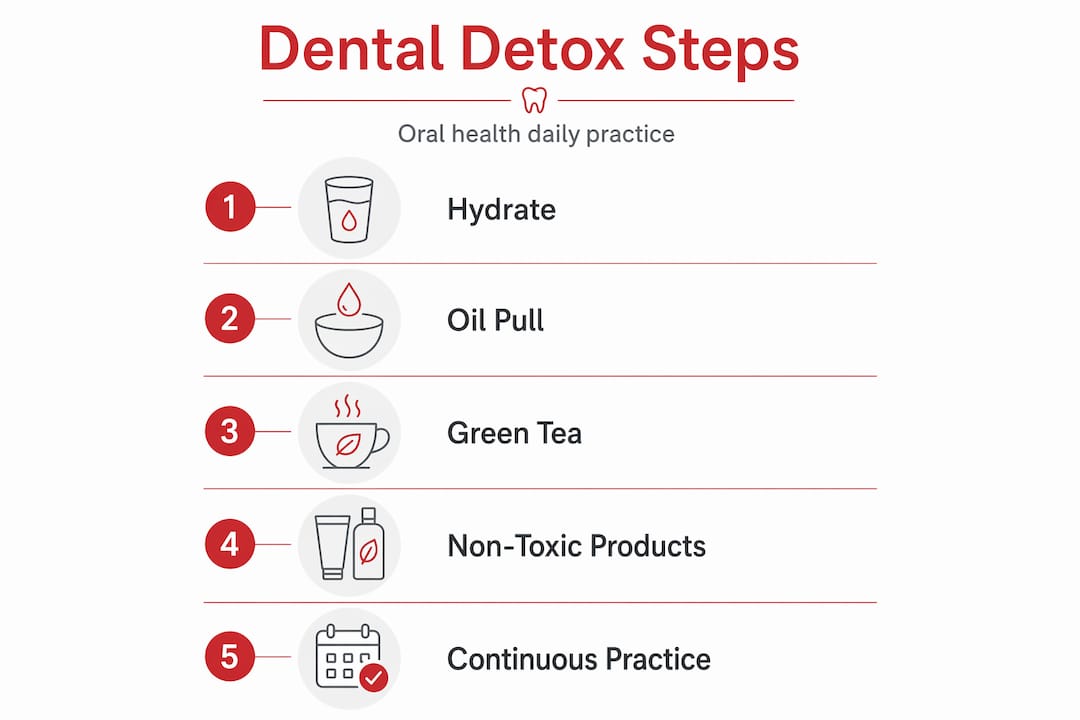
Optimize daily hydration. Adequate fluid intake directly sustains salivary volume and buffering capacity. A target of 2 to 3 liters of water daily supports the oral environment’s primary self-cleaning mechanism and assists systemic elimination pathways. Supporting detox pathways with hydration is consistently recommended by practitioners as a foundational intervention before any supplemental protocol.
-
Incorporate oil pulling with precision. Swishing a food-grade oil, most commonly coconut or sesame, for 10 to 15 minutes in the morning before eating physically removes loose bacterial aggregates from oral surfaces. The practice is not a substitute for mechanical brushing but functions as a supplementary biofilm reduction measure with documented tolerability.
-
Introduce green tea as a dietary regular. Epigallocatechin gallate (EGCG), the primary bioactive polyphenol in green tea, inhibits the adhesion of Streptococcus mutans and Porphyromonas gingivalis to tooth and gingival surfaces. Regular consumption introduces a botanical antimicrobial effect without disrupting the broader commensal microbiome population.
-
Select non-toxic, fluoride-free oral care products with documented formulations. Conventional toothpastes and mouthwashes frequently contain surfactants, artificial preservatives, and antimicrobial agents that create indiscriminate disruption of the oral microbiome. Transitioning to a fluoride-free care workflow that incorporates mineralizing agents such as Dead Sea minerals and botanical actives supports microbiome stability while maintaining hygiene efficacy.
-
Prioritize mineral and micronutrient support. Calcium, magnesium, zinc, and vitamin D3 each contribute to enamel integrity and immune competence within gingival tissue. Dietary sources or targeted supplementation addressing documented deficiencies strengthens the structural and immune components of the oral detox environment. Herbal liver support, such as that described in liver detox herb guides, complements dental detox by ensuring systemic elimination pathways remain functional.
-
Consult a holistic or integrative dental practitioner. Integrative dental detox requires collaboration between dental professionals and general healthcare providers, particularly when amalgam removal, heavy metal considerations, or systemic inflammatory conditions are involved. Self-directed protocols carry meaningful risk in the absence of clinical oversight.
Detoxifying your teeth regularly through these approaches is not a pursuit of an extreme outcome. It reflects support for the biological systems already operating within the oral cavity.
My perspective on dental detox as a health practice
I have observed, across years of practice integrating dentistry with natural medicine, that patients who achieve the most sustained improvements in oral health do not arrive at those outcomes through dramatic interventions. They arrive through consistency.
What I find most clinically significant is not any single product or procedure. It is the moment a patient begins to understand that their oral environment connects directly to how their gut, immune system, and metabolic pathways function. That recognition shifts their approach from reactive to proactive, and the outcomes reflect that shift measurably.
The evidence supporting the oral-gut-brain axis is no longer preliminary. It demands that we stop treating the mouth as a compartmentalized system. In my experience, the patients who progress most effectively are those who implement small, consistent changes in diet, hydration, and product selection. Those who pursue extreme cleansing protocols without professional guidance frequently experience setbacks that set back their overall health goals.
My recommendation is always to start with the fundamentals, work with a practitioner who understands both dental and systemic health, and approach detox as a process rather than a destination. That is where the dental routine and wellness connection becomes clinically real.
— Veronica
How Stop-oralcare supports your dental detox goals
Stop-oralcare develops fluoride-free oral care products formulated with hemp-derived actives and Dead Sea minerals, specifically designed to support oral microbiome balance without disrupting the natural detoxification processes the mouth relies on. Each formulation reflects the scientific principles discussed throughout this article, addressing pH stability, bacterial balance, and tissue health through precisely selected natural compounds.
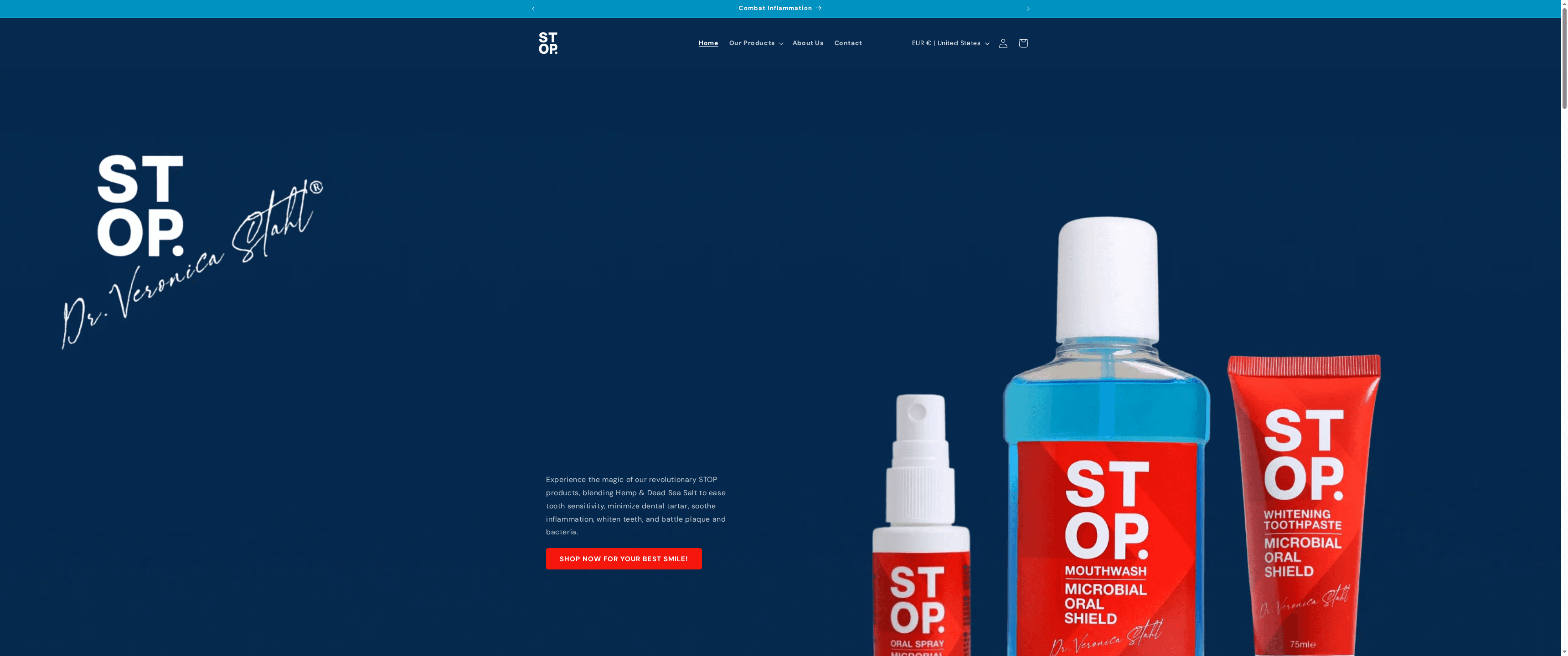
For individuals seeking to transition from conventional oral care products toward formulations that actively support dental detox for oral health, Stop-oralcare offers natural oral care solutions developed under Dr. Veronica Stahl’s clinical guidance. The product line includes toothpaste, mouthwash, and oral spray formats, each contributing to a non-toxic, mineralizing oral environment consistent with current evidence on microbiome-supportive dental care.
FAQ
What is dental detox and how does it differ from a cleaning?
Dental detox refers to the process of restoring oral microbiome balance, reducing toxic burden from bacterial byproducts or dental materials, and supporting the oral cavity’s natural self-regulatory systems. A professional dental cleaning addresses surface biofilm and calculus mechanically, while dental detoxification encompasses broader biological restoration of the oral environment.
Why does dental detox matter for overall health?
Dental detox matters because chronic oral infections and periodontal dysbiosis generate systemic inflammation through the oral-gut-brain axis, contributing to metabolic dysfunction and blood sugar dysregulation. Treating these conditions produces measurable improvements in systemic inflammatory markers.
Is detoxifying your teeth safe to do at home?
Supportive practices such as hydration, oil pulling, green tea consumption, and switching to non-toxic oral care products are safe for home use. However, procedures involving amalgam removal or targeted mercury chelation require professional oversight to avoid increasing toxicological exposure.
How often should you detox teeth for best results?
Dental detox is most effective as a continuous practice rather than a periodic intervention. Daily habits that support the oral microbiome produce more durable results than infrequent intensive protocols, which can strain systemic elimination pathways if not structured correctly.
What are the benefits of teeth detox beyond oral hygiene?
The benefits of teeth detox extend to reduced systemic inflammation, improved metabolic markers, better breath quality, and gum tissue comfort. Emerging research links oral microbiome restoration to reduced risk factors associated with neurodegenerative and metabolic conditions via the oral-gut-brain inflammatory axis.